Rapid Patio Revival

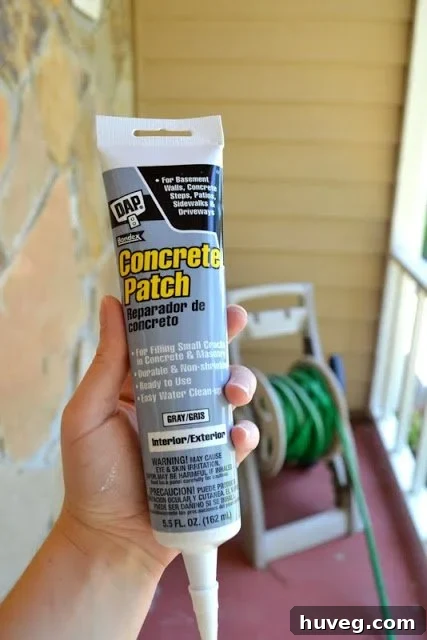
The journey of home improvement is often paved with small victories that culminate in a grand transformation. Remember that pesky little hole I highlighted on my front stoop a while back? The one that seemed insignificant yet silently marred the curb appeal of our home? Well, I’m thrilled to report that its days of diminishing our entrance’s charm are officially over. This seemingly minor defect, which had been a quiet but persistent item on my DIY checklist, has now been efficiently addressed, marking another step forward in our home’s ongoing revitalization.
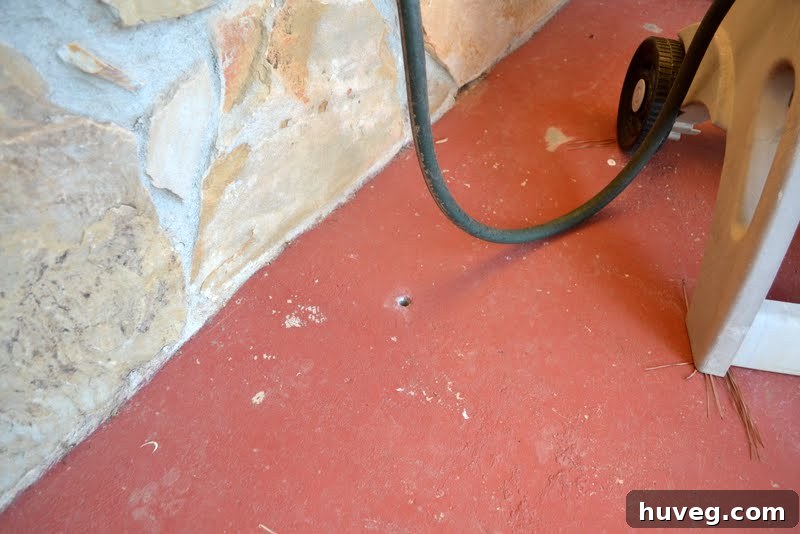
Gone. Completely eradicated.
The transformation might seem simple, but the impact is significant. It’s a testament to how even the most minor repairs can contribute substantially to the overall aesthetics and longevity of your property. Our stoop, once blemished by this small but noticeable imperfection, now presents a much smoother and more inviting surface, ready for its next phase of enhancement. This quick fix embodies the spirit of proactive home maintenance, preventing minor issues from escalating into larger, more costly problems down the line.
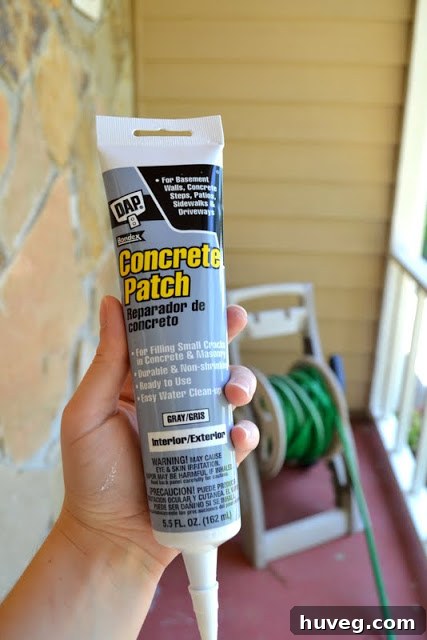
Achieving this seamless repair was surprisingly straightforward, thanks to a reliable patching material. While one might intuitively reach for standard caulk for minor cracks, for a more substantial void like this, a dedicated concrete or patio patching compound is often the superior choice. These specialized products are formulated to withstand outdoor elements, foot traffic, and temperature fluctuations, ensuring a durable and long-lasting repair. In my case, I opted for a high-quality gray patching material that offered both strong adhesion and flexibility, making it ideal for exterior concrete surfaces. Its consistency was similar to a thick caulk, which made application incredibly user-friendly.
The process itself was uncomplicated: first, ensure the area is clean and free of loose debris. Then, meticulously fill the hole or crack with the patching material, making sure to press it firmly into every crevice to eliminate air pockets. Once applied, use a flat tool – I found the flat end of the patching tube itself perfectly adequate – to scrape over the surface. This step is crucial for achieving a smooth, flush finish that blends seamlessly with the surrounding concrete. The goal is to make the repaired area indistinguishable from the original surface once painted. After smoothing, the patched area simply needs time to dry and cure according to the manufacturer’s instructions, a critical step that ensures maximum strength and longevity.
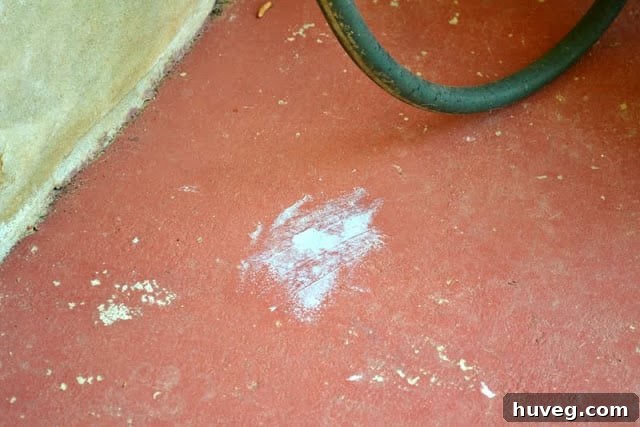
Encouraged by the immediate success of patching the initial hole, I decided to tackle another small crack that had developed on a different section of the stoop. These hairline fissures, while not as visually arresting as a full-blown hole, can be equally problematic if left unaddressed. They can allow water penetration, leading to further deterioration, especially in climates with freeze-thaw cycles. Applying the same patching technique to this crack was equally effective, reinforcing the idea that often, the biggest hurdle in home maintenance is simply starting the task. The ease and speed of these repairs truly underscored the value of addressing issues as they arise, preventing them from escalating into more demanding projects.
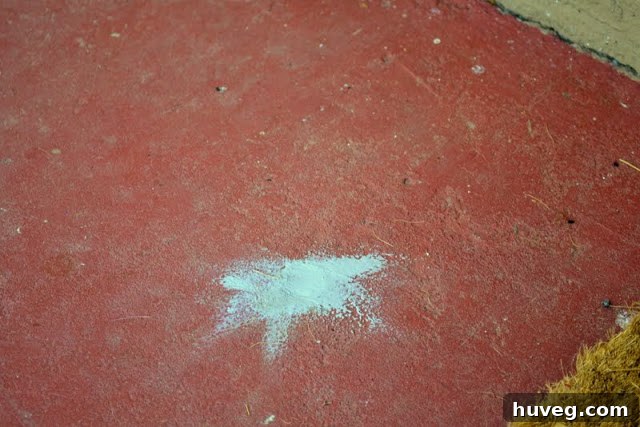
Now, let’s talk aesthetics. Immediately after the patch, the contrast of the fresh gray material against the existing reddish hue of the stoop was undeniably striking, and perhaps not in the most visually appealing way. However, it’s important to remember that this phase is merely a temporary “ugly duckling” stage in the larger renovation process. Many DIY projects involve moments where things look worse before they get better, and this was certainly one of them. But I’m well-aware that this contrasting gray is a precursor to a much more cohesive and appealing finish. The true beauty will emerge once the entire stoop receives its fresh coat of paint, unifying the patched areas with the rest of the surface.
And speaking of things that aren’t visually appealing, these patched areas are far from the only “character marks” adorning our stoop. A quick glance reveals a scattering of paw prints – remnants of a playful puppy’s adventurous exploration into a tray of trim paint. Yes, even the most meticulous home improvement efforts can sometimes be comically disrupted by our beloved furry friends. These little paw-shaped souvenirs, while endearing in their own right, also contribute to the overall worn appearance of the stoop. They serve as a quirky reminder that home life is dynamic, and sometimes, perfection is less about an immaculate finish and more about creating a beloved, lived-in space. Nonetheless, these playful imprints, along with the newly patched areas, highlight the pressing need for a comprehensive repaint.
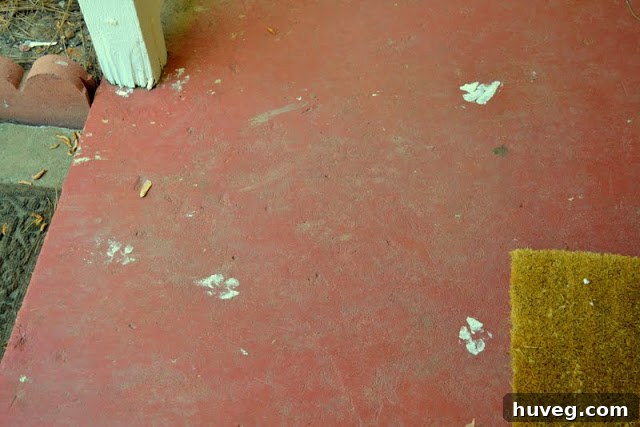
Once everything is thoroughly painted over, a transformative change will undoubtedly take place. The fresh paint will not only conceal the gray patches and the notorious paw prints but will also rejuvenate the entire appearance of the stoop, creating a welcoming and pristine entryway. A well-maintained and freshly painted front stoop significantly enhances curb appeal, making a positive first impression for visitors and adding value to the home. It’s amazing how a relatively simple and affordable project like this can have such a dramatic impact on the exterior of a house. The key now is patience and proper timing. I’ll just have to keep a close eye on the weather forecast and wait for the pollen count to drop significantly before I can confidently embark on the painting phase. Exterior painting requires optimal conditions – moderate temperatures, low humidity, and minimal airborne particles – to ensure proper adhesion and a smooth, lasting finish.
However, despite the current “in-between” stage and the waiting game for ideal painting weather, I’m actually incredibly satisfied that I finally took the initiative to address these issues. There’s a profound sense of accomplishment that comes with tackling a long-standing item on the to-do list, rather than perpetually putting it off. This project, though small, reinforces a crucial philosophy in home renovation: “baby steps” are not just acceptable, they are often the most effective way to approach the daunting task of working on an entire house. Each small repair, each little improvement, builds momentum and confidence. It demonstrates that progress, no matter how incremental, is still progress. These tiny victories prevent burnout, maintain motivation, and ultimately contribute to the larger vision of a beautifully maintained and functional home. So, if you have a small hole, a minor crack, or even a few adventurous puppy paw prints on your own stoop, consider this your gentle nudge to grab some patching material and start your own “baby step” toward a more polished home exterior.