Custom Mailbox Number Plaque

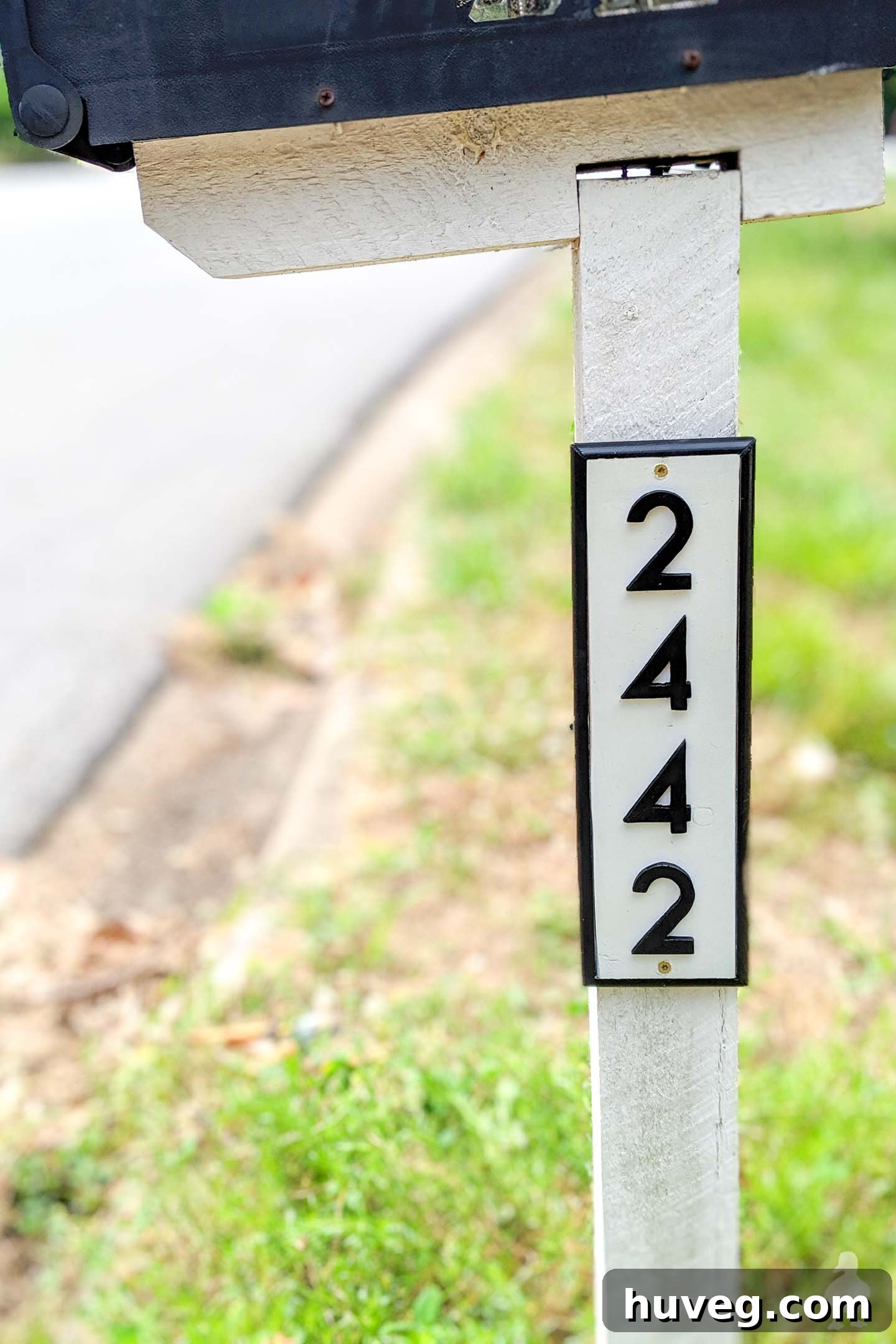
Is your home address a hidden secret, especially after dusk? Making your house numbers more visible is a simple yet impactful home improvement that benefits everyone from delivery drivers to emergency services. This guide will show you how to craft a striking, highly visible address sign using common scrap wood pieces and the precision of a scroll saw. Not only is this a rewarding DIY project, but it’s also incredibly cost-effective, turning salvaged materials into a valuable addition to your home’s curb appeal.
In our modern lives, the convenience of home deliveries has become indispensable. Whether it’s a late-night meal, a much-needed package, or essential pet supplies, we rely heavily on external services to bring things right to our doorstep. However, this convenience often highlights a common problem: invisible house numbers. At my home, we’ve experienced this firsthand. Despite living in a well-established neighborhood, our postal carrier frequently misdelivers mail, and new delivery drivers often struggle to pinpoint our exact location. It’s a common frustration, especially when every minute counts, be it for a hot meal or an urgent delivery.
I once attempted a quick fix with reflective stickers on our mailbox, hoping for an easy solution. While initially promising, they quickly faded and peeled, proving ineffective against the elements and the test of time. It became clear that a more permanent, durable, and truly visible solution was necessary. This experience directly inspired the creation of this DIY address sign. Instead of throwing out perfectly good wood scraps from past projects, I saw an opportunity to create something both functional and aesthetically pleasing. It was a chance to transform discarded lumber into a practical piece of home decor, ensuring our address stands out day and night without spending a dime on new materials.
Beyond the practical need, there’s a unique satisfaction that comes from creating something with your own hands, especially when it solves a real-world problem. Armed with a scroll saw and a collection of leftover wood, the process of bringing this vision to life was far more engaging than preparing dinner. Power tools, in their enabling glory, often lead to these delightful diversions, turning a mundane afternoon into a productive session of creative problem-solving. This project isn’t just about making numbers; it’s about making a statement of clarity and care for your home.
Crafting Your Custom Wooden Address Plaque
A distinctive and clearly visible address plaque serves multiple purposes: it welcomes guests, guides delivery personnel, and, most importantly, assists emergency services in locating your home swiftly. This DIY project walks you through creating a durable and attractive wooden sign that will enhance your home’s curb appeal and functionality. We’ll leverage the versatility of a scroll saw for precise cuts and ensure the finished product is robust enough to withstand outdoor conditions.
Materials and Tools You Will Need:
- 1/4″ Scrap Plywood: Ideal for the number cutouts due to its stability and ease of cutting with a scroll saw.
- Approx. 12 inches of Scrap 1×4 Wood: This will form the main background piece of your sign, providing a solid base.
- Scrap Trim Pieces: Matching the thickness of your background wood, these will create an attractive frame around your numbers, adding depth and definition. I repurposed trim offcuts from a master bedroom door upgrade, showcasing how existing materials can be creatively reused.
- Printer & Printer Paper: For printing out your chosen number template.
- Painter’s Tape: Essential for securing the template to your wood and making template removal effortless.
- Scroll Saw: The primary tool for cutting intricate number shapes with precision.
- Black Spray Paint: For the numbers and frame, providing sharp contrast.
- White Spray Paint: For the background piece, ensuring maximum visibility, especially at night. Look for outdoor-grade, fast-drying formulas.
- Outdoor Wood Glue: Crucial for a lasting bond that can withstand varying weather conditions.
- Spar Urethane: A high-quality outdoor sealant that protects the wood from UV radiation, moisture, and temperature fluctuations, extending the life of your sign.
- Miter Box and Saw Set: For achieving accurate 45-degree angle cuts on your frame pieces, ensuring clean, professional-looking corners.
- Drill with Small Bit: For pre-drilling pilot holes in intricate sections of your numbers.
- Sandpaper (various grits): For smoothing edges and preparing surfaces for paint.
Watch the Project Video Guide
For a dynamic, step-by-step visual walkthrough of this project, be sure to watch the accompanying video. It offers valuable insights into scroll saw techniques, paint application, and assembly tips that complement this written guide, making your DIY journey even smoother.
Step 1: Create Your Numbers Template
The foundation of a professional-looking address sign is a well-designed template. Using graphic design software like Photoshop, I created a template for my house numbers, sizing them to fit a standard 8.5×11 inch piece of printer paper. When selecting a font, prioritize clarity and readability from a distance. Bold, sans-serif fonts often work best for this purpose. To conserve printer ink and ensure only a light guide for cutting, I opted for a grayscale, light-weight outline of the numbers. This minimalist approach helps avoid ink bleeding onto the wood and makes it easier to see your cutting lines.
Ensure your numbers are large enough to be easily seen from the street, both day and night. Consider the viewing distance from the road to your mailbox or desired mounting location. Print several copies if you’re not confident in your cutting skills, allowing for practice or mistakes. This template will be your precise guide for cutting, so accuracy at this stage is crucial for a clean final product.
Step 2: Cut Your Plaque to Size
Next, dive into your scrap wood pile! The goal here is to find pieces that are not only suitable in size but also in thickness to provide a sturdy base for your address numbers. For my project, I found leftover slats from an old bed frame, which coincidentally matched the thickness of the trim I planned to use for the frame. This not only saved money but also gave the project a sense of continuity with other home improvements.
Carefully measure and cut your background piece to the desired dimensions. The size will depend on the number of digits in your address and the overall aesthetic you’re aiming for. Ensure the wood is free from major defects that could compromise the sign’s integrity or appearance. Lightly sand the edges to remove any splinters, preparing the surface for the next steps.
Step 3: Tape, Spray, and Attach Template
This is a critical step for achieving clean cuts and an easy cleanup. Before applying your paper template, cover the surface of your plywood (where the numbers will be cut) with painter’s tape. This innovative technique, which I’ve found incredibly useful in past scroll saw projects, creates a protective barrier. Once the cutting is complete, the paper template, along with any adhesive residue, can be peeled off much more easily, leaving a clean wood surface underneath.
After applying the painter’s tape smoothly, use a spray adhesive to firmly attach your printed number template directly onto the tape. Ensure the template is perfectly aligned and pressed down flat to prevent any shifting during the cutting process. For this project, I used a 1/4″ piece of oak plywood scrap, which offered excellent stability for detailed scroll saw work. Remember, patience in this step will pay dividends in the quality of your finished numbers.
If you’re new to scroll saw work or feeling a bit nervous, rest assured! I’ll be detailing scroll saw basics and beginner tips in an upcoming post. Be sure to pin this project for later and check back for that comprehensive guide, which will help you build confidence and master the tool. The goal is to empower you to tackle intricate cuts with ease and precision, making projects like this incredibly satisfying.
Step 4: Pre-Drill Holes & Make Straight Cuts
When working with a scroll saw, a general rule of thumb is to tackle the internal cutouts before moving to the external outlines. This approach maintains the structural integrity of the wood for as long as possible. For numbers like ‘4’, ‘6’, ‘8’, or ‘9’ that have enclosed spaces, you’ll need to create an access point for your scroll saw blade. Using a drill with a small bit, pre-drill a hole within each enclosed section of your numbers. Ensure the hole is large enough for your scroll saw blade to easily pass through.
For any perfectly straight edges on your numbers, such as those found on a ‘1’ or the sides of a ‘2’ or ‘7’, a miter saw or table saw will typically yield a much cleaner and straighter cut than attempting it with a scroll saw. I separated the straight sections of my ‘2’s, cutting them with a miter saw. This not only improved the precision of the straight lines but also shortened the overall piece of wood for the scroll saw, making it easier to maneuver. Balancing the size of the piece – small enough for easy manipulation but large enough for stability – is key for optimal scroll saw performance.
Step 5: Scroll Each Number
With your pilot holes drilled and straight edges cut, it’s time to bring out the scroll saw for the detailed work. Begin by carefully inserting your scroll saw blade through the pre-drilled holes for the internal cutouts (e.g., the center of a ‘4’). Work slowly and deliberately, guiding the wood rather than forcing it, allowing the blade to do the work. The key to smooth curves and precise lines is a steady hand and consistent pressure.
Once all internal cutouts are complete, proceed to cut the external outlines of each number. Take your time, following the lines of your template meticulously. If you encounter any rough edges, don’t worry – a light sanding later will smooth everything out. Remember to practice proper scroll saw safety, wearing eye protection and keeping your fingers clear of the blade. The satisfaction of seeing your numbers take shape with such precision is truly rewarding.
Step 6: Cut the Trim to Create a Frame
To give your address plaque a finished, polished look, adding a simple frame is highly recommended. For this, you’ll use your scrap trim pieces. Achieving perfectly mitered corners (45-degree angles) is essential for a seamless frame, and a miter box and hand saw are often more reliable for small, delicate pieces than a large power miter saw. The precision of a hand miter box allows for fine adjustments and less risk of splintering or overcutting.
Measure the perimeter of your main background piece carefully. Cut four pieces of trim, each with a 45-degree angle on both ends, ensuring that when assembled, they form a perfect rectangle around your sign. This contrasting frame will not only enhance the aesthetic appeal but also provide a subtle border that helps the white background stand out even more, especially against a darker mounting surface.
Step 7: Paint All Pieces for High Contrast
The visual impact of your address sign, especially at night, hinges on high contrast. This step is crucial for achieving maximum visibility. Prepare all your cut wood pieces for painting by lightly sanding any rough edges and wiping them clean to ensure optimal paint adhesion. Apply white spray paint to the main background piece of your sign. Choose an outdoor-grade white paint that offers good coverage and reflectivity. For the numbers and the trim pieces that will form the frame, apply black spray paint.
I personally recommend Rust-Oleum’s 2X spray paint for projects like these because of its excellent coverage and fast-drying properties, which means less waiting time between coats. Apply several thin, even coats rather than one thick coat to prevent drips and ensure a smooth, durable finish. Allow adequate drying time between coats and before proceeding to assembly. This high-contrast combination of black numbers on a white background is universally recognized as the most effective for visibility under various lighting conditions, making your address easily readable day or night.
Step 8: Assemble and Glue with Precision
With all your pieces painted and thoroughly dry, it’s time for assembly. This stage requires careful alignment to ensure your numbers are straight and your frame is snug. Begin by applying a generous amount of outdoor wood glue to the back of each black number cutout. Carefully position and press each number onto the white background piece, ensuring they are centered and evenly spaced. Use painter’s tape to hold the numbers in place temporarily while the glue sets, acting as a gentle clamp.
Next, apply outdoor wood glue along the mitered edges of your black trim pieces. Carefully attach them around the perimeter of the white background. This is where your precise 45-degree cuts will truly shine. If there are any minor gaps in your mitered corners (a common occurrence, even for experienced DIYers), a small amount of wood filler can be applied and sanded smooth after the glue has dried. Use painter’s tape once again to securely clamp the frame pieces to the main plaque and to each other, maintaining pressure until the glue cures. This careful clamping process is vital for a strong, durable bond that will withstand outdoor elements.
Step 9: Weatherproof and Install Your New Address Sign
After all the glue has dried and any touch-ups or sanding are complete, the final, crucial step before installation is weatherproofing. Since your address sign will be exposed to the elements, it’s essential to protect the wood from moisture, UV rays, and temperature changes. Apply several coats of spar urethane spray to all surfaces of your assembled sign. Spar urethane is specifically designed for outdoor wood projects, offering superior protection against sunlight and moisture, which helps prevent fading, cracking, and water damage.
Once the spar urethane has fully cured according to the product’s instructions, your sign is ready for installation. Choose a prominent location on your mailbox post, fence, or house that is clearly visible from the street. Use outdoor-grade screws or appropriate mounting hardware to securely attach the sign. Ensure it is mounted at a height that is easily readable by drivers and pedestrians. This small but significant upgrade will immediately enhance your home’s functionality and curb appeal, making it a breeze for anyone to find your address, day or night.
While this might seem like a small change, its impact is surprisingly significant. The heavy contrast of the black numbers on the white background makes it incredibly easy to spot, even in the darkest hours. This improvement is just one piece of a larger puzzle, as our entire yard and mailbox area are slated for a complete overhaul this month. However, this simple DIY project represents a huge step in the right direction for clarity and convenience.
My plans don’t stop here. I’ll be crafting a second matching sign for the opposite side of the mailbox post. Given that our road includes a cul-de-sac, it’s smart to ensure visibility from both directions. The mailbox post itself has seen better days, showing some instability from years of use (as you might notice in the video!). So, more extensive sprucing up is on the horizon, including a completely new garden bed design to bring balance and beauty to the driveway area.
Expect to see that detailed post, complete with all the major changes and a finished video, around early June. I’ll also be hosting a Live Q&A on Instagram to discuss the progress and answer your questions. These sponsored projects are wonderful motivators, keeping me accountable to deadlines more than just working for myself! You won’t want to miss the unveiling of those transformations – I’m anticipating truly BIG changes!
Don’t forget to pin this project for future reference and share it with your DIY-loving friends!
More Scrap Wood Ideas
SEE ALL
Don’t let those cutoffs from bigger woodworking projects and home DIYs go to waste! Here are tons of ideas on how to reuse the scrap — you can make gifts, décor, and more, all while saving money and reducing waste.
-
DIY Firewood Rack | Free Plans
-
DIY Scrap Wood Magnetic Bottle Opener
-
DIY K-Cup Holder | How to Stain Wood with FIRE!
-
25 Great Gift Ideas for the Craft Beer Lover
-
DIY Hanging Advent Countdown Calendar
-
Introducing: Love Create Celebrate