Unveiling Our Clever Murphy Bed Nook

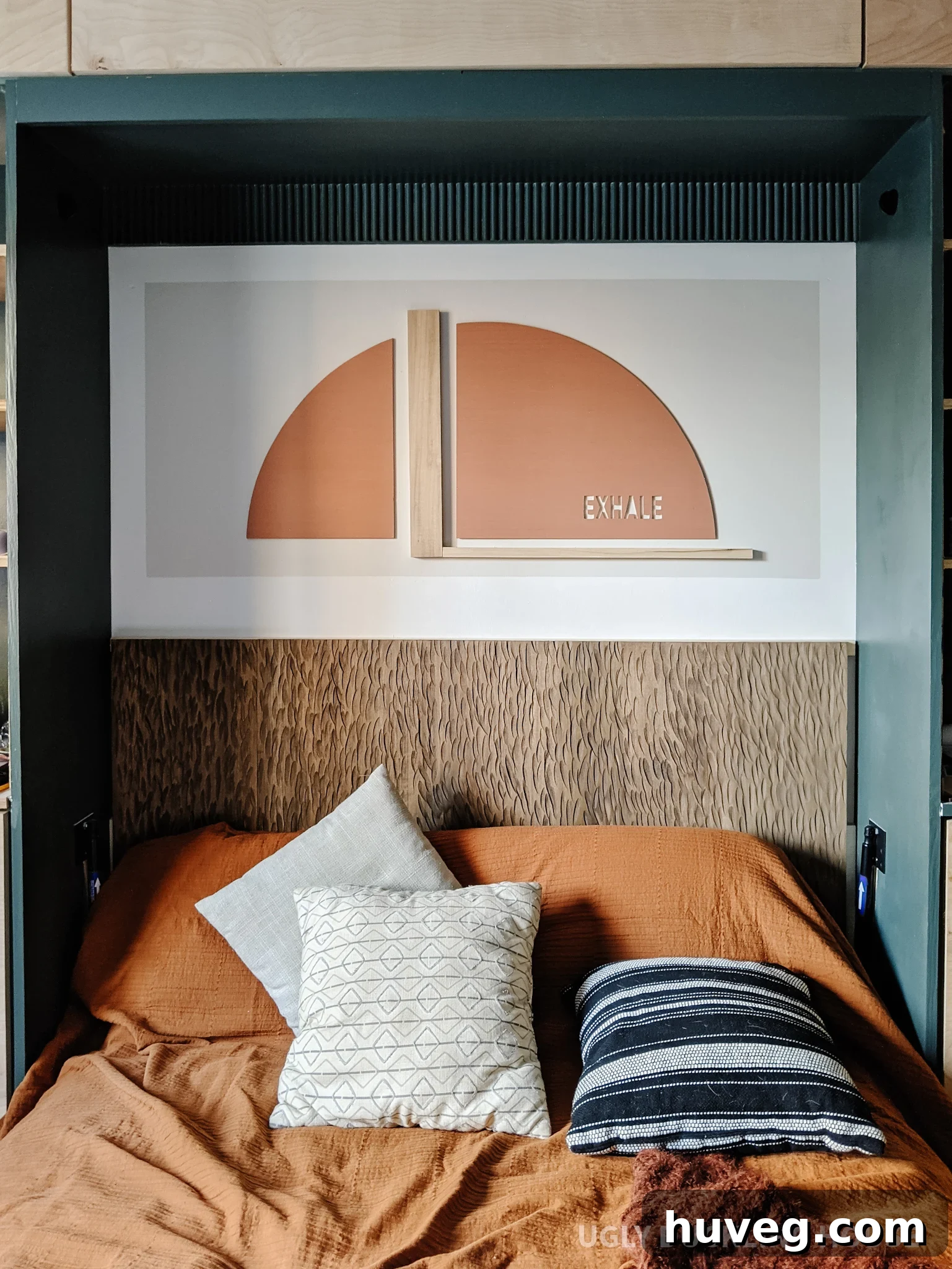
I am absolutely thrilled to finally unveil a monumental project that has been a labor of love and a source of immense personal satisfaction: the complete transformation of the interior “nook” area within our guest bedroom’s Murphy bed! This ambitious DIY endeavor has culminated in a space that truly embodies tranquility and personalized style, and I can’t wait to share every detail with you.

This post is proudly sponsored by Minwax, a brand whose products were instrumental in bringing this vision to life. All the words and opinions expressed herein are 100% my own and reflect my genuine experience.
To provide a little context, as some of you may recall, our sweet son, Ellis, made an early and unexpected arrival, gracing us with his presence a full six weeks ahead of schedule. While his arrival was a joyous occasion, it undeniably and completely derailed our meticulous plans for completing the guest room built-ins. Our carefully crafted timeline involved finishing the custom cabinets, finalizing the Murphy bed installation, and having the entire space beautifully painted and ready before the baby’s arrival. The ultimate goal was to create a cozy and welcoming sanctuary for K’s mother, who was planning to stay with us and offer invaluable support as we navigated the exciting yet daunting journey into parenthood. As life often dictates, things didn’t quite go according to plan.
Instead, both my son and I encountered a series of health challenges that necessitated his early delivery. Adding to the whirlwind, I underwent emergency surgery just last month (a story for another time), and honestly, we’re still very much in the process of trying to find some semblance of order and sanity amidst this wonderful, yet utterly chaotic, new chapter. It’s almost a surprise to me that I’m managing to articulate these thoughts for you now, as my brain often feels delightfully detached from reality these days!
You might be wondering, “Given all these significant life events, why on earth would you even consider tackling a project like this – or anything beyond the basic necessities of showering and sleeping?” My answer, though it might not resonate with everyone, is quite simple: I desperately need “me” time, and engaging in creative projects is when I feel most authentically myself. Paradoxically, I often find myself more stressed and fatigued when my to-do list hangs heavy and unfinished. Diving into the creation of this wall art and headboard provided me with a profound sense of accomplishment and a much-needed focal point that transcended the endless cycle of spit-ups and sleep deprivation. I am actively working on adopting the mantra of “let’s not put too much pressure on the DIY right now,” but the sheer joy and calm I feel when I gaze at this beautifully decorated space is immeasurable. It instantly brings a sense of order back into my world, providing a peaceful anchor in our new, bustling home.
Colors of Calm: Designing a Serene Guest Retreat
Let’s delve deeper into that concept for a moment: calm. Naturally, the guest bedroom is an ideal canvas for this theme, particularly under normal, pre-pandemic circumstances when we might anticipate actual guests gracing our home from time to time. But when you envision “calm,” what specific colors spring to mind? For many, including my initial thoughts, cooler hues like serene blues and sophisticated grays typically dominate. However, with the long-term plan of eventually painting the entire built-in area a rich, dark, and dramatic green, I felt an exciting opportunity arose to experiment with warmer, more earthy rust colors for the art above the headboard. This was a bold departure from my usual palette and certainly outside my typical comfort zone (and K, whose home office also resides in this room, offered his valuable input!). Looking at the installed result now, I am incredibly glad I took that leap; I absolutely adore it!
My creative journey began with a few pieces of scrap underlayment, which ultimately inspired the captivating wall art you now see. In fact, I initially conceived and created TWO distinct art ideas for the wall. Unsure which design I would ultimately prefer, and with an abundance of free scrap wood at my disposal, I decided to fully explore both options.
Option 1: Bold Geometric Abstraction

Minwax Colors used for Option 1:
- Deep Terra
- Sandstone
- Light Ginger
- Various custom mixes of these three harmonious colors
Option 2 (The Chosen Winner): Minimalist Arch with Text

For both of these artistic endeavors, I utilized Minwax’s highly versatile water-based solid color stain. This incredible product offers an expansive palette of over 200 different color options, which can be custom-mixed to perfection at any Lowe’s paint desk. Beyond the standard selections, you also have the flexibility to get colors custom-matched to your favorite paint swatches (I’m already planning to have one of my all-time favorites, Tricorn Black, mixed for an upcoming project, simply to have it readily available!).
Ultimately, my heart settled on option #2. I found its minimalist design beautifully complemented the rich texture of the carved headboard, creating a sophisticated and balanced aesthetic. While I still genuinely love the more intricate and busy pattern of option #1, I believe it would be better suited elsewhere. I’m already envisioning re-staining it and placing it in a new, perhaps unexpected, location within our home. Imagine how stunning a tone-on-tone canvas would appear with those intricate shapes adding depth and visual texture!

Both art pieces were created following remarkably similar steps and utilizing the same core products. Therefore, for the detailed DIY tutorial below, I will primarily focus on the “EXHALE” art piece. You should be able to easily connect the dots and adapt these instructions to create the other design, and I’ll include a few specific notes where I believe it’s particularly helpful. Be sure to look out for my next post, where I’ll provide a separate, comprehensive tutorial specifically for the DIY carved headboard!
DIY “Exhale” Stained Wood Wall Art: A Step-by-Step Guide
Essential Materials & Tools for Your Project
- Minwax solid color stain (in your chosen hues)
- Minwax pre-stain wood conditioner
- Minwax ultra flat polycrylic
- 1/4″ underlayment (or any similar thin plywood)
- 1×3″ poplar wood (for the vertical wood block element)
- 1″ square dowel (for the horizontal wood stripe element)
- Pencil (for marking and drawing)
- Miter saw (for precise cuts)
- Orbital sander (for smooth finishes)
- Sandpaper (various grits)
- Measuring tape (for accuracy)
- Safety gear: Safety glasses, hearing protection, breathing mask
- Paint (for the color block background)
- Painter’s tape (especially delicate surface tape)
- Paint roller
- Paint tray
- Scroll saw (or jigsaw/band saw for curves)
- Pin nailer (for discreet hanging)
- 3/4″ pin nails
- Rotary tool (for refining cuts)
Create a fun, personalized, and relaxing art installation that will enhance any space in your home!
-
Step 1: Define and Paint Your Color Block Background
To give this art project its own distinct presence and visual anchor within the Murphy bed nook, I opted against painting the entire wall the same color. Instead, I carefully taped off a specific section and painted it a subtle, neutral greige. You could consider this a form of sophisticated color blocking, where the surrounding white border acts much like the elegant mat inside a picture frame. I believe this thoughtful detail elevates the entire project, lending it a polished and intentional feel, though it’s an entirely optional step. Pro Tip: If you’ve recently painted the wall where your color block will be applied, it’s crucial to use painter’s tape specifically designed for delicate surfaces. This will prevent any damage to your fresh paint layer when you remove the tape.
-
Step 2: Precisely Draw and Cut Your Arch Shape
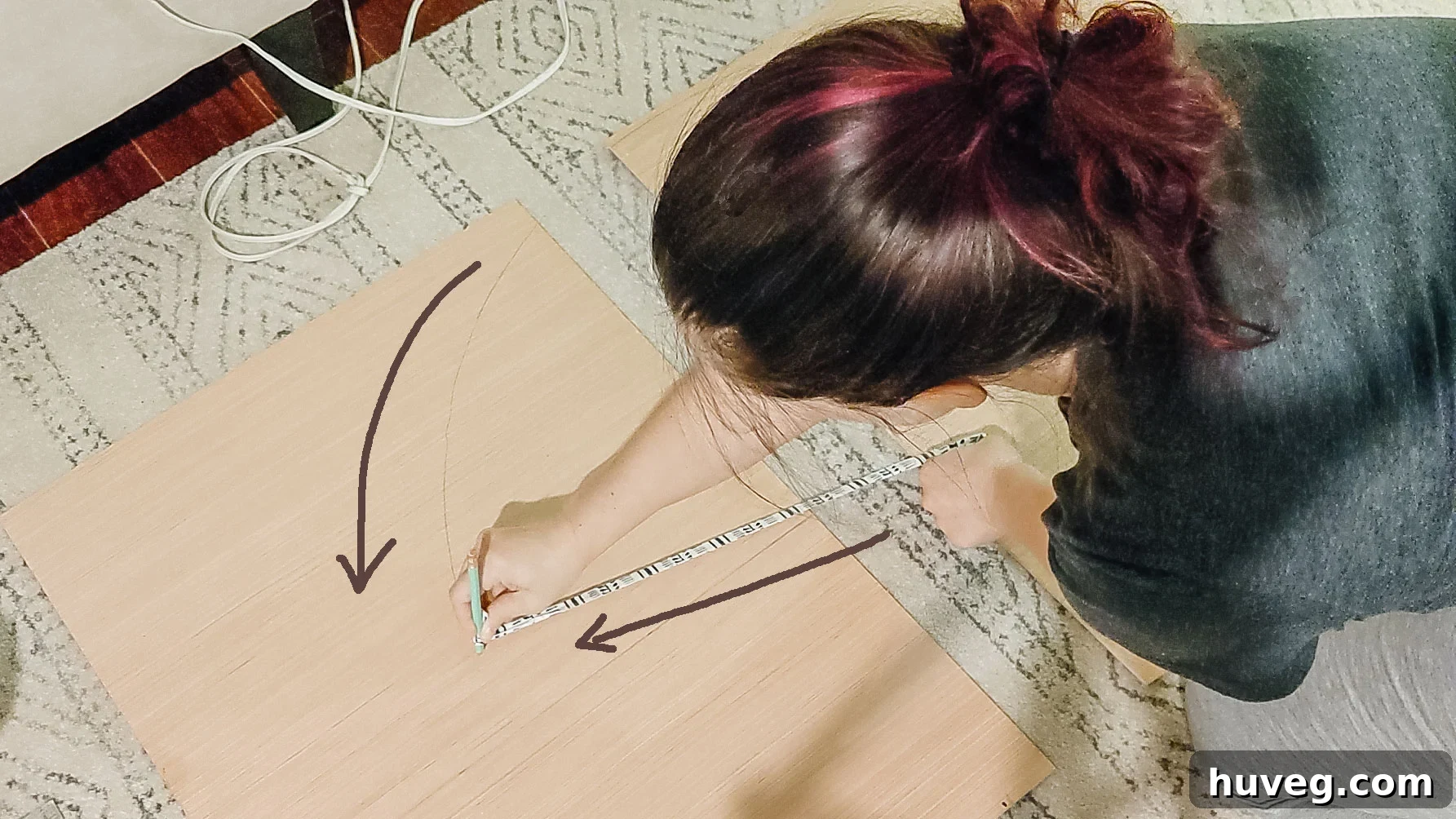
Initially, I found myself with two smaller pieces of scrap wood rather than one large, continuous piece. This limitation creatively inspired the idea of incorporating a negative space in the middle of the arch, turning a potential challenge into a unique design feature! To achieve a perfectly symmetrical and smooth arch, I employed a simple yet effective technique: I tied a string to the end of a pencil and held the other end of the string firmly at the intended “center” point where the arch would pivot. Keeping the string taut, I then carefully dragged the pencil across both pieces of wood, tracing out a beautiful, invisible circle. The plywood I used was thin enough to be cut quickly and efficiently with my scroll saw, but a jigsaw or even a band saw would also work wonderfully for this task. My initial cuts were somewhat uneven, which is perfectly normal in DIY! To refine the curvature and ensure a flawless arch shape, I used a benchtop sander. While other sanders can be used, I found the benchtop model offered the best control for precisely smoothing and perfecting the rounded edges. Achieving a smooth edge here is key for a professional, finished look.

-
Step 3: Integrate a Word by Cutting into the Arch
I had a strong desire to add a meaningful word to the larger side of the arch, and the “negative space” concept perfectly aligned with this vision. Instead of simply layering letters on top of the plywood, I chose to meticulously cut the letters “EXHALE” out of the wood itself. This technique creates a unique depth and shadow effect, making the word an intrinsic part of the art. Again, my cuts were a little rough around the edges – perhaps I’m a bit rusty these days with the scroll saw after a busy period! To achieve crisp, clean lines and smooth out any jagged corners, I carefully used a rotary tool. This fine-tuning step is essential for giving the cut-out word a polished, professional appearance that truly stands out.
-
Step 4: Meticulously Prep Surfaces for Staining
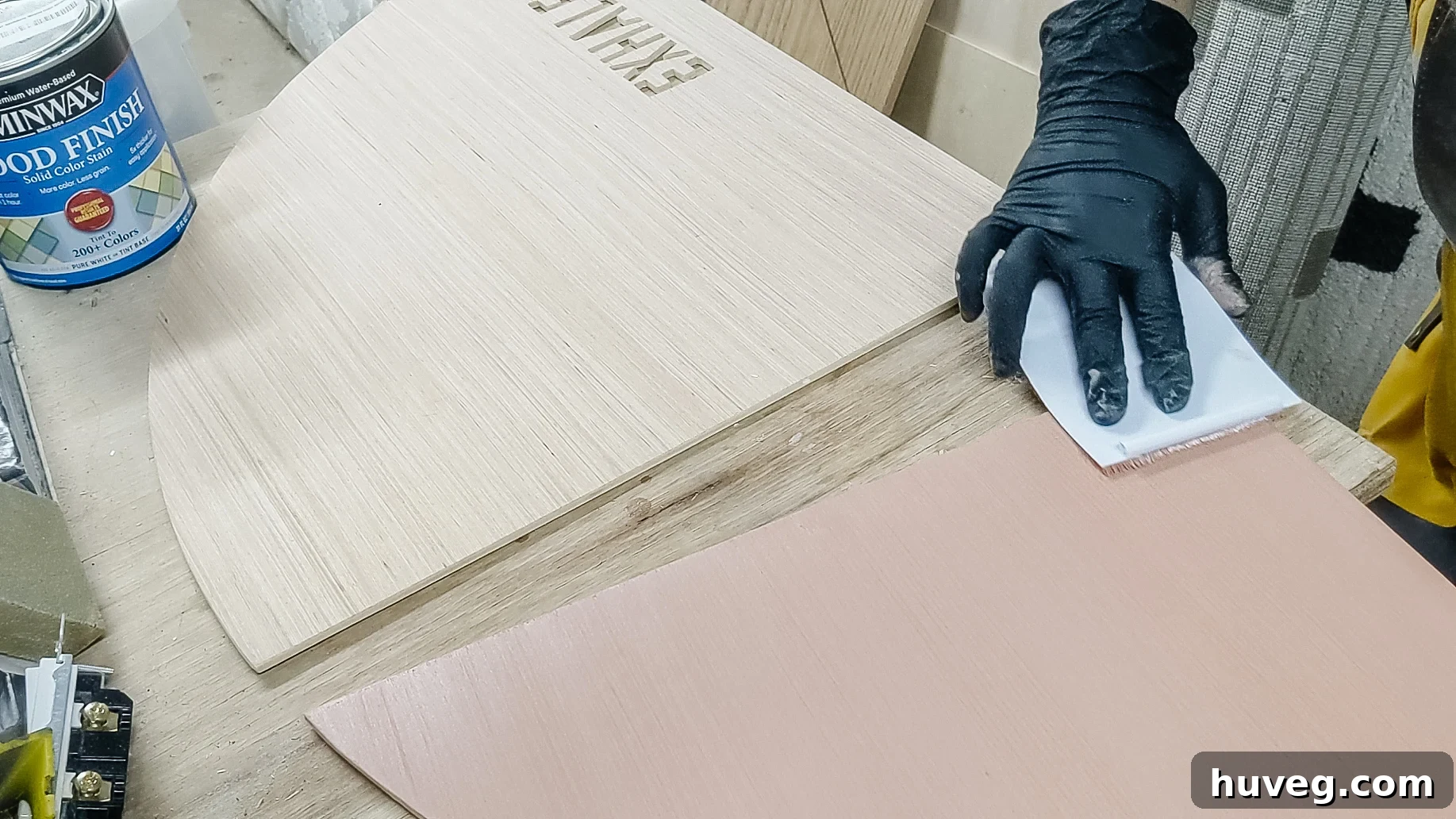
Proper surface preparation is absolutely critical for achieving a beautiful, even stain finish. I began by thoroughly sanding all my wood pieces to a fine #220 grit. This ensures a smooth base, allowing the stain to penetrate uniformly. Following the sanding, I applied a generous coat of pre-stain wood conditioner. In most cases, this conditioner acts as a crucial barrier, preventing the stain from appearing blotchy or uneven, especially on softer woods like plywood. It also has a tendency to slightly raise the wood grain. To counteract this and ensure the smoothest possible finish, I performed a very light sanding of the surface again after allowing the conditioner to dry for approximately 30 minutes. This two-step sanding process, combined with conditioning, guarantees optimal stain absorption and a professional result.
-
Step 5: Apply the Minwax Solid Color Stain
From my previous experience with Ellis’s nursery art project, I know firsthand that Minwax’s solid color stain applies incredibly fast. This particular formula is approximately five times thicker than traditional stains, almost resembling paint in its consistency, yet it masterfully allows just enough of the natural wood grain to subtly peek through. This unique characteristic underscores why the pre-stain wood conditioner (from Step 4) is so crucial for achieving the most even and consistent look possible. Using a synthetic pad, I swiftly swiped the stain onto the wood surface and then immediately wiped any excess back off. The entire application process takes mere minutes – an absolute lifesaver when you’re squeezing in finishing work between precious baby naps! While I admired the “Deep Terra” color from my Option #1 experiment, I decided to blend all three of my chosen colors to create a slightly lighter, custom hue for the main arch piece. This ability to easily mix and customize colors is truly one of my favorite features of this Minwax stain; the colors blend together seamlessly, allowing for endless creative possibilities.
-
Step 6: Integrate Custom Wood Blocks for Dimension
After initially mounting the arch pieces to the wall, I felt that something was still missing; the installation just didn’t quite feel complete. To add extra visual interest and crucial dimension, I decided to incorporate additional wood elements. I cut a 1×3 inch poplar piece to 19 inches in length for a vertical accent, and a 1-inch square dowel to 24 inches for a horizontal stripe. Both pieces were crafted from poplar wood, known for its smooth grain and excellent staining properties. To maintain a soft, understated contrast with the warmer tones of the arch, I chose Minwax’s “Pickled Oak” as my stain color for these blocks, aiming for a beautifully pale and subtle finish. These simple additions dramatically enhanced the overall composition, giving the art a more layered and sophisticated presence.
-
Step 7: Protect Your Artwork and Securely Hang All Components
To ensure the longevity and durability of my stained wood art, I applied a protective coat of Minwax ultra flat polycrylic over both the arch pieces and the accent wood blocks. This step is vital for safeguarding the beautiful stain finish from wear and tear, while the “ultra flat” sheen preserves the natural, matte look of the wood, avoiding any unwanted shine. Once cured, I meticulously mounted all the art components to the wall. For hanging, I utilized a pin nailer, which creates incredibly small, almost invisible holes. This method is not only secure but also offers a fantastic advantage: patching these tiny holes will be an absolute breeze whenever I decide it’s time to refresh the decor or experiment with a new artistic arrangement. The final result is a cohesive, protected, and beautifully integrated art installation that truly defines the Murphy bed nook.
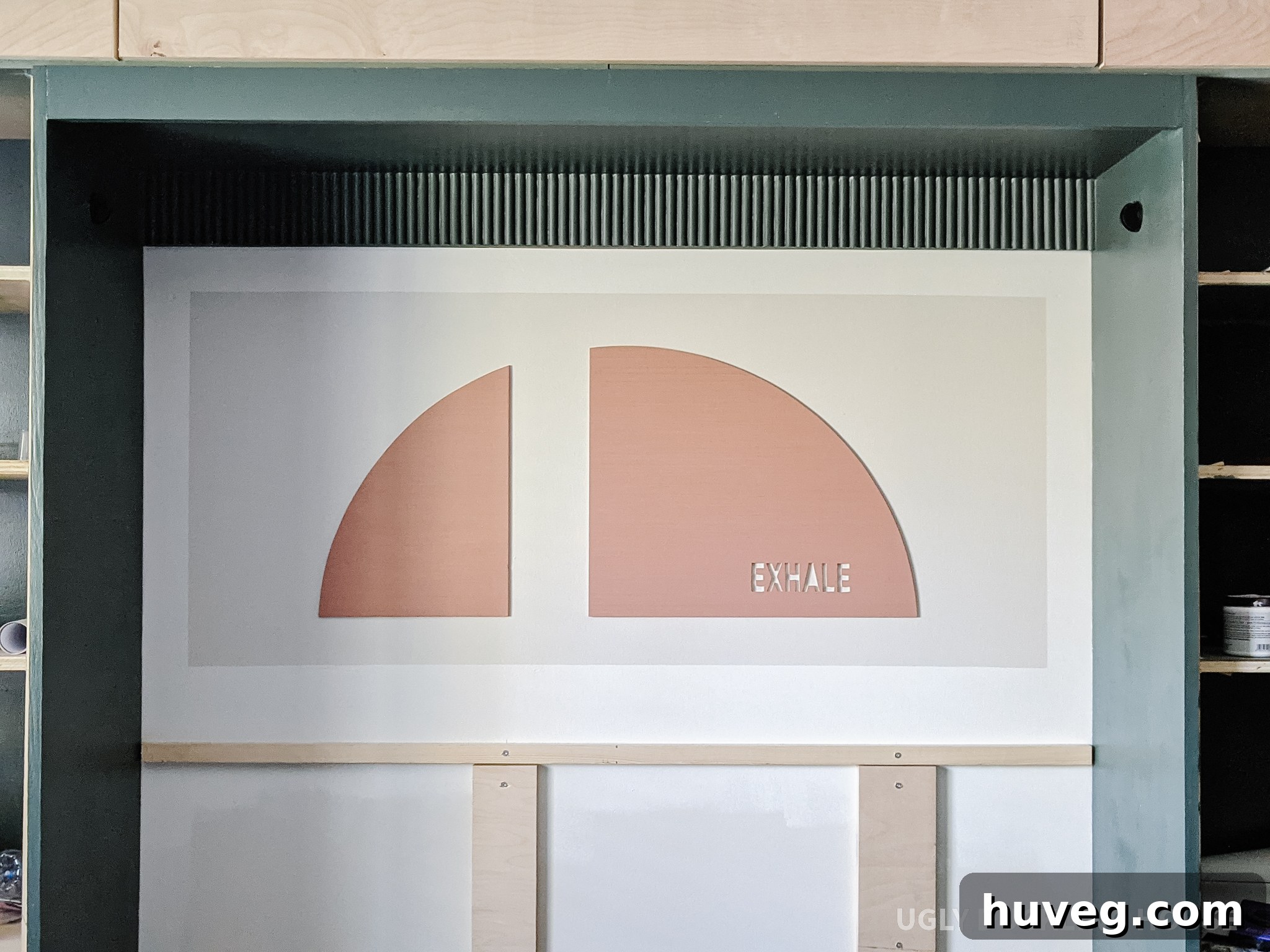
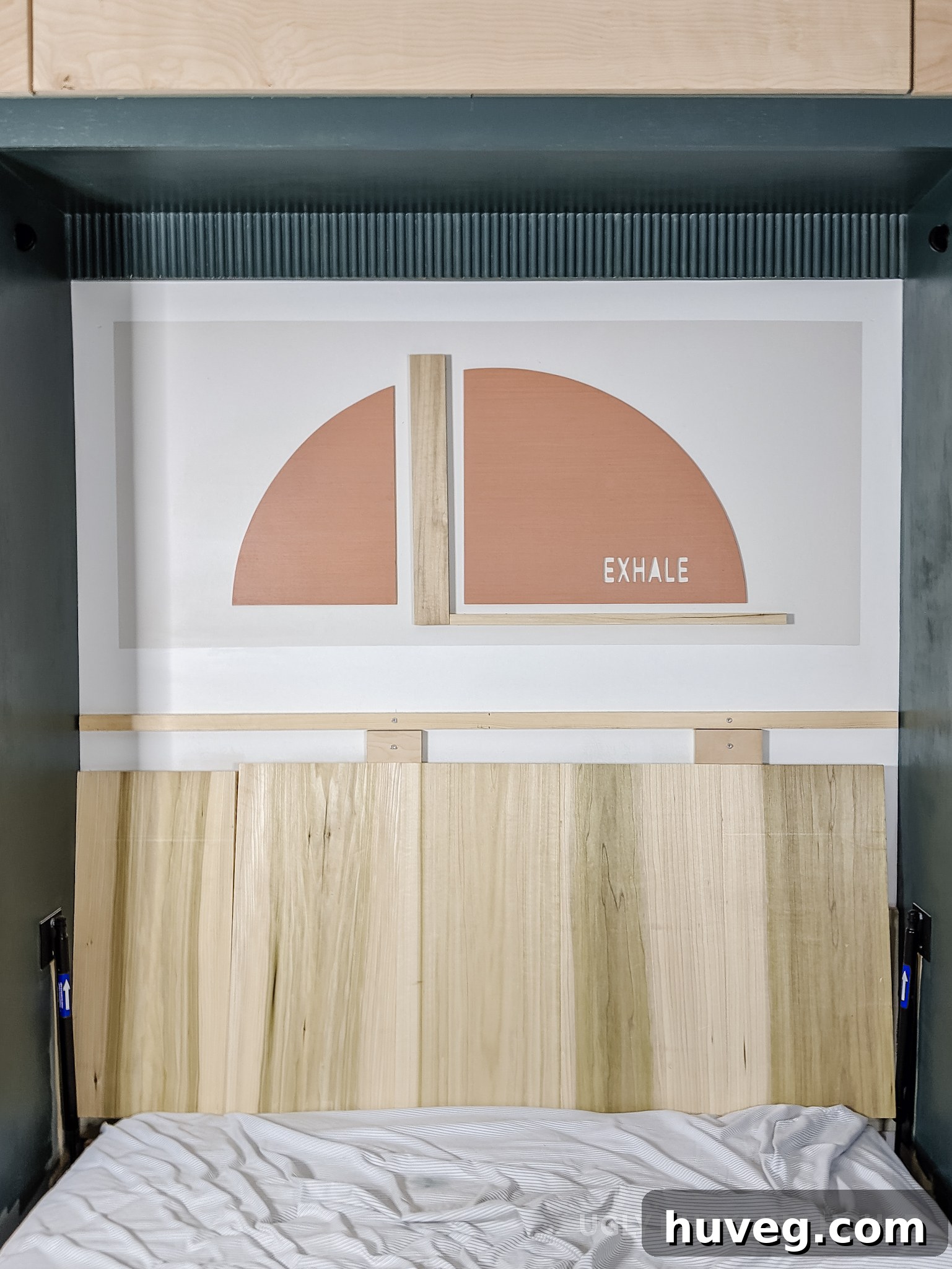
And just like that, the project is complete! For those interested in creating Option #1 instead, you would essentially follow the same foundational steps outlined above. However, I’d offer one crucial tip for achieving consistency across all the smaller arch pieces: when sanding, hold them together as one thick unit on the benchtop sander. This technique allows you to precisely control which areas are sanded down, ensuring that all pieces perfectly match in shape and curvature, eliminating any inconsistencies. It’s a simple trick that makes a huge difference in achieving a cohesive look!

A very special thank you to Minwax for their generous sponsorship of this project. Their high-quality stains and finishes were absolutely essential in bringing my vision to life. Don’t forget to check back for the upcoming post, where I’ll dive into the detailed DIY tutorial for the stunning carved headboard!
Love this idea? Don’t forget to pin it for future inspiration!
