Pinterest’s Glorious Mayhem

Welcome to another Friday, a day where a dash of lightheartedness is always a good idea. As I navigate the creative chaos of my kitchen today, I’m thrilled to share some rather amusing and occasionally perplexing observations I’ve gathered from my recent adventures on Pinterest. For DIY enthusiasts, home decorators, and gardeners alike, Pinterest often stands as an indispensable visual search engine, a digital canvas brimming with inspiration and practical how-to guides. It’s where countless ideas take root, offering a seemingly endless stream of projects, tips, and aesthetic delights.
While this post celebrates the unique quirks and unexpected moments encountered on the platform, I must clarify that it is entirely independent. This content is neither sponsored by, affiliated with, nor promoted by Pinterest in any capacity. It’s simply a collection of personal experiences and musings from a regular user, offered for your entertainment and perhaps, a shared chuckle.
For me, Pinterest often serves as a superior alternative to traditional search engines when a new project idea sparks. Unlike Google, which might offer a broad spectrum of images for a query like “Adirondack chairs” – including picturesque beach scenes that offer little practical value – Pinterest excels at filtering results to present concrete projects. It curates content specifically focused on “how to build an Adirondack chair” or “paint an Adirondack chair,” delivering actionable inspiration. This makes it an invaluable resource for anyone looking to move beyond mere aesthetic appreciation to hands-on creation. Its visual-first approach significantly streamlines the discovery process for DIYers, saving precious time by cutting through irrelevant noise.
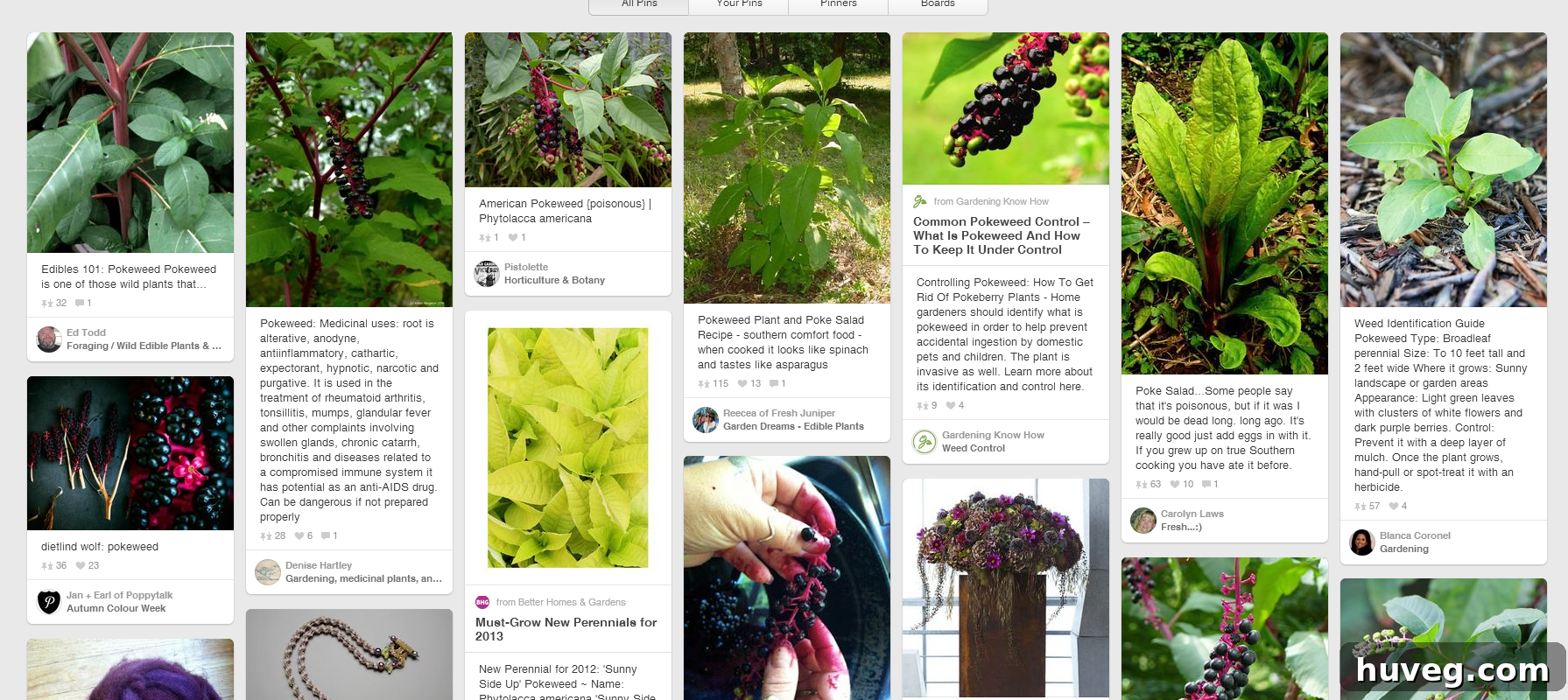
Just last week, this powerful visual search tool led me down an unexpected rabbit hole. My mission was to unearth effective strategies for eradicating pokeweed, a resilient and notoriously stubborn plant that has aggressively claimed dominion over my backyard. This botanical takeover commenced after the removal of several large pine trees, which had previously smothered the pokeweed with their dense canopy and constant blanket of pine straw. It’s a classic case of solving one problem only to unwittingly create another, illustrating the delicate and often unpredictable balance of natural ecosystems within our immediate surroundings. The removal of the pines, while addressing certain issues, inadvertently provided the perfect conditions for this invasive species to flourish, reminding me that gardening is a perpetual dance of cause and effect.
Those who followed my earlier gardening sagas might recall the epic battle I waged against ivy, a similarly tenacious invasive plant that once threatened to engulf my entire yard. The memory of extracting gargantuan ivy roots, often met with a mix of awe and exasperation at their sheer size and subterranean reach, remains vivid. Pokeweed presents a comparable challenge. Fortunately, for now, many of its roots can be dislodged with a few determined tugs, often accompanied by grunts of effort. The caveat, however, is its alarming rate of regrowth. It’s a continuous, low-intensity war, fought in small skirmishes across the yard, often timed strategically with my dog Charlie’s outdoor excursions, turning mundane yard work into a peculiar routine.
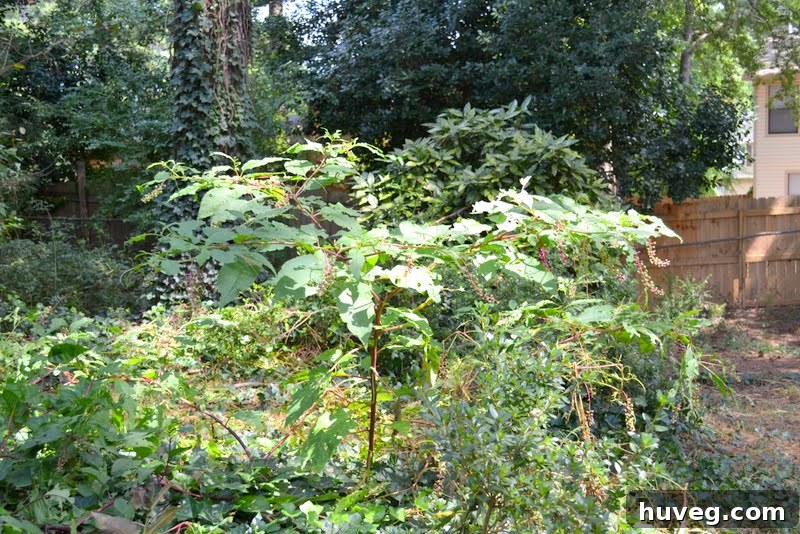
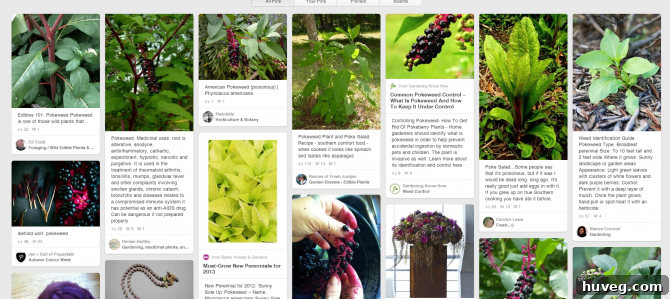
Despite my clear objective to eliminate this pervasive plant, the initial search results on Pinterest took a rather peculiar turn. A significant portion of the content revolved around how to *cook* pokeweed, or alternatively, how to utilize its berries to create natural dyes. This was a surprising revelation, considering pokeweed’s well-documented toxicity. For the uninitiated, nearly all parts of the pokeweed plant – its leaves, roots, and especially its vibrant berries – contain toxic compounds that can be harmful, even lethal, if ingested without proper preparation. Yet, in certain Southern culinary traditions, young pokeweed shoots are carefully processed through multiple boiling and draining cycles to reduce their toxicity, transforming them into a dish known as “poke sallet.” The thought of deliberately preparing such a plant for consumption while simultaneously trying to eradicate it from my garden introduced a layer of bewildering irony to my research.
Intrigued by the unexpected culinary angle but still firmly focused on my primary goal, I refined my search terms, specifically emphasizing “how to get rid of pokeweed” rather than exploring its potential as my next adventurous meal. My hope was to uncover some ingenious, perhaps little-known, method for preventing its return and effectively removing this persistent nuisance. While no groundbreaking revelations emerged beyond the straightforward, labor-intensive “yank-it-out-of-the-ground” technique I was already employing, I did stumble upon a truly side-splitting advertisement placement that perfectly encapsulated the quirky nature of online algorithms.
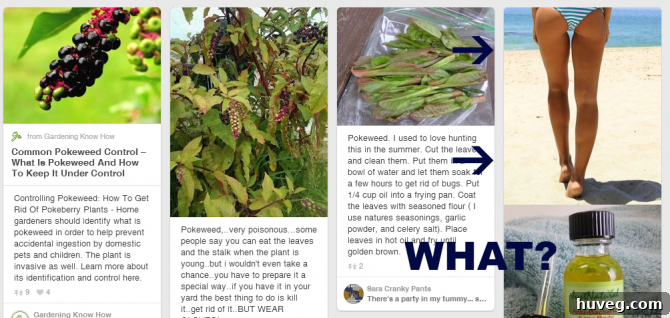
Behold the digital juxtaposition: on the left, an article detailing methods to combat pokeweed; on the right, an ad promising relief from stubborn *butt acne*. While it’s highly probable that the advertiser simply targeted a broad keyword phrase like “how to get rid of,” my inner satirist prefers a more imaginative interpretation. I envision this ad as a cosmic whisper, a gentle yet firm reminder from the digital ether: “So, you’re grappling with a pokeweed infestation in your yard? Tough break, but let’s put things into perspective. You could also be dealing with butt acne. Or, even worse, butt acne without the redeeming distraction of a garden to tend to. Now, cease your lamentations about weeding, and rise from your presumably acne-free (and thankfully, not too lazy) derrière.” It’s these unexpected, often nonsensical algorithmic pairings that add a dash of humor to the otherwise functional experience of online searching, reminding us that even the most advanced AI can have its hilariously human moments.
Beyond my personal project searches, I also make it a point to periodically check what content from my blog is being pinned on Pinterest. For fellow bloggers, this is an invaluable practice for understanding content popularity, traffic drivers, and audience engagement. The process is remarkably simple: just type “www.pinterest.com/source/YOURSITEURL” into your browser’s address bar (replacing “YOURSITEURL” with your actual domain), and Pinterest will display the most recent pins originating from your site. It’s always gratifying to see older, evergreen posts continue to resonate and get shared, but a particular joy comes from observing new content gain traction and find its way onto users’ boards. This constant feedback loop helps in refining content strategy and identifying what truly captivates the audience.
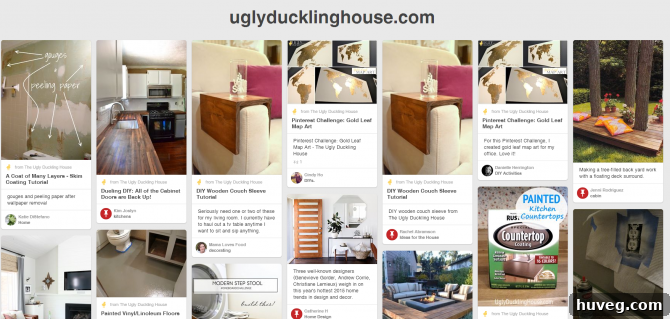
One would naturally assume that when a user pins content directly from your website, the integrity of that content – particularly the accompanying image – would remain perfectly intact. Logical, right? Well, prepare to have that assumption delightfully shattered. Online platforms, despite their sophisticated architecture, are not immune to the occasional, truly baffling glitch or user error that defies all rational explanation. And Pinterest, in its magnificent, sometimes bewildering glory, certainly delivers on this front. My recent foray into tracking my blog’s pins unearthed a curious anomaly that left me scratching my head in utter disbelief and fascination.

Honestly, the mechanics behind this particular incident remain a complete mystery to me. Through some inexplicable digital alchemy, a Pinterest user managed to pin an image that, to my absolute certainty, has never resided on my website in the form captured in the screenshot above. The image depicts a beautifully crafted DIY mirror, a project undeniably belonging to another talented creator. Let me provide some context: in a previous post, part of the widely celebrated #oneboardchallenge, I *did* feature several inspiring projects from fellow DIYers. However, I deliberately linked directly to their individual project pages and included only a single, curated roundup image showcasing all participants, not individual full-sized photos of each project. If you were to click the link to that challenge post, you would immediately see the distinction; the mirror image simply isn’t there as a standalone photo from my domain.
This peculiar snafu deepens further. The pin in question, despite featuring an image entirely foreign to its supposed source, was inexplicably linked to one of my posts about tiling my kitchen backsplash. A post that, to be clear, contained absolutely no links or visual references that could have possibly led to this specific mirror image. It’s not even a mere thumbnail; it’s a full-blown, high-resolution featured photo. The layers of disconnect—wrong image, wrong original post, wrong context—are truly intriguing. This incident has fundamentally altered my perspective. Moving forward, whenever I encounter a “borrowed” image on Pinterest that seems out of place or incongruous with its attributed source, I’ll invariably wonder. For all I know, someone genuinely attempting to properly link to an image’s origin could, through no fault of their own, be inadvertently sharing another person’s content under a completely erroneous attribution. It’s a stark reminder of the fragile nature of digital content attribution and the potential for widespread misinformation, even on platforms designed for visual sharing. The digital landscape, it seems, is full of fascinating, if sometimes frustrating, anomalies.
Despite these occasional head-scratching moments and algorithmic eccentricities, my affection for Pinterest remains unwavering. It’s a goldmine of creativity, a boundless source of inspiration, and an invaluable tool for countless projects. Yet, sometimes, I can’t help but playfully suggest that perhaps Pinterest should ease up on whatever digital “sauce” it’s been imbibing. A little less creative chaos in its algorithms might make for a slightly more predictable, though perhaps less amusing, user experience. Here’s to hoping for fewer butt acne ads next to my pokeweed solutions!