Handcrafted Concrete Ring Luminary

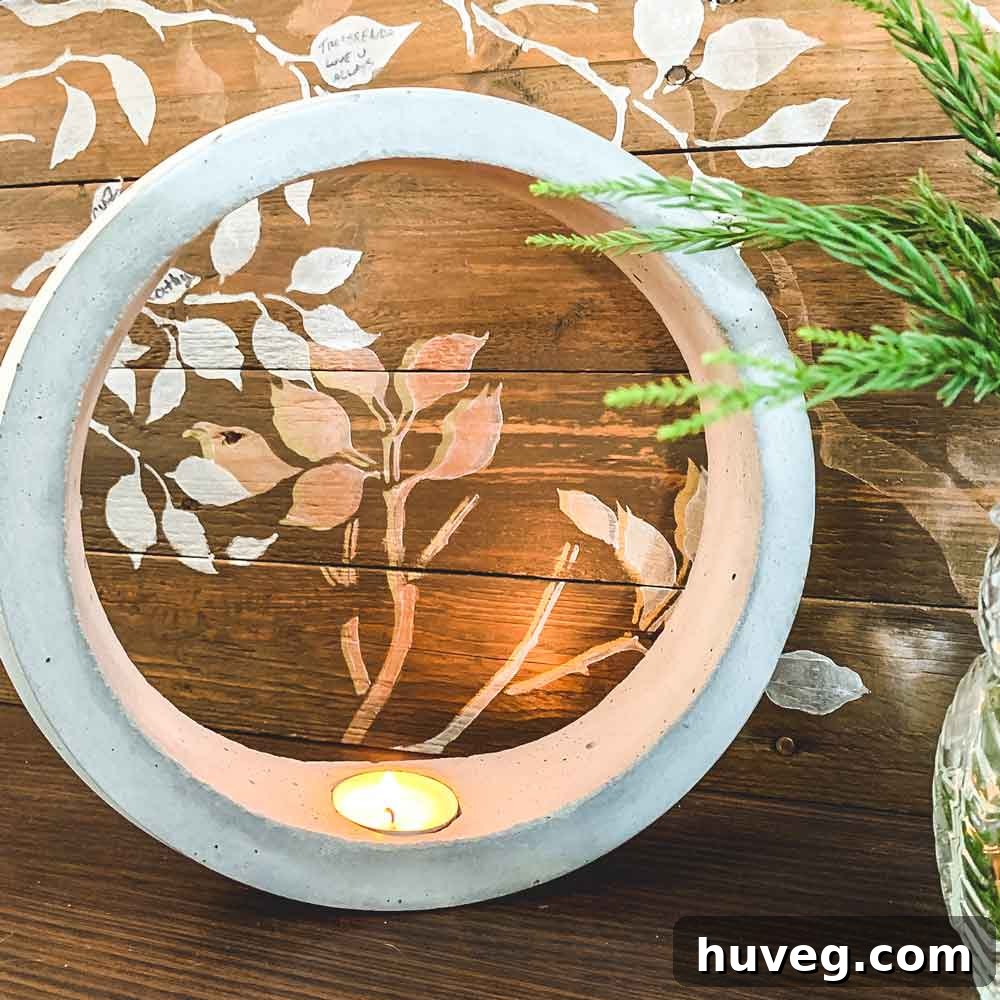
Transform your living space with a unique, handmade touch! Discover how to craft a striking, ring-shaped DIY cement candleholder that blends modern aesthetics with rustic charm. This comprehensive guide will walk you through every step, from selecting your materials to the final finishing touches, ensuring you create a beautiful and durable piece for your home.
Hello, creative community! As many of you know, here at Ugly Duckling House, I’ve dedicated the past few years to curating and introducing you to a selection of talented new bloggers whose work I genuinely believe you’ll adore. Today, I’m thrilled to bring you another fantastic addition to our contributing team, and I sincerely hope you’ll extend a warm welcome her way! I first had the pleasure of meeting Ellen last year at a creative conference, and serendipitously, we discovered we live quite close to each other. After admiring her incredibly clever and stylish concrete projects on Instagram – a medium I’ve been eager to explore further myself, as you might recall from my concrete coaster experiments – I immediately knew she’d be a perfect fit for sharing her expertise here on the blog. I offered her a spot to share some of her innovative DIYs, confident that her unique perspective would resonate with all of you. For those curious about our contributing team, you can find more details here. The core idea behind this initiative is to provide a platform for emerging bloggers to gain exposure and share their passion, much like how I began my own blogging journey back in the days when guest posting and blog swapping were thriving trends. Ellen will be gracing our pages periodically, sharing her distinct lessons on working with concrete, cement, and developing imaginative planter projects. I’m incredibly excited to see the amazing creations she’ll bring to life next!
Hello everyone! I’m Ellen, the creative mind behind Artsy Pretty Plants. I’m absolutely delighted to make my debut here at Ugly Duckling House, and what better way to kick things off than by sharing this exciting DIY cement candleholder project, crafted in a chic, modern ring shape! This is just the beginning of many projects I look forward to sharing with you all.
Before we dive headfirst into the detailed tutorial for this beautiful piece of home decor, I thought it would be beneficial to provide a little background. Many common questions arise when embarking on concrete and cement DIY projects, especially for beginners. So, I’ll start by answering some of those fundamental questions and sharing a bit about my journey into this fascinating crafting medium, ensuring you feel confident and prepared for what’s ahead!
My husband and I recently embarked on a new chapter, moving into a new home this year. Having relocated numerous times throughout my adult life – a staggering 19 times, if you can believe it! – I developed a habit of keeping decorative items to a minimum. However, our new, larger space felt a bit sparse and lacked the personal touch that makes a house a home. This realization spurred my desire to create unique decorative elements. That’s how I conceived this homemade cement candleholder, which I believe adds a wonderfully dramatic and contemporary effect to any room.
Interestingly, this ring-shaped cement candleholder marks my very first foray into creating interior decor using cement. While I’ve explored many outdoor and functional concrete crafts, this project opened up a whole new realm of possibilities for stylish indoor accents. If you’re interested in exploring some of my other cement projects, I invite you to check out my popular Modern Concrete Planters, or take a peek at my truly unique and whimsical Cement Balloon Planter project. You’ll quickly discover the versatility and endless creative potential of working with this material.
Essential Basics for DIY Concrete & Cement Projects
If you’re new to the world of concrete or cement crafting, you might be surprised by how accessible and enjoyable it is. Many people assume it’s a difficult or messy process, but with a little guidance, it’s actually much easier than you’d imagine, opening up a fantastic avenue for creating durable and stylish DIY pieces for your home and garden.
Understanding the Difference: Concrete vs. Cement
This is one of the most common questions I hear, and it’s an important distinction for any aspiring concrete crafter! Simply put, cement acts as the binder – it’s a fine powder, typically composed of materials like clay, gypsum, shale, and silica. When mixed with water, it forms a paste that hardens and binds other materials together. Concrete, on the other hand, is a composite material made up of cement, water, and various aggregates such as sand, stone, gravel, or even peat moss. Essentially, concrete *contains* cement, but cement can exist independently. Think of cement as the glue, and concrete as the final, strong mixture of glue and filler materials. So, while you can’t have concrete without cement, you *can* have cement without concrete.
For most crafting purposes, especially when aiming for a refined and smooth finish, I generally prefer working with pure cement or a rapid-setting cement-based product. This preference is mainly because cement tends to create a much smoother surface texture compared to concrete, which, due to its larger aggregates, often results in a rougher, more porous finish. For intricate designs and elegant home decor items like this DIY cement candleholder, the smooth surface of cement is usually ideal.
Common Concrete & Cement Supplies to Keep On Hand
While the specific materials for this modern ring-shaped candleholder project are detailed below, I also wanted to provide you with a foundational list of basic supplies that you’ll find yourself reaching for in almost any concrete or cement crafting endeavor. These are staple items that I always ensure I have readily available in my workshop, allowing me to spontaneously start a new project or quickly restock my essentials. Having these on hand will streamline your creative process and make DIY cement projects much more enjoyable.
- A bag of rapid-setting cement or a fine concrete mix (depending on your desired finish)
- Disposable cups for measuring and mixing smaller quantities
- Disposable bowls or containers for mixing larger batches
- Plastic grocery bags or sturdy garbage bags for easy cleanup and waste disposal
- Durable nitrile gloves or heavy-duty rubber gloves to protect your hands from corrosive materials
- 220 grit sanding block for smoothing edges and refining surfaces
- Weights of some type – sandbags, rocks, or heavy objects for securing molds
- Safety glasses (sealed is preferred) to protect your eyes from dust and splashes
I genuinely hope you find immense joy and satisfaction in creating this project. It’s a wonderful way to personalize your living space with a handmade item that’s both functional and stylish. Please don’t hesitate to reach out in the comments section below if you have any questions or run into any challenges along the way. I’m here to help you succeed!
Craft Your Own Modern Ring-Shaped DIY Cement Candleholder!
Difficulty Level — Easy: This project is designed to be approachable for beginners while still offering a rewarding creative experience.
Comprehensive Materials & Tools for Your DIY Cement Candleholder
Gathering all your supplies before you begin is crucial for a smooth and enjoyable crafting experience. Here’s a detailed list of everything you’ll need for this modern ring-shaped cement candleholder:
- Two round silicone cake molds – specifically, look for a 3-pack that typically includes the ideal 7-inch and 9-inch sizes, perfect for creating the inner and outer rings of our candleholder.
- Cement-All, Rapid Set brand: This is my preferred choice for its quick-setting properties and smooth finish, essential for indoor decor.
- Charcoal pigment: To achieve that striking, deep black or rich grey hue for a contemporary look.
- Disposable cup: For precise measurement of cement and water.
- Disposable mixing bowl: Choose a sturdy one for mixing your cement and pigment.
- Plastic grocery bag: Excellent for covering your workspace and easy disposal of excess cement.
- Durable nitrile gloves: Absolutely essential for protecting your hands from the cement and pigment.
- Safety Glasses (sealed is better): To shield your eyes from any dust or splashes during mixing and pouring.
- Multi-purpose sand: Used as a weight inside the inner mold.
- 220 grit sanding block: For achieving perfectly smooth edges and a refined finish.
- Flat-head pin: A simple tool for aligning your molds.
- Pen or marker: For making precise measurements and marks on your molds.
- T-square or speed square: To ensure accurate center marking and straight lines.
- Two tealight candles: One to mold around, and one for the finished product.
- Packing tape: For preparing the tealight holder and securing molds.
- Hot glue gun (high temp setting preferred) and hot glue sticks: For securely attaching the tealight holder to the mold.
- A 2-inch by 2-inch piece of screen or wire mesh: This acts as a crucial reinforcement for the candleholder base.
- Scissors: For cutting the mesh and tape.
- Needle-nose pliers: Handy for removing the taped candle holder from the cured cement.
- Rigid board (plywood, cutting board, etc.): Any flat, sturdy board used for vibrating the mold to release air bubbles.
- Weights approximately 4 to 6 inches wide (e.g., thick tiles): For holding down the inner mold.
- A heavy, flat object (e.g., a brick, or the same thick tiles): Essential for flattening the bottom of the candleholder to prevent rolling and ensure stability.
Step 1 | Preparing Your Silicone Molds for Cement Pouring
The secret to a beautifully smooth and slightly shiny finish on your cement candleholder lies in the quality of your silicone molds. To ensure the best possible outcome, start by thoroughly rinsing both silicone molds under running water. This crucial step helps remove any lingering dust, tiny debris, or manufacturing residues that could potentially transfer to your finished cement piece, causing imperfections. After rinsing, simply shake the molds gently to dislodge excess water. It’s important to resist the urge to dry them with a towel, as even lint-free towels can leave behind microscopic fibers that would compromise the smooth surface. Instead, allow them to air dry completely, ensuring a pristine surface for your cement.
Step 2 | Taping the Tealight Candle Holder
For this step, carefully remove the actual candle from its metal tealight holder. We’ll only be working with the empty metal holder itself. Take your packing tape and meticulously wrap it around the opening and the sides of the tealight holder. The goal here is to create a smooth, non-stick barrier that will allow the cement to cure cleanly around it, and also make it easier to remove later. However, it’s vital to leave the very bottom of the tealight holder untaped. This untaped section will be where we apply hot glue to secure it to the inner mold. As you apply the tape, exercise caution to avoid deforming or “smushing” the holder; maintaining its perfect circular shape is essential to ensure your tealight candle fits snugly once the project is complete. Once taped, trim off any excess tape for a neat finish.
Step 3 | Precisely Marking the Center Points of Your Molds
Before you begin measuring, now is an excellent time to pre-heat your hot glue gun to its high setting. This will ensure it’s at optimal temperature and ready to provide strong adhesion for the next step. To find the exact center of each silicone mold, begin by measuring three equidistant points along the edge of the circle. For instance, if your mold measures 6 inches across, you would mark the 3-inch point. Repeat this process two more times, ensuring each mark is roughly opposite the others, effectively creating three distinct reference points around the circumference of the mold.
Next, grab your T-square or speed square. From each of the three midpoints you just marked, draw a straight line towards the center of the mold. Where these lines intersect will be the precise center of your mold. Repeat this marking process for the second silicone mold as well. This accurate centering is critical for ensuring your candleholder is perfectly symmetrical and visually balanced.
Step 4 | Securely Gluing the Tealight Holder into the Mold
On the bottom interior of the inner silicone mold, use your pen or marker to draw a line approximately ¼ inch up from the base. This mark is where the bottom of your taped tealight holder will sit. This ¼-inch buffer of cement beneath the candle holder is incredibly important; it provides structural integrity and significantly reduces the risk of the cement cracking around the candle opening as it cures and when in use. Now, with your hot glue gun sufficiently heated to its high setting, apply a generous amount of hot glue to the previously untaped bottom end of the tealight candleholder. Carefully align this glued end with the ¼-inch mark you just made on the inner mold. Hot glue, by its nature, can sometimes struggle to adhere firmly to the slick surface of silicone. If you find it challenging to get the holder to stick, a helpful trick is to use a thumbtack and push it through the candleholder from the outside of the mold, pinning it gently into place until the glue sets. Continue by adding more glue around the outer edge of the taped candleholder, working your way inward to create a strong, sealed bond. Press the candleholder firmly against the mark and hold it in place for a few moments until the glue cools and hardens, creating a secure attachment.
Step 5 | Aligning and Combining the Silicone Molds
Return to your two silicone molds. Take your flat-head pin and carefully push it through the exact center point you marked on the bottom of the larger (outer) mold. Ensure the pin goes through cleanly and is positioned straight. Now, with extreme care, pick up the second, smaller mold – being particularly mindful not to bend or distort the area where the tealight holder is glued. Align the center mark on the bottom of this inner mold with the exposed end of the pin from the outer mold, and gently push the pin through its center as well. This effectively nests the smaller mold inside the larger one, with the pin acting as a guide to maintain perfect concentric alignment. This step is crucial for achieving the desired ring shape with an even thickness.
Step 6 | Reinforcing the Tealight Holder’s Base for Durability
During my initial attempts at this project, I experimented with a smaller inner mold, which resulted in a thicker ring than I envisioned. This time, I opted for a slightly larger inner mold to achieve the desired thinner, more elegant ring sides. However, this adjustment meant that the bottom of the candle opening would have a very thin layer of cement, raising concerns about its long-term durability and the possibility of the candle eventually falling through. To preemptively address this potential weakness, we’ll add a simple yet effective reinforcement. Take your piece of screen or wire mesh material and cut it to approximately 2 inches wide and 2 ½ inches high. Carefully place this mesh piece at the bottom of the tealight holder, pressing it against the side of the inner mold. It’s important to position it so it doesn’t extend too far down and touch the bottom of the outer mold, as we don’t want the mesh visible or poking out of the finished candle ring.
Once positioned correctly, gently bend the top edge of the screen or mesh over the rim of the tealight holder and secure it in place with a small piece of packing tape. This reinforcement provides additional strength to the thin cement layer at the base of the candle opening, ensuring your DIY cement candleholder is robust and long-lasting.
Step 8 | Preparing the Mold for the Cement Pour
Achieving a smooth, clean finish on your candleholder requires careful mold preparation. First, take packing tape and meticulously seal the gap between the two nested molds. This creates a barrier, preventing any sand from seeping into this space during the next step, which could otherwise add unwanted texture to the exterior of your cement candleholder. A clean, smooth surface is key for a modern aesthetic.
Next, it’s time to secure the inner mold firmly in place to prevent any shifting during the cement pouring process. Begin by carefully pouring multi-purpose sand into the inner mold until it’s approximately two-thirds full. Then, add water to the sand, allowing it to saturate completely. You can fill the inner mold almost to the top with this wet sand mixture, adding more sand if necessary to achieve the desired level. The combination of sand and water creates a dense, heavy core that will hold the inner mold steady.
Finally, place additional weights (like your thick tiles) on top of the sand-filled inner mold. The primary purpose of this weighted setup is to prevent the wet cement from seeping underneath the inner mold during pouring. The combined pressure from the sand, water, and added weights will firmly anchor the inner mold, ensuring a clean, well-defined bottom edge for your candleholder.
Step 9 | Mixing and Pouring the Pigmented Cement for Your DIY Candleholder
* Before you begin mixing, ensure your heavy, flat weight is readily accessible. This will be used immediately after pouring to create a perfectly flat bottom for your candleholder, preventing it from rolling and ensuring stability.
* Important Warning: Charcoal pigment can be quite messy and easily stains surfaces. I highly recommend laying down a drop cloth, old newspapers, or a large garbage bag on your workspace to protect it from any spills or dust. Always wear your gloves and safety glasses during this stage.
Begin by scooping 2 ½ cups of dry rapid-setting cement into your disposable mixing bowl. While this quantity might be slightly more than you ultimately need, it’s always safer to prepare a bit extra. Running short in the middle of a pour means mixing a new batch, and it can be incredibly challenging to match the exact color and consistency of the first pour, leading to inconsistencies in your finished piece. Next, add 3 heaping teaspoons of the charcoal pigment to the dry cement. Using a disposable stir stick or spoon, mix the dry cement and pigment thoroughly until the color is uniformly distributed and no streaks of pure cement or pigment are visible. Once blended, slowly begin adding water, stirring continuously. Add water gradually, a little at a time, mixing until you achieve a thick, pancake batter-like consistency – not too runny, but easily pourable. Avoid making it too watery, as this can weaken the final cement.
Now, carefully pour or scoop the mixed cement into the space between the two molds until it is completely full, ensuring that the taped tealight holder is fully immersed and covered. You may find it necessary to gently peel back the edges of the outer mold slightly to guide the cement smoothly into the narrow gap between the molds. Once the cement is in place, use your gloved finger to gently smooth the top surface a little. Use your plastic bag for quickly disposing of any excess cement you might have.
With one hand, lift the rigid board slightly, keeping your other hand firmly on top of the weights and molds to stabilize them. Now, gently shake, vibrate, and tap the board. This crucial process helps the wet cement settle evenly and encourages any trapped air bubbles to rise to the surface and escape. Be careful not to tap too forcefully, as excessive vibration could cause the inner mold to lift from the outer mold, allowing cement to seep underneath (a common mistake I’ve made, which you’ll see can happen, though it’s usually easy to clean off later). I typically perform this tapping and vibrating action for at least a couple of minutes, constantly observing for bubbles. As the cement settles, you might notice a slight overflow; use your finger to gently scoop this excess off the top, striving for a smooth and level surface. Continue shaking and smoothing until the top appears uniform and relatively flat.
Immediately after vibrating, take your heavy, flat weight and firmly press it against the side of the outer mold, specifically aligning it with the area where the tealight is located. This action creates a perfectly flat and stable bottom for your candleholder, ensuring it won’t wobble or roll once cured. If your weight isn’t substantially heavy, you might need to hold it firmly in place for approximately five minutes to allow the cement to begin setting and maintain the flat profile, as I found myself doing.
Step 10 | The Critical Process of Curing Your Cement
The curing process is absolutely vital for the strength, durability, and appearance of your DIY cement candleholder. If your goal is a beautiful, glossy finish for your cement candleholder, allow it to cure undisturbed overnight, typically for at least 8-12 hours. The longer curing time in the mold often enhances the natural sheen. However, if you’re aiming for a sophisticated matte look, let the cement cure for a minimum of 5 hours – but avoid leaving it in the mold significantly longer than that if you want to retain a matte finish. A key indicator that your cement is ready for demolding is its temperature: it should feel cool to the touch. If you detect even a slight warmth, it indicates the exothermic reaction of curing is still active, and it’s too early to demold. Premature demolding can lead to cracks or a weaker structure.
The precise curing time can vary depending on several environmental factors, including ambient humidity, room temperature, and airflow. Higher temperatures and lower humidity can accelerate curing, while cooler, humid conditions slow it down. If, despite aiming for a matte finish, your cement comes out with an unexpected sheen, don’t worry! You can easily remedy this by gently sanding the surface with your 220-grit sanding block. This will effectively remove the glossy top layer and achieve the desired matte aesthetic.
Step 11 | Demolding Your DIY Cement Candleholder
Once your cement has fully cured and feels cool to the touch, it’s time for the exciting moment of demolding! First, lay down a soft towel or a cushioned surface on your workspace. This will provide a protective cushion for your newly formed cement piece as you extract it from the molds, preventing any accidental damage or chipping. Begin by carefully removing the inner silicone mold. Silicone is flexible, so you should be able to gently peel it away from the cured cement ring. Next, invert the entire assembly and press the cement out of the larger, outer silicone mold. Again, the flexibility of silicone makes this process relatively straightforward; work slowly and evenly around the edges until the cement piece releases.
With the cement ring now free, the next step is to remove the taped tealight holder. Using your needle-nose pliers, grasp the taped candle holder firmly and carefully pull it out. You might need to gently wiggle and even “dig” it out a bit, especially if the hot glue created a strong bond. Be patient and work slowly to avoid damaging the delicate edges of the candle opening.
Quick Tip: If you notice any stubborn remnants of hot glue left on the cement surface after removing the candle holder, there’s an easy fix! Simply dab a small amount of rubbing alcohol onto a cotton swab or cloth and gently apply it to the glue. Rubbing alcohol helps to shrink and break down the hot glue, making it much easier to peel or pull off cleanly without leaving any residue or marring your beautiful cement finish.
Step 12 | The Final Touches: Finishing Your Modern Cement Candleholder
Congratulations, you’re almost there! The final step involves refining the edges of your DIY cement candleholder to achieve a professional and polished look. Take your 220-grit sanding block and carefully sand any rough spots, sharp edges, or minor imperfections that might be present on your cement ring. Pay particular attention to the bottom edge and the outer circumference to ensure a smooth, tactile finish. Remember, if you opted for a shiny finish during the curing process, avoid sanding those areas unless you’ve decided you now prefer a matte look. Once you’re satisfied with the smoothness of your candleholder, it’s time to complete your masterpiece. Simply insert the remaining tealight candle into its newly crafted holder. Step back and admire your handiwork – a stunning, modern, ring-shaped cement candleholder that perfectly blends industrial style with handmade charm, ready to illuminate your space!