Achieve Flawless Countertop Edges with a Router

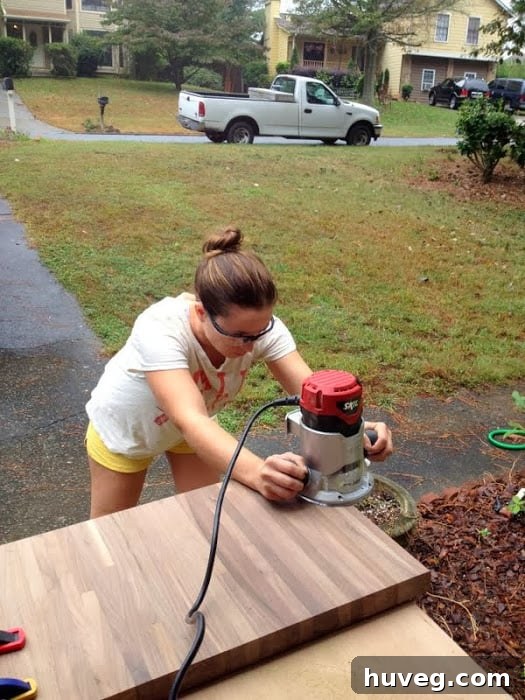
Embarking on a kitchen renovation or updating existing countertops can be one of the most rewarding home improvement projects. My recent venture involved the installation of a beautiful, rich walnut butcher block countertop. While the natural elegance of solid wood is undeniable, these countertops often arrive unfinished, presenting both a challenge and an opportunity for personalization. The ends of my new counters, fresh from the mill, were not only unsanded but remarkably sharp, posing a minor safety hazard and certainly not aligning with the smooth, finished aesthetic I envisioned for my kitchen. This clearly indicated that it was time to address these rough edges and smooth countertop edges into a refined finish.
The journey to perfecting these edges began with a fantastic Christmas gift from my dad: a brand-new palm router, complete with a versatile set of bits. Receiving such a powerful and precise woodworking tool was incredibly exciting. I vividly recall my mom finding it hilarious as I hugged the router box with the same joy I once reserved for a new doll from Santa. True to my DIY spirit, I decided to save this magnificent tool for a significant project, ensuring its debut would be impactful. This butcher block countertop installation, with its demanding requirement for flawlessly smooth edges and seamless joins, provided the ideal stage for my new router to shine.

Mastering the Router: Essential Techniques for Smoothing Butcher Block Countertop Edges
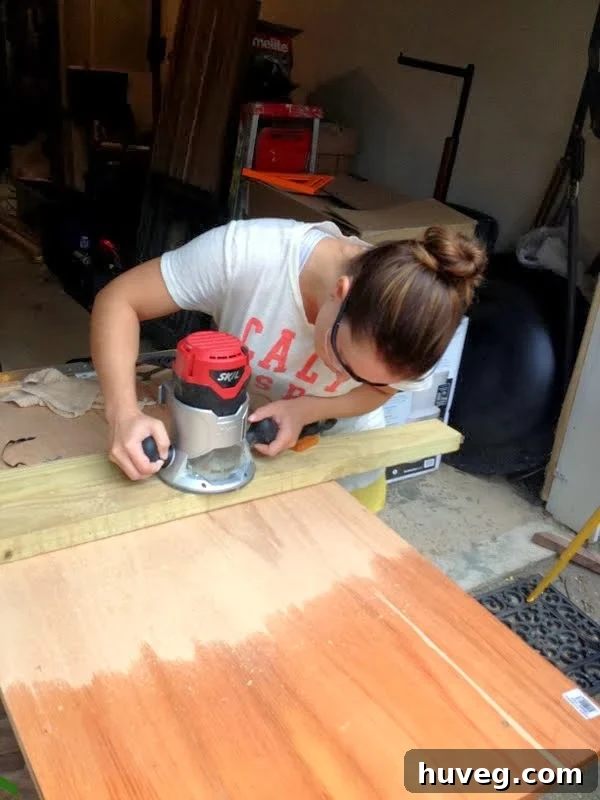
The arrival of my uncle, an experienced craftsman, for a visit presented a golden opportunity to learn the ropes of my new router. There’s nothing quite like hands-on guidance from someone seasoned in woodworking. Given the limited space indoors and the nature of the project, we set up our workstation outside, despite the less-than-ideal rainy weather. This outdoor setup, though challenging, allowed for ample space to maneuver and manage sawdust effectively. For the initial phase, I observed as my uncle and his brother familiarized themselves with the router, experimenting with various techniques on scrap pieces of wood. This crucial step allowed us to determine the optimal cutting approach for the new countertop and ensure a perfect finish.
Achieving the Perfect Edge Profile: Keep It Simple and Functional
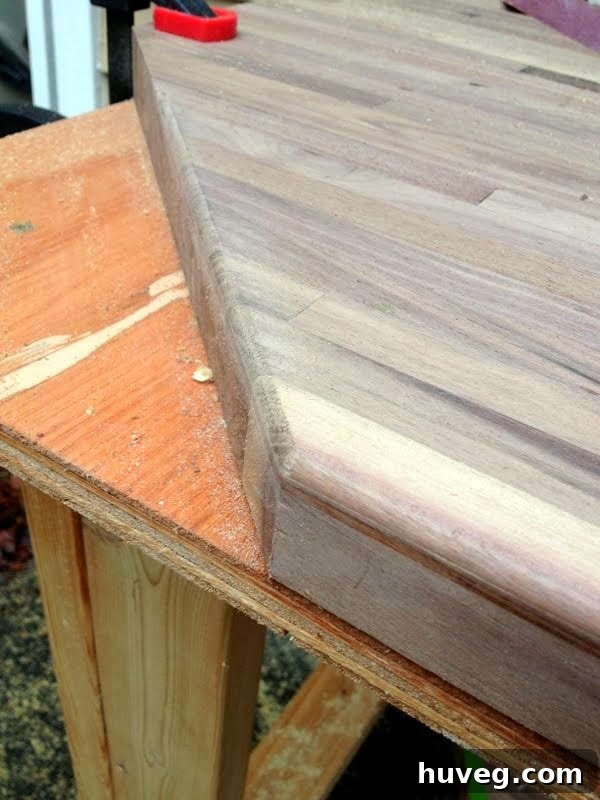
Our primary objective for using the router that day was twofold. Firstly, and perhaps most importantly, I wanted to create a consistently smooth, beautifully rounded edge along the entire perimeter of the butcher block countertop. While my router kit came with an array of bits capable of producing intricate and decorative profiles, I found myself drawn to the clean simplicity of a classic rounded edge. This wasn’t just about aesthetics; it was about functionality and safety. The goal was straightforward: transform those sharp, unforgiving corners into soft, touch-friendly edges, ensuring that accidental bumps against the counter would no longer result in cuts or bruises. Mission accomplished meant a safer, more comfortable kitchen environment.
From Practice to Perfection: Time to Route the Butcher Block
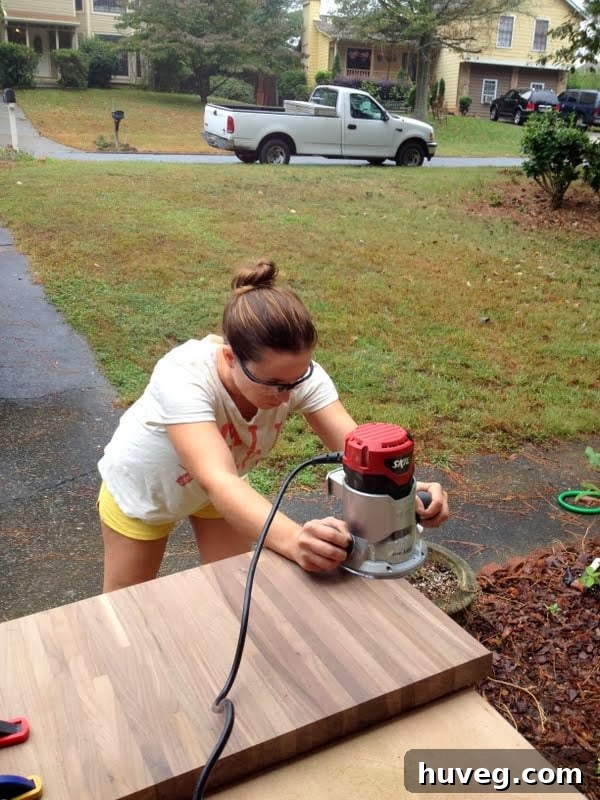
After a few successful passes on the scrap wood, fine-tuning our technique and adjusting the router’s depth, it was time for the main event: applying the router to the actual butcher block countertop. There’s a particular thrill that comes with using a powerful tool for the first time on a real project, and this experience was no exception. As the router glided along the edges, transforming the raw, sharp wood into a smooth, elegant curve, I was absolutely captivated. The precision and ease with which the palm router worked were truly impressive, turning a potentially daunting task into an incredibly satisfying one. This moment solidified my appreciation for having the right tools for DIY excellence.
Innovative Joins: Reusing Existing Hardware for Seamless Countertop Integration
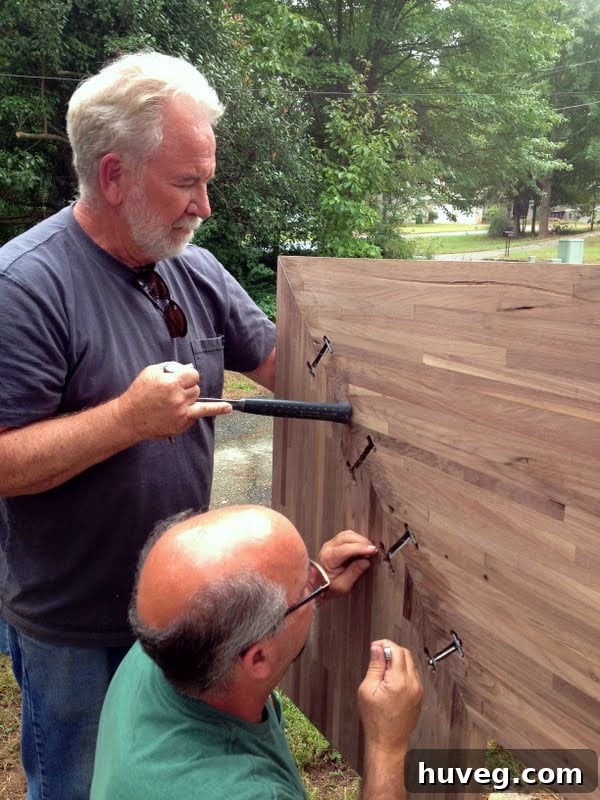
The second critical objective for the day involved crafting secure and flush joints where the 45-degree angled countertop sections would meet. Creating a strong, invisible seam in an L-shaped countertop configuration is crucial for both structural integrity and aesthetic appeal. We initially considered several popular woodworking joinery methods, such as using biscuits with a biscuit joiner or employing my trusty Kreg Jig for pocket holes. However, after careful consideration and my uncle’s expert advice, we decided on a more unconventional yet effective approach: reusing the existing countertop connecting bolts from the old laminate countertop. The plan was to adapt this tried-and-true technique to the butcher block, leveraging the robust strength of these specialized bolts.
The strategy involved precisely routing several strategic spots along the underside of the butcher block at the joining edges. These routed channels would accommodate the countertop bolts, allowing the two sections to be pulled together tightly with just a few twists of each bolt. This method promised a secure and durable join, essential for a heavily used kitchen surface. The precision required for these routed channels was paramount; any miscalculation could compromise the strength and flushness of the joint. With careful measurements and a steady hand, the router once again proved to be the indispensable tool for this intricate task, ensuring a professional-grade finish for our DIY kitchen remodel.
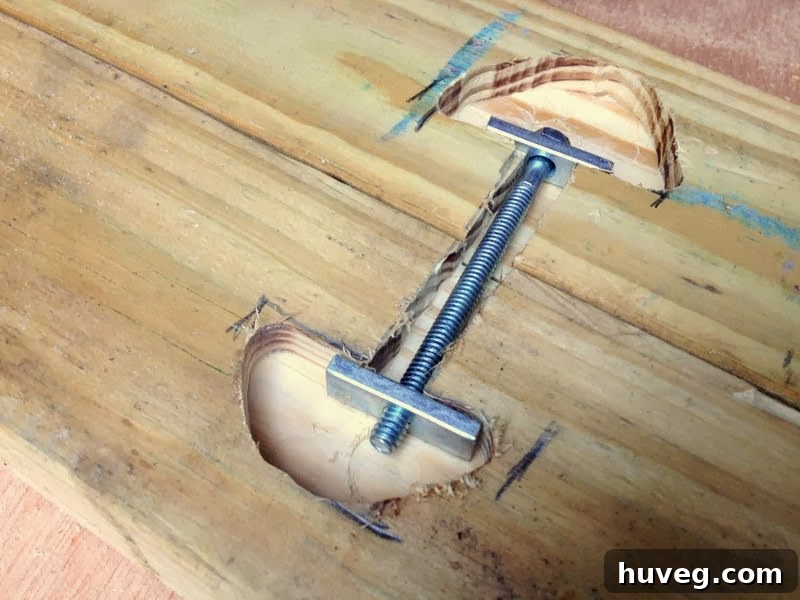
If you look closely, you’ll notice a distinctive mushroom shape routed at either end of the channels. This specific design was engineered to allow the ends of the countertop bolts to turn freely initially, while gradually narrowing to create a firm stopping point. This intelligent design ensures that as you tighten each bolt as much as it will go, the joined edges are relentlessly pulled together, securing them firmly for the long haul. This robust connection is vital for maintaining the integrity and stability of the butcher block countertop, preventing any shifting or separation over time and under heavy use.
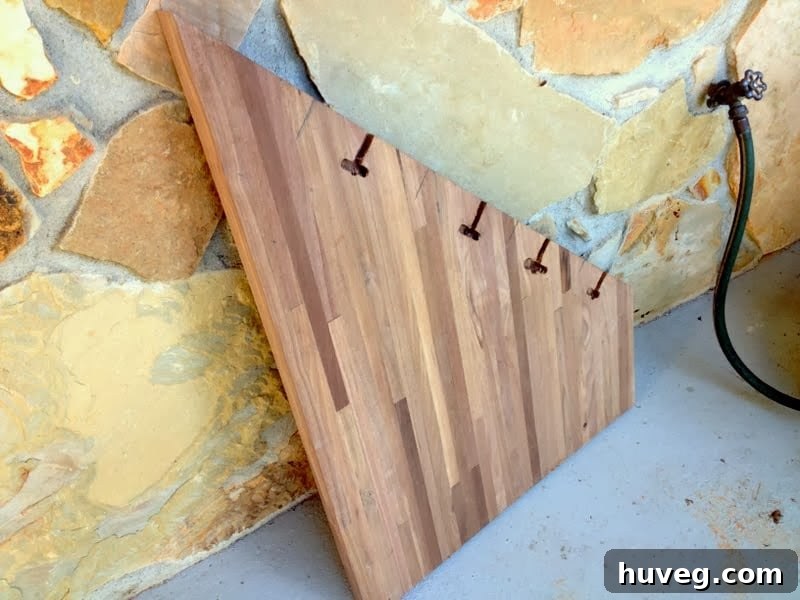
With a bit of careful maneuvering and some genuine muscle power, the L-shaped countertop sections finally came together, fitting snugly into their designated space. The satisfaction of seeing the two pieces merge into one cohesive unit was immense. For a house that doesn’t boast perfectly square angles at every turn – a common characteristic of older homes – achieving such a tight and precise fit was a testament to meticulous planning and execution. The seamless join and perfectly smoothed edges truly elevated the entire kitchen design, proving that with the right tools and techniques, even complex installations can be handled by a dedicated DIY enthusiast.
Essential Tips for Using a Palm Router on Your Woodworking Projects
Working with a palm router is incredibly rewarding, but like any power tool, it requires understanding and adherence to best practices. Here are some invaluable tips gleaned from my experience, designed to help you achieve professional-quality results on your woodworking projects, especially when routing butcher block countertops:
- Maintain Constant, Even Pressure: A stable base is crucial. While a second set of hands can be helpful for applying extra downward pressure, it’s not strictly necessary. The key is to keep the router’s base perfectly flat against the workpiece throughout the entire cut. When routing an edge, like on a countertop, one side of the router will naturally overhang. You must consciously apply consistent weight and pressure on the side that remains in contact with the wood, ensuring the bit cuts evenly and prevents tilting, which can lead to uneven or deeper cuts.
- Prioritize Swift, Smooth, and Continuous Cuts: To prevent burning the wood and ensure a clean, crisp finish, it’s essential to move the router bit continuously and at a consistent pace along the wood. Hesitation or stopping mid-cut can cause unsightly burn marks, especially on denser woods like walnut. Experiment on scrap pieces to find the optimal feed rate – too slow, and you risk burning; too fast, and the cut might be rough or tear out the wood fibers.
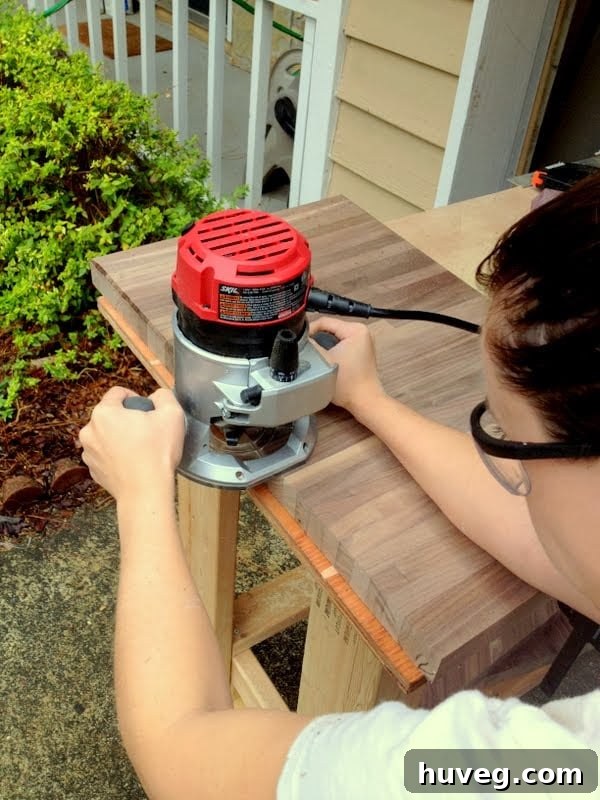
- Understand the Direction of Cut: I experimented with both pushing the tool away from me and pulling it toward me. For straight, continuous runs, I found pushing the router away often resulted in a slightly smoother cut. However, when tackling tricky areas like corners or when you need exceptional control, pulling the router toward you proved to be more manageable. For instance, on one particular section, I needed to route one edge while leaving an adjacent edge perfectly square and untouched, as it would butt against another piece. When pushing the router away, the bit subtly veered at the very tip, slightly routing the end of the other side. As a perfectionist, this was vexing! However, it served as a valuable lesson. For subsequent corners and delicate areas, I adopted the opposite technique, pulling the router toward me, which offered superior control and prevented unintended cuts.
- Safety First, Always: Safety goggles are non-negotiable when operating any power tool, but equal attention must be paid to hand placement. Even a small router bit is incredibly sharp and, when spinning at high RPMs, poses a significant risk. I particularly appreciated that my router brand included a guide light that illuminated when plugged in, serving as a constant visual reminder to be acutely aware of hand positioning. Furthermore, remember that after the friction of cutting through wood, the bit becomes extremely hot. Always keep your hands firmly on the designated handles, and never touch the bit immediately after use, even after unplugging the tool.
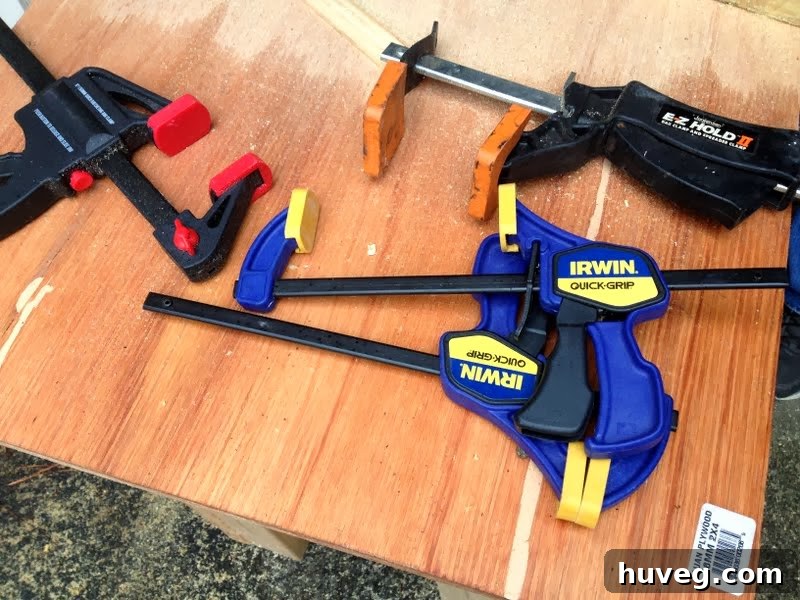
- Clamps: Your Woodworking BFFs: Secure clamping of your workpiece is paramount. Clamps are your best friends in woodworking, preventing any movement of the wood as you route. A securely clamped piece allows you to focus on guiding the router smoothly and accurately, significantly reducing the risk of errors and potential injury. Never attempt to route a piece of wood that isn’t firmly secured.
- Bit Selection and Maintenance: Always choose the correct bit profile for your desired outcome. Keep your router bits clean and sharp. Dull bits not only produce inferior cuts but also generate more heat, leading to wood burning and increased strain on your router. Regularly cleaning bits with a resin cleaner will extend their life and improve performance.
- Manage Dust for Safety and Visibility: Routing creates a significant amount of sawdust. Whenever possible, connect your router to a dust collection system or a shop vac. This not only keeps your workspace cleaner but also improves visibility of your cutting line, contributing to safer and more accurate work.
My adventures with the router are undoubtedly far from over. I have several sections of leftover butcher block countertop material that are just waiting to be transformed into exciting new projects. I’m already planning to tackle several of these by Christmas – consider that a hint for future DIY endeavors! The versatility of butcher block and the precision of a router open up a world of creative possibilities, from cutting boards and shelving to small furniture pieces. Do you have any personal tips for using a palm router or memorable woodworking stories you’d like to share? I’d love to hear them! Also, for those looking to maintain the pristine beauty of their butcher block countertops, you might find our guide on how to treat water spots on these countertops incredibly helpful. Happy routing and happy DIYing!