Brushstrokes for Serenity

Transforming Your Home: DIY Kitchen Renovation & The Power of Productive Nights
Ever found yourself wide awake, staring at the ceiling when you should be deep in slumber? For many, the late hours bring an unwelcome surge of energy, a “second wind” that seems to defy the body’s natural need for rest. Instead of succumbing to restless tossing and turning, what if you could channel that nocturnal energy into something genuinely productive and satisfying? This is precisely the approach I’ve embraced, transforming those wakeful moments into opportunities for meaningful home improvement, one careful brushstroke at a time.

Embracing DIY as a Therapeutic Remedy for Sleepless Nights
The struggle with sleeplessness is a widespread challenge, often leaving individuals feeling frustrated, anxious, and depleted. However, I’ve discovered a unique antidote that not only aids in drifting off to sleep but also fosters a profound sense of accomplishment: engaging in hands-on DIY projects, particularly painting. There’s an inherent tranquility in the rhythmic motion of a paintbrush, the hushed ambiance of the house in the dead of night, and the undeniable satisfaction of witnessing tangible progress. This powerful combination acts as a mental reset, effectively redirecting an overactive mind from anxieties and worries to focused, creative endeavor.
It’s hard to pinpoint the exact element that makes this method so effective for me. Perhaps it’s the soothing quiet that envelops the house after everyone else has gone to bed, or the repetitive, almost meditative nature of applying paint. Or maybe it’s simply the deep-seated satisfaction of knowing I’m getting something significant done. Whatever the reason, this approach consistently proves successful. My routine involves tackling about half a wall, ensuring a manageable scope for a late-night session. Crucially, I meticulously wrap up the brush to prevent it from drying out – a simple yet ingenious baggie trick I rely on to avoid the tedious rinsing process late at night. Once the tools are stowed, I climb back into bed, feeling relaxed and content from the productive diversion, and almost without fail, I’m out like a light.
The Current Project: Priming for Perfection in the Kitchen
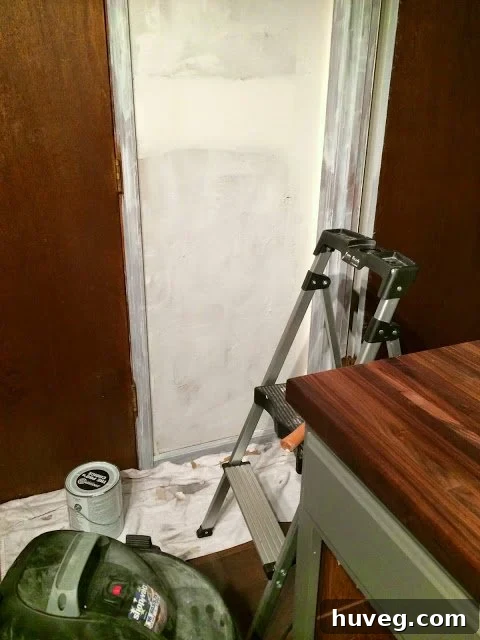
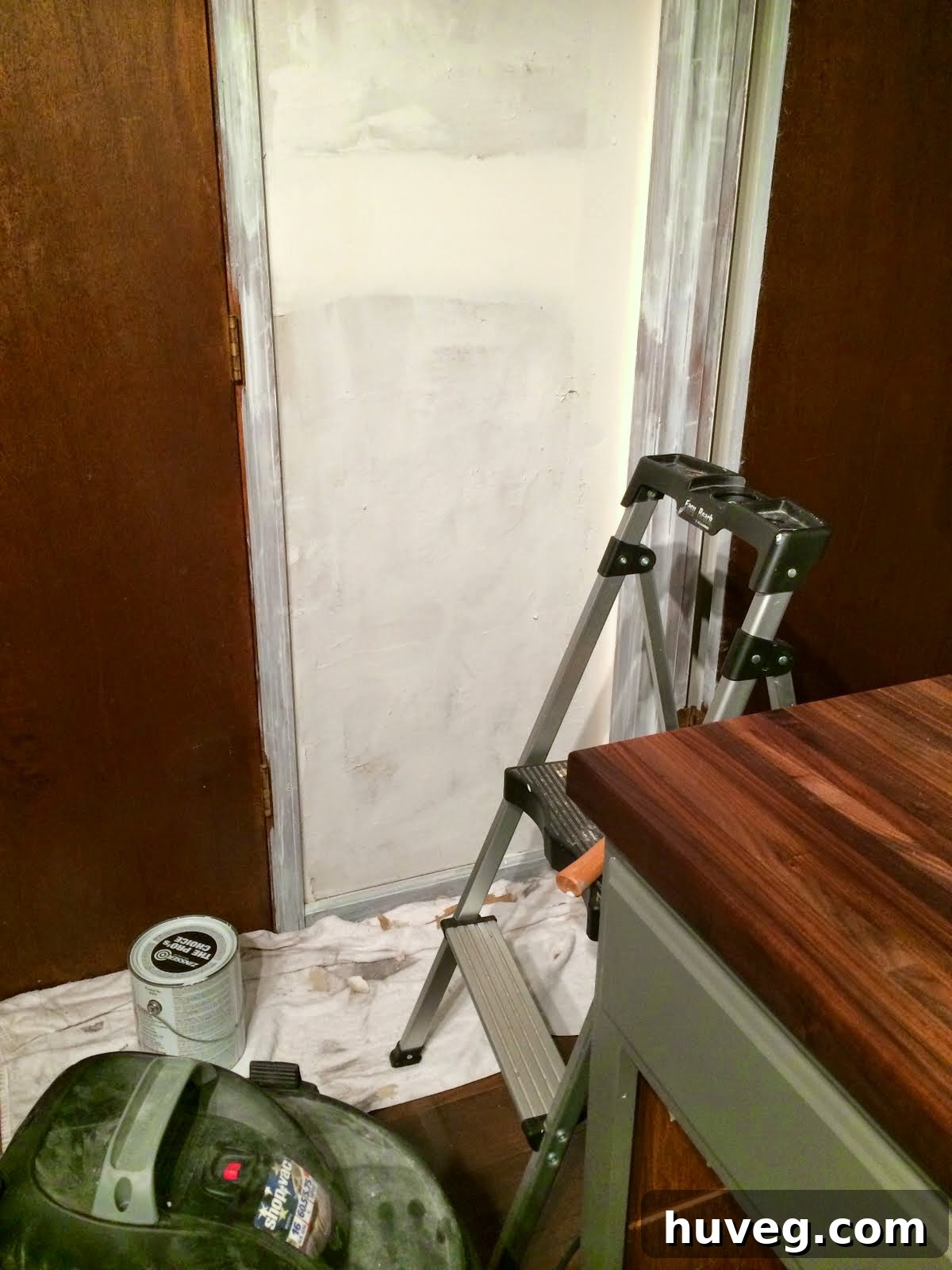
The focal point of my latest nocturnal home improvement project is a specific, yet crucial, section of my kitchen wall. This area, often overlooked, is strategically located between the garage door and the laundry room door – essentially the far corner of the kitchen. While it might seem like a minor detail, the condition of this wall significantly impacts the overall aesthetic and feel of the entire kitchen space. My current task involves meticulously priming these walls, a foundational and absolutely essential step before applying the first skim coat. This particular technique, a valuable tip I gleaned from a seasoned contractor several months ago, is indispensable for effectively addressing and resolving the common issue of torn drywall paper bubbling up when subsequent layers of joint compound are applied. Priming creates a stable, uniform surface, sealing the vulnerable paper and providing an ideal, robust base for the critical next stages of wall preparation.
Even at this preliminary stage, the transformative impact of priming is remarkably evident. The wall, which previously bore the unmistakable signs of wear and tear, including areas where the drywall paper was visibly torn, is already beginning its remarkable metamorphosis. While it’s undeniably still a work in progress and quite rough to the touch, this initial priming step alone dramatically diminishes the visual clutter and chaotic appearance caused by the damaged drywall. This crucial stage lays a solid foundation for a much smoother, more professional-looking finish. With this essential groundwork meticulously laid, I can now eagerly anticipate the day – hopefully in the very near future – when I can finally apply that much-awaited first skim coat, bringing me significantly closer to achieving a beautifully finished, immaculate kitchen wall.
Understanding the Importance of Comprehensive Wall Preparation
Many eager DIY enthusiasts, driven by the excitement of a fresh look, often jump straight into painting, keen to see a new coat of color on their walls. However, experienced professionals and seasoned home renovators understand that the true secret to a truly lasting, durable, and professional-looking paint job lies in thorough and meticulous wall preparation. Neglecting this crucial phase can inevitably lead to a host of problems down the line, ranging from uneven finishes and visible imperfections to frustrating peeling paint and ultimately, wasted effort and resources. Wall preparation encompasses far more than just a quick clean; it involves carefully repairing any damage, ensuring an impeccably smooth surface, and creating optimal adhesion for both the primer and subsequent layers of paint or other finishes.
Why Primer is an Absolute Must-Have
Primer serves multiple vital functions that are often underestimated by novice DIYers. Firstly, it provides a consistent, uniform base, which is absolutely critical for ensuring that your chosen topcoat color appears true, vibrant, and evenly toned. Without primer, especially over patched areas, bare drywall, or previously dark and intense colors, you might find yourself needing several extra coats of paint to achieve the desired coverage, leading to increased material costs and significantly more labor. Secondly, primer dramatically enhances adhesion, creating a strong, robust bond between the wall surface and the paint, which significantly reduces the likelihood of future peeling, chipping, or flaking. For walls with stubborn stains, primer also acts as an effective sealant, preventing those unsightly marks from bleeding through your pristine new coat of paint. In my specific case, applying primer over areas of torn drywall paper is critically important; it effectively seals the paper fibers, preventing them from absorbing moisture from the subsequent skim coat and thereby forming unsightly bubbles. This preparatory step alone saves an immense amount of potential frustration, time, and rework later in the renovation process.
Mastering Skim Coating: The Path to Flawless Walls
For walls that have undeniably seen better days, particularly after the arduous removal of stubborn or really ragged wallpaper, skim coating stands out as an indispensable and transformative technique. It’s essentially the art of applying one or more very thin layers of joint compound over an entire wall surface with the goal of creating a perfectly smooth, uniform, and pristine finish. This meticulous process effectively conceals minor imperfections, seamlessly blends patched areas, and eradicates the various textures and residues left behind by old wallpaper or damaged drywall. While the prospect of skim coating might initially seem daunting to a beginner, it is a skill that any diligent DIYer can master with a healthy dose of patience, attention to detail, and the correct approach.
The Skim Coating Process: A Comprehensive Step-by-Step Guide
Achieving truly smooth walls with skim coating involves careful execution of each stage:
- Thorough Preparation is Paramount: Begin by meticulously cleaning the walls, ensuring all dust, debris, and any loose material are completely removed. For walls featuring torn drywall paper, as in my project, applying a primer beforehand is absolutely paramount to effectively seal the paper and prevent any bubbling. Ensure all loose bits of paper are either removed entirely or securely glued down to the wall surface.
- Assemble Your Essential Tools: You will need a good quality joint compound (either lightweight or all-purpose, depending on your preference and the specific project needs), a mud pan for holding the compound, a wide drywall knife (a 10-12 inch blade is highly recommended for efficiency and smooth application), a smaller utility knife (4-6 inches) for intricate corners and for mixing the compound, and a sanding pole equipped with fine-grit sandpaper (150-220 grit) for smoothing.
- Precise Mixing of the Compound: If you are using all-purpose joint compound, it will likely require slight thinning with clean water to achieve a workable consistency. Aim for a texture similar to thick yogurt or pancake batter. Mix the compound thoroughly to eliminate any lumps or inconsistencies. Lightweight compound generally requires less, if any, thinning.
- First Coat Application Technique: Load your wide drywall knife with a moderate, manageable amount of joint compound. Begin application from a top corner of the wall, spreading a thin, even layer of compound. Hold the knife at a slight angle (approximately 20-30 degrees relative to the wall surface) to ensure a smooth, feathered edge. Work in manageable sections, slightly overlapping your strokes to ensure continuous coverage. The primary objective of this first coat is to fill in imperfections, not to build up significant thickness.
- Smooth and Feather the Edges: After applying a section, use a clean pass with your drywall knife, holding it at a slightly flatter angle, to smooth out the compound, remove any excess material, and gently feather the edges into the existing wall surface. Don’t be overly concerned if this first coat isn’t absolutely perfect; subsequent coats will progressively refine the surface.
- Adequate Drying Time: It is crucial to allow each coat of joint compound to dry completely before proceeding to the next step. This can take anywhere from several hours to overnight, depending on the thickness of the application, ambient humidity levels, and room temperature. Rushing this step will invariably lead to a messy, uneven, and ultimately unsatisfactory finish.
- Light Sanding for Refinement: Once the compound is thoroughly dry, lightly sand the entire applied surface using your fine-grit sandpaper on a sanding pole. The goal here is to knock down any high spots, ridges, or minor imperfections that have formed. After sanding, meticulously clean off all dust with a slightly damp cloth before applying the next coat.
- Subsequent Coats for Perfection: Apply a second, and if necessary, a third thin coat of joint compound, diligently repeating the application, drying, and sanding processes. Each successive coat should meticulously build upon the previous one, progressively smoothing the surface until it achieves a perfectly uniform and flawless finish.
- Final Inspection and Preparation: Once you are fully satisfied with the smoothness and uniformity of the wall, perform a final, very light sanding and thoroughly wipe down the entire surface. Run your hand over the wall; it should feel impeccably smooth to the touch, with absolutely no discernible bumps, ridges, or valleys.
The gratifying result of a properly skim-coated wall is a pristine, ready-to-paint canvas. This technique effectively eliminates the myriad headaches associated with uneven textures, stubborn old wallpaper residue, and damaged drywall, ensuring that your final paint job looks crisp, professional, and truly beautiful, elevating the overall aesthetic of your space.
The Broader Impact of a DIY Kitchen Renovation
Engaging in a DIY kitchen renovation project, even when tackled in stages, offers immense personal satisfaction and yields numerous practical benefits. The kitchen is widely regarded as the heart of the home, and its thoughtful transformation can significantly enhance both the functionality and the aesthetic appeal of your entire living space. Beyond the immediate visual improvements, tackling hands-on projects like meticulous wall preparation and careful painting contributes significantly to the overall longevity and intrinsic value of your home. Each completed step, no matter how minor it might seem, stands as a testament to personal effort, developing skill, and fostering a deep sense of pride in your living environment.
Furthermore, DIY projects provide a unique and invaluable learning experience. Through these endeavors, you acquire new practical skills, develop problem-solving abilities as you navigate unexpected challenges, and gain a much deeper, more intimate understanding of your home’s construction and maintenance needs. This acquired knowledge empowers you to approach future projects with greater confidence, potentially saving thousands in professional labor costs over time. The journey from a rough, damaged wall to a perfectly smooth, primed surface, and eventually to a beautifully painted finish, is not merely about home improvement; it is profoundly about personal growth, cultivating resilience, and experiencing the sheer, unadulterated joy of creating something meaningful and beautiful with your own hands. So, while my late-night painting sessions might initially serve as a practical remedy for sleeplessness, they invariably evolve into something far greater: a deliberate, rewarding stride towards achieving a dream kitchen and, by extension, a more comfortable, personalized, and cherished home.