Staircase Glow-Up: The Runner’s Arrival

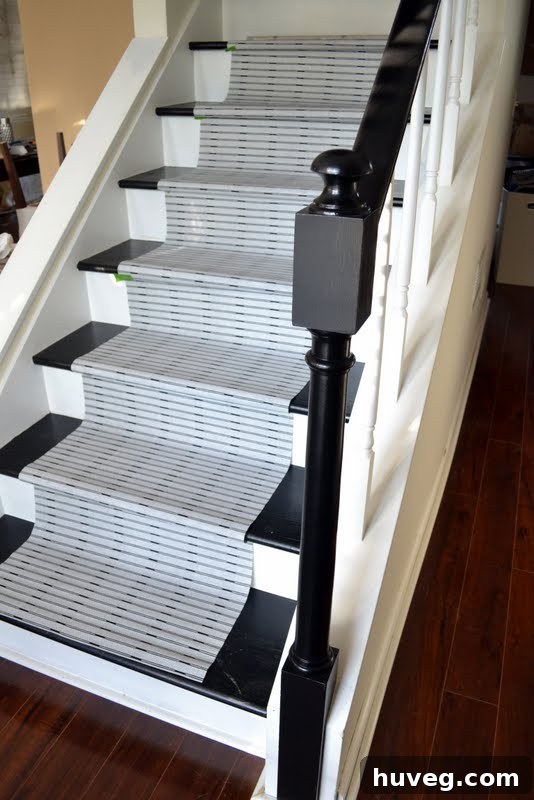
Transform Your Staircase: A Guide to DIY Stair Runner Brilliance on a Budget
The staircase, often considered merely a functional element, holds immense potential as a focal point in any home. It’s a canvas awaiting a touch of personality, safety, and style. But embarking on a staircase makeover, especially installing a beautiful stair runner, doesn’t have to break the bank. In fact, with a little creativity and DIY spirit, you can achieve a stunning transformation for a fraction of the cost of custom installations. We’re diving deep into the world of affordable DIY stair runners, exploring innovative ideas that combine eye-catching aesthetics with smart, budget-friendly solutions.
Whether you’re looking to enhance safety for your family and pets, reduce noise, or simply inject a fresh dose of character into your living space, a stair runner is an excellent choice. Our journey begins with an exciting discovery that challenged my initial vision for a colorful ascent, leading me down a path of pattern adoration and incredible savings. Let’s uncover how everyday items can be reimagined into bespoke home décor.
Unveiling a Game-Changing Idea: The IKEA Curtain Panel Stair Runner
Just last week, my head was buzzing with vibrant ideas. I had envisioned a staircase awash in a kaleidoscope of colors, a bold statement that would greet anyone entering my home. However, as often happens in the world of DIY, inspiration strikes when you least expect it, completely shifting your perspective. My plans for a riot of color took an unexpected turn when I stumbled upon something truly captivating during a routine trip to Ikea: a set of black and white curtain panels. It wasn’t just any pattern; it was a graphic, modern design that immediately spoke to me. I simply couldn’t leave them behind.
There’s an undeniable thrill in finding a design element that perfectly resonates with your aesthetic, especially when it comes at an unbelievable price point. At just $12.99 per panel, these curtains weren’t just a design crush; they represented an incredibly practical and economical solution. The thought quickly formed: could these curtain panels be the key to an affordable, stylish stair runner? Each panel was generously sized, promising to cover more than half of my staircase. This meant the total cost for transforming my stairs could easily remain under thirty dollars – a truly remarkable figure for such an impactful home upgrade.
Visualizing the Transformation: A Quick Test with Frogtape
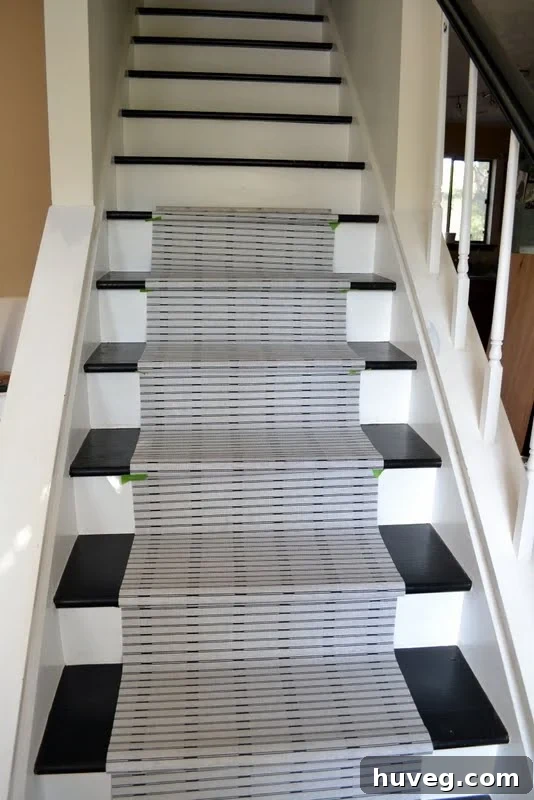
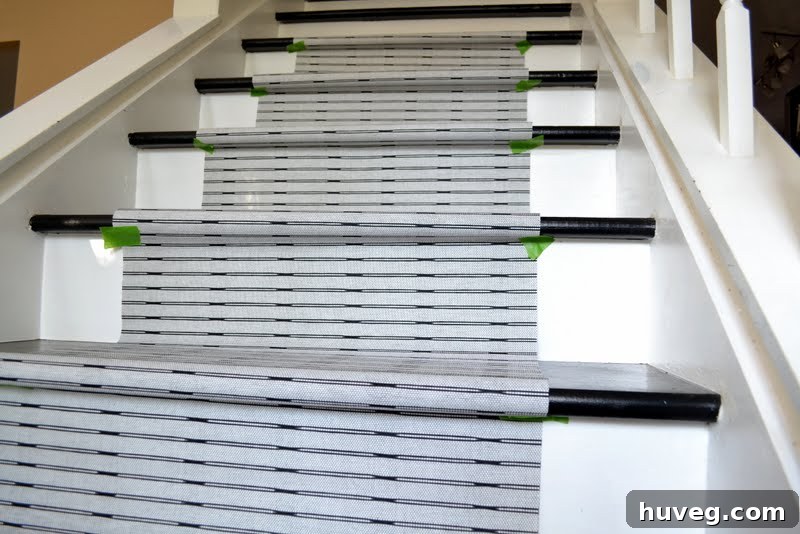
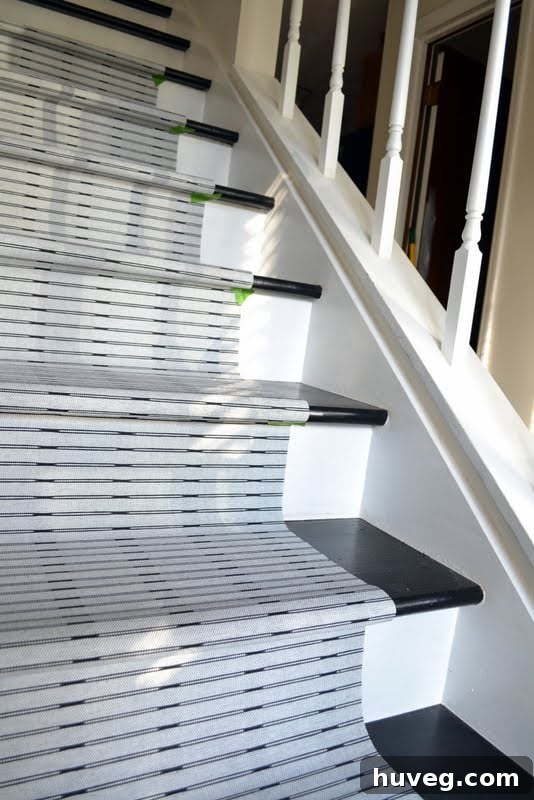
Bringing the curtain panels home was just the first step. The real magic began with visualizing how this unconventional material would look as a stair runner. To get a realistic sense of the final outcome without committing to permanent installation, I employed a simple yet effective DIY trick: Frogtape. This painter’s tape is fantastic for creating clean lines, but it also serves as an excellent temporary adhesive for mock-ups.
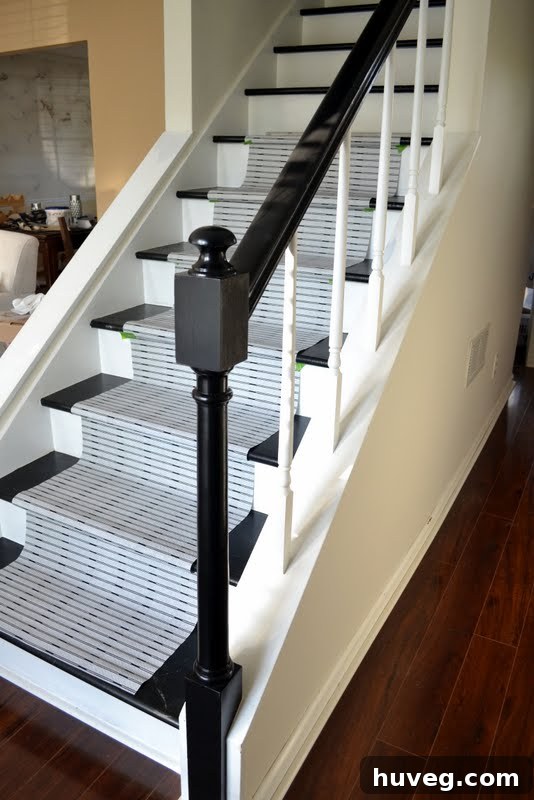
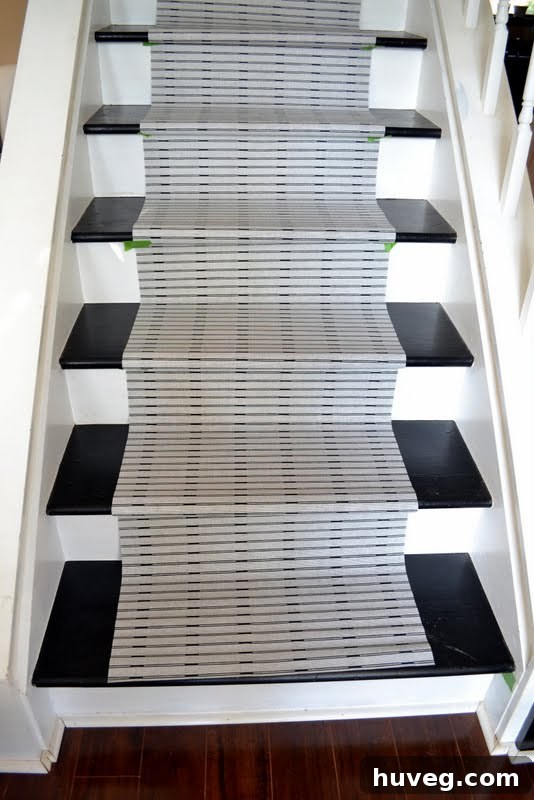
Carefully, I draped and secured sections of the curtain panels onto my stairs using Frogtape, ensuring they hugged the contours closely. This allowed me to step back, observe the pattern flow, and truly grasp the potential of this budget-friendly design. The black and white pattern, which I adored, instantly brought a fresh, contemporary vibe to the staircase. It was clear that this idea had strong merit.
Ensuring Durability and Safety: Beyond the Basic Installation
A stair runner isn’t just about aesthetics; safety and longevity are paramount. While the initial cost of the curtain panels is incredibly low, it’s crucial to invest a little extra time and perhaps a few more dollars to ensure the runner is secure, durable, and safe for everyday use. My considerations for this project extended to integrating additional slip guard and a touch of cushioning.
One excellent, inexpensive solution for both grip and minor padding is rubber kitchen lining. Placed underneath the curtain panels, this material significantly reduces the risk of slippage, a common concern with any textile on stairs. Even with the addition of this lining, the overall project cost would likely hover around the thirty-dollar mark, potentially reaching $35 if I opted for a slightly higher quality lining from a store like Walmart instead of a dollar store. This marginal increase in cost is a small price to pay for enhanced safety and comfort.
Reinforcing Edges and Protecting Fibers
The durability of a fabric stair runner, especially one made from curtain material, largely depends on how well its edges and fibers are protected. I noticed some slight unraveling on the display panels at the store, which immediately flagged this as a critical area for attention. With a dog routinely navigating the stairs, preventing fraying is non-negotiable.
My plan involves taping the raw ends of the fabric with a material that offers both structural integrity and a refined aesthetic. Something with a leathery look would not only prevent unraveling but also add a sophisticated finish, elevating the DIY project beyond its humble origins. Faux leather trim or even heavy-duty fabric tape could serve this purpose beautifully.
Furthermore, protecting the fabric fibers themselves from daily wear, staining, and fraying is essential. This led me to consider applying a protective coating. Similar to how people seal sisal rugs to enhance their longevity and cleanability, a clear topcoat could work wonders here. A good quality polyurethane sealant, or even a fabric protector spray, would create a barrier against spills and friction, ensuring the beautiful pattern remains pristine for longer. This step is a small investment in time and material, but it significantly extends the life and beauty of the runner, making it truly worth the effort.
Personalizing Your Stair Runner: Adding Your Unique Touch
The beauty of a DIY project lies in its endless potential for customization. While the black and white pattern is striking on its own, the thought of adding an extra layer of personality is incredibly appealing. This could mean introducing a vibrant splash of color through paint, transforming the existing design into something truly bespoke.
For instance, incorporating an ikat pattern immediately comes to mind. The intricate, slightly blurred edges of ikat designs offer a unique charm that is both traditional and modern, without being overly trendy. Imagine painting a rich, darker blue where gray tones might be, or introducing soft grays in place of yellows, creating a more subdued yet equally captivating palette. This layering of patterns and colors allows for a truly personalized aesthetic, letting your staircase reflect your individual style.
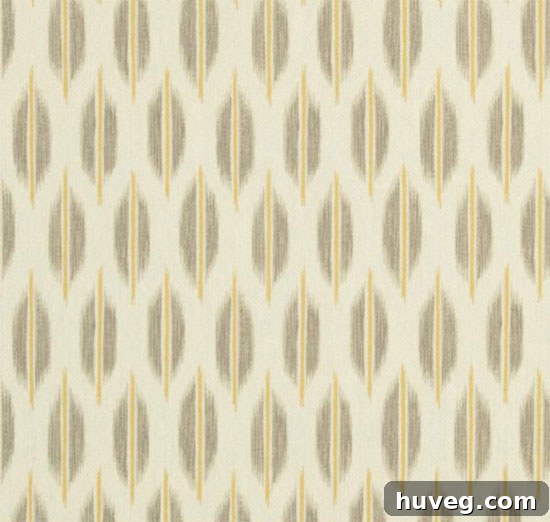
The core message here is experimentation. If this budget-friendly experiment doesn’t yield the desired long-term results, the financial outlay is minimal, making it a low-risk, high-reward endeavor. And honestly, I haven’t come across another pattern that makes me this excited yet!
Alternative DIY Stair Runner: The Painted Drop Cloth
Beyond curtain panels, another brilliant and equally budget-conscious idea for a DIY stair runner is to utilize a painted drop cloth. I’ve seen stunning examples of this on various home decor blogs, though the specific source momentarily escapes me. This method offers unparalleled flexibility in terms of design and color, as you’re starting with a blank canvas.
Why Choose a Drop Cloth?
Drop cloths, typically made from sturdy canvas, are incredibly durable and inexpensive. Their natural, neutral color provides a perfect base for any paint scheme you envision. They are designed to withstand heavy use, making them an excellent candidate for a high-traffic area like a staircase.
Creating Your Painted Drop Cloth Runner: Step-by-Step Considerations
1. Preparation: Begin by washing and thoroughly drying your drop cloth to pre-shrink the fabric and remove any sizing. Ironing it smooth will ensure a clean surface for painting.
2. Measuring and Cutting: Carefully measure the width and length of your staircase, accounting for returns over the nose of each tread. Cut the drop cloth to size, adding a few inches for hemming the edges to prevent fraying.
3. Design and Taping: This is where your creativity shines! For a simple yet elegant look, consider a classic stripe pattern. Use Frogtape or high-quality painter’s tape to mark out your desired stripes. Ensure the tape is firmly pressed down to prevent paint bleed.
4. Painting: Use a durable floor paint, fabric paint, or even exterior latex paint mixed with a fabric medium for flexibility. Apply thin, even coats to prevent stiffness. A roller will give a smooth finish, while a brush can add texture. Imagine replacing an “orange-y stripe” with a serene blue, or a striking charcoal for a modern touch.
5. Sealing and Protection: Once the paint is completely dry and cured, apply several coats of a clear, water-based polyurethane or a fabric sealant. This step is critical for protecting the paint from wear, tear, and scuffs, especially on stairs. It also makes the runner easier to clean.
6. Installation: Secure the finished runner to your stairs using a heavy-duty staple gun. Staples should be discreetly placed in the “crease” where the tread meets the riser, and perhaps along the sides for extra security. For added cushioning and slip resistance, consider placing a thin rug pad or rubber lining underneath.
A simple stripe pattern, like the one inspired by traditional table linens, can be incredibly effective and timeless. Imagine this concept brought to life on your stairs, customized with colors that perfectly complement your home’s existing decor.
Final Thoughts: Your Staircase Awaits Its DIY Transformation
Whether you lean towards the bold graphical statement of an upcycled IKEA curtain panel or the fully customizable charm of a painted drop cloth, the world of DIY stair runners offers endless possibilities for style, safety, and savings. Both methods provide a fantastic opportunity to express your creativity and enhance your home’s aesthetic appeal without a significant financial outlay.
These projects are more than just about saving money; they’re about the satisfaction of creating something beautiful with your own hands, tailoring every detail to your personal taste. You get to choose the pattern, the colors, and the level of durability that suits your household.
So, which path will you choose for your staircase transformation? The striking simplicity of the black and white curtain panels, perhaps with an added splash of hand-painted color, or the versatile canvas of a custom-painted drop cloth? Share your thoughts and inspire fellow DIY enthusiasts!