Raindrop Wonders from Old Magazine Pages

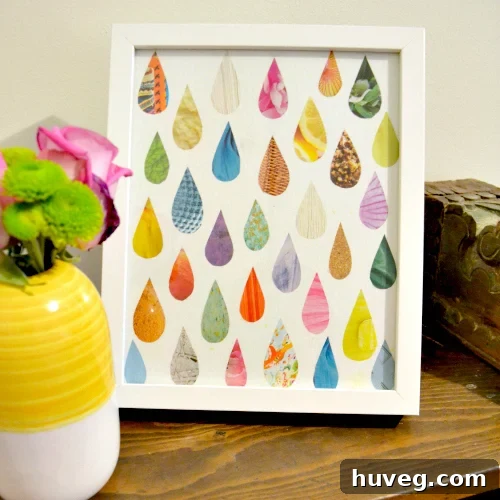
Transforming your living space doesn’t always require a hefty budget or complex renovations. Sometimes, the most impactful changes come from simple, creative DIY projects that add a personal touch and inject fresh energy into your home. While painting walls can indeed be a tedious task, finding engaging ways to personalize your decor can make the entire process more enjoyable and rewarding. This guide will walk you through an incredibly easy, budget-friendly, and uniquely charming DIY craft project: creating elegant raindrop art using nothing more than old magazine pages.
Whether you’re looking to add a splash of color to a bland hallway, create a focal point in your living room, or simply engage in a relaxing and creative activity, this recycled magazine art project offers a wonderful solution. It’s a fantastic way to repurpose materials that would otherwise be discarded, turning them into a beautiful, personalized piece of budget-friendly wall decor. Get ready to unleash your inner artist and discover the joy of crafting something truly unique for your home, all while enhancing your interior design with upcycled decor ideas.
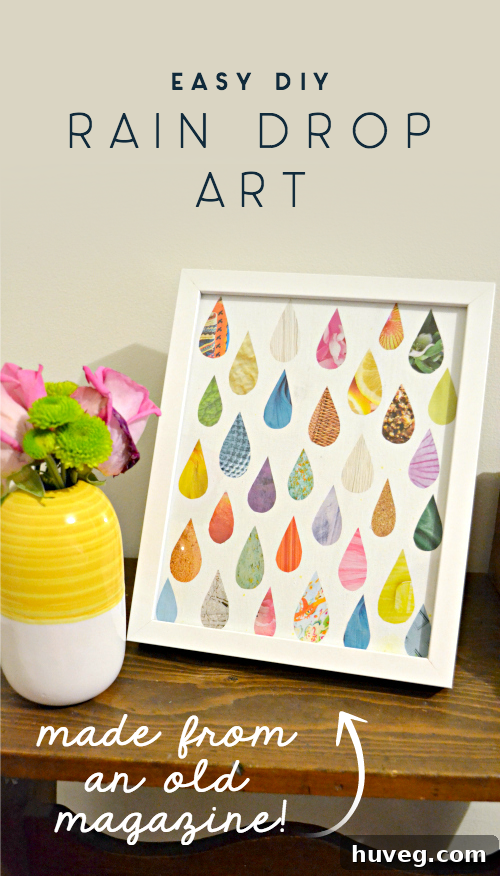
Crafting Unique Raindrop Art: A Step-by-Step Guide for Stunning Results
Today’s focus is on creating captivating DIY raindrop art from materials you likely already have around your house: old magazine pages. This project is not only incredibly satisfying but also an excellent example of upcycled home decor. It allows you to transform forgotten pages into vibrant, textural wall art that speaks to your unique style. Here’s what you’ll need to get started on this enjoyable easy craft project (contains affiliate links for convenience):
- Sharp Scissors: While it might seem obvious, a good pair of sharp scissors makes a significant difference in the ease and precision of your cuts. When dealing with many small shapes and intricate details from magazine pages, clean, crisp edges are desirable. If your current scissors are dull, investing in a fresh, ergonomic pair will make this magazine art project much more enjoyable and less frustrating, preventing jagged edges and hand strain.
- Mod Podge (Matte Finish Recommended): This versatile adhesive, sealant, and finish is the backbone of decoupage projects. A matte finish is often preferred for art pieces as it minimizes glare, giving your artwork a sophisticated, professional look that doesn’t reflect too much light. Ensure your Mod Podge is fresh and not dried out for smooth application and optimal adhesion; old, lumpy Mod Podge can lead to an uneven finish.
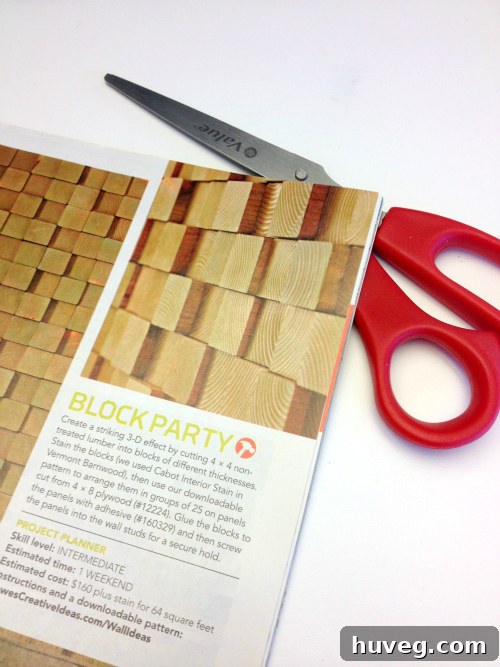
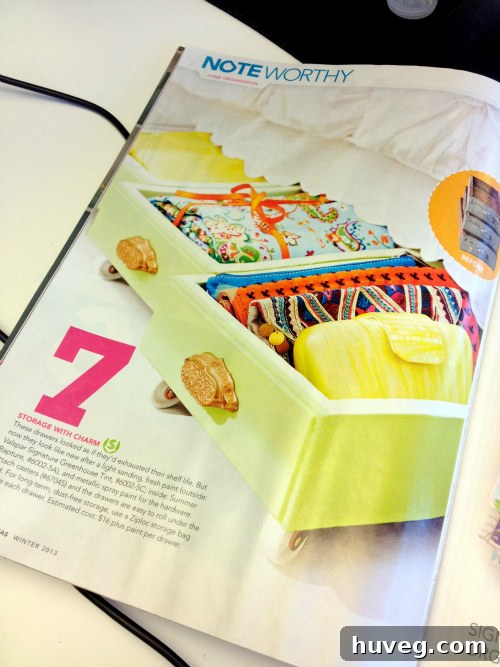
- Any Old Magazine: The beauty of this recycled art idea is that almost any magazine will work! The key is to look for publications with vibrant colors, interesting textures, and unique photographic patterns. Home decor magazines, travel magazines, fashion glossies, or even old product catalogs can be fantastic sources for diverse imagery. For this particular project, a winter copy of Lowe’s Creator magazine provided a rich array of visual interest, from subtle gradients to bold swatches of color.
- Foam Brush: A foam brush is ideal for applying Mod Podge smoothly and evenly, preventing the brush strokes that traditional bristle brushes might leave. This ensures a clean, professional finish for your DIY collage art. They are also inexpensive, easy to clean, and disposable, making them a practical choice for decoupage and other adhesive-heavy crafts.
- Flat Canvas or Heavy Cardstock: This will serve as the sturdy base for your artwork. A flat canvas provides a durable, professional-looking surface that’s ready for display, while heavy cardstock offers a more economical option that can still be framed beautifully and is lighter for hanging. Choose a size that suits your desired display area and complements your home’s aesthetic.
- Thick White Frame: A frame can significantly elevate the finished piece, giving it a polished and professional look. A thick white frame, like the popular RIBBA series from Ikea, often works wonderfully. Its clean, modern border provides a perfect contrast that allows the colorful, organic artwork to truly pop without competing for attention, creating a gallery-quality presentation for your handmade decor.
The Spark of Inspiration: From Structured Grids to Free-Form Creativity
The journey of any creative project often begins with a flash of inspiration. For this particular DIY wall art project, the initial spark came from a print discovered on Etsy. While beautiful in its structured grid pattern, it ignited a desire for something a little more organic, fluid, and expressive. The aim was to capture the delicate and spontaneous essence of raindrops, not as a perfectly ordered array, but as a scattering of unique forms, each distinct yet contributing to a harmonious whole. This artistic evolution is common in DIY, where initial ideas serve as springboards for personalized interpretations.
This pursuit of a more “loose and free-form” aesthetic led to the concept of hand-cutting individual teardrop shapes. Engaging in such a repetitive, yet mindful, task can be incredibly therapeutic. It’s a perfect activity for idle hands, whether you’re listening to a podcast, catching up on a conference call, or simply unwinding after a long day. The meditative rhythm of clipping shapes allows the mind to wander, fostering creativity and a sense of calm. This initial phase is less about rigid perfection and more about enjoying the process of creation, envisioning how each small cutout will contribute to the final artistic composition. This project beautifully demonstrates how simple actions can lead to profound artistic satisfaction and unique handmade home decor.
Unlocking Hidden Gems: How to See Magazines Differently for Crafting
The success of your magazine collage artwork heavily relies on the quality and variety of the patterns and textures you select. While “any old magazine” can technically work, the real trick lies in shifting your perspective from a reader to an artist. Train your eye to spot areas that, when isolated, will create visually interesting raindrop shapes. This means consciously overlooking the text and context, focusing instead on color blocks, subtle gradients, abstract forms, and fine details within photographs.
The key principle here is contrast and depth. Look for sections with distinct color variations, bold gradients, or intricate details that will stand out. Anything that appears too uniform or lacks enough contrast will likely fall flat and look boring in your final project, blending into the background rather than adding visual interest. Think about how different shades of blue and green, or even abstract architectural patterns, can mimic the reflective qualities and translucence of a real raindrop. This step is a treasure hunt, and the more diverse your findings, the richer and more dynamic your finished colorful raindrop art will be. You’ll be amazed at the hidden beauty you can discover within everyday print materials, turning them into components for stunning recycled craft ideas.
The Art of Cutting: Embracing Imperfection for Natural Beauty
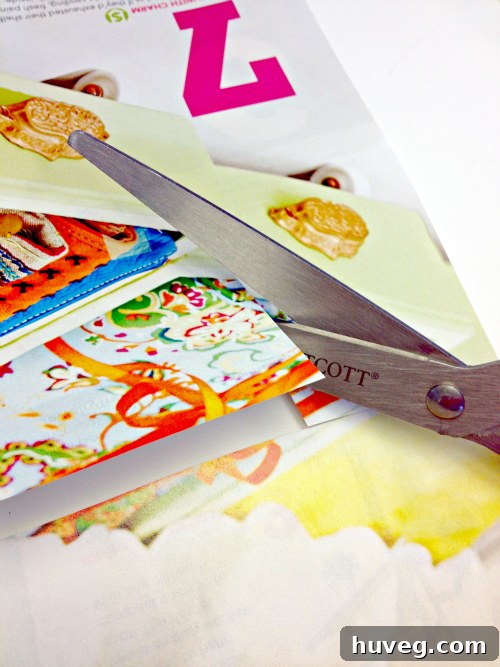
Once you’ve identified promising areas, it’s time to start cutting out each droplet. A crucial tip for this easy DIY craft is to release the pressure of perfection. Don’t fret too much about each droplet being an identical size or having a perfectly symmetrical shape. In fact, embracing slight variations in size, form, and even the “wobble” of a hand-cut edge will contribute to the organic and natural aesthetic of falling raindrops. Some can be plump and round, others elongated and slender, mimicking the diverse shapes water can take. This diversity adds depth and visual interest to your overall composition, making the finished piece more dynamic, authentic, and truly one-of-a-kind.
Consider cutting a generous amount of teardrop shapes – far more than you anticipate needing. This abundance provides you with a wide array of choices during the arrangement phase, allowing for greater flexibility and experimentation. It’s always better to have too many options than to run out of suitable pieces mid-project and have to interrupt your creative flow. This mindful cutting process is not just about producing shapes; it’s about curating a diverse palette of textures and colors that will soon form a cohesive and striking piece of handmade wall decor, reflecting your artistic vision.
A Unique Perspective: Seeing Beyond the Content for Artistic Inspiration
Here’s an ingenious little trick to help you disconnect from the magazine’s content and focus purely on its visual potential: try turning the magazine upside down or sideways. When you view pages from an unconventional orientation, your brain is less likely to process the text or the intended image, allowing you to see it purely as a collection of colors, lines, and textures. This shift in perspective makes you less of a “reader” absorbed in stories and more of a “texture identifier” on a quest for visual elements.
For instance, an advertisement featuring a person’s hat might, when viewed upside down, reveal a stunning gradient of light blue fading into dark blue. This subtle texture, previously overlooked, could be just large enough to cut a perfect tear shape, and it would truly pop against the white background of your canvas. Similarly, a close-up of a fabric pattern or a landscape photo might offer unexpected abstract compositions. By consciously detaching from the original purpose of the images, you unlock a hidden world of artistic possibilities within the familiar pages of a magazine, turning mundane print into vibrant components of your creative recycled crafts, transforming the ordinary into the extraordinary.

The Abundance Principle: More is Always Better for Creative Freedom
As you delve into the cutting phase, remember the “abundance principle.” It’s absolutely essential to have a vast selection of cutouts – encompassing a wide spectrum of colors, diverse textures, and varying sizes. You will undoubtedly cut out more shapes than you’ll ultimately use in your final composition, and that’s precisely the point. Having an ample supply provides invaluable flexibility during the arrangement stage, allowing you to experiment freely and make precise adjustments without feeling limited or having to go back and cut more.
If you’re crafting in a location where you can immediately move to the arrangement phase, great! If not, as was the case for the original creator, simply gather all your meticulously cutouts and transport them to your designated crafting space. Once you have your collection, you can begin the exciting process of arranging them onto your canvas. Expect to rearrange your pieces multiple times – perhaps four or five, or even more. Each re-arrangement is an opportunity to refine your vision, balance colors, optimize the flow of the “raindrops,” and consider negative space. The extra options you meticulously cut out will prove incredibly useful for swapping pieces in and out, helping you achieve that perfect, visually harmonious effect for your DIY home decor masterpiece. This iterative process is key to creating truly impactful recycled magazine wall art.
Capturing Your Vision: The Importance of Photography Before Gluing
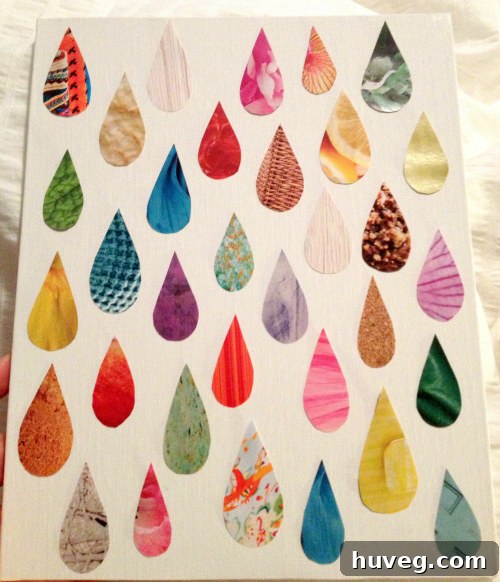
Before you commit any of your beautifully arranged raindrops to glue, there’s an absolutely critical step that can save you a lot of potential frustration: take pictures of your work! This seemingly simple act is an invaluable tool in the creative process. As you meticulously place each cutout on the canvas, you’re building a temporary masterpiece. However, once you start applying Mod Podge, you’ll need to lift and replace pieces, and it’s incredibly easy to forget the exact placement, orientation, and overall flow that you loved so much.
Your smartphone camera can be your best friend here. Snap several photos from different angles and distances. These images will serve as your essential reference points, guiding you back to your desired composition as you work through the gluing process. They allow you to confidently remove pieces, apply adhesive, and then return them to their precise spots without guesswork or second-guessing. This step ensures that the final, permanent arrangement on your custom wall art piece perfectly matches the vision you so carefully crafted during the arrangement phase. It’s a small effort that yields significant peace of mind and guarantees a stunning, professional outcome for your unique DIY art.
The Mod Podge Method: Securing Your Artistic Creation with Precision
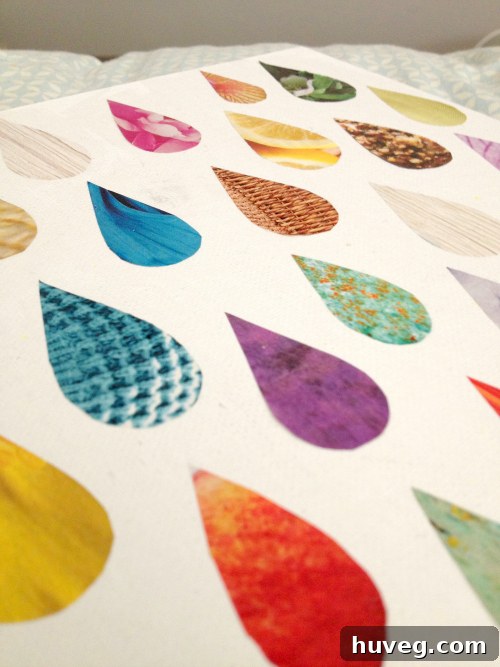
Once you are completely satisfied with your arrangement and have captured it photographically, it’s time for the final, permanent step: gluing. Carefully remove the paper pieces from one section of your canvas. It’s highly recommended to work in smaller sections, such as quarters or even smaller, to manage the process effectively and prevent the Mod Podge from drying prematurely. Starting at a corner, like the top right, and systematically moving across the canvas, ensures you maintain control over the arrangement and application.
Apply a thin, even coat of Mod Podge to the designated section of the canvas using your foam brush. Avoid applying too much, as excess glue can cause buckling, wrinkling, or unsightly bubbling of the paper. Refer back to your iPhone pictures frequently to ensure each raindrop is placed exactly where you intended it to be. Gently press each paper cutout onto the wet Mod Podge, smoothing out any air bubbles from the center outwards with your fingers or a clean, dry brush. Use the Mod Podge to secure the paper pieces firmly to the canvas.
Crucially, do NOT apply a top coat of Mod Podge over the entire artwork until the bottom layer (the layer directly adhering the paper to the canvas) has completely dried. Impatience here is the enemy of a smooth, professional finish. Attempting to apply the top protective layer while the bottom is still damp will almost certainly lead to unsightly air bubbles and trapped moisture, compromising the aesthetic of your beautiful Mod Podge craft. Allow ample drying time, which can vary depending on humidity and the thickness of the Mod Podge application. Once the base layer is dry, you can then apply one or two thin, even coats over the entire surface to seal and protect your creative wall art, ensuring its longevity and vibrant appearance. This multi-layered approach ensures a durable and stunning result for your magazine decoupage art.
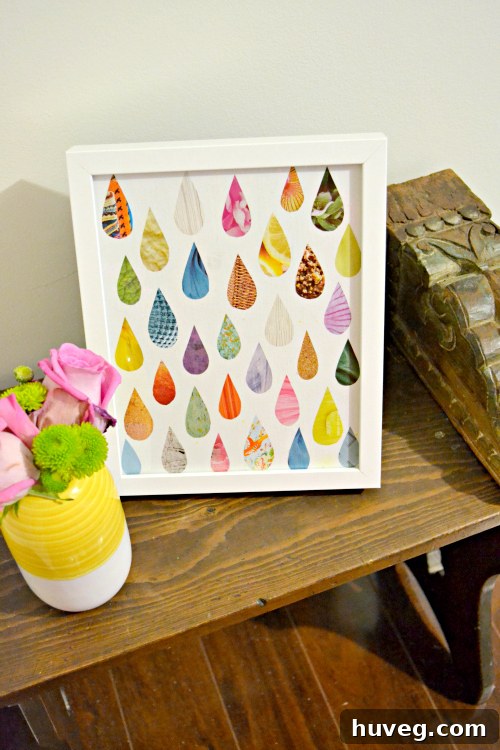
The Grand Reveal: Framing and Displaying Your Masterpiece with Pride
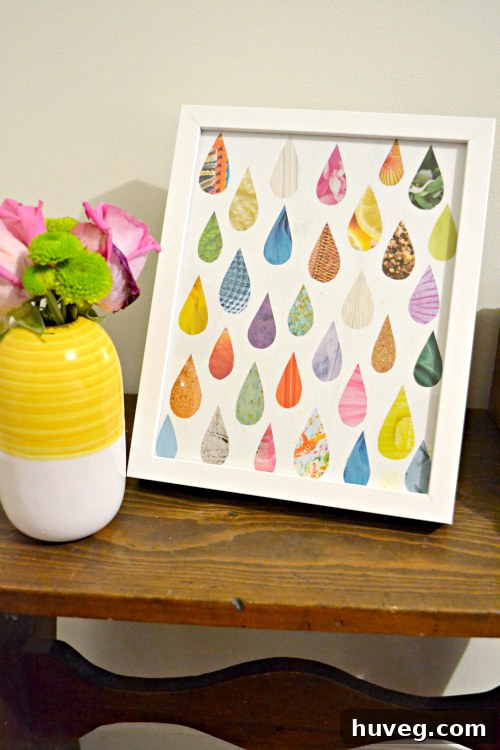
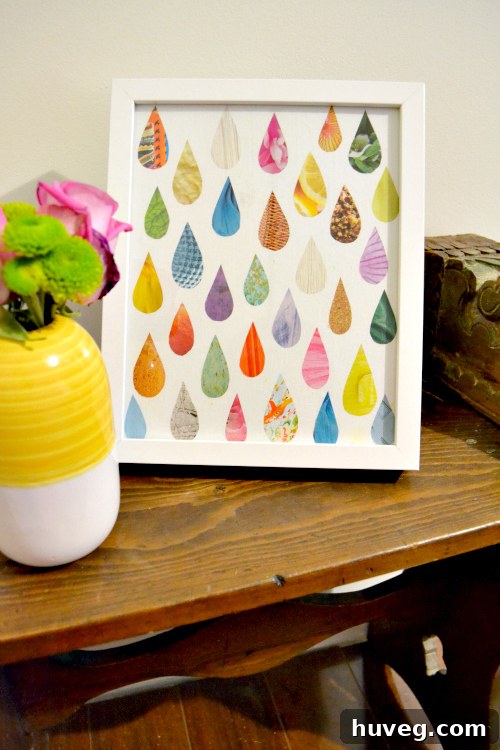
After all the Mod Podge layers have completely dried and cured – which might take several hours or even overnight, depending on environmental conditions – your DIY raindrop collage is ready for its grand debut! This is where your chosen frame comes into play, transforming your craft project into a professional-looking piece of custom home decor. A frame, such as the popular RIBBA frame from Ikea, with its clean lines and minimalist design, will beautifully complement the vibrant, organic shapes of your artwork without overshadowing it. The right frame acts as a window to your creativity, defining the piece and preparing it for elegant display within your home.
With your new artwork framed, you’ve added a wonderful splash of color and unique personality to your space, perhaps a hallway that needed a little awakening, or a blank wall above an entryway bench. While it might be tempting to immediately hang it, sometimes it’s wise to wait. If you have other DIY art projects in the pipeline, it can be beneficial to complete a few more before deciding on the final wall arrangement. This allows you to create a cohesive gallery wall or simply ensures you make the most thoughtful decisions about placement, especially on freshly painted walls where you want to minimize unnecessary holes. Step back, admire your handiwork, and enjoy the immense satisfaction of bringing a unique vision to life, enhancing your living environment with truly personalized wall art.
Embrace Your Inner Crafter: The Joy and Rewards of Creative Expression
It’s truly invigorating to engage in a genuine creative craft project after a period of absence. There’s an undeniable joy and profound sense of accomplishment that comes from flexing those creative muscles and bringing an idea to tangible form. This easy recycled art project not only adds a beautiful, personalized element to your home but also serves as a wonderful reminder of the pleasure of mindful creation and the therapeutic benefits of hands-on work.
The beauty of DIY lies in its accessibility and the boundless possibilities it offers. Whether it’s creating unique wall decor, upcycling old furniture, experimenting with new mediums, or simply adding small, charming accents, every small project contributes to making your living space truly your own. It’s about infusing your personality into your surroundings and creating an environment that genuinely reflects who you are. So, how about you? Have you embarked on any small yet immensely satisfying creative projects recently? We’d love to hear about them! Share your experiences, get inspired by fellow crafters, and continue to explore the rewarding world of DIY. This DIY craft tutorial is just the beginning of what you can achieve with a little imagination, some readily available materials, and a desire to create something wonderful.