My Tile Embraces Its Inner Bon Qui Qui

Mastering Large Format Porcelain Tile: A DIYer’s Guide to Flawless Installation
Embarking on a tiling project, especially with large format porcelain tiles, can be an incredibly rewarding experience. However, it often comes with a steep learning curve and a few surprises – like discovering just how incredibly sharp those seemingly innocent tile edges can be. This isn’t just a casual observation; it’s a crucial safety note. These tiles, when handled improperly, truly willcutyou, emphasizing the paramount importance of caution and protective gear throughout the entire installation process.
The Unexpected Challenges: Sharp Edges and Inconsistent Surfaces
My first significant revelation during this bathroom renovation journey was the surprising sharpness of porcelain tile edges. It’s a detail often overlooked until you’re deep into the project, but it quickly teaches you to respect the material. Always prioritize safety by wearing appropriate heavy-duty gloves to protect your hands from those unforgiving edges. Beyond the inherent sharpness, another unexpected challenge emerged: despite being cut to identical dimensions, these large 12×24 inch rectangles were anything but perfectly flat and level. This inherent variability, a common characteristic of large format tiles, added a layer of complexity to the installation, making precise placement a meticulous art rather than a simple task.
Understanding these initial hurdles is key to a successful DIY tile project. Porcelain, known for its density and durability, often retains a certain amount of internal stress from the firing process, which can manifest as slight bows or warps, especially in larger formats. This doesn’t mean they’re defective; it’s simply a characteristic to anticipate and manage. Being mentally prepared for the nuances of working with materials that aren’t always perfectly uniform sets the stage for addressing issues like lippage effectively, ensuring a professional-looking finish even for a first-time installer. Proper planning, meticulous measurement, and the right tools become invaluable allies in navigating these challenges.
Rectified vs. Non-Rectified Tiles: The Key to Narrow Grout Lines and Modern Aesthetics
The porcelain tile chosen for this bathroom project measured a generous 12×24 inches and was specifically a “rectified” or “dimensionally stable” tile. These terms are more than just industry jargon; they describe a critical difference in manufacturing that significantly impacts the final aesthetic and longevity of your tiled surface. Unlike non-rectified tiles, which are cut to size before baking and thus prone to slight shrinkage and variations, rectified tiles undergo a precise mechanical process of grinding or sawing their edges after they’ve been baked. This post-baking refinement ensures each tile meets incredibly tight dimensional tolerances, meaning every single tile is virtually the exact same size, often with crisp, 90-degree edges.
The primary advantage of rectified tiles, and a major reason for their popularity in contemporary design, is their ability to accommodate very thin grout lines. For this particular bathroom, we opted for 1/16th inch spacers, creating a sleek, contemporary look that minimizes the visual distraction of wide grout. This minimalist approach allows the tiles themselves to be the focal point, enhancing the perception of a larger, more seamless space. Beyond aesthetics, narrow grout lines offer practical benefits: they reduce the surface area where dirt, grime, and mildew can accumulate, making your tiled floor or wall significantly easier to clean and maintain. This makes rectified tiles an excellent choice for anyone seeking a minimalist design and a low-maintenance solution, perfectly aligning with a desire for both style and practicality.
When selecting your tiles, understanding the difference between rectified and non-rectified is crucial for achieving your desired outcome. Non-rectified tiles, often with softer, cushioned edges, typically require wider grout lines (1/8 inch or more) to account for their inherent size variations. While they offer a more traditional or rustic look, they don’t provide the clean, almost monolithic appearance achievable with rectified large format tiles. Always consult with your tile supplier to ensure you’re choosing the right tile type for your specific aesthetic and functional requirements, paying attention to the manufacturer’s recommendations for grout line width.
Battling Lippage: Understanding, Preventing, and Mitigating Uneven Tile Surfaces
The very process that makes large format tiles so appealing – their size – also introduces a unique installation challenge: warping. During the high-temperature baking process, these expansive tiles can develop a slight bow or crown, meaning their height might subtly vary across different areas. This phenomenon is particularly prevalent in the center of the tile compared to its ends, which tend to remain flatter. When these subtly warped tiles are laid against one another, especially with thin grout lines, the height difference at the joints becomes noticeable, creating an uneven surface known as lippage. This isn’t just an aesthetic flaw; severe lippage can create trip hazards, make cleaning more difficult, and can even lead to premature wear or cracking of the tile edges or grout. (I liken it to when my dog, Charlie, makes an Elvis face – slightly amusing but ultimately a minor imperfection that you want to avoid on your floor.)
Preventing and mitigating lippage requires strategic planning and meticulous execution, starting well before the first tile is mixed. Proper subfloor preparation is paramount; ensuring your subfloor is as flat and level as possible provides the best foundation for your tiles. Any dips or humps in the subfloor will be magnified by large format tiles. Self-leveling compounds can be incredibly useful here, creating a perfectly smooth canvas upon which to work. Additionally, employing a tile leveling system, which uses clips and wedges to hold tiles at an even height as the thin-set cures, is highly recommended for large format tiles. These systems apply pressure, forcing adjacent tiles to align, drastically minimizing lippage and resulting in a much smoother, more professional finish. Investing in these relatively inexpensive tools can save countless hours of frustration and significantly elevate the quality of your DIY project, making them an indispensable part of a modern tiling toolkit.
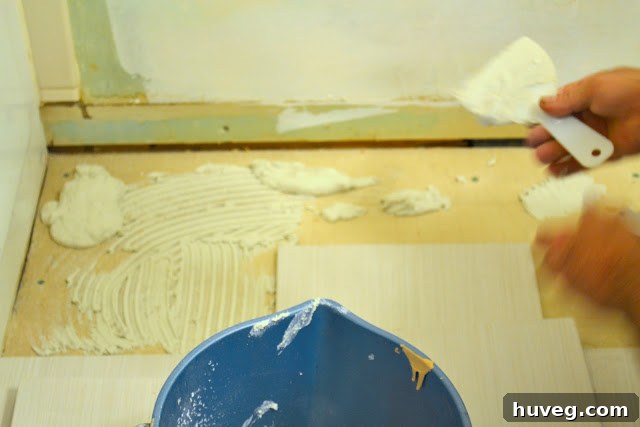
Another crucial factor in preventing lippage is the proper application of thin-set mortar. Using the correct notch trowel size, typically larger for large format tiles (e.g., 1/2 x 1/2 inch square notch or a larger U-notch), is essential to ensure full coverage on the back of the tile (at least 90% coverage for floors, 80% for walls). Back-buttering each tile – applying a thin layer of thin-set to the back of the tile in addition to the floor – further enhances adhesion and helps to fill any minor depressions on the tile back, reducing air pockets and aiding in achieving a flatter surface. The consistency of your thin-set is also important; it should be firm enough to hold a ridge but workable enough to spread easily and allow the tile to be embedded firmly.
Choosing the Right Pattern: Minimizing Lippage with Strategic Staggered Layouts
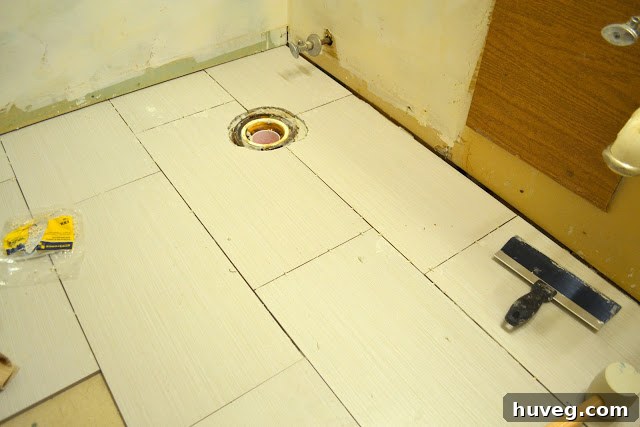
After numerous dry fitting attempts, experimenting with various layouts to minimize the visibility of lippage, a staggered brick pattern emerged as the most effective solution for our 12×24 inch tiles. The conventional half-brick (50/50) offset pattern, while popular and classic for smaller tiles, actually exacerbated the lippage issue with large format tiles. This is because it aligns the highest point (the center) of one tile directly with the end of another, where the tile tends to be flatter, creating a noticeable discrepancy at the joint that’s difficult to conceal.
For large format tiles prone to warping, an offset of 33% (1/3 staggered) or even 25% (1/4 staggered) is often recommended. This shifts the central, potentially warped, area of one tile to align with a more consistent section of the adjacent tile, effectively dispersing and minimizing the visual impact of any slight height variations across multiple joints. A diagonal pattern can also be forgiving as it breaks up the linear lines, making minor inconsistencies less apparent. Always conduct a thorough dry fit before applying any thin-set. Lay out several rows of tiles without adhesive to observe how they interact, paying close attention to the joints and using a straightedge or level to check for lippage. This crucial step allows you to identify potential lippage issues early and adjust your pattern or strategy before committing to the final installation. It’s a small investment of time that can save significant frustration later on.
Beyond lippage, the chosen pattern significantly impacts the overall aesthetic of your bathroom. Popular tile patterns include:
- Straight Lay: Simple, elegant, and modern, but highlights any imperfections. Best for perfectly flat tiles.
- Brick Lay (50/50 Offset): Classic, but often problematic for large format tiles due to lippage.
- 1/3 or 1/4 Offset: Recommended for large format tiles to mitigate lippage, offering a sophisticated staggered look.
- Herringbone: Dynamic and visually interesting, excellent for small spaces or as an accent, but requires more cuts and waste.
- Basket Weave: Creates a woven appearance, often used with square tiles.
- Diagonal: Can make a room feel larger and is forgiving of minor imperfections.
Consider the size of your room, the natural light, and the overall style you’re aiming for when making your final pattern decision. Visualizing with a digital layout tool or a physical dry lay can be immensely helpful.
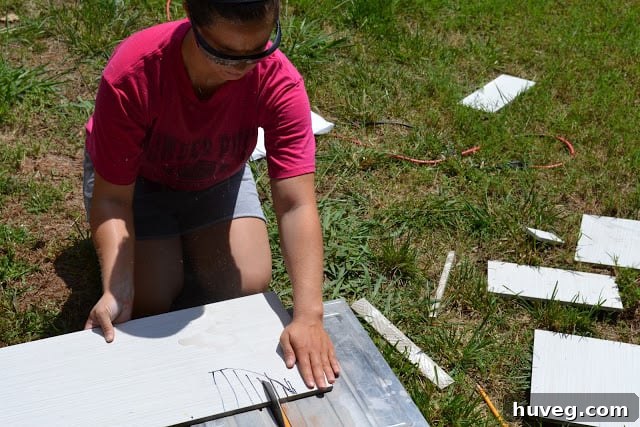
The Art of Tile Cutting: Precision, Preparation, and Prioritizing Safety Outdoors
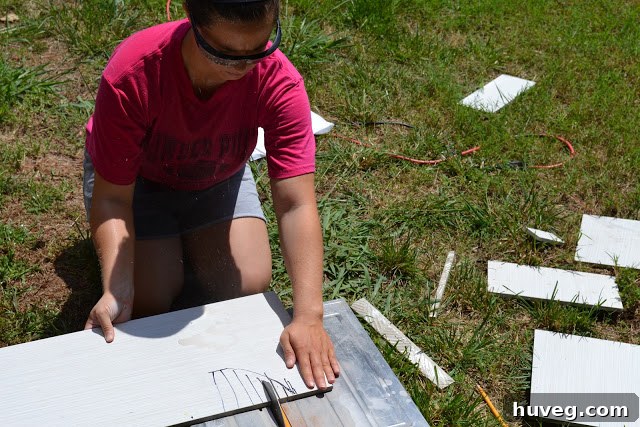
While my partner, Tony, meticulously laid tiles upstairs, my domain was the lawn outside, tasked with the critical job of cutting pieces to fit around obstacles and edges. This task, surprisingly, became a very enjoyable part of the process – a rhythmic dance with the wet saw, transforming raw tile into custom shapes. That is, until my Dad, with the best intentions, decided the tile saw’s water reservoir needed a top-up, proceeded to fill it vigorously with a garden hose, and then found great amusement in my ensuing, utterly drenched state. Apparently, the crucial splash guard was enjoying a day off at home. Har har! Nothing says “DIY chic” like sludgy hair, right?
Jokes aside, tile cutting demands respect and proper technique. A wet saw is indispensable for cutting porcelain, providing clean, precise cuts while minimizing dust. Always ensure the water reservoir is adequately filled to lubricate the blade and cool the tile, but remember to maintain the splash guard for your own protection! Beyond wet saws, other tools like snap cutters are excellent for straight cuts on ceramic and some porcelain tiles, while an angle grinder with a diamond blade can handle intricate cuts and grinding edges for curves or small notches. Regardless of the tool, safety glasses are non-negotiable to protect against flying debris, and hearing protection is highly recommended, especially for prolonged use of power tools. Proper ventilation, especially when cutting indoors with a grinder, is also crucial to avoid inhaling harmful silica tile dust. Embracing the outdoor cutting station, despite the occasional shower, truly minimizes mess and promotes a safer working environment. Always measure twice, cut once, and double-check your cuts against the space they’re intended for.
Before you even start cutting, it’s vital to mark your tiles accurately. Use a grease pencil or a fine-tip permanent marker for clear lines. For intricate cuts, creating a template out of cardboard or scrap material can save valuable tiles. When using a wet saw, allow the blade to reach full speed before feeding the tile slowly and steadily. Never force the tile through the blade; let the diamond do the work. For L-shaped cuts or notches, make multiple straight cuts into the waste area before breaking off the pieces. Remember to account for the thickness of the grout line when measuring for cuts around walls or fixtures.
The Waiting Game: Curing and Grouting for a Lasting and Beautiful Finish
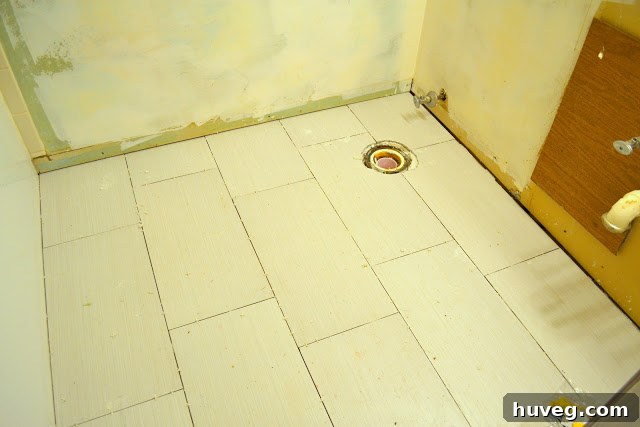
By late afternoon, the last tile was meticulously placed, marking the end of the day’s intense labor. We were exhausted but immensely satisfied, knowing the bulk of the installation was complete. However, the work isn’t truly done until the thin-set adhesive has had ample time to cure. This curing period is crucial; rushing to grout can compromise the bond between the tile and the subfloor, leading to potential issues down the line such as loose tiles, cracking, or moisture penetration. Depending on the type of thin-set used, the ambient humidity, and temperature, this can take anywhere from 24 to 72 hours, sometimes even longer for thick beds or in cooler, damp conditions. Patience truly is a virtue in tiling, as proper curing ensures the long-term stability and durability of your new floor.
With the tiles fully cured after several days, the next phase – grouting – can begin. Grouting transforms individual tiles into a cohesive, finished surface, filling the gaps, providing structural integrity, and protecting the subfloor from moisture. There are various types of grout available, each suited for different applications:
- Sanded Grout: Contains sand, making it suitable for wider joints (typically 1/8 inch and above). The sand provides strength and prevents cracking in wider applications.
- Unsanded Grout: Finer in texture, ideal for narrower joints (less than 1/8 inch) and for use with delicate tiles that might scratch from sand.
- Epoxy Grout: Highly durable, stain-resistant, waterproof, and ideal for wet areas like bathrooms and kitchens, but also more challenging to mix and apply due to its fast cure time and sticky nature.
- Fugitive/Specialty Grouts: Newer options like pre-mixed grouts or those with enhanced flexibility and stain resistance.
For our 1/16th inch lines, unsanded or a specialty fine-sanded grout would be appropriate to achieve that clean, modern look. Proper grout application, ensuring all joints are fully packed and excess removed promptly with a damp sponge, is key to preventing future moisture penetration and maintaining the integrity and appearance of your beautiful new floor. Don’t forget to consider sealing your cementitious grout after it cures (typically 48-72 hours after application) to enhance its stain resistance and prolong its life, making maintenance even easier.
Looking Ahead: Lessons Learned and Future Renovations for DIY Success
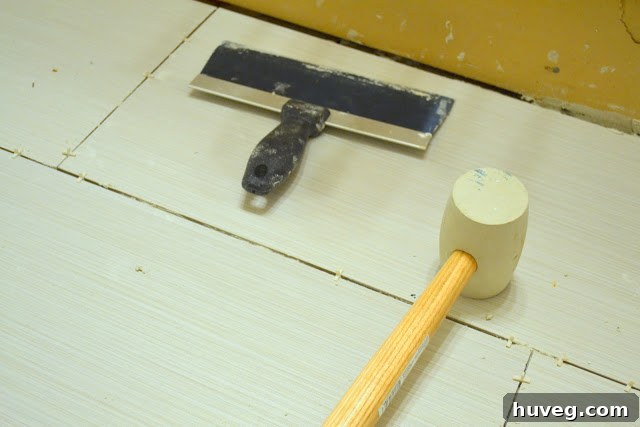
This bathroom tiling project wasn’t just about renovating a space; it was a comprehensive learning experience, a hands-on masterclass in the nuances of large format porcelain. The benefit of having two rooms requiring the same major undertaking (this bathroom and the primary bath) is that the first becomes a trial run, a chance to refine techniques, understand the material’s quirks, and optimize the process. We’ve certainly learned invaluable lessons about dealing with sharp edges, the subtle but significant challenges of lippage, and the art of precise cutting – often through trial and error, a hallmark of many DIY endeavors. I plan to document the primary bath renovation with a detailed tutorial, including all our “unofficial” but highly effective tile tools – like my trusty taping knife, which proved surprisingly versatile for everything from scraping thin-set to nudging tiles. I’ll be sure to capture more in-depth photographs and share even more tips and tricks, insights into specific tools, and common pitfalls to avoid when I tackle that next room.
There’s an immense sense of relief and accomplishment in making such tangible progress in this room. While renovations often unfold slower than anticipated, fraught with unexpected delays and discoveries, the journey itself is part of the reward. It builds skills, fosters resilience, and provides a profound satisfaction in creating something with your own hands. For anyone considering their own DIY tile project, my advice is to research thoroughly, invest in quality tools (especially a good wet saw and a leveling system for large format tiles), and most importantly, embrace patience. The process will test you, but the outcome of a beautifully tiled space, crafted with care, is truly priceless.
Who knows? Perhaps by the start of my next “semester” of life, this bathroom will be fully remodeled, sparkling and complete. Or, more realistically, maybe it’ll be about halfway there, as seems to be the usual pace for ambitious DIY projects, allowing life to unfold around the renovation. But this time, definitively with a functional toilet – a non-negotiable cornerstone of any bathroom, no matter the stage of completion! Every step, however small, is progress towards creating the home of your dreams, one tile at a time.