Urban Industrial Wood and Steel Desk Project

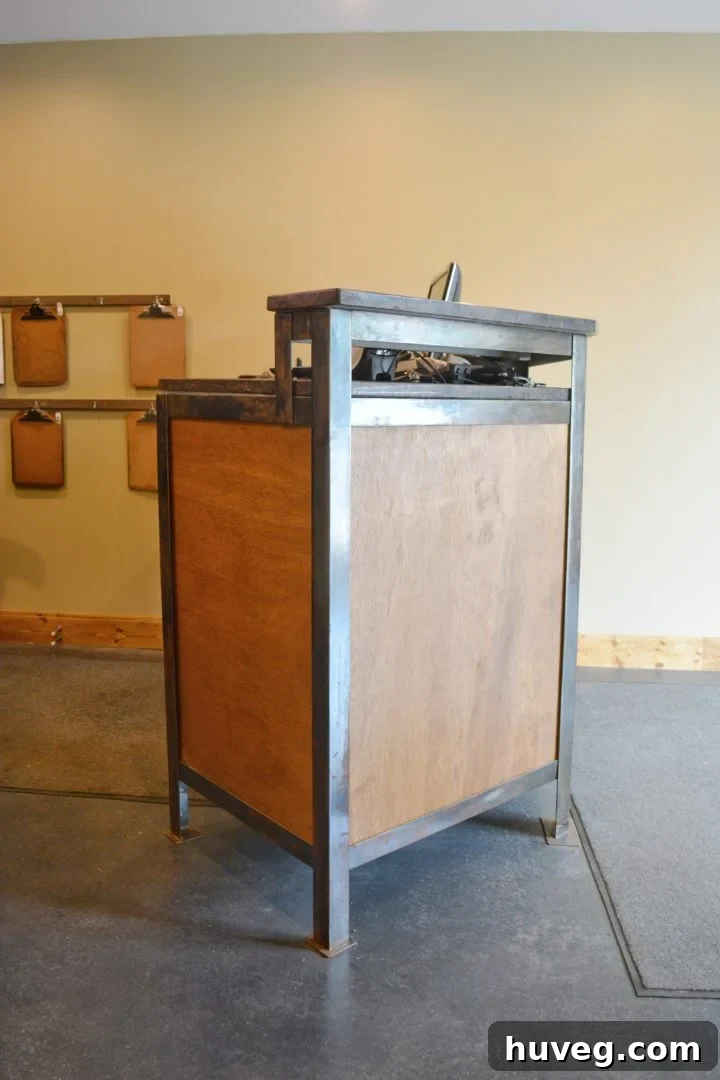
Hello DIY enthusiasts! Tylynn here again from Bitterroot DIY, excited to share a project that’s a step up from my usual scrap wood creations. This week, we’re diving into a more ambitious build: a robust and stylish industrial desk, crafted from a compelling blend of wood and metal. This desk isn’t just furniture; it’s a statement piece, offering unparalleled durability and a distinctive aesthetic perfect for any workspace, especially a busy auto shop or a modern home office.
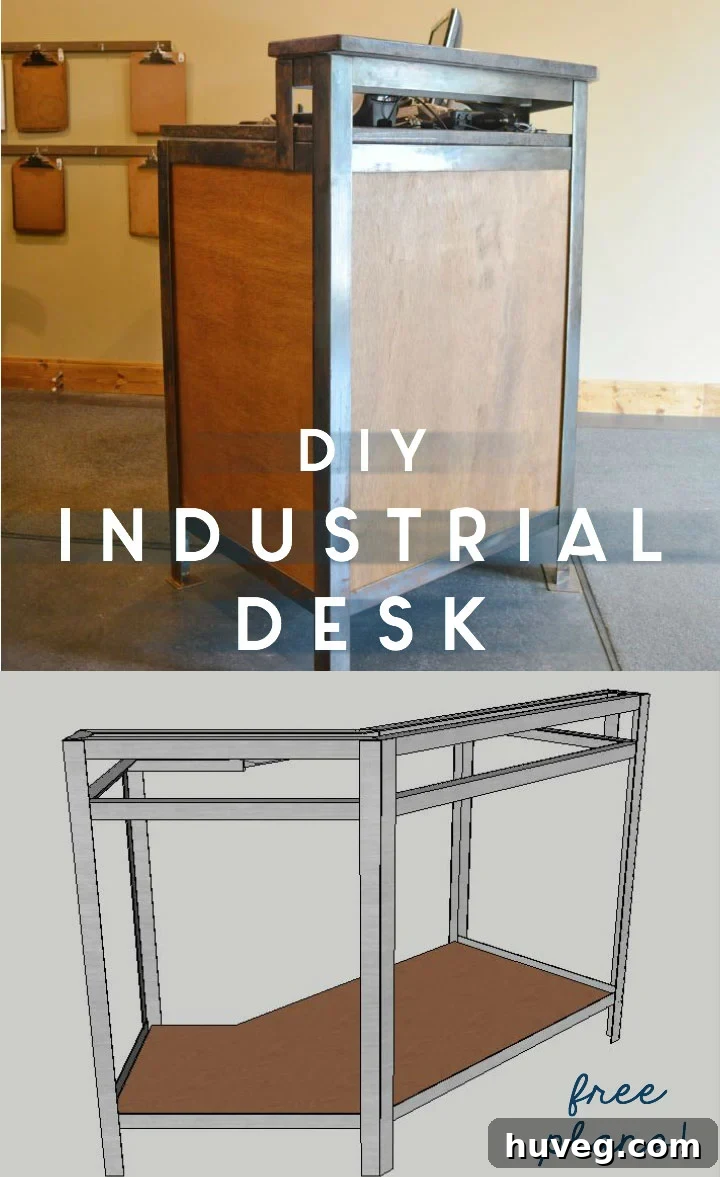
The inspiration for this industrial desk came a few months ago when my Father-in-law needed a new, sturdy workstation for his auto shop. I envisioned a desk that could withstand the rigors of a workshop environment while exuding a timeless industrial charm. Though I have a foundational understanding of welding, I currently lack the specialized equipment required for such a large-scale metal fabrication. Therefore, I drafted the detailed plans and collaborated with one of my Father-in-law’s skilled friends, who expertly welded the metal frame. Once the frame was returned to me, I took over, meticulously constructing and finishing the wooden components. This truly was a collaborative effort, and the finished industrial desk now stands proudly in the shop, a testament to teamwork and thoughtful design.
Why Choose a DIY Industrial Wood and Metal Desk?
Opting to build your own industrial desk offers a multitude of benefits over purchasing a pre-made one. Firstly, it allows for complete customization to fit your exact space and functional needs. Whether you require specific dimensions for a tight corner or desire unique storage solutions, a DIY approach puts you in control. Secondly, the industrial aesthetic, characterized by its raw materials and functional design, is incredibly versatile. It seamlessly blends with various decor styles, from modern minimalist to rustic farmhouse. Beyond aesthetics, the combination of wood and metal guarantees exceptional durability. This desk is built to last, capable of supporting heavy equipment and enduring daily wear and tear, making it an ideal choice for workshops, garages, and even high-traffic home offices. Lastly, there’s an immense sense of accomplishment that comes with crafting a piece of furniture with your own hands, especially one as substantial and visually striking as this industrial desk.
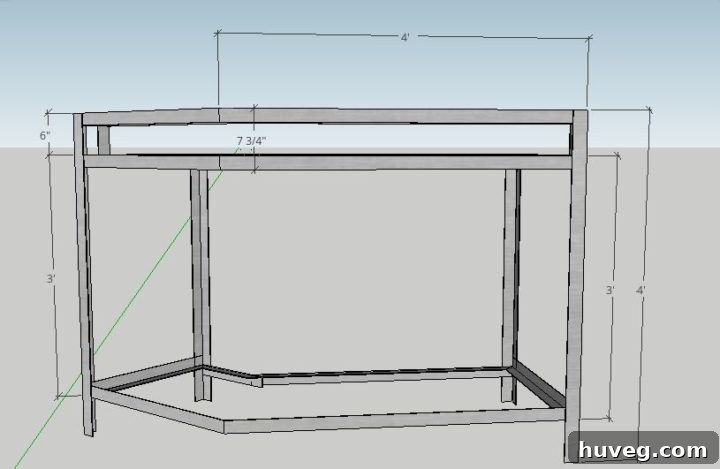
For those eager to replicate this project, I’ve provided the overall dimensions for the metal frame. Please note that while I have experience in building, I’m not a professional welder, so detailed step-by-step welding instructions are outside the scope of this tutorial. However, I’m always happy to clarify the design aspects if you have any questions. Feel free to reach out via email or leave a comment on my blog. Remember, safety first! Always wear appropriate personal protective equipment (PPE) when working with power tools or undertaking welding tasks, and ensure you have a clear, safe workspace.
Essential Materials and Tools for Your Industrial Desk Project
Before embarking on this rewarding DIY journey, it’s crucial to gather all your materials and tools. Preparation is key to a smooth and successful build. Here’s a comprehensive list to get you started:
For the Metal Frame (Welding Component)
- Steel: Approximately 35-40 feet of 2-inch right angle steel (or a preferred steel pipe/tubing for the frame). The right-angle profile is highly recommended for securely nesting the plywood panels.
- Welding Equipment: MIG or TIG welder, welding helmet, gloves, jacket, and other safety gear.
- Metal Cutting Tools: Angle grinder with a cutting disc or a metal chop saw.
- Clamps: Various welding clamps to hold pieces securely during fabrication.
- Measuring Tools: Tape measure, speed square, level.
- Grinding Discs: For smoothing welds and edges.
- Rust-Preventative Primer & Paint: To protect the metal frame and achieve the desired finish.
For the Wood Components
- Plywood: Two 4×8 sheets of 1/2-inch plywood. This will be used for the bottom shelf, side panels, and front sections of the desk. Ensure you select a good quality plywood, especially if you plan to stain it for a visible finish.
- Wood Finish: Wood stain (e.g., Minwax Special Walnut for a rich, warm tone), wood sealant or polyurethane for protection.
- Adhesive: Heavy-duty construction adhesive like Liquid Nails for securing wood to metal.
- Interior Shelves (Optional): Additional plywood or planks for internal storage, along with right-angle brackets for installation.
General Tools & Supplies
- Wood Cutting Tools: Circular saw, miter saw, or table saw for precise plywood cuts.
- Measuring and Marking: Tape measure, carpenter’s square, pencil.
- Sanding Supplies: Sandpaper (various grits), orbital sander for smooth finishes.
- Clamps: Wood clamps to hold plywood during adhesive curing.
- Drill: For pre-drilling holes if using screws for additional fastening (optional).
- Safety Gear: Safety glasses, hearing protection, dust mask, work gloves.
Step-by-Step Guide: Crafting Your Industrial Desk
Step 1: Fabricating the Robust Metal Frame
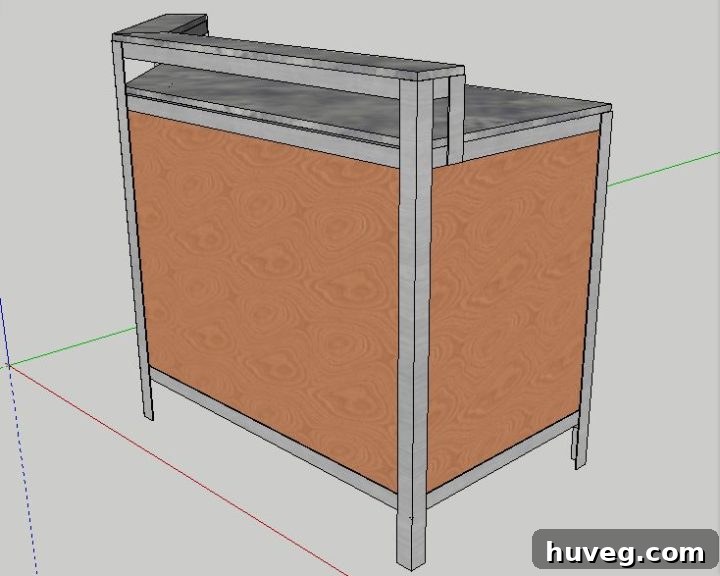
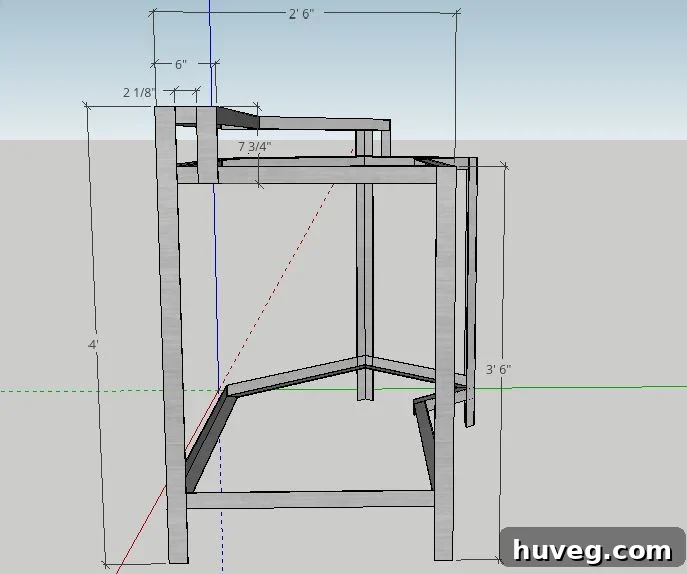
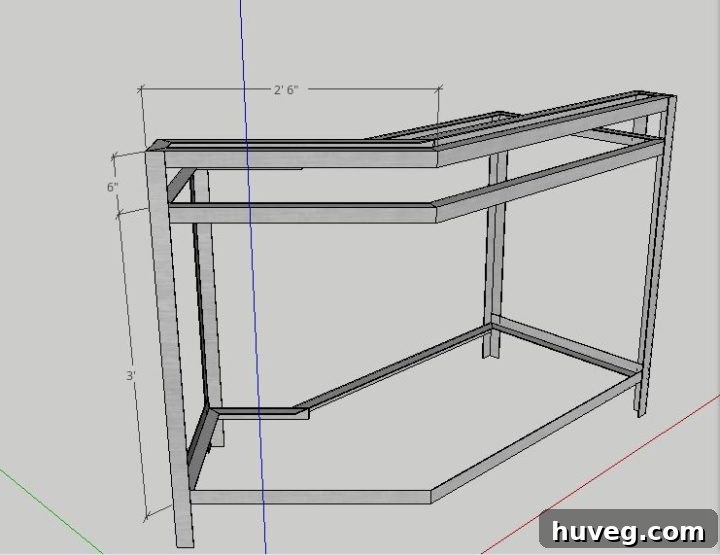
The foundation of this industrial desk is its sturdy metal frame. Precision in this step is paramount, as all subsequent wood components will fit into this framework. As mentioned, I outsourced the welding of my frame, but for those with welding skills and equipment, I’m providing the crucial dimensions to guide your fabrication. The design utilizes 2-inch right angle steel, which offers a lip perfect for supporting the plywood panels, ensuring a snug and flush fit. If you opt for a different type of steel, remember to adjust your wood cutting plans accordingly to account for its profile and how the wood will be secured.
Here are the overall dimensions for constructing the frame:
Front View Schematic
Right Side View Schematic
Left Side View Schematic
Top View Schematic
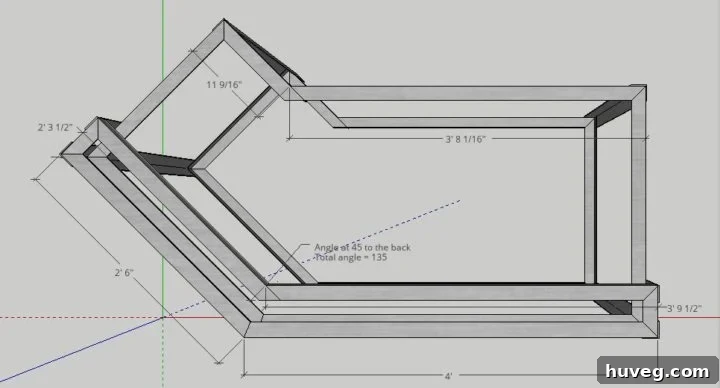
As designed, the frame is constructed with 2-inch right angle steel. This specific profile is key to how the plywood will integrate into the desk structure, providing a natural ledge for the wood panels to rest against. While you have the freedom to choose a different style of steel pipe or tubing, keep in mind that the right-angle steel makes for an incredibly clean and stable installation of the plywood. Ensure all welds are strong and clean, and grind down any sharp edges or spatter for a smooth finish before priming and painting the metal frame with your chosen color.
Step 2: Precision Cutting and Finishing the Wood Elements
With the metal frame complete, it’s time to bring the warmth and texture of wood into the design. You will need two 4×8 sheets of 1/2-inch plywood for the bottom shelf, the side panels, and the front sections of the desk. A critical tip here: always measure your *finished* metal frame before making your final wood cuts. Welding can sometimes introduce slight variations, and measuring your actual frame will ensure a perfect fit for your plywood pieces. However, in an ideal scenario where the frame is perfectly true to the plans, here is your cutting list:
- 1 | 1/2″ Plywood @ 2′ 5″ x 2′ 11 3/4″ (right side panel)
- 1 | 1/2″ Plywood @ 3′ 11″ x 2′ 11 3/4″ (front right panel)
- 1 | 1/2″ Plywood @ 2′ 5″ x 2′ 11 3/4″ (front left panel)
- 1 | 1/2″ Plywood @ 1′ 11″ x 2′ 11 3/4″ (left side panel)
- Cut the bottom shelf to fit as shown in the diagram below. This will likely be two pieces that meet in the middle, or one large piece with specific cutouts to fit around the frame’s uprights.
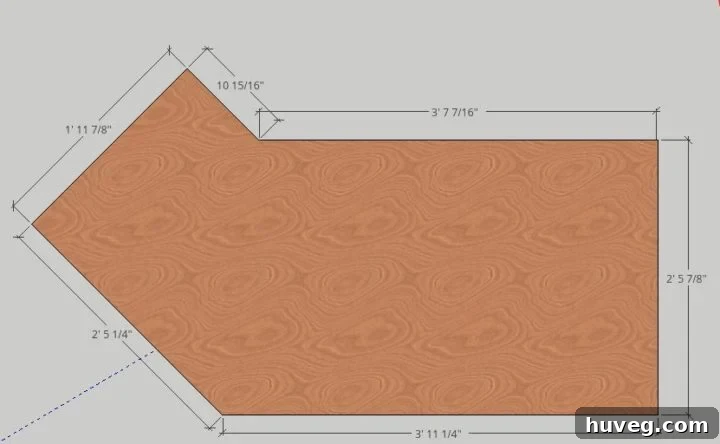
Once all your plywood pieces are cut, perform a dry-fit within the metal frame. This is a crucial step to identify any minor adjustments needed before applying finishes or permanent adhesive. Start by placing the bottom shelf sections into position, ensuring they sit flush against the right-angle steel and that all edges meet cleanly.
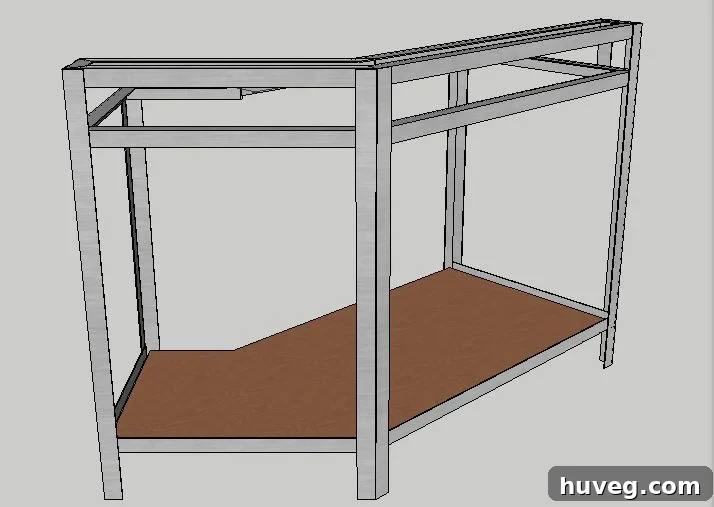
Next, carefully work your way around, dry-fitting the side and front panels. Check for tight seams and ensure all pieces align as intended. Make any necessary adjustments by sanding or trimming the wood until you are completely satisfied with the fit and appearance.
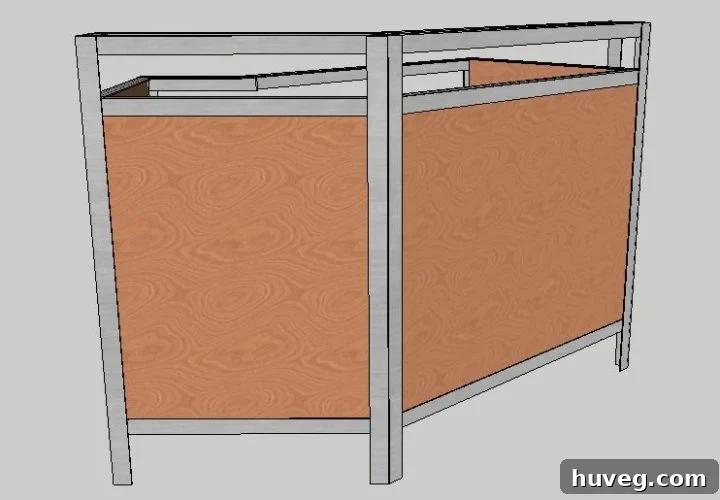
Once you are confident with the fit, remove all the wood pieces from the frame. Now is the ideal time to apply your desired finish. Staining and sealing the wood separately from the metal frame is significantly easier and allows for a more uniform and professional finish than trying to do so once everything is assembled. For this project, I chose Minwax Stain in Special Walnut, which imparts a rich, classic hue that beautifully complements the industrial metal. Apply your stain following the manufacturer’s instructions, allowing adequate drying time between coats, then follow with a protective topcoat like polyurethane for durability.
After the stain and sealant are completely dry and cured, it’s time to permanently attach the wood panels to the metal frame. Apply a generous bead of a strong construction adhesive, such as Liquid Nails, to the inner ledges of the right-angle steel where the plywood will sit. Carefully place each wood panel back into position, pressing firmly to ensure good adhesion. Use clamps or temporary supports to hold the panels in place while the adhesive cures fully, according to the product instructions. This secure bond ensures the desk’s stability and longevity.
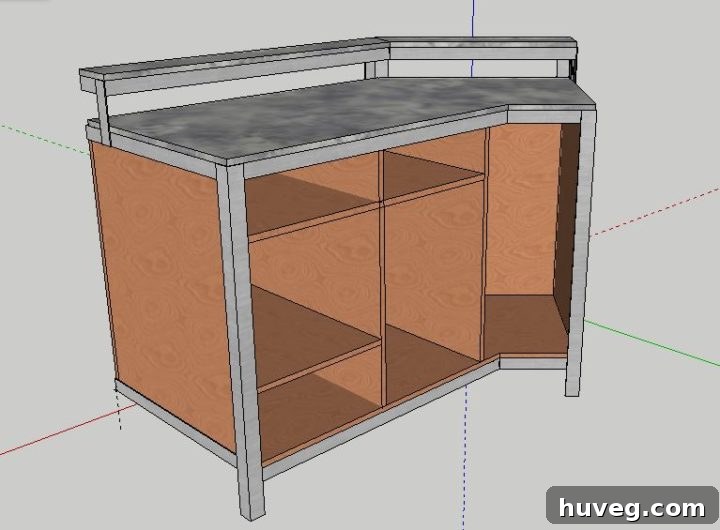
For added functionality, we incorporated a few interior shelves into the design. These were cut from leftover plywood and securely attached to the bottom shelf and side panels using right-angle brackets, creating practical storage compartments within the desk’s structure. This is an excellent way to maximize utility and keep your workspace organized.
Step 3: Installing Your Custom Countertop
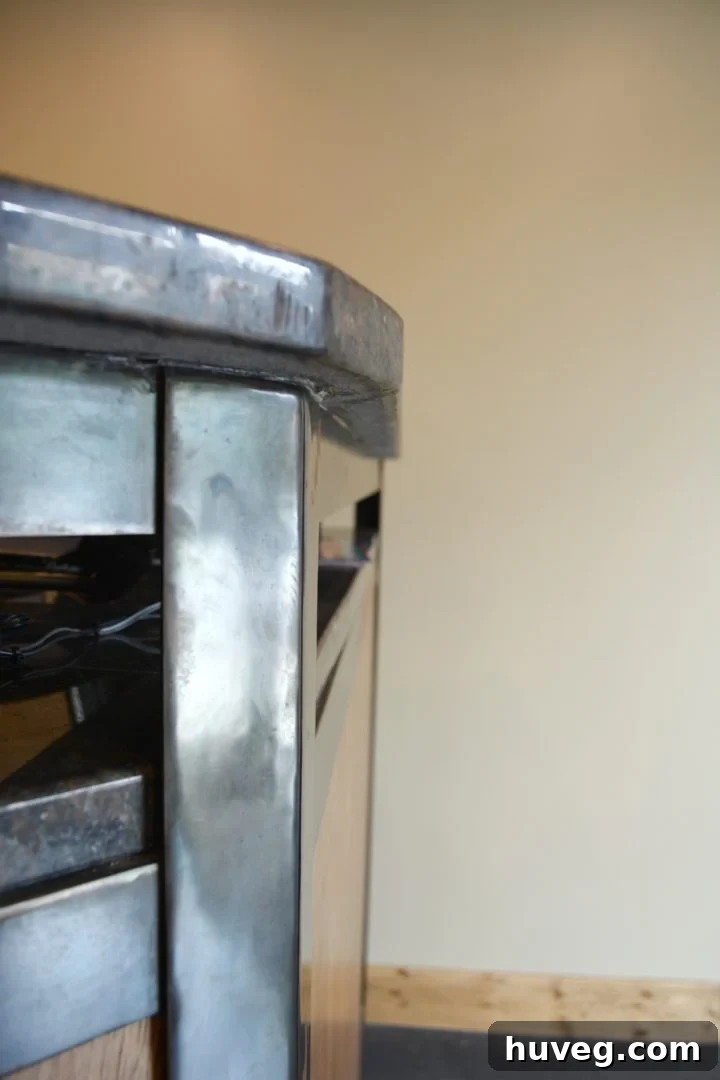
The final step in constructing your industrial desk is installing the countertop, which truly defines the surface and completes the aesthetic. For my Father-in-law’s auto shop desk, we opted for a piece of durable granite. This choice not only adds significant weight and stability but also provides an extremely resilient work surface, perfect for heavy-duty tasks. We attached the granite using the same reliable construction adhesive, Liquid Nails, ensuring a strong and lasting bond.
However, the beauty of a DIY project is the freedom of choice. While granite offers superior durability and a premium look, you have a wealth of other options for your countertop, each with its own advantages. You could use additional plywood for a cohesive, cost-effective finish, solid wood planks for a warmer, more traditional feel, or even a poured concrete slab for an ultra-modern, rugged industrial vibe. Consider the intended use of the desk, your budget, and your personal aesthetic preferences when making this important decision. Whichever material you choose, ensure it is securely fastened to the top of the metal frame for safety and stability.
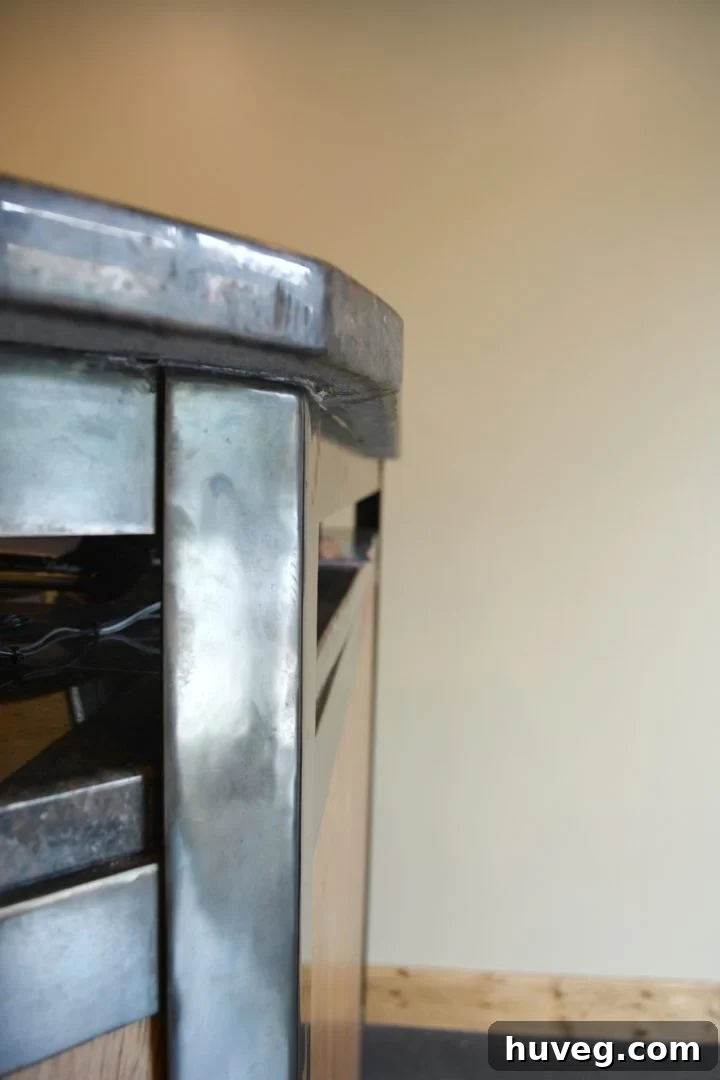
The Finished Industrial Desk: A Blend of Style and Functionality
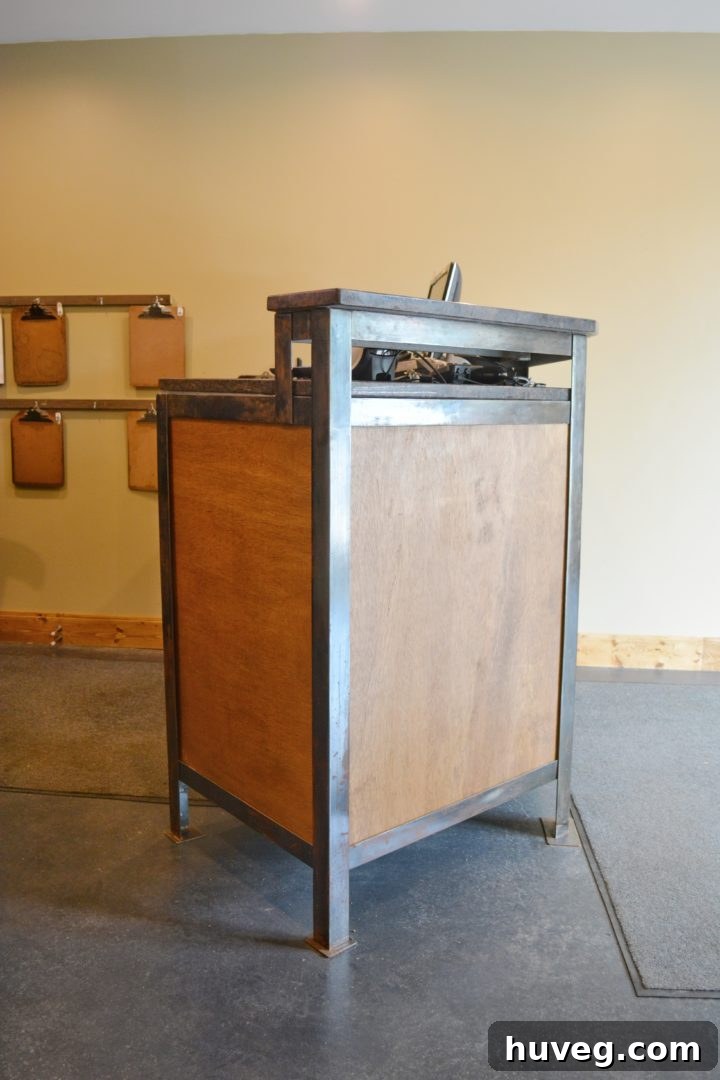
I am absolutely thrilled with how this industrial desk turned out. The combination of the raw strength of the metal and the natural beauty of the stained wood creates a rich character that’s both functional and visually appealing. It perfectly suits the energetic environment of an auto shop, providing a durable surface for work while adding a touch of sophisticated industrial design. This desk proves that practical pieces can also be incredibly stylish.
I hope these free plans inspire you to tackle your own industrial desk project! Happy DIY-ing!
Explore More DIY Woodworking Projects and Ideas
If you enjoyed building this industrial desk and are looking for more project ideas that blend functionality with great design, I’d love for you to stop by my blog, Bitterroot DIY. You’ll find a wealth of tutorials, tips, and inspiration for all your home improvement and woodworking endeavors. Don’t forget to also find me on Pinterest for a visual feast of creative projects, and to stay updated with my latest shenanigans, be sure to follow me on Instagram!
Don’t forget to pin this project for later inspiration!
More Woodworking Plans
SEE ALL PLANS
Dive into these fantastic woodworking projects, ranging from elegant furniture pieces to thoughtful DIY gift ideas. Each plan includes detailed PDF instructions, precise measurements, and additional insights to ensure your next woodworking project is a breeze and a joy to complete!
-
DIY Floating Bookcase | Free Plans
-
How to Build a Better Bee House | Free Plans
-
DIY Desk Organizer | Free Plans
More from Tylynn