Island Odyssey

The Ultimate Kitchen Revival: From Laundry Room Finish Line to Dream Island Design
With the laundry room appliances finally in place and that project beautifully wrapped up, it’s an incredibly satisfying feeling to pivot back to the heart of the home: the kitchen. This isn’t just about aesthetic upgrades; it’s about reclaiming functionality and sanity. Living with dishes in the living room is a quirky phase that reminds me far too much of my college days – a phase I’m more than ready to leave behind! My ultimate goal is a kitchen that’s not only visually stunning but also highly efficient and a joy to spend time in. Let’s dive into the next crucial steps of this exciting kitchen transformation journey.

Tackling the Kitchen To-Do List: Cabinets, Backsplash, and the Perfect Island
Every successful kitchen renovation requires a clear roadmap, and I’ve outlined three immediate priorities to bring this space closer to its full potential. Each step, from the smallest brushstroke to the largest furniture piece, plays a vital role in creating a cohesive and inviting environment.
Painting Cabinets: A Fresh Coat for Upper Storage
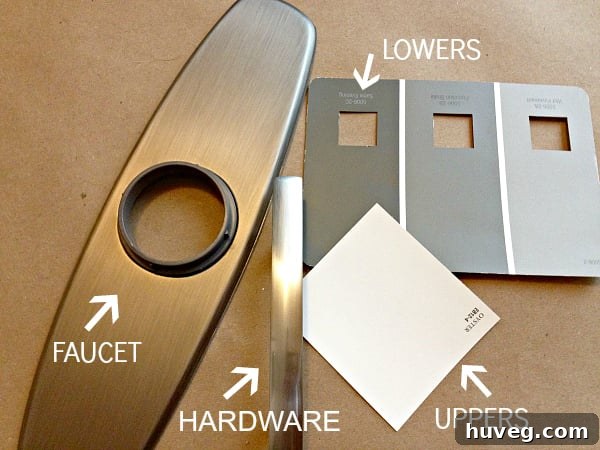
The first item on my agenda is completing the painting of the upper kitchen cabinets. It’s an ongoing labor of love, requiring patience and precision. I’ve got at least one more coat to go, but the coverage so far has been exceptionally good, which keeps my spirits high and my optimism flowing. I’m confident I can knock this out within the next week, ideally before the rush of Christmas festivities begins. Painting cabinets is more than just changing a color; it’s about revitalizing the entire room’s atmosphere. A fresh coat of paint brightens the space, reflects light, and provides a clean canvas for the next stages of design. Choosing the right paint and technique is crucial for durability and a professional finish, ensuring these cabinets withstand the test of time and daily use. This seemingly simple task lays the groundwork for the industrial chic aesthetic I’m aiming for, creating a crisp backdrop for the forthcoming design elements.
Finding the Perfect Kitchen Backsplash: Eradicating the “Bio Hazard”
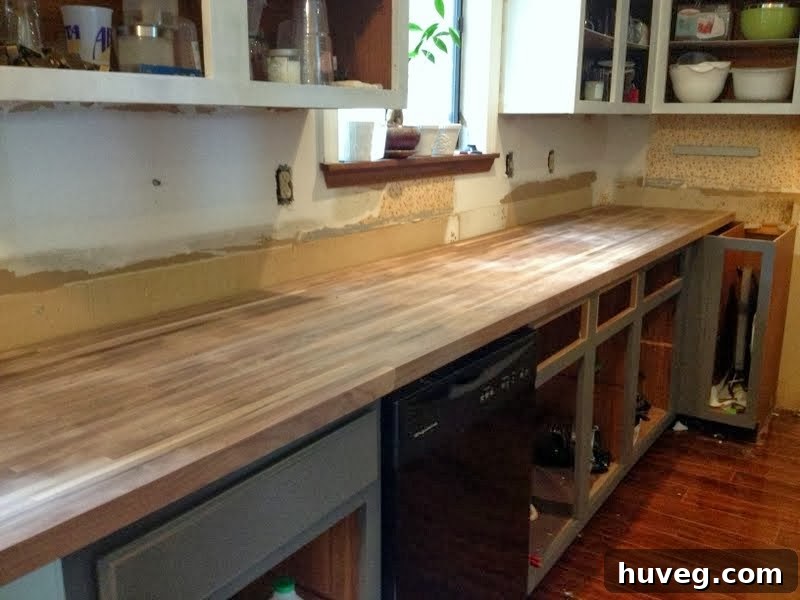
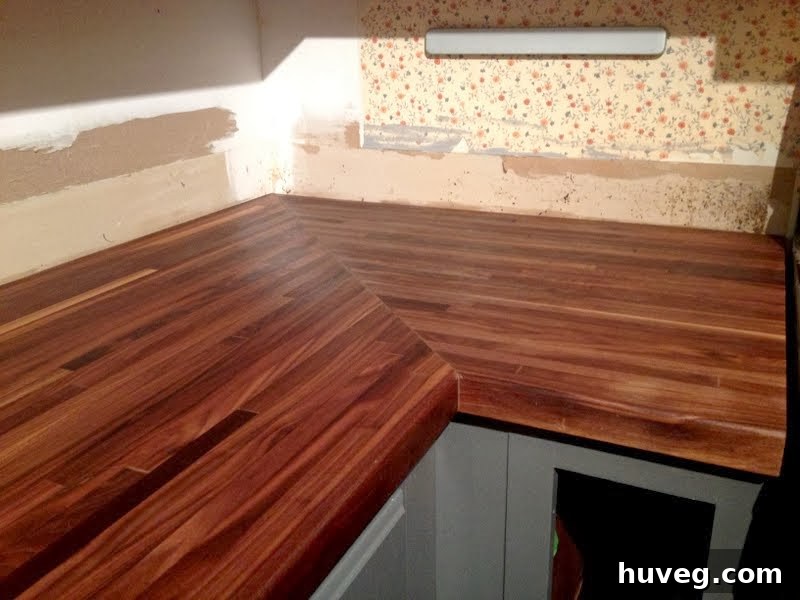
Next up is arguably the most urgent aesthetic fix: finding and installing a kitchen backsplash to cover those truly unappealing walls. While I absolutely adore my new butcher block countertops – their warmth and natural beauty are undeniable – I simply cannot cook or truly enjoy this kitchen if I have to constantly stare at the unsightly stains and imperfections on the walls. I’ve scrubbed and scrubbed with various cleaning agents, but these stubborn marks, remnants from a previous countertop and wallpaper removal, seem permanently etched. That section under the wallpaper is what was hiding behind the old countertop, a testament to years of forgotten grime. Until these glaring stains are properly covered, my mind can’t help but register “BIO HAZARD!” every time I glance at them. Blech. A backsplash is not just about aesthetics; it’s about hygiene, protection, and creating a focal point that ties the kitchen design together. The right tile will not only conceal the past but also introduce texture, pattern, or color, complementing the butcher block and the industrial elements I plan to introduce. This decision will significantly elevate the kitchen’s appeal and make it a space where I genuinely love to prepare meals.
Designing the Heart of the Kitchen: The Industrial Island
And third – and the star of today’s discussion – is the kitchen island. My kitchen is generously sized, offering ample space to accommodate a central island, which will undoubtedly become a pivotal feature of the room. Given that all my existing counters are adorned with beautiful butcher block, I’m leaning towards an industrial aesthetic for the island. This choice will perfectly complement the new hardware I’ve selected for the cabinets, creating a harmonious yet visually intriguing blend of styles. While I have enough leftover butcher block from the main countertop installation to construct the island’s surface, I’m captivated by the idea of using a different material for the island top. This contrast will add visual interest, prevent the space from feeling monotonous, and allow the island to stand out as a distinctive piece.
Why an Island? Benefits Beyond Aesthetics
A kitchen island is far more than just a piece of furniture; it’s a multifunctional hub. It offers invaluable additional prep space, making meal preparation more efficient and enjoyable. It can serve as an informal dining area, a homework station, or a gathering spot for friends and family. For kitchens with an open concept, an island acts as a gentle divider, defining the kitchen area without sacrificing the spacious feel. The strategic placement of a well-designed island can significantly enhance the flow and ergonomics of any kitchen.
Embracing the Open Concept: A Lighter, More Functional Island
I’ve deliberately moved away from options that feature closed-in cabinetry at the base of the island. My kitchen is one of the larger rooms in the house, and a key design principle for me is to maintain that expansive, open feel. Introducing an island with heavy, solid cabinetry on the bottom would inevitably make the space feel smaller and more enclosed, counteracting the natural spaciousness I appreciate. Instead, my search is focused on a prep table style island, ideally with open shelving. This design choice offers several advantages: it keeps the visual weight of the island light, allowing light to flow through and around it, thus preserving the airy ambiance. Open shelving also provides readily accessible storage for frequently used items, cookbooks, or even decorative pieces, blending functionality with display opportunities. The practicality of open shelving appeals greatly to my desire for an uncluttered yet accessible kitchen environment.
The Appeal of Mobility: Locking Casters for Versatility
An added bonus I’m actively seeking in my ideal island is the inclusion of locking casters on the bottom. The ability to move the island, even slightly, offers incredible versatility. Whether it’s to reconfigure the kitchen for a large gathering, clean thoroughly underneath, or simply adjust the workspace as needed, mobility is a highly desirable feature. Locking casters ensure the island remains stable and secure during use, yet provides the flexibility to adapt the kitchen layout on demand. This feature perfectly aligns with a modern, adaptable kitchen design philosophy.
Navigating the Price Gap: Finding Value in Prep Tables
One interesting observation during my search for the perfect prep table is the significant pricing disparity. Most prep tables I’ve encountered are either surprisingly inexpensive – perfectly within my budget – or astronomically priced, falling way beyond what I’m willing to spend. There seems to be a curious gap in the market, with very few options in the mid-range. While the reasons for this pricing gap are unclear, I’m simply thrilled that there are viable options that fit both my design preferences and my financial constraints. As long as I can find something that meets my criteria without breaking the bank, I’m a happy camper.
Inspiration and Ideal Features
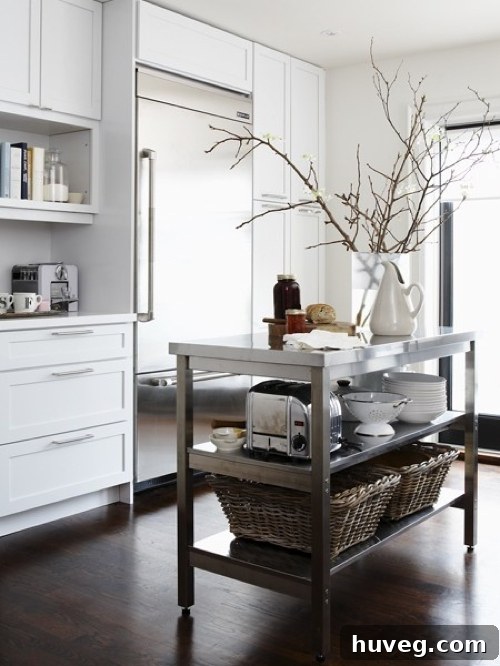
For the sake of pure inspiration, just take a moment to admire this absolutely drool-inducing setup from House and Home. It embodies much of what I’m looking for: a sleek, functional prep table with open storage that exudes understated elegance. This image serves as a powerful visual guide for the direction I want to take with my own kitchen island. The clean lines, the robust structure, and the practicality of the open shelves resonate deeply with my vision for a modern industrial kitchen.
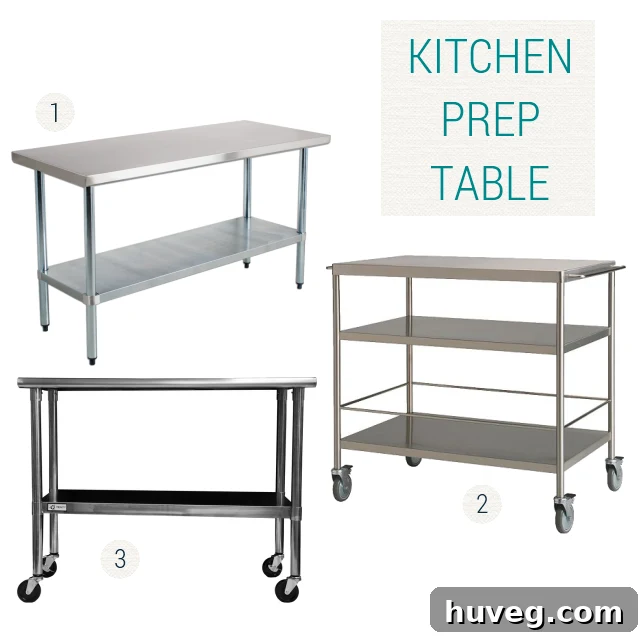
My Top Three Contenders for a Kitchen Island
Following countless hours of online browsing and comparison, I’ve narrowed down my search to three strong contenders. Each offers a unique blend of features and potential for customization. My ultimate goal is a piece that feels substantial, functional, and aligns with the industrial aesthetic.
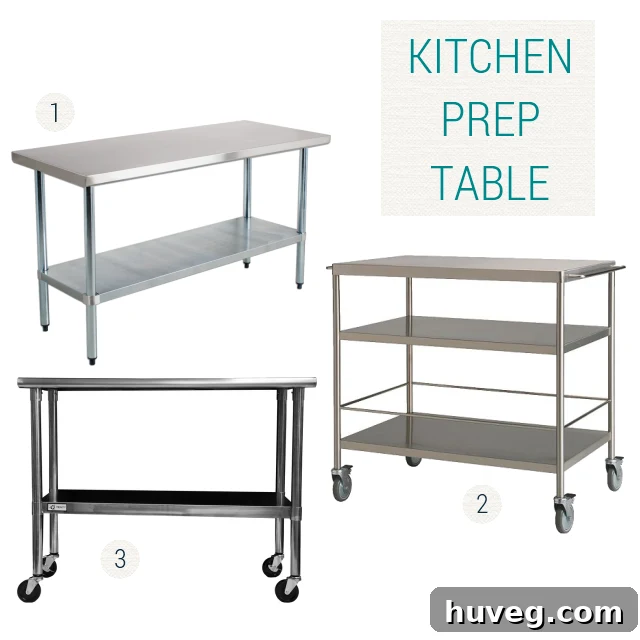
1 / 2 / 3
Ideally, I envision an island with the same robust, square legs as seen in my inspiration picture, coupled with three spacious shelves for maximum storage and utility. However, I’m prepared to make a compromise and work with two shelves if that’s the best option available. What I absolutely cannot compromise on is the perceived flimsiness of the unit. The island needs to feel sturdy and substantial, a true workhorse in the kitchen. The thinner legs of the Ikea version (#2), while appealing in other aspects, don’t quite hit the mark for the solid industrial feel I’m after. Yet, I appreciate its additional middle shelf and the convenient towel bars on either side, which are practical touches. The beauty of these flat-packed options, particularly commercial prep tables often found at restaurant supply stores or home improvement retailers, is their inherent hackability. This opens up a world of DIY possibilities, allowing me to potentially customize the legs or even combine different materials. Imagine a striking blend of wood and stainless steel for the legs, adding another layer of visual intrigue and unique character to the kitchen. This customization potential is what truly excites me about these choices, enabling me to create a piece that is not just functional but also a unique expression of my design vision.
Your Kitchen Island Journey
Choosing a kitchen island is a deeply personal decision, influenced by space, style, budget, and functional needs. For me, it’s about blending an industrial aesthetic with an open, airy feel, ensuring both beauty and practicality. What about you? What were your primary decision factors when embarking on the quest for your perfect kitchen island? Did you prioritize storage, seating, mobility, or a specific design style? Share your insights and experiences; they’re invaluable to anyone navigating their own kitchen renovation journey!