Coastal Chic Enamel Scallop Necklace

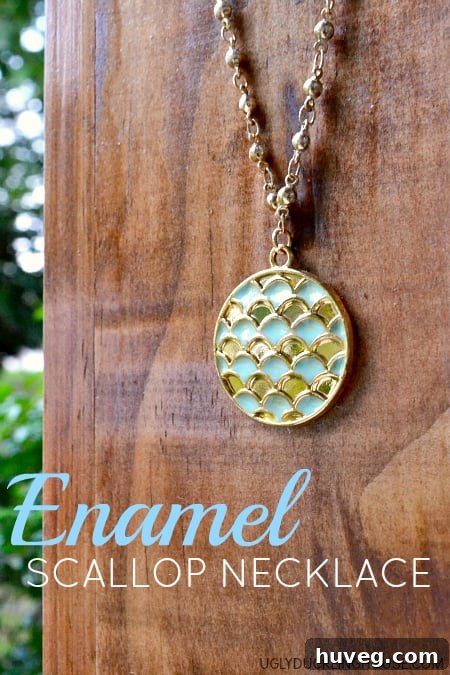
This comprehensive guide to crafting a DIY Enamel Scallop Necklace is proudly brought to you through a collaboration with Plaid Crafts and Martha Stewart Jewelry. All opinions expressed herein are 100% my own.
Before the days of homeownership and the exciting discovery of power tools, my heart belonged to the world of crafting. There’s an undeniable satisfaction that comes from creating something beautiful and tangible with your own hands. While my attention has naturally gravitated towards larger DIY home improvement projects, the fundamental principles and meticulousness honed through years of crafting have proven invaluable. Think about it: applying delicate tiles to a jewelry box lid isn’t conceptually different from tiling an entire floor; only the scale and the tools evolve. It’s this deep-rooted appreciation for handmade artistry that occasionally draws me back to my crafting origins, serving as a refreshing wellspring for creativity and inspiration. This particular air-dry enamel necklace project is not only incredibly simple to execute but also promises to be the perfect, elegant accessory for a multitude of summer dresses and casual outfits.
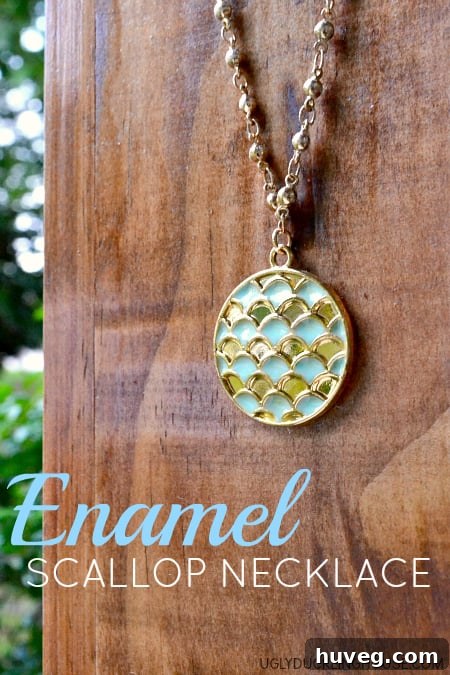
Craft Your Own Stunning DIY Enamel Scallop Necklace
For years, my dedicated craft room—affectionately known as the study-o—has housed an extensive collection of jewelry-making supplies. While my current schedule often limits my time with these wonderful little tools, a recent, incredibly generous box from Plaid Crafts reignited my passion. This treasure trove of inspiration included an exciting array of new tools, findings (the essential metal connectors and components that form the backbone of any jewelry piece), charming charms, brushes, dazzling rhinestones, specialized glues, and so much more. My eyes widened with anticipation the moment I spotted the vibrant enamel paints. I simply couldn’t wait to dive in and experiment with this versatile medium, envisioning the beautiful creations I could bring to life.
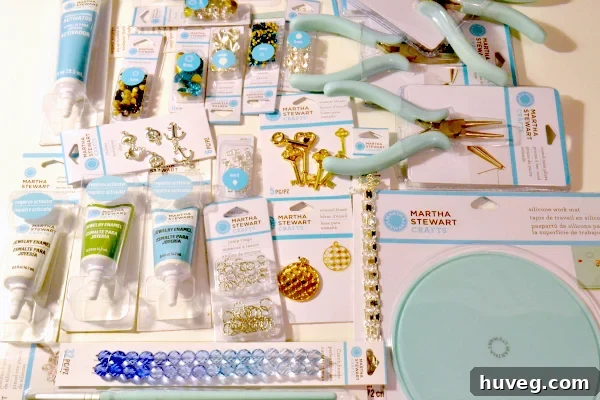
Essential Supplies for Your DIY Enamel Scallop Necklace Project
While the list of items for this seemingly simple jewelry project might appear a bit extensive at first glance, don’t be intimidated. Jewelry making, despite the variety of small components involved, is an incredibly approachable and rewarding craft. Each item plays a crucial role in bringing your vision to life, ensuring both the beauty and durability of your finished enamel scallop necklace. Here’s a detailed breakdown of what you’ll need to gather before you begin:
- Enamel Blank(s): These are the base forms onto which you’ll apply your enamel. For this project, we’re focusing on a beautiful scallop design, but these blanks come in countless shapes and sizes, offering endless creative possibilities for future projects. Choosing a gold-toned blank can add a luxurious touch that beautifully complements the enamel colors.
- Martha Stewart Enamel Paint: We’ll be using “Pool Blue” and “Sea Green” for a refreshing, oceanic palette. These paints are specially formulated for jewelry, offering vibrant colors and a smooth finish. Feel free to explore other color combinations from the Martha Stewart line to personalize your creation.
- Martha Stewart Enamel Paint Activator: This essential component is mixed with the enamel paint to create the durable, air-drying enamel coating. It’s what transforms the liquid paint into a hard, glossy finish.
- Silicone-Tipped Tool: This versatile tool is indispensable for precise application and, more importantly, for meticulously cleaning up any mistakes or excess enamel around the edges, ensuring a professional finish.
- Silicone Mat: A silicone mat is your best friend for keeping your workspace clean and tidy. It prevents spills from sticking and makes cleanup a breeze, allowing you to focus on your creative process without worrying about messes.
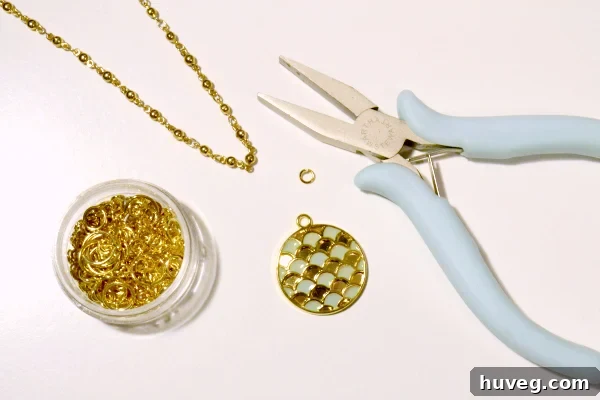
- Jewelry Pliers: A good set of jewelry pliers (especially round-nose and flat-nose) is crucial for opening and closing jump rings and manipulating other small metal findings with ease and precision.
- Jump Rings: These small, open loops of metal are used to connect different components of your necklace, such as the pendant to the chain and the clasp to the chain ends.
- Chain: Select a chain that complements your scallop blank and desired aesthetic. Consider its length, material (gold, silver, bronze), and style (e.g., delicate link, snake chain).
- Closure (Lobster Clasp Recommended): A reliable clasp is vital for securing your necklace. Lobster clasps are a popular choice due to their secure closure and ease of use.
- Toothpicks or Small Applicator: While toothpicks are traditionally recommended for mixing and applying, any small, pointy tool can work effectively for precise application in small areas.
- Rubbing Alcohol: Used for thoroughly cleaning the enamel blank prior to application, ensuring optimal adhesion of the enamel and a flawless finish.
Getting Started: Preparing Your Workspace and Enamel Mixture
Embarking on your DIY enamel scallop necklace journey begins with proper preparation. A clean, organized workspace sets the stage for a smooth and enjoyable crafting experience. Lay down your silicone mat to protect your surfaces and simplify post-project cleanup. This initial step is more important than you might realize, as it helps contain any potential spills and provides a non-stick surface for mixing.
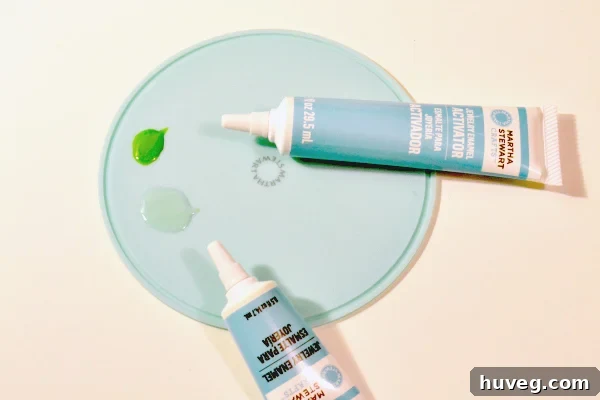
Next, focus on preparing your enamel mixture. The key to successful air-dry enamel is adhering to the correct ratio: mix two parts activator with one part enamel paint. The Martha Stewart enamel paint has a very fluid consistency, so it’s crucial to exercise caution and start with small quantities. Remember, a little goes a very long way, especially when working on delicate jewelry pieces. Mix thoroughly until the paint and activator are fully combined, achieving a uniform color and consistency. This careful mixing ensures the enamel cures properly and achieves its intended durable, glossy finish.
The Application Process: Cleaning and Creative Improv
Before applying any enamel, meticulously clean the surface of your enamel blank with rubbing alcohol. This step is critical as it removes any oils, dust, or residues that could prevent the enamel from adhering properly, ensuring a smooth, long-lasting finish for your scallop pendant. Once clean, allow it to air dry completely for a minute or two.
While the package instructions typically recommend using a toothpick for mixing and applying the enamel, don’t be afraid to improvise if necessity calls! In a moment of delightful spontaneity (and perhaps a slight shortage of toothpicks), I discovered that a simple paperclip worked wonders. Its small, angled tip proved surprisingly effective for both mixing the paint and applying it with precision. I started by mixing the sea green, then used the same end of the clip to blend into the pool blue. This accidental technique resulted in a beautiful, milky seafoam color – a truly unique shade that perfectly complemented the elegant gold scallop blank. The beauty of DIY lies in these unexpected discoveries, turning a potential hurdle into a unique creative flourish!
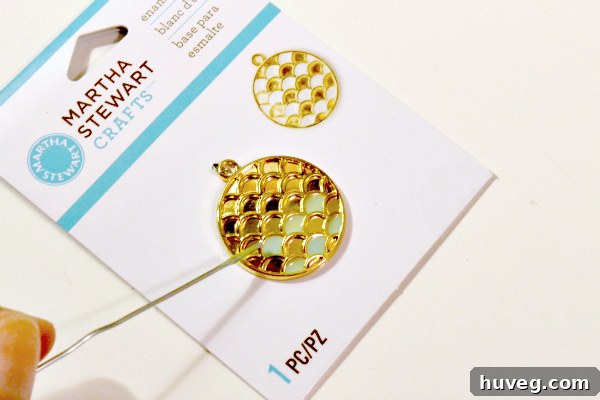
Achieving Your Desired Look: Translucent or Opaque Enamel Finish
One of the fascinating aspects of working with air-dry enamel is the ability to control its final appearance – whether you prefer a delicate translucent sheen or a rich, opaque color. If you begin applying the enamel mixture immediately after combining the paint and activator, the consistency will be thinner and more fluid. This creates a beautiful, almost stained-glass like translucent effect, allowing the metallic gleam of your enamel blank to subtly shine through. It’s perfect for a light, ethereal aesthetic.
However, if you desire a more vibrant and solid color payoff, a richer opaque application, patience is key. Allow the enamel mixture to sit for approximately two hours. During this time, it will naturally thicken, making it easier to achieve a more opaque and concentrated color with your application. Personally, my impatience often gets the better of me, and I typically dive straight into application! Regardless of your chosen finish, the application process for a piece this size shouldn’t take more than about 10 minutes – even less if you’re naturally more precise than I am. To ensure stability and prevent accidental smudges or movements, I found it helpful to keep the enamel blank still attached to its original cardboard packaging while working.
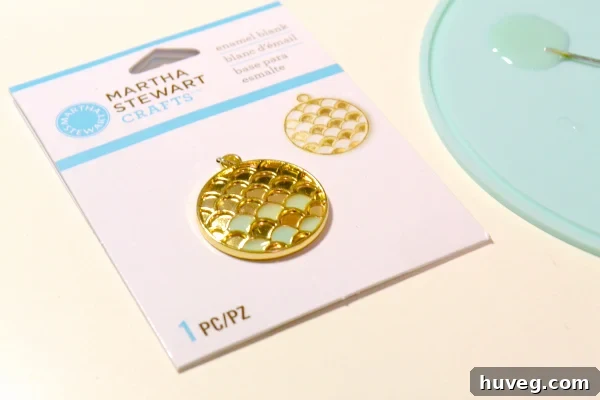
Should any small mishaps occur, such as accidentally overfilling an area or getting enamel where it doesn’t belong, don’t despair! The silicone-tipped tool is your secret weapon. Its flexible yet firm tip allows you to gently and effectively remove any excess enamel before it dries, ensuring clean lines and a professional finish without damaging your work. This tool is truly invaluable for refining your design.
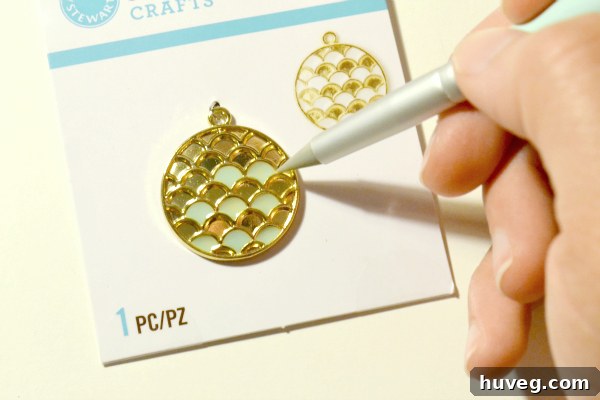
The Waiting Game: Air Drying Your Enamel Creations
Once you’re satisfied with your enamel application, the most challenging part for many crafters begins: the wait. Air-dry enamel typically requires a drying period of approximately 24 to 72 hours. The exact time depends largely on the thickness of your enamel application and the ambient humidity. While your main scallop pendant is drying, if you find yourself with leftover enamel (which is quite common, as a small amount goes a long way), seize the opportunity to experiment! I often play around with other small blanks or findings from my craft box to avoid wasting any product. It’s a fantastic way to practice your technique and create coordinating pieces.
Some reviews I’ve encountered online mention a noticeable smell from the enamel during the drying process. While I personally didn’t detect any strong odors, it’s always prudent and highly recommended to work in a well-ventilated area. Open a window or use a fan to ensure proper airflow, guaranteeing a safe and comfortable crafting environment for yourself.
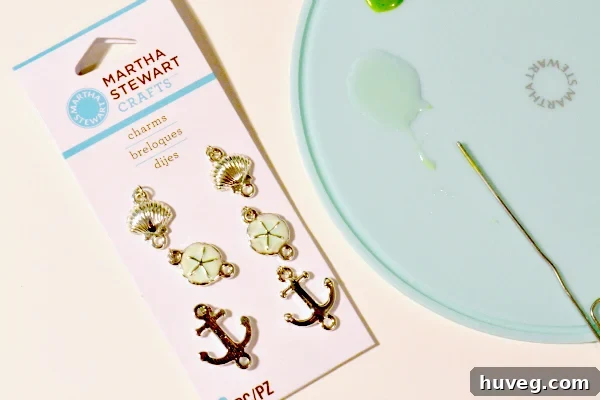
Once your enamel has completely dried and cured, it’s time for the final assembly. This is where your beautiful enamel scallop pendant transforms into a wearable piece of art. Using your jewelry pliers, carefully attach the chain and the chosen clasp to the pendant with jump rings. Working with these tiny components requires a steady hand and a good set of jewelry pliers, which provide the necessary grip and leverage. Ensure all jump rings are securely closed to prevent your necklace from accidentally coming undone during wear. Take your time with this step, as a well-assembled piece is key to its longevity and aesthetic appeal.
Showcasing Your Handmade DIY Enamel Scallop Necklace
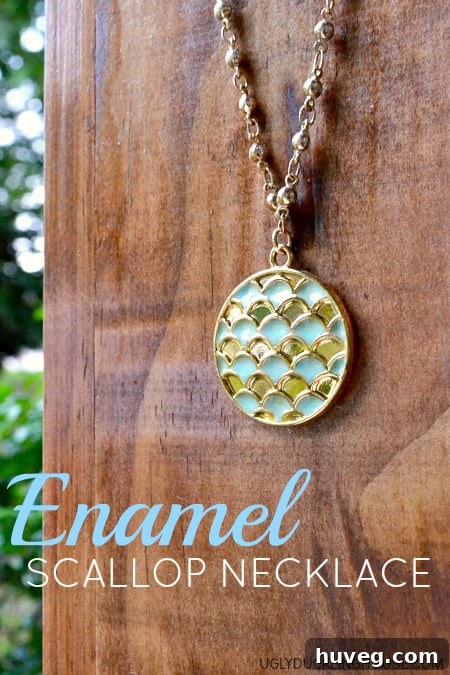
And there you have it – your very own unique, handcrafted DIY Enamel Scallop Necklace! Now, for the grand finale: the photo session. Feel free to unleash your inner photographer, perhaps hanging your newly created masterpiece on a rustic block of wood and capturing countless charming, even goofy, pictures in front of your neighbors for your blog post. Or, you could simply embrace the joy of being a normal person and wear it out for everyone to admire! This necklace is designed to be cherished, admired, and worn with pride, reflecting the creativity and effort you poured into making it.
If this project has sparked your interest in delving deeper into the captivating world of enamel jewelry making, you’re in luck! The entire Martha Stewart Jewelry line, featuring all the paints, activators, blanks, and tools used in this tutorial, is available exclusively at Michael’s Stores. This accessibility makes it incredibly easy to gather everything you need to start your own collection of beautiful, custom-made jewelry. For an ongoing source of inspiration, project ideas, and community engagement, make sure to follow Plaid Crafts – the innovative makers behind the Martha Stewart line – on their social media channels. You can find them on Facebook, Twitter, and Pinterest. Dive in, get creative, and enjoy the satisfaction of crafting unique jewelry pieces!
*Just kidding about the blindfolded part! I simply couldn’t locate a toothpick at that moment and opted for another small, pointy alternative that was readily available. Resourcefulness is a crafter’s best friend!
This post is sponsored by Blueprint Social. For more information regarding our partnerships and content creation, please refer to our full Disclosure policy.