My Complete Guide to Beautiful Hydrangeas Your Questions Answered

The Ultimate Guide to Growing Stunning Hydrangeas: Varieties, Care, and FAQs
Welcome to a comprehensive journey through the vibrant world of hydrangeas! If you’ve been captivated by their breathtaking blooms, you’re in for a treat. This guide delves into the diverse hydrangea varieties gracing my garden, offering a closer look at their magnificent flowers as they unfurl. More importantly, I’m addressing a treasure trove of frequently asked questions about hydrangeas, gathered from curious gardeners like you.
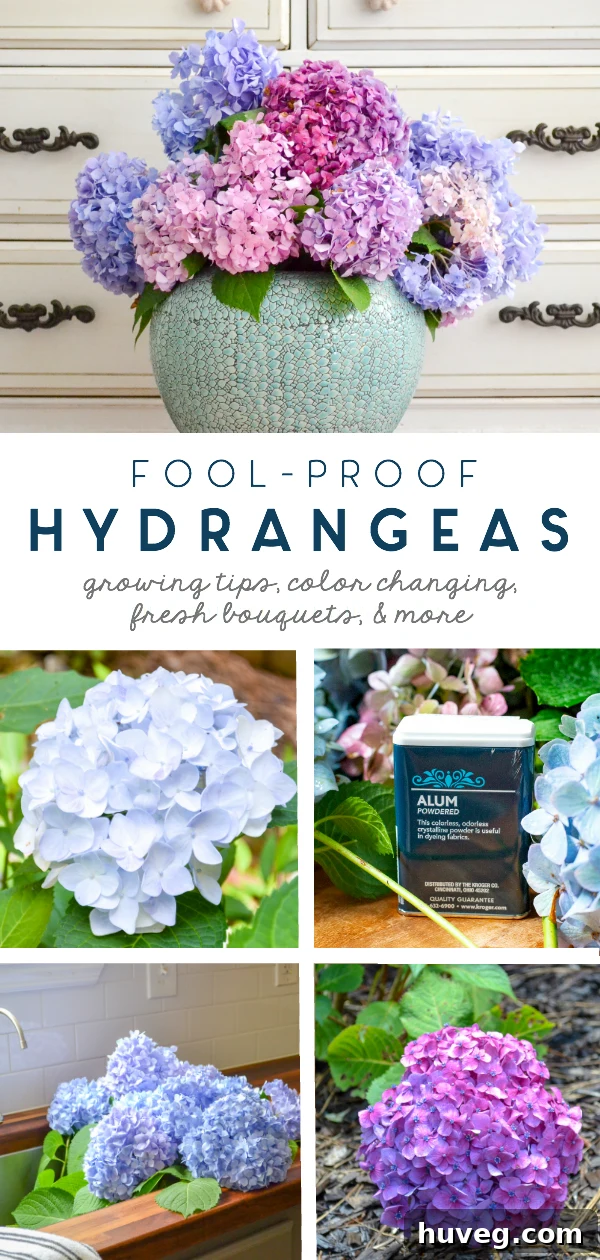
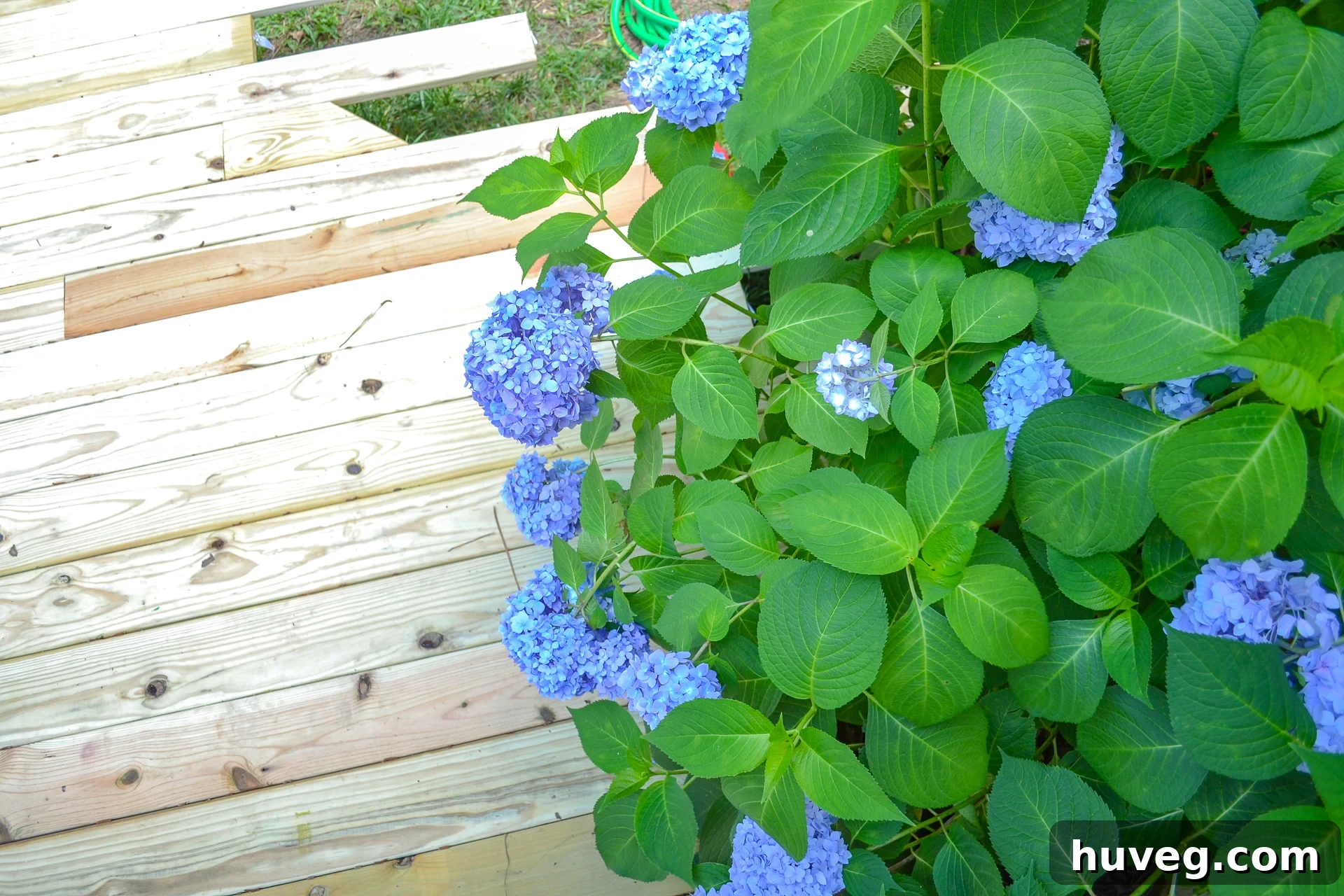
Happy gardening, fellow enthusiasts! This season, my hydrangeas are absolutely overflowing with blooms. If you’ve been following my Instagram feed, you’ve likely seen the explosion of color. While I’ve been diligently working on significant outdoor projects like the floating deck and the pub shed, the sheer abundance of my hydrangea blossoms has been a constant source of inspiration and beauty. Every direction I turn, I’m greeted by a spectacular display of these captivating flowers.
Over my more than eight years of gardening, I’ve shared numerous insights on hydrangeas, addressing topics like understanding their bloom color and the critical aspects of overwintering. This year, however, the unprecedented bloom rate has given my garden an exceptionally showy character. It’s truly rewarding to see these plants flourish amidst the ongoing transformations of my outdoor space, from the new vegetable garden to the large deck construction. The vibrant colors provide a beautiful escape and a motivating backdrop to all my DIY endeavors.
The profound beauty of my hydrangea shrubs serves as a living testament to past efforts. Each glorious bloom is a gentle, encouraging reminder of the care and labor invested. It’s incredibly satisfying to witness these beautiful flowers grow, especially as I tackle new projects and sweat through the Georgia heat. While some might dismiss this sentiment as superficial, on a Sunday with a slight carb deficiency, I prefer to simply revel in the visual delight of these exquisite blossoms.
Addressing Your Top Hydrangea FAQs: A Gardener’s Guide
My passion for hydrangeas is undeniable. They consistently enhance my yard with their polished, healthy appearance and vibrant blooms. They’ve even managed to camouflage some of the construction chaos from my upcoming deck updates, making the garden look a little less disheveled during the process. I often receive numerous questions about my hydrangeas, particularly through social media posts featuring random snapshots. To consolidate these inquiries and provide a definitive resource, I’ve compiled answers to the most frequently asked questions right here.
This post serves a dual purpose:
- To provide comprehensive answers to common hydrangea FAQs, creating a quick, shareable resource for future inquiries.
- To indulge in sharing an abundance of photos showcasing my stunning hydrangea blooms, in a delightfully self-indulgent manner – perhaps it’s the lack of carbs!
The questions I receive span a wide range, from general hydrangea care to specific queries about their appearance. While all my hydrangeas are beautiful, the most noticeable differences lie in their color and size. These variations are primarily due to the specific variety of hydrangea shrubs. Therefore, I’ll begin by detailing each type I cultivate in my garden, offering insights into their unique characteristics and how they contribute to my garden’s splendor.
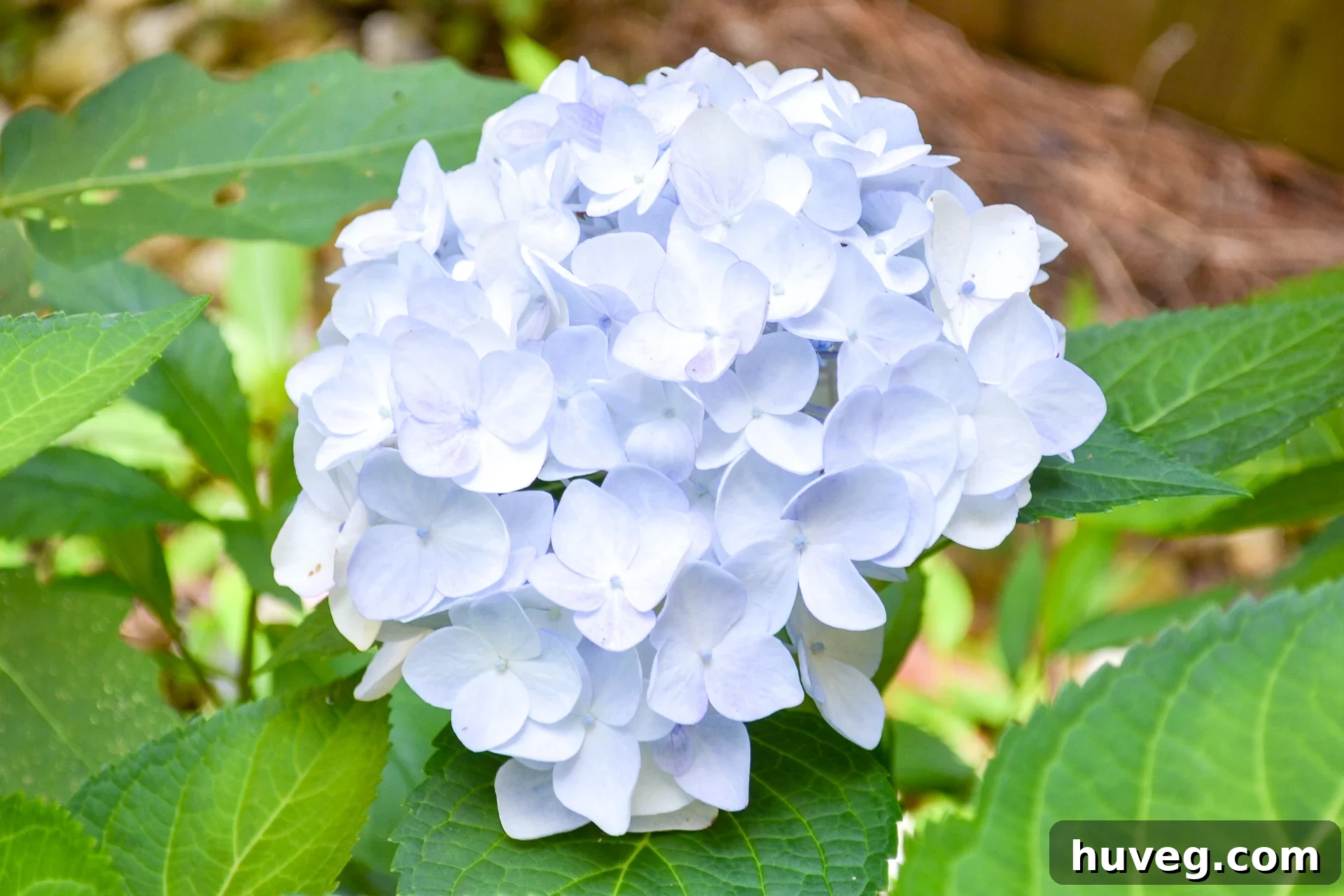
Discover the Beauty of My Hydrangea Garden
Exploring the Diverse Hydrangea Varieties in My Garden
The world of hydrangeas is vast, with countless varieties offering unique beauty, and their availability often varies by geographical region. In my garden, which spans the front, side, and back yards, I cultivate several distinct types of hydrangea shrubs. Each variety possesses its own characteristic coloring, which can subtly fluctuate throughout the year depending on environmental factors like the season and, most significantly, the soil acidity.
The Original Hydrangeas: Classic Beauty in Blue, Pink, and Lilac
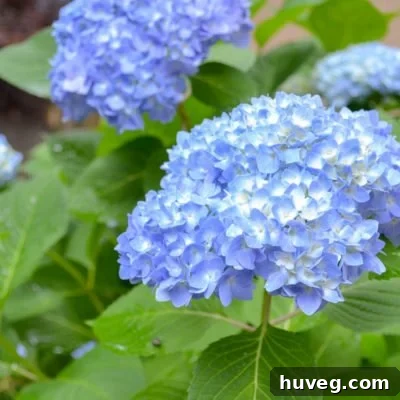
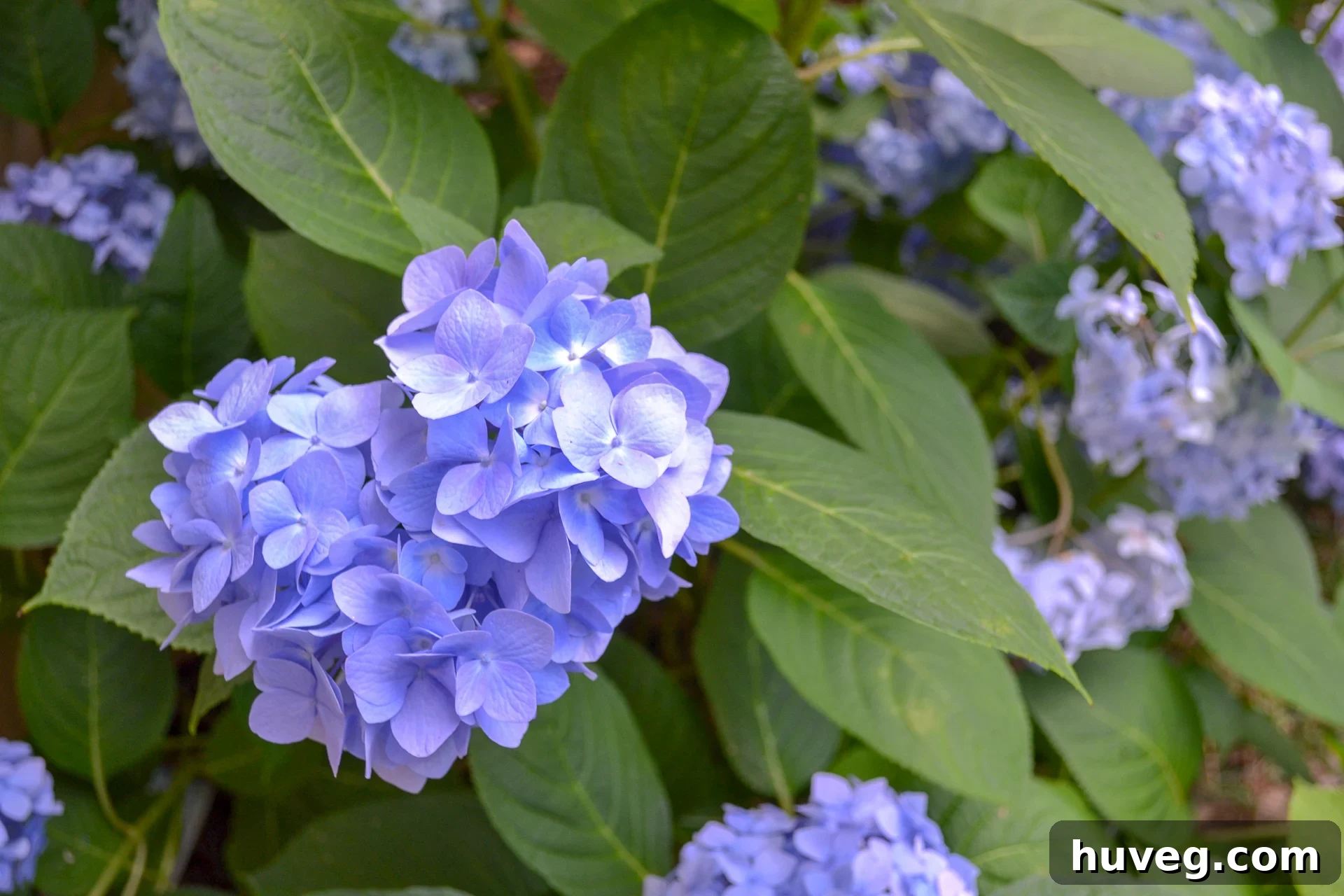
Among the many hydrangeas in my collection, the predominant variety is simply known as “The Original.” These classic beauties typically feature blooms in stunning shades of blue, pink, and lilac. This type is often the most common and affordable in my area, easily recognizable by the telltale blue pots they are frequently sold in. I first began planting these robust hydrangea shrubs as early as 2013, and just last year, I expanded my garden further, planting a long, continuous row along the back of my house, flanking both sides of the patio.
Through years of planting various hydrangeas, I’ve learned a crucial lesson: never underestimate their mature size and spacing requirements. While they might appear modest in their initial couple of summers, these plants can grow to be exceptionally large and create a truly grand display if given adequate room to spread!
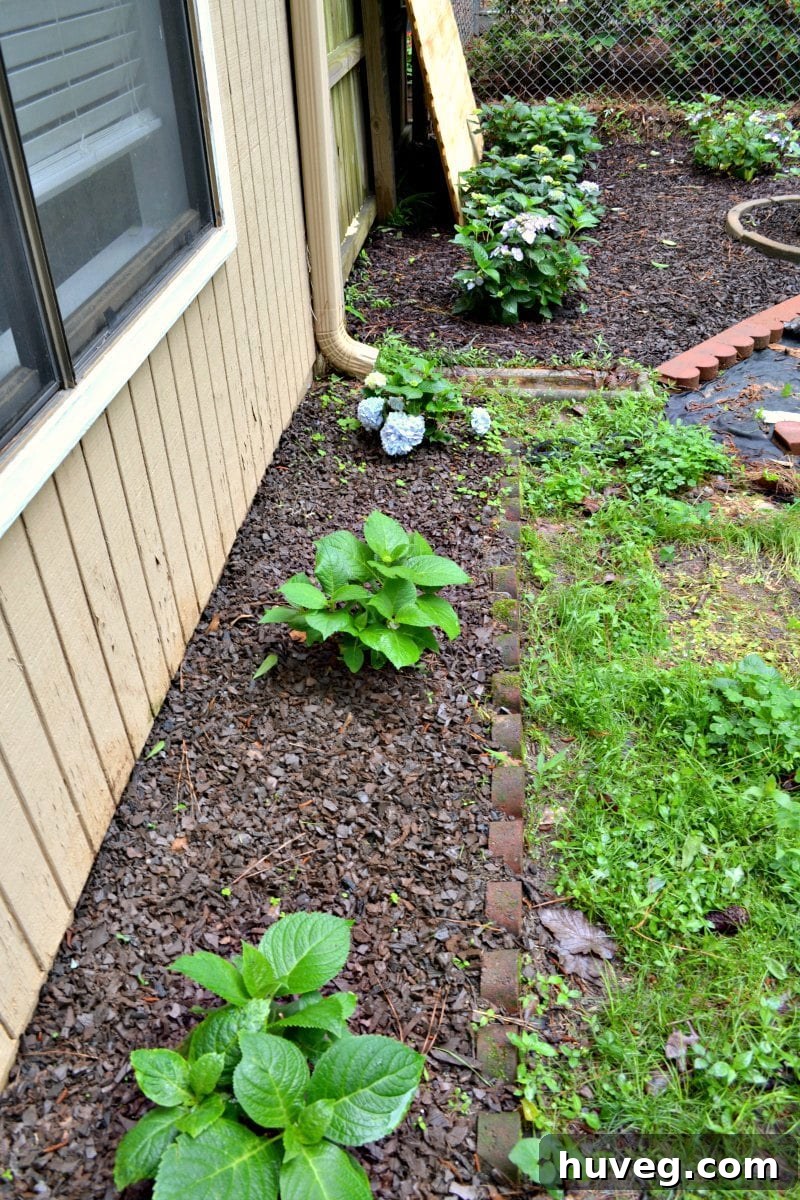
The photo above illustrates my hydrangeas shortly after they were planted last year. Fast forward to this year, and you can clearly see their remarkable growth and flourishing health in the very same location:
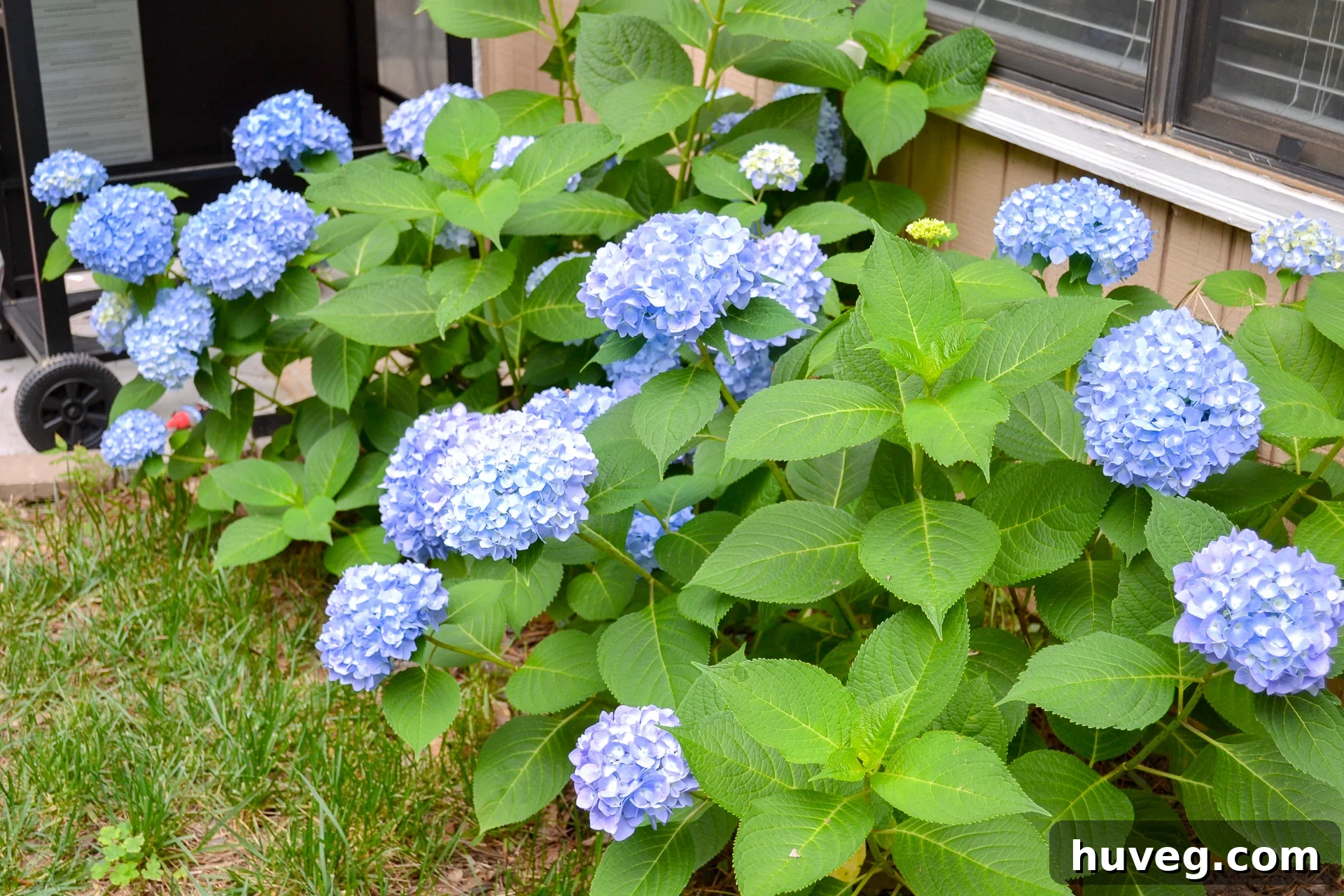
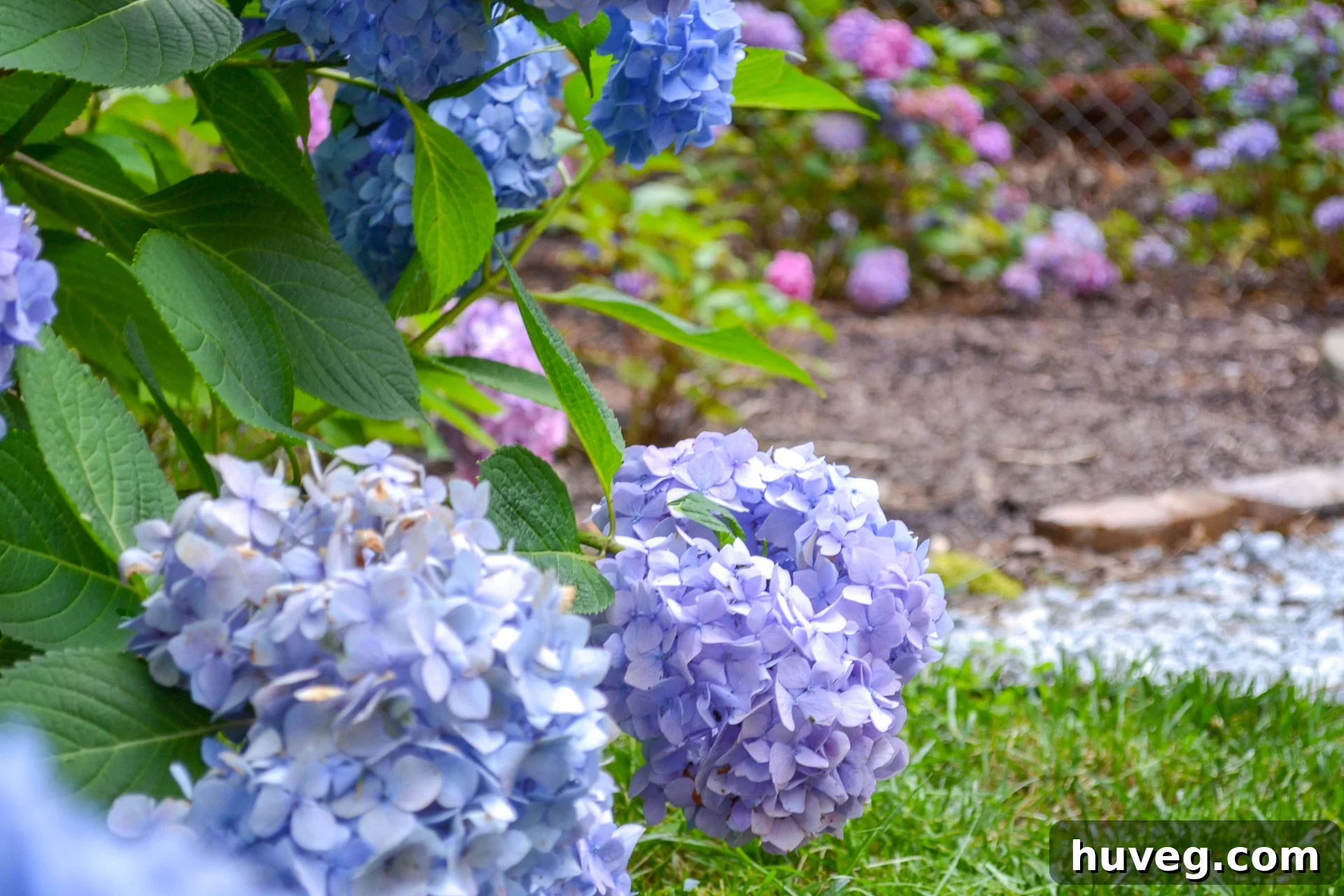
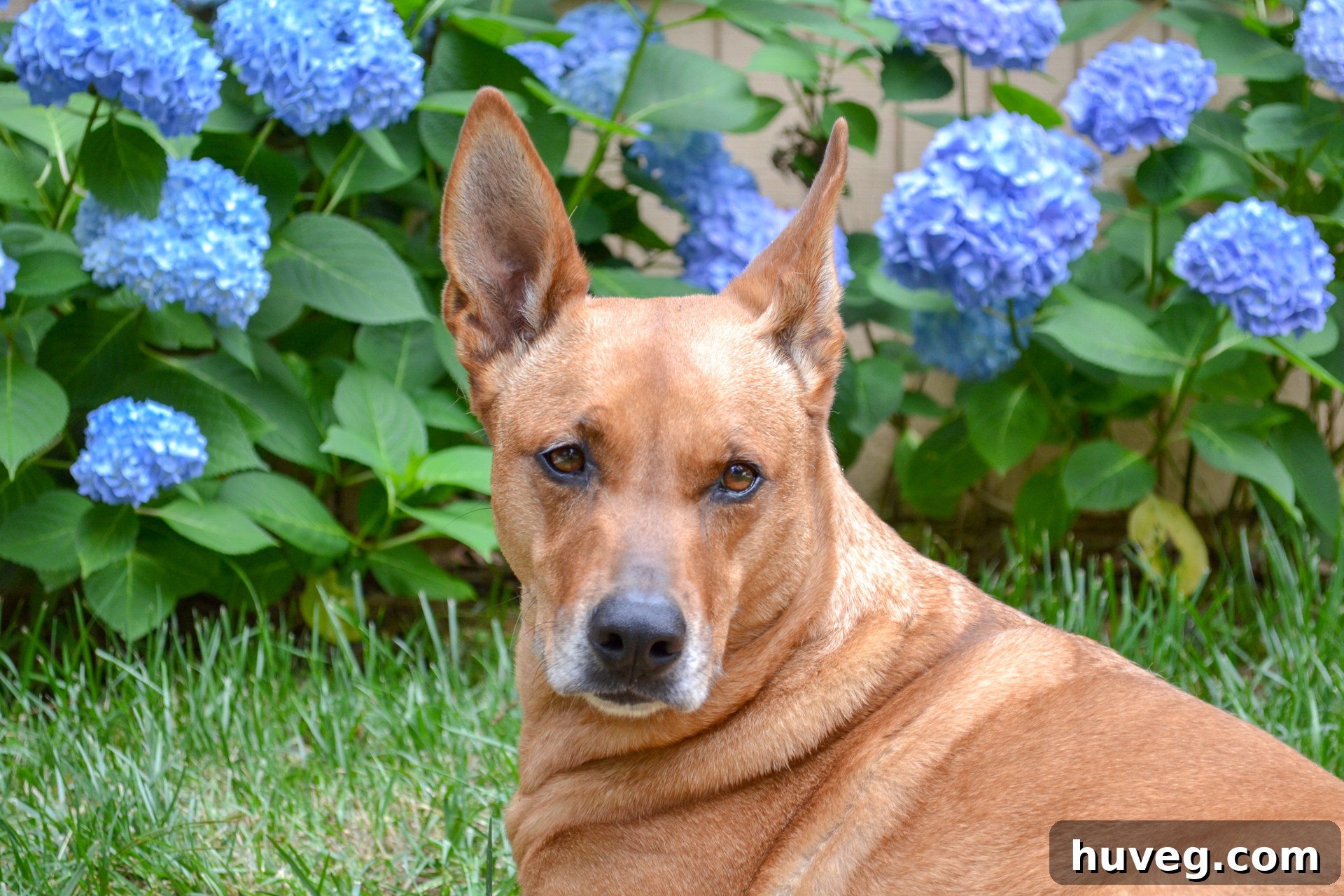
These brilliant blue hydrangea blooms provide a picturesque backdrop, especially when my sweet dog, Charlie, decides it’s the perfect spot for a cool, shady rest. Their vibrant color truly brings joy to the garden.
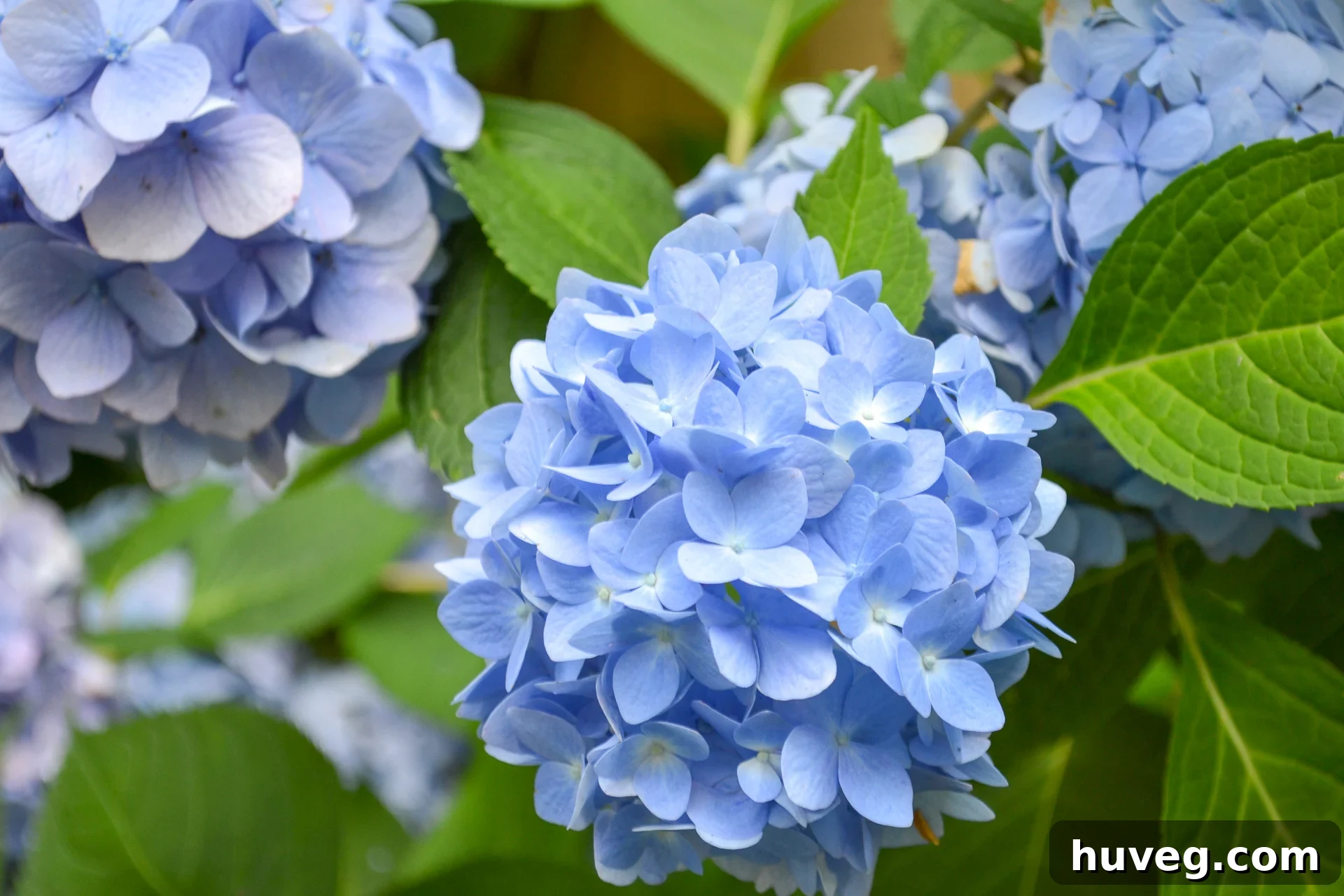
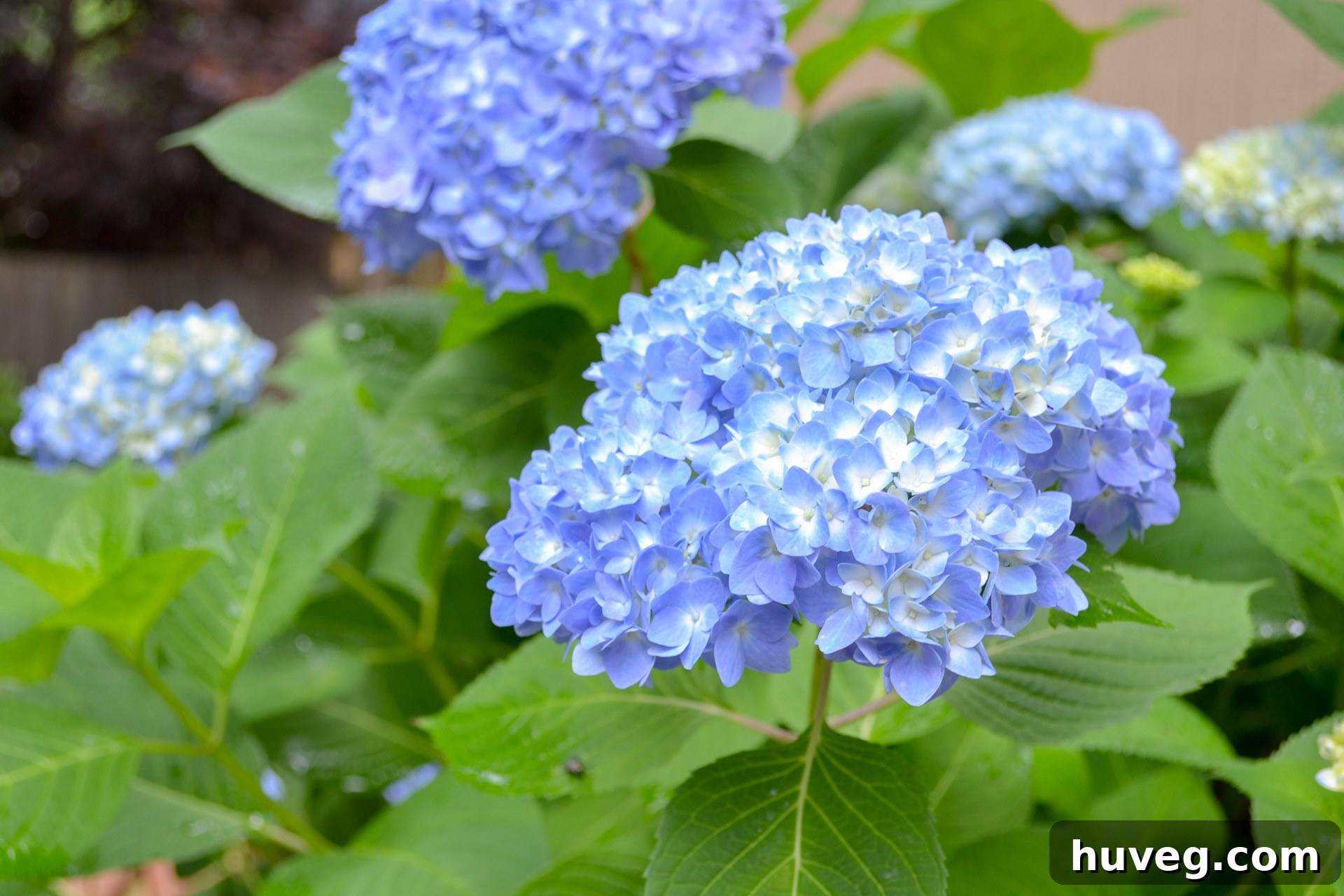
Hydrangeas are truly fascinating, displaying an incredible spectrum of colors, from delicate light pinks to electrifying bright blues, all largely dictated by the soil’s pH levels. I delve into the specifics of soil pH and its impact on color a little later in this post. Typically, my hydrangeas emerge in a soft lilac hue and gradually intensify into a remarkably vivid blue – they almost glow! Some varieties in my garden consistently maintain a striking purply-blue shade. The prevalence of blue in my hydrangeas is most likely attributed to the pine needles that have accumulated over the years; even after removing my pine trees, the soil’s natural acidity from decomposing pine needles persists. This acidic environment is precisely what encourages the stunning blue hydrangea flowers. So, there you have it!
(That last sentence always makes me think of My Big Fat Greek Wedding – anyone else catch the reference?)
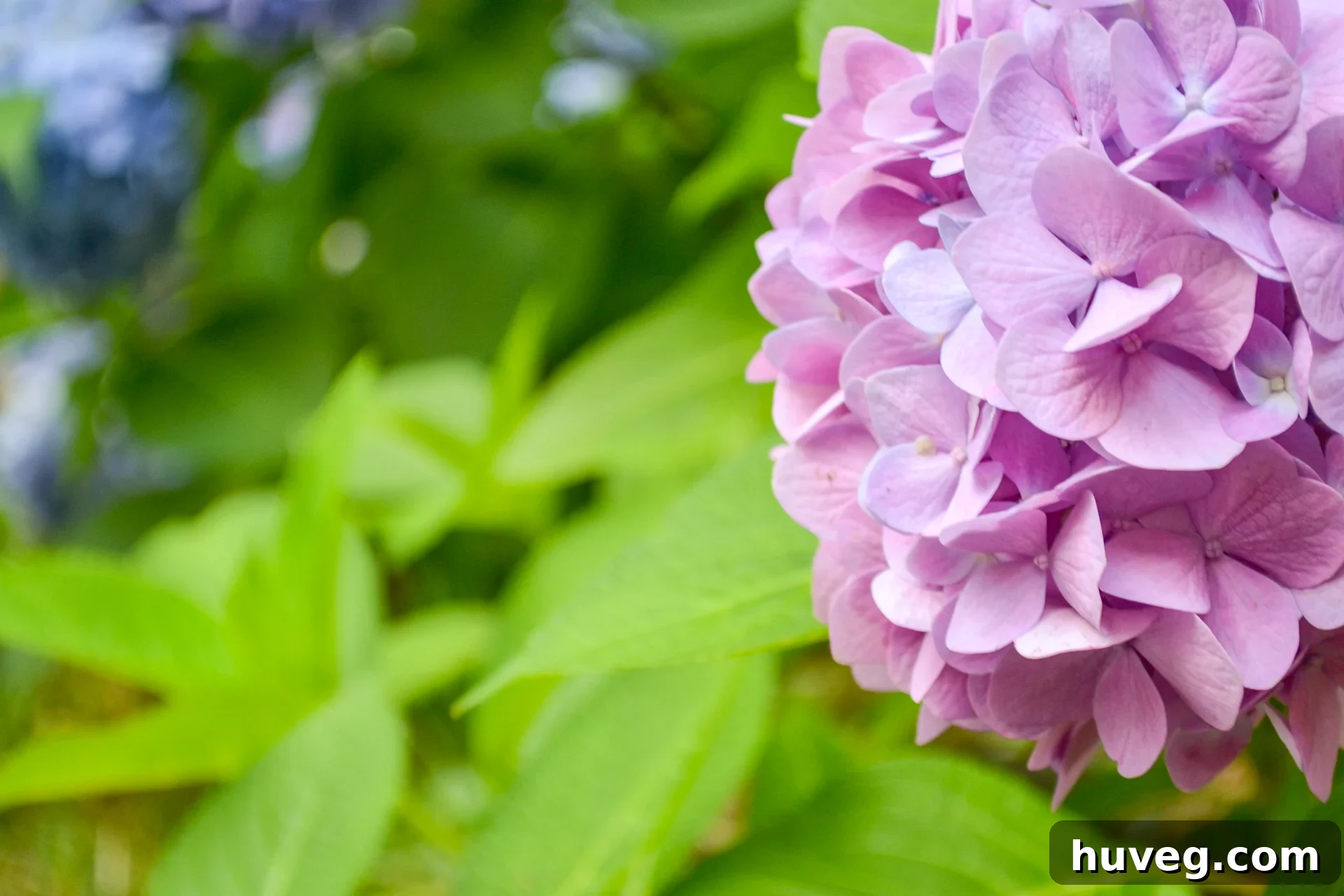
Interestingly, a small number of hydrangeas in my yard, specifically those situated closer to a consistent water source, tend to bloom in more pronounced pink shades, highlighting the subtle environmental variations even within a single garden.
Bloomstruck Hydrangeas: Deep Purples and Prolific Blooms
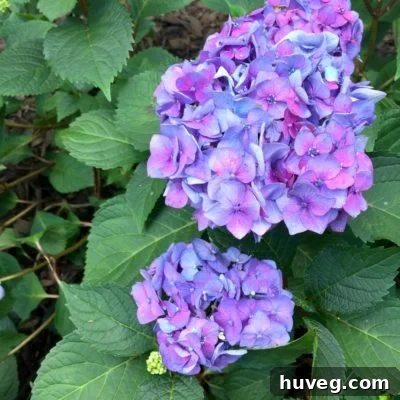
Another striking varietal in my garden is the Bloomstruck hydrangea. I initially planted these in a corner of the backyard as part of a sponsored series last year. What I particularly adore about these hydrangea flowers is their exceptionally deep and rich color saturation compared to other types. They offer a profound hue that adds a luxurious feel to the garden landscape.
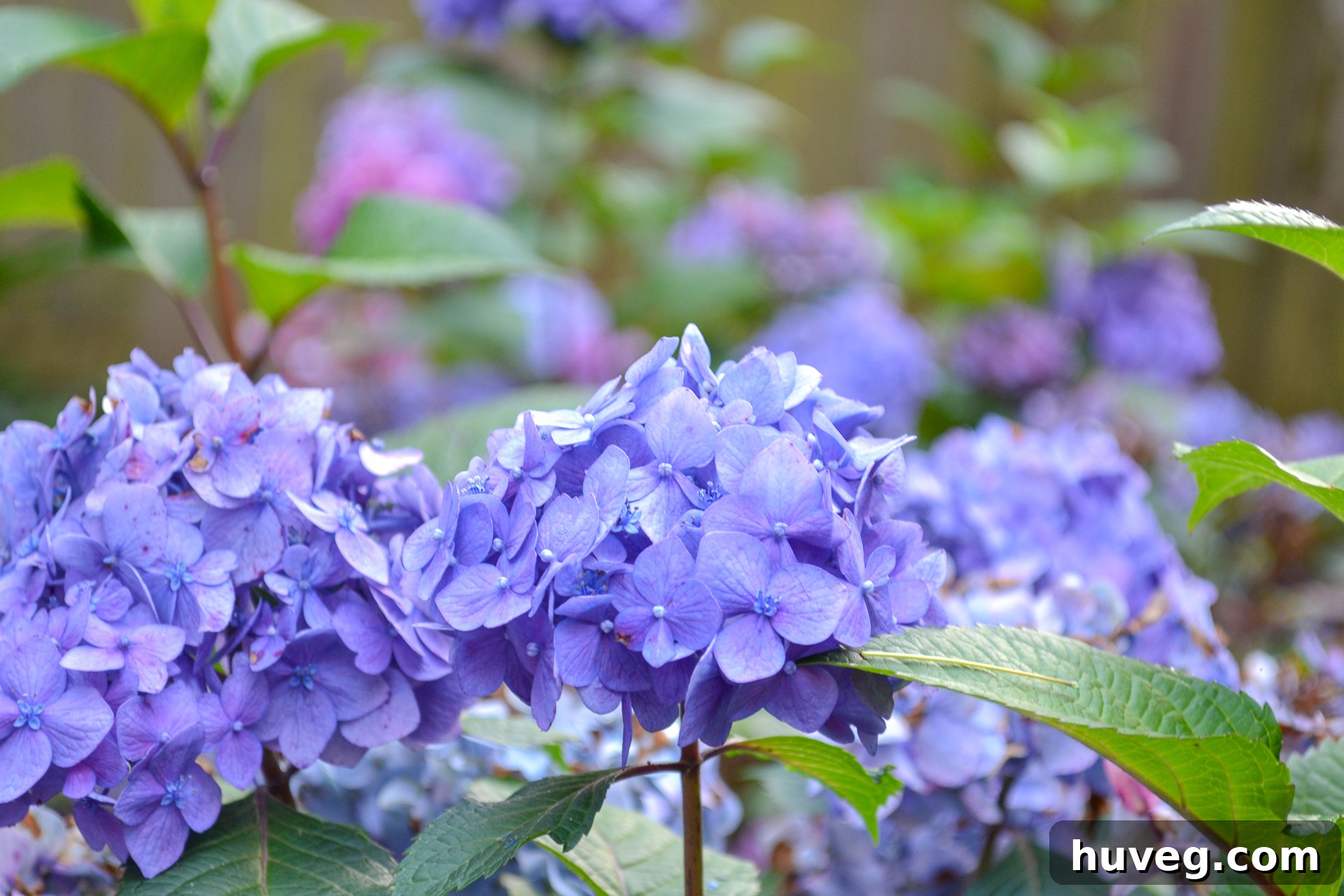
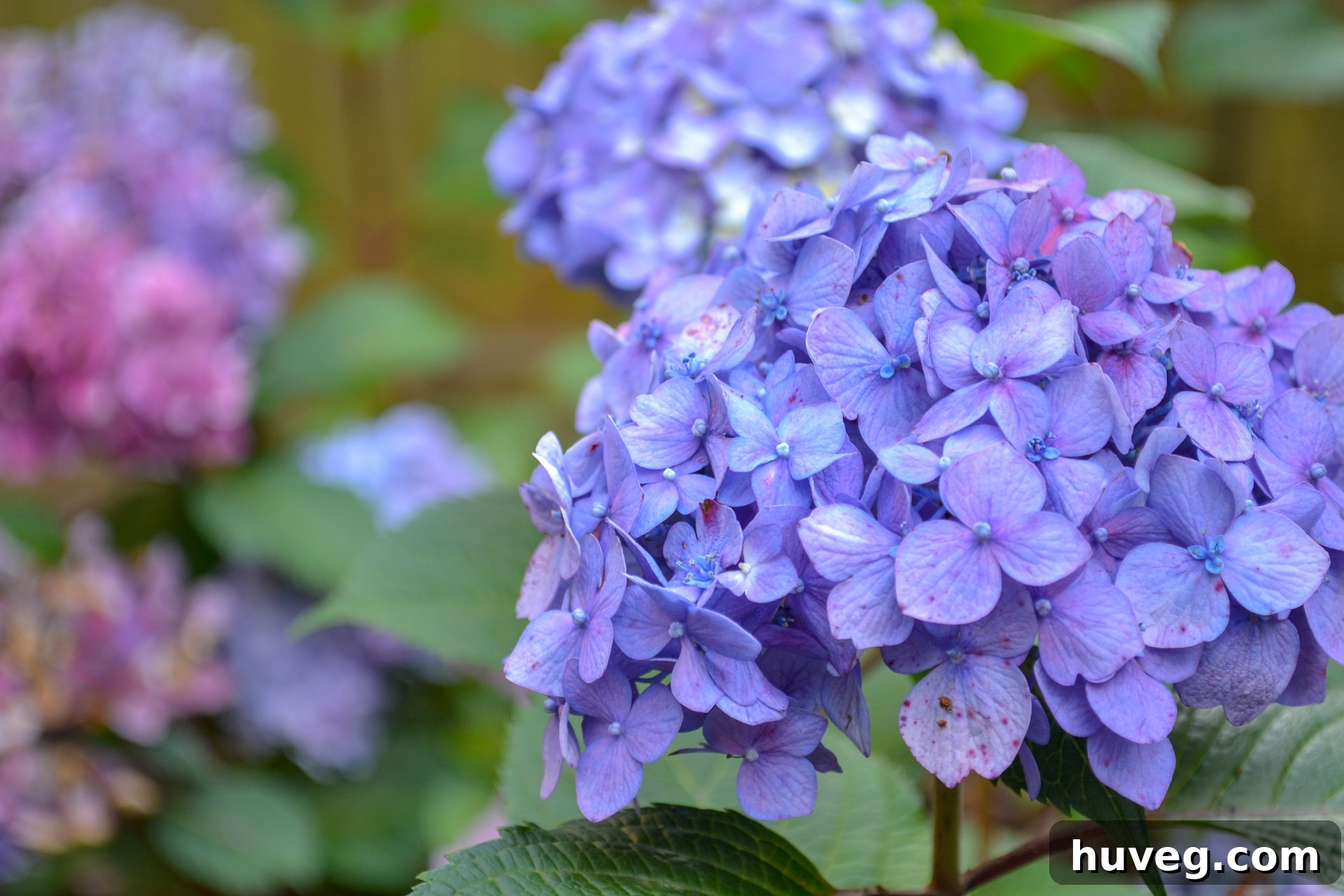
I’ve also observed a distinct difference in bloom characteristics: while the “Original” hydrangea types boast truly gigantic individual blooms, the Bloomstruck hydrangea shrubs tend to produce a greater number of slightly smaller, yet densely clustered and incredibly productive flowers. This creates a very full and impactful visual display.
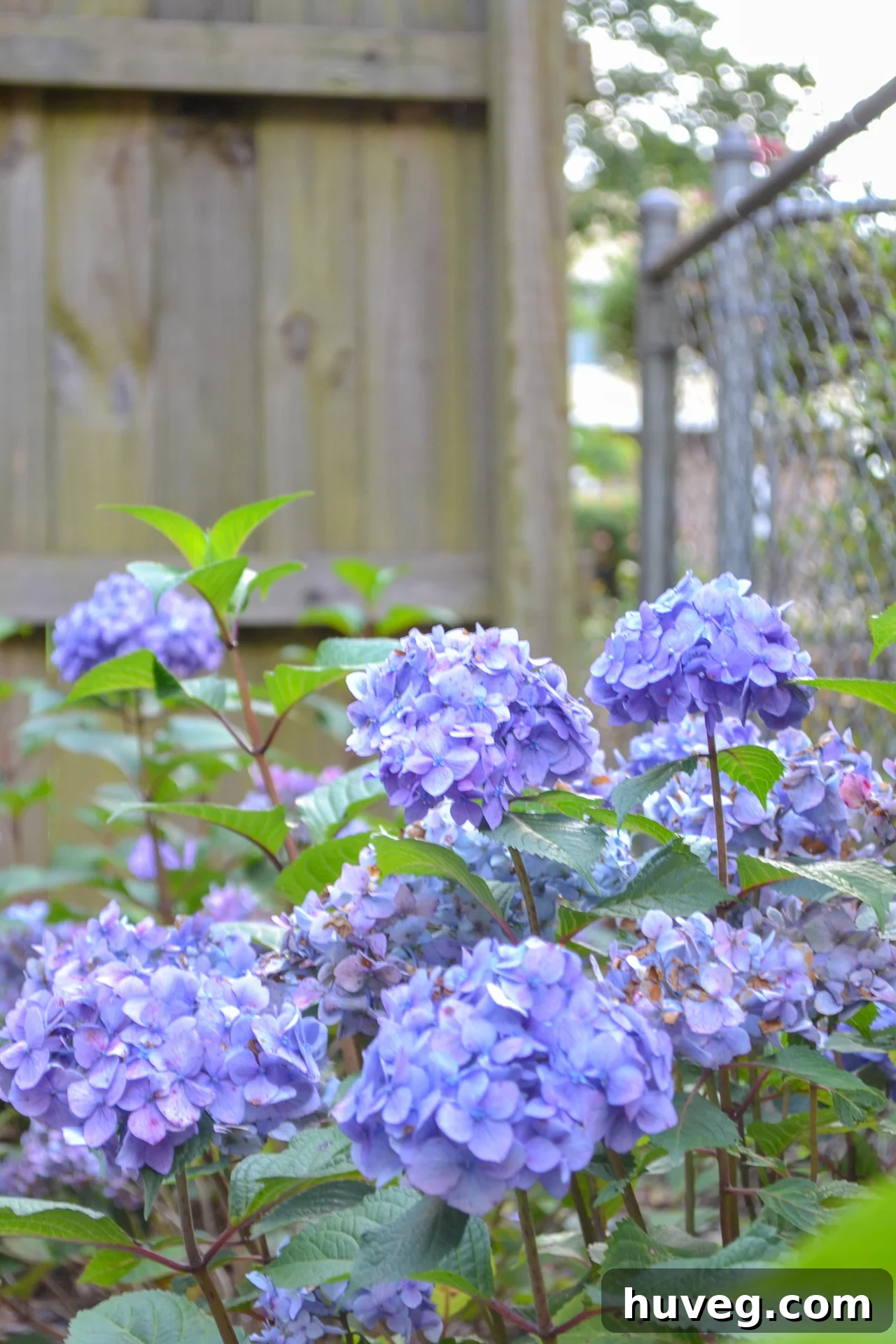
The individual size of these blooms could simply be a factor of their age, as they are less established than my older varieties. It’s also possible that I haven’t yet perfected the watering regimen for this specific section of the garden compared to the rest. I anticipate seeing if they develop larger flowers in the coming years; my suspicion is that they will, especially since the Bloomstruck plants situated closest to the “Original” types have already produced fewer but comparably sized blooms. It’s a fascinating process of observation and adjustment!
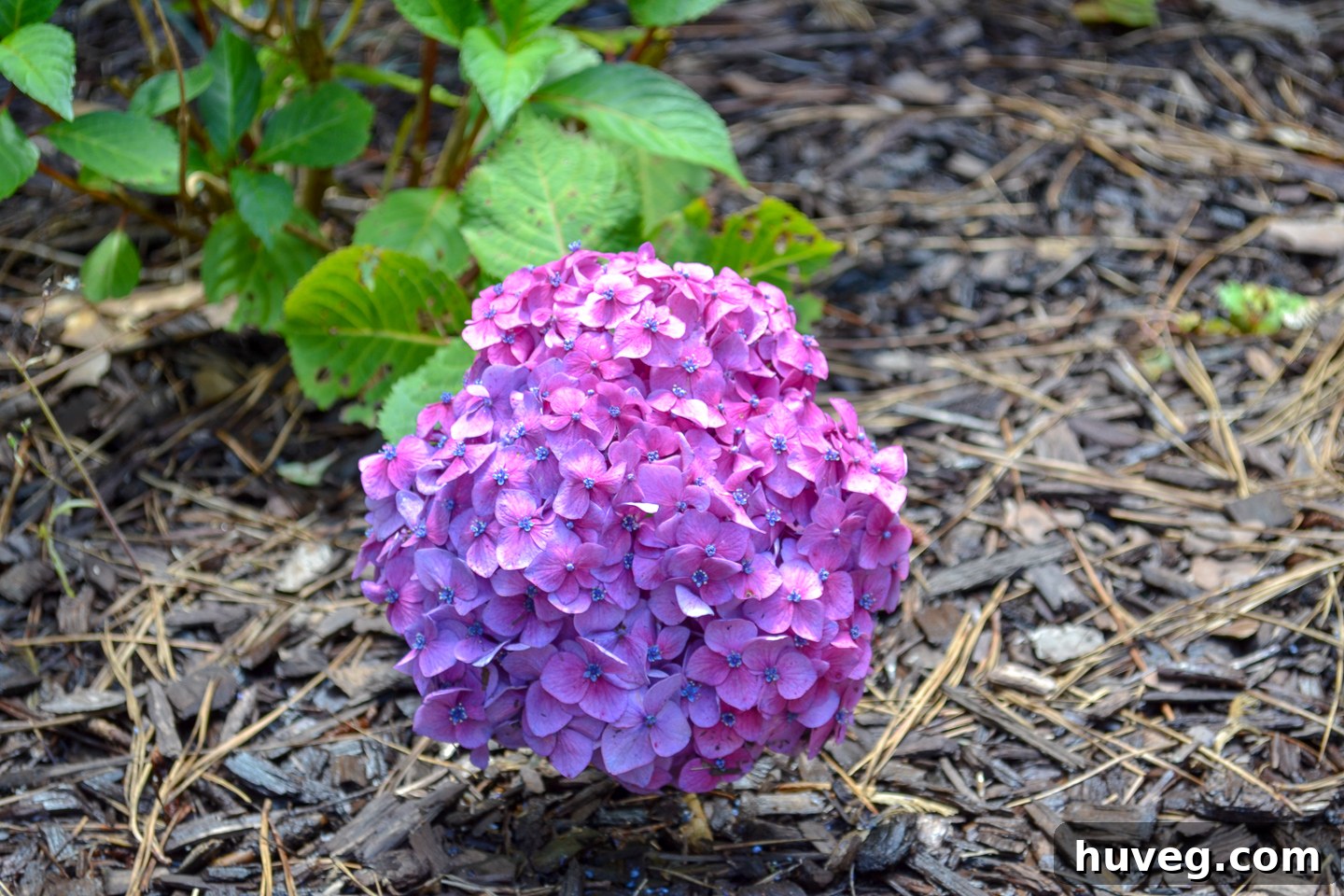
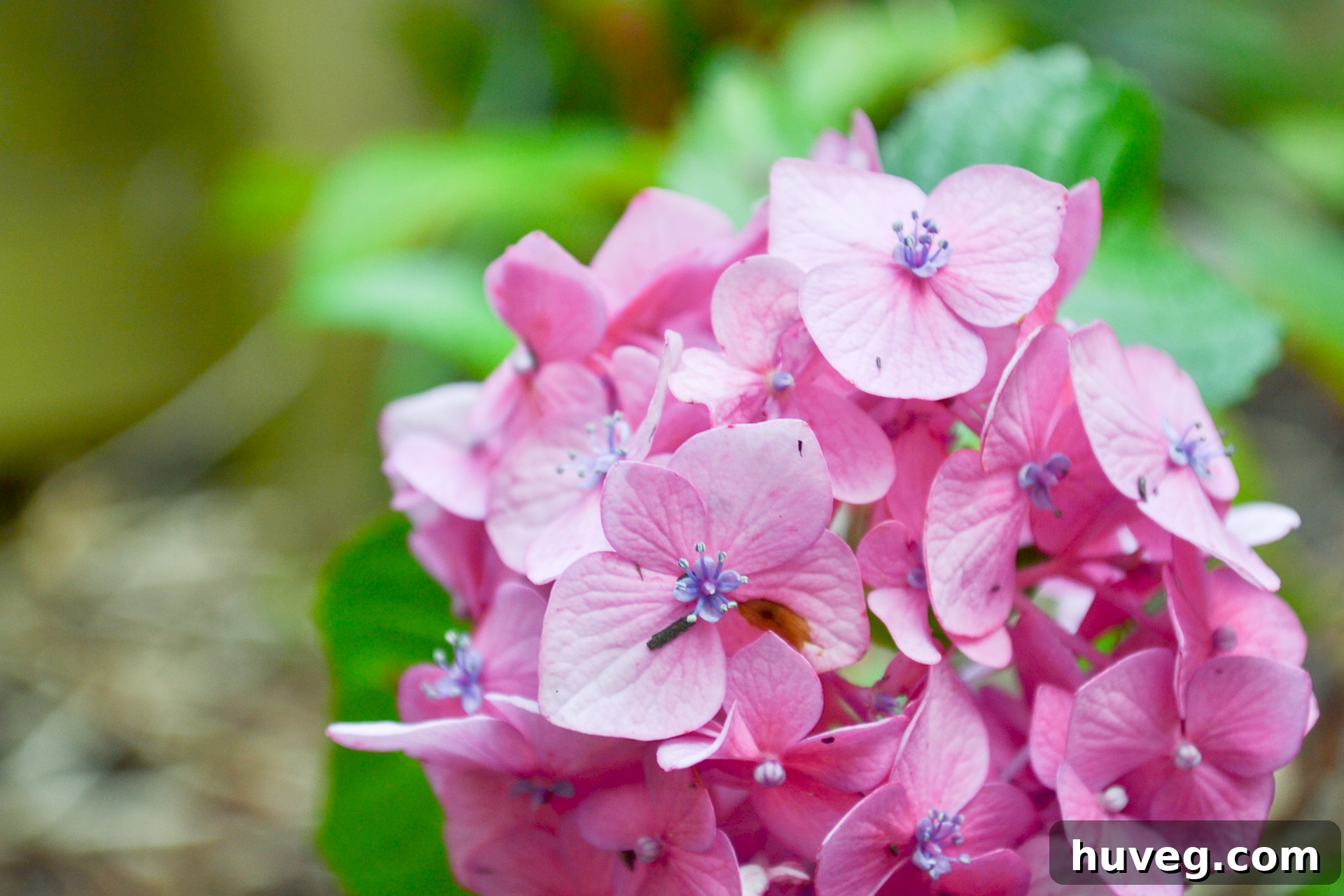
Intriguingly, a few of my Bloomstruck hydrangeas are also emerging in soft pink hues! It’s a vivid demonstration of how significantly soil pH levels can vary even within a small area, as only the flowers growing closest to the house’s downspout, which likely has a less acidic runoff, are exhibiting this beautiful pink transformation.
Blushing Bride Hydrangeas: Elegant Whites, Grays, and Soft Pinks
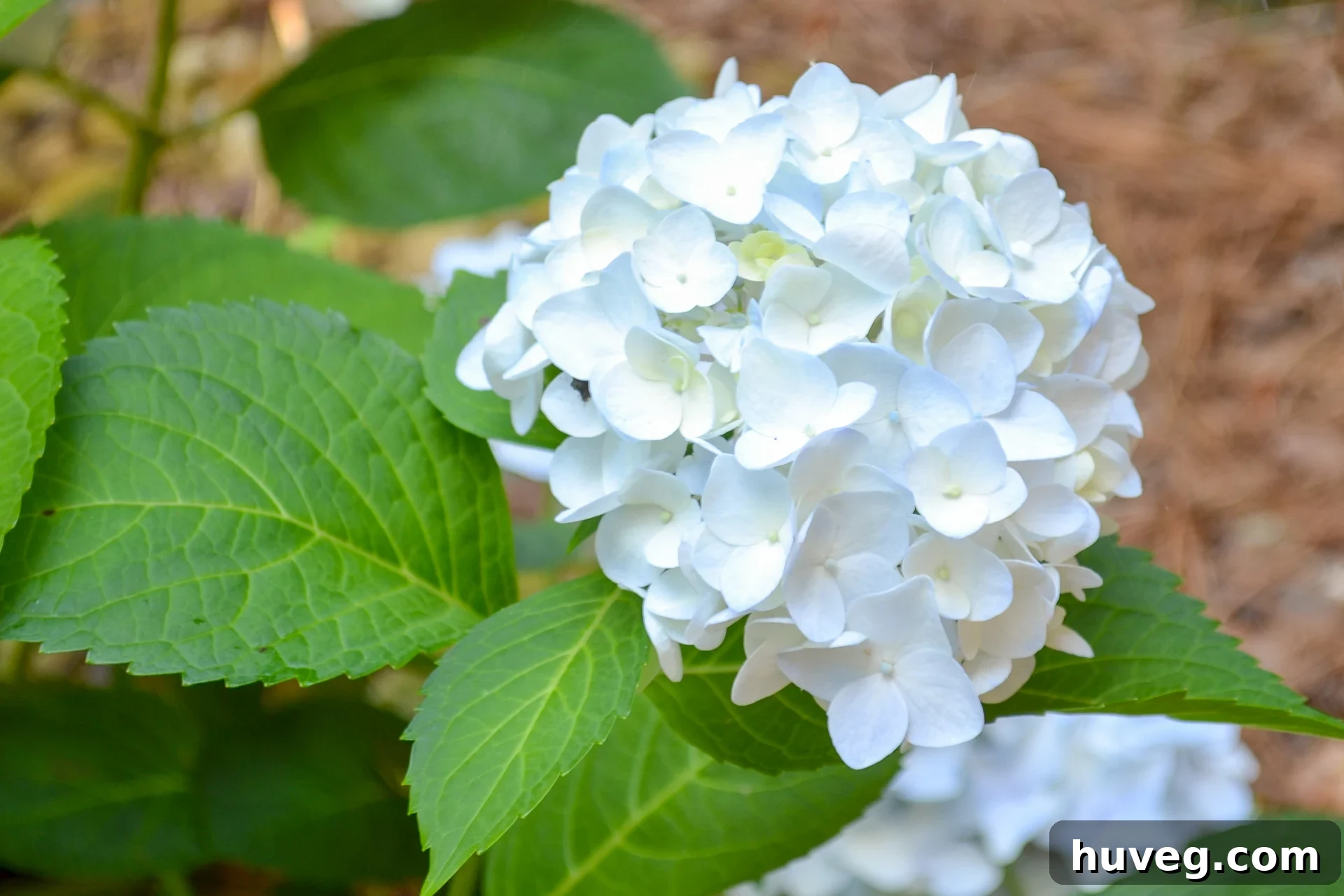
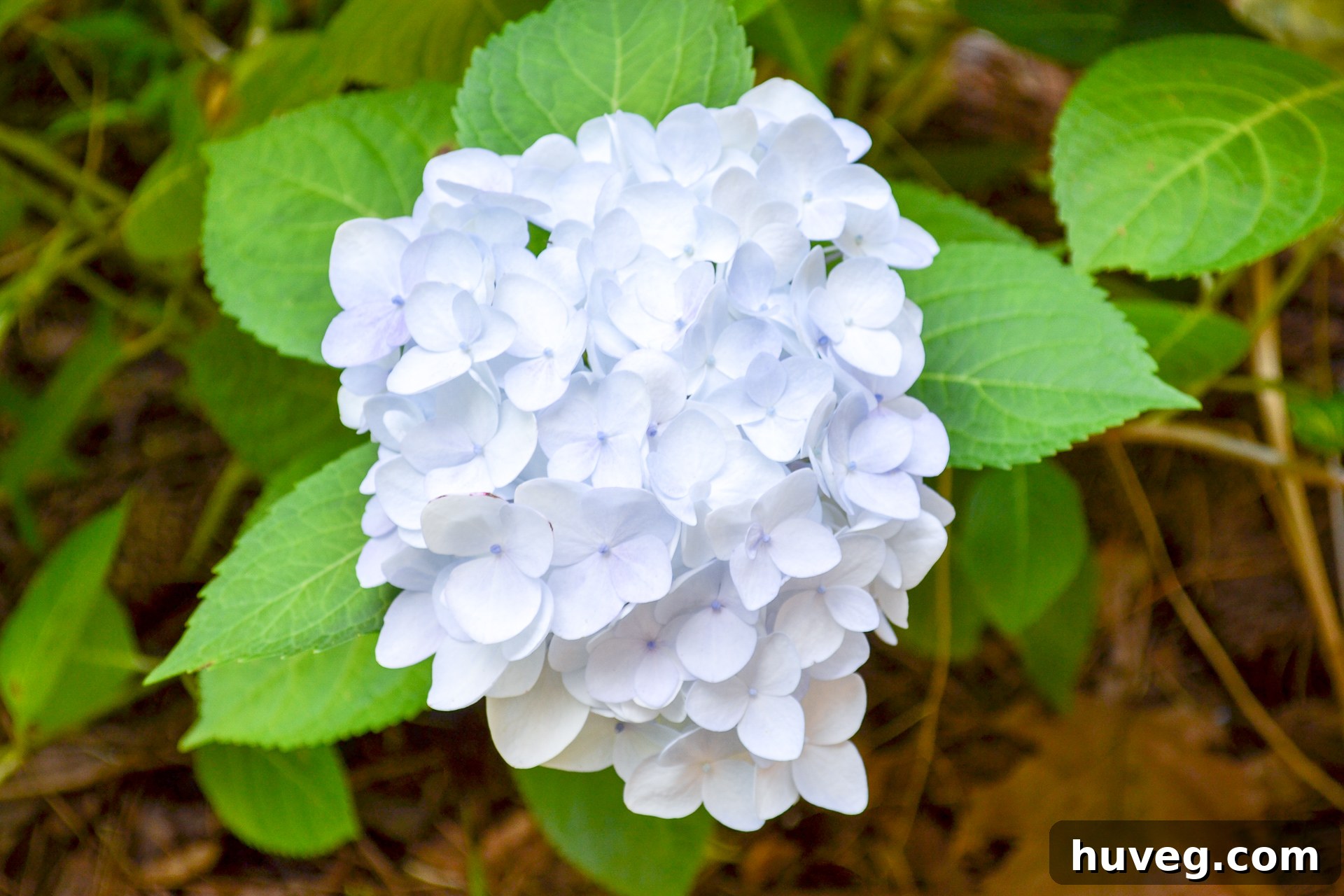
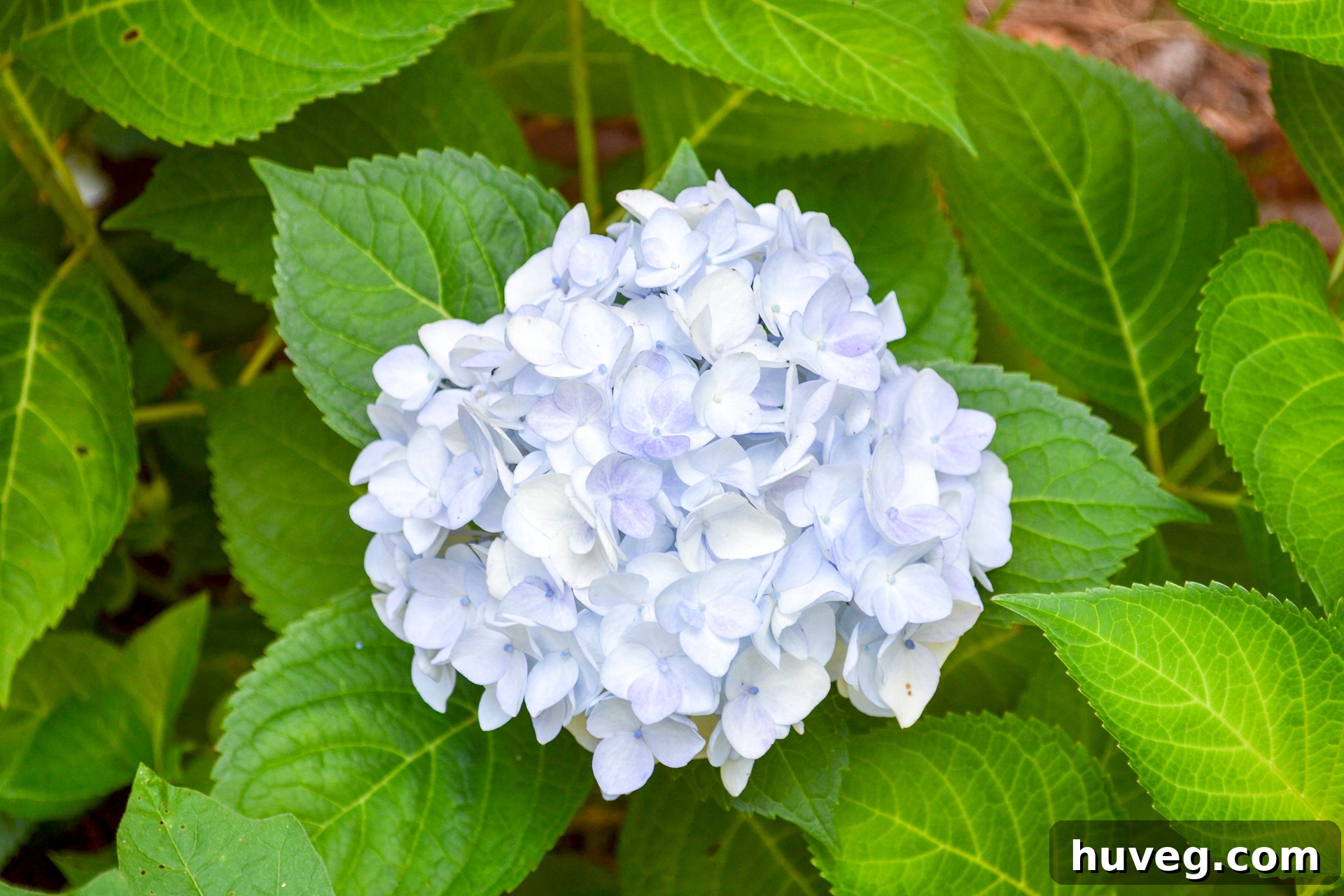
While my garden bursts with a kaleidoscope of bright, colorful hydrangeas, my personal preference for flowers almost always leans towards white. (White anemones, for instance, are a dream, though I’ve yet to try growing them – perhaps someday!) Driven by this love for pristine white blooms, I acquired a single Blushing Bride Hydrangea. I strategically planted it on the other side of the fence, in the small garden bed I designed around the air conditioning unit. My primary curiosity was to observe if this particular variety would transition to a blue shade or steadfastly maintain its white elegance.
The Blushing Bride variety is renowned for its graceful range, typically blooming from a subtle blue-gray to pure white, and sometimes even soft pink. I am delighted to see its beautiful white and gray tones now making their appearance, adding a touch of serene sophistication to that corner of the garden.
Twist n’ Shout Pink Lacecap Hydrangeas: A Unique Bloom Structure
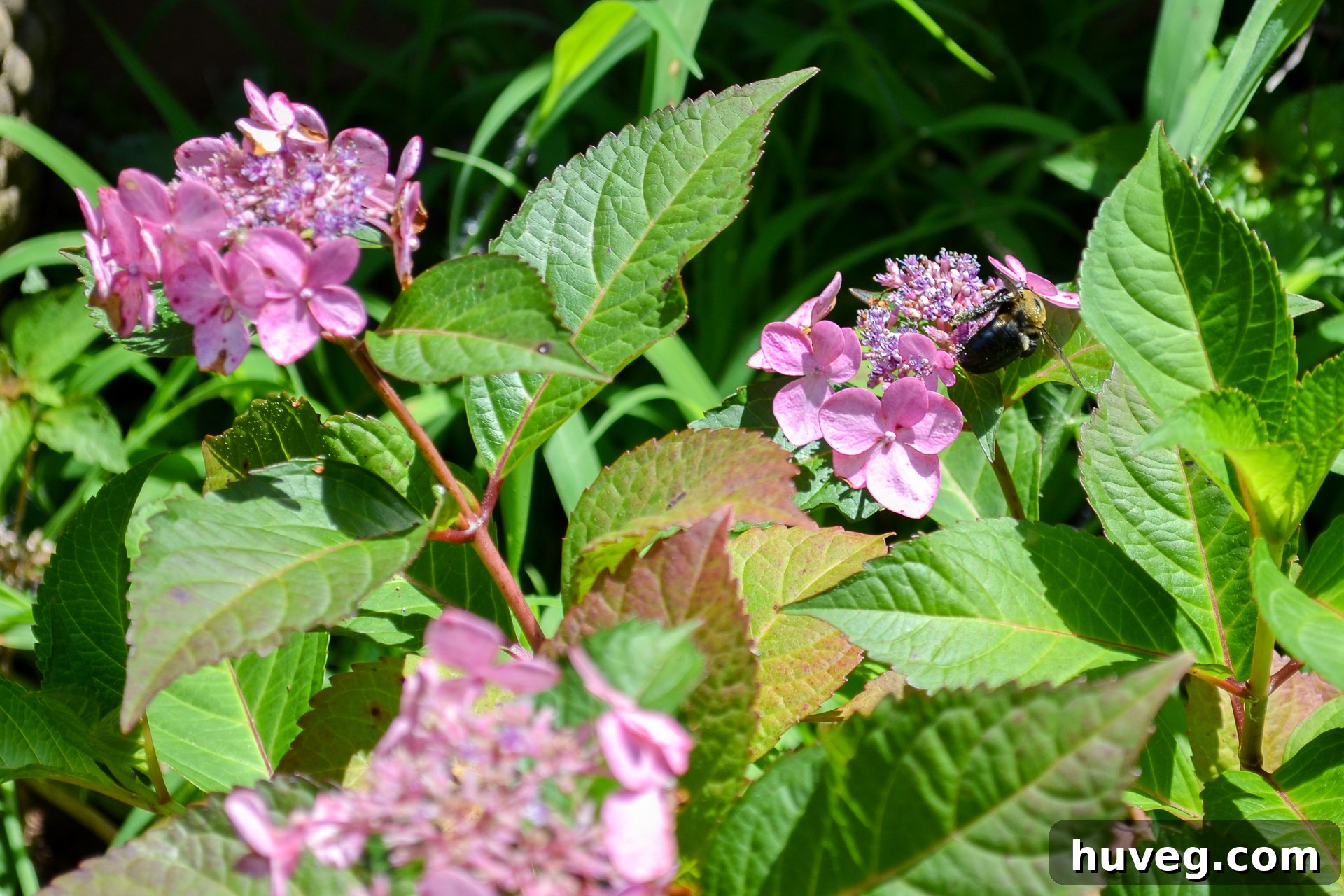
Last year, my new garden project experienced a significant mix-up from the local nursery: three of my hydrangea plants were mistakenly labeled as Bloomstruck when they were, in fact, an entirely different type. This serendipitous error allowed me to learn the fascinating distinction between a “Mophead” bloom, characterized by its full, rounded appearance, and a “Lacecap” bloom, which has a flatter center surrounded by delicate ray florets. These particular mislabeled plants turned out to be Twist ‘n’ Shout Lacecap hydrangeas.
Admittedly, Lacecap hydrangeas aren’t my absolute favorite; their blooms sometimes appear as if half their florets have been gently blown away, giving them a somewhat delicate, almost dandelion-like fluffiness. Once I realized the labeling error, I carefully dug them up and replaced them with the Bloomstruck hydrangeas I had originally intended for that space. My plan was to return the Lacecap varieties, but between ongoing projects and a touch of gardener’s laziness, they remained in their pots. By winter, I was convinced they hadn’t survived the neglect. To my delightful surprise, they all returned this year, happily thriving in their original containers! Of the three Lacecap hydrangeas, I’ve since replanted one in the front of the house to add a splash of color by the trash can screen (a project still awaiting its dedicated tutorial!). The remaining two will find their permanent home next to the pub shed once its construction is complete this summer.
Mastering Hydrangea Color Transformation: Pink to Blue and Back
The ability to change hydrangea bloom color from pink to blue (or vice-versa) is one of their most enchanting characteristics. I previously penned a detailed post on how I achieve blue hydrangeas naturally, which includes various tips, such as using specially-formulated fertilizers. However, the true secret to influencing your hydrangea’s color lies primarily in two critical factors: soil pH levels and the specific variety of hydrangea you are growing. As beautifully articulated by Southern Living:
In strongly acid soil (pH below 6), flowers turn blue. In alkaline soil (pH above 7), flowers turn pink or even red. In slightly acid or neutral soil (pH 6 to 7), blooms may be purple or a mix of blue and pink on a single shrub.
To achieve blue blooms, you need to lower the soil pH, making it more acidic. This can be done by adding soil amendments like aluminum sulfate or elemental sulfur. For pink blooms, you’ll want to raise the pH, making the soil more alkaline, which can be accomplished by adding garden lime. It’s crucial to perform a soil test before applying any amendments to understand your starting pH and avoid over-correction. Consistent application over time is also key, as color changes don’t happen overnight and require ongoing effort. Remember that soil composition and water runoff can affect localized pH, leading to variations even within a single plant or garden bed.
While this information on soil pH is invaluable, it’s equally important to consider the variety of hydrangea you are cultivating. Not all hydrangeas respond to pH changes in the same way; some are less sensitive, and white varieties, in particular, rarely change color regardless of soil conditions. Therefore, if you have a specific color in mind for your garden, always ensure that the hydrangea shrub variety you select is capable of producing that desired hue. This vital information is usually clearly stated on the plant’s label when you purchase it, so be sure to check!
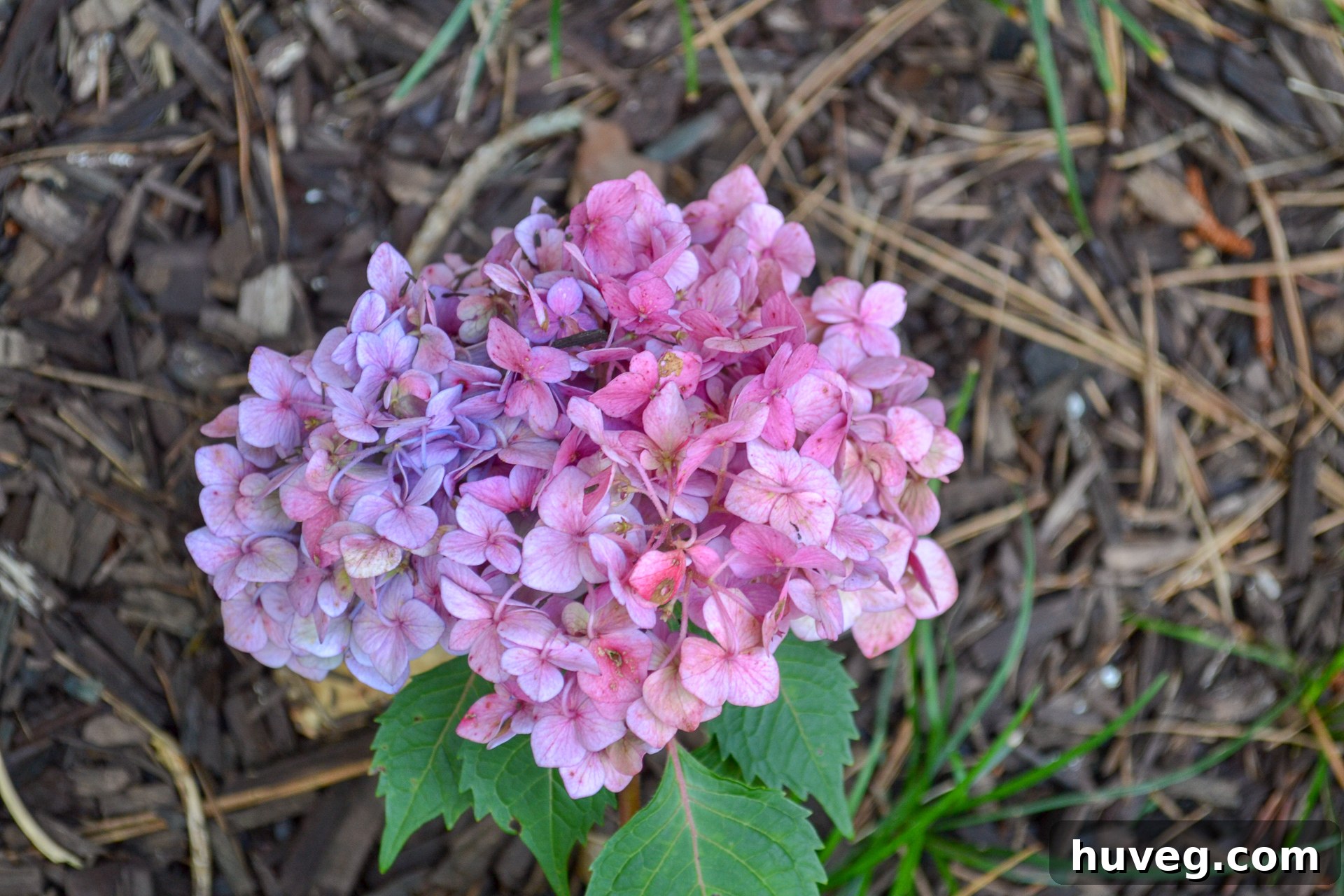
As this captivating image demonstrates, with certain hydrangea varieties, you might even be lucky enough to witness the magic of a single bloom displaying two distinct colors, a beautiful testament to the subtle pH variations within its growing environment!
Optimal Placement: Where Should You Plant Hydrangeas for Success?
Hydrangeas are remarkably resilient and generally easy-to-care-for plants, often described as self-sufficient growers. The key to their success lies in selecting the right planting location, ensuring they are protected from harsh elements and receive sufficient moisture. I’ve found that my hydrangeas thrive in areas that offer natural protection and consistent hydration:
- Against the house: The house provides shelter from strong winds and intense afternoon sun, while also benefiting from rainwater runoff.
- Near a fence: Fences offer similar protection from wind and can provide dappled shade throughout the day.
- Next to taller shrubs or trees: These can act as natural windbreaks and offer beneficial shade during the hottest parts of the day.
Beyond protection, proper light exposure is crucial. Most hydrangeas prefer morning sun and afternoon shade, especially in warmer climates. Too much direct, intense sun can scorch their leaves and lead to wilting, while too much shade can result in fewer blooms. Excellent soil drainage is also vital, as hydrangeas dislike “wet feet” which can lead to root rot. If you live in an area where your neighbors successfully grow hydrangeas, there’s absolutely no reason to doubt your ability to cultivate them too – they truly are adaptable plants!
Last year, many of my shrubs developed leaf spots, likely due to a fungal issue exacerbated by excessively wet conditions from my drip hose efforts. Ironically, my attempts to provide meticulous care may have been counterproductive. This season, however, they’ve bounced back with incredible vigor, suggesting that sometimes, a bit of “benign neglect” can actually benefit these hardy plants!
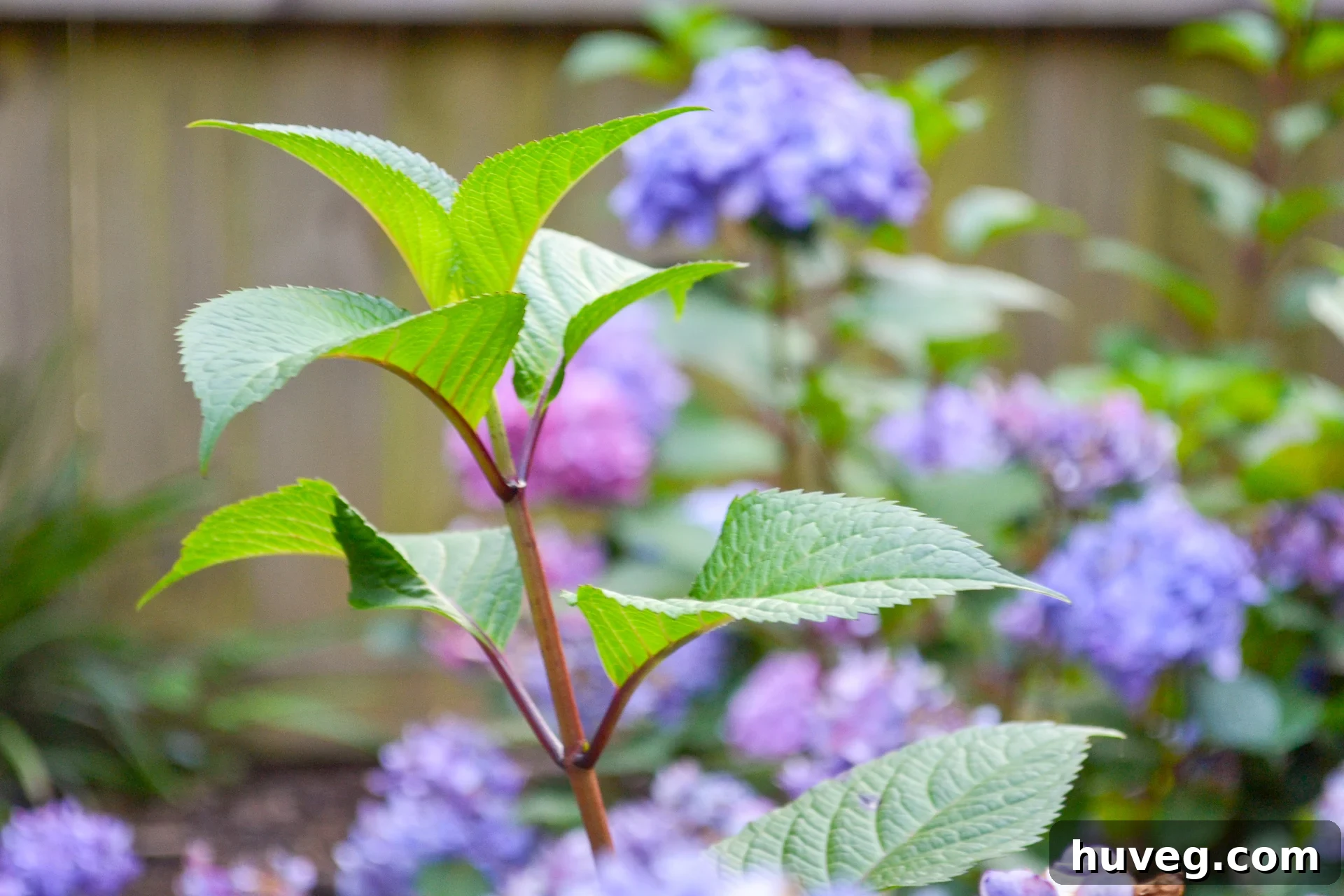
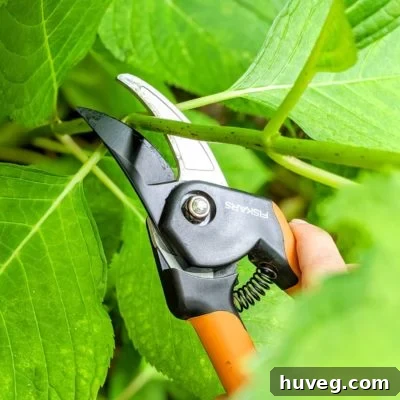
As the hydrangea flowers unfurl their beauty, I often trim them for bouquets, bringing their charm indoors. It’s important to note that many hydrangea varieties (specifically those blooming on “old wood” and “new wood”) form their buds for the following year on both existing stems and new growth. For this reason, I refrain from major pruning until after they’ve begun their blooming cycle. For detailed information on crucial pruning dates and other essential winter care for hydrangeas, please refer to my dedicated guide here. While some gardeners recommend cutting back hydrangeas in late winter or early spring, doing so at a time when new buds are forming risks sacrificing the spectacular blooms for the upcoming season. Understanding your specific hydrangea variety and its blooming habit is key to successful pruning.
Troubleshooting Hydrangeas: Why They Wilt, Spot, or Seem Sad
It can be disheartening to see your beautiful hydrangeas looking less than their best. Often, what appears to be a major problem is a normal part of their life cycle or an easily rectifiable issue. Let’s address some common concerns:
Hydrangeas Look Dead in the Winter: Understanding Dormancy
One of the most perplexing aspects for new hydrangea growers is their winter appearance. Hydrangeas undergo a natural dormancy period, especially in colder climates, where they can look completely lifeless – spindly brown sticks with no leaves. Rest assured, this is entirely normal! Hydrangeas are not evergreen shrubs; it’s perfectly natural for their leaves to drop and for the plant to enter a dormant state during colder weather. In the spring, with warming temperatures, they will reliably leaf out and bloom once more.
I consider this winter dormancy a small price to pay for the breathtaking beauty they offer during the other three seasons. If their bare winter branches bother you significantly, consider interspersing them with evergreen shrubs in your garden. For this very reason, I also cultivate gardenias and roses, which provide year-round greenery and the added bonus of their own delightful fragrances. For comprehensive guidance on how to properly care for your hydrangeas during the winter months, including specific protection strategies, I highly recommend visiting my detailed separate post on hydrangea winter care (also conveniently linked in the “More Hydrangea Ideas” section below).
My Hydrangea Has Spotted Leaves: Identifying and Treating Fungus
Spotted leaves on hydrangeas are often an indicator of a fungal infection, typically brought on by overly wet conditions, such as prolonged humidity or overhead watering that keeps foliage damp. The most effective initial step to prevent the spread of leaf spot diseases is to carefully strip away any affected leaves. If the spread is extensive and occurs early in the growing season, you might consider using commercial fungicides specifically formulated for hydrangeas, or even natural remedies like neem oil. However, if it’s later in the year and winter is approaching, simply removing the affected leaves from your hydrangea shrubs might be sufficient. With the natural leaf drop during winter, the fungus often disappears on its own, allowing the plant to emerge healthy and spot-free in the spring. Ensuring good air circulation around your plants and watering at the base rather than overhead can significantly reduce the risk of future fungal issues.
The Color is Fading on My Hydrangeas: Natural Aging and Rejuvenation
It’s entirely normal for older hydrangea blooms to gradually fade in color as summer progresses. This is a natural part of their life cycle and not a sign of distress. To encourage new, vibrant flowers and maintain the plant’s energy, simply deadhead these spent blooms. New flowers will continue to emerge with their signature brighter colors. As an added boost, I like to sprinkle spent coffee grounds around my hydrangeas. Coffee grounds are acidic, and as previously mentioned, soil pH plays a crucial role in bloom color intensity. Reusing coffee grounds is not only an eco-friendly practice but also an excellent way to help achieve and maintain those intensely vibrant blue hues in my hydrangeas!
My Hydrangeas Have a Lack of Blooms: Common Causes and Solutions
A scarcity of blooms on your hydrangeas can be quite perplexing, but there are typically two main culprits. The first is improper pruning: you might have cut them back in the winter after the cutoff date for your specific variety. Many hydrangeas, especially those that bloom on old wood (last year’s growth), form their flower buds in late summer or early fall. If you prune these stems in winter or early spring, you inadvertently remove next year’s potential blooms. The plant might skip a year of flowering or take some time to regrow and form new buds, so patience is key. Researching whether your particular hydrangea variety blooms on “old wood,” “new wood,” or “both” is crucial for correct pruning timing.
The second common issue is overcrowding. If your hydrangeas are planted too close together, they will compete intensely for essential resources like water, nutrients, and sunlight. This competition can significantly reduce bloom production. The solution can be as simple as relocating a few plants to give them more breathing room. I recently experienced this myself: my largest hydrangea was blooming profusely, while the one directly next to it produced nothing but foliage. After carefully moving the leafy plant just a foot or two further away, it soon began forming flower buds. Other less common causes can include over-fertilization (especially with too much nitrogen, which promotes foliage over flowers), extreme drought stress, or severe pest and disease pressure.
The Autumn Spectacle: Do Hydrangeas Change Color in The Fall?
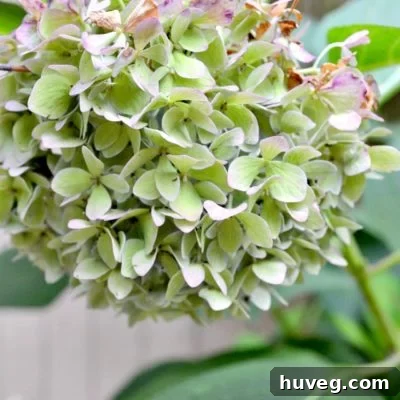
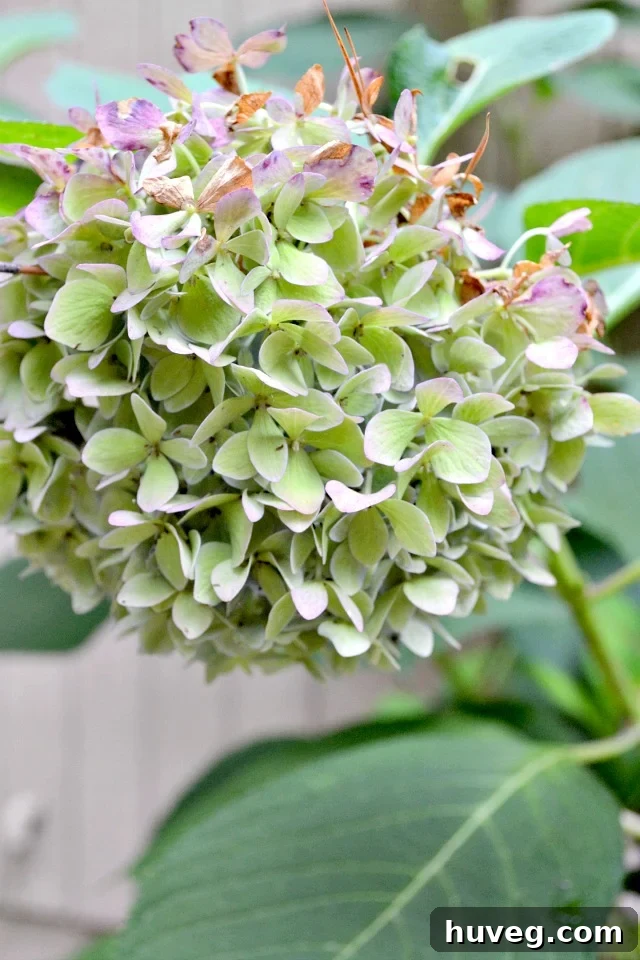
Absolutely! Hydrangeas continue to surprise and delight even as the seasons transition. Unlike many plants that simply fade, hydrangeas undergo a remarkable transformation in the fall, forming new buds and often blooming with dramatically altered colors. This late-season display is practically a new show entirely, as their hues deepen and shift into unique combinations. Among these autumn marvels, the sight of green hydrangeas with delicate pink tips is arguably my favorite, adding a sophisticated and unexpected beauty to the cooler months. These transitional colors add another layer of visual interest to the garden, extending their appeal well beyond the peak of summer.
Essential Winter Care for Your Hydrangeas
Winter care is crucial for the health and continued prolific blooming of your hydrangeas in the following seasons. Since this topic warrants a detailed explanation to cover all aspects, I’ve dedicated an entire separate post to it. For comprehensive information and expert tips on how to prepare and protect your hydrangeas during the colder months, I highly recommend you head over to that guide. It’s packed with everything you need to know to ensure your plants successfully overwinter and return stronger than ever (and yes, it’s also linked in the “More Hydrangea Ideas” section below!).
Keeping Hydrangea Bouquets Fresh and Vibrant Indoors
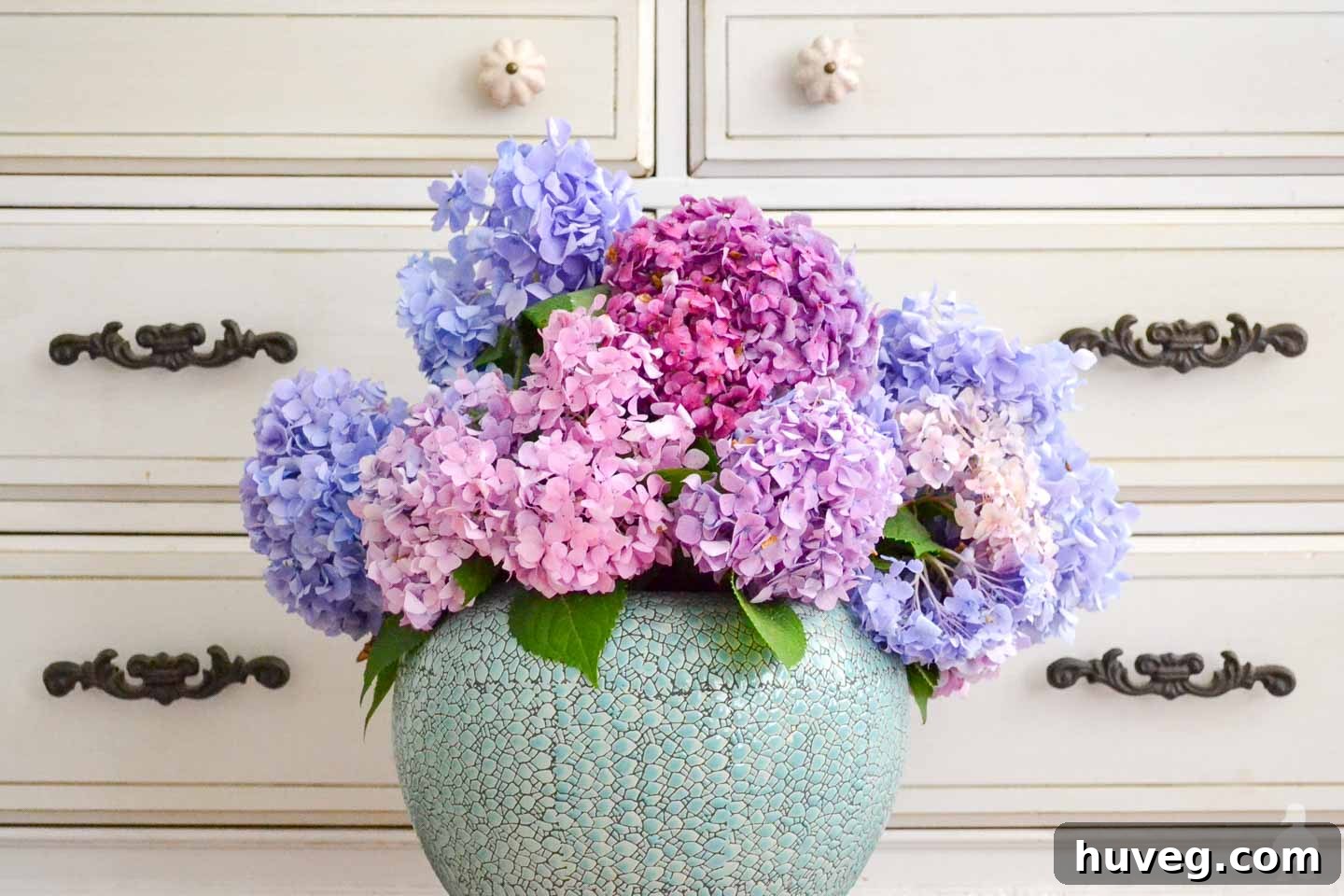
Due to the ongoing deck construction, I’ve had to prune some of my hydrangeas earlier than usual. While I held off as long as possible to let them reach their full blooming potential, some plants were simply in the way. The silver lining? An abundance of fresh hydrangea bouquets!
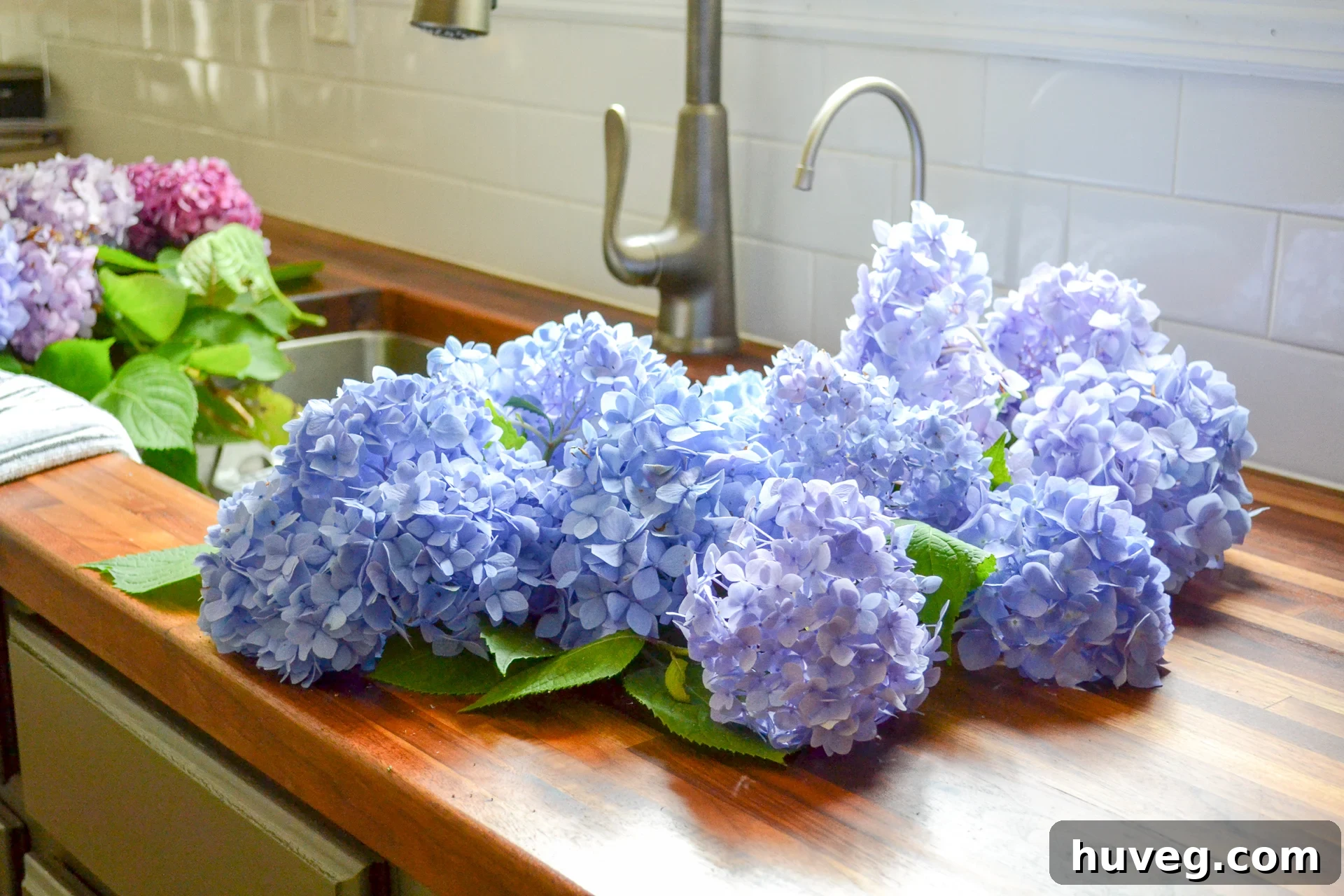
Last year marked my first official hydrangea bouquet from my garden, but this spring, I’ve already created three, which I consider a significant victory! My most recent batch of hydrangeas offered a beautiful mix of colors, inspiring me to experiment one morning and see what creative arrangements they might spark.
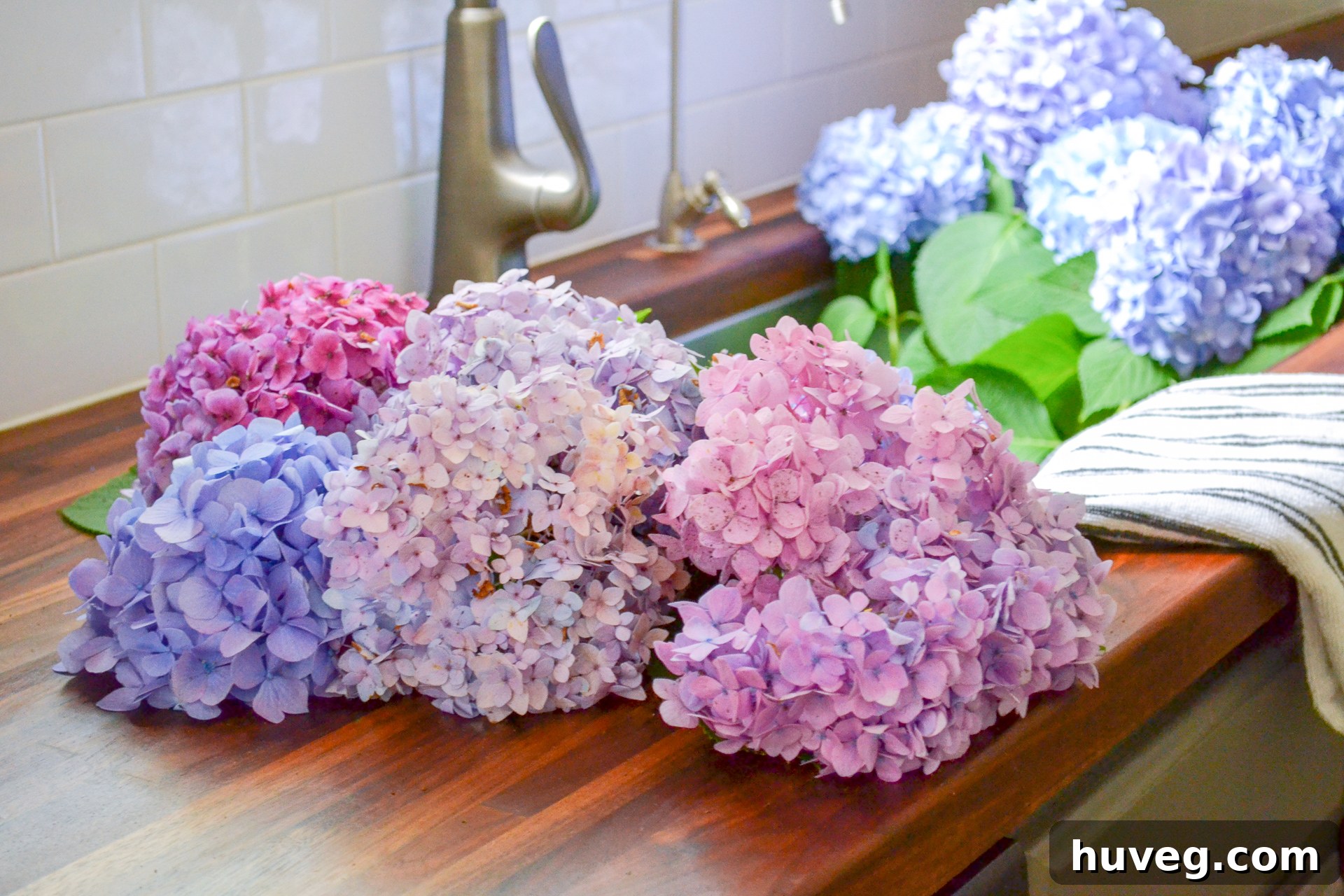
While I’ve previously shared general tips on keeping cut flowers fresh, I haven’t extensively experimented with cut hydrangeas specifically, as this is truly my first year consistently cutting them for bouquets. However, I’ve delved into online research to gather the best advice for you. Here are some highly recommended techniques to keep your cut hydrangea bouquets looking fresh and vibrant for longer:
- Prepare the Stems Properly: Before placing them in water, remove any excess leaves that would fall below the waterline in your vase. Leaves submerged in water will rot, introducing bacteria that contaminate the water and hinder the hydrangea’s ability to absorb moisture efficiently. (Source: Bouqs.com).
- The Hot Water Treatment: Immediately after cutting the stems, plunge them into cold water. Then, pour about 1 inch of boiling water into a separate container and let it cool for just a minute or two. Cut your hydrangea stems to the desired lengths for your arrangement, then hold the bottom 1 inch of each stem in the hot (but not boiling) water for approximately 30 seconds. This technique helps to clear any sap or blockages in the stem, improving water uptake. Immediately transfer the treated stems to cool water. (Source: Hydrangea.com).
- Utilize Alum for Longevity: After cutting the stem, dip the freshly cut end into powdered alum (a common spice found in most grocery stores) before placing it in water. Similar to the hot water method, alum helps to break up the “gumminess” or sap that can form at the bottom of a freshly cut stem. This blockage prevents hydrangeas from properly soaking up water, so alum effectively keeps the vascular system clear, allowing for maximum hydration and extended freshness. (Source: The Happier Homemaker).
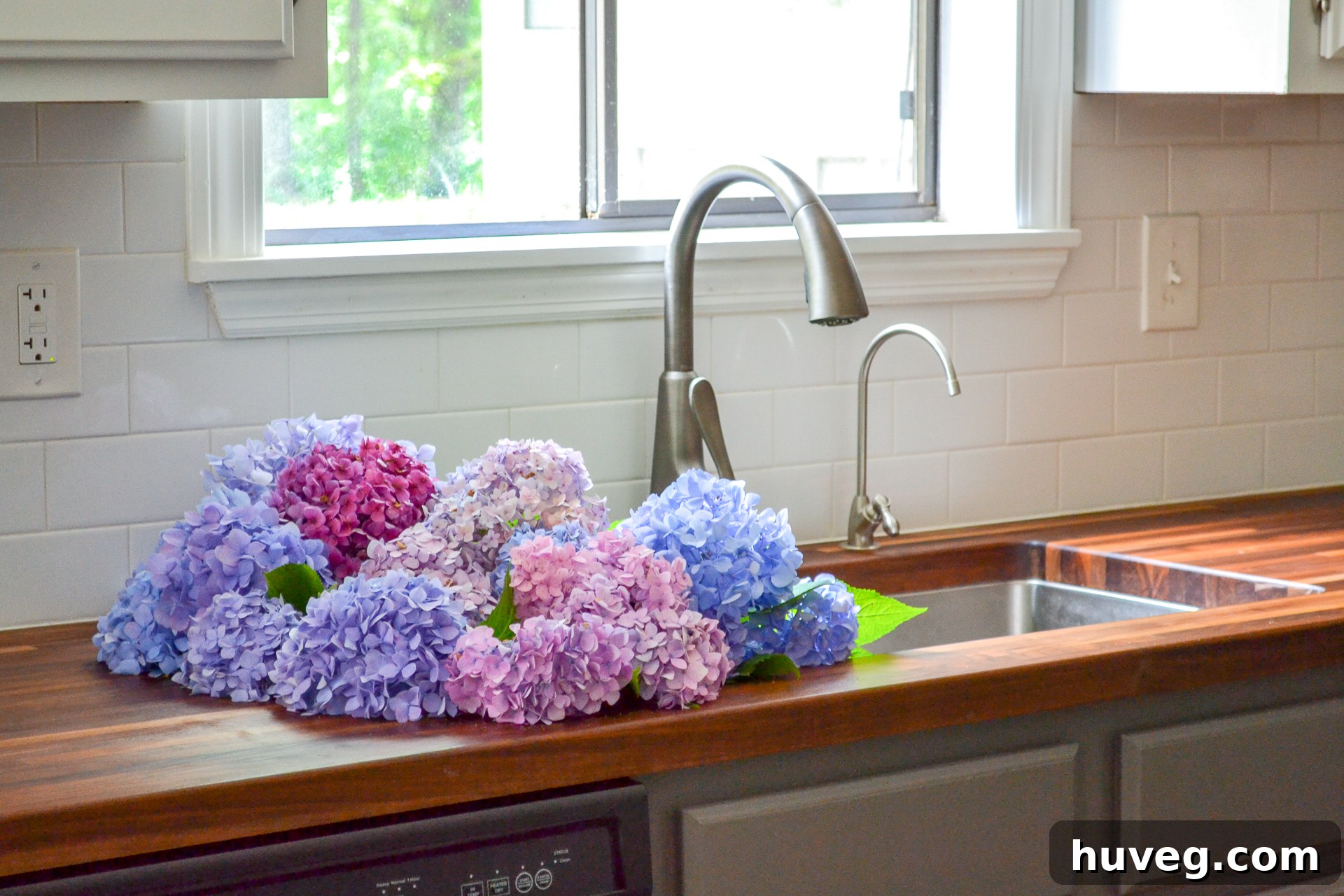
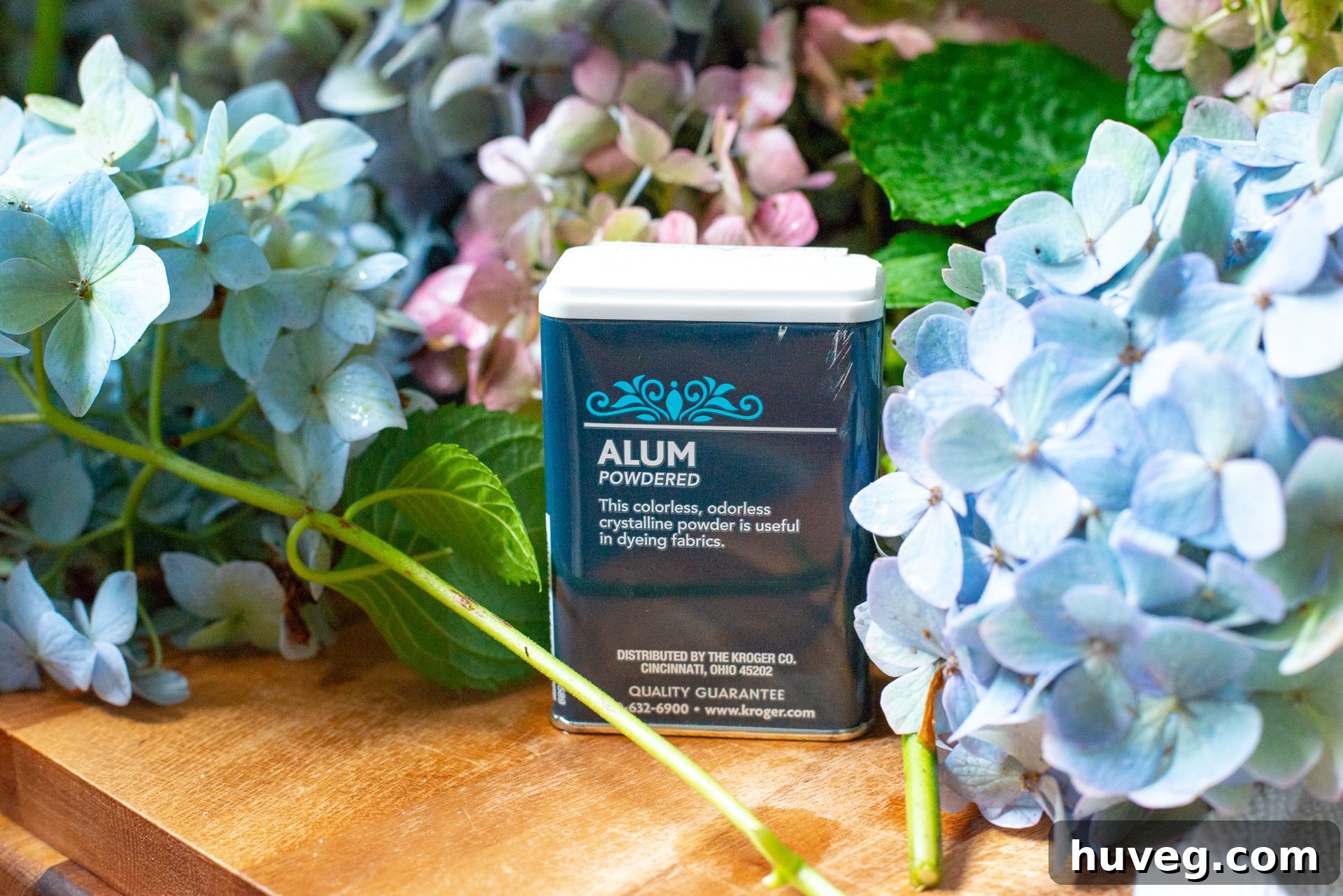
As an amateur in both flower styling and photography, opportunities to work with a still subject like these exquisite bouquets are rare but deeply cherished. They offer a fantastic chance to familiarize myself with my camera’s settings and experiment with different lighting conditions. This focused practice is invaluable for mastering my larger, more complex camera that I purchased a couple of years ago but haven’t fully conquered yet.
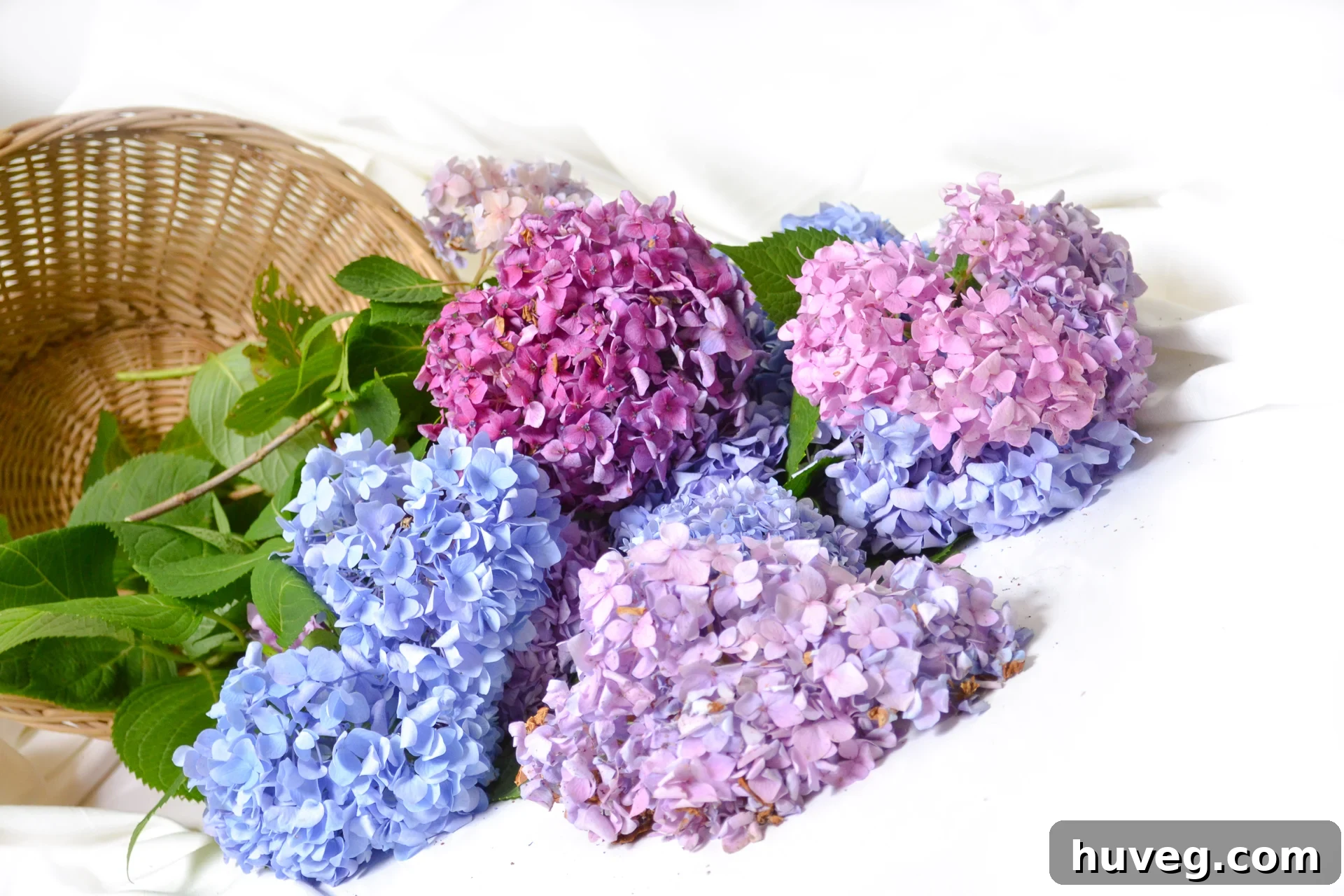
Typically, when I take photos for my tutorials (or of my energetic dogs!), I aim to capture the most interesting shot within about 30 seconds before moving on to the next step of a project. In contrast, these hydrangea bouquets provided a tranquil interlude, allowing me to simply play and enjoy the creative process for its own sake. I’m even considering framing one of these shots as a beautiful reminder to pause more often, savor the moment, and appreciate the simple joys in life. It’s a wonderful lesson in mindful creation.
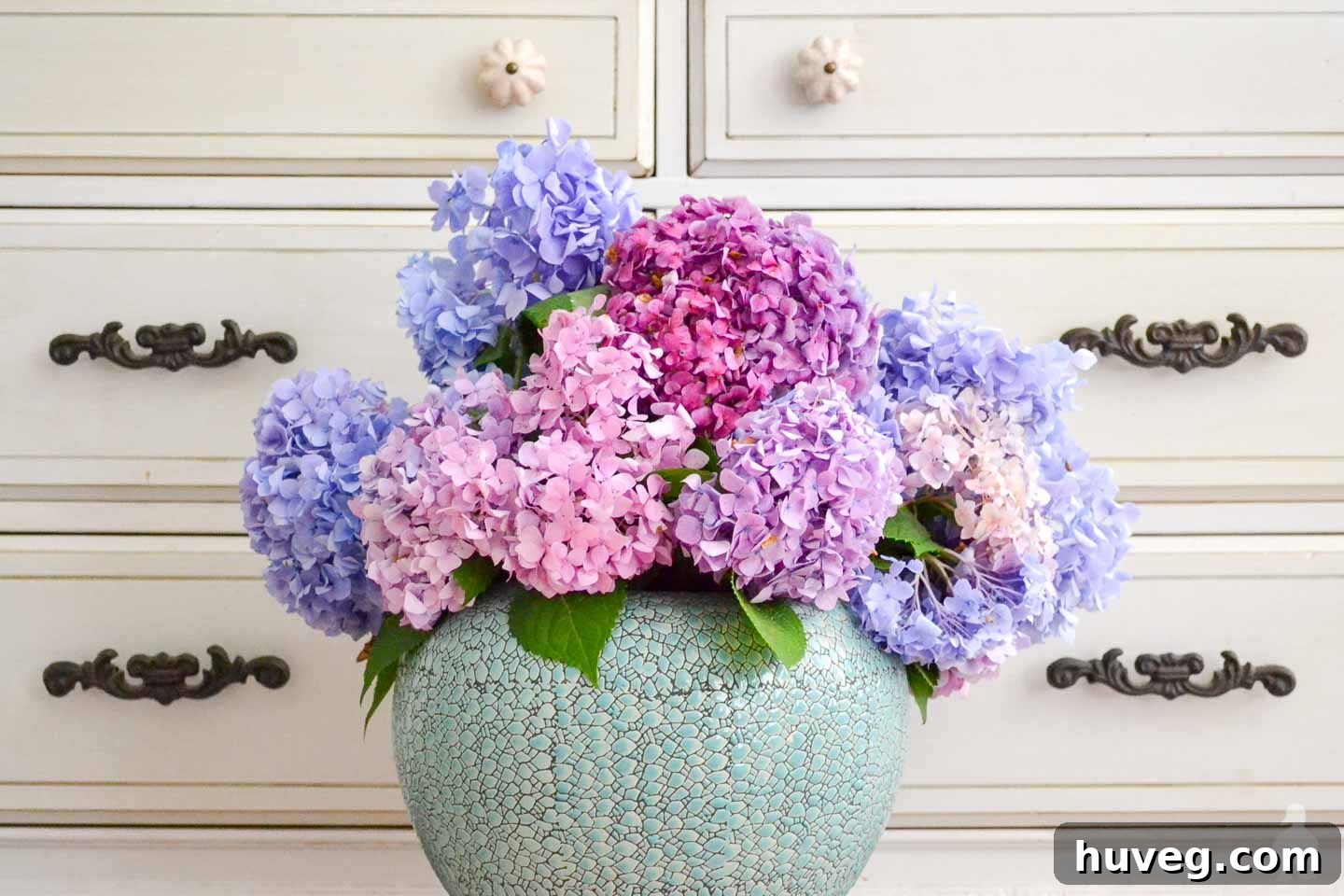
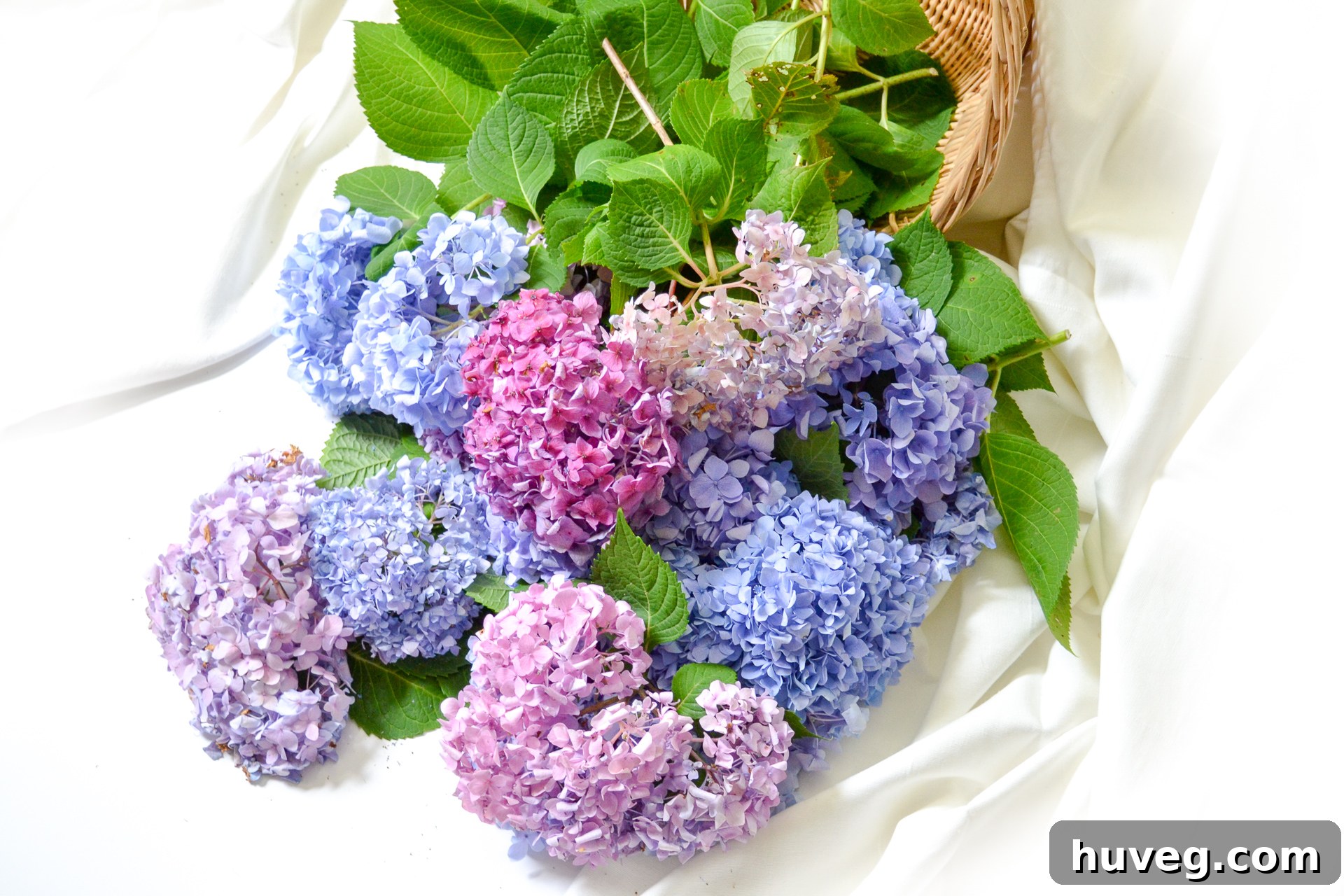
To all the wonderful readers who specifically requested this post, I sincerely hope it has thoroughly answered your most pressing questions about hydrangeas! And a special thank you for prompting me, as your inquiries gifted me an afternoon filled with invaluable photography lessons and creative exploration. It was a joy to share my hydrangea passion with you.
Do you have more burning questions about hydrangeas? Don’t hesitate to ask – fire away in the comments below!
P.S. For full transparency, I should mention that the nursery/brand behind many of the hydrangea varieties I discussed was a sponsor of mine last year. While I am not receiving any direct payment for mentioning them today, I adhere to legal disclosure requirements (both in the US and internationally) when referencing brands, even if you, my savvy readers, might have already inferred it!
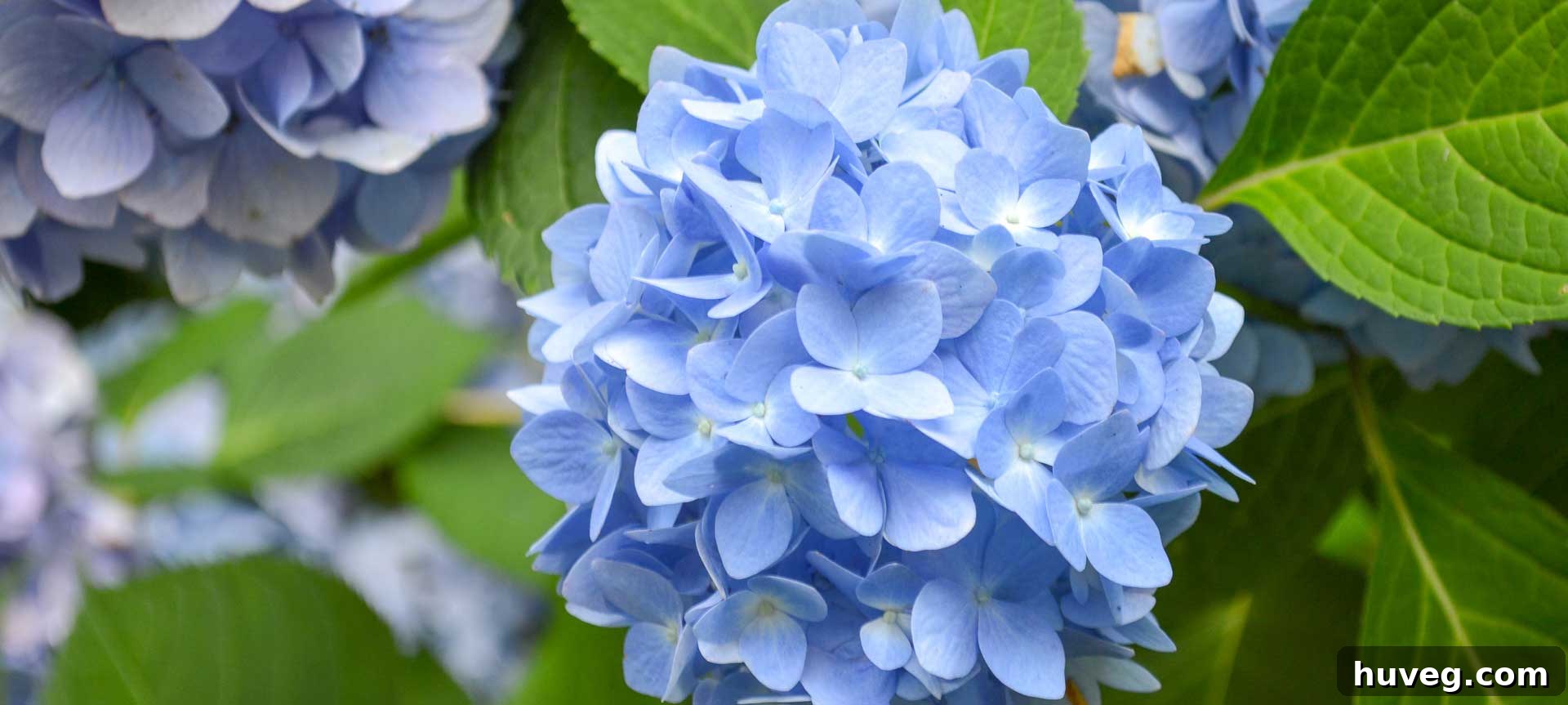
More Hydrangea Guides & DIY Ideas