Crafting Your Own Wooden Jigsaw

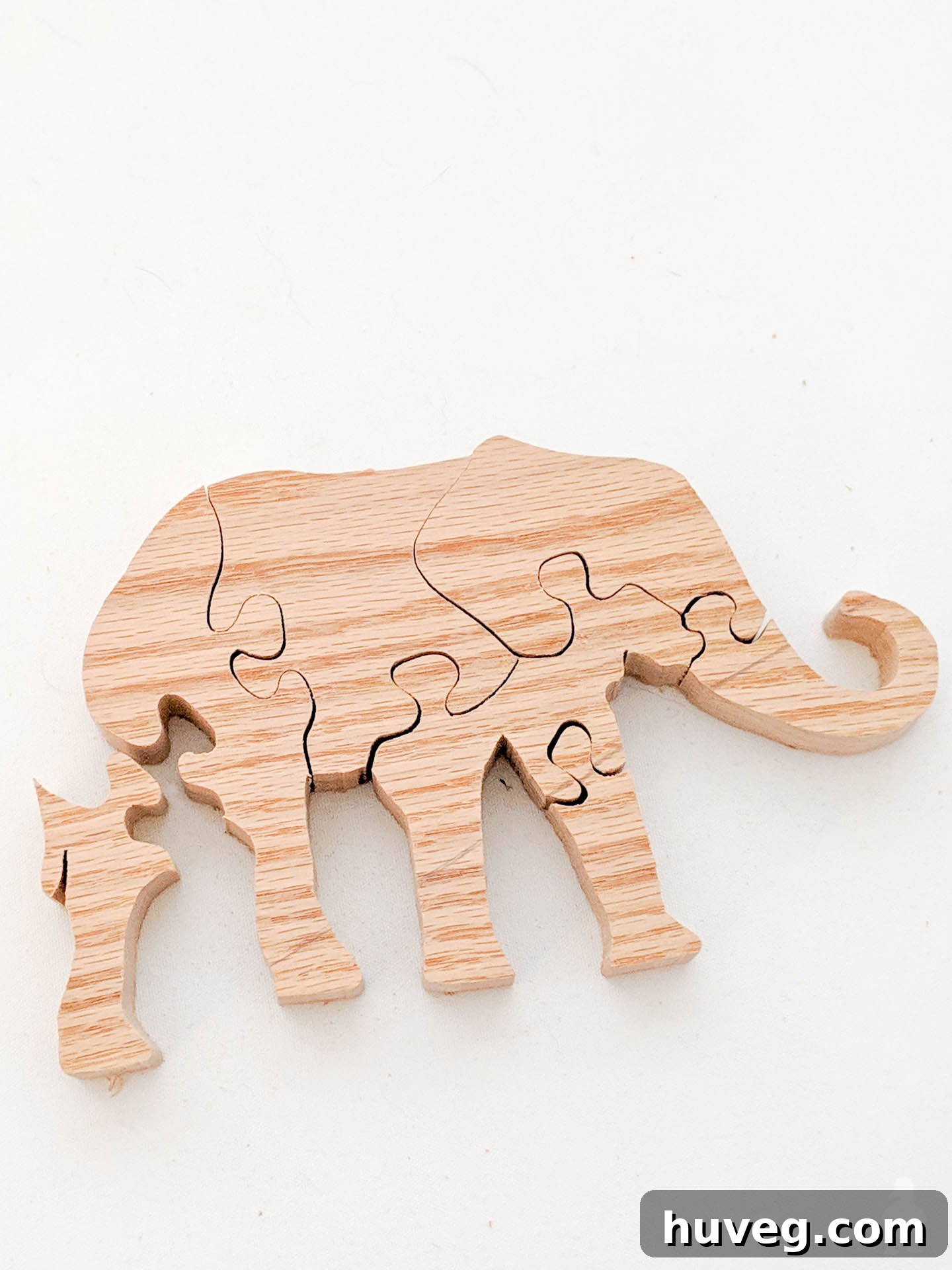
Transforming ordinary pieces of scrap wood into captivating stand-up puzzles is a rewarding endeavor that blends creativity with practical woodworking skills. These unique puzzles not only make thoughtful, personalized gifts but also serve as an excellent entry-level project for older children and teens, igniting their interest in the craft of woodworking. Imagine the joy of creating a tangible, interactive toy from materials that might otherwise go to waste!
Before diving into the detailed steps, you might find a visual guide helpful. A comprehensive video tutorial showcasing the process of creating this DIY standing wooden elephant puzzle from scrap wood is available on our website. This project draws inspiration from a cherished puzzle my great-grandmother had, which fascinated me as a child. The video also includes several beginner-friendly scroll saw tips to help you achieve clean and precise cuts. You can download the free cutting template for the elephant design directly from our woodworking plans library to get started on your own masterpiece.
My earliest memories of visiting my great-grandmother’s house often revolve around a particular wooden elephant puzzle she kept on her living room table. I would spend hours meticulously taking it apart and putting it back together. What struck me most was the ingenious way each piece interlocked, the incredible smoothness of the wood from years of play, and its remarkable ability to stand upright once completed – a stark contrast to the flat, conventional puzzles I was accustomed to. That early fascination planted a seed, and now, I’m thrilled to recreate that nostalgic experience for others.
Recently, I was challenged by Addicted2DIY to conceive a DIY game project. Given that the original elephant puzzle now resides with my cousin (it was a family favorite!), it presented the perfect opportunity to craft a similar, personalized version for my own home. This project is more than just making a puzzle; it’s about connecting with a beloved memory and sharing the simple pleasure of handcrafted toys.
How to Make This DIY Wooden Elephant Puzzle: A Step-by-Step Guide for Beginners
Creating your own wooden stand-up puzzle is a fantastic way to develop woodworking skills and create something truly special. This detailed guide will walk you through each step, ensuring a smooth and enjoyable crafting experience, even if you’re new to scroll saw projects.
Materials List
- Scroll Saw: Essential for cutting intricate shapes with precision.
- Printer Paper: For printing your chosen puzzle template.
- Painter’s Tape: A crucial material for protecting your wood surface and aiding in template removal.
- Spray Adhesive: To temporarily attach the paper template to your wood.
- Pencil/Pen: For tracing and marking puzzle pieces.
- Palm Sander: For smoothing edges and surfaces.
- Sandpaper: Various grits (e.g., 80, 120, 220) for progressive sanding.
- Wood Finish/Sealer: To protect the wood and enhance its appearance (e.g., lacquer, oil, wax).
Safety & Age Appropriateness Disclaimer: When creating this project for or with children, it is paramount to meticulously verify that all materials used are non-toxic, safe, and suitable for their age group. Not all wood finishes are food-safe or non-toxic, and young children, especially toddlers, have a tendency to put objects in their mouths. Always prioritize their safety. Furthermore, constant adult supervision is non-negotiable when children and teens are working with power tools like a scroll saw. Ensure proper safety gear, including hearing protection, eye protection, and breathing masks, is provided and used correctly. The responsibility for their safety rests entirely with you; please act accordingly and exercise extreme caution.
1. Select and Prepare Your Wood & Template
The beauty of this project lies in its flexibility, especially when it comes to material selection. I utilized a piece of oak from my scrap wood pile – specifically, a leftover 1×10 from a previous collaboration with Rust-Oleum. This particular puzzle, once finished, measures approximately 4-3/4 inches tall, 7-3/8 inches wide, and has an actual thickness of 3/4 inch. These dimensions provide a sturdy base for a stand-up puzzle.
However, feel free to use any wood you have on hand or prefer. Common alternatives for wooden jigsaw puzzles include pine, walnut, maple, MDF, and various types of plywood. Each wood type offers a different aesthetic and working experience; for instance, softer woods like pine are easier to cut but might splinter, while harder woods like maple offer a finer finish but require more effort. Choose a wood that is at least 3/4 inch thick for optimal stability and durability of the standing pieces. Consider the grain direction when laying out your template, especially for delicate parts like the elephant’s trunk or legs, to minimize breakage during cutting.
To ensure a perfect fit for this specific design, a downloadable template is available in my woodworking plans library. If you prefer to design your own, you can easily resize a royalty-free stock image. The key is to select simple images without excessive fine detail for your first few puzzles, as intricate cuts can be challenging for beginners. When adapting a design, focus on elements that contribute to the puzzle’s functionality, such as ensuring all four legs of the elephant are flat, allowing it to stand independently, just like my great-grandmother’s cherished antique.
2. Template Adhesion: The Tape and Spray Method
Attaching your paper template to the wood accurately and securely is crucial, but removing it cleanly without damaging the wood or leaving sticky residue can be a challenge. A highly recommended technique, often shared in woodworking forums, involves applying painter’s tape or contact paper to the wood surface *before* using spray adhesive to attach the template. This simple yet effective method serves as a protective barrier.
Here’s how it works: first, carefully cover the entire surface of your wood blank with painter’s tape, ensuring there are no gaps or overlapping edges. This layer will bear the brunt of the spray adhesive. Next, apply a light, even coat of spray adhesive to the back of your printed template and carefully position it onto the taped wood surface, smoothing out any bubbles or wrinkles. Once the cutting is complete, the painter’s tape (with the paper template attached) can be peeled off the wood easily, leaving your finished piece clean and free from stubborn glue or paper fibers. This is particularly beneficial for woods with open grains, like red oak, where adhesive can easily seep into the pores. This technique ensures a pristine surface, ready for sanding and finishing.
3. Scroll Sawing the Outer Contour
The scroll saw is an indispensable tool for this project, celebrated for its ability to make precise, intricate cuts that finer blades allow. Before beginning, ensure you have the appropriate blade installed—a fine-toothed, skip-tooth blade is generally ideal for woodworking puzzles, providing clean cuts without excessive tear-out. Safety glasses are a must, and practice cuts on scrap material can help you get a feel for the machine.
A common dilemma for scroll saw users is whether to cut the smaller, interior pieces first or to tackle the main outer edge. Generally, it’s advisable to cut interior sections or smaller, more fragile parts of your design first. This approach keeps the overall piece larger and more stable, reducing the risk of snapping delicate features (like an elephant’s trunk or ears) as you apply pressure during subsequent cuts. However, for this particular elephant puzzle, given the substantial thickness of the wood and the fact that the internal puzzle pieces were not yet drawn, starting with the exterior outline proved to be a practical and straightforward decision. The robust nature of the wood provided ample stability throughout the initial cutting phase. Maintain a steady, controlled feed rate, letting the blade do the work, and avoid forcing the wood through the blade, which can lead to rough cuts or blade breakage.
4. Designing and Cutting the Internal Puzzle Pieces
With the outer contour of your elephant shape precisely cut, the next exciting phase is to design the individual puzzle pieces. Start by refining any imperfections on the outer edges. I used a flat edge to redraw the feet, ensuring they were perfectly level and would provide optimal balance for the standing puzzle. Then, with a pencil or marker, begin sketching your puzzle lines directly onto the wood surface, working within the elephant’s outline.
This is where your creativity truly shines! When designing the interlocking pieces, remember the core principle: create “bulbous-y” curves and prominent, rounded tabs and slots. These shapes are crucial for ensuring that each piece can securely “grab” onto its neighbors, preventing the puzzle from falling apart due under its own weight or gravity when assembled and standing. Avoid sharp angles or shallow curves, as these can result in a loose fit or easily breakable pieces. Consider varying the size and complexity of your pieces; smaller, more numerous, and more intricately shaped pieces will create a more challenging and engaging puzzle. For a beginner-friendly puzzle, aim for fewer, larger, and simpler shapes.
Once your design is complete, return to your scroll saw. Now, meticulously cut along your drawn lines, taking care to make smooth, deliberate cuts. For internal cuts, remember to drill a small pilot hole within each piece to insert the scroll saw blade. Take your time, especially on curves, to ensure clean, tight-fitting puzzle pieces. After cutting, you’ll be delighted to find that the painter’s tape technique works like a charm! The template, along with any lingering adhesive, should peel away effortlessly, leaving your beautifully cut wooden puzzle pieces clean and ready for the next step.
5. Finishing Touches and Enjoyment
The final step in bringing your wooden elephant puzzle to life involves refining its surfaces and protecting the wood, making it smooth, durable, and ready for countless hours of play. Start by thoroughly sanding all the edges and surfaces of each puzzle piece. I used a belt sander to ensure the elephant’s feet were perfectly flat, which is crucial for its ability to stand independently. Follow up with a palm sander and progressively finer grits of sandpaper (e.g., 80, 120, 220) to achieve a wonderfully smooth, tactile finish. Pay extra attention to removing any sharp edges or splinters, especially if the puzzle is intended for children.
Once sanded, it’s time to add character and protection. You have numerous finishing options:
- Natural Look: A simple tung oil or beeswax finish will deepen the wood’s natural color and protect it while maintaining a natural, organic feel.
- Color & Vibrancy: For a pop of color, consider non-toxic acrylic paints, wood stains, or dyes. If working with children, inviting them to paint and personalize each piece makes the project even more engaging and unique.
- Modern & Chic: For a more contemporary aesthetic, you might experiment with India Ink, as I’m considering for future projects. It can create striking, deep tones that highlight the wood grain.
- Durability: A spray lacquer or polyurethane provides a clear, durable protective layer that stands up to handling and wear.
Regardless of your chosen finish, always allow adequate drying time between coats and ensure good ventilation. If this puzzle is a gift or toy for younger children, absolutely stick to certified non-toxic paints and finishes. Supervising older children or teens with a scroll saw is key, and you’ll know best when they’re ready to handle such tools safely under guidance.
I am absolutely thrilled with how this elephant puzzle turned out, and it has inspired me to create more. Next, I’m thinking of making a Charlie and a Stella version, perhaps for my pets or as gifts for friends. What other animals or shapes do you think would make fantastic stand-up puzzles? Share your ideas!
Other DIY Game Ideas: Expand Your Crafting Horizons
This project was proudly part of the #DIYGameChallenge! If you’re looking for more fun and creative DIY game ideas, be sure to explore the amazing projects shared by these talented bloggers:
- Ugly Duckling House (YOU ARE HERE!)
- Addicted 2 DIY: DIY Backyard Chip Shot Golf Game
- RemodelaCasa: Chinese Checkers Game Nesting Tables
- The Created Home: DIY House Shaped Dress Up Wardrobe
- Anika’s DIY Life: DIY Ring Toss Game
- The Inspired Workshop: DIY Ring Toss Game
- The Awesome Orange: DIY Outdoor Tic Tac Toe Game
- Stacy Risenmay: DIY Outdoor Scoreboard
- My Repurposed Life: DIY Molkky Game for Camping
- 100 Things 2 Do: DIY Sliding Puzzle
- Joyful Derivatives: Chalkboard DIY Tutorial
More Creative Scrap Wood Ideas
Never let those precious cutoffs from larger woodworking projects and home DIYs go to waste! Scrap wood is a versatile resource for countless creative endeavors. Dive into these ideas to discover how you can repurpose even the smallest pieces into beautiful gifts, practical decor, and much more, adding a touch of handmade charm to your home and life.
- 25 Great Gift Ideas for the Craft Beer Lover
- How to Create Long, Deep, & Thin Floating Shelves
- DIY Air Plant Wall Art from Scrap Wood
- Scrap Wood Kitchen Decor – DIY Herb Signs
- How to Build a Better Bee House | Free Plans
- DIY Tree Cutout Art