Quick 15-Minute DIY Hairpin Leg Coffee Table

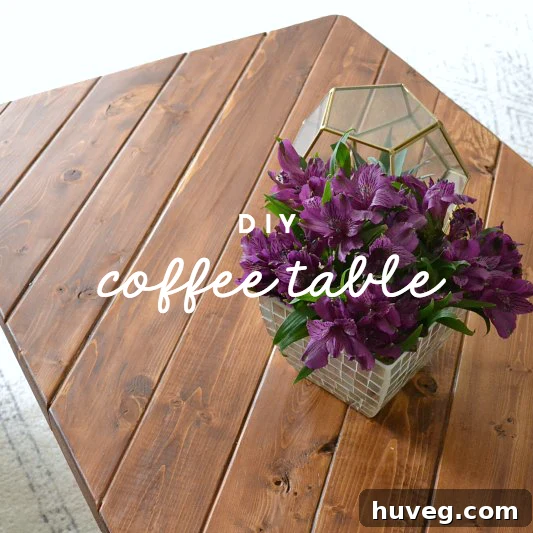
After shedding my old living room furniture, I found myself in a familiar DIY dilemma: a pressing need for a coffee table, and fast! Armed with a collection of scrap lumber and a set of modern hairpin legs, I embarked on a mission to create a stylish, functional coffee table that was not only quick to build but also incredibly budget-friendly. This project, which I’m thrilled to share with you today, is a testament to what can be achieved in just an afternoon with a little creativity and some reclaimed materials.
Hello, fellow DIY enthusiasts! For those new to my corner of the internet, I’m Sarah, and my passion lies in tackling numerous DIY home projects, often resulting in glorious messes. Today’s post is extra special, as it’s part of the exciting #2x4andMore Challenge blog hop from Remodelaholic. If you’ve just discovered The Ugly Duckling House, welcome! You’ll find me knee-deep in countless home improvement adventures, currently in the midst of remodeling my “bad luck” primary bathroom, among approximately 5,903 other tasks on my never-ending to-do list.
For my regular readers, today marks the fulfillment of a promise! I’ve been dropping hints about this new coffee table on Instagram, and now it’s time to reveal all the details. Yes, it’s the very one I quickly assembled for a date night because, well, after selling off all our living room furniture, we had nowhere to place our pizza! A truly essential piece of furniture, indeed.
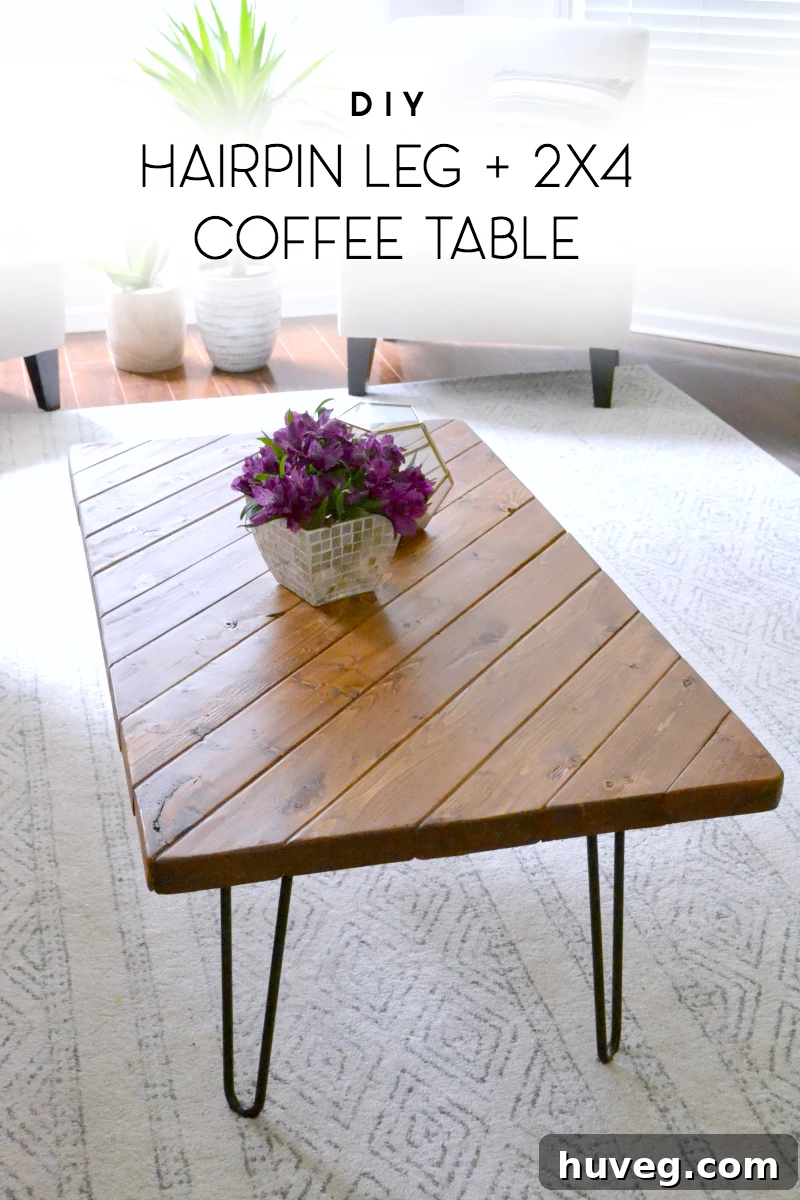
Build Your Own Modern Hairpin Leg Coffee Table from Scrap Wood
There’s nothing quite like purchasing a pristine white rug and then realizing you have no comfortable surface to rest a glass of red wine on to ignite a burst of furniture-building motivation! While the staining and finishing processes for this coffee table occupied the better part of a day, I can genuinely say that the initial cutting of all the wood pieces took a mere 15-20 minutes, utilizing only the scrap wood I already had. This project is a fantastic example of how accessible and rewarding DIY furniture can be, transforming leftover materials into a beautiful, functional centerpiece for your living space.
Why Choose Scrap Wood for Your DIY Coffee Table?
Opting for scrap wood in your DIY projects isn’t just about saving money; it’s also an eco-friendly choice that reduces waste and adds character to your creations. Every piece of salvaged lumber tells a story, and when you combine them, you craft something truly unique and full of personality. For this hairpin leg coffee table, using a mix of 2x4s meant that some edges were naturally rounded, while others were sharper – this inconsistency, far from being a flaw, contributed to the rustic-modern aesthetic I was aiming for. It demonstrates that perfection isn’t always the goal; sometimes, embracing the imperfections of reclaimed materials leads to the most interesting results.
Materials and Tools for Your Scrap Wood Coffee Table
Before diving into the build, gather your supplies. The beauty of this project lies in its flexibility, allowing you to adapt based on what scrap wood you have available. Here’s what you’ll need:
- Scrap Plywood: One piece, roughly 2ft x 3ft (or to your desired tabletop size for the base).
- Scrap 2x4s: A collection of various lengths. The more variety, the more unique your pattern can be.
- Hairpin Legs: Four coffee table height hairpin legs (I linked to similar ones below).
- Strong Wood Glue: Essential for a solid bond.
- Bar Clamps: To hold pieces securely while the glue dries.
- Wood Screws: For reinforcing the assembly and attaching legs (ensure they are appropriate length for your wood thickness).
- Wood Filler: To fill gaps and knots for a smooth finish.
- Sandpaper: Various grits (80, 180, 240) for progressive sanding.
- Wood Stain: Your preferred color (I used Golden Mahogany).
- Satin Finish Polyurethane: For protection and a lasting finish.
- Miter Saw: For precise angled cuts on the 2x4s.
- Drill/Driver: For pre-drilling and driving screws.
- Orbital Sander: To make the sanding process quicker and more effective.
- Router (Optional): For rounding off the outside edges.
- Sanding Block: For hand-sanding between stain coats.
Step-by-Step Guide to Building Your DIY Hairpin Leg Coffee Table
1. Selecting and Preparing the Plywood Base
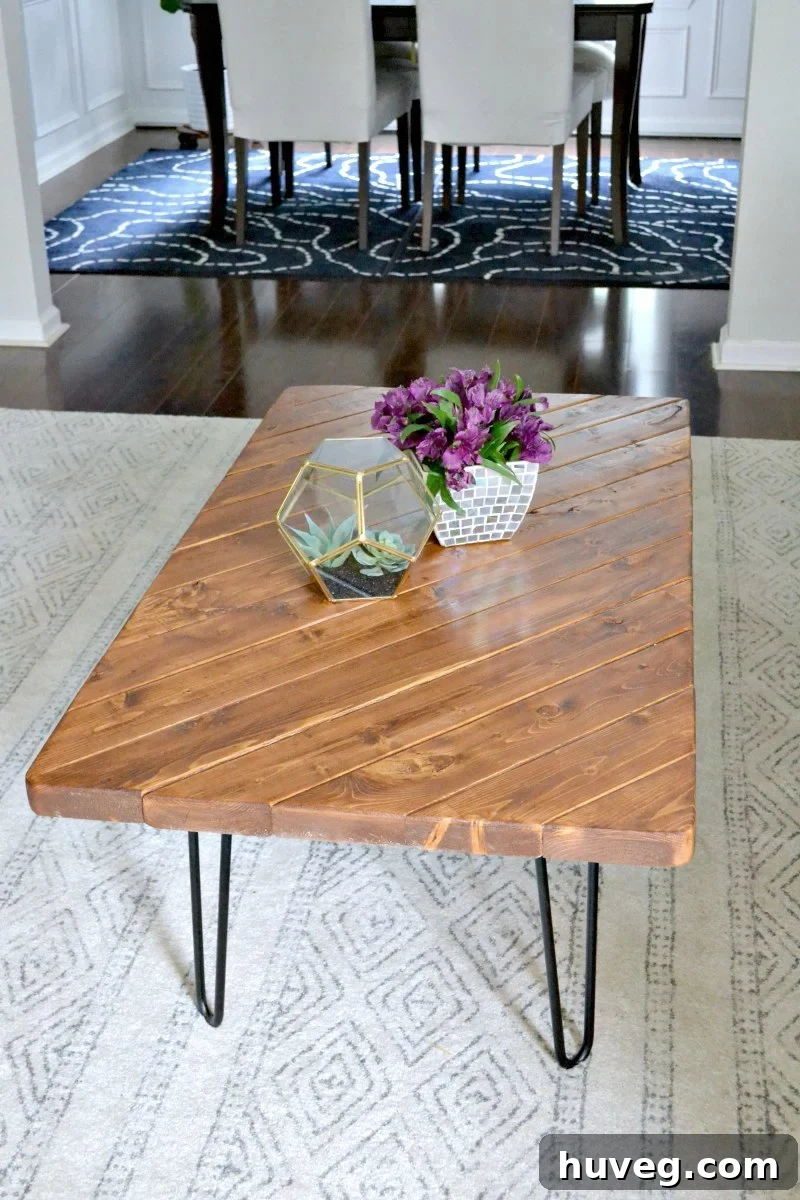
The foundation of your coffee table is a sturdy plywood base. While I used a scrap piece that was just under 2 feet by 3 feet, the final table, including the 2×4 overhang, measured approximately 25 inches wide, 45 inches long, and 17 5/8 inches high. Don’t stress too much about exact measurements at this stage if you’re working with scrap; the goal here is to establish the general footprint of your tabletop. The 2x4s will eventually extend beyond this plywood base, so consider this an initial guide for the table’s overall size and how it will fit into your room. Ensure your plywood is relatively flat and free of any major defects that could compromise the table’s stability.
2. Gathering and Strategizing with Scrap 2x4s
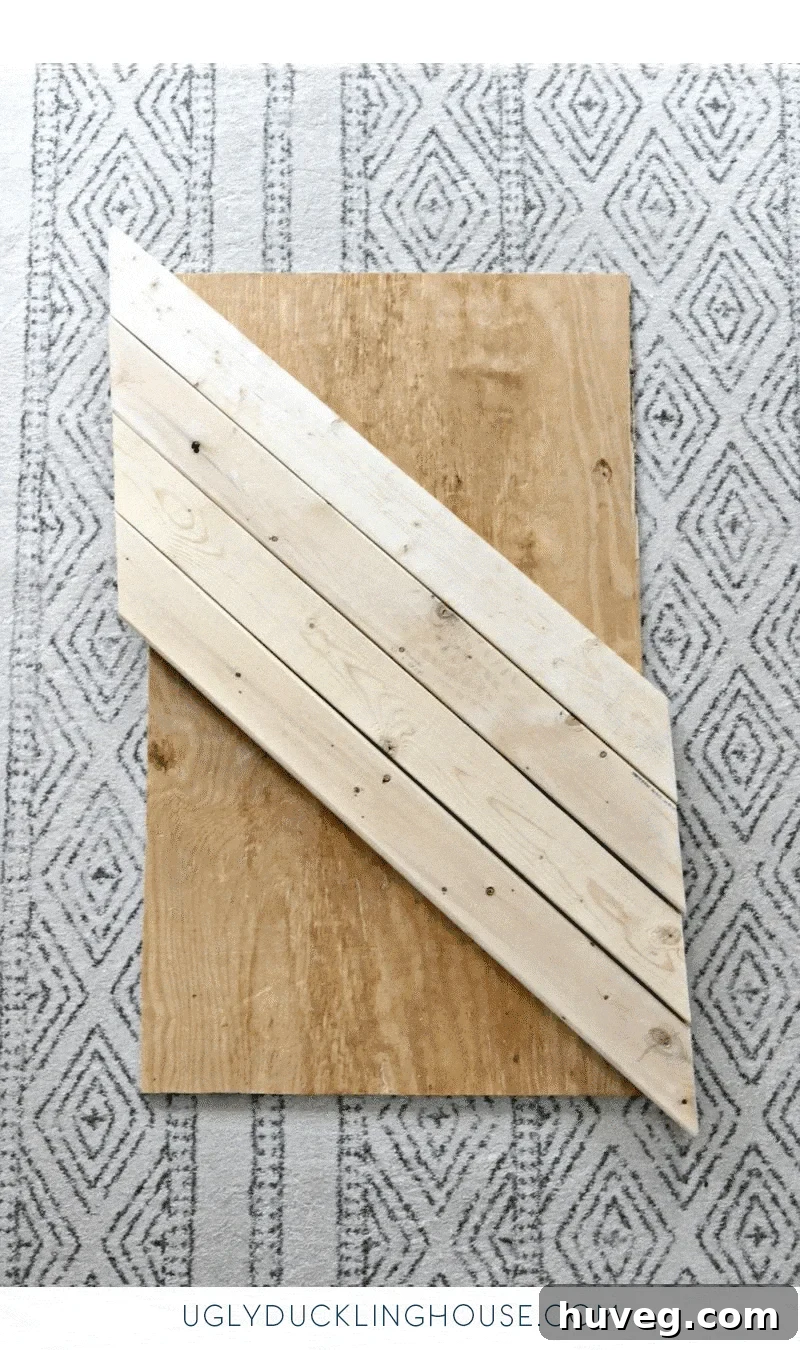
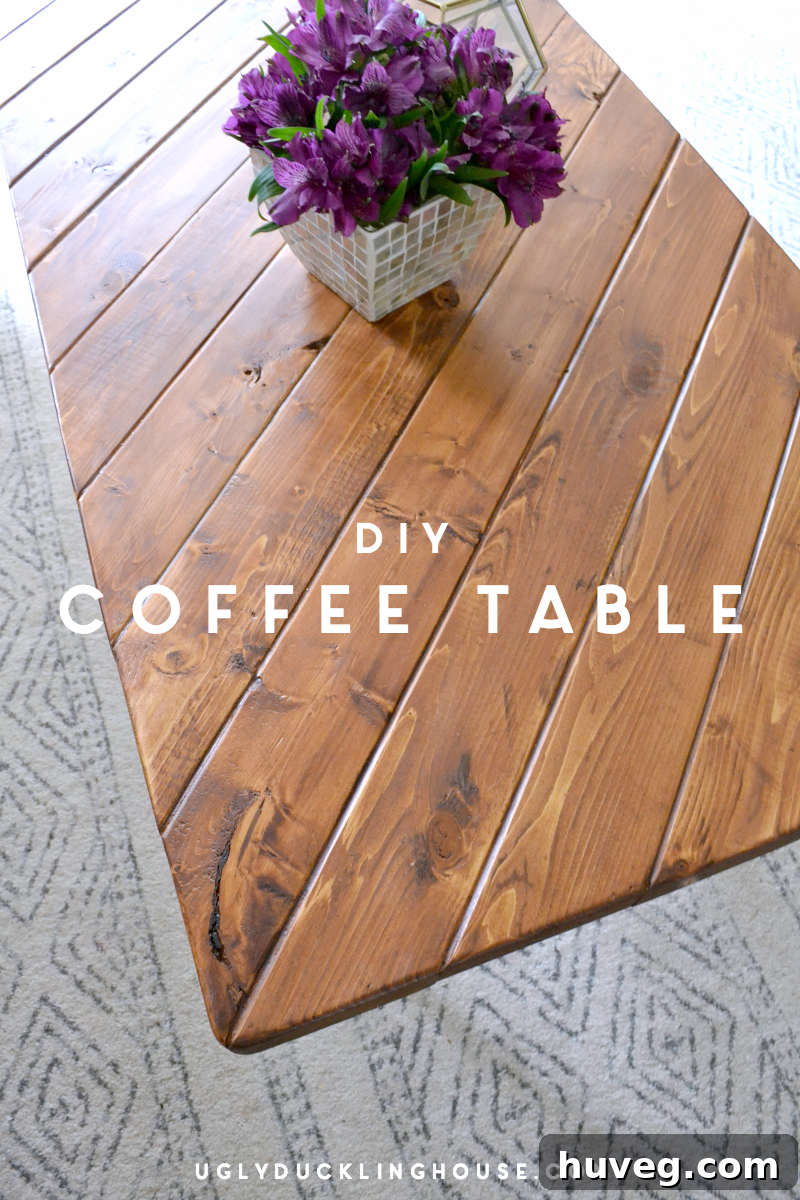
Next, it’s time to gather your army of scrap 2x4s. As mentioned, my collection included a mix: some pieces with rounded edges from framing lumber, others of higher grade intended for finer furniture projects. This blend of textures and qualities is what gives the finished table its unique charm. My ultimate vision is a coffee table with a nice slab or live edge round, so I wasn’t overly concerned with absolute perfection or uniformity in this temporary solution. The beauty of working with scrap is embracing its inherent character. I experimented with different angles and patterns until I found a configuration that maximized the use of my longer scrap pieces. The 45-degree angle quickly became my preferred choice, offering an appealing diagonal pattern across the tabletop. Once decided, I cut a generous number of 2×4 pieces at 45 degrees on my miter saw, ready for assembly.
3. Precision Cutting as You Assemble the Pattern
With a pile of 45-degree angled 2x4s, the real fun began: lining them up on the plywood base. This step is less about pre-cutting everything to exact size and more about an organic, ‘cut as you go’ approach. As I worked my way towards each edge of the plywood, I carefully measured and cut smaller scrap pieces to create a clean, squared-off finish. This iterative process allows for precise fitting, compensating for any slight variations in your scrap wood. You’ll be surprised how quickly the intricate pattern comes together, transforming a collection of random scraps into a coherent and visually interesting tabletop surface.
4. Securing the Coffee Table Top Assembly
Once all the 2×4 pieces were cut and laid out to my satisfaction, it was time to make the tabletop permanent. I applied a strong wood glue generously to the back of each 2×4 piece before carefully placing them onto the plywood base. To ensure a tight and durable bond, I then used my set of bar clamps, applying even pressure across the entire surface and allowing the glue to cure completely according to the manufacturer’s instructions. This initial gluing and clamping provides a strong bond, but it’s just the first layer of security. Later, when attaching the hairpin legs, I further reinforced the 2x4s from the underside of the plywood with wood screws. Remember to always pre-drill pilot holes for your screws to prevent the wood from splitting, especially with scrap lumber that might be drier or more prone to cracking.
5. Attaching the Stylish Hairpin Legs
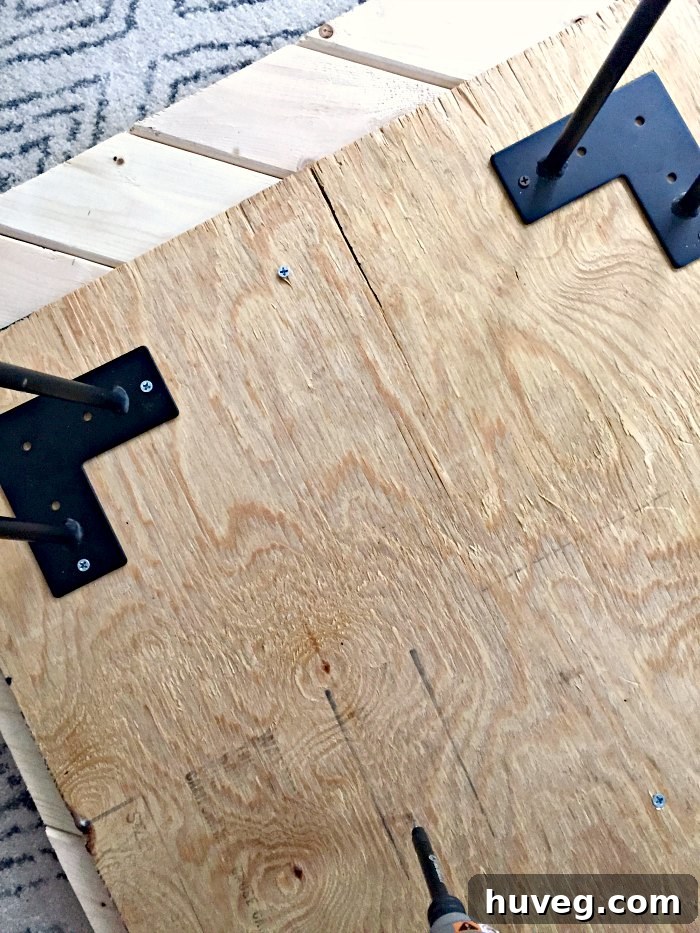
For the legs, I used hairpin coffee table legs that I had ordered online a couple of months prior and, true to my chaotic DIY nature, had forgotten about in the garage. While my boyfriend wasn’t initially a fan of the hairpin leg aesthetic, I was building a coffee table, so my design choice stood! (He later helped by cleaning out the garage so I could sand and stain, which I count as a win-win: I build, he cleans!) Attaching the legs is straightforward: position them evenly on the underside of the plywood base, ensuring they’re set back slightly from the edges for both stability and aesthetic appeal. Mark your screw holes, pre-drill, and then securely fasten the legs with screws. This is also where you’ll drive the reinforcing screws through the plywood into the 2x4s if you didn’t do so earlier, further solidifying your tabletop. Once attached, the coffee table is essentially built, though still in its raw, unfinished state. Be warned: this piece is surprisingly heavy!
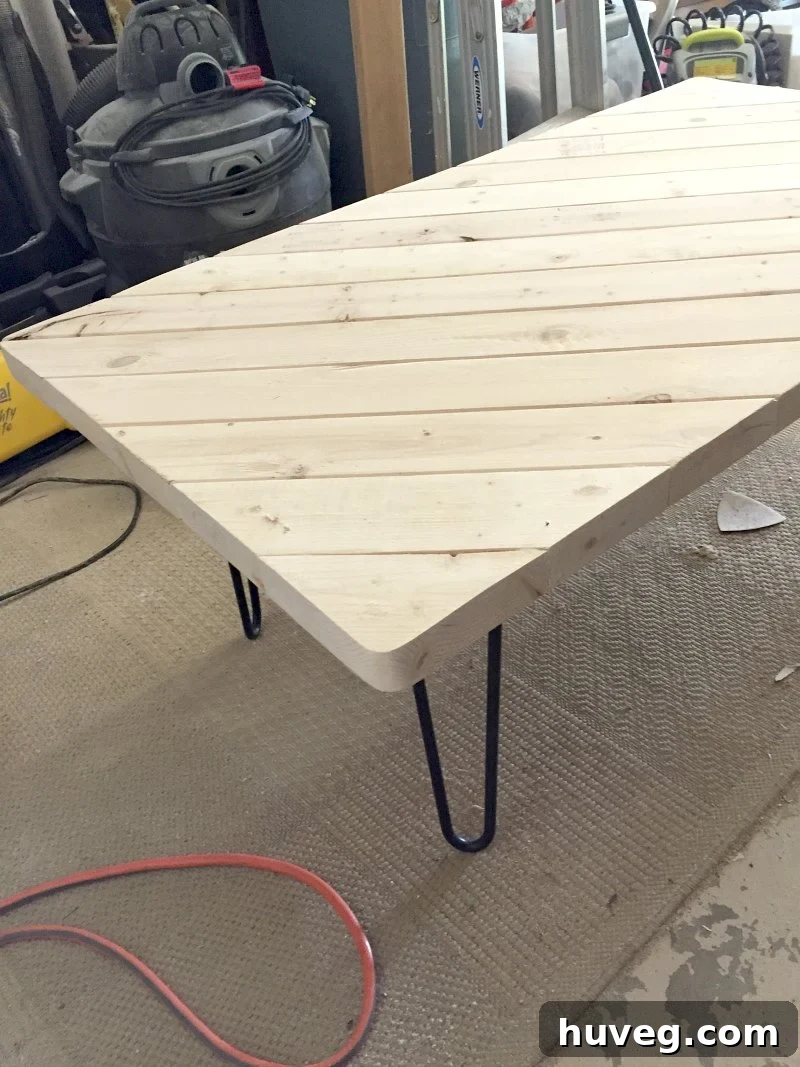
6. Filling Gaps and Imperfections with Wood Filler
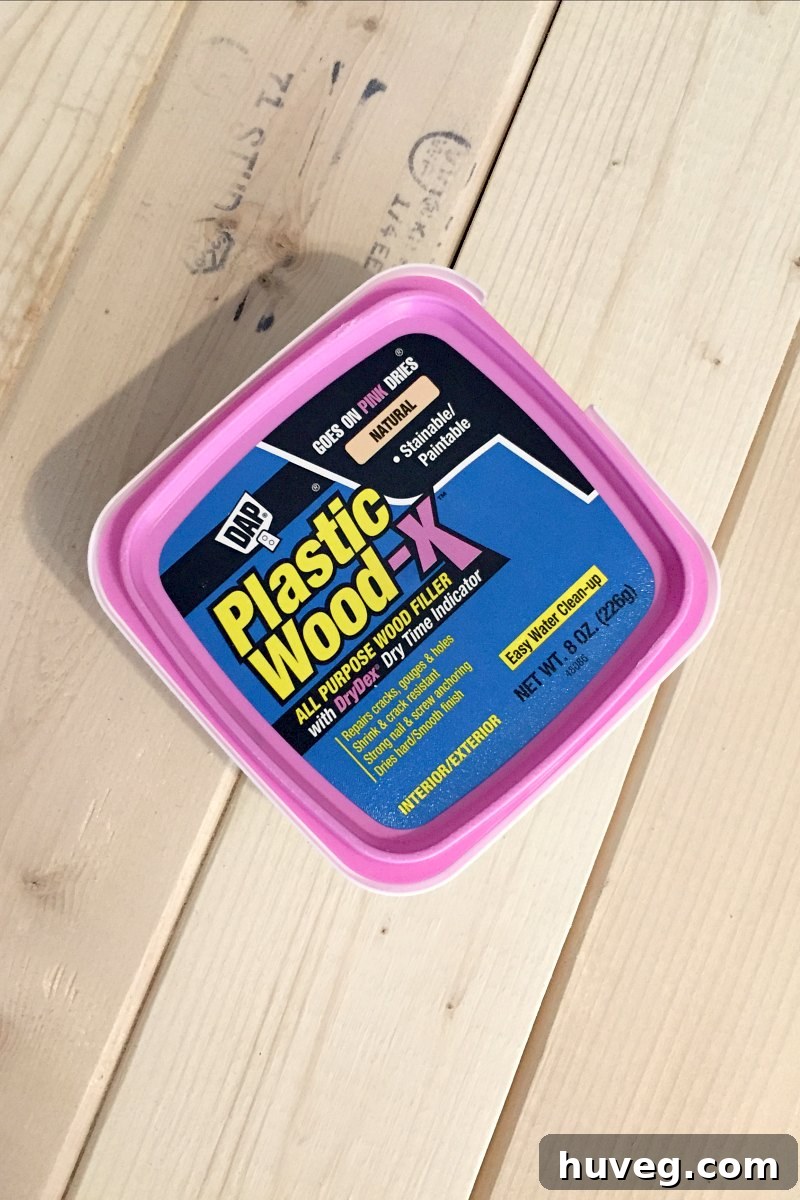
Working with scrap wood means embracing its unique characteristics, which often includes rounded edges, minor warps, or existing knots. To achieve a smoother, more uniform surface for staining, I used wood filler to address some of the wider gaps between the 2×4 pieces and any prominent knots. I particularly like the type that goes on pink and dries to a natural wood color, as it helps visualize where you’ve applied it. If you have a favorite stainable and paintable wood filler that you swear by, I’d love to hear your recommendations in the comments! I’m constantly on the hunt for the best all-around option and might even conduct a head-to-head comparison review in the future given the varied opinions among my woodworking friends. Apply the filler according to product instructions, ensuring it’s slightly overfilled, as it will shrink slightly upon drying.
7. Achieving a Silky Smooth Finish Through Sanding
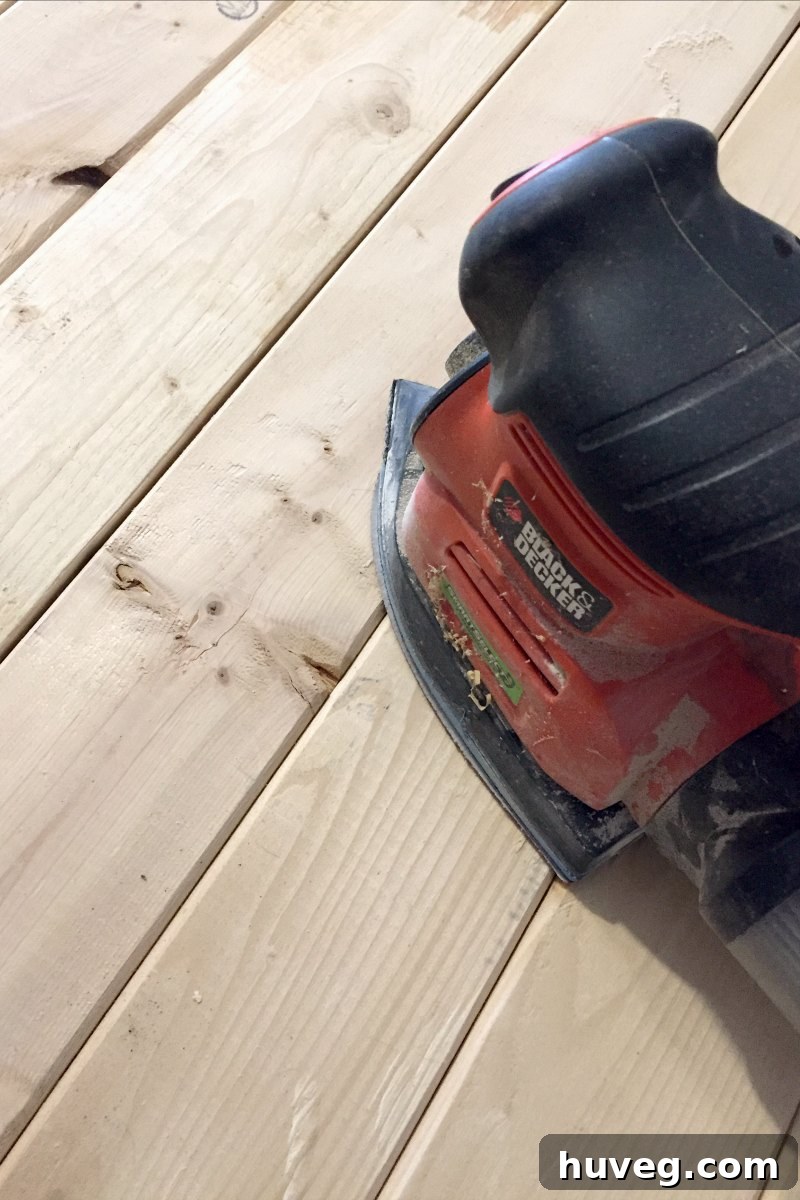
Sanding is a crucial step that transforms a rough wooden structure into a smooth, touchable piece of furniture. I tackled the entire coffee table with my orbital sander, progressively moving through finer grits of sandpaper. I started with 80-grit for any rough spots or significant glue residue, then moved to 180-grit to refine the surface, and finally finished with 240-grit for a silky-smooth finish. Between each grit, wipe down the surface thoroughly with a tack cloth to remove all dust, which can interfere with the next sanding stage or the final finish. For an extra touch of refinement, I used a router to gently round off the outside edge of the tabletop, though you can also achieve softened corners by hand-sanding with the 80-grit paper. This attention to detail in sanding makes a dramatic difference in the table’s appearance and feel.
8. Applying Stain and Protective Finish
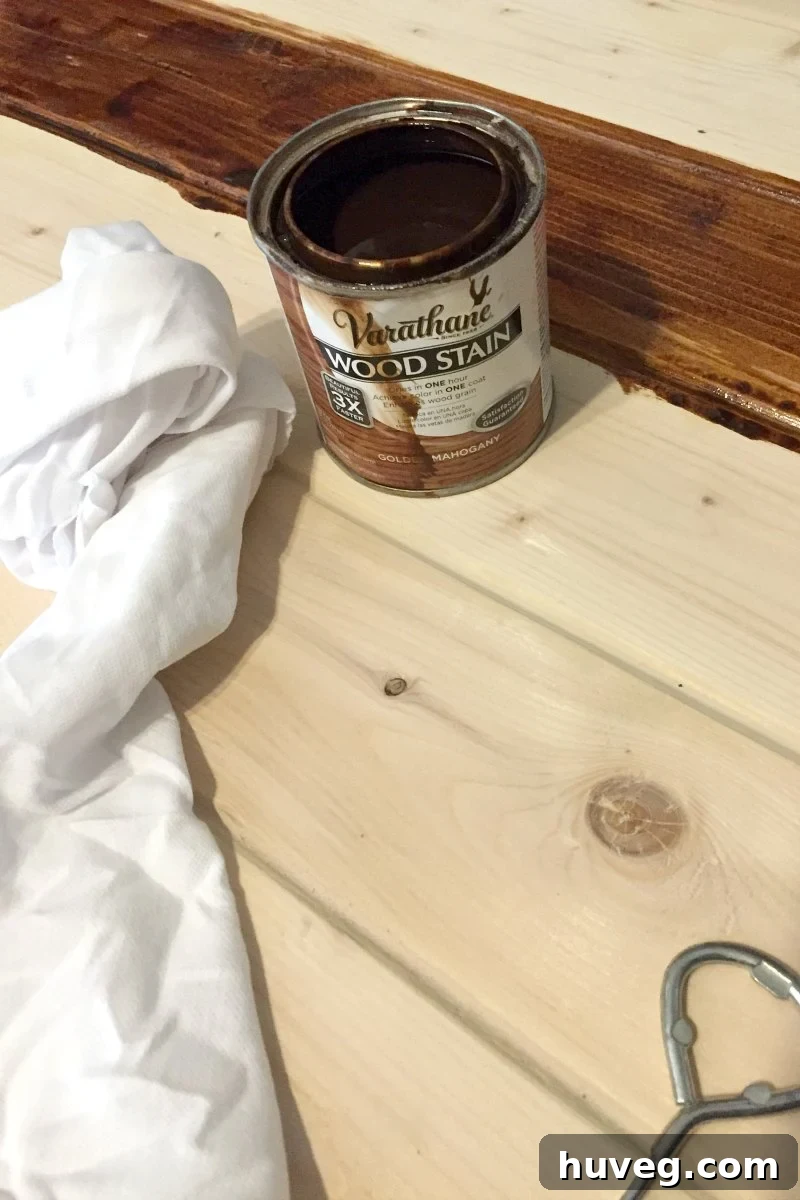
The final touches bring your DIY coffee table to life. To enhance the natural grain and add warmth, I applied a golden mahogany wood stain. Apply the stain evenly with a brush or rag, allowing it to penetrate the wood for the recommended time before wiping off any excess. For durable protection against spills, scratches, and daily wear, I followed up with a satin finish polyurethane. Apply poly in thin, even coats, allowing each coat to dry completely. For an exceptionally smooth and professional-looking finish, lightly sand between coats with a sanding block (using 220-grit or finer) and wipe away dust before applying the next coat. I typically apply two to three coats of poly for adequate protection. Once the final coat is dry and cured, your stunning new hairpin leg coffee table is ready to take its rightful place in your living room!
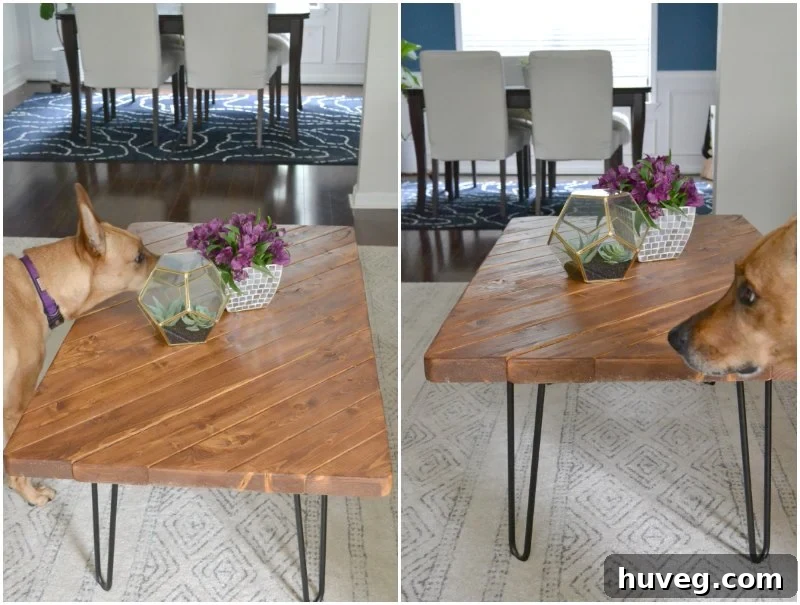
It was already dark by the time I finished the staining and brought the table indoors, making good photos a challenge. However, my beloved pup, Charlie, was incredibly curious about the new addition, so much so that she became an impromptu model for some of my initial shots! ❤️
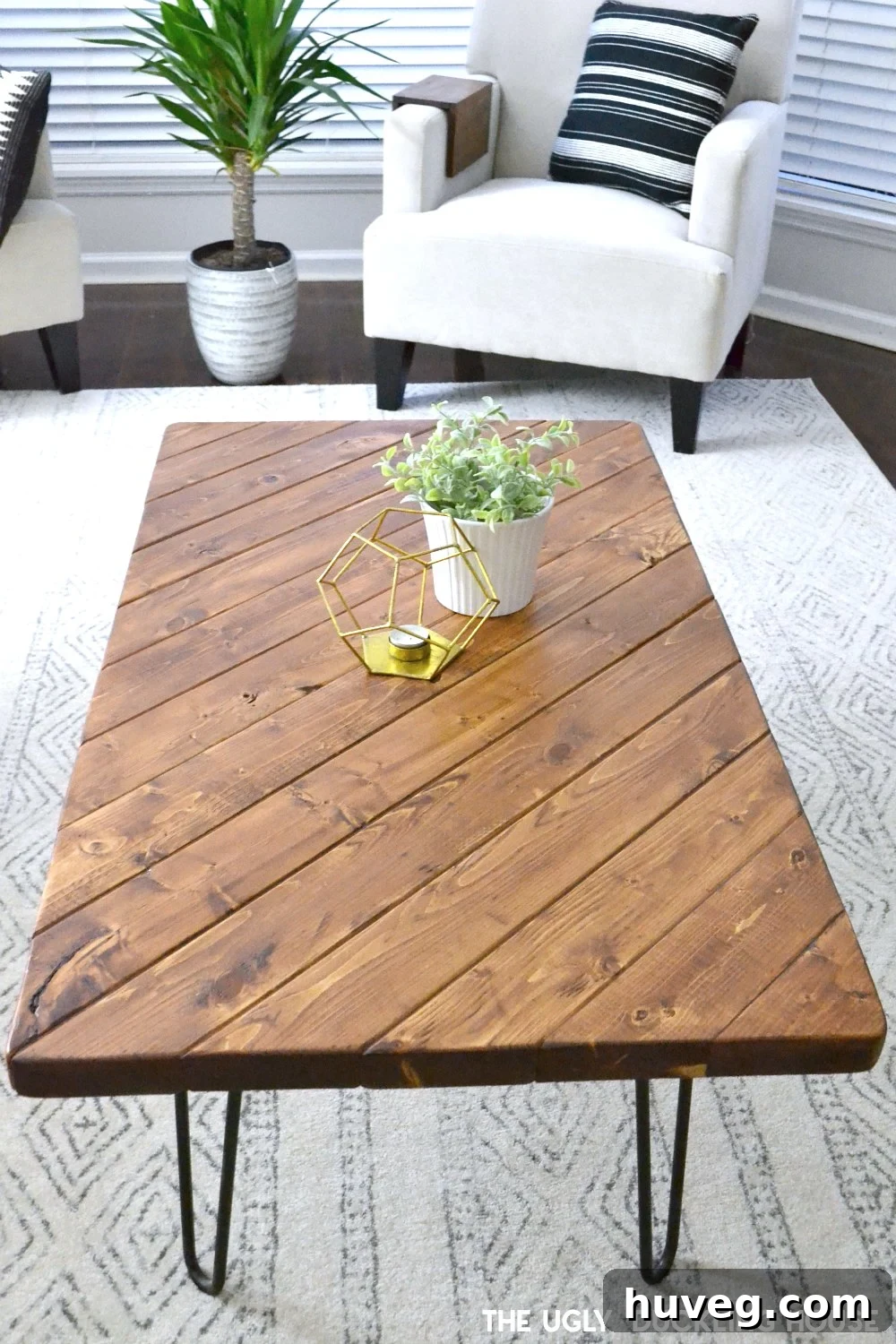
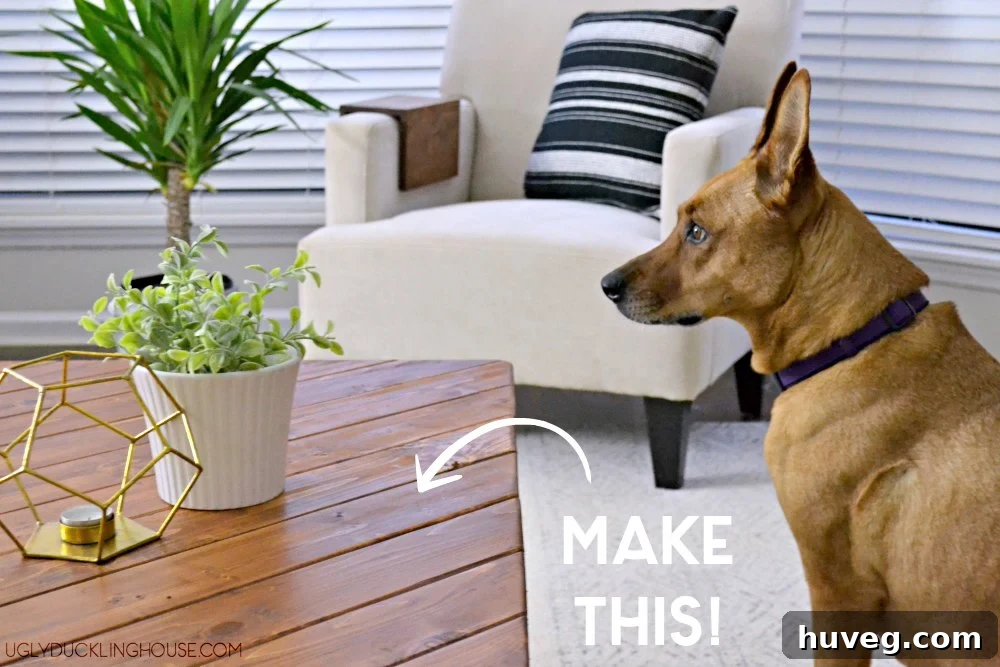
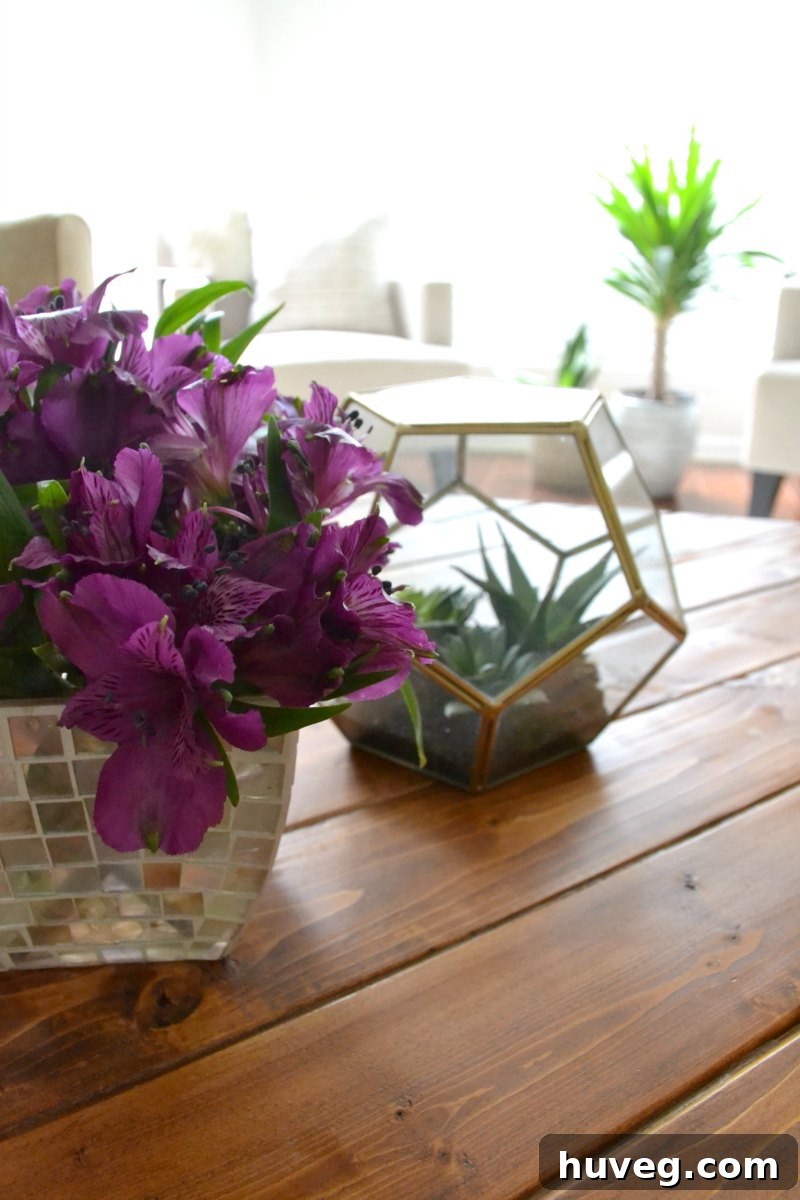
The next morning, with better light, I was able to capture a few more photos. I’ve been using this new hairpin leg coffee table for a couple of weeks now, and it has drastically improved our living room’s functionality, making it much easier to entertain like adults and, more importantly, eliminating the need to eat pizza off the floor. It’s truly a game-changer for casual dining and cozy evenings.
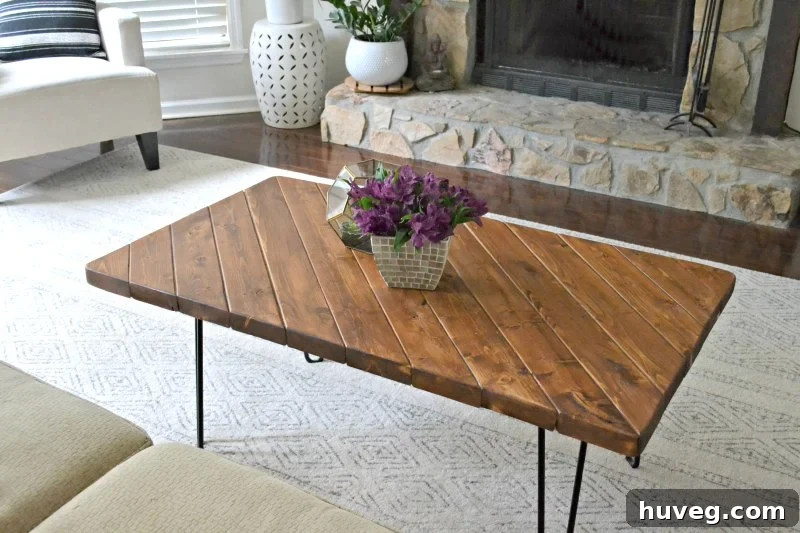
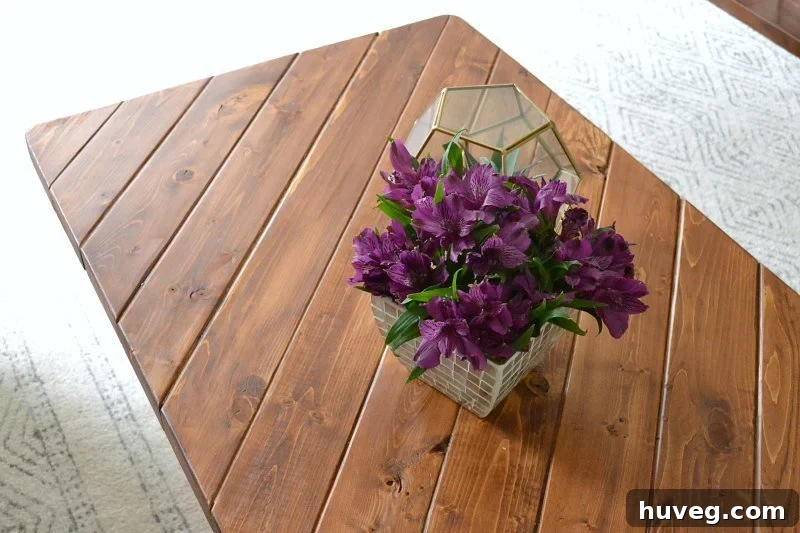
And as for Charlie, she remains adorably curious about every new item that graces our living room!
P.S. I’m currently on the hunt for a new couch to complement our evolving white, gray, and black color scheme and hope to share that update with you soon!
Join the #2x4andMore Challenge!
There you have it: my #2x4andMore Challenge project! This initiative celebrates the versatility of structural lumber in creative home builds. If you’re inspired to make something fantastic out of common 2x4s or similar materials, feel free to share your projects using the hashtag this week on Instagram. Don’t forget to explore the incredible creativity from other participants in this blog hop. The Remodelaholic linky party is open all week, so you have plenty of time to share your own 2×4 creations and discover even more inspiring ideas. This community is full of brilliant minds transforming humble lumber into extraordinary pieces!
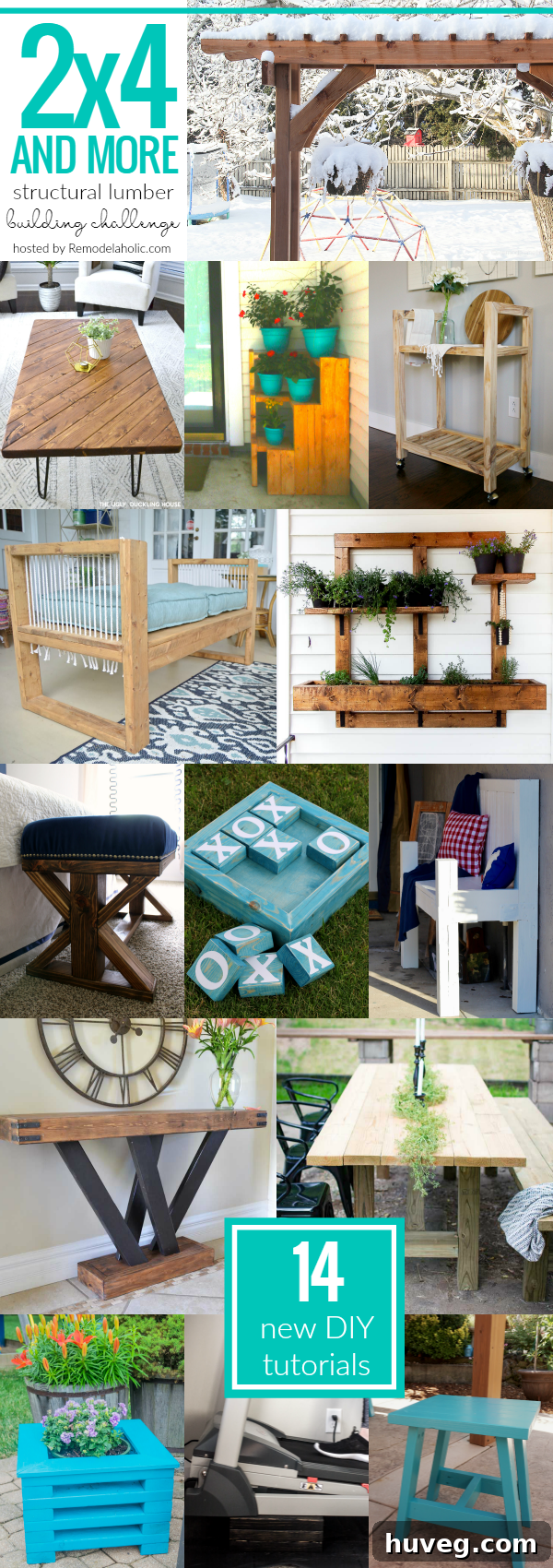
Discover more fantastic projects from fellow DIYers:
- Garden arbor | Remodelaholic
- 15 minute coffee table | The Ugly Duckling House (that’s here!)
- Tiered corner plant stand | Charleston Crafted
- Single-board rolling bar cart | Woodshop Diaries
- Outdoor bench w/rope detail | At Charlotte’s House
- Wall planter and herb garden | Making Joy and Pretty Things
- Upholstered x-base bench | Frazzled Joy
- Jumbo tic tac toe | Ginger Snap Crafts
- Porch bench | Everyday Party Magazine
- Console table | Hertoolbelt
- Farmhouse patio table | North Country Nest
- Easy flower planters | Our House Now a Home
- Treadmill incline | Practical and Pretty
- Patio side table | Small Home Soul
More Scrap Wood Ideas
SEE ALL
Don’t let those cutoffs from bigger woodworking projects and home DIYs go to waste! Here are tons of ideas on how to reuse your scrap wood, transforming it into gifts, décor, and much more. Each project offers a new way to inject creativity and sustainability into your home.
-
Introducing: Love Create Celebrate
-
Outdoor Bench Seat | DIY Garden Bench Plans
-
Lots of Sneak Peeks: Riding the Buildathon Wave
-
DIY Outdoor Light Pole Planters Around the Deck | Free Plans
-
DIY Plywood Art Wine Rack
-
Easy White Washed Ornaments