How to Remove a Towel Bar

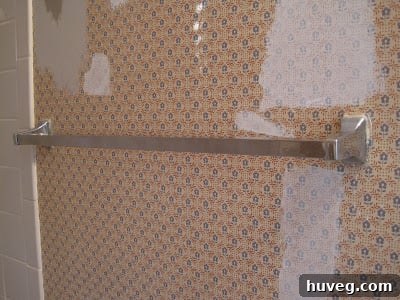
Transform Your Bathroom: A DIY Guide to Removing Old Towel Bars and Repairing Walls
Embarking on a home renovation journey often begins with a single, impactful decision. For many, the bathroom, a sanctuary of daily routines, is a prime candidate for an update. Picture this: you’ve envisioned a sleek, modern bathroom, complete with elegant brushed nickel or gleaming stainless steel finishes. Yet, an outdated fixture, perhaps a decades-old towel bar, stubbornly clings to the wall, a stark reminder of a bygone era. This common scenario often sparks an immediate, almost impulsive, desire for change – a desire to reclaim your space and align it with your contemporary vision. This was precisely the catalyst for a recent, much-needed refresh in our primary and guest bathrooms. The sight of that anachronistic towel bar, utterly mismatched with the sophisticated aesthetic I had planned, became an undeniable source of frustration during a broader primary bedroom painting project. The decision was swift and firm: that eyesore had to go, and it had to go right now!
Why Update Your Bathroom Fixtures? Elevating Your Home’s Aesthetic
The impact of outdated bathroom fixtures extends far beyond mere aesthetics. They can significantly detract from the overall ambiance and perceived value of your home. A simple update, such as replacing a dated towel bar, can dramatically elevate the look and feel of your bathroom, transforming it from a functional space into a stylish retreat. Modern brushed nickel and stainless steel finishes, for instance, offer a timeless elegance and versatility that complements a wide range of interior designs, from minimalist to industrial chic. Embracing these contemporary elements not only enhances your daily experience but also contributes to a cohesive design narrative throughout your home. This DIY project, while seemingly minor, represents a significant step towards achieving that desired modern bathroom aesthetic, proving that even small changes can yield impressive results in a home improvement journey.
Gather Your Tools: Essential Supplies for a Smooth Towel Bar Removal and Wall Repair
Before diving into any DIY project, especially one involving wall repair and potential paint work, gathering the right tools is paramount. Preparation ensures a smoother, more efficient process and helps you achieve professional-looking results. For this particular endeavor of removing an old towel bar and repairing the wall, you’ll want to have the following essential items on hand:
- Utility Knife or Razor Blade: Crucial for meticulously cutting around wallpaper or caulk, ensuring clean edges and preventing unnecessary damage to the surrounding wall.
- Joint Compound (Spackle): The primary material for filling holes and smoothing imperfections in your drywall. Opt for a lightweight, all-purpose variety for easier application and sanding.
- Plastic Trowel or Putty Knife: Indispensable for applying and expertly smoothing the joint compound onto the wall. A flexible plastic trowel is often preferred for its ability to create seamless finishes without scratching the wall.
- Fine-Grit Sandpaper (120-220 grit): Essential for achieving a perfectly smooth and paint-ready surface after the joint compound has dried. A sanding block can make this task more comfortable and effective.
- Damp Sponge or Cloth: Useful for wiping away dust after sanding and for cleaning your tools thoroughly between uses.
- Drop Cloths or Old Sheets: Crucial for protecting your flooring, vanity, and other surrounding fixtures from dust, paint splatters, and joint compound residue during the repair process.
- Safety Glasses and Dust Mask: Always recommended when sanding or working with airborne particles to protect your eyes and respiratory system from fine dust.
- Primer (optional, but highly recommended): Especially if you’re dealing with older wallpaper, covering dark patches, or ensuring a consistent finish. A quality primer promotes better paint adhesion and a more uniform color.
- Paint (matching your wall color): For the final touch-up once all wall repairs are complete and primed, ensuring the patched area blends seamlessly with the rest of the wall.
- Screwdriver/Drill (if screws are present): Some towel bars are securely mounted with screws and may require these tools for removal.
- Stud Finder (for new installation): If you plan to install a new towel bar, accurately locating wall studs is vital for secure mounting and preventing future instability.
Step 1: The Initial Dissection – Separating the Old Bar from the Wall
The first step in liberating your bathroom from its outdated hardware often involves a careful initial assessment. In my case, the vintage towel bar was not only visually unappealing but also partially integrated with the existing wallpaper. This meant a direct pull could potentially rip large sections of the wallpaper, creating a far more extensive repair job than necessary. To mitigate this, I armed myself with a sharp razor blade – a simple yet indispensable tool for precision work. I meticulously traced the edges where the wallpaper had adhered to the towel bar’s supports. This careful trimming created a clean separation line, ensuring that only the immediate area around the fixture was affected. This preemptive measure is critical, especially when dealing with older installations where fixtures might be embedded in layers of paint, caulk, or, as here, wallpaper. Taking a few extra moments at this stage can save hours of frustration and additional repair work down the line. It’s all about working smarter, not harder, to prepare the canvas for its next transformation.
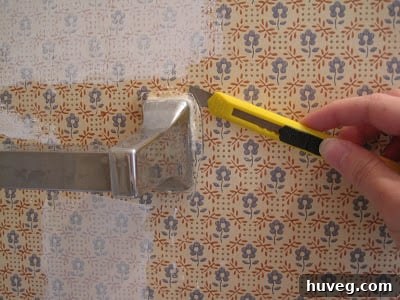
Step 2: Liberating the Fixture – Gentle yet Firm Removal
Once the surrounding wallpaper or caulk was neatly trimmed, the task of physically removing the towel bar became significantly simpler. Many older towel bars are held in place by friction fittings, adhesive, or sometimes hidden screws, making initial removal seem daunting. However, after carefully separating the edges, the structure of this particular bar proved to be quite loose. A couple of firm, yet controlled, yanks were all it took to detach the supports from the wall. It’s important to apply even pressure and avoid excessive force that could damage the drywall further. While this process might vary depending on your specific towel bar’s installation method – some might require unscrewing mounting plates – the principle remains the same: identify the weakest points and work with them. With the old bar finally gone, I was left with two distinct, somewhat unappealing, holes in the wall. These voids, while a temporary eyesore, marked the successful conclusion of the removal phase and the exciting beginning of the repair and restoration stage.
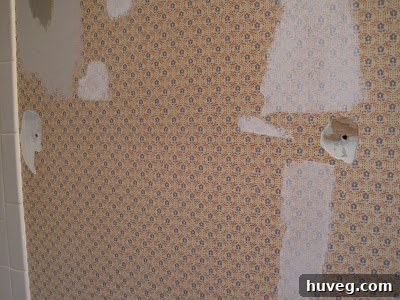
Step 3: The Art of Restoration – Filling and Smoothing Wall Imperfections
With the old towel bar successfully removed and its unsightly holes exposed, the focus shifted to preparing the wall for its fresh, new look. This is where joint compound, often referred to as spackle, becomes your best friend. Repairing drywall holes, whether small nail holes or larger anchor voids, is a fundamental skill in any home renovation project, and mastering it ensures a flawless finish. I scooped a generous amount of joint compound onto a flexible plastic trowel. The key is to apply enough compound to completely fill the hole and extend slightly beyond its edges. Using the trowel, I firmly pressed the compound into the holes, ensuring it fully penetrated and bonded with the surrounding drywall. Then, with a smooth, sweeping motion, I feathered the edges of the compound. Feathering means gradually tapering the compound outwards, making it thinner as it moves away from the center of the repair. This technique prevents harsh lines and creates a seamless transition between the patched area and the original wall surface. It’s crucial to apply thin layers rather than one thick one, allowing each layer to dry completely according to the manufacturer’s instructions, usually a few hours.
As part of a larger bathroom painting project, I saw an opportunity to utilize any excess joint compound wisely. Instead of simply wiping it away, I strategically applied it to various parts of the wall where wallpaper seams were visible or slightly raised. This gave me a head start on smoothing out imperfections across the entire wall surface, a common challenge when dealing with older wallpaper. This multi-tasking approach not only minimized waste but also accelerated the overall preparation process for painting. After the initial layer of compound dries, you’ll likely need to lightly sand the area with fine-grit sandpaper (120-220 grit) to achieve a perfectly smooth finish. Wipe away any dust with a damp cloth, then apply a second, thinner coat of compound if needed, feathering the edges once more. Repeat the sanding and cleaning process until the wall surface is impeccably smooth to the touch. For larger holes or areas requiring more structural integrity, self-adhesive mesh patches can be applied before the joint compound, providing extra support and preventing future cracks.
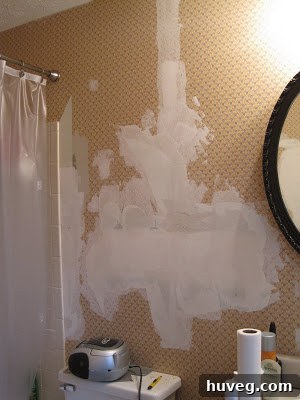
The Transformation Begins: From Messy Patchwork to Pristine Canvas
At this stage, looking at a wall covered in wet joint compound might not evoke feelings of immediate beauty; in fact, it often looks like a temporary mess. However, it’s crucial to remember that this seemingly chaotic phase is an essential part of the transformative process. Beneath this ‘ugly duckling’ layer, the foundation for a stunning new bathroom is being meticulously laid. My preference would always be to completely remove old wallpaper, especially when aiming for a truly pristine finish. Wallpaper can hide imperfections and, if not properly primed beforehand, can be a nightmare to remove without damaging the drywall beneath. In this particular instance, the absence of a primer layer before the wallpaper was adhered made a full-scale removal potentially more problematic and time-consuming. Therefore, the strategic decision was made to repair imperfections and smooth the surface, preparing it for a fresh coat of paint over the existing, well-adhered wallpaper.
This approach, while a deviation from a full wallpaper strip, represents a practical solution for specific scenarios, aiming for efficiency without compromising too much on the final aesthetic. I’ve always believed in having a robust backup plan for any DIY project, acknowledging that unforeseen challenges can arise. While I’m crossing my fingers that ‘plan A’ – smoothing and painting over the existing wallpaper after repair – yields the desired flawless result, the experience has taught me the value of adaptability. The anticipation of seeing the newly painted, perfectly smooth walls, adorned with contemporary brushed nickel fixtures, is a powerful motivator. This project, from the impulsive decision to remove an eyesore to the careful application of joint compound, is more than just a repair; it’s an active step towards creating a bathroom that truly reflects modern design sensibilities and personal style.
Choosing Your New Fixtures: Style, Function, and Secure Installation
Once your wall repairs are complete and primed, the exciting part begins: selecting and installing your new towel bar. When choosing new bathroom fixtures, consider materials like brushed nickel, matte black, or polished chrome, which are popular for their durability and stylish appeal. Think about the overall aesthetic you’re aiming for – a sleek, minimalist bar for a contemporary look, or a more ornate one for a traditional feel. Ensure the new fixture’s dimensions fit your space and that you have the necessary mounting hardware. Using a stud finder to locate wall studs is highly recommended for securely installing heavy items like towel bars, preventing them from pulling out of the drywall over time. If studs aren’t available at your desired location, use high-quality drywall anchors designed to support the weight of a towel and the bar itself. Proper installation will not only secure your new fixture but also complete the transformation of your refreshed bathroom space.
Beyond the Towel Bar: Creating a Cohesive Bathroom Design
While the towel bar often takes center stage in a bathroom refresh, remember that it’s just one piece of the puzzle. Consider coordinating other fixtures such as the toilet paper holder, robe hooks, and even cabinet pulls to create a cohesive and harmonious design. Updating these smaller details simultaneously can significantly amplify the impact of your renovation, tying the entire space together with a unified aesthetic. Each updated element contributes to a more polished and luxurious feel, transforming your bathroom into a truly modern and inviting oasis.
Conclusion: The Reward of a DIY Bathroom Refresh
The journey from a frustratingly outdated towel bar to a smoothly repaired wall, ready for its contemporary debut, is a testament to the power of DIY home improvement. What began as an impulsive decision born out of design frustration has evolved into a strategic step towards a more cohesive and modern bathroom. While the process of wall repair might seem daunting, it’s an incredibly rewarding skill that empowers homeowners to tackle their own renovations. This project underscores the principle that even seemingly minor updates can profoundly impact the overall feel and aesthetic of a room. With careful planning, the right tools, and a bit of patience, anyone can achieve remarkable results, turning a vision of modern elegance into a tangible reality. Embrace the transformation, enjoy the process, and revel in the satisfaction of a beautifully updated space that truly reflects your style.