DIY Stair Runner Showdown

DIY Stair Runner: From Scratches to Style in Your Home Renovation
Every seasoned DIY enthusiast learns early on that projects rarely unfold perfectly the first time. My journey with painting the stairs white quickly proved this rule, becoming a rather messy testament to initial misjudgment. Thankfully, I soon opted for a sleek black finish as part of the ongoing “Dueling DIY” challenge I share with Kit. This epic renovation saga, chronicled under Dueling DIY, has been an adventure. However, one question continuously surfaces: with my energetic dog, Charlie, navigating them daily, do the stairs ever get scratched?
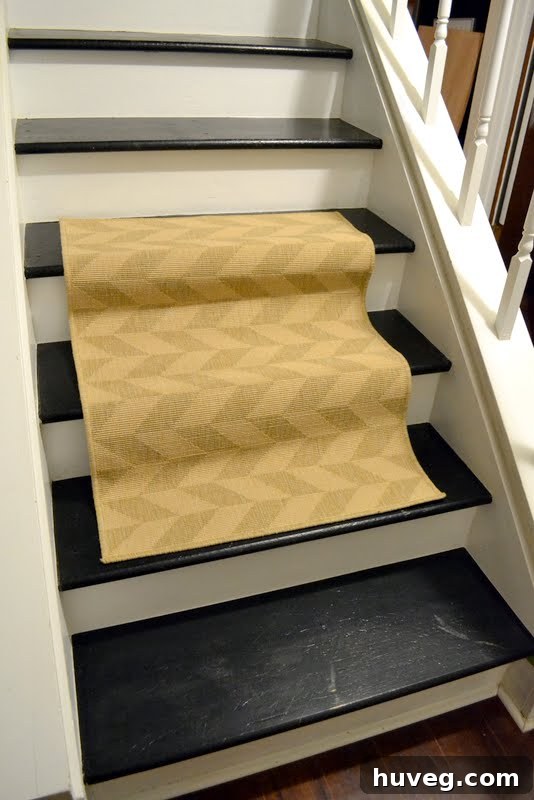
The unequivocal answer is yes, absolutely. Scratches, scuffs, and even significant gouges are an inevitable part of living with beloved pets and active family life. Just last night, I captured a photo illustrating the reality. The bottom step, where Charlie frequently makes an angled leap into the hallway, bears the most prominent evidence, showcasing considerable gouges along its edge and visible scuff marks. These imperfections are a constant reminder of the lively activity that transforms a house into a home, but they also highlight the need for practical solutions in any lasting home design.
The Indispensable Stair Runner: A Solution for Both Style and Durability
Anticipating this wear and tear was precisely why I always planned to install a stair runner. Initially, the primary motivation was to enhance traction, especially for Charlie’s spirited ascent and descent. Now, the protection it offers against scratches and daily scuffs has become an equally vital consideration. A well-chosen stair runner not only safeguards your beautiful painted stairs but also adds a layer of comfort, noise reduction, and undeniable style to your staircase, transforming it into a true centerpiece of your interior design.
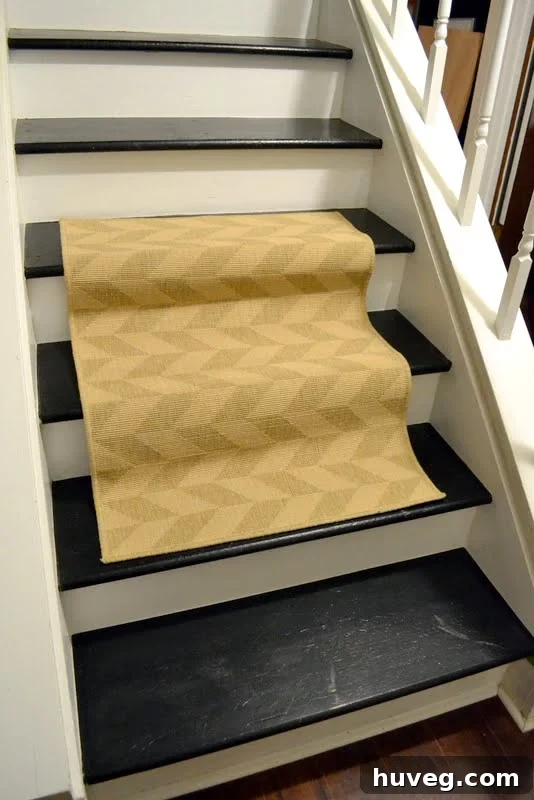
My first step in this next phase of the staircase makeover was to find a test rug. I headed to Ikea, hoping to find a neutral runner that would complement the black stairs without overwhelming the space. I’d seen this particular runner successfully integrated into other DIY projects, such as this inspiring example, which gave me high hopes for its suitability.
The Challenges of Visualization: A Design Dilemma
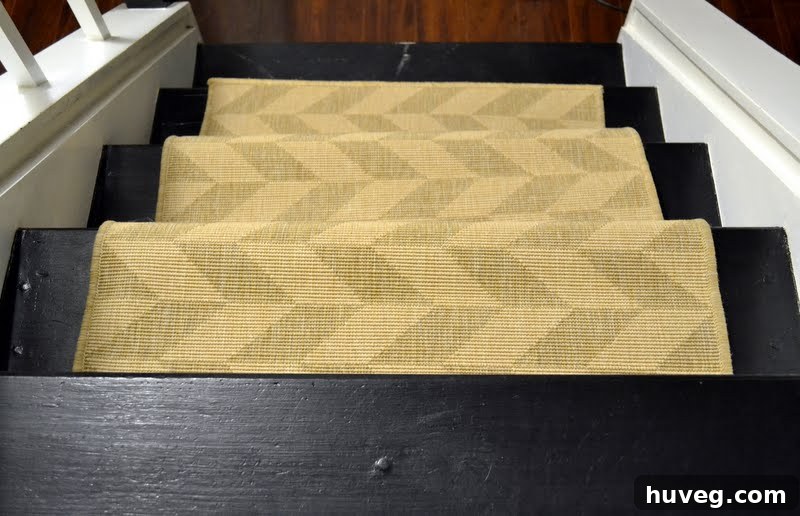
What I quickly discovered, however, is that visualizing a design element like a stair runner in situ is far more challenging than it appears in photos or in a store. My budget-conscious decision to purchase only one test rug, coupled with not properly securing it to the stairs, made an accurate assessment difficult. As I laid the sample runner down, a glaring issue emerged: the rug’s too-beige tone seemed to clash with and draw out all the wrong undertones in my freshly applied black paint. While paint is a relatively inexpensive fix, the idea of having to repaint fifteen separate wall surfaces just to accommodate a runner that doesn’t quite work was a daunting thought, especially when considering the minimal cost of the runner itself.
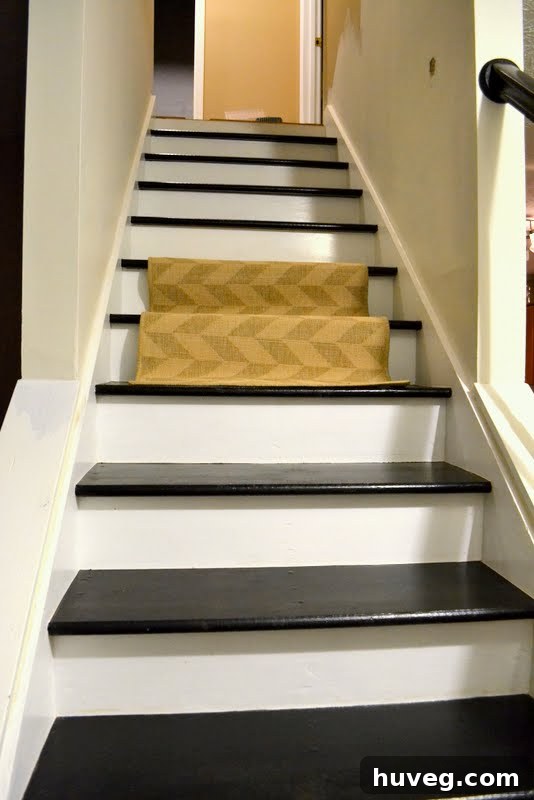
A direct upward view of the stairs, with the rug positioned slightly higher for a better perspective, truly clarified my concerns. The back tan wall, which will eventually be painted the same lighter greige as the stair walls, means this particular beige runner would become the sole tan element in the entire space. While I absolutely adore the bold, classic contrast of black and white, the combination of greige walls and a tan runner simply doesn’t create the harmonious visual I’m aiming for. This design challenge underscores the importance of considering your entire color palette, including wall colors, trim, and existing furniture, when selecting such a prominent feature as a stair runner.
Seeking Input: What’s Your Design Verdict?
This brings me to a crucial point in this DIY project: I need your insights! What are your thoughts on this design dilemma? Should I explore lighter runner options to blend more seamlessly, or perhaps go darker for a more dramatic statement against the greige? Am I overthinking it, and does this rug actually work better than I perceive? For reference, you can see a few of my initial runner considerations here. Your perspective is invaluable in helping me navigate this next step in my staircase transformation.
Choosing the Perfect Stair Runner: A Comprehensive Guide
Selecting the ideal stair runner involves more than just aesthetics; it’s about blending durability, safety, and style. Here’s a deeper dive into factors to consider:
Material Matters: Durability and Feel
- Wool: Luxurious, highly durable, naturally stain-resistant, and excellent for noise reduction. It’s an investment but offers exceptional longevity and comfort underfoot.
- Synthetics (Nylon, Polyester): More budget-friendly, highly stain-resistant, and durable. Nylon is known for its resilience and ability to bounce back from crushing, while polyester offers vibrant colors and a soft feel.
- Natural Fibers (Sisal, Jute, Seagrass): Offer a rustic, organic look and excellent traction. However, they can be less soft underfoot and may be more susceptible to staining and wear in high-traffic areas, making them potentially less ideal for households with very active pets.
Pattern and Color: Enhancing Your Home’s Aesthetic
- Solids: Provide a clean, minimalist look. Be cautious with very light solids in high-traffic areas, as they can show dirt quickly. Darker solids can be elegant but also highlight lint and pet hair.
- Stripes: Can create an illusion of length and draw the eye upwards, adding dynamic energy to your staircase. Consider the scale of the stripe to match your space.
- Geometrics & Patterns: Excellent for hiding everyday wear, dirt, and pet hair. They can also introduce personality and a focal point. Ensure the pattern scale is appropriate for the width of your stairs.
- Color Palette: As my current dilemma illustrates, consider your existing wall colors, trim, and adjacent flooring. Aim for harmony or a deliberate contrast. Greiges and cool tones might pair better with blues, grays, or even certain patterned runners that incorporate both warm and cool shades.
Measuring and Installation: Ensuring a Perfect Fit
- Accurate Measurement: Measure the length of each tread and riser. Account for any landings or turns. It’s often recommended to add 10-15% extra for waste, pattern matching, and future repairs.
- Padding: A good quality carpet pad underneath the runner not only adds comfort but also prolongs the life of your runner by absorbing impact and preventing friction.
- Installation Method: DIY installation with a staple gun is possible for the handy, but professional installation ensures a seamless, taut, and safe finish, especially for complex staircases or higher-end runners.
The Dueling DIY Challenge: A Testament to Project Commitment
This staircase update is, of course, part of the broader “Dueling DIY” challenge – an ongoing competition that Kit (the incredible DIY Diva) and I kicked off earlier this year. Our goal was simple yet ambitious: to leverage a little friendly competition to actually *finish* a project, rather than initiating eight new ones simultaneously (a common DIYer affliction). I’m proud to say that despite numerous other project distractions vying for my attention, I remain steadfastly committed to dedicating time to this staircase each week, no matter how agonizingly slow the progress might feel at times. The discipline and accountability of this challenge have been surprisingly effective in keeping me on track.
And speaking of distractions, Kit has had her fair share, too! From vivid fever-induced hallucinations to the unexpected drama of chicken nuggets and even runaway donkeys (yes, both the chicken nuggets and donkeys were entirely real, not fever dreams!), life has certainly thrown some curveballs her way. For now, I’m giving my fellow DIYer some grace and space to focus on the essential task of keeping her animals (and herself!) safe and sound. Though, perhaps there was one playful text from me nudging her along. In my defense, I did inquire about her fever breaking *before* playfully implying I’m outpacing her in this competition. Because I genuinely care, of course.
Join the Conversation: Share Your Staircase Renovation Journey!
Are you currently revamping your staircase or contemplating a similar project? We’d love for you to join our DIY community! Share your experiences, challenges, and triumphs in the comments section below. Feel free to link up your own blog posts or project photos. Your insights and encouragement are what make the DIY journey so rewarding. Let’s inspire each other to create beautiful and functional spaces!
Other Inspiring DIYers in the Challenge:
- Our Handmade Home
- Perfect Prospect
- The House of Bing