Smart and Simple DIY Wood Rack

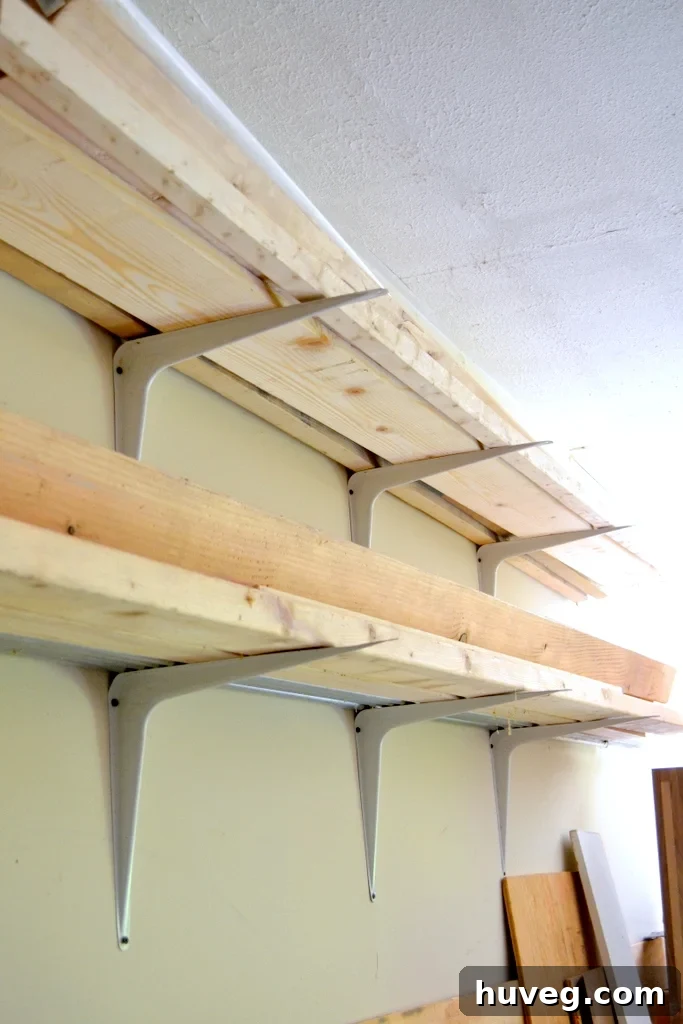
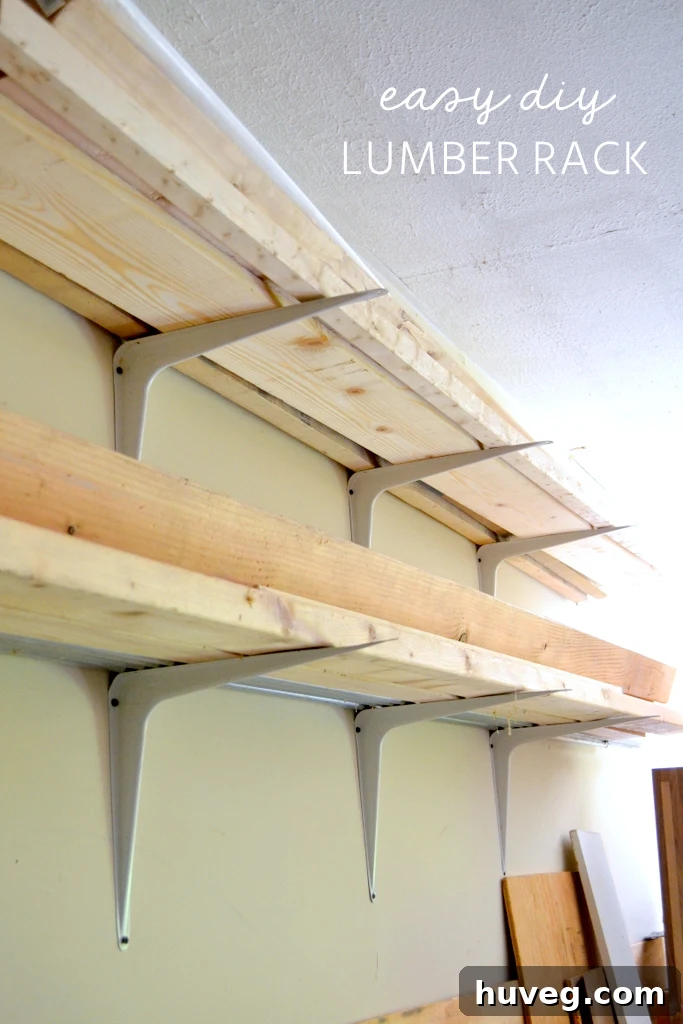
Every DIY enthusiast and woodworking hobbyist knows the struggle: a growing pile of lumber, conduit, and trim pieces slowly consuming valuable garage floor space. It’s a common scenario where a “hare-brained idea” can unexpectedly turn into a brilliant, practical solution. In my quest for an organized garage workshop, after weighing the pros and cons of numerous lumber storage concepts, I stumbled upon an incredibly simple, quick, and, best of all, FREE method to create a robust lumber rack using repurposed heavy-duty shelf brackets!
Why Effective Lumber Storage Is Crucial for Every Workshop
As part of my ongoing garage makeover, installing an efficient wall-mounted lumber rack was high on the priority list. This isn’t just about tidiness; it’s about optimizing workflow and protecting valuable materials. For woodworkers and home renovators like myself, having a dedicated space for full lengths of lumber, conduit pipe, scrap wood, and molding is paramount. Unorganized materials don’t just create clutter; they pose tripping hazards, take up precious floor space, and can lead to warping or damage over time, especially with costly hardwoods.
Proper lumber storage isn’t merely an aesthetic choice; it’s an investment in your productivity and the longevity of your materials. An organized system ensures easy access to supplies, reduces wasted time searching for specific pieces, and minimizes the risk of injury. Moreover, vertical storage allows for clear separation of different wood types – think expensive hardwoods designated for fine furniture versus standard 2x4s for utility builds. This strategic approach to organization transforms a chaotic workspace into a functional, inspiring environment.
Exploring Popular Lumber Storage Options: A Comprehensive Review
Before diving into my “free” solution, I thoroughly researched various lumber storage options available online, especially DIY projects. Most solutions typically fall into three main categories, each with its unique set of advantages and disadvantages. My goal was to find a system that was not only effective but also aligned with my limited time, budget, and tool availability.
DIY Option 1: Wood + Pipe Lumber Storage Rack
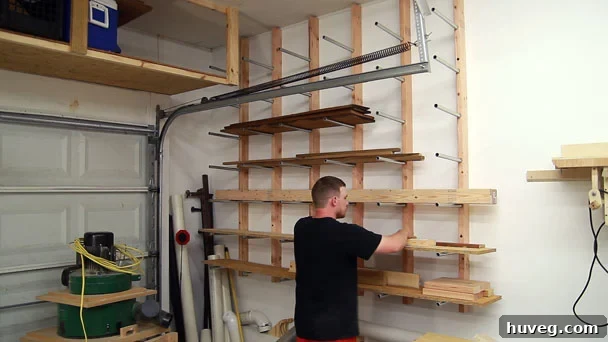
This popular DIY method involves installing sturdy lengths of conduit pipe into a robust wooden backer board, which is then securely mounted to wall studs. The pipes extend outwards, creating cantilevered supports for your lumber.
Pros: This option offers a clean, industrial aesthetic and is exceptionally sturdy, capable of supporting significant weight. It excels at keeping floor space completely clear and provides easy, unimpeded access to stored materials. Furthermore, conduit pipe, while not entirely free, is generally an inexpensive material, making this a cost-effective choice for a permanent solution.
Cons: Despite its advantages, this design typically requires a bit more precision and effort than I was willing to commit to at the time. Drilling precise, snug-fitting holes for the conduit can be time-consuming, and the overall construction involves several steps that could easily lead to procrastination. The thought of my lumber remaining in disarray for “months and months” until the project was perfectly executed made me rule this option out for my immediate needs.
DIY Option 2: Furring Strips + Plywood Supports
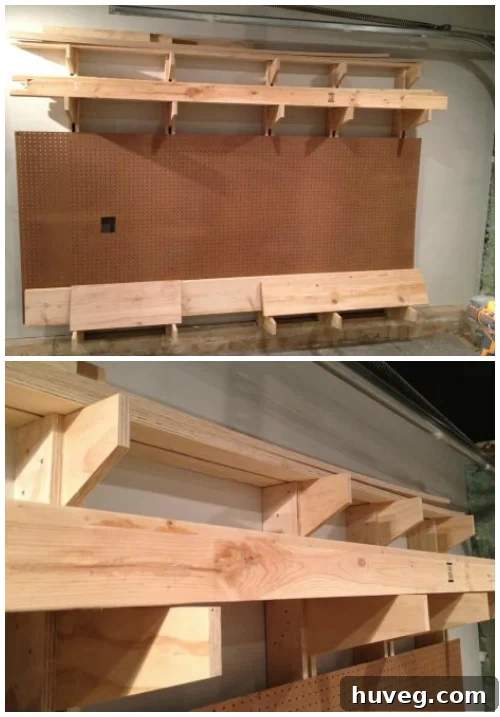
There are numerous variations of this design, but the core concept involves building individual plywood supports and then installing them between vertical lengths of wood, typically mounted along 2×4 studs. These supports create horizontal bays for lumber.
Pros: This is a highly cost-effective solution, especially if you have leftover plywood sheets, as it’s an excellent way to use up scraps. It generally looks decent and is often considered easier to DIY than the conduit pipe version, requiring less specialized drilling. The visual organization can be quite good for separating different types of wood.
Cons: My main hesitation with this option was the significant time commitment required for cutting and assembling the various plywood pieces. Without a table saw, achieving precise, repeatable cuts would be challenging and laborious. Another drawback is that the fixed plywood supports can sometimes make it difficult to place wider pieces of lumber without them bumping into the adjacent supports. Furthermore, depending on the design, these racks can consume a fair amount of wall space, which might be a concern in smaller workshops.
Commercial Option 3: Pre-fabricated Metal Vertical Lumber Organizer
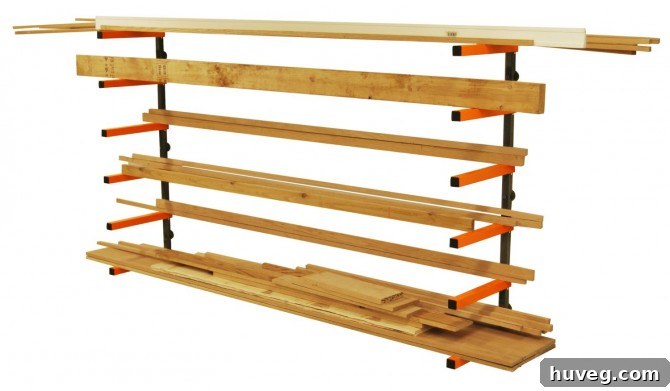
These ready-made steel storage racks, like the PORTAMATE PBR-001, are widely available and typically cost less than $100. They offer a “buy and install” solution for those who prioritize speed and convenience over custom building.
Pros: This is arguably the quickest option for setting up a lumber storage system. These racks come in various lengths, making them suitable for different wall spaces, whether you need extensive storage or just a small section. They offer straightforward hardware requirements, excellent durability, and unmatched convenience. The robust steel construction provides reliable long-term storage.
Cons: The primary deterrent for me was the cost. While under $100 isn’t exorbitant, I wasn’t keen on spending that much on what I anticipated might be a temporary storage solution. My workshop needs and design preferences are still evolving, and I didn’t want to invest in a fixed system that might not fit future layouts. Furthermore, reviewing the depth and weight limits of each level revealed that a potentially cheaper and equally effective option might exist.
The Ingenious Solution: My DIY Heavy-Duty Shelf Bracket Lumber Rack
After evaluating the alternatives, I realized my ideal solution needed to be: 1) incredibly cost-effective (preferably free!), 2) quick and easy to install, and 3) capable of supporting a decent amount of weight. It was this “aha!” moment that led me to consider a material I already had access to: heavy-duty shelf brackets.
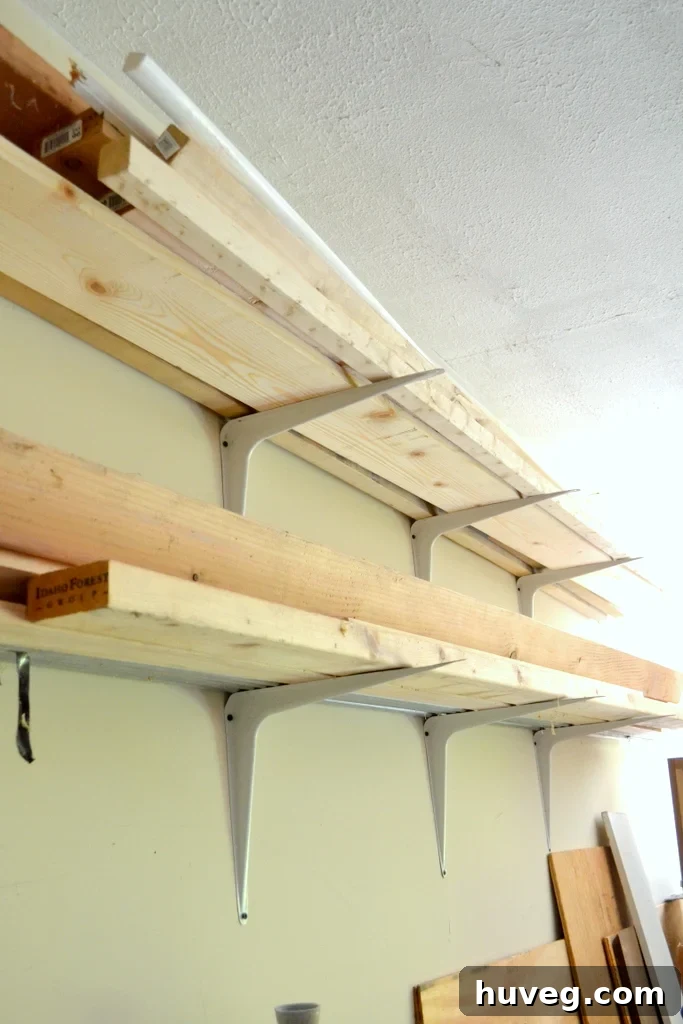
The Unexpected Find: Repurposed Shelf Brackets
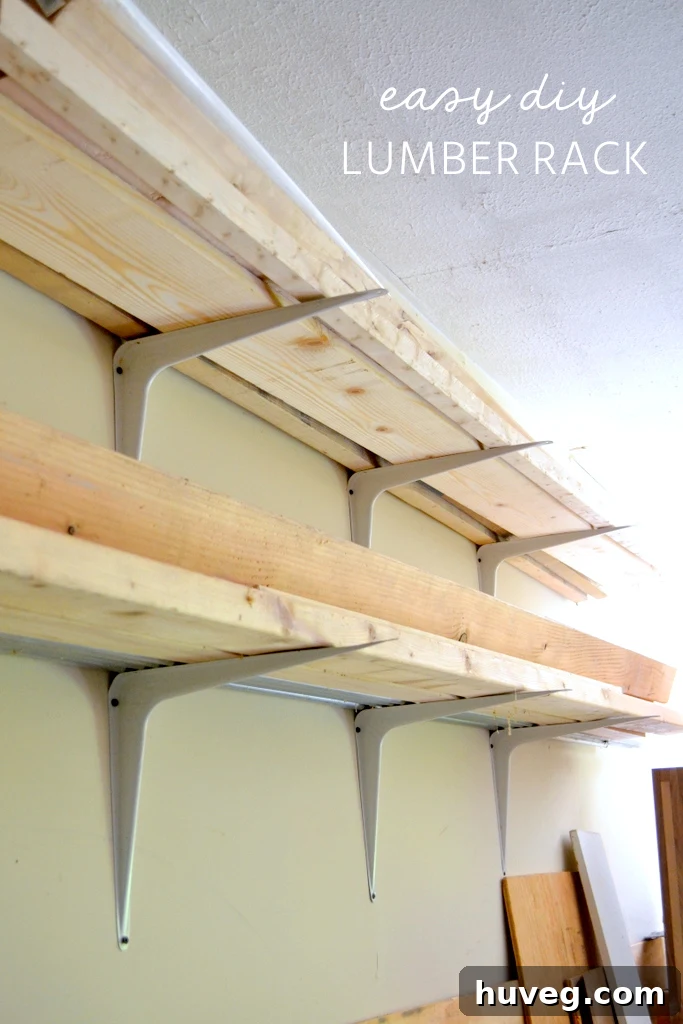
The store-bought metal rack boasted levels each supporting 110 lbs with a depth of 12.25 inches. I reasoned that if I could find something similar in terms of steel shelf brackets, I could achieve a comparable, perhaps even superior, solution without spending a dime. My dad, ever the hoarder of useful things, was my first call. A quick raid of his garage yielded a treasure trove: six sturdy 12 x 14-inch shelf brackets. They were grimy and covered in years of dirt and crusty paint, but they were absolutely FREE – and that, in my book, makes them the best kind of material to work with!
Evaluating Strength and Practicality
Before proceeding, I needed to verify the weight capacity of these old brackets. A quick online search for typical heavy-duty shelf bracket specifications revealed that when properly mounted into wall studs, each of these brackets could safely hold around 100 lbs. This was just 10 lbs shy of the store-bought rack’s capacity, making them perfectly adequate for my lumber storage needs. It’s worth noting that while standard L-brackets offer decent support, truly heavy-duty variants (often featuring a diagonal brace or a thicker gauge steel) can support upwards of 300 lbs per bracket. However, these usually come at a higher price point, making the pre-made steel racks more competitive in that weight class.
An important detail often overlooked, as some experienced DIYers pointed out, is the shear strength and weight capacity of the screws used to mount the brackets. Even the strongest bracket is only as reliable as its fasteners. Therefore, it’s crucial to use heavy-duty wood screws specifically designed for structural applications, ensuring they are long enough to penetrate deep into the center of the wall studs. This ensures the entire system can bear the intended load without fail.
Step-by-Step Installation: A Rapid Transformation

The transformation began during a recent garage cleanup. I took the brackets outside and gave each a thorough cleaning, followed by a few coats of primer and crisp white spray paint. This not only improved their appearance but also protected them from rust. Once dry, the installation was incredibly straightforward. Using a stud finder, I located the vertical studs along one wall of the garage. Then, I carefully marked the positions for my two levels of brackets, ensuring consistent spacing.
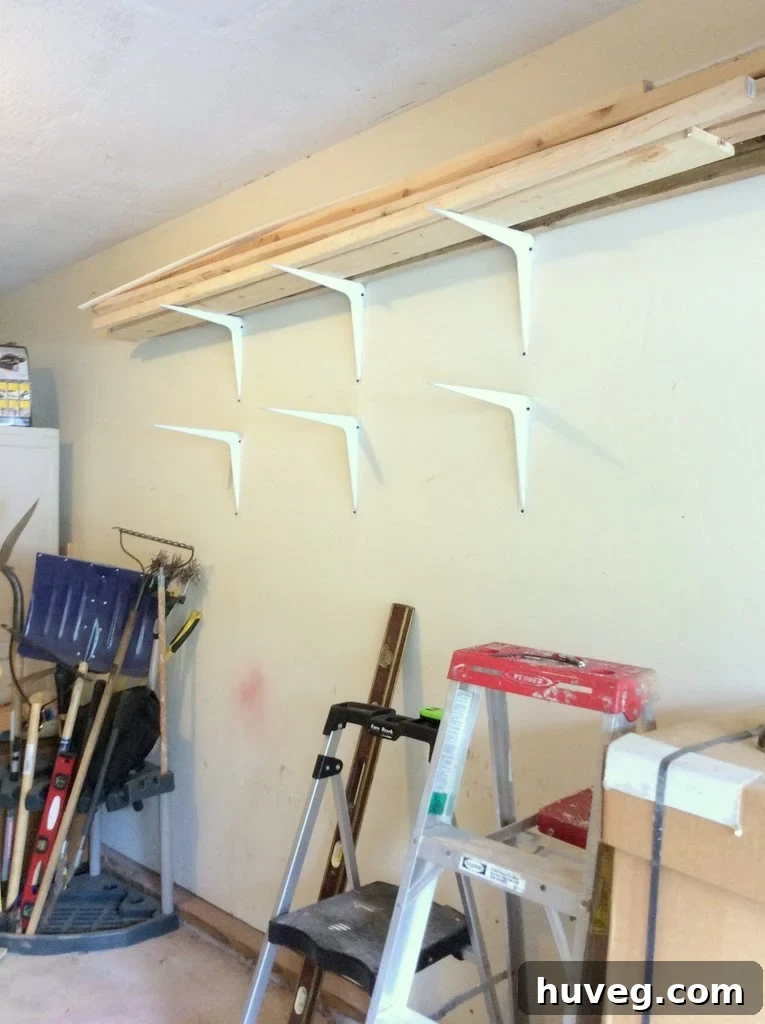
Using the appropriate heavy-duty screws (as advised!), I meticulously fastened each bracket into the studs. It was essential to ensure every screw was firmly anchored, providing maximum support. The entire process – from painting the reclaimed brackets to securely hanging them – genuinely took less than an hour. No complex cuts, no intricate joinery, just a simple, effective install-and-go solution.
Loading and Real-World Performance
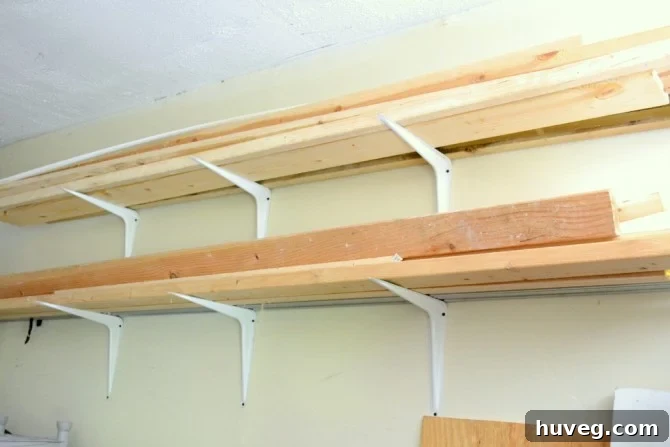
With the brackets securely in place, it was time for the true test: loading them up. To my pleasant surprise, these two simple levels held every piece of full-length lumber, conduit pipe, and molding I had accumulated. I made sure to distribute the heavier 2x4s evenly across the racks, which prevented any single section from approaching its maximum weight capacity. The immediate benefit was undeniable: a clear garage floor and neatly organized materials that were once a constant source of bruised shins and frustration. This simple DIY project instantly solved one of the biggest organizational challenges in my workshop, making it safer and far more efficient.
Beyond the Basics: Maximizing Your Garage Workshop Efficiency
While this heavy-duty shelf bracket solution was a perfect quick fix, I acknowledge it might not be my permanent, long-term solution. As my workshop evolves and the need to store items for future projects (like the upstairs bathroom renovation) along that wall diminishes, I might still upgrade to a more robust, custom-built system like the conduit version (Option #1). However, for now, this temporary-turned-functional rack suits my needs perfectly. It was a project that required no procrastination, encountered zero DIY hiccups, and involved absolutely no fuss. It also allowed me to easily fit a workbench underneath, providing a dedicated spot for my miter saw.
The success of this project was a huge motivator, crossing a significant item off my comprehensive workshop makeover list. It proves that sometimes the simplest, most unconventional ideas can yield the most effective immediate results. It’s all about finding solutions that fit your current needs, resources, and skill set, enabling you to move forward with other vital workshop improvements.
My ongoing garage workshop transformation includes:
- Pegboard organization wall
DIY lumber rack(achieved!)- Charging station
- Lumber cart (for scrap wood and plywood sheets)
- Gardening tool storage
Your Turn: Share Your Lumber Storage Strategies!
Have you been grappling with lumber organization in your own garage or workshop? Are you considering building a dedicated lumber rack? Which version or design are you planning to install, and what are the key factors driving your choice? Share your insights and experiences in the comments below – let’s inspire each other to create more organized and efficient workspaces!
How to create your ideal garage workshop, inexpensive supply organization ideas, and more:
-
Cedar Garage Door Reveal! (Before and After)
-
My One-Car Garage Workshop Plan
-
How to Add Sound Dampening without Removing Drywall
-
Marking The Studs
-
An LED Lighting Upgrade in the Garage
-
Tip: How to Secure Loose Pegboard Hooks