Streamline Your Flooring Project: Home Depot’s Measuring Service

Mastering Your Flooring Renovation: From Selection to Budgeting Success
The journey of transforming a home through renovation is often filled with both excitement and challenges. Among the most impactful changes one can make is updating the flooring, a fundamental element that dictates the comfort, style, and practicality of any living space. A few weeks ago, I initiated this significant phase of our home renovation by arranging for a professional measurement and quote for our new floors. My first step involved navigating Home Depot’s online system, which promised a streamlined approach to estimating this crucial part of our project.
The Initial Step: Home Depot’s Measurement Service and First Impressions
The process began with the convenience of an online booking for a measurement service, for which I paid a non-refundable $35 fee. This fee was advertised to cover comprehensive services including precise room measurements, essential moisture testing, and preliminary leveling estimates. A significant draw was the understanding that this payment would contribute towards the total flooring cost should I proceed with Home Depot for the installation. Optimistic about the value, I welcomed their representative into my home. The visit was remarkably efficient, lasting approximately 30 minutes, during which the measurements were taken. I was then advised to visit a local Home Depot store the following Monday to finalize my material selections and receive the complete, itemized quote. This initial phase felt productive and set the stage for what I hoped would be a smooth transition into our new floors.
Making Material Choices: The Allure of Hardwood and Plush Carpet
With the freedom to modify my selections at any point, I delved into the exciting task of choosing the perfect flooring. For areas where comfort and warmth were paramount, I opted for a soft, fluffy carpet. However, for the high-traffic zones and communal living spaces, I set my sights on the enduring elegance of real hardwood. My choice landed on Brazilian Cumaru, a species renowned for its exceptional durability and striking natural beauty. This decision stemmed from a desire for a long-lasting investment that could withstand the rigors of daily life, including the playful antics of my beloved dog, Colby. The distinction between solid hardwood and engineered wood became a key factor in my selection process. While engineered wood offers advantages like greater stability in varying humidity and often a lower price point, the unparalleled robustness and potential for refinishing solid hardwood ultimately swayed my decision.
Decoding Durability: Understanding the Janka Hardness Test
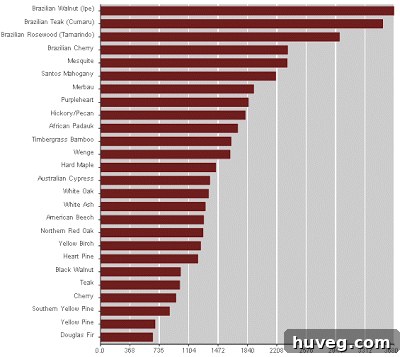
A pivotal piece of information shared by the flooring representative was the existence and significance of the Janka Hardness Test. This crucial industry standard is a direct measure of a wood species’ resistance to denting and wear. It quantifies the force, measured in pounds-force (lbf) or newtons (N), required to embed a 0.444-inch steel ball to half its diameter into a plank of wood. Essentially, the higher a wood’s Janka rating, the harder and more resilient it is against everyday impacts and scratches. For homeowners, understanding this scale is invaluable. For instance, common domestic hardwoods like Red Oak typically register around 1290 lbf, while softer species such as Cherry might be closer to 950 lbf. Exotic hardwoods, like my chosen Brazilian Cumaru, often boast significantly higher ratings, indicating superior resistance to dents and general wear. The impressive Janka rating of Brazilian Cumaru, which can exceed 3300 lbf, provided immense peace of mind. Knowing that this investment would stand up to the energetic movements of Colby and the usual wear and tear of a busy household reinforced my confidence in its selection.
Comparing the cost, I found that the price difference per box between the solid Brazilian Cumaru and many engineered wood options was not as substantial as I initially anticipated. This further solidified my conviction that I was making an excellent, durable choice perfectly suited for our family’s needs and lifestyle. With my selections made and confidence high, I formally submitted my choices to the Home Depot representative and eagerly awaited the email that would include both the precise layout measurements of our home and the comprehensive, itemized flooring quote for both the carpet and hardwood. This email was set to be the definitive financial blueprint for our flooring renovation.
The Unsettling Reality: A Quote Far Beyond Expectations
When the much-anticipated quote finally arrived, the excitement I had felt quickly evaporated, replaced by profound disappointment. The total figure was shockingly over my projected budget—exceeding $15,000! This was a considerable blow, especially when I critically examined the breakdown. The cost of the materials themselves, encompassing both the high-quality carpet and the premium Brazilian Cumaru hardwood, accounted for only about $6,000 of this staggering total. The significant disparity between material cost and the overall project price immediately raised red flags, leaving me deeply dissatisfied with the proposed pricing from Home Depot.
Seeking clarity, I promptly re-engaged with the representative to understand the components contributing to such an exorbitant sum. His explanation delved into various “special” requirements and “extra” charges, which, to a budget-conscious homeowner like myself, sounded less like justifiable costs and more like an attempt to inflate the bill. These ambiguous additions typically encompass a range of potential services: extensive subfloor preparation, the labor-intensive removal and disposal of existing flooring, specialized trim work, transition pieces between different flooring types, and even delivery fees and taxes. While I have immense respect for the expertise of flooring professionals and acknowledge their in-depth knowledge of installation complexities, the quote simply did not align with the reality or perceived value for my home. My residence, a comfortable family home, is certainly not in the category that warrants a $15,000 flooring investment, unless, as I mused, “these floors possess the ability to clean themselves, wash my car, and handle the household trash!” The sheer magnitude of the quote unequivocally indicated that I needed to explore alternative solutions that offered greater transparency and a more reasonable cost.
The Pitfalls of Proprietary Measurements: A Missed Opportunity for Homeowners
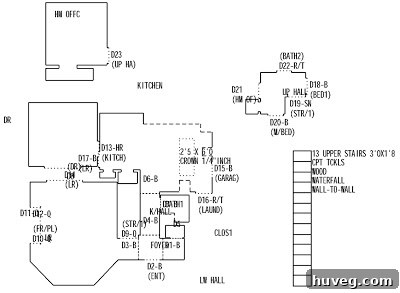
Beyond the financial shock, another element of my Home Depot experience proved to be quite disappointing: the floor plan and measurements provided. While it was reassuring to receive a layout, its utility for me as a homeowner was severely limited. The measurements were coded and formatted specifically for Home Depot’s internal use, rendering them largely unhelpful for my personal long-term planning needs. A truly valuable floor plan should serve as a versatile tool for various home management decisions—from strategizing furniture arrangements to planning future custom built-ins or even simply visualizing spatial changes within rooms. Unfortunately, the provided document lacked crucial details; most wall segments were not clearly marked with individual measurements. This omission meant I couldn’t easily reconfigure a room or accurately assess dimensions without having to re-measure everything myself. This proprietary format felt like a significant oversight, detracting from the overall value of the initial $35 measurement fee, which, in retrospect, did not deliver on its implied promise of comprehensive utility for the homeowner.
Empowering Your Renovation: Smart Strategies for Affordable Flooring
Upon reflection, my initial $35 investment in Home Depot’s measurement service ultimately proved to be an unsatisfactory expenditure. For anyone contemplating a flooring overhaul in the future, my primary recommendation is to diligently explore alternative avenues for quotes and precise measurements. Often, seeking free quotes from specialized local flooring companies, or even national competitors, can yield more transparent and competitive bids without any upfront cost. These dedicated firms are typically more eager to earn your business through detailed, no-obligation estimates that clearly itemize all costs.
Moreover, empowering yourself with fundamental DIY measurement skills is an invaluable asset that can save both money and potential frustration. All that’s truly essential is a reliable tape measure, a pencil, and some graph paper to accurately sketch out your room layouts with precise dimensions. This proactive approach not only equips you to obtain more accurate and comparable quotes from various suppliers but also provides you with a versatile and invaluable floor plan for all your future interior design endeavors, from furniture placement to contemplating structural modifications. Knowing the exact square footage and linear feet of your spaces places you in a much stronger negotiating position and significantly helps in preventing unforeseen costs.
Despite the initial setback, I remain genuinely optimistic about securing a more budget-friendly and transparent solution. The flooring market is inherently competitive, and I firmly believe that by actively shopping around, diligently gathering multiple bids from various vendors, and asking specific, detailed questions about every aspect of the installation process—including materials, labor, subfloor preparation, and potential incidentals—the overall project cost will be considerably reduced. It is paramount for homeowners to be proactive, compare offers meticulously, and never feel pressured to accept the first quote, especially when it far exceeds initial expectations. A thorough understanding of all pricing components is the cornerstone of making an informed decision and successfully staying within your renovation budget.
Share Your Journey: Lessons Learned from Home Renovation
This entire experience has served as a valuable, albeit costly, lesson in the intricate world of home renovation projects and underscored the critical importance of due diligence. I am genuinely curious to hear from other homeowners who have embarked on similar journeys. Have you encountered a comparable quote experience that left you feeling surprised, disappointed, or perhaps even pleasantly surprised? What specific home improvement project were you undertaking when you received your estimate, and what strategic steps did you ultimately decide to take once you reviewed the final bottom line? Sharing our collective experiences, insights, and practical advice can provide an invaluable resource for fellow homeowners who are navigating the often-challenging yet ultimately rewarding path of home renovations. Please feel free to share your stories and any valuable tips you’ve gained in the comments section below!