Attic Anarchy The Squirrels Encore

The Epic Saga of the Stubborn Attic Squirrel: A Homeowner’s Battle for Peace
For those who followed the initial skirmishes, my struggle against the persistent squirrel attempting to claim my attic as its personal residence was far from over. What began as an irritating intrusion has evolved into an ongoing, albeit sometimes comical, saga. Despite my best efforts, this tiny yet tenacious adversary proved to be as stubborn as I am, necessitating a follow-up defense strategy to (hopefully, once and for all!) prevent my unwelcome attic squatter from regaining entry.
Who’s ready to delve into the dusty, dimly lit world of attic pest control? If you’re a homeowner, you probably understand the urgency and frustration involved in such a battle. This isn’t just a story about a squirrel; it’s a guide to understanding, identifying, and ultimately preventing these nimble creatures from turning your attic into their private sanctuary.
Understanding the Adversary: Why Squirrels Invade Attics
For those needing a quick recap, my months-long campaign against a small but incredibly irritating rodent has been relentless. This creature seems determined to become my permanent roommate, an idea about as appealing as touring the world with Mona-Lisa Saperstein – utterly chaotic and perpetually unwelcome. Squirrels are opportunistic creatures, constantly searching for safe, warm, and dry places to nest, especially during colder months or when raising young. Attics provide the perfect habitat, offering shelter from predators and the elements.

Over the weeks since its initial successful eviction from the attic, the squirrel consistently attempted to access the front window area near my bedroom. This predictability, while annoying, proved somewhat advantageous, allowing me to concentrate my defensive efforts on a single, known trouble spot. My unwanted guest seemed particularly fond of gnawing on the roofline directly above my head, providing a rather unwelcome and noisy wake-up call each morning. While nature can be beautiful, it can also be incredibly disruptive when it decides to make a home in your roof!
The Initial Defense: Identifying and Sealing Vulnerable Entry Points
Initially, I believed I had done a commendable job of sealing potential entry points with steel hardware cloth. This robust mesh is an excellent deterrent, as squirrels cannot chew through it. However, in the back of my mind, I knew I had left one crucial spot vulnerable. In the heat of summer, while contorting myself through tight attic spaces, I ran out of pre-cut mesh. I had covered approximately 80% of the critical area, leaving one small section unstapled. I hoped sheer willpower would deter the squirrel, avoiding another session of what I affectionately called “the worst yoga the world has ever seen” to return to the cramped attic.
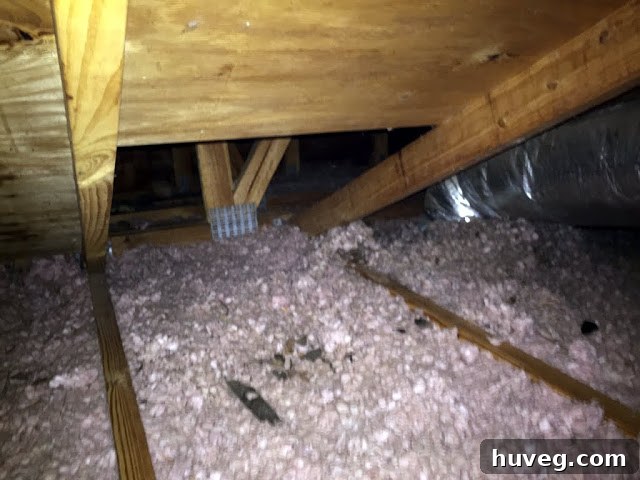
Predictably, my hopes were dashed. The squirrel, displaying a remarkable aptitude for reconnaissance, discovered the attic’s exhaust port – the very spot I had left unprotected. As it turns out, squirrels are far from unintelligent, especially when motivated by the prospect of a cozy new home. This experience taught me a valuable lesson: when it comes to pest exclusion, complacency is your greatest enemy.
The Squirrel’s Persistence: A Pattern of Attack
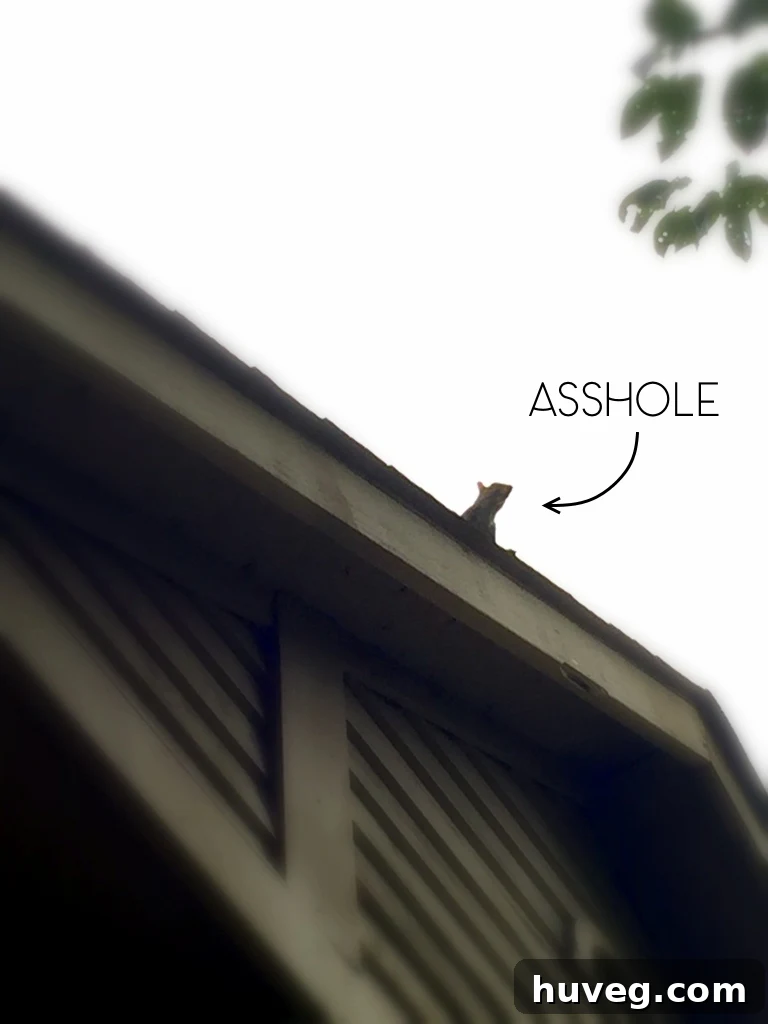
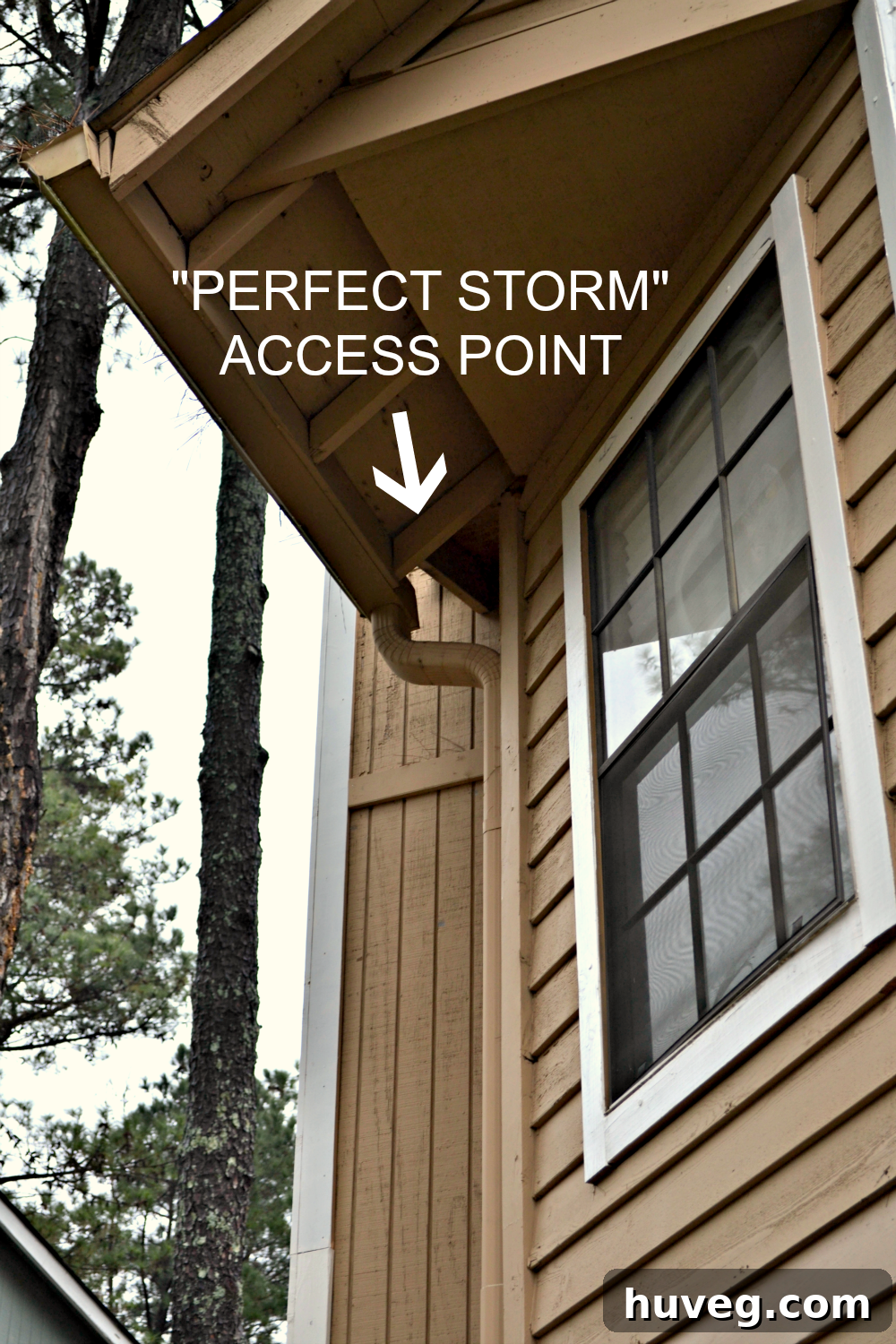
My furry antagonist established a distinct pattern: it would leave the roof undisturbed for several weeks before returning to gnaw precisely at the same spot. I deduced its preference for this specific area was due to the nearby drain spout, which served as a convenient ladder. From this vantage point, it could concentrate its efforts on chewing a hole along the top board, where the roof meets the siding. Through a mix of hubris and sheer laziness – or perhaps a blend of both – my initial response was to simply step outside, shout an indignant warning (often something along the lines of, “Yeah, I SEE YOU, JAGWEED!”), or throw a pinecone in its general direction. The squirrel would scamper away, and I would avoid another unpleasant trip into the attic. At the time, I considered these minor victories.

However, this cycle of hurried gnawing and chasing continued until, inevitably, the squirrel managed to squeeze its portly body through the compromised opening. The familiar sound of scampering across the ceiling confirmed my worst fears, signaling that immediate action was required. I waited for the squirrel to leave, then re-entered the attic, once again contorting myself through the narrow access. Reaching the small nook above the front window of the house, where the main conflict played out, felt less daunting this time. While still not exactly pleasant, the fear of a face-to-face confrontation with an angry squirrel had somewhat diminished. Or so I hoped.
A Closer Look: Documenting Entry Points
During my previous, more frantic excursions into the attic, I hadn’t had much opportunity to document the extent of the damage. This time, armed with a renewed sense of purpose, I snapped a few extra photos. Below, you can see the original front opening of the gable vent, which served as the squirrel’s initial access point. This area had already been diligently covered with steel mesh during my first attempt.
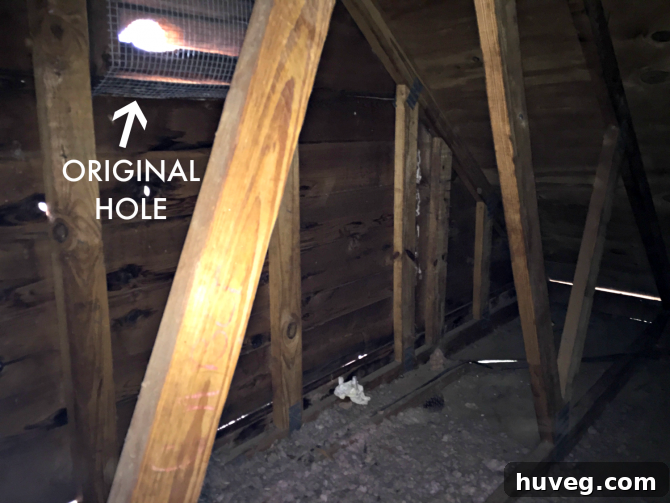
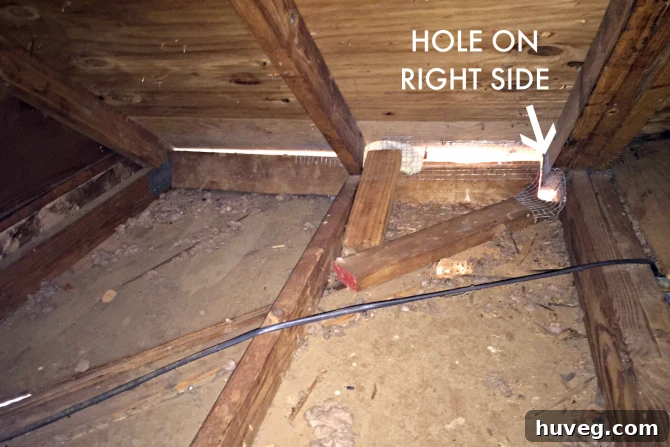
Once that initial breach was successfully sealed (with plans for cosmetic repair from the outside in the spring), the cunning squirrel found an alternative exit route. It gnawed along the board that separates the roof from the joists, creating a new passage on the right side of this space.
From the exterior, this newly exploited weak spot coincided precisely with where the storm drain curled, as visible in the picture below. The drain spout, acting as a convenient climbing aid, undoubtedly facilitated the squirrel’s relentless efforts.
Advanced Squirrel Proofing: Tools, Techniques, and Lessons Learned
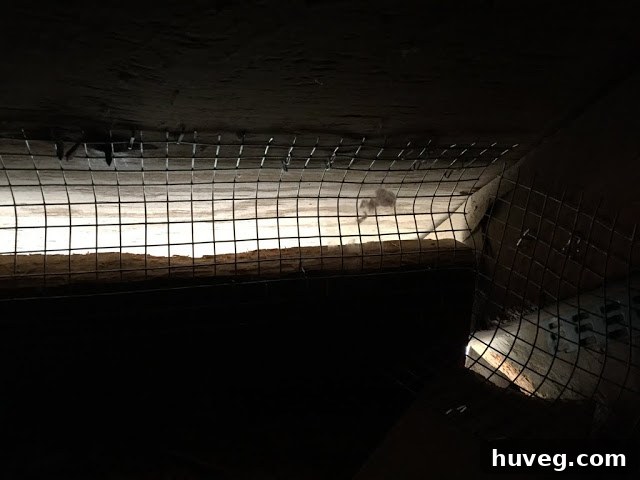
During my initial efforts, I had primarily stapled hardware cloth to the right, where visible gnaw marks indicated an existing hole. These weak points often occur where the roof, horizontal board, and the main attic structure converge. Transporting an entire roll of hardware cloth into the attic is cumbersome, so I had pre-cut only a few pieces, believing they would suffice. After exhausting my supply, I hadn’t returned to address a small, vulnerable spot further to the left. This oversight proved costly, as it became the squirrel’s re-entry point. The lesson was clear: dedicate the effort to cover every potential opening thoroughly in a single, comprehensive session!
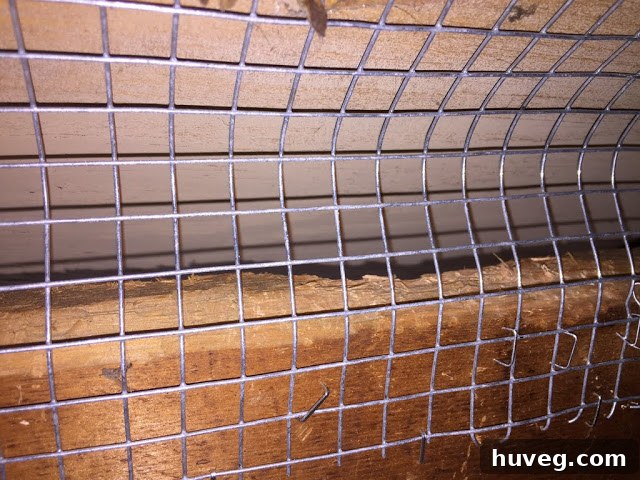
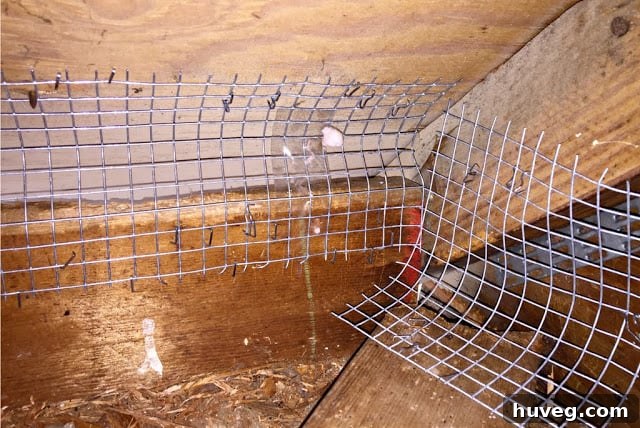
This second round of defense saw a more meticulous approach. I covered all identified gnaw marks, which were easily discernible thanks to the increased light filtering through these compromised areas. For anyone undertaking a similar DIY project, remember that perfection in aesthetics isn’t the goal. The primary objective is security. As long as the mesh is firmly in place and cannot be dislodged – even if it means stapling it to a stray piece of wood and wedging it securely – you’re on the right track.
Beyond Barriers: Adding Deterrents
Once the existing holes were securely stapled with hardware cloth, I took extra precautions. I ran additional pieces of mesh along the entire roofline, targeting any areas where I could still detect light. While the squirrel hadn’t yet attempted these spots, it was only a matter of time before it explored new avenues. As an added measure, I generously sprinkled cayenne pepper along the entire board. I’d read about its effectiveness in deterring squirrels from birdseed, so I figured it couldn’t hurt to try it as an attic deterrent!
The Ongoing War: Long-Term Prevention Strategies
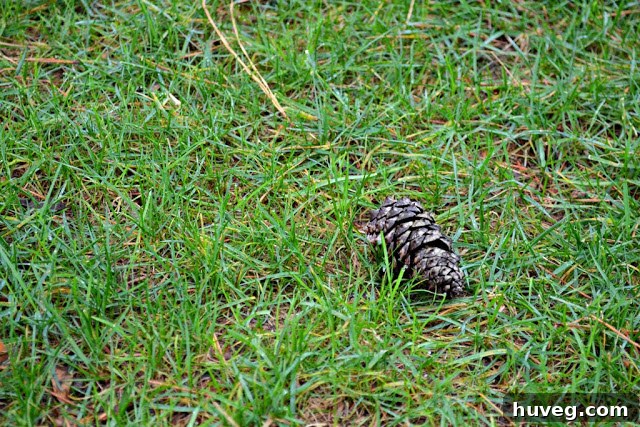
While I wish I could declare complete victory, the truth is, the battle with my attic squirrel continues. The persistent creature still makes attempts, but thankfully, it hasn’t managed to breach my defenses again. Each time I hear those tell-tale scratching noises, I sprint outside, armed with a clear message: “I’m here, and I’m not in the mood!” A well-aimed pine cone near the drain usually suffices to send it scurrying.
Long-term squirrel prevention requires ongoing vigilance. Regular inspections of your roofline, eaves, soffits, and vents are crucial, especially after severe weather. Trimming tree branches that hang near your roof can also eliminate easy access points for squirrels. Consider installing vent covers on all exposed openings and repairing any damaged fascia or siding promptly. If the problem persists despite your best efforts, professional wildlife exclusion services might be necessary.
Will this be the final chapter in my epic saga with the attic squirrel? I can’t say for certain. But one thing is for sure: I have an ample supply of pine cones at the ready, and my determination to maintain a squirrel-free attic remains unwavering.
*A quick, relevant, and timely Star Wars reference! Please forgive my indulgence; I’ve only seen the original movies once and haven’t caught the latest installment in theaters yet, so I’m well aware I might be making a somewhat outdated joke here. No spoilers, please! I plan to see it with friends this week.