Fabric Fresh

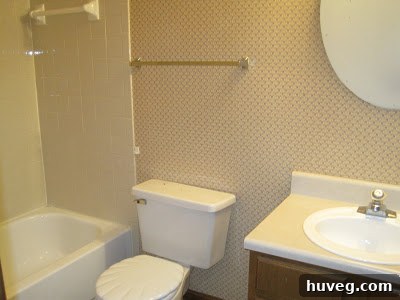
My primary bathroom is anything but a luxurious retreat. In fact, its current state and compact dimensions make the mere thought of a remodel feel overwhelmingly intimidating. It’s a space that has stubbornly resisted my creative efforts, leaving me at a perpetual standstill when it comes to envisioning its potential transformation.
The Dream vs. Reality: Navigating the Challenges of a Small Bathroom Remodel
The journey to acquiring my current home was a winding path filled with compromises, especially regarding the primary bathroom. When I first embarked on my house hunt, a spacious, opulent primary bathroom sat proudly at the very top of my non-negotiable list. I envisioned grand walk-in showers, soaking tubs, and ample counter space – a true spa-like escape within my own home. This aspiration was nestled alongside other key criteria for my “perfect” abode: a securely fenced backyard for privacy and pets, an expansive kitchen designed for entertaining, a generous walk-in closet in the primary suite, and the convenience of a downstairs half bath for guests. Beyond these aesthetic and functional desires, I desperately sought a property that wouldn’t demand immediate, costly repairs from professional contractors, dreaming of a home free from plumbing nightmares, roof dilemmas, or foundational issues.
Unfortunately, my ambitious vision for a designer-level home often clashed with the stark reality of my budget. I found myself in a predicament akin to having Manolo Blahnik tastes while operating on a Famous Footwear budget – a classic mismatch between desire and financial capability.
When I stumbled upon the house I now call home, my initial reaction to the bathrooms was one of profound disappointment. Their diminutive size immediately struck me as a significant drawback. So much so that I initially recoiled from the idea of making an offer, convinced that my ideal home, complete with its spacious primary bath, was still waiting to be discovered. I spent another two arduous months diligently searching, firm in my belief that the perfect property was “out there.” It wasn’t that I failed to find houses that ticked all the boxes on my extensive wish list; rather, the challenge was that someone else always seemed to find them – and secure them – first.
After several frustrating months of navigating the competitive real estate market, a clear pattern emerged. My price range, unfortunately, proved to be highly attractive to seasoned investors who were keenly focused on snatching up affordable income properties. These investors often possessed the distinct advantage of making all-cash offers, a proposition banks found undeniably more appealing than my financing requirements. And honestly, who could blame them? If I were a seller, a swift cash offer would undoubtedly be my preference too. This market dynamic, however, meant that my search extended far beyond my initial expectations, adding months of anxious anticipation to an already stressful process.
Embracing the Imperfect: Finding Potential in an Unexpected Place
I certainly don’t want to convey the impression that I begrudgingly settled for this house, treating it as merely the best option among a collection of rejects. Yet, there’s an element of truth to that sentiment. Despite the initial reservations, this particular property possessed all but one of the items on my demanding checklist. More importantly, as I walked through its dusty, dated rooms, I began to see beyond the surface imperfections. I could genuinely envision transforming this neglected space into a vibrant, contemporary home. It simply felt right – a profound sense of connection that transcended the cosmetic flaws. I recognized its potential as a sound investment, an exciting adventure, and a canvas for my creative aspirations.
Adding to its appeal, the owner was in a desperate hurry to sell. This urgency proved to be a fortunate turn of events for me, especially when the appraisal came in nearly $30,000 lower than her asking price. It was a rare instance where I found myself unexpectedly grateful for a foreclosure sale in my immediate neighborhood, as it significantly sweetened the deal. However, even with all these compelling factors, there was still one area of the house that remained a complete blank in my imagination: the bathrooms. They stood as perplexing enigmas, resisting all attempts at envisioning their future potential.
The Bathroom Dilemma: A Designer’s Creative Block
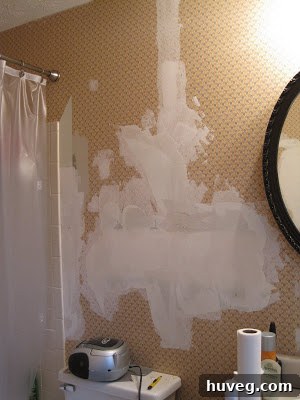
And so, here I remain, creatively stalled. The primary bathroom, in particular, has become a symbol of this architectural writer’s block. I’ve managed to implement only one significant improvement within its confines: the spray painting of the rather unattractive frame around the medicine cabinet mirror. This was a minor victory, a fleeting moment of progress in an otherwise stagnant space. Then, one day, overwhelmed by the pervasive ugliness of the outdated wallpaper and the persistent annoyance of a broken towel bar, I simply reached my breaking point. With a surge of frustration, I ripped them out, hoping that a blank slate might spark some much-needed inspiration. Alas, my progress has not extended beyond that moment of catharsis.
Unlocking Potential: Smart Strategies for Small Bathroom Design
Despite its current underwhelming appearance, I have no doubt that this compact primary bathroom possesses a wealth of untapped potential – truly, that’s just about all it offers right now. However, I’m experiencing the design equivalent of writer’s block, a frustrating inability to move forward. This common challenge faced by homeowners and designers alike is particularly acute in small spaces, where every inch counts, and creative solutions are paramount.
Transforming a small primary bathroom into a functional, aesthetically pleasing, and even luxurious space requires strategic thinking. One key approach is to rethink traditional fixtures. Opting for a floating vanity, for instance, not only creates an illusion of more floor space but also offers a sleek, modern aesthetic. Similarly, wall-mounted toilets, while a more significant undertaking, can reclaim precious inches, making the room feel less cramped. For truly tiny bathrooms, a corner sink or a pedestal sink can free up valuable wall space for other elements or simply enhance the room’s open feel.
Lighting plays a pivotal role in expanding a small bathroom visually. Maximizing natural light is always ideal, but when that’s limited, layering artificial light sources becomes crucial. Recessed lighting provides ambient illumination without occupying ceiling space, while strategically placed sconces or a backlit mirror can add both task lighting and a touch of sophistication. Bright, clear lighting can make a small room feel airier and more inviting.
The choice of color scheme also dramatically impacts perception. Light, neutral colors like whites, creams, soft grays, and pale blues can make walls appear to recede, instantly creating a sense of openness. These colors reflect light more effectively, preventing the room from feeling claustrophobic. Incorporating large mirrors is another time-tested trick; a generously sized mirror not only serves a functional purpose but also reflects light and the room itself, making it seem twice its size.
Smart storage solutions are non-negotiable in a small bathroom. Instead of bulky cabinets, consider built-in shelving or vertical storage units that utilize wall space upwards. Recessed medicine cabinets, shower niches, and slim wall-mounted shelves can provide essential storage without encroaching on the limited floor area. Even small, decorative baskets or clear containers can help organize toiletries while maintaining a tidy appearance.
When it comes to the shower or tub, many small primary bathrooms benefit greatly from a walk-in shower, especially one with a frameless glass enclosure. This design choice visually expands the space by allowing sightlines to extend across the entire room, unlike opaque shower curtains or bulky framed enclosures that chop up the view. If a tub is essential, consider a Japanese soaking tub or a space-saving tub design that fits within compact footprints.
Finally, the choice of tiles can also contribute to the perception of space. Large format tiles on both floors and walls can create a more continuous surface with fewer grout lines, making the room feel larger and more cohesive. Alternatively, using the same tile on the floor and extending it partly up the wall can blur the lines and create an uninterrupted flow.
Seeking Inspiration: Your Solutions for Small Space Design
Considering all these possibilities, why not make this journey more interactive? I invite you, my readers, to share your insights and experiences. Have any of you wrestled with a similar design dilemma in a challenging small bathroom? What innovative solutions or clever hacks have you implemented that you’re most proud of? Perhaps you’ve embraced the cozy nature of a small bathroom, finding ways to make it feel charming rather than cramped. Or, like me for a while, have you simply let this room be, waiting for the perfect spark of inspiration? I am genuinely eager to hear your thoughts, your successes, and even your ongoing struggles. Your collective wisdom could be the catalyst I need to finally transform this intimidating space into a beautiful, functional primary bath.
Together, let’s explore the endless possibilities for maximizing style and functionality in even the most compact of primary bathrooms. Your ideas might just be the blueprint for my next renovation adventure!