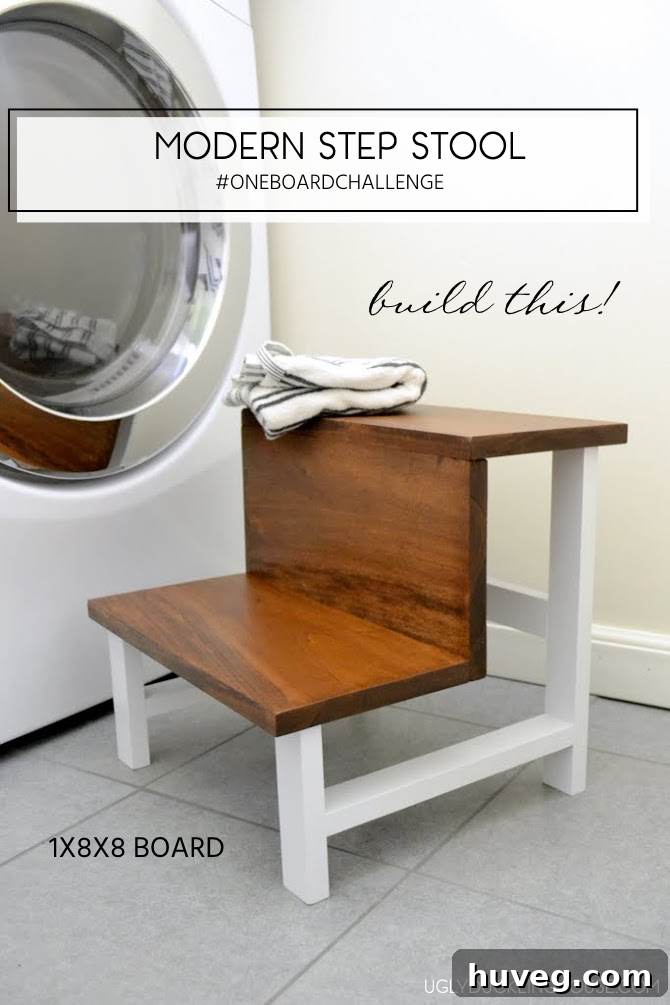
Modern Step Stool One Board Challenge

Have you ever completed a home improvement project, only to realize a crucial element is still missing? Perhaps you’ve spent hours meticulously installing beautiful, long, deep, thin floating shelves in your laundry room, stepping back to admire your new organizational masterpiece, only to discover a rather inconvenient truth: if you’re like me, standing at just 5’2″, those top shelves remain tantalizingly out of reach for your everyday essentials. This common dilemma leads many of us to seek practical, yet stylish, solutions to bridge the gap between aspiration and accessibility. For me, that solution manifested in the form of a modern, custom-built step stool, an indispensable addition to conquer the heights of newfound home organization.
The Laundry Room Transformation: From Vision to Practicality
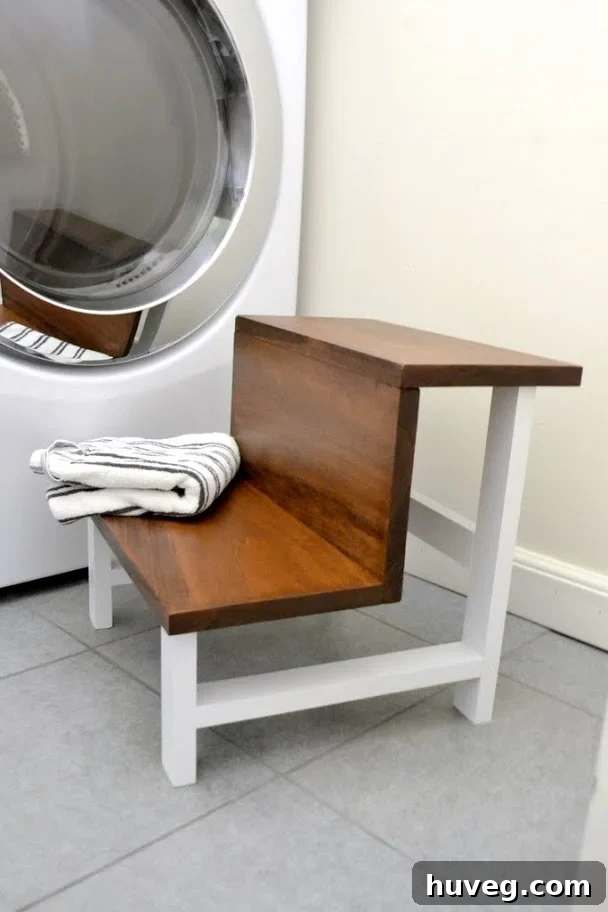
My journey to building this essential step stool began with a significant laundry room overhaul. The goal was to maximize every inch of space, especially those often-overlooked vertical areas. Out went the old, and in came sleek, new appliances and the aforementioned floating shelves, strategically placed in the underutilized top-right corner. This innovative arrangement was a marked improvement over constantly stretching over my new washer and dryer to reach the narrow shelf under the window, which now serves a new purpose as a small greenhouse for my plant collection. While the aesthetic and spatial improvements were undeniable, the practical challenge of my height quickly became apparent. What good is a beautifully organized space if you can’t comfortably access its contents?
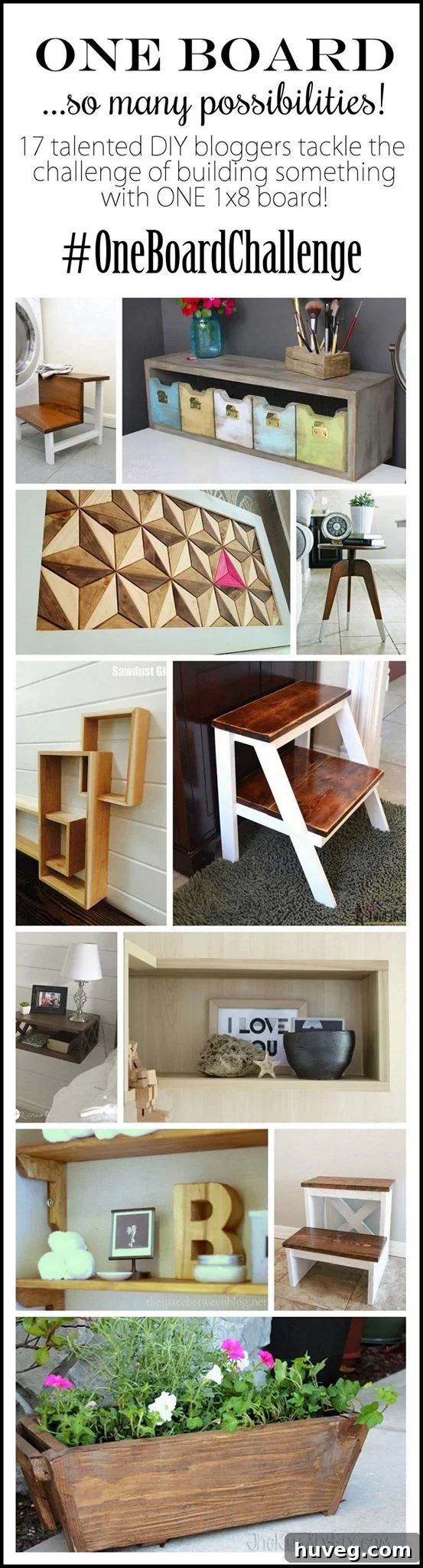
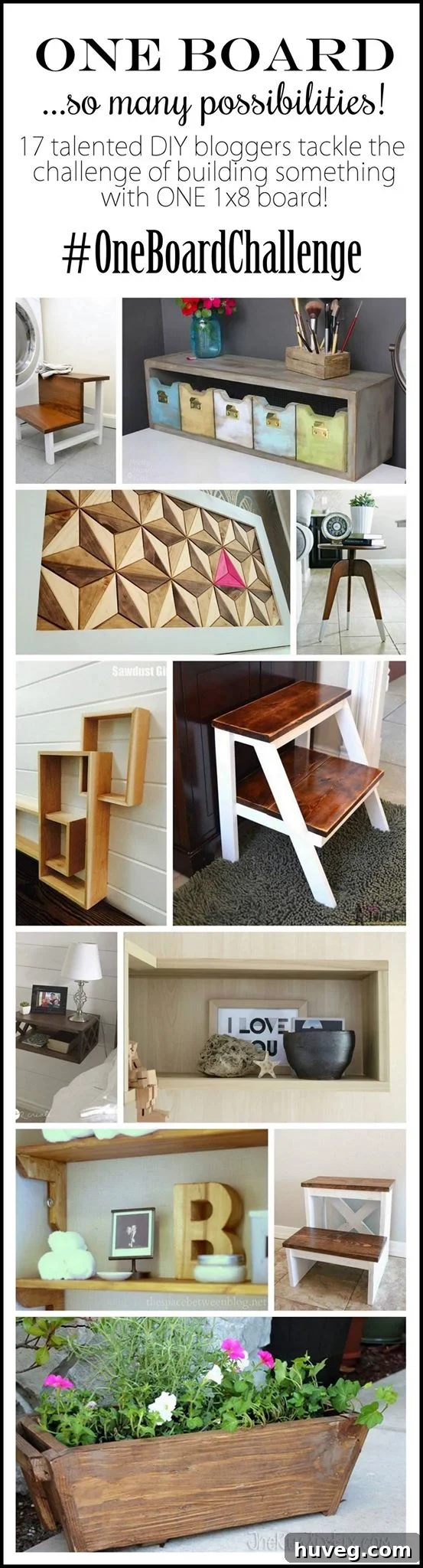
It was at this serendipitous moment that I learned about the “One Board Challenge,” hosted by the talented Jen from House of Wood. This unique initiative invited DIY bloggers to craft something incredible using just a single 1x8x8 board. For me, this wasn’t just another building challenge; it was the perfect opportunity to re-engage with the vibrant DIY blogging community and, more importantly, to finally check a much-needed item off my home improvement list: a stylish, functional modern step stool that perfectly complemented my refreshed laundry room.

Overcoming Creative Hurdles: The Journey to a Modern Step Stool Design
The path to a finished project, especially one born from a creative challenge, is rarely linear. My “One Board Challenge” experience was no exception. I found myself battling procrastination and a delightful, yet overwhelming, influx of ideas. This is often the less glamorous side of creativity: when inspiration strikes, it’s easy to become overly ambitious, wanting to tackle every single brilliant idea simultaneously. The beauty of the “One Board Challenge” lies in its inherent versatility; as the sheer genius of other participating bloggers demonstrated, a single board can be transformed into an astonishing array of items – shelves, wine racks, benches, planters, tables, and so much more. This expansive potential, while inspiring, also led to considerable internal debate and design shifts.
Ultimately, I had to rein in my grander aspirations and focus on the immediate need. The desire for a functional step stool, infused with a clean, modern aesthetic, took precedence. And I am genuinely thrilled with the outcome. The other creative ventures can certainly wait their turn. Interestingly, having my newly organized garage made the entire building process significantly smoother, proving that good organization truly underpins successful DIY projects.
Step Stool Plans: Visualizing the Cuts and Assembly
For those eager to replicate this project, understanding the cuts is the first step. While I confess my Google SketchUp skills are still a work in progress, I’ve outlined the essential cuts here. The iterative nature of my design process meant the precise plans solidified only after the physical build was complete. However, this visual guide should provide a clear starting point for your own modern step stool construction.

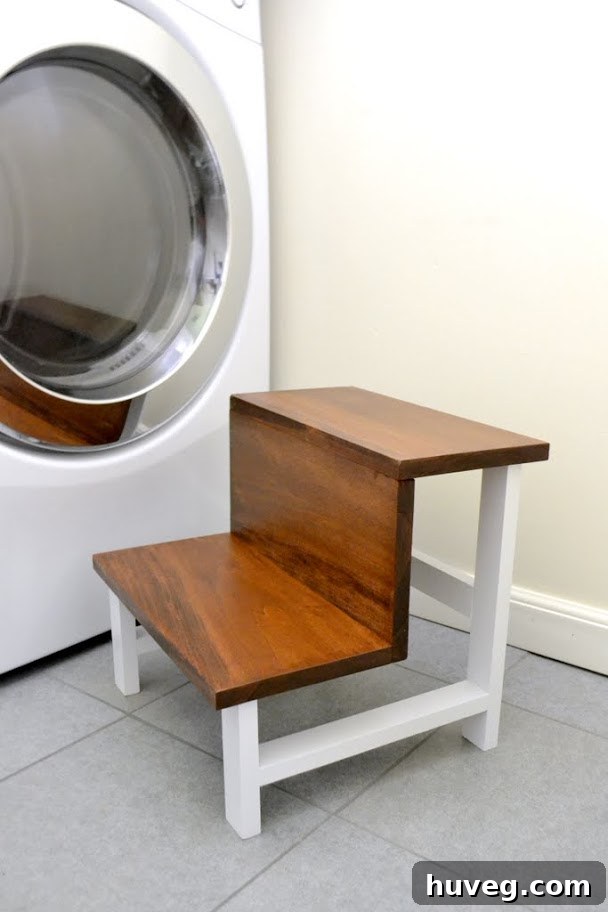
Essential Tools and Materials for Your DIY Step Stool
Before diving into the build, gather your tools and materials. Working with the right equipment not only makes the process smoother but also ensures a higher quality finish for your modern step stool. Here’s what you’ll need to transform that single board into a functional piece:
- Miter Saw: For precise cross-cuts on your board.
- Table Saw or Circular Saw: Essential for ripping the board into narrower strips for the legs and supports.
- Tape Measure: For accurate measurements.
- Pencil: For marking cuts and pocket hole locations.
- Square: To ensure all cuts and assemblies are perfectly square.
- 1 – 1x8x8 Board: I opted for poplar, appreciating its smooth grain and excellent staining properties.
- Wood Conditioner: Crucial for achieving an even stain application, especially on woods prone to blotching.
- Wood Stain of Your Choosing: Select a color that complements your space.
- Polyurethane (I used Satin finish): For durable protection and a smooth finish.
- Kreg Jig: A game-changer for creating strong, hidden pocket-hole joints.
- Kreg Screws (1 1/4″): Specifically designed for pocket holes.
- Drill/Impact Driver: For drilling pocket holes and driving screws.
- Primer: For the painted sections of the step stool.
- Spray Paint (Color of your choosing; I used white): For a crisp, modern contrast.
- Nail Gun: For quick and secure final assembly of the steps to the base.
Step-by-Step Guide: Building Your Modern Step Stool
The assembly process, once you commit, flows surprisingly well. Here’s how to construct your stylish and sturdy modern step stool:
1. Cut the Main Step Components
Begin by using your miter saw to cut the largest pieces from your 1x8x8 board. These will form the two steps and the riser that connects them. Accuracy here is key for a stable and aesthetically pleasing stool. Once cut, use your Kreg Jig to drill pocket holes. Specifically, place pocket holes where the bottom step will connect to the middle riser, and where the middle riser will connect to the top step. These hidden joints will provide exceptional strength and a clean finish.
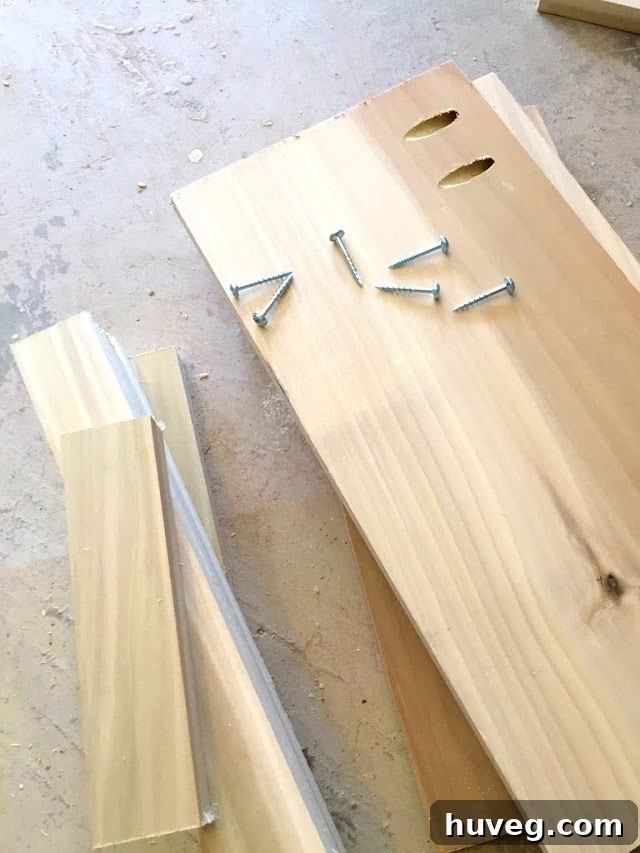
2. Prepare the Support Strips (Legs and Braces)
Next, take the remaining portion of your 1x8x8 board and rip it down into 1 1/2-inch wide strips using a table saw or circular saw. This step creates the material for your stool’s legs and structural supports. Once ripped, cut these strips to the following precise lengths:
- 2 pieces – 1.5″ x 5.75″ (These will be your front legs)
- 2 pieces – 1.5″ x 13″ (These will form your taller back legs)
- 3 pieces – 1.5″ x 11″ (These are for the crucial middle and back supports that tie the structure together)
You’ll likely have a good amount of scrap wood left over, perfect for testing stains or small future projects!
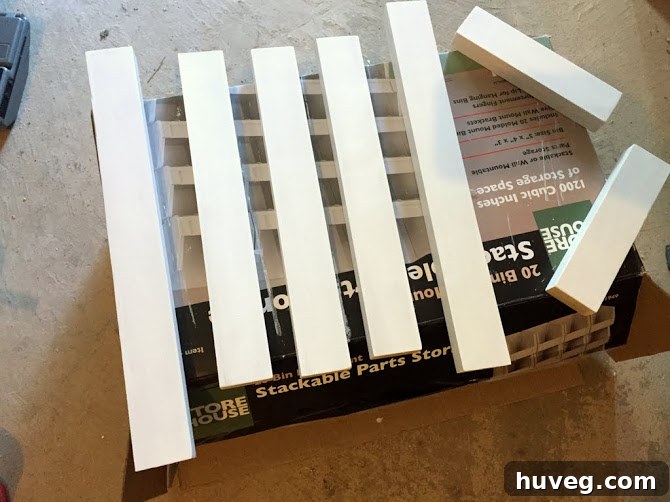
3. Drill Pocket Holes in Supports and Pre-Finish
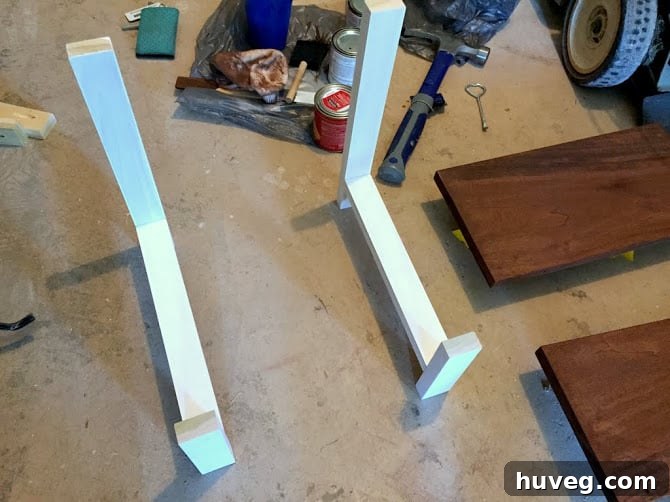
For the 11-inch middle support pieces, drill pocket holes into both ends. These will allow you to securely attach them to the legs. To streamline the finishing process, I pre-primed these support pieces and applied their first coat of paint before final assembly. This ensures thorough coverage and reduces touch-ups later.
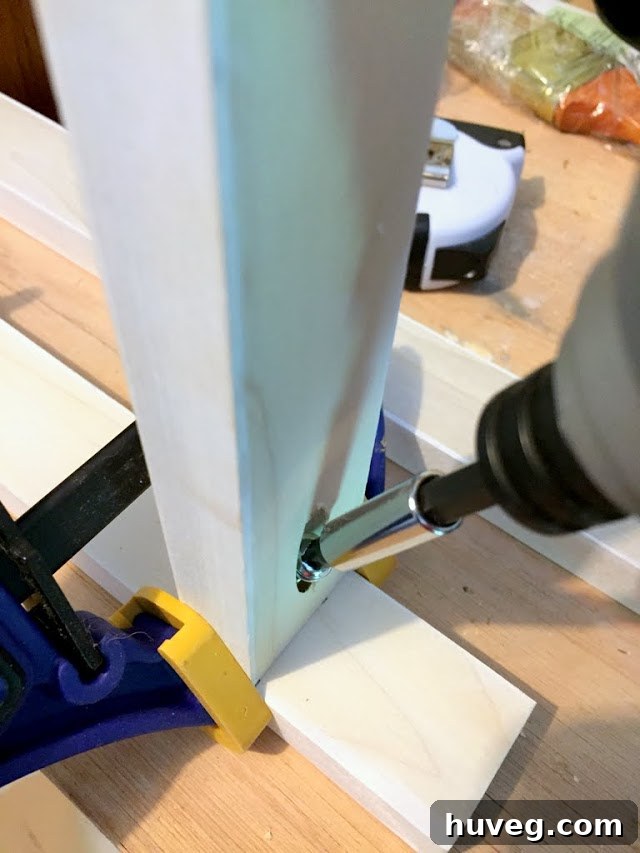
4. Assemble the Stool’s Base Structure
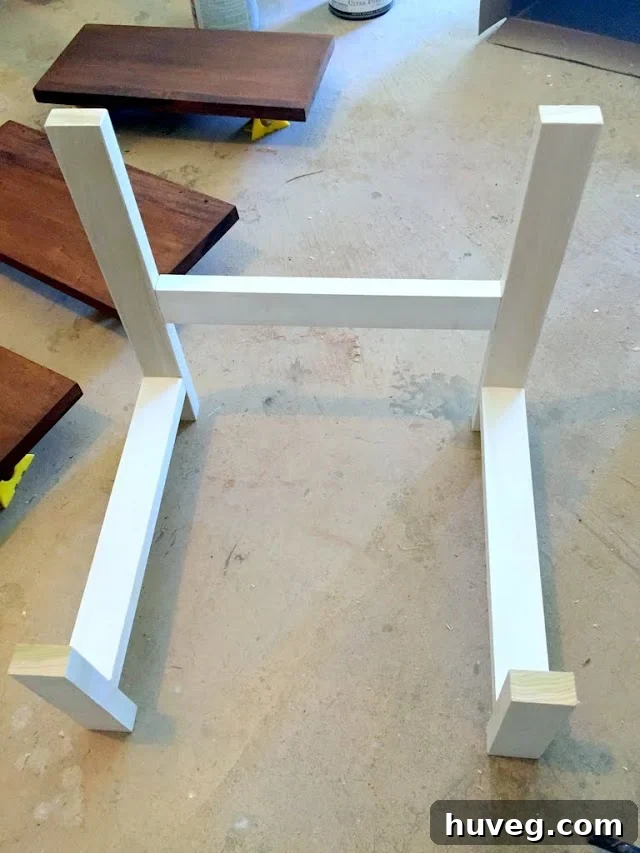
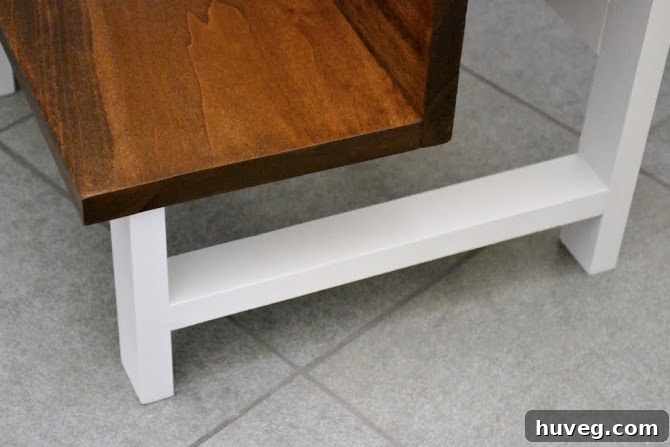
Now, it’s time for assembly! Attach the middle supports. Position the lower middle supports 2 inches up from the bottom of the legs. The back support should be placed 5.75 inches up from the bottom, ensuring it aligns visually with the front step for a balanced look. Create both side assemblies first (front leg, back leg, and a middle support connecting them).
Once both sides are built, connect them with the remaining back support piece. This ensures the entire base structure is rigid and square. Take your time to check that everything is level and square before fully tightening your Kreg screws.
5. Final Painting of the Base
Once the base is fully assembled, apply caulk to any seams or gaps in the painted sections for a seamless, professional finish. Then, apply a final coat of spray paint to the legs and supports, ensuring complete and even coverage. Allow ample drying time.
6. Condition, Stain, and Polyurethane the Steps and Riser
While the painted base dries, turn your attention to the steps and riser. First, apply a wood conditioner to ensure the stain absorbs evenly and prevents blotchiness, especially important for poplar. For the stain color, I experimented a bit. I had both American Walnut and Dark Walnut from Rustoleum on hand, but neither quite hit the mark on its own. So, I mixed them – roughly half and half, with slightly less American Walnut. The resulting custom blend, which I affectionately named “Hot Walnut,” was perfect! I applied two coats to achieve the desired depth of color. This custom mix might even be making an appearance on my laundry room countertop in a future project.
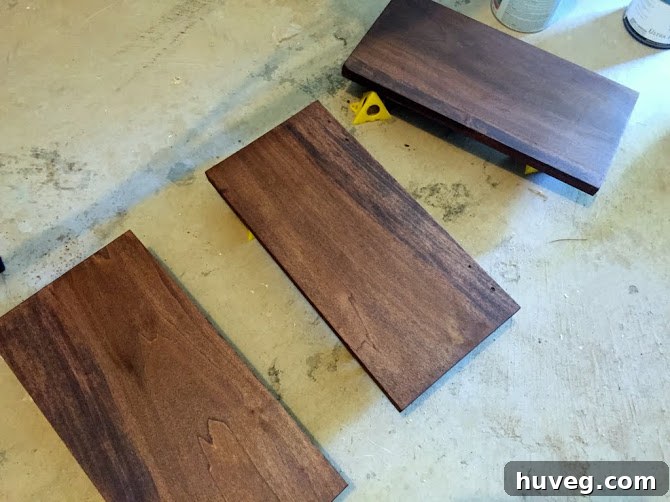
A quick tip: For wiping off excess stain, I highly recommend using old socks or t-shirts. They are lint-free, readily available (especially those single socks that lose their partners!), and an eco-friendly way to reuse textiles. After the stain has dried, apply several coats of polyurethane (I used satin for a subtle sheen), allowing proper drying time between coats, to protect the wood and provide a durable finish.
7. Final Assembly: Attach Steps to Base
With both the painted base and stained steps/riser fully dry, it’s time for the final assembly. Align the assembled steps and riser with the base structure and quickly attach them using a nail gun. While screws would offer maximum strength, my impatience and love for my nail gun won out for this final step! The nail gun provides a secure and fast attachment, bringing your modern step stool to completion.
Before moving your new step stool into your home, especially a laundry room, remember to give the stained pieces adequate time to off-gas. It’s best to let them cure in a well-ventilated area like a garage. Those volatile organic compounds (VOCs) from stains and polys are no joke and proper ventilation is crucial for your health!
Important Considerations and Design Flexibility
A few notes on the finished stool:
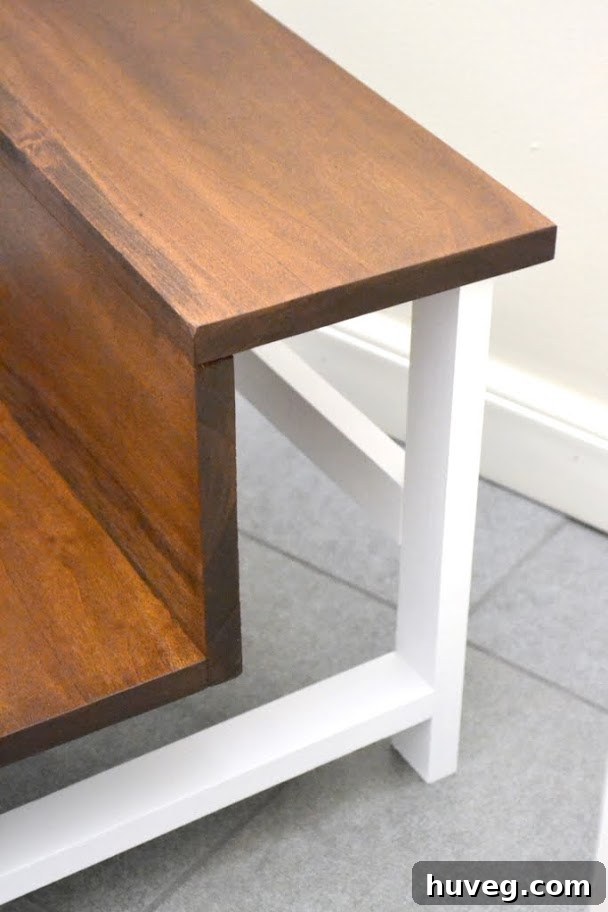
- **Weight Capacity:** While I haven’t conducted any official stress tests, this step stool feels quite sturdy for my intended light use in the laundry room. I’ve used it several times already without any issues. However, as with any DIY project, it’s essential to understand its limitations. This stool is designed for practical access, not for high-impact activities like jumping. Always exercise caution and ensure stability during use.
- **Design Evolution:** In retrospect, I’ve had a fleeting thought about incorporating a subtle 5-degree angle on the legs for an even more dynamic, modern look, rather than keeping them perfectly straight. While it’s a minor detail I could potentially modify later, for now, the stool perfectly serves its purpose, and I’m content with its current aesthetic. This highlights the beauty of DIY – you can always iterate and refine!
Join the DIY Community: The One Board Challenge Blog Hop!
The “One Board Challenge” brought together an incredible array of talent, showcasing the boundless creativity that can emerge from a single piece of wood. I encourage you to explore the other 16 inspiring projects shared by my fellow DIY enthusiasts. Prepare to be incredibly inspired, or perhaps, depending on your mood, delightfully overwhelmed by the ingenuity on display! It’s a fantastic way to see the diverse possibilities and perhaps spark an idea for your next home improvement project.
Dive into these amazing projects from the “One Board Challenge” participants:
Jen – House of Wood / Katie – Addicted 2 DIY / Jaime – That’s My Letter / Sandra – Sawdust Girl / Brittany – Pretty Handy Girl / Brad – Fix This Build That / Jenn – Build-Basic / Mindi – My Love 2 Create / Amy – Her Toolbelt / Bethany – Reality Daydream / Kim – The Kim Six Fix / Elisha – Pneumatic Addict Furniture / Jessica – Decor Adventures / Karah – the space between / Emily – Merrypad