Effortless Handmade Gift: A Beautiful Earring Display

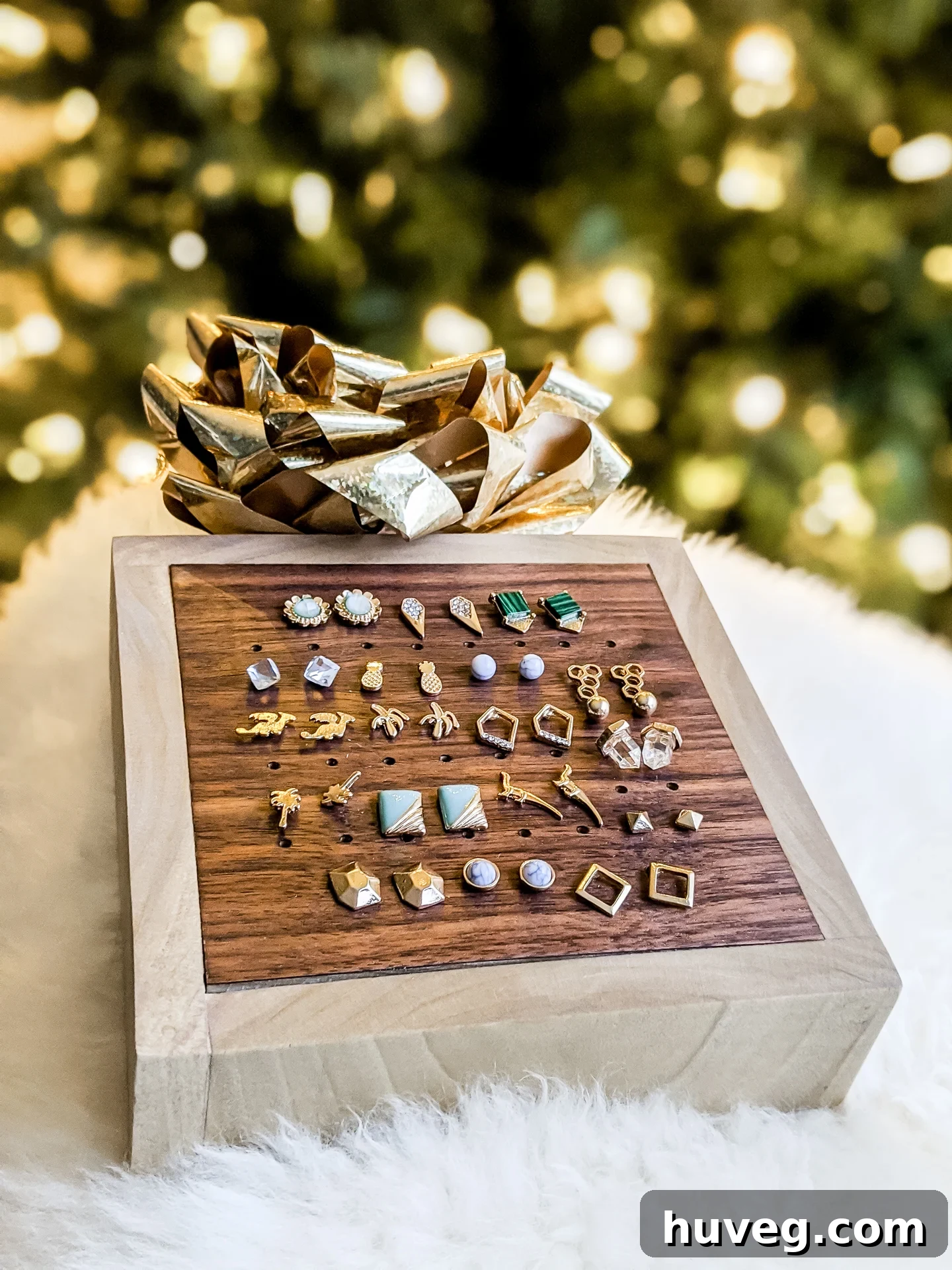
Craft Your Own Custom Stud Earring Holder: An Easy DIY Scrap Wood Project

Discover how effortlessly you can transform discarded wood pieces into a practical and charming stud earring holder. This simple DIY project not only helps organize your beloved jewelry but also makes for a thoughtful, personalized gift. Utilizing materials often destined for the trash, you can create a beautiful display that adds a touch of handmade elegance to any space.
The journey to creating this earring holder began as a serendipitous detour from another project. While experimenting with scrap wood to construct a basic frame, inspiration struck. As I gathered a selection of stud earrings intended as a stocking stuffer for my sister, I realized these small frames offered the perfect solution for a stylish presentation. The plastic packaging often accompanying costume jewelry, though practical, lacks aesthetic appeal. Why not present these lovely earrings in a holder that’s just as delightful as the gift itself?
Both my sister and I share a fondness for costume jewelry – it’s an accessible and fun way to accessorize. However, its typical retail packaging leaves much to be desired. This DIY earring holder elevates the gift-giving experience, providing a charming and personal display solution. Unlike a larger, wall-mounted jewelry organizer, this petite version is perfect for tucking onto a shelf, a nightstand, or neatly within a closet, keeping earrings visible and easily accessible.
Beyond its function as a gift accessory, this project embodies the joy of working with scrap materials. For long-time readers of my blog, my passion for scrap wood projects comes as no surprise. There’s immense satisfaction in giving new life to forgotten pieces of wood, transforming them into something beautiful and useful. This earring holder is a testament to that philosophy, proving that even small offcuts can yield impressive results.
Essential Materials & Tools for Your DIY Earring Holder
Before you dive into crafting your personalized earring holder, gathering the right materials and tools is crucial. Most items are commonly found in a DIYer’s workshop, and where power tools are suggested, manual alternatives can often be used with a bit more effort. Remember to always prioritize safety when working with tools.
Materials & Tools List:
- Scrap Wood: Small pieces for the frame and inner supports. Look for straight, clean edges.
- Thin Plywood: A small sheet (e.g., walnut plywood) for the back panel.
- Pencil: For marking cuts and drill points.
- Miter Saw: Ideal for precise, angled cuts on your frame pieces. A handsaw with a miter box can be an alternative.
- Orbital Sander & Sandpaper: For smoothing wood surfaces and preparing for finish. Various grits (e.g., 120, 220) will be helpful.
- Measuring Tape or Ruler: For accurate measurements.
- Safety Gear: Essential for protecting yourself while working. This includes safety glasses to protect your eyes from flying debris, hearing protection when using loud power tools, and a breathing mask to avoid inhaling sawdust and finish fumes.
- Wood Glue: For strong, lasting joints.
- Clamps: Crucial for holding pieces together while glue dries and for securing wood during drilling.
- Ryobi Airstrike 23-gauge Finishing Nailer: For quickly securing frame pieces. A hammer and small finishing nails can also work.
- Wood Filler: To fill any gaps or nail holes for a seamless finish.
- Drill & Drill Bits: A narrow drill bit (approximately 1/16″ or 1.5mm) is needed to create holes for earring posts.
- Wood Stain: To add color and enhance the wood grain of your frame and plywood back. Choose colors that complement each other.
- Maker Brand Simple Finish (or similar wood oil/finish): To protect and bring out the natural beauty of the wood, especially on the front panel.
- Painter’s Tape: To minimize splintering when cutting plywood.
How to Craft Your Small Stud Earring Holder: A Step-by-Step Tutorial
Time needed: 1 day (including drying times)
This unique earring holder is constructed from a few simple cuts of scrap wood, designed to elegantly organize your stud earrings. Its compact size ensures it can be neatly placed in various locations around your home.
-
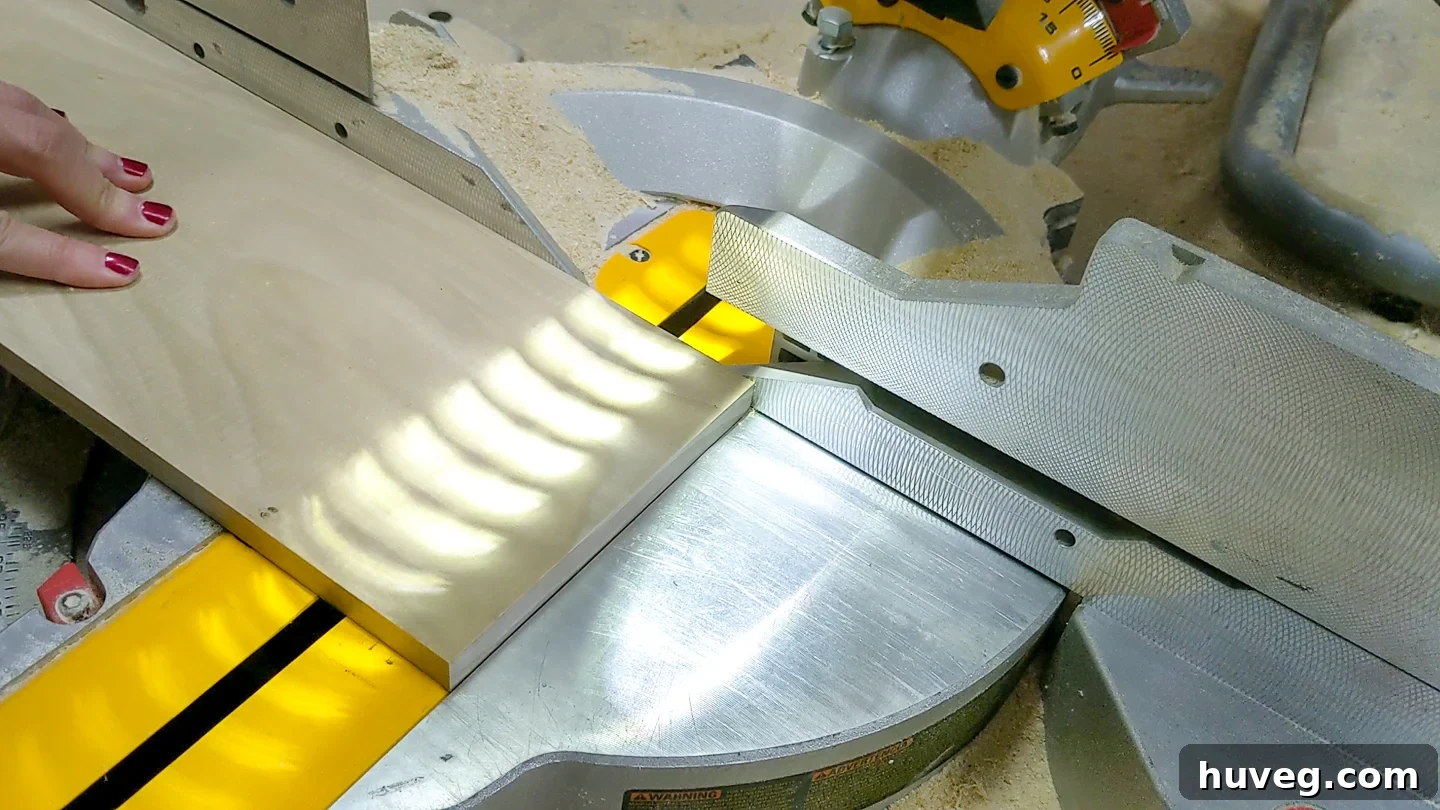
1. Cut the Exterior Frame Pieces
Begin by cutting the pieces for the outer frame. For consistency and ease, I opted for a method that didn’t require precise measurements for the width: I aligned the edge of the wood stock with a groove in my miter saw. This allowed me to make four identical width cuts for the frame sides. The length of these pieces will determine the overall size of your earring holder; ensure they are cut to create a perfectly square or rectangular frame once assembled. For example, if you want a 5×5 inch frame, cut two pieces at 5 inches and two pieces slightly shorter to account for the thickness of the adjoining pieces in a butt joint, or all four at 5 inches for mitered corners. Accuracy here is key for a professional look. If you don’t have a miter saw, a handsaw and a miter box can achieve similar results, though with more manual effort.

Achieving precise cuts for the frame pieces using a miter saw. -
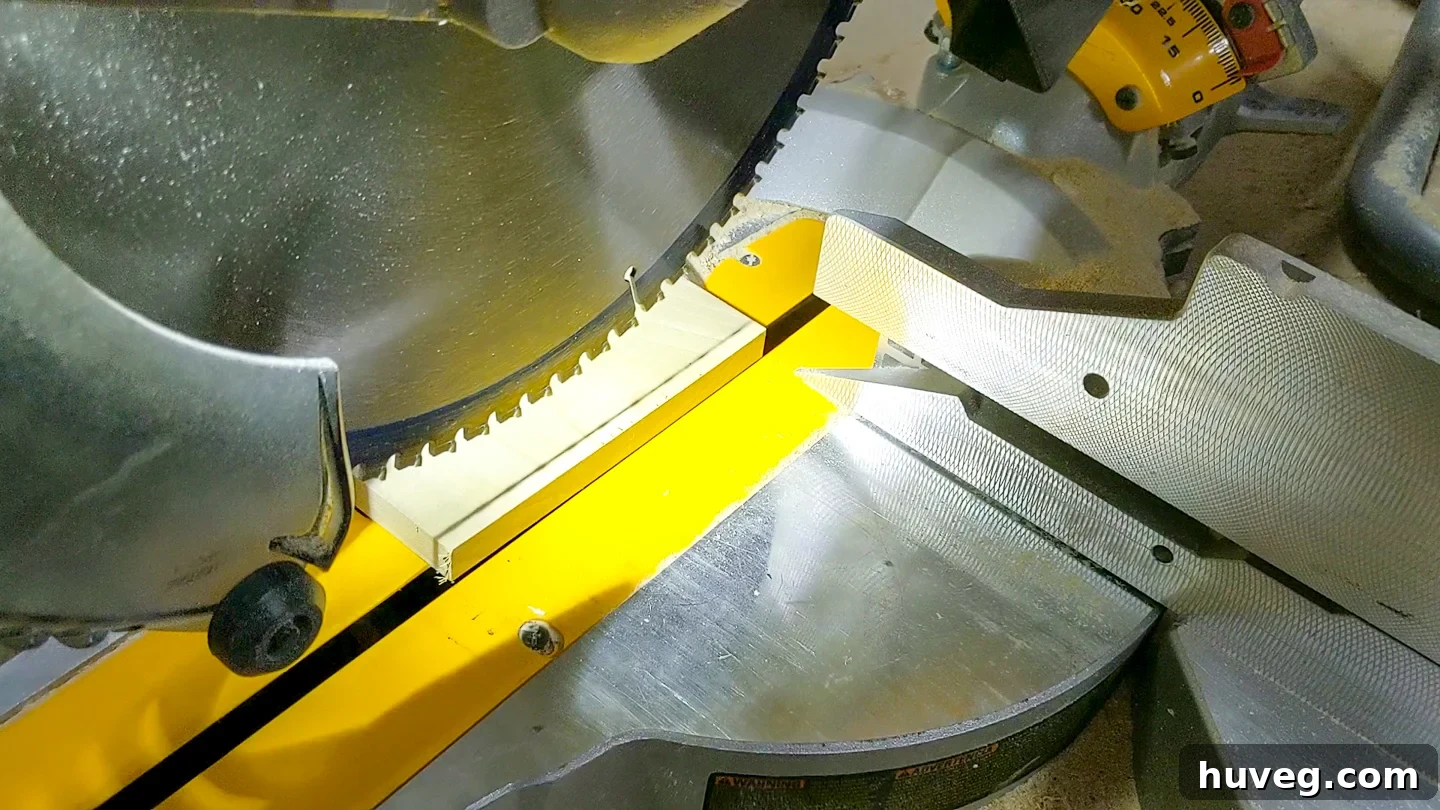
2. Cut the Interior Frame Pieces
Next, you’ll need to cut thinner pieces of scrap wood that will form an inner ledge within the frame. These pieces are essential for supporting the plywood back panel, creating a recessed area for a clean finish. Similar to the outer frame, I used a trick to ensure consistent widths: aligning the wood along the small gap between the blade and the edge of the cutting area on my miter saw. This yields very narrow, uniform strips. The exact width isn’t critical, but consistency is. These inner pieces should be slightly thinner than the main frame pieces to create a subtle recess.
Creating narrow internal supports for the plywood back. -
3. Trim Inner Frame Pieces to Fit
After cutting the narrow strips, trim them to the appropriate lengths so they fit snugly inside your exterior frame. This step requires precision to ensure the plywood panel will sit flush. When cutting very small pieces on a miter saw, safety is paramount. I highly recommend using a piece of scrap wood as a “jig” or push block. This stabilizes the small pieces, preventing them from flying off or getting caught in the blade, and keeps your fingers safely away from the cutting action. Only proceed if you are fully comfortable and experienced with your saw’s operation, always wearing appropriate safety gear.
-
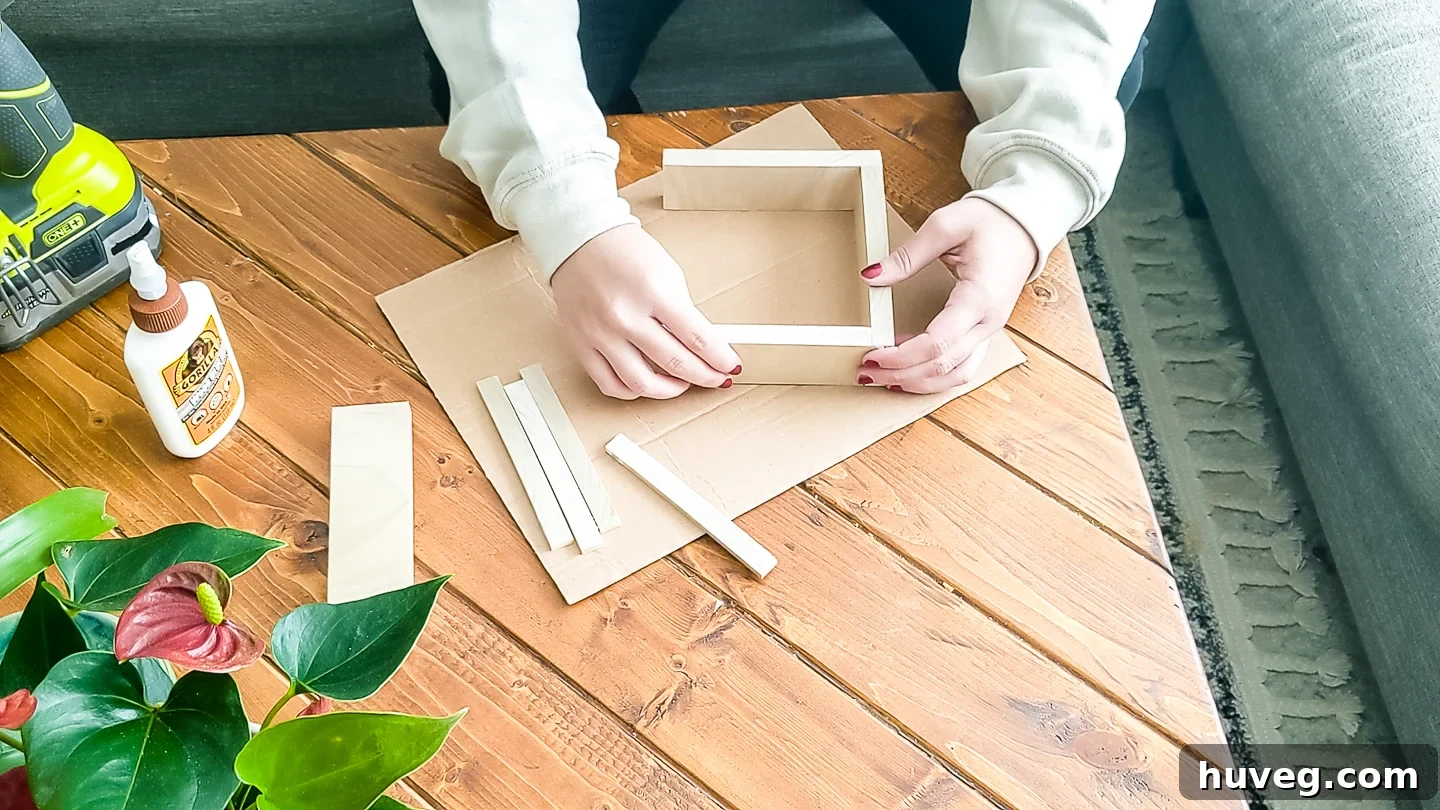
4. Assemble the Frame
Now, it’s time to assemble the main frame. Apply wood glue sparingly but evenly to the ends of your exterior frame pieces. Then, using a finishing nailer, secure each piece together in a spiral or alternating fashion to form a sturdy square or rectangular box. Scrap wood can sometimes have slight warps, so immediately use clamps to hold the frame tightly together while the glue dries. This ensures strong, square joints. Once the outer frame is secure, glue the smaller, thinner inner frame pieces along the inside edges, creating a lip for the plywood. Offset these pieces so the plywood will sit flush with the back of the outer frame. Allow ample drying time for the glue. After the glue has fully cured, use wood filler to fill any visible nail holes or minor gaps. Once dry, sand the entire frame smooth with an orbital sander, progressing from a coarser grit (e.g., 120) to a finer grit (e.g., 220) to prepare it for staining.
Securely assemble the frame with glue and nails, using clamps to ensure squareness. -
5. Cut the Plywood Back Panel to Size
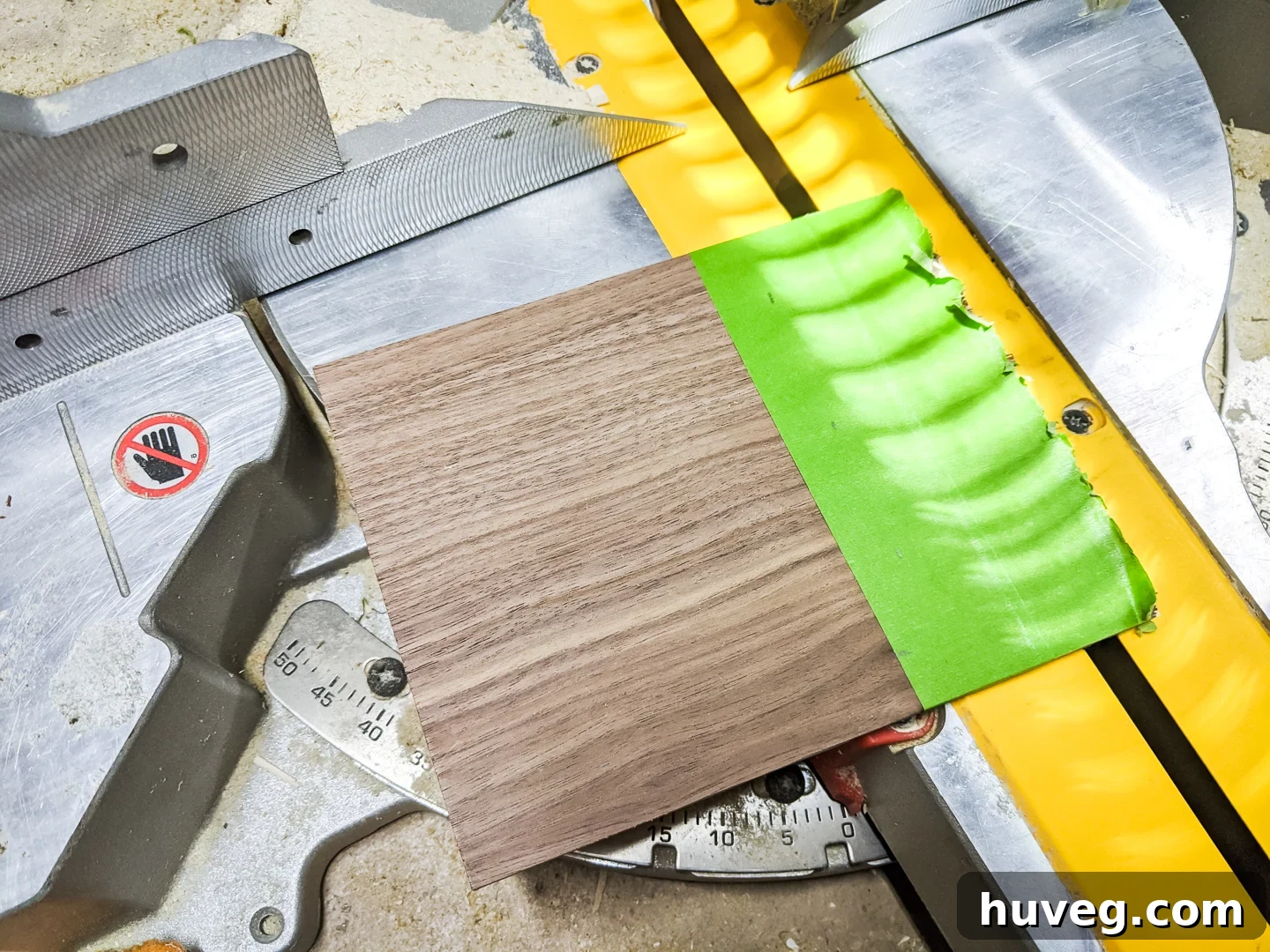
For the back panel, I utilized a piece of scrap walnut plywood, left over from a previous jewelry organizer project. Measure the exact inside dimensions of your assembled frame (where the inner support pieces create the lip). Carefully cut the plywood to fit this measurement. To achieve clean cuts and minimize splintering, especially with veneered plywood, apply painter’s tape along your cut line before sawing. This provides a barrier that helps prevent the wood fibers from tearing out. A circular saw or jigsaw can be used for this step, always ensuring the blade is sharp and appropriate for fine cuts.
Precision cutting of the plywood panel for a perfect fit. -
6. Drill Holes for Earrings
This is the critical step for functionality. Using a narrow drill bit (the size isn’t exact, but it must be large enough for earring posts to pass through easily, typically 1/16th inch or slightly larger for thicker posts), begin drilling pairs of holes, row by row, across your plywood panel. Aim for consistent spacing, about half an inch apart, to accommodate numerous earrings without overcrowding. To prevent “tear-out” on the backside of the plywood—where the drill bit exits and can splinter the wood—securely clamp the plywood to a scrap piece of wood while drilling. This backing board provides support, ensuring clean holes. If there’s even a small gap between the plywood and the backing, tear-out is likely, as I learned from experience. Clamps are strongly advised over just pinning or holding it down.
-
7. Stain the Back and Frame
Before applying any finish, give both sides of your drilled plywood and the entire frame a final light sanding (e.g., 220 grit) to ensure a smooth surface for optimal stain absorption. Since the back of the plywood will be visible once the earring holder is assembled, I applied a medium brown stain to it. This adds a finished look. Be careful not to apply too much stain or allow it to drip excessively, as it could seep through the holes or around the edges to the front, staining the beautiful walnut. For contrast, I stained the exterior frame with a lighter stain, specifically “Flagstone.” This creates a pleasing visual distinction between the frame and the plywood, highlighting the craftsmanship.
-
8. Oil the Front Plywood Panel
Once the stained backside of the plywood is completely dry, turn your attention to the front. Apply a wood oil finish, such as Maker Brand Simple Finish, to the walnut plywood. This type of oil penetrates the wood, enhancing its natural color and grain, giving it a rich, lustrous appearance. The difference an oil finish makes, especially on beautiful woods like walnut, is truly remarkable and showcases why every scrap piece is worth saving and transforming!
-
9. Final Assembly
With both the plywood panel and the frame fully dry and finished, it’s time for the final assembly. Apply wood glue to the inner support pieces within the frame. Carefully place the finished plywood panel onto this glued lip, ensuring it sits flush with the back of the frame. Apply gentle pressure and use clamps if necessary to hold it in place while the glue cures. The finished product will be a beautiful, functional display that perfectly showcases your stud earrings. You might notice this orientation is the opposite of how I mounted the plywood for the plywood art version, where the decorative side faced forward. For the earring holder, the drilled, oiled side is the star!

Design Considerations & Customization Ideas
The beauty of DIY projects lies in their limitless potential for customization. While the tutorial provides a solid foundation, here are some ideas to make your earring holder truly unique:
- Wood Selection: Experiment with different types of scrap wood. Cedar, oak, or pine can offer varied grain patterns and colors. Mix and match for unique contrasts.
- Finish Variations: Instead of stain, consider painting the frame in a vibrant color or a subtle pastel to match room decor. Use metallic paint for a touch of glam.
- Adding Hooks: For those with dangle earrings or necklaces, small cup hooks can be screwed into the bottom edge of the frame to add extra storage options.
- Size Matters: Adjust the dimensions of your frame to create a larger display for an extensive earring collection or a mini version for travel.
- Wall Mounted Option: Add D-rings or a sawtooth hanger to the back of the frame to create a wall-mounted earring organizer, freeing up counter space.
- Decorative Elements: Embellish the frame with stenciled patterns, carved details, or even small decorative appliques before finishing.
- Alternative Backing Materials: Instead of plywood, consider a corkboard for an easier-to-drill surface, or a fabric-covered foam board for a softer look.
Why Choose a DIY Earring Holder?
Creating your own earring holder offers several compelling benefits:
- Personalized Touch: You can tailor every aspect, from the wood type to the finish, to perfectly match your personal style or the recipient’s taste.
- Cost-Effective: By utilizing scrap wood, this project is incredibly budget-friendly, proving that beautiful organization doesn’t have to break the bank.
- Eco-Friendly: Repurposing scrap materials is a sustainable choice, reducing waste and giving new life to otherwise discarded items.
- Sense of Accomplishment: There’s immense satisfaction in creating something functional and beautiful with your own hands.
- Enhanced Organization: Keep your stud earrings visible, untangled, and easy to access, saving you time and frustration.
This simple DIY project is more than just an earring holder; it’s a statement about creativity, resourcefulness, and the joy of handmade items. Whether you’re making it for yourself or as a gift, it’s sure to be cherished.
This project was part of a broader series of DIY gifts, decor, and festive inspiration that I called my “25 DIYs of Christmas.” This ambitious undertaking allowed me to explore numerous creative avenues, turning various materials into unique treasures. While some projects were overtly holiday-themed, many, like this earring holder, are versatile enough to be enjoyed year-round.
Reflecting on my goal of 25 DIYs, I’m incredibly proud of what was accomplished, especially considering the packed schedule leading up to the holidays. From scrap wood creations and gift card holders to ornaments, cross-stitch patterns, advent calendars, custom cookie cutters, and various table decorations, it was a whirlwind of creative activity. This intensive period of making, inspired by years of wanting to execute a grand Christmas project series, truly filled my creative cup. After years of being consumed by major home renovations like drywall repairs or exhausted by grad school, it felt wonderful to dedicate so much time to these smaller, joyful crafts. I always wish I could do more, but this collection of projects was deeply satisfying to complete and share. I sincerely hope you found inspiration and enjoyment in at least one of them.
Thank you immensely for following along on this creative journey. Your comments, shares, emails about your inspired projects, and subscriptions to my email list mean the world. While I can confidently say that such an extensive project series is likely a one-time endeavor, it was an incredibly rewarding experience to exercise my creative muscles. Perhaps in the coming year, I can dedicate time to editing and adding voiceover instructions to these projects for my YouTube channel. It’s a time-consuming process, but I believe in doing things thoroughly, especially when there’s no going back to add notes as with written posts.
As we step into a new year, I’m excited to pivot back to core home projects, with January dedicated to purging and organizing. I am truly ready to shed the remnants of 2019 and embrace a fresh start. Happy holidays, friends, and a very Happy New Year! I wish you all happiness, health, and a wealth of possibilities in 2020.
25 DIYs of Christmas
VIEW SERIES
Explore the full list below for the entire collection of projects, along with a few additional Christmas DIYs from previous years. Each post offers step-by-step tutorials, recipes, videos, free patterns, and woodworking plans where applicable. Many ideas include multiple variations to spark your creativity and demonstrate the endless possibilities of DIY.
-
DIY Pinecone Christmas Place Card Holders
-
DIY Business Card Holder + Desk Planter
-
Rainbow Christmas Tree | Cross Stitch Pattern
-
DIY Christmas Table Setting and Centerpiece
-
DIY Wood and Leather Ornaments
-
DIY Confetti Glitter + White Concrete Coasters