Cultivating the Welcome


Revitalizing Your Front Stoop: A Comprehensive DIY Guide to Painting and Repair
There are few home improvement frustrations quite as universally understood as investing time and effort into a project, only for Mother Nature to seemingly conspire against you. As if on cue, the night after meticulously applying the first coat of paint to my front stoop, the heavens opened. Of course, it rained. A common DIYer’s lament, but one that thankfully won’t deter the progress of transforming this tired entrance into a welcoming focal point.
Such is the unpredictable nature of exterior home projects. While I might not always check the long-range forecast before picking up the paintbrush, the resilience of a good quality outdoor paint and a solid plan ensures these minor setbacks are just part of the story. Thankfully, a few dry days are ahead, allowing ample time to move efficiently to the next crucial phase: addressing the myriad of imperfections that the first coat so eloquently revealed.
The First Coat Revelation: Unmasking Hidden Imperfections
Before any paint even touches the surface, the foundation of a successful stoop renovation lies in thorough preparation. This involves more than just a quick sweep; it’s about deep cleaning, scrubbing away grime, mildew, and any loose debris that could compromise paint adhesion. For concrete stoops, a pressure washer or a stiff brush with a specialized cleaner can work wonders. Understanding the material of your stoop – whether it’s concrete, wood, or even brick – guides your initial prep and paint choice, setting the stage for durability and a lasting finish.
The beauty of applying that initial coat of paint isn’t just about covering the old surface; it’s a diagnostic step. As the paint dries and settles, it highlights every divot, crack, and pockmark that might have been invisible on the raw, unpainted slab. It’s a common observation among DIY enthusiasts: what looks perfectly smooth when dry and dusty can suddenly appear ridden with imperfections once a uniform coat of paint accentuates every slight depression. This ‘aha!’ moment is crucial, as it guides the next steps in achieving a truly flawless and enduring finish.
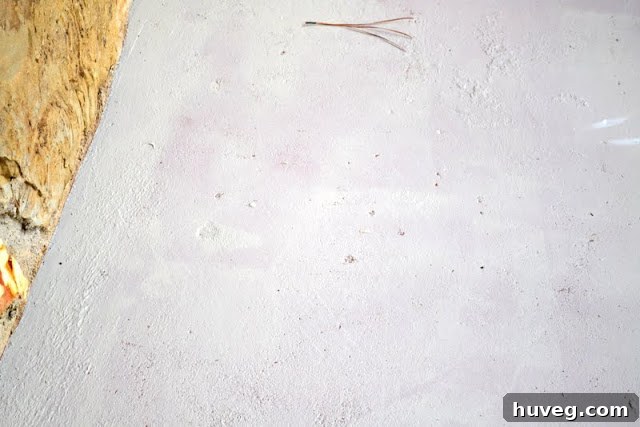
Indeed, this particular concrete slab appears to have endured its fair share of wear and tear over the years. I confess, the extent of its indentations only became truly apparent after that initial application of paint. This revelation, however, is precisely why a two-coat system, interspersed with strategic repairs, proves so effective. The first coat acts as a primer and a revealing agent, guiding your hand to the specific areas that require attention. It’s far more efficient to identify and address these deep imperfections at this stage than to meticulously search for them on a dry, unpainted surface, only to inevitably miss a few and have to repeat the process. This phased approach saves time and ensures a superior final result.
Mastering Imperfections: The Art of Concrete Stoop Repair
Identifying and Understanding Surface Damage
Before diving into repairs, it’s beneficial to understand the types of damage your stoop might exhibit. Pock marks, hairline cracks, and larger chips are common in concrete due to weathering, freeze-thaw cycles, and general wear. Each type of damage, while seemingly minor, can compromise the integrity and appearance of your stoop over time. Filling these voids is not just about aesthetics; it’s about preventing water infiltration, which can lead to further damage, and creating a smooth, safe surface.
Choosing the Right Filler for Your Stoop
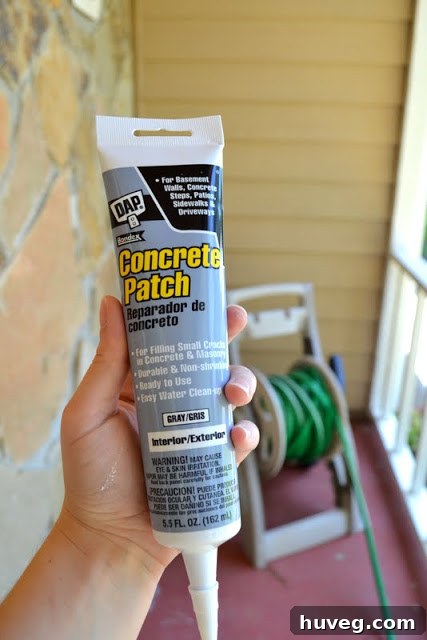
For repairing concrete stoops, the choice of filler is critical. While larger structural cracks might require a dedicated concrete patch compound, smaller pock marks and hairline cracks are perfectly suited for a high-quality caulk. Not all caulks are created equal, however. For outdoor concrete applications, look for acrylic latex caulk with silicone additives, polyurethane caulk, or specialized concrete crack fillers. These types offer excellent adhesion, flexibility to withstand temperature fluctuations, and superior weather resistance, ensuring your repairs last.
For this project, I opted for a type of caulk that offers unparalleled convenience – one that doesn’t require a caulk gun. While traditional caulk guns are indispensable tools for many DIYers, the availability of squeeze-tube caulks makes quick, small repairs incredibly accessible, eliminating the need to haul out extra equipment. It’s a small innovation, but one that significantly streamlines the repair process and makes tackling those individual pock marks a breeze. Truly, my mind was blown by this ingenious design… kidding, of course, but it certainly simplifies the task!
Step-by-Step Caulking Technique for a Seamless Finish
Applying caulk effectively is a skill that improves with practice, but the basic steps are straightforward. First, ensure the area to be repaired is clean and dry. Any dirt, dust, or loose debris will prevent proper adhesion. Next, prepare the caulk tube by cutting the nozzle at a 45-degree angle, making sure the opening is appropriate for the size of the imperfection you’re filling. For smaller pock marks, a narrower opening is ideal to prevent over-application.
Apply the caulk steadily, ensuring it penetrates fully into the crack or divot. Don’t just skim the surface; push the caulk in to fill the void completely. Once applied, smooth the caulk with a wet finger, a specialized caulking tool, or a damp cloth. This step is crucial for achieving a seamless finish that blends with the surrounding surface, ready for the next coat of paint. Allow the caulk ample time to dry and cure according to the manufacturer’s instructions, which can vary significantly depending on the product and environmental conditions. Patience here will prevent cracking or bubbling in your final paint job.
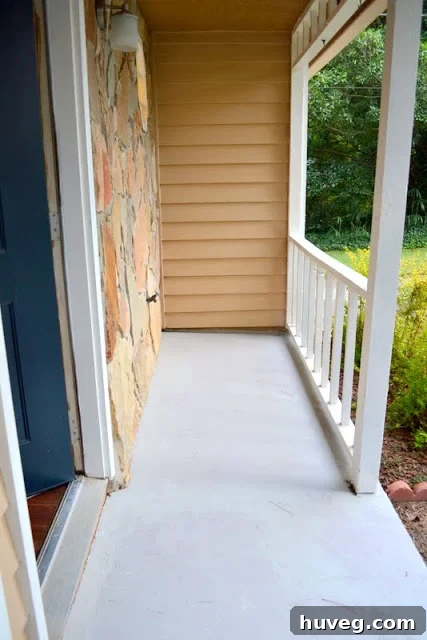
After just a few minutes of focused effort, the visible signs of imperfection vanish, leaving behind a smooth, prepared surface. It’s often these foundational, yet visually understated, DIY tasks that feel a little underwhelming in the immediate aftermath. You put in the labor, and it almost looks like nothing happened, simply because the goal was to make problems disappear. However, this unseen work is absolutely critical. It’s the difference between a paint job that flakes and cracks within months, and one that stands the test of time, weather, and foot traffic. The true satisfaction comes not from an immediate dramatic transformation, but from knowing you’ve built a solid, durable foundation for the beautiful finish to come.
The Grand Finale: Achieving a Flawless Second Coat and Lasting Protection
With the imperfections expertly addressed and the caulk fully cured, it’s time for the transformative second coat of paint. This is where your front stoop truly comes to life. The second coat isn’t just about adding another layer; it’s about achieving depth of color, ensuring complete and uniform coverage, and enhancing the overall durability of the painted surface. It fills in any minor inconsistencies left by the first coat and repair work, resulting in a smooth, professional-looking finish that will welcome guests for years to come.
When applying the second coat, aim for thin, even layers. Over-applying can lead to drips, uneven drying, and a less durable finish. Allow adequate drying time between coats as specified by the paint manufacturer – this is crucial for proper adhesion and curing. Once the second coat is dry, consider an optional step: applying a clear concrete sealer. A high-quality sealer will provide an extra layer of protection against weather, abrasion, and stains, further extending the life of your freshly painted stoop. For added safety, especially on outdoor surfaces prone to becoming slippery when wet, consider incorporating anti-slip additives into the final coat or sealer.
Elevating Curb Appeal: Beyond the Stoop Paint
A beautifully painted and repaired stoop is a significant step towards boosting your home’s curb appeal, but why stop there? The “little chair project” hinted at earlier is a perfect example of how combining efforts can create a truly cohesive and inviting entrance. Refurbishing an old chair with a fresh coat of weather-resistant paint, perhaps in a complementary color, can instantly add charm and a touch of personality to your stoop.
Think about other elements that can elevate the space. Strategically placed planters filled with vibrant flowers or lush greenery can soften the hard lines of the stoop and add a burst of color. Upgrading door hardware – a new handle, knocker, or house numbers – can provide subtle yet impactful enhancements. Consider new outdoor lighting fixtures that not only illuminate the entrance but also add to its aesthetic appeal. Even a simple, stylish welcome mat can tie the entire look together, signaling warmth and hospitality. These thoughtful additions transform a functional entry point into a cherished part of your home’s exterior, reflecting your personal style and attention to detail.
Final Thoughts: Embracing the DIY Journey
Undertaking a DIY project like painting and repairing your front stoop is more than just a task; it’s a journey of vision, patience, and skill development. From the initial frustrations of unexpected rain to the meticulous process of identifying and repairing imperfections, each step contributes to the ultimate satisfaction of a job well done. The true beauty of DIY lies not only in the tangible results but also in the pride of knowing you’ve invested your own effort into enhancing your home.
A refreshed stoop does more than just look good; it creates a welcoming first impression for guests and a sense of pride every time you arrive home. It’s a testament to the value of careful preparation, strategic repairs, and the transformative power of paint. So, embrace the journey, learn from each step, and enjoy the lasting beauty and enhanced curb appeal your hard work brings. May your newly revitalized stoop serve as a beautiful entryway for many years to come.