Wrecking the Restroom!

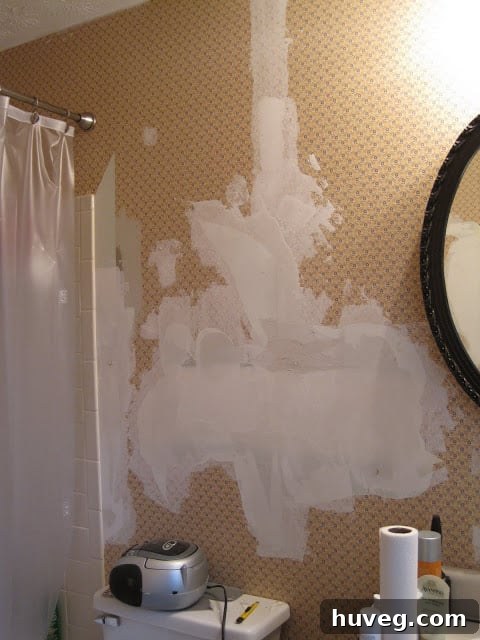
Transforming Our Primary Bathroom: From Frustration to Functional Oasis
Every homeowner embarking on a DIY journey knows the feeling: a project technically begins, but then real life, with its more urgent demands, inevitably intervenes. For us, the moment I finally conceded defeat to a broken towel bar and unceremoniously ripped it from the wall undoubtedly marked the unofficial commencement of our primary bathroom renovation. However, in true DIY fashion, this initial burst of frustration quickly gave way to other, seemingly more pressing undertakings, such as the extensive installation of our beautiful new floors throughout the main living areas. Those larger projects, while rewarding, meant our dilapidated bathroom continued its patient wait, an ever-present reminder of work yet to be done.
The primary bathroom, often considered a sanctuary, had instead become a source of mild anxiety and a stark reminder of its urgent need for an upgrade. What started as a simple desire to replace a broken fixture gradually evolved into a grander vision for a complete overhaul, transforming it from a neglected space into a calming oasis. The journey of home renovation is rarely linear, and our bathroom’s story perfectly encapsulates the typical DIY experience: a mix of initial enthusiasm, strategic delays, and renewed determination. It’s a testament to the fact that sometimes, the biggest transformations begin with the smallest, most annoying imperfections.
A New Year, A Renewed Commitment to Renovation
With the dawn of a new year, there’s an almost palpable shift in energy – a fresh start, an opportunity to tackle lingering projects and fulfill long-held aspirations. This year, my unwavering focus is squarely on our primary bathroom. I am absolutely determined to transform this space into something truly relaxing and inviting, a stark contrast to its current state, which frankly leaves me feeling like I’m overdue for a tetanus shot. The thought of stepping into a serene, beautiful bathroom rather than a functional, yet visually unappealing, one is a powerful motivator.
My commitment runs deep; I even penned a heartfelt letter to my primary bath, preparing her for the magnificent makeover that awaits. It was a whimsical, yet earnest, gesture to declare my intentions and mentally prepare myself for the intensive work ahead. This isn’t just another project on a never-ending to-do list; this is a deeply personal mission to reclaim and redefine a vital part of our home. I. Am. Ready. The anticipation of seeing the vision come to life is incredibly exciting, and I’m eager to share every step of this transformation journey with you.
The initial phase of any significant renovation often begins not with a sledgehammer, but with organization and clearing out. This week, I took the very first, yet crucial, step in this major undertaking: systematically moving all the “unmentionables” – the various bottles, toiletries, cleaning supplies, and general clutter that had accumulated under the sink – to the guest bathroom. This seemingly minor relocation served a dual purpose: it created a clear workspace, and more importantly, it allowed for a mental shift, signaling the official start of demolition and design.
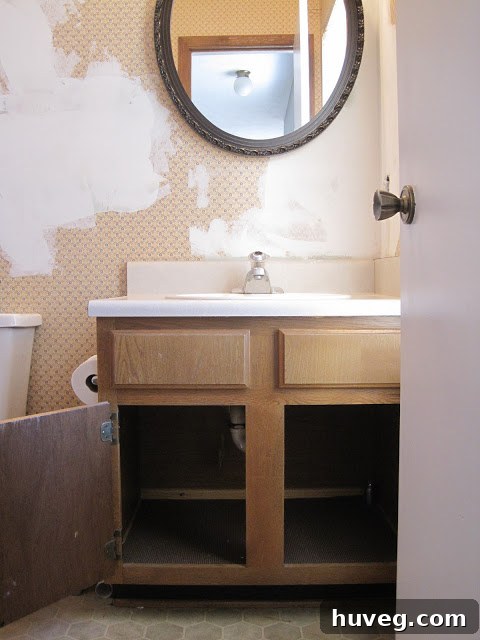
The Impact of Initial Steps: Clearing the Clutter
It’s truly inexplicable how such a small, seemingly insignificant move has managed to keep the rest of our tiny primary bathroom remarkably clear and tidy. This initial act of decluttering brought an immediate, refreshing sense of order, allowing me to better visualize the space and mentally prepare for the larger changes ahead. Even with its distinctly retro yellow vinyl flooring – a feature that will undoubtedly be among the first to go – the room already feels lighter, less cluttered, and more manageable. This early success reinforces the idea that even the smallest steps can yield significant psychological and practical benefits in a renovation project.
Renovating a small bathroom presents its own unique set of challenges, from maximizing space to making every design choice count. The existing yellow vinyl flooring, a relic from a bygone era, has long dictated the aesthetic, often making the space feel dated and somewhat enclosed. Our goal is to infuse modernity and openness, creating an illusion of greater space and a more inviting atmosphere. Clearing out the under-sink area not only freed up essential working room but also metaphorically cleared the way for new ideas and possibilities.
This early victory, however minor, has been a significant boost to my morale and momentum. It proves that even when faced with the daunting prospect of a full-scale renovation, breaking the project down into smaller, achievable tasks can prevent overwhelm and build confidence. The journey from a cluttered, outdated bathroom to a clean, contemporary space begins with such careful, deliberate actions, setting a positive tone for the ambitious work that lies ahead.
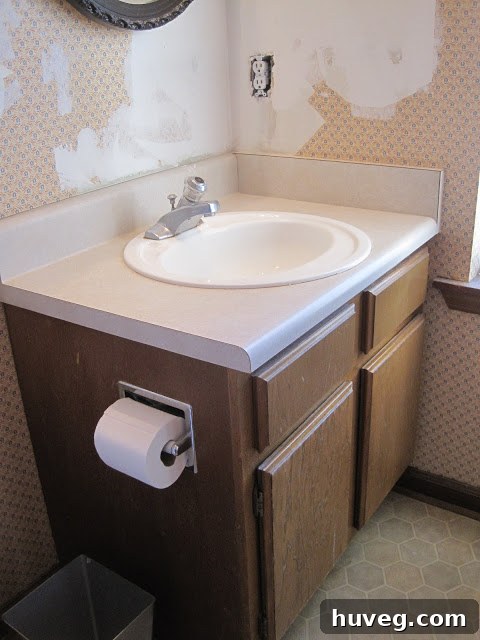
The Next Big Step: Revitalizing Oak Cabinets with Paint
This upcoming weekend marks a crucial turning point as we prepare to tackle one of the most impactful visual elements of the bathroom: the dated oak cabinets. My plan is to carefully remove the cabinet doors, and then begin the (what I anticipate will be) tedious, yet incredibly rewarding, process of sanding them down. This essential prep work is the foundation for successfully painting oak cabinets, a task notorious for requiring meticulous attention to detail to achieve a smooth, durable finish. Painting these cabinets will instantly modernize the space, bringing it closer to the fresh, contemporary look we envision.
Prepping for Perfection: The Key to Painting Oak Cabinets
Painting oak cabinets, particularly in a high-moisture environment like a bathroom, requires a precise approach to ensure longevity and a professional-looking result. Here’s a detailed breakdown of the steps I’ll be following:
- Cleaning: Before any sanding begins, thorough cleaning is paramount. I’ll use a strong degreaser to remove years of grime, oil, and buildup. This step ensures that the primer and paint adhere properly without any contaminants causing issues.
- Removing Doors and Hardware: All doors, drawers, and hardware will be carefully removed and labeled to ensure they return to their original positions. This prevents accidental painting of hinges and allows for easier, more even application on all surfaces.
- Sanding for Adhesion: Oak often has a strong grain and a factory finish that needs to be roughed up. I’ll use a medium-grit sandpaper (around 120-150 grit) to lightly sand all surfaces. The goal isn’t to remove all the old finish, but to create a ‘tooth’ for the primer to grip onto. After sanding, a thorough wipe-down with a tack cloth or vacuum is essential to remove all dust.
- Choosing the Right Primer: This is arguably the most critical step, especially when dealing with oak’s prominent grain and potential for tannins to bleed through. I’m looking for recommendations for high-quality primers that offer excellent adhesion and stain-blocking properties. An oil-based primer or a good quality shellac-based primer is often recommended for oak to seal the wood and prevent bleed-through, ensuring a uniform base for the paint.
Selecting the Ideal Paint: Durability Meets Aesthetics
Once primed, the choice of paint will define the final look and durability of the cabinets. For a bathroom, moisture resistance and ease of cleaning are paramount:
- Paint Type: A high-quality acrylic-latex enamel or a hybrid enamel paint is generally recommended for cabinets. These paints offer excellent durability, a hard finish, and are easier to clean than traditional latex paints. They also tend to level out nicely, minimizing brush strokes.
- Finish: A satin or semi-gloss finish is usually ideal for bathroom cabinets. These finishes are more durable and easier to wipe clean than matte finishes, while still offering a subtle sheen that enhances the cabinet’s appearance without being overly reflective.
- Application: Applying several thin coats of paint, rather than one thick coat, will yield the best results. I plan to use a combination of a high-quality brush for detailed areas and a small foam roller for flat surfaces to achieve a smooth, even finish. Adequate drying time between coats is non-negotiable for proper curing and adhesion.
The transformation of these cabinets will significantly impact the overall feel of the bathroom, moving it from dated to decidedly modern. I’m incredibly excited about this phase, even with the meticulous effort it demands. I’d love to hear from anyone who has experience painting oak cabinets for a bathroom – any tips on specific primer or paint brands that you’ve found to be exceptional would be greatly appreciated! Wish me luck as I embark on this next challenging, yet immensely satisfying, DIY adventure!