Ultimate Mudroom Organization Free Cubby Plans

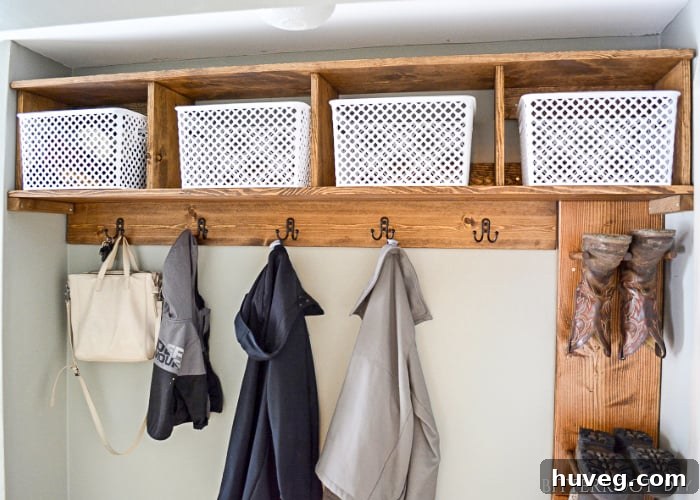
Welcome, fellow DIY enthusiasts! Tylynn here from Bitterroot DIY, bringing you an essential project that will transform your home organization. If you’ve ever battled with overflowing coats, scattered shoes, and a general sense of chaos near your entryway, you know the struggle is real. Today, we’re tackling that challenge head-on with free plans to build your very own, highly functional mudroom storage cubbies.
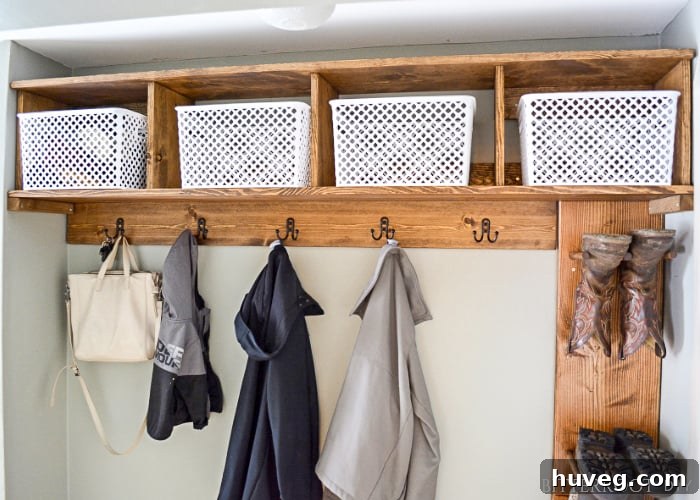
Living in Minnesota means experiencing the sudden, dramatic shift into winter. One day it’s fall, the next, BAM! You’re bundled up and tracking snow indoors. Our previous mudroom area, situated conveniently by the garage entrance in the basement, was hardly a system. It comprised a single, sad shelf with a few hooks – utterly inadequate for a space that endures such heavy traffic and constant use. Coats piled up, shoes created trip hazards, and finding matching gloves became a daily scavenger hunt.
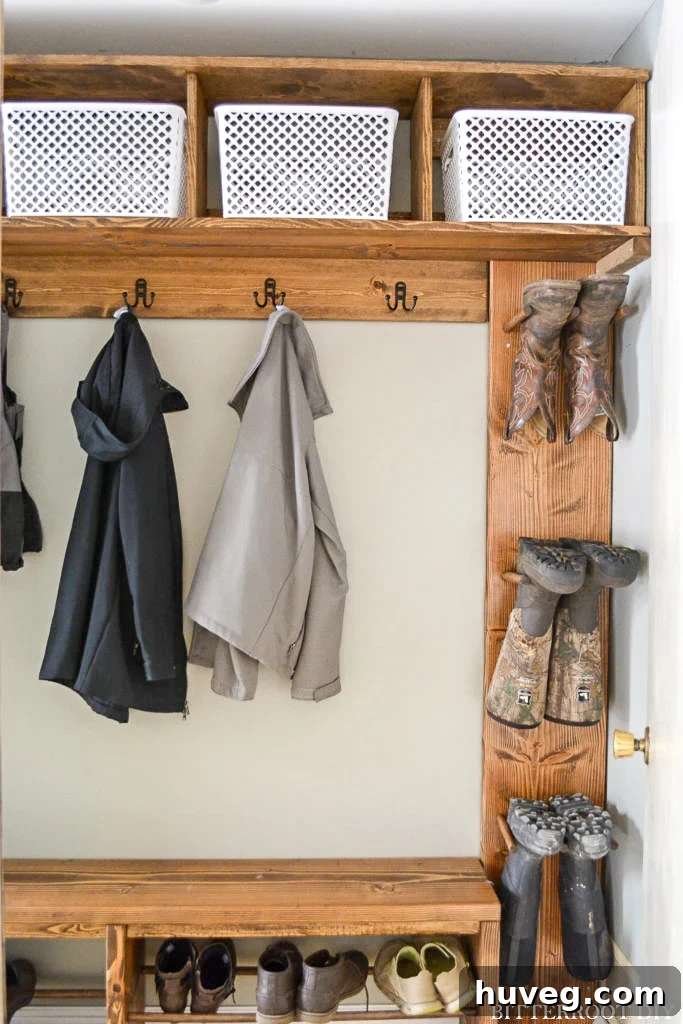
The time for a serious upgrade was long overdue. Last week, I finally put my DIY skills to work, creating a comprehensive new mudroom system. The cornerstone of this transformation? These fantastic, custom-built mudroom storage cubbies!
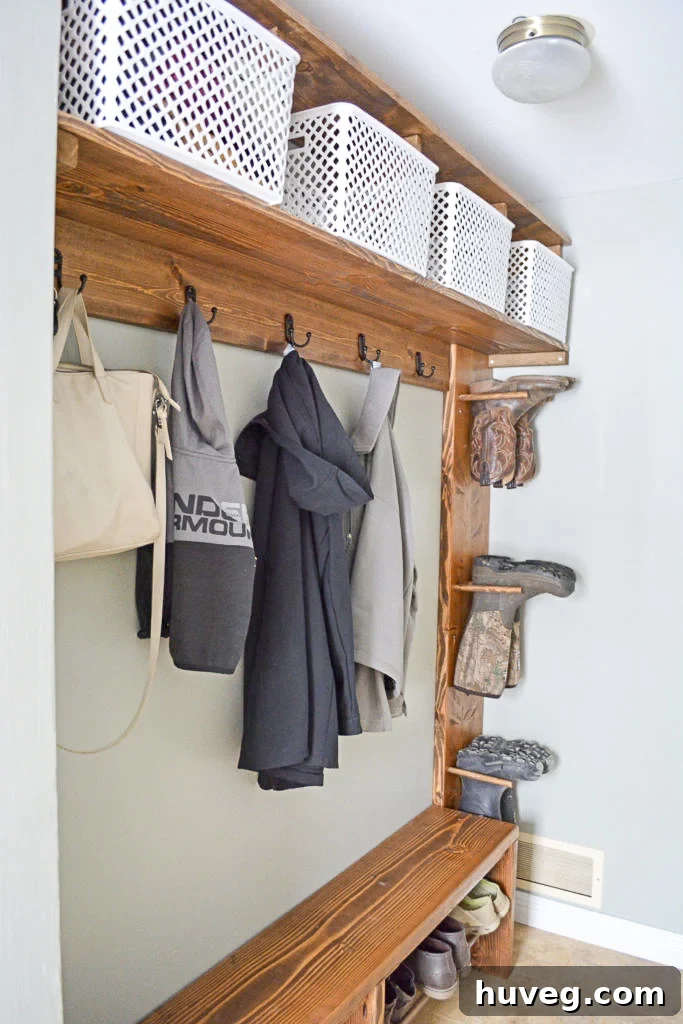
These free plans will guide you through every step of building robust, stylish storage that will bring order to your entryway. And for those looking to complete the entire mudroom setup, don’t forget to grab the additional plans for the matching mudroom bench with shoe storage and the handy boot hanger available over at Bitterroot DIY. Together, these projects create a cohesive and highly functional space that combats clutter and welcomes you home.
Build Your Own Mudroom Storage Cubbies: Free DIY Plans
A well-organized mudroom can significantly reduce daily stress, especially for families. It provides a dedicated spot for everything, from coats and bags to shoes and winter gear. This DIY mudroom storage cubby project is designed to be accessible for intermediate woodworkers, offering clear instructions and a rewarding result. Let’s gather our materials and get started on creating a more organized and inviting entryway.
Essential Tools & Supplies for Your Mudroom Cubbies
Before you dive into cutting and assembling, ensure you have all the necessary tools and supplies. Having everything ready saves time and prevents interruptions during the build process. Safety is paramount, so always wear appropriate protective gear, such as safety glasses and ear protection, when operating power tools.
Tools:
- Saw: A miter saw or circular saw will be essential for making accurate, straight cuts in your lumber. Precision here ensures your cubbies fit together perfectly.
- Drill: You’ll need a cordless drill for driving screws and creating pocket holes.
- Kreg Pocket Hole Jig: This specialized jig allows you to create strong, concealed joints, which are perfect for a clean finish on your cubbies.
- Tape Measure: An absolute must for accurate measurements.
- Pencil: For marking your cuts and pocket hole locations.
- Orbital Sander: For smoothing out surfaces and preparing the wood for finishing.
- **Clamps**: Essential for holding pieces together securely while glue dries or screws are driven.
- **Safety Glasses & Ear Protection**: Always protect your eyes and ears when working with power tools.
Supplies:
- 1-1/4″ Pocket Hole Screws: Specifically designed for use with your Kreg jig to create strong, invisible joints.
- Wood Glue: For added strength and stability in all your joints. Don’t underestimate the power of a good wood glue!
- 2″ Self-Tapping Screws: For attaching the back braces, providing robust structural support.
- 2 1/2″ Finish Nails: Useful for attaching internal dividers where a drill might not fit.
- Sandpaper (various grits): For progressive sanding, from rough shaping to fine finishing.
- Wood Filler (optional): To fill any small gaps or nail holes for a seamless look.
- Finish of Choice: Stain, paint, polyurethane, etc. (more on this later).
- Rags & Brushes: For applying glue and finish.
Lumber List: Get Your Wood Ready
Selecting the right lumber is crucial for the durability and appearance of your cubbies. We’ll be using common pine or similar softwood, which is affordable and easy to work with. Always inspect your boards for warps, twists, and large knots before purchasing.
- 2 | 1 x 12 @ 8′ (Used for the main top and bottom shelves)
- 1 | 1 x 10 @ 6′ (For the internal dividers, providing ample depth for storage)
- 1 | 1 x 6 @ 6′ (For the hook shelf, where coats and bags will hang)
- 2 | 1 x 4 @ 8′ (Essential for the back braces, adding stability)
Precise Cuts for a Professional Finish
Accuracy in your cuts is the foundation of a successful woodworking project. Measure twice, cut once! Take your time and ensure your saw is set correctly for each cut.
- 2 | 1 x 12 @ 73″ (These will form the top and bottom main shelves of your cubby unit)
- 5 | 1 x 10 @ 12″ (These pieces will serve as the vertical dividers, creating individual cubby spaces)
- 1 | 1 x 6 @ 61 3/4″ (This is your hook shelf, which will span most of the unit for hanging items)
- 2 | 1 x 4 @ 73″ (These are the back braces, providing crucial structural integrity and mounting points)
Step-by-Step Construction Guide
Step 1: Build the Main Frame
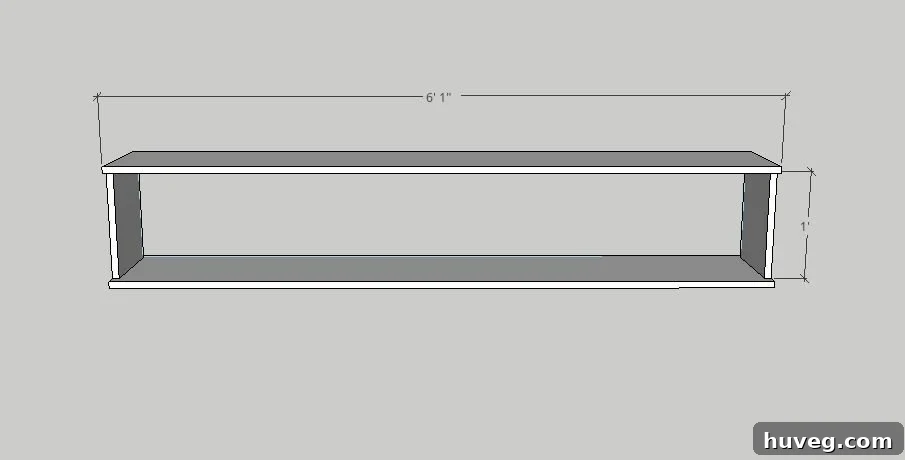
Begin by constructing the primary framework of your cubbies. Take one of your 73″ (1×12) top shelves and one 73″ (1×12) bottom shelf. These form the horizontal backbone of your unit. Next, take two of your 12″ (1×10) dividers, which will serve as the outside vertical edges of your frame. Apply a generous bead of wood glue to the ends of these outside dividers where they will meet the top and bottom shelves. Using your Kreg Pocket Hole Jig, drill two pocket holes on the top and two on the bottom of each outside divider. These pocket holes should be strategically placed on the *outside* faces of the dividers, as they will be hidden against the wall, ensuring a clean appearance. Secure these dividers to the top and bottom shelves using 1 1/4″ pocket hole screws. When positioning the dividers, ensure there is a 3/4″ gap at the back. This gap is vital for accommodating the back brace later on. Since your dividers are 1x10s, this specific placement will leave a 1 1/4″ gap along the front edge, which creates a pleasing aesthetic setback.
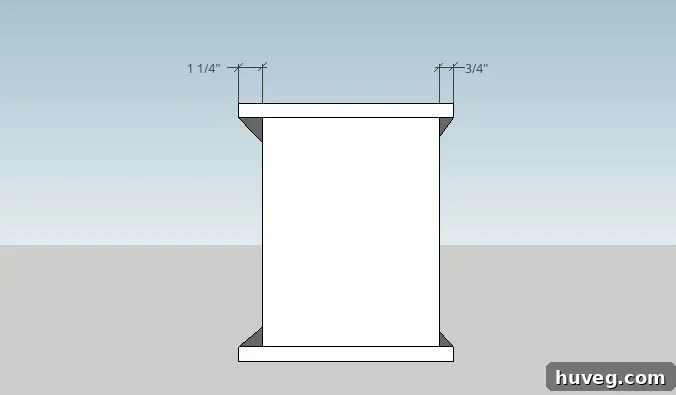
As mentioned, placing the pocket holes on the outer faces of the shelves is a clever trick, as these edges will typically be hidden against a wall once installed. This design choice maintains the aesthetic integrity of your finished cubbies.
Step 2: Install the Back Braces for Stability
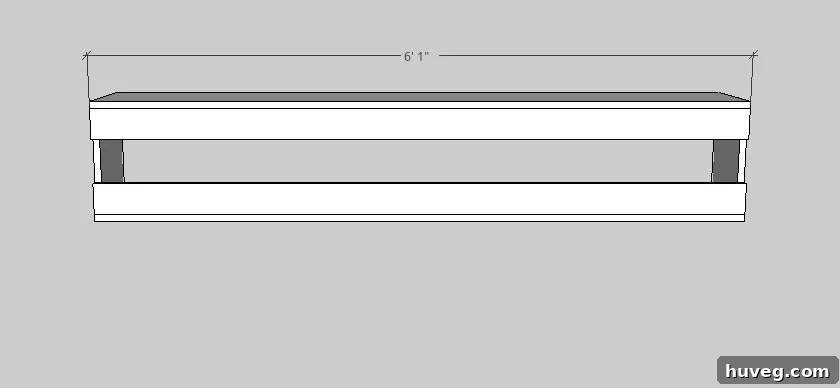
With your main frame assembled, it’s time to add crucial stability with the back braces. Take your two 73″ (1×4) back brace pieces. Position them flush along the entire back edge of your cubby frame. These braces should align perfectly with the top and bottom shelves, assuming you maintained the 3/4″ gap behind the 1×10 dividers in the previous step. Apply wood glue along the contact points of the braces with the outside dividers. Secure the back braces to the outside dividers using 2″ self-tapping screws. Drive two screws on each end of each brace to create a robust and secure joint. These braces not only add rigidity to the entire structure, preventing it from racking, but also provide solid points for mounting the cubbies to the wall.
Step 3: Insert the Remaining Dividers
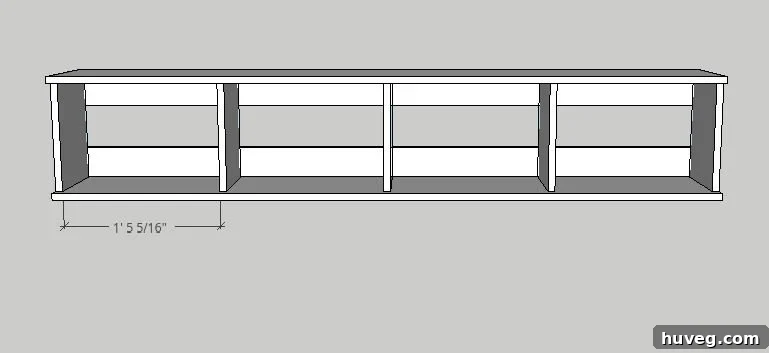
Now, let’s create the individual cubby sections. Take your remaining three 12″ (1×10) dividers. Carefully measure and mark where you want each divider to be placed, ensuring even spacing for balanced aesthetics and functionality. Apply wood glue to the top and bottom edges of each divider where they will meet the main shelves. Due to the narrowness of the cubby spaces, fitting a drill to drive pocket hole screws can be challenging. For this reason, I attached these internal dividers using 2 1/2″ finish nails. Use a nail gun for speed and precision, or a hammer and nail set if working manually, ensuring the nails are sunk below the surface for a clean finish. Once the dividers are securely in place, reinforce their connection to the back braces. Drive 1 1/4″ self-tapping screws through the back braces into the back edge of each internal divider, mirroring the attachment method used for the end dividers. This extra step significantly enhances the overall strength and stability of your cubby unit.
Step 4: Add the Functional Hook Shelf
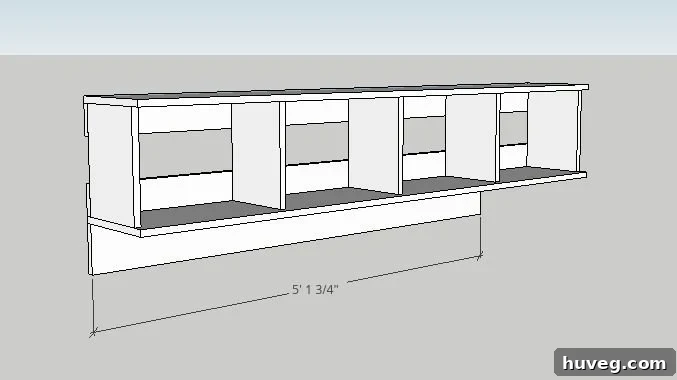
The hook shelf is where you’ll hang coats, scarves, and bags, making it a critical component for everyday use. Take your 61 3/4″ (1×6) hook shelf piece. Position this shelf so its bottom edge aligns with the top edge of the lowest internal divider. Ensure it’s flush with the left side of the cubby unit and also flush with the back braces. This placement creates a consistent look and allows for maximum hanging space. Apply wood glue to the contact points. Drill pocket holes along the back edge of the hook shelf, facing towards the back of the unit. This placement will hide the pocket holes once the cubbies are mounted to the wall. Secure the hook shelf with 1 1/4″ pocket hole screws. Once attached, you can sand the entire unit to prepare it for finishing. I chose to finish this particular unit with Varathane Weathered Wood Accelerator in brown, which gives a beautiful, aged look. I then sealed it with Varathane Triple-Thick Spray On Polyurethane for maximum durability and protection — this combination has quickly become one of my favorites for its ease of application and stunning results!
Step 5: Finishing Touches and Secure Installation
With the construction complete, the final step is to apply your chosen finish and securely mount the cubbies to your wall. Spend time sanding all surfaces thoroughly, progressing through finer grits of sandpaper until the wood is smooth to the touch. This attention to detail will greatly enhance the final appearance. After sanding, clean off any dust. Then, apply your stain, paint, or sealant according to the manufacturer’s instructions. A durable finish is crucial for a mudroom environment, as it protects the wood from moisture and wear.
For installation, carefully position your cubby unit on the wall at your desired height. In my case, the bottom shelf rests at 6 feet, perfectly aligning with the top of my existing boot rack, creating a seamless and integrated look. The most important aspect of installation is to securely fasten the unit to wall studs. Use a stud finder to locate the wall studs and mark their positions. Drive long screws (ideally 3-inch construction screws) through the back braces and into the studs. Also, secure the end dividers to studs if possible. Given the potential weight these cubbies might hold – hats, gloves, heavy coats, backpacks, and all sorts of random mudroom essentials – I opted for extra precautions. I added two small cleats on each end, screwed into studs, just to provide additional support and peace of mind. Over-engineering for safety is always a good idea when dealing with storage units that will bear significant weight. Ensure the cubbies are level before making final adjustments.
Personalizing Your Mudroom Cubbies
Once your cubbies are built and installed, the fun truly begins with personalization! Consider adding hooks, labels, or even small baskets to each cubby for even more organized storage. Paint them a vibrant color to match your decor, or choose a classic wood stain for a timeless look. This project offers a fantastic canvas to express your personal style while solving a practical storage need.
A Note on Safety
Always prioritize safety in your workshop. Wear appropriate personal protective equipment (PPE) like safety glasses, hearing protection, and gloves. Ensure your workspace is well-lit and free of clutter. Follow all manufacturer instructions for your tools and always double-check your measurements and cuts. If you’re unsure about any step, don’t hesitate to seek advice from experienced woodworkers or online resources.
Questions or Comments?
I hope these free plans inspire you to tackle your next home organization project! If you have any questions during your build, please don’t hesitate to leave a comment below, and I’ll do my best to get back to you as soon as possible.
And remember, to fully complete your mudroom transformation, make sure to grab the plans for the coordinating mudroom bench with shoe storage and the practical boot hanger. These pieces perfectly complement the cubbies, creating a truly functional and beautiful entryway.
For more exciting DIY project ideas, woodworking plans, and home improvement inspiration, I’d love for you to stop by my blog, Bitterroot DIY. You can also connect with me on social media: find me on Pinterest for visual inspiration and project boards, and follow me on Instagram to stay up-to-date with my latest projects and behind-the-scenes shenanigans!
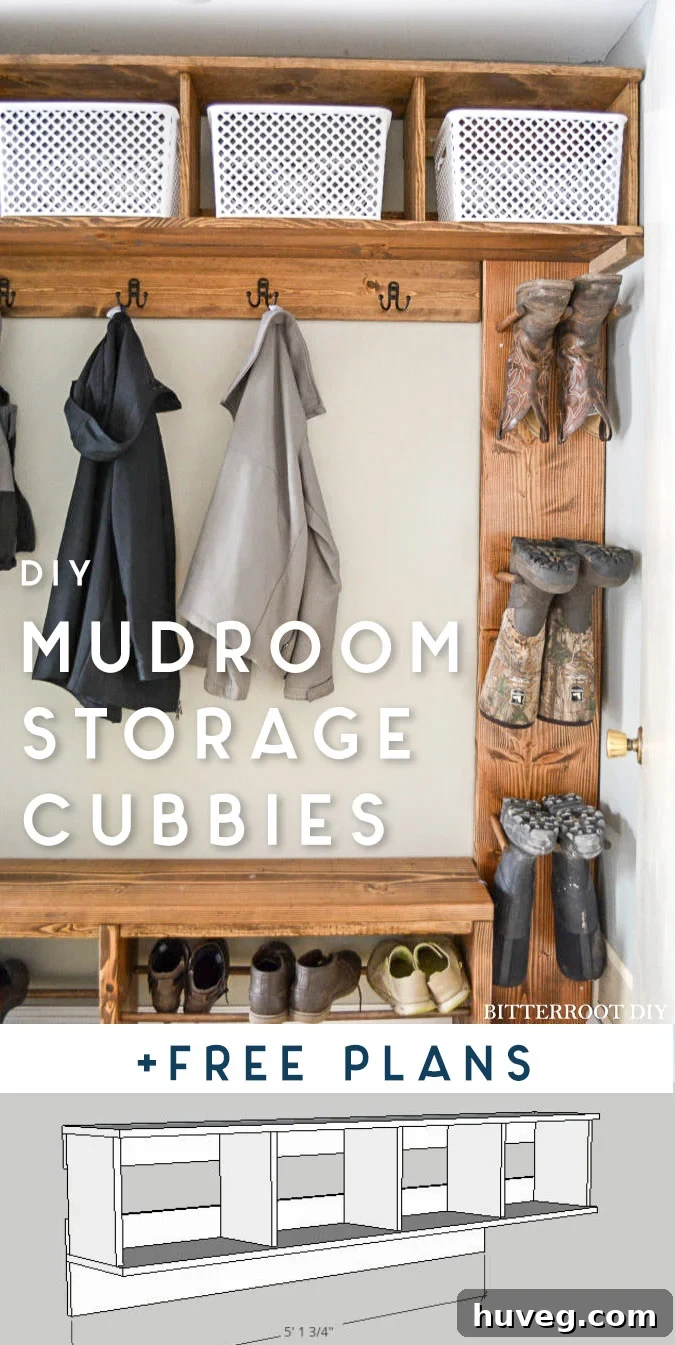
Don’t forget to pin this project for later inspiration!
More Woodworking Plans
Check out these other great projects, ranging from elegant furniture pieces to thoughtful woodworking gift ideas. Our plans include comprehensive PDF instructions, detailed measurements, and additional information to make your next project a breeze!
-
DIY Floating Bookcase | Free Plans
-
How to Build a Better Bee House | Free Plans
-
DIY Desk Organizer | Free Plans
More from Tylynn
SEE ALL PLANS