Ultimate Arm Blaster

Transforming the Dining Room: A DIY Journey Through Drywall, Molding, and Persistent Progress
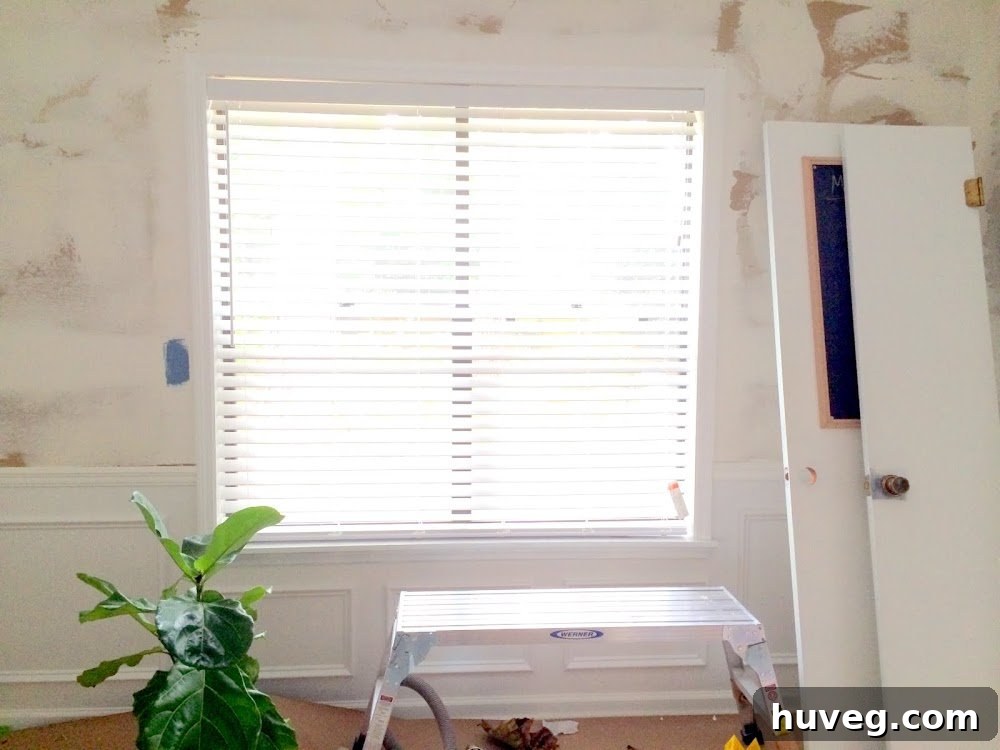
The journey to a beautifully finished home is rarely a straight line, and our dining room is a testament to this truth. Currently, it sits in an intriguing, albeit “awkward,” transitional phase. If you were to have seen a snapshot of this room yesterday, it would have appeared identical to its state today. Yet, beneath that unchanged surface lies hours of painstaking effort – specifically, the physical exertion of sanding joint compound, a task made slightly less daunting, though no less laborious, with the aid of my new favorite tool. The result? Achy, rubbery arms that serve as a testament to the latest stage of our DIY dining room makeover. And while I say it with a hint of sarcasm, I’m genuinely discovering innovative ways to incorporate intense physical activity into my renovation schedule.
To truly appreciate the current state and the significant progress we’ve made, let’s rewind and revisit the challenges and breakthroughs that have defined this particular space. Every DIY project has its origin story, and for this dining room, it began with an unforeseen battle against outdated décor.
The Unexpected Battle: Wallpaper Removal and Drywall Damage
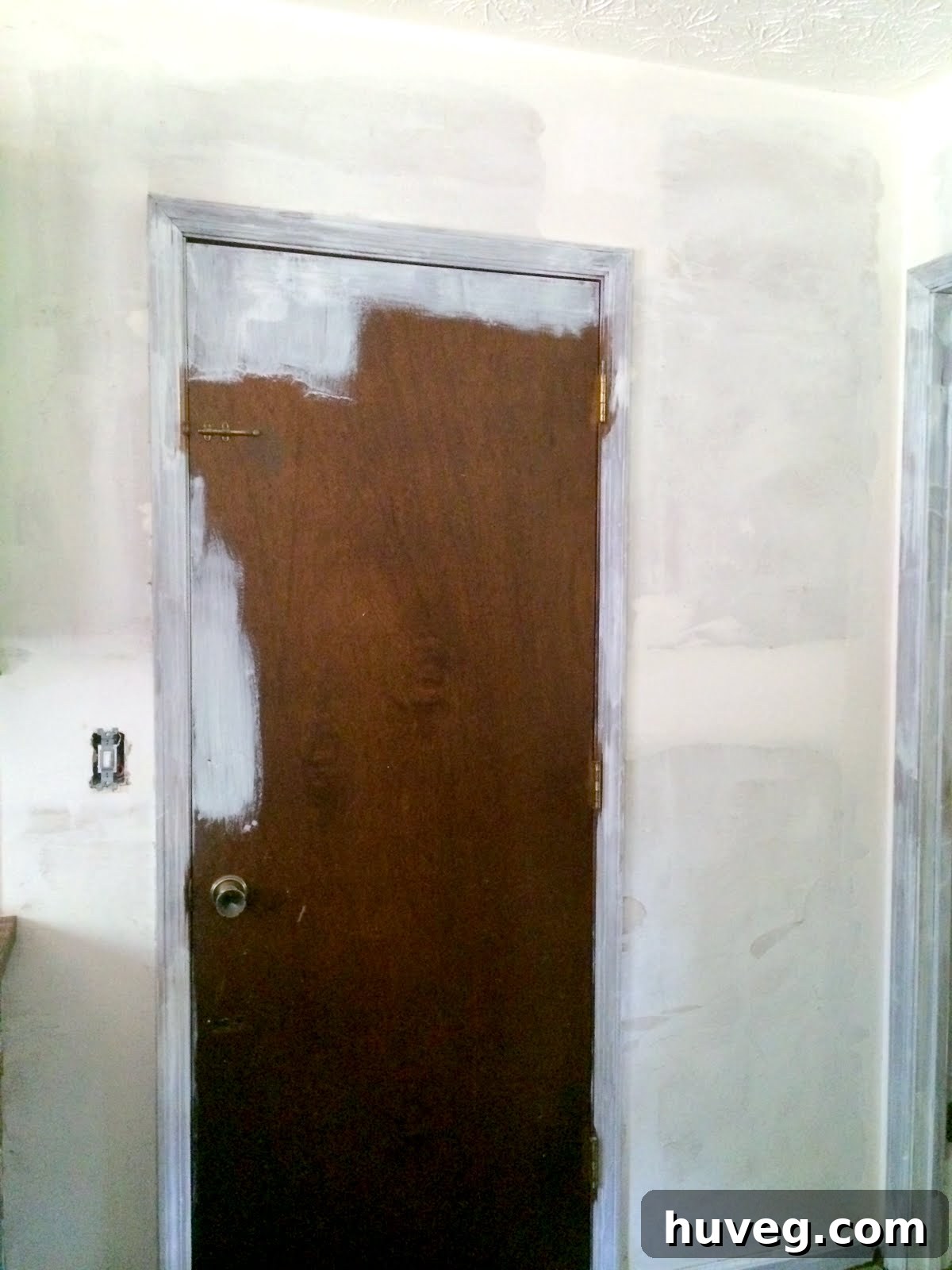
The initial step in our dining room transformation was the much-anticipated removal of old wallpaper. What we anticipated as a straightforward task quickly devolved into a full-blown renovation challenge, leaving behind a deplorable mess of torn and shredded drywall. Before you consider sharing your tried-and-true wallpaper removal tips, rest assured, I exhausted every conceivable method on these particular walls. While these techniques are undoubtedly effective in countless other situations, they proved futile here. The root of the problem lay in the original construction: the builders, in their wisdom (or lack thereof), applied wallpaper directly onto bare drywall without any protective priming. This fundamental oversight meant that the wallpaper adhesive bonded directly with the paper facing of the drywall, resulting in extensive damage upon removal.
In most homes, proper priming of bare drywall is a standard preparatory step before wallpapering. This crucial layer creates a barrier, allowing for much smoother and less damaging removal when it’s time for a refresh. Unfortunately, this was not the case in the Ugly Duckling House. While initially frustrating, this challenge presented a unique opportunity to hone my expertise in drywall repair. I’ve since channeled these newfound skills into a comprehensive tutorial on skim coating, a technique invaluable for restoring damaged walls to a smooth, paint-ready surface. This experience underscored the critical importance of understanding underlying structural conditions in any home renovation project and provided valuable insights into effective wall preparation strategies.
Building Back Better: Skim Coating and Architectural Elegance
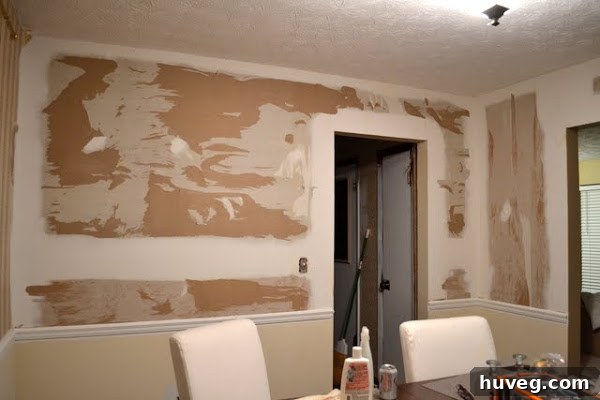
Following the harrowing wallpaper removal saga, my immediate priority was to address the severely damaged walls. Shortly thereafter, I applied a rough skim coat, marking the preliminary phase of the extensive repair work ahead. Skim coating is a multi-step process involving the application of thin layers of joint compound to create a smooth, even surface, effectively erasing the imperfections left by the wallpaper. It’s a labor-intensive but incredibly rewarding process that lays the foundation for a flawless finish.
The project received a significant boost when my uncle visited to assist with the ongoing kitchen overhaul. We dedicated a day to an impactful aesthetic upgrade: installing elegant picture frame molding beneath the existing chair rail. This architectural detail instantly elevated the room’s character, adding a touch of classic charm and visual interest. The combination of smoother walls and the refined molding began to hint at the dining room’s potential, making the space feel more intentional and cohesive. Even in its unfinished state, the addition of this decorative trim brought a noticeable improvement, making the room feel considerably closer to its envisioned sophisticated design.
The Temporary Hold: A Dining Room Transformed into a DIY Hub
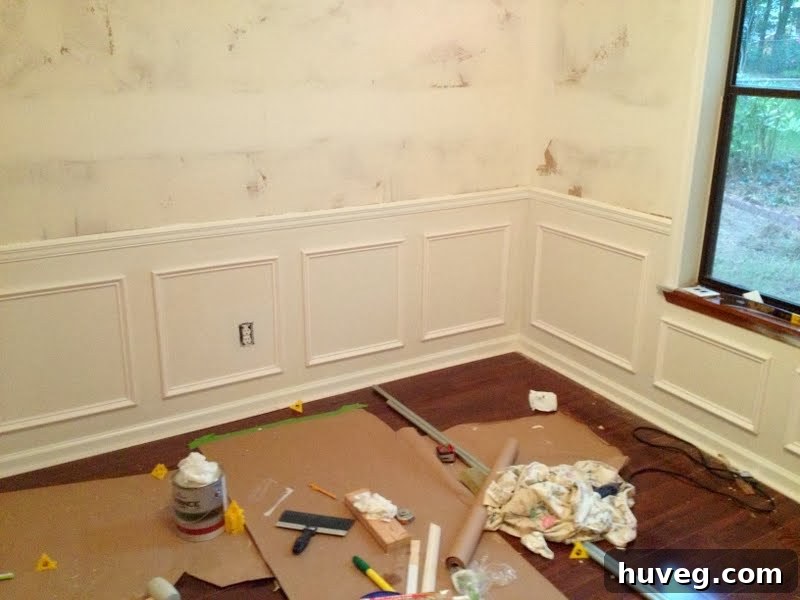
Despite the promising start in the dining room, the momentum of the kitchen renovation soon took precedence. Driven by the necessity of a complete kitchen overhaul, coupled with a healthy dose of motivational “smack talk” during a “Dueling DIY” challenge, the dining room underwent a temporary transformation. For several months, it served as an essential, albeit somewhat chaotic, workspace and storage area. This meant that all the tools, materials, and miscellaneous DIY-related junk accumulated during the extensive kitchen projects – from painting kitchen cabinets to installing backsplashes and other fixtures – found their temporary home sprawled across the dining room floor. While far from ideal, this arrangement was a practical necessity, allowing the kitchen renovation to proceed without interruption.
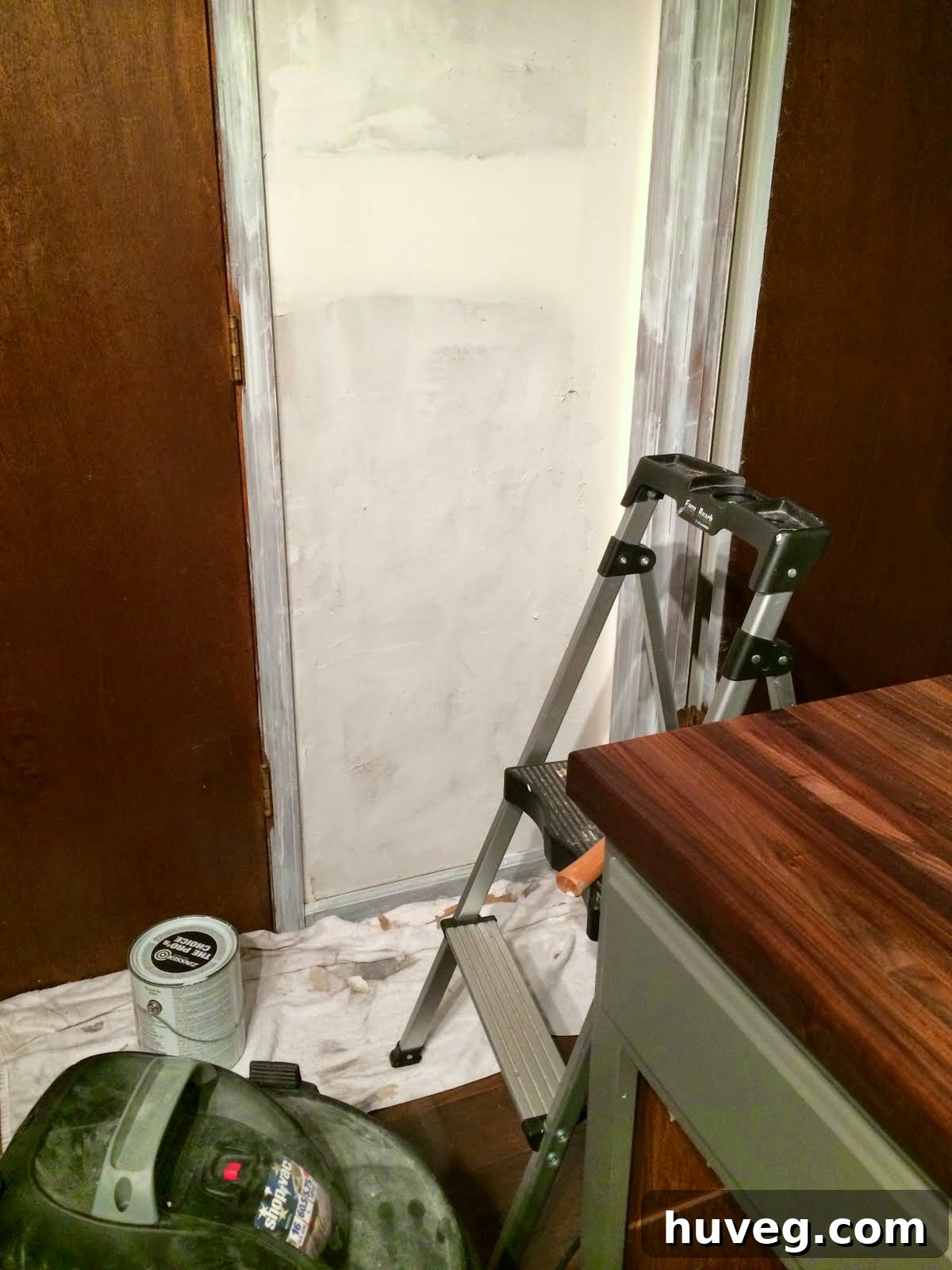
During this period, I received an invaluable tip from a contractor that would prove crucial for future wall repairs. He advised using an oil-based primer on torn drywall *before* applying layers of joint compound. This crucial step seals the exposed paper, preventing bubbling and ensuring a smoother, more durable finish. While the dining room didn’t present significant bubbling issues, this advice would have been incredibly beneficial for the pantry area in the kitchen, which exhibited similar drywall damage. Consequently, I incorporated this wisdom into my workflow, testing out some oil primer on the kitchen walls just last week. As the kitchen represents the final room requiring extensive wall repair, the timing of this discovery felt serendipitous, ensuring a more refined and lasting finish for that space.
The Frustration of the Unfinished: Why Completion Became Imperative
While I’ve been immensely pleased with the substantial progress in the kitchen, a persistent detail has been a source of quiet frustration for months: the dining room, despite being a mere wall repair away from completion, remained unfinished. What exacerbated this feeling was the fact that I already possessed virtually everything needed to decorate this space – the perfect curtains, a beautiful rug, the chosen paint, and the furniture. The only remaining element to acquire is a piece of original art, a decision I’m still contemplating.
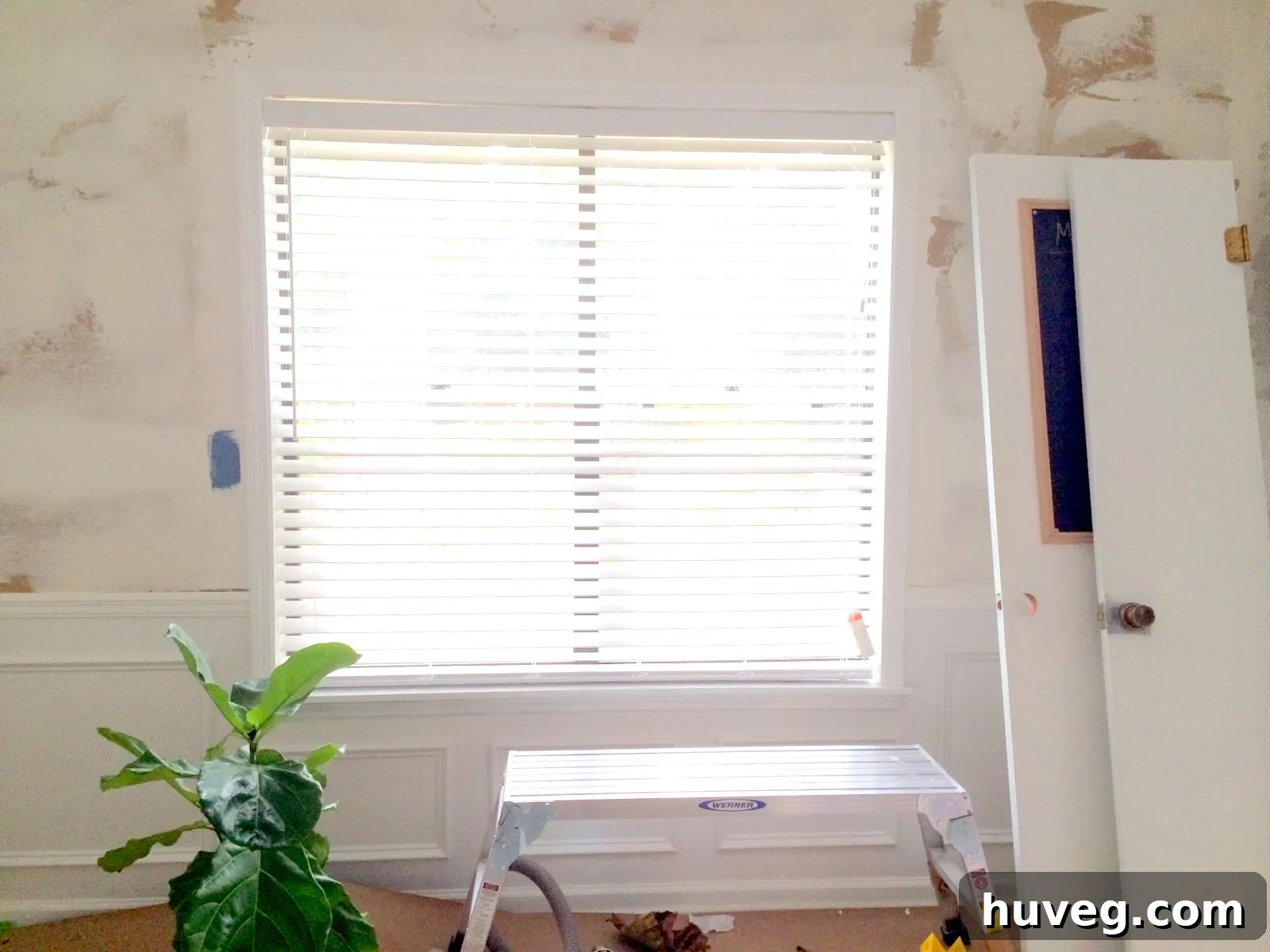
Now that the kitchen has reached a reasonably complete state, my patience has worn thin. The sight of two adjacent, yet starkly “broken,” rooms became intolerable. The knowledge that all the necessary elements for the dining room’s transformation were literally within reach, with only the unfinished upper walls standing as a barrier, was driving me to distraction. This mounting frustration served as the ultimate catalyst, compelling me to shift focus and bring the dining room renovation to its much-anticipated conclusion.
Current Progress: Embracing the Primer and the Promise of Smooth Walls
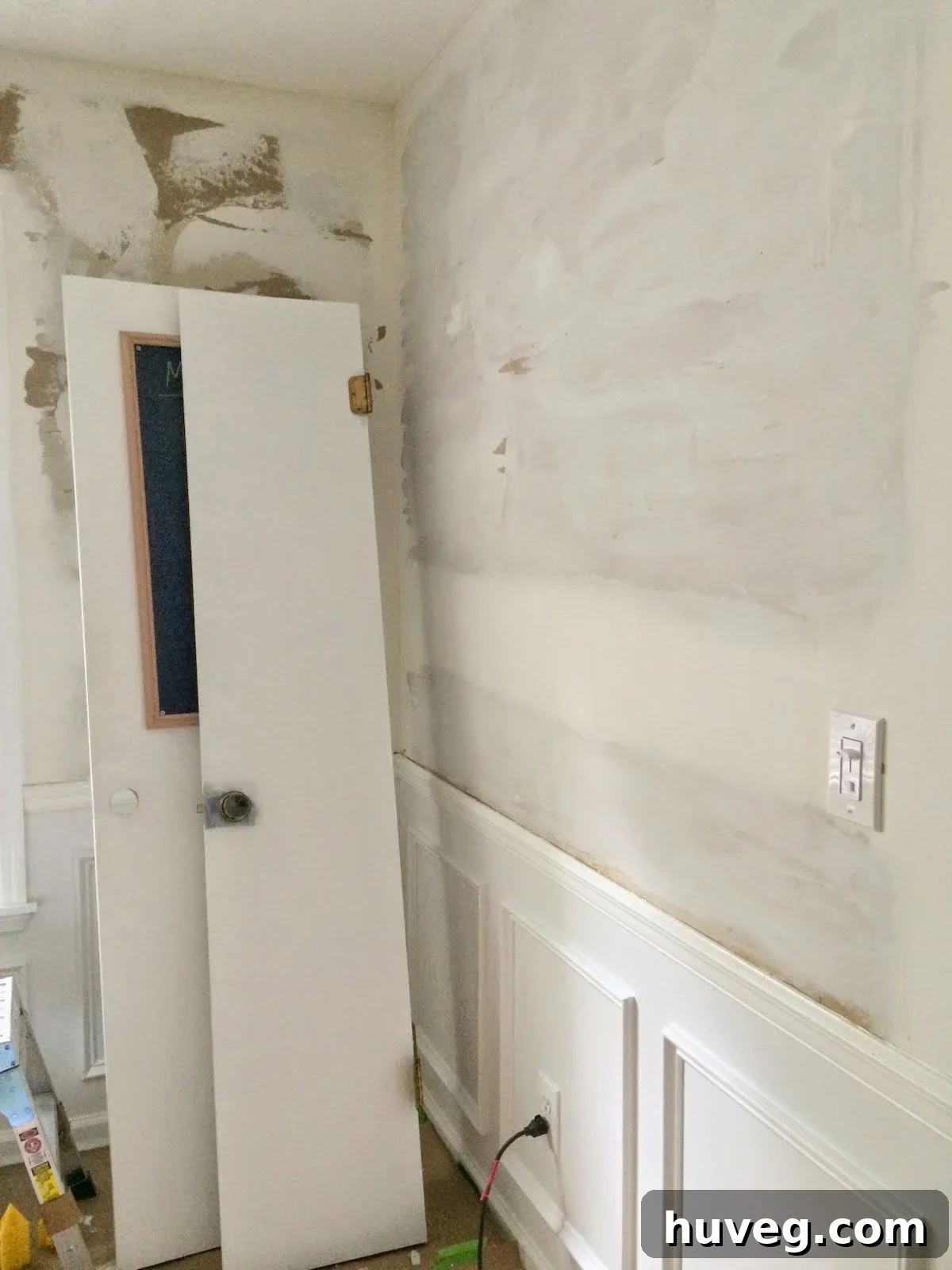
This past weekend marked a renewed dedication to the dining room, culminating in extensive sanding efforts. Interestingly, I decided to apply oil primer to one particular wall – the very wall I had previously considered removing to open up the floor plan. This idea, however, now seems somewhat moot given the uncertainty surrounding how much longer I’ll reside in this house. Nevertheless, the application of primer proved to be a beneficial experiment. So far, the contractor’s advice appears to be sound: after applying the primer and allowing it to dry, I proceeded with sanding. This process helped to flake off any lingering rough bits of torn paper, resulting in a noticeably smoother surface. I’m optimistic that this preliminary step will ultimately reduce the overall sanding time required before the final skim coat, leading to a more efficient and less labor-intensive finishing process.
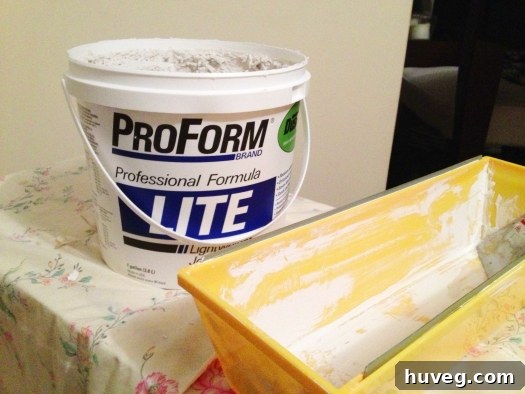
Encouraged by the excellent results of the oil primer on that single wall, I’ve made the decision to extend this vital step to the remaining three walls. Applying a uniform layer of primer across all surfaces will ensure consistent adhesion for subsequent layers of joint compound and paint. This approach also acts as a safeguard; should a second layer of joint compound partially re-wet the first, which is a common occurrence, the primed surface will prevent any previously smooth paper areas from bubbling or delaminating. This afternoon, I’ll be tackling the primer application for the rest of the room. Once that layer is thoroughly dry, the second skim coat will be applied, bringing us significantly closer to a perfectly smooth and paint-ready surface. And, of course, this final push will inevitably involve yet another strenuous arm workout, a familiar part of any comprehensive DIY wall repair project.
Looking Ahead: The Final Stretch of the Dining Room Makeover
The journey to transform this dining room has been a classic DIY adventure – full of unexpected challenges, valuable learning experiences, and the sheer satisfaction of seeing progress unfold. From the initial frustration of stubborn wallpaper and damaged drywall to the strategic application of skim coats and elegant molding, each step has brought us closer to the vision of a sophisticated and inviting space. The recent success with oil primer represents a significant leap forward, promising a smoother finish and a more durable foundation for the paint to come.
As we move into the final stages of wall preparation, with the second skim coat on the horizon, the dream of a fully decorated dining room is within reach. The physical effort is undeniable, but the anticipation of finally furnishing and styling this room, utilizing all the carefully chosen elements patiently awaiting their moment, provides immense motivation. This project is not just about renovating a room; it’s about the resilience, creativity, and sheer determination that define the spirit of DIY home improvement. Stay tuned for the exciting reveal of our dining room, a space meticulously crafted through perseverance and passion.