Skim Coating Secrets My Go To Primer Bubble Fixes and Beyond

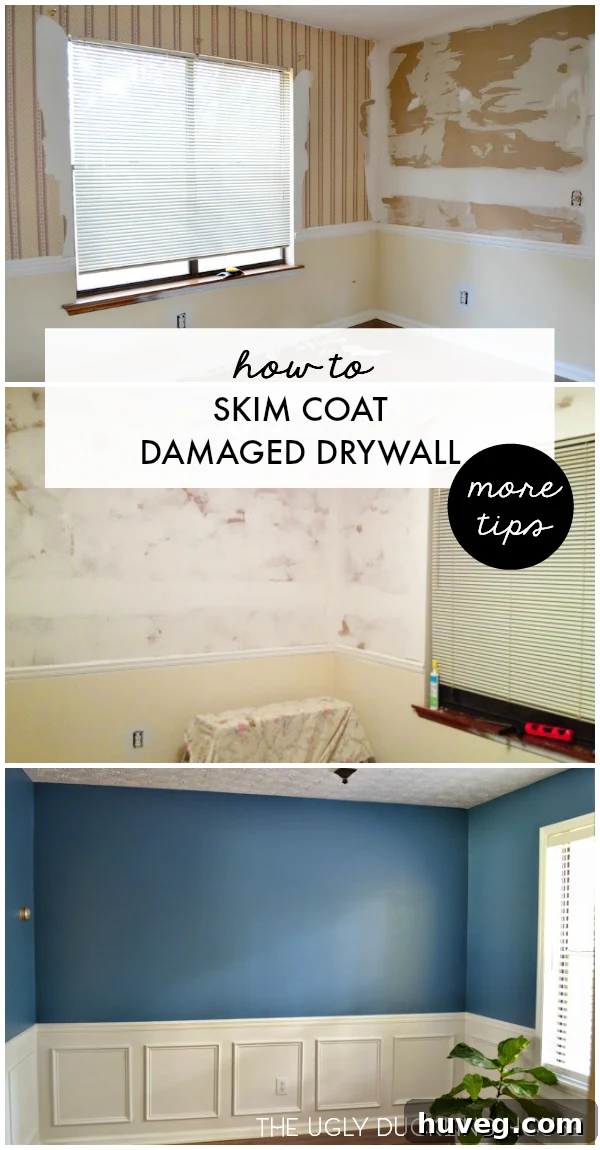
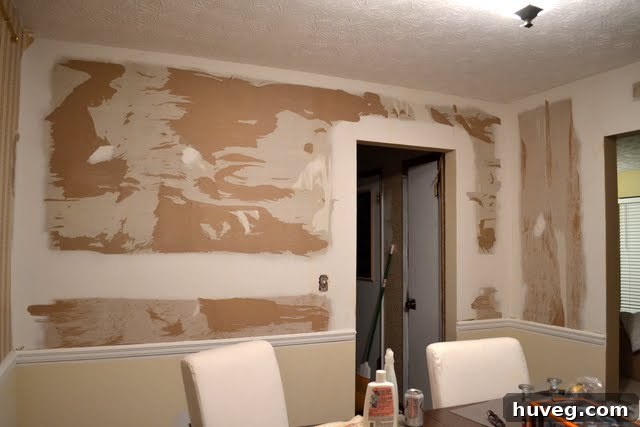
Transforming a home often begins with addressing the foundational elements, and few are as critical as the walls. Several years ago, I embarked on a DIY journey to rejuvenate the upstairs primary bathroom. After the demanding task of removing all the old wallpaper, I was confronted with a myriad of imperfections across the drywall surface. Extensive damage, particularly torn drywall paper, left the walls looking far from ideal for a fresh coat of paint. At that time, terms like “level 5 drywall finish” were foreign to me, and I was equally unfamiliar with the specialized tools and techniques required for proper wall repair. My quest for a comprehensive guide online proved challenging; I couldn’t find a single tutorial that covered all my questions and uncertainties.
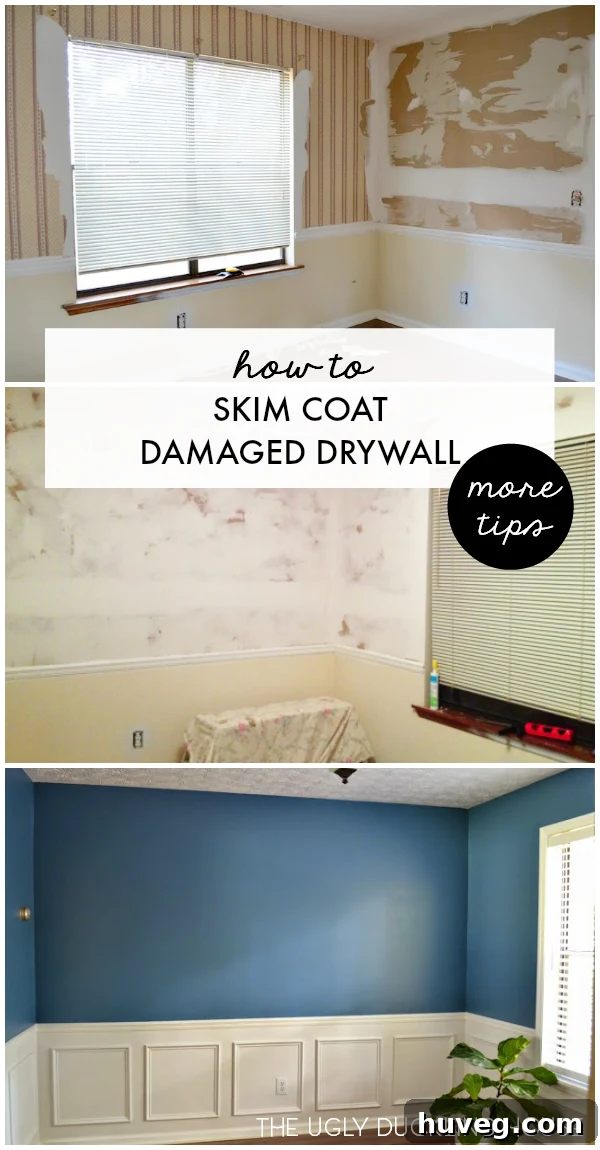
Undeterred, I pieced together information from various online forums, experimented on a couple of walls, and gradually accumulated practical tips and tricks. This self-taught knowledge eventually culminated in my own detailed skim coating tutorial. While I certainly wasn’t a professional, and much of the industry jargon still eluded me, I had discovered effective methods for tackling damaged drywall. My motivation was simple: to share this hard-won information with fellow DIY enthusiasts, saving them the hours of research and trial-and-error I had endured.
This commitment to demystifying home improvement projects for first-time homeowners has been the driving force behind my blog from the very beginning. As a naturally communicative person, blogging felt like a natural fit. Beyond the occasional personal anecdote, my primary goal is to provide accessible, practical advice for those without extensive prior experience. My parents, avid DIYers themselves, instilled in me the belief that with the right instructions, anything is possible. The key, however, is finding the *right* tutorial – one that doesn’t assume prior expertise or leave out crucial details. I strive to break down complex tasks into layman’s terms, anticipating and addressing common challenges that beginners often encounter.
In essence, my DIY philosophy involves identifying a problem, researching solutions, consolidating the most helpful information into a workable guide, and then diving in. More often than not, home improvement is a continuous learning process, where mistakes are almost inevitable. But each “screw-up” teaches you what *not* to do, refining your skills and adding invaluable experience. The satisfaction of a completed project, knowing it was your own effort and perseverance that brought it to life, is truly unmatched. It imbues your space with a unique sense of accomplishment and pride.
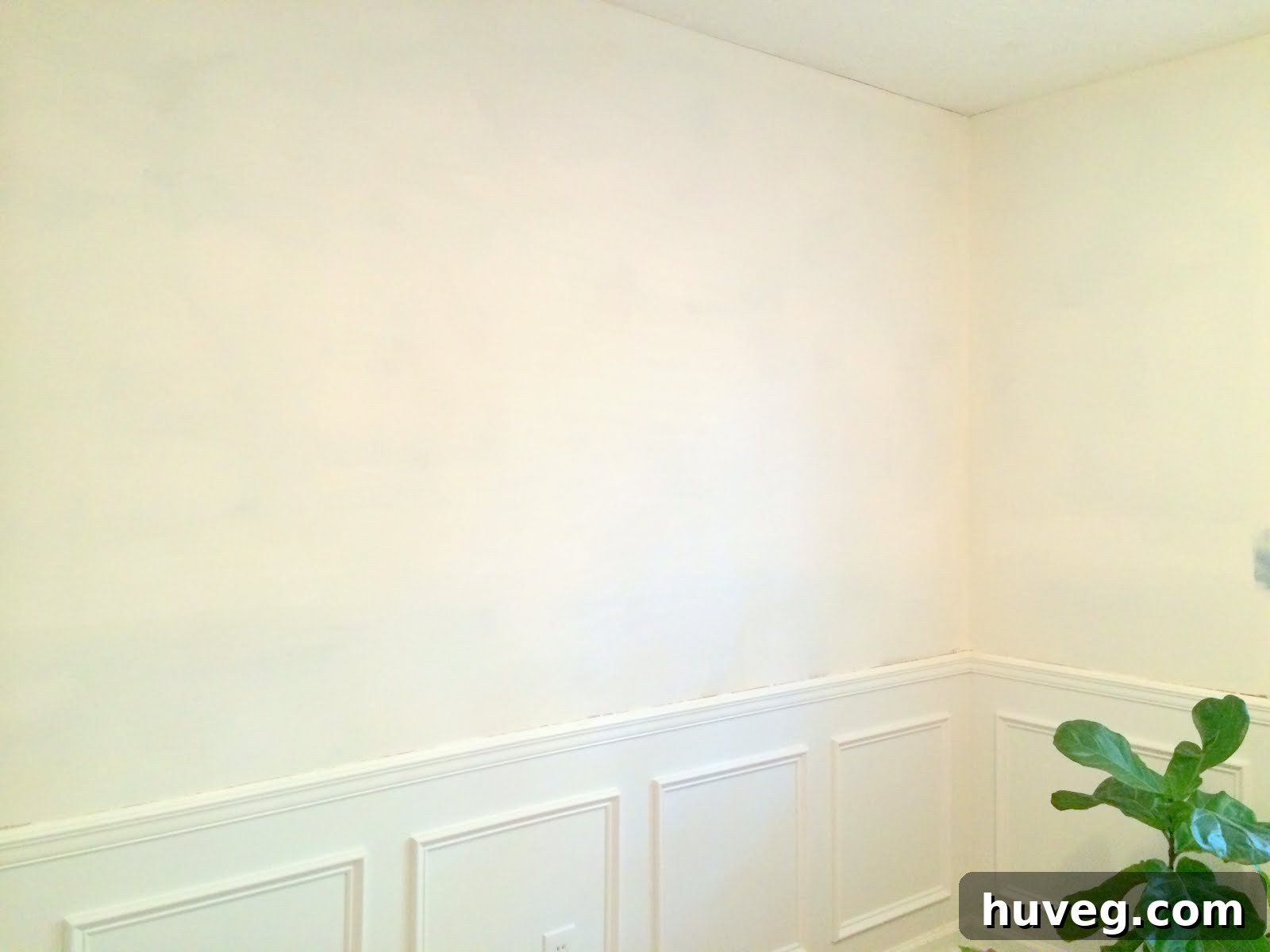
Naturally, tackling similar projects multiple times leads to new discoveries and refined techniques. My journey began with skim coating in the primary bath, then moved to the guest bath, followed by the dining room, and now, I’m nearing completion in the kitchen. Each room presented unique challenges and unexpected obstacles, pushing me to find new solutions. Whether it was differences in wall material, variations in wallpaper adhesive, or simply my own occasional lapses in meticulousness, these experiences ultimately broadened my understanding. This house has taught me invaluable lessons about skim coating, long after I believed I had written a comprehensive tutorial. I’ve found myself back in a similar position, encountering new problems and developing new solutions, which I’m eager to share with you.
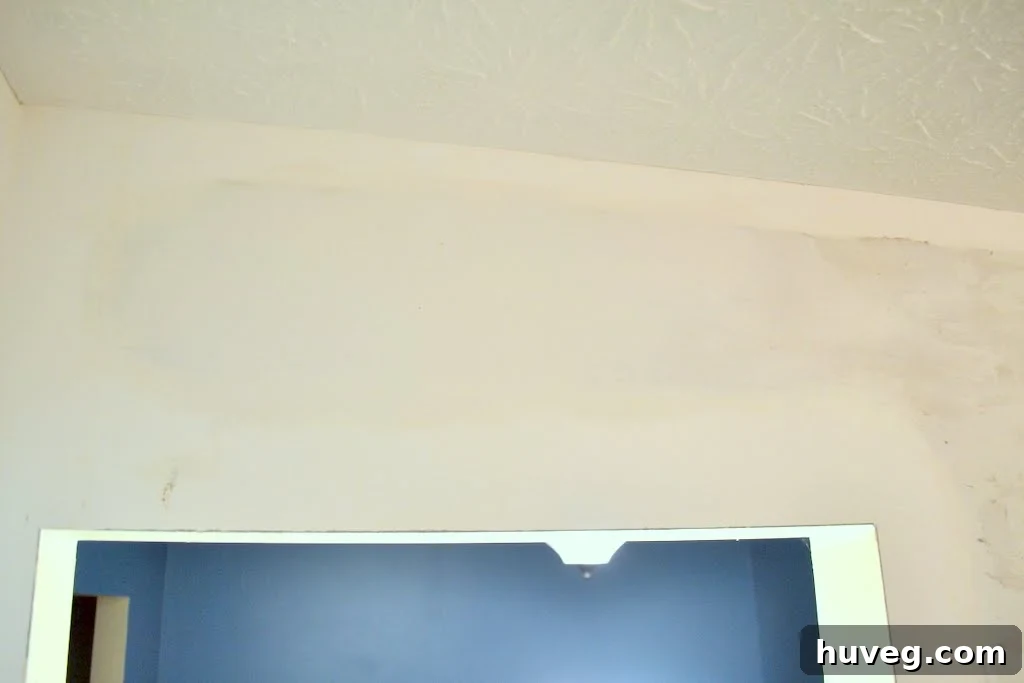
Advanced Skim Coating Techniques: Preventing Bubbles, Priming, and Achieving a Flawless Finish After Wallpaper Removal
If you’re new to skim coating, I highly recommend starting with my foundational tutorial here. It covers essential tools, where to find them, basic terminology, and the fundamental steps for achieving a smooth drywall finish. Once you’ve grasped those basics, return to this guide to delve into more advanced tips and tricks, especially for common issues like bubbling. I’ll be here, ready to provide the next level of insights.
Mastering Drywall Repair: How to Prevent and Fix Bubbles and Blisters
A common and incredibly frustrating issue after wallpaper removal and during skim coating is the appearance of bubbles or blisters in the drywall. This wasn’t a problem in my initial bathroom projects, but once I moved to the dining room and kitchen, I realized I was missing a crucial preventative step. Bubbling occurs when the paper layers of the drywall separate, often due to moisture from the joint compound. Even after meticulous wall preparation, you might find these pesky bubbles appearing as soon as the first layer of compound is applied. It’s incredibly disheartening, as it means extra work and delays. Adding more layers of joint compound over a bubble only re-wets the paper, often exacerbating the problem. The most effective solution I’ve found is to thoroughly seal the damaged drywall surface *before* applying any joint compound.
The Initial Attempt: Oil-Based Primer
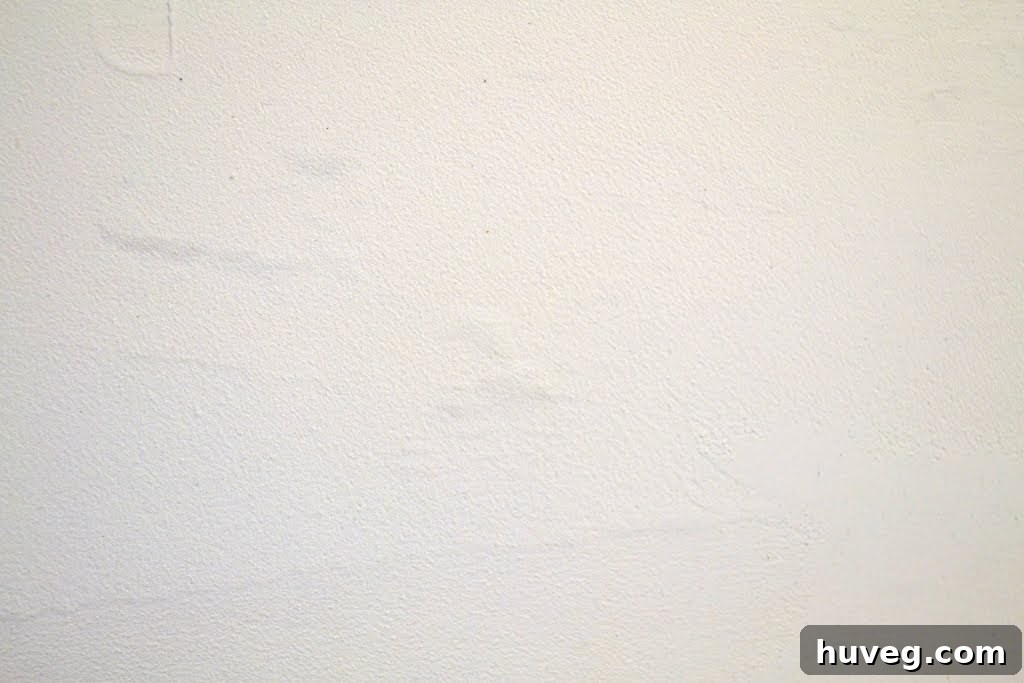
My first approach to combating drywall bubbles, strongly advocated by some experienced DIYers and professionals in online forums, was to use an oil-based primer. The theory was that the oil primer would penetrate and harden the loose drywall paper, making it less susceptible to bubbling when wet compound was applied. Following this advice, I applied it to every wall in my kitchen and dining room. Unfortunately, my results were less than stellar. I still encountered bubbles, and the strong fumes from the oil primer required extensive ventilation (always ensure good airflow when using such products!). It became clear that while oil primer might work for some, it wasn’t the universal solution my specific drywall issues required.
This experience highlighted a fundamental truth in DIY: there’s often more than one way to approach a problem, and what works perfectly for one person or house might not work for another. Every project has its nuances, and sometimes, your particular situation deviates from the common advice.
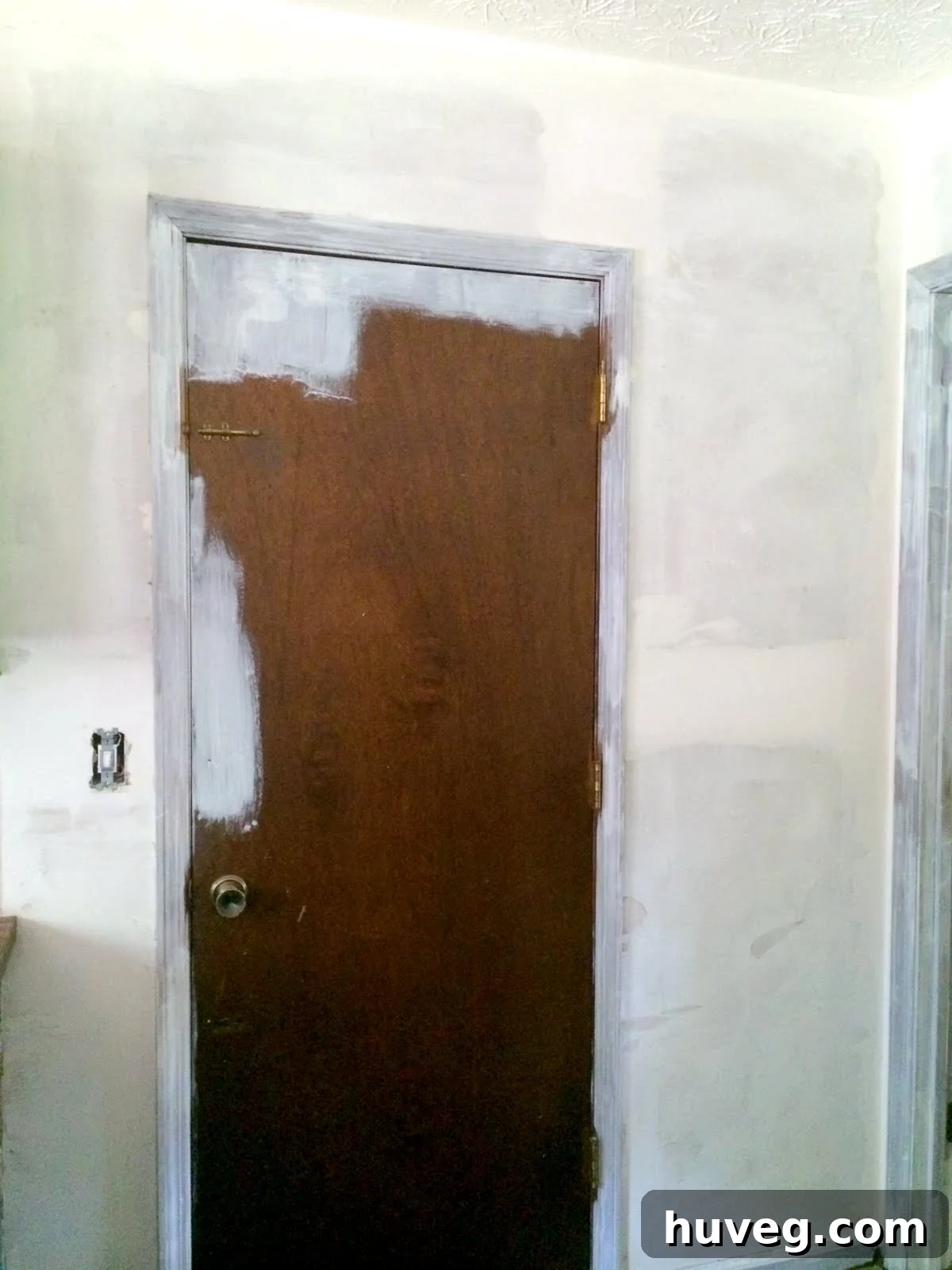
My subsequent research led me to online communities of seasoned professionals and DIYers who consistently recommended a specific product: Zinsser Gardz. Gardz is renowned for its ability to seal porous and compromised surfaces, making it ideal for damaged drywall. I’d had positive experiences with other Zinsser products, so I set out to find it. The challenge, however, was its availability; it was primarily sold online in large, contractor-sized quantities, and smaller retail versions had been discontinued. This presented a logistical hurdle for a small-scale homeowner project.
A Superior Solution: Roman Rx-35 Drywall Repair and Sealer Primer
My third and thankfully, successful attempt led me to Roman Rx-35 PRO-999 Drywall Repair and Sealer Primer, readily available at my local Home Depot (often referred to as “the Orange store”). Unlike typical paint primers, Rx-35 has a consistency more akin to a thin glue or skim milk. This unique formulation allows it to deeply penetrate and effectively seal the compromised drywall paper, preventing the layers from separating and forming bubbles. You can find it under the product name Roman Rx-35.
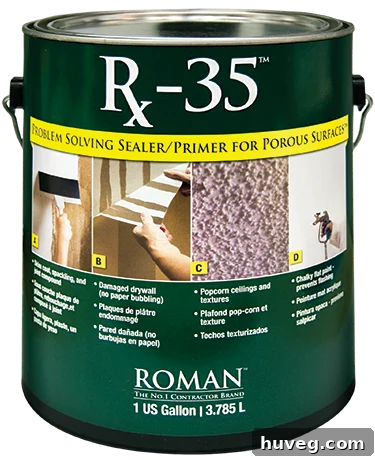
The difference after incorporating Rx-35 into my prep work was remarkable. I experienced significantly fewer bubbles, which translated into considerably less frustration during the skim coating process. While I’ve heard Gardz might offer an even better performance, the convenience of easily acquiring an effective product like Rx-35 is a huge advantage. There’s nothing more frustrating than researching an ideal solution only to find it’s either unavailable or requires purchasing an impractical quantity. Therefore, I confidently recommend Rx-35. Apply it after wallpaper removal and before your first skim coat to ensure a stable, smooth foundation.
Dealing with Persistent Drywall Bubbles: Even After Sealing, What’s Next?
Even with the best preparation and sealing agents, occasional bubbles can still appear. This part of the process is undeniably tedious, but addressing them correctly is crucial for a professional finish. As mentioned, simply applying more joint compound over a bubble is counterproductive, as it reintroduces moisture and risks further delamination. The most effective approach is to physically remove the problematic paper causing the bubble.
Eliminate the Source: Removing the Bubble-Causing Paper
This means carefully digging into the drywall surface to excise the loose paper creating the bubble. I’ve performed this step both when the joint compound was still wet and after it had dried. While working with wet compound can be messier and might lift more paper than intended, removing dry paper offers more control. The pointed tip of a taping knife is excellent for precisely getting under the bubble and removing the offending section of paper.
Re-Seal and Cure the Repaired Area
After removing the paper, allow any wet areas to fully dry. Then, thoroughly saturate the newly exposed area with Rx-35 sealer. This product dries relatively quickly, so this step won’t significantly hinder your progress. It’s a small investment of time that prevents unsightly bubbles from becoming glaring flaws in your final paint job. Trust me, bubbles become even more noticeable once paint is applied.
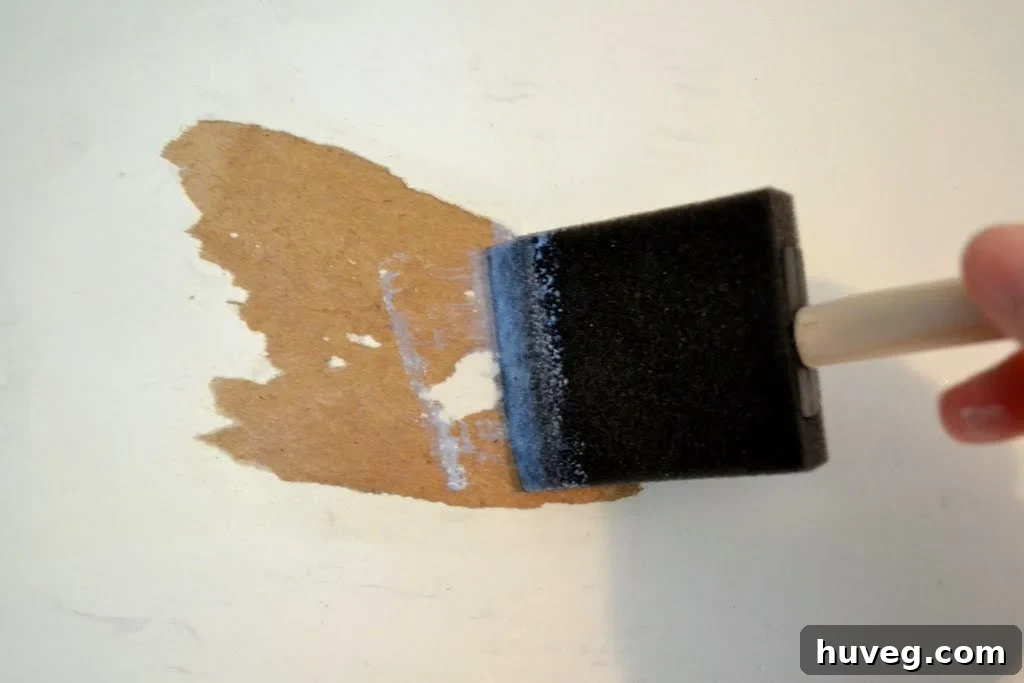
Patching and Re-Skim Coating
Once the sealer has dried, apply new joint compound to patch the repaired area. This process is straightforward but can be time-consuming if you have many bubbles. Prioritizing prevention with a good sealer like Rx-35 will save you a lot of headache (and perhaps less “stress-induced” beer consumption).
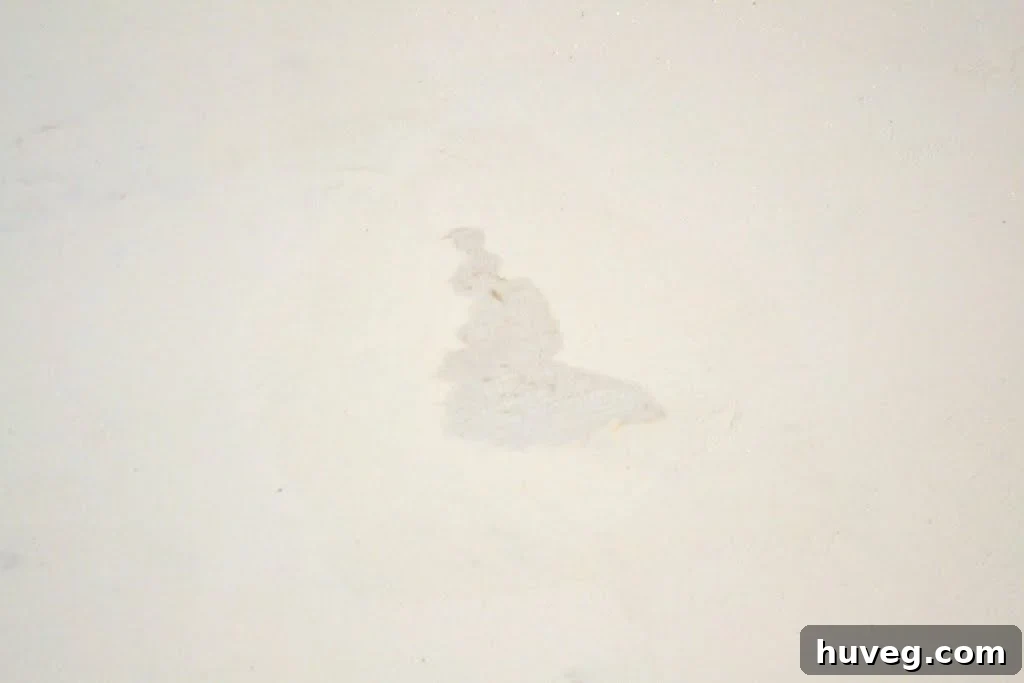
Optimizing Joint Compound Application for a Smooth Finish
Selecting the Right Joint Compound for Your Project
In my initial skim coating tutorial, I provided guidance on choosing and locating the appropriate type of joint compound, often referred to as “mud.” Initially, I used standard all-purpose joint compound (typically identified by a green lid). However, for subsequent projects, I transitioned to a lightweight, low-dust version (usually with a blue lid). This change significantly improved the final finish, making sanding easier and cleaner. Be aware, though, that lightweight compounds can be more prone to scratching, so it’s crucial to prime the wall as soon as your skim coating is complete to protect the surface.
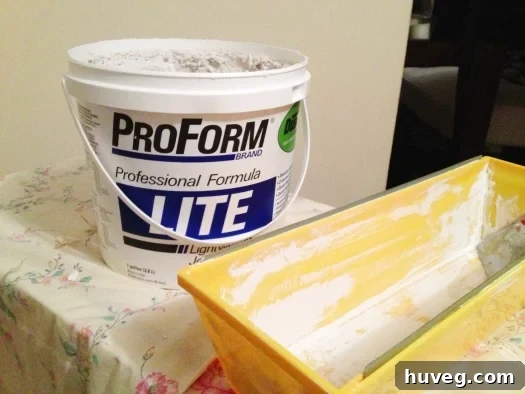
Always Mix Joint Compound for Consistency
Regardless of the type of joint compound, thorough mixing is non-negotiable. I’ve personally experienced the consequences of laziness; on occasions when I skipped mixing a fresh batch for small repairs, I ended up with stubborn ridges and lumps after sanding. Proper mixing ensures a consistent texture, which is vital for smooth application and easier sanding. I prefer my compound slightly runnier than some tutorials suggest, but experiment to find a consistency that works for your application technique. For large areas, a paddle mixer attached to a drill is an invaluable tool, saving significant time and effort. Resources like DIYDiva offer excellent insights into mixing and using joint compound.
Allow Each Coat to Dry Completely
Patience is paramount in skim coating. While a layer of joint compound might appear and feel dry to the touch, it often requires more time to fully cure. Unless you’re using a quick-setting, chemical-hardening compound (which typically have specific curing times like 20, 45, or 90 minutes), you generally need to wait a full 24 hours before applying subsequent coats. Rushing this step can lead to cracks and other surface imperfections, undermining all your hard work. Don’t let impatience sabotage your project in the final stages.
Considering Quick-Setting Joint Compound
For those looking to accelerate their project, there are “easy-sand” joint compound products that dry in as little as 45 minutes. Unlike pre-mixed buckets, these fast-setting compounds come in powder form and must be mixed with water. I haven’t personally used them for skim coating yet, but I’ve seen promising results in videos like this helpful guide from Our Home From Scratch. Beyond the quicker drying time, the rigid base formed by these compounds could potentially offer additional resistance to bubbling. However, for the final, feather-light coats, you’d still likely want to switch back to a lightweight, pre-mixed compound for optimal smoothness and workability.
Efficient Drywall Sanding Techniques
Strategic Sanding: Not Always Necessary Between Coats
Beginners might feel the need to sand after every coat of joint compound, and while it’s not harmful, it’s often unnecessary. With practice, you can use your taping knife to effectively scrape down dried ridges and imperfections before applying the next layer. The goal of skim coating is to gradually *build* a smooth surface, not to achieve perfection with the first coat. The final sanding pass will address the vast majority of remaining irregularities, creating a uniformly smooth surface for priming and painting.
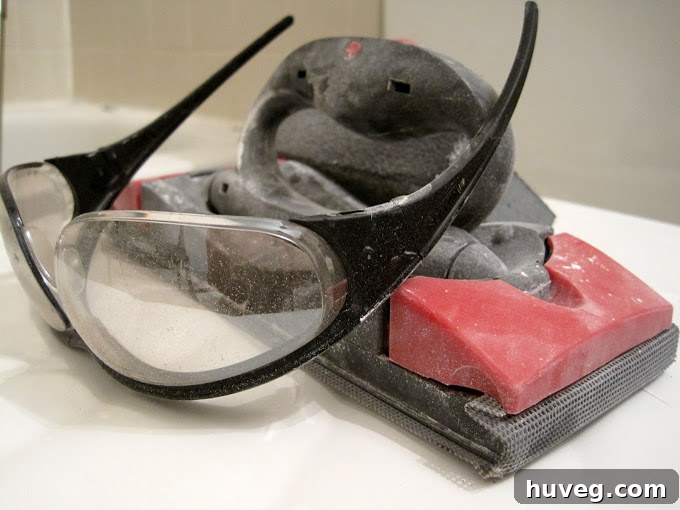
Game Changer: Dust-Free Drywall Sanding with a Vacuum Attachment
Sanding drywall generates an incredible amount of fine dust, making your workspace look like a winter wonderland (and posing respiratory risks). Manually sanding can be slow and incredibly messy. To drastically reduce dust and save time, I highly recommend using a shop vacuum with a specialized drywall sanding attachment, such as the Hyde drywall sanding kit. This affordable, easy-to-use system connects directly to your shop vac and can be used with a pole attachment for ceilings and high walls. It effectively captures most of the dust at the source. I’ve also found it invaluable for backsplash tile preparation. While wearing a dust mask is always recommended, this tool significantly reduces airborne particles, making the job much safer and cleaner. Sandra from Sawdust Girl also praises its effectiveness. Remember to equip your shop vac with a filter specifically designed for fine drywall dust; a standard filter can quickly clog and damage the motor.
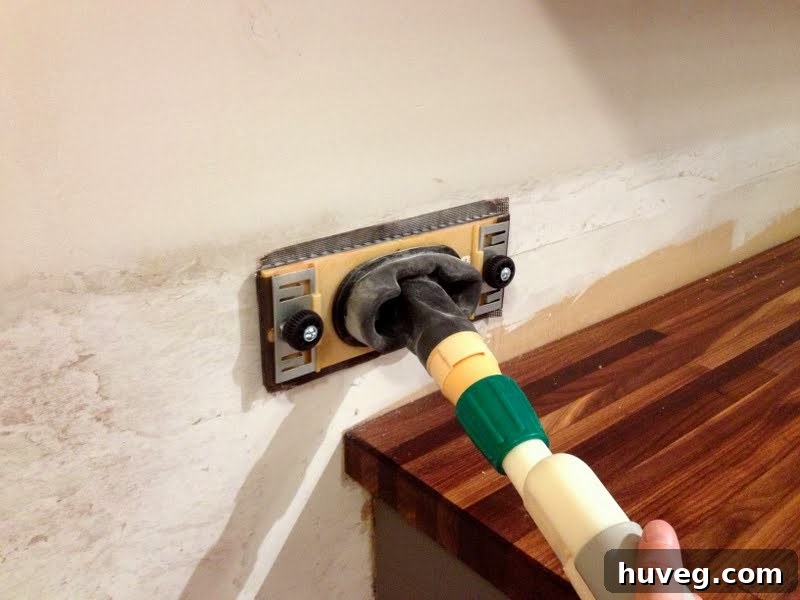
The Critical Step: Priming Before Paint
Addressing Minor Scratches with the Right Primer
When using a vacuum sander with sanding screens (which I recommended in my previous tutorial), you might notice an increase in superficial scratches compared to hand-sanding. The vacuum’s suction holds the sander tightly against the wall, making these screens more aggressive. After completing all sanding, I usually do a light final pass with a sanding block to smooth everything out. Even so, minor imperfections can remain. For these, I highly recommend Glidden’s Gripper Primer. While becoming harder to find, it excels at filling in minor scratches and creating a perfectly smooth base, making them invisible once painted. Beyond minor flaw concealment, it also properly seals the joint compound, ensuring excellent paint adhesion and preventing the dreaded scenario of paint peeling off the wall (a project-ruiner at the very last step!). For more detailed insights into paint preparation after drywall repair, explore my dedicated post on painting prep after drywall repair.
Further Recommendations and Future Explorations
As I approach the final room in my current house renovation (hopefully for a while!), I’m always open to exploring new techniques and tools. Chris from Picardy Project, for instance, suggests using a knock-down trowel, which is significantly wider than the taping knives I’m accustomed to. These could be interesting to try, though I suspect my relatively small frame might make wielding one look like a garden gnome operating a snow shovel!
It’s also important to remember a key distinction: most paint products, especially those marketed as “paint/primer combos,” are formulated for previously painted walls, not for new or freshly repaired drywall. When working with bare drywall and joint compound, a separate primer is crucial. It not only prepares the surface for paint but, more importantly, seals the porous compound. I’ve had unfortunate experiences in the past where paint peeled off bare drywall, a frustrating setback on the final step. However, I’ve recently heard positive feedback about certain innovative painting products that claim to eliminate the need for a separate primer on new drywall. I’m currently researching these claims, and I’ll certainly share my findings (good or bad) if I decide to test them out.
Conclusion: The Enduring Journey of DIY Learning
This comprehensive guide, now quite extensive, reflects my belief that when seeking tutorials, clicking around endlessly is tiresome. My goal is to consolidate information, even if it results in a lengthy read. Ultimately, DIY projects are an ongoing education; you learn something new with each endeavor, and repeating projects only hones your skills. The more you practice, the more proficient you become. I hope these expanded tips and tricks will empower you in your next skim coating project, helping you achieve beautiful, smooth walls with confidence.
More Drywall Tips
SEE ALL DRYWALL
Drywall can be intimidating; luckily, I’ve got more posts to help you learn what you need to know! Check them out below.
-
Painting Prep after Drywall Repair
-
Skim Coating Tips: Bubbles, My Favorite Primer, and More
-
DIY Drywall Over Wood Paneling
-
How to Seal Damaged Drywall
-
How to Prep Kitchen Walls for a Tile Backsplash
-
How to Seamlessly Transition Crown Molding Where Tile Meets the Wall