Your Own Silverware Organizer: DIY Drawer Makeover

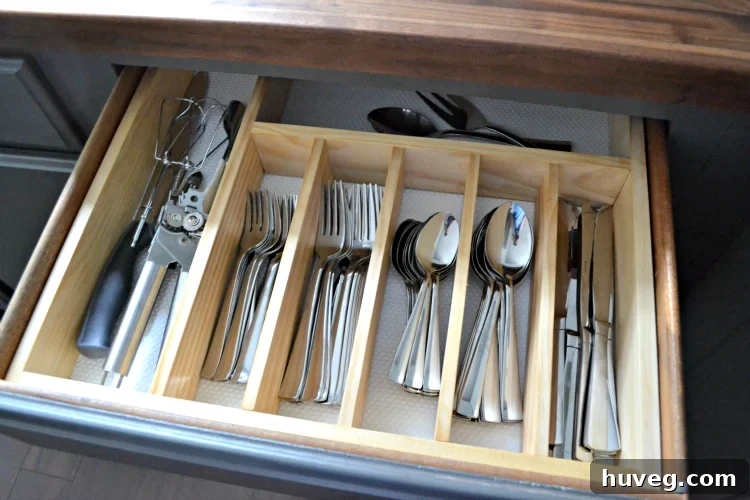
Mastering Kitchen Organization: Crafting Your Own Custom Silverware Drawer Organizer
Welcome back, DIY enthusiasts and home improvement seekers! It’s that exhilarating time of the month again when the #OrganizeBuildChallenge calls, inspiring us to tackle those often-neglected corners of our homes. For many of us, these challenges are more than just an opportunity to get creative; they’re a powerful motivator to finally check off those lingering tasks from our to-do lists. While the prospect of showcasing my project alongside a cohort of incredibly talented DIY bloggers always brings a mix of excitement and nerves, I continually remind myself of the satisfaction that comes with transforming a space with my own hands. This month, my focus returned to the heart of the home – the kitchen, specifically, the notorious silverware drawer.
You might recall my previous adventures in these challenges, from creating a scrap wood magnetic bottle opener to festive Christmas kitchen window decorations, and even a modern step stool from a single board. Each project presented its own unique hurdles and triumphs, but the underlying joy has always been in the functional transformation it brings. This time, the goal was clear: elevate the functionality and aesthetics of my kitchen’s most hardworking drawer. Join me as I walk through the process of creating a custom DIY silverware drawer organizer – a project that promises both practicality and a touch of bespoke elegance.
The Evolution of a Kitchen: From Chaos to Custom Cohesion
My ongoing kitchen remodeling journey has reached a truly satisfying phase: the meticulous process of putting everything back into its rightful place. This isn’t just about unpacking boxes; it’s about curating a space that genuinely works for my lifestyle. A significant part of this evolution involves upgrading essential kitchenware. Gone are the days of mismatched plates, glasses adorned with questionable beer logos (far too many, I admit!), and a collection of bent and worn-out silverware. Instead, I’m embracing more “grown-up” counterparts, a subtle but impactful shift towards a more refined home.
I’ve been on a mission to systematically declutter each collection of “stuff,” thoughtfully donating items that no longer serve a purpose. This means saying goodbye to those flimsy 50-piece sets that quickly melt or rust in the dishwasher, in favor of durable pieces that truly feel like an upgrade. It’s about investing in quality, functionality, and a sense of order that reflects my current stage in life – a tangible representation of “adulting” in my thirties.
Addressing the Silverware Saga: A Drawer in Desperate Need
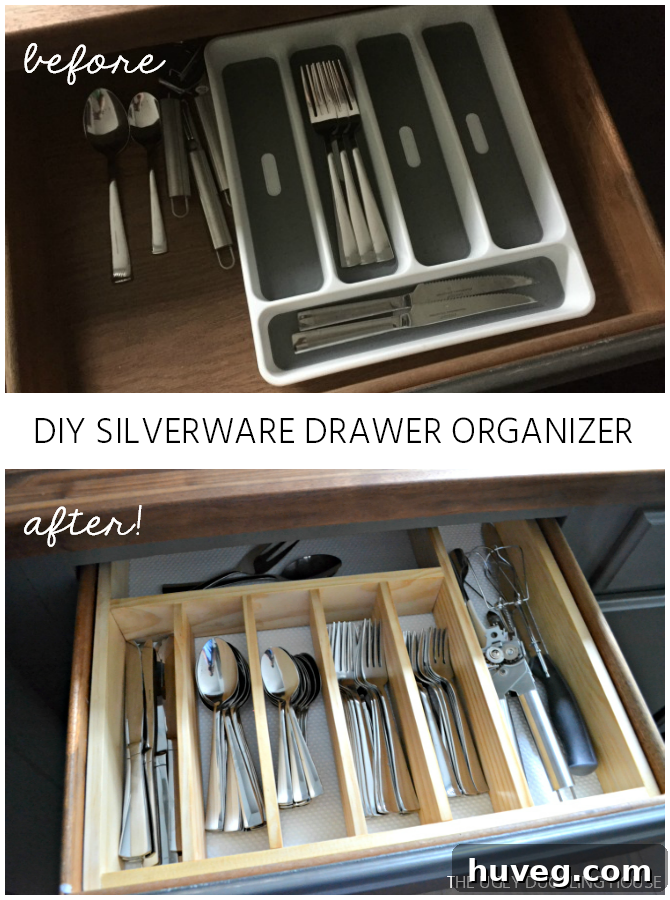
Among the many cabinets and drawers throughout my kitchen, one particular space cried out for attention: the silverware drawer. It was a chaotic jumble, a testament to years of haphazard accumulation. The catalyst for this project was a recent purchase: a complete set of matching silverware. While this might seem like a minor milestone, for anyone who has endured a hodgepodge collection of random utensils, the relief of owning a cohesive set is profound. Below, you can see the “before” state – a visual representation of the disarray I was eager to banish.
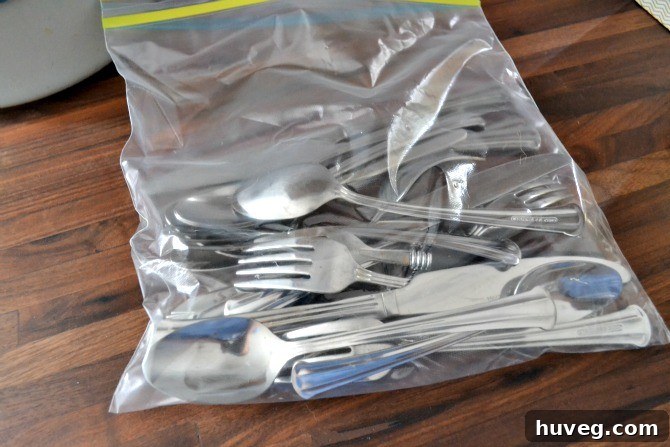
Sometimes, it’s the subtle imperfections that nag at you over time, waiting for the opportune moment for an upgrade. I discovered this beautiful new set during a Black Friday sale, immediately falling in love with its elegant simplicity and the satisfying weight of each piece. It was a stark contrast to my previous, lighter sets. However, there was one minor snag: my new set boasted more types and sizes of silverware than my old ones, leaving my existing organizer woefully inadequate. There simply weren’t enough dedicated slots for everything.
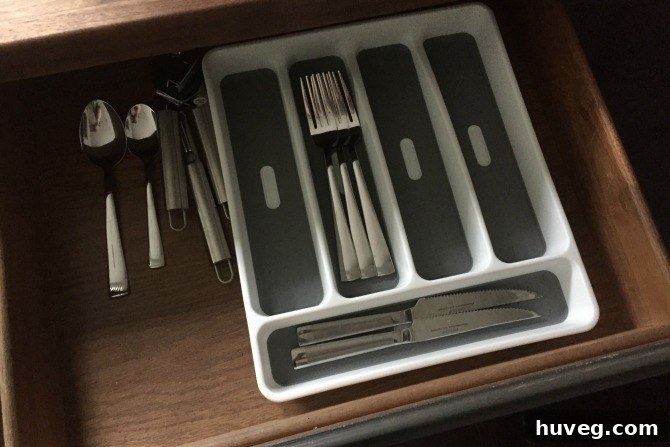
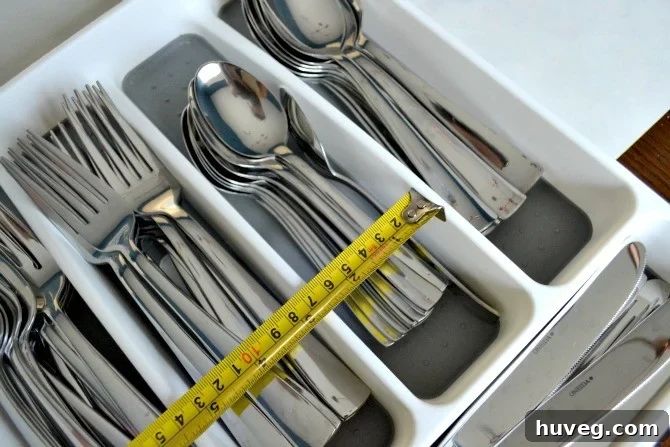
The old organizer wasn’t inherently bad; it was clean and perfectly functional for what it was designed for. The real issue was its size – it was simply too small for the drawer itself, leaving significant unused space around its perimeter. Given that this month’s challenge was all about organization, creating a custom organizer to fully maximize the drawer’s potential felt like the perfect project. This would not only accommodate my new silverware set but also bring a new level of order and efficiency to my kitchen.
Building Your Bespoke Cutlery Haven: A DIY Guide
Creating a custom silverware drawer organizer might sound daunting, but it’s surprisingly straightforward. The key lies in precise measurements and the right tools. With a little patience and attention to detail, you can transform a cluttered drawer into a perfectly organized space tailored to your specific needs. Here’s what you’ll need to embark on this rewarding DIY journey:
Essential Tools & Materials:
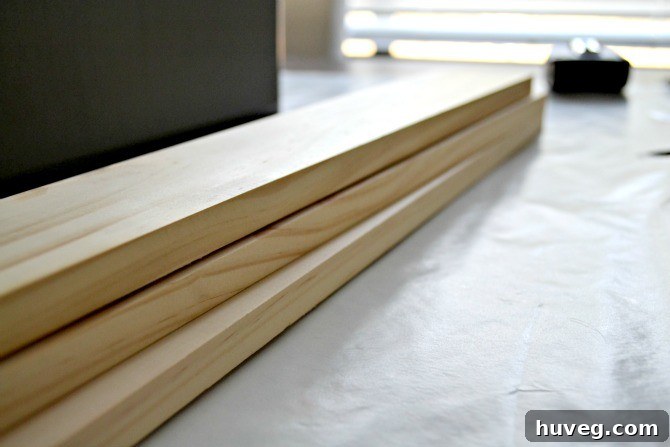
- Craft Wood: Choose your preferred wood type. I opted for 1/2″ thickness for the outer frame and larger dividing pieces, and 3/8″ thickness for the narrower dividers between each type of cutlery. Pine is an affordable and widely available option, especially if you need specific widths.
- Wood Glue: A strong adhesive is crucial for durability.
- Clamps: At least 24″ or longer are highly recommended to hold pieces securely while the glue dries. The more clamps, the better!
- Nail Gun & Finishing Nails (Optional): While not strictly necessary, a nail gun can significantly speed up the process by securing pieces temporarily as the glue cures, preventing slippage. If you don’t have one, just ensure you have plenty of clamps and allow extra drying time.
- Work Surface Protection: Use old wrapping paper, newspaper, or a drop cloth to protect your table from glue and sawdust.
Common Workshop Staples:
- Tape Measure: For accurate measurements, this is non-negotiable.
- Pencil: For marking cuts and dimensions.
- Miter Saw: Essential for making clean, precise, and angled cuts for your wood pieces.
Step-by-Step Construction: Bringing Your Vision to Life
1. Prepare Your Drawer & Workspace
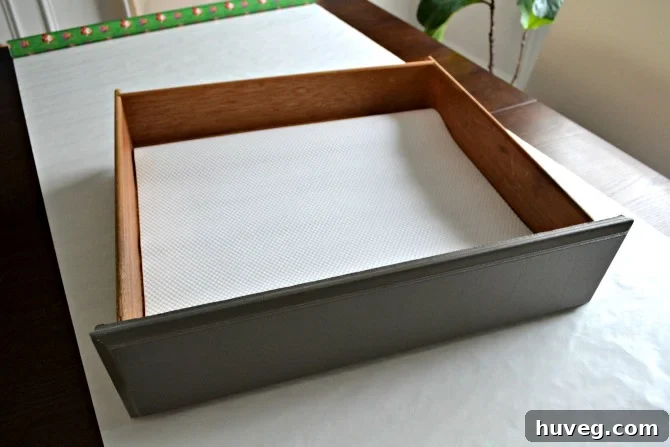
Begin by preparing your drawer. I lined mine with a fresh, bright drawer liner from IKEA, instantly elevating its appearance. This also provides a clean, non-slip base for your new organizer. For the most accurate measurements and ease of work, I highly recommend removing the drawer from its cabinet. This eliminates awkward angles and potential obstructions, like a nearby stove. (I’m even exploring options to extend my drawer’s slide capabilities for future accessibility improvements!). Next, prepare your work surface. I spread out leftover holiday wrapping paper on my dining room table, providing a colorful and effective barrier against glue drips and wood dust.
2. Construct the Outer Frame
The first crucial step is to build a sturdy outer frame for your organizer. While it might be tempting to just connect individual dividers, a solid frame ensures everything remains square, robust, and perfectly fitted within the drawer. Precisely measure the interior dimensions of your drawer. Cut the 1/2″ thick craft wood pieces to create a snug-fitting rectangle that will form the perimeter of your organizer. Apply wood glue generously to the joining edges, then clamp or nail the pieces together. Allow this frame to dry thoroughly before proceeding.
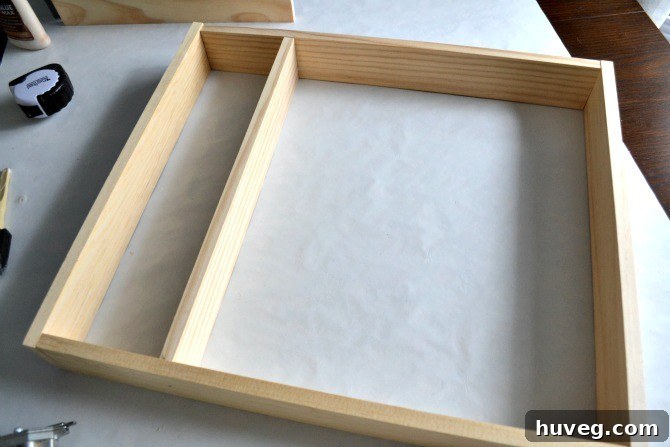
3. Plan Your Layout & Dry Fit Dividers
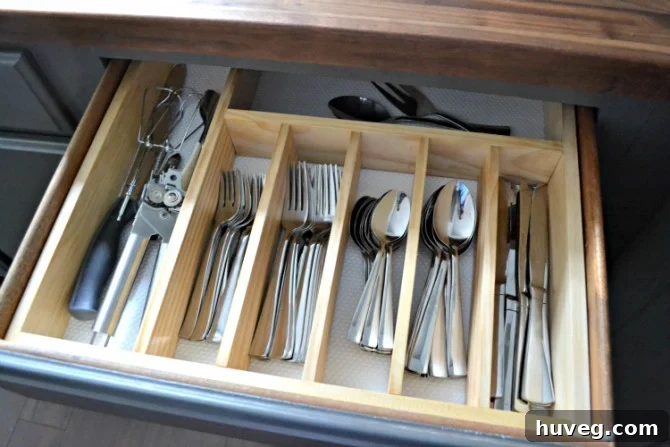
This is where the customization truly comes into play. Consider your specific cutlery set: how many butter knives, small spoons, large spoons, small forks, large forks do you have? Also, think about less-frequently used items like serving spoons and forks, or miscellaneous kitchen tools like a can opener. I decided to divide my drawer into five main groupings for daily flatware, reserving a space at the back for serving pieces and a longer channel on the left for sundry items. When cutting your divider pieces, remember that it’s generally more efficient to cut the longest pieces first, then use the remnants for shorter sections – a technique often advocated by DIY pros like Ana White. For a standard cutlery set, a 10″ length for the flatware dividers often works well. I used 1/2″x3″ wood for the main frame and central dividers, and slightly narrower 3/8″x3″ wood for the dividers separating individual cutlery types, providing a subtle visual distinction and saving a little space.
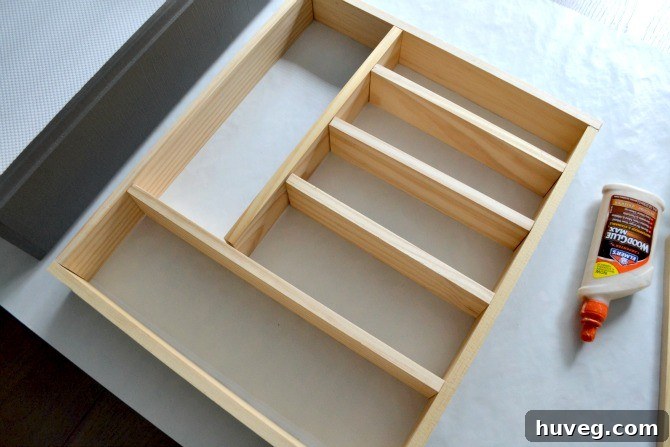
Before applying any glue, perform a “dry fit” of all your divider pieces within the outer frame and the drawer itself. This allows you to adjust sizes, check clearances, and ensure all your cutlery fits comfortably into its designated slot. This is also an excellent opportunity to sand each individual piece, making it much easier to achieve smooth finishes in all the corners and tight spaces later on.
4. Glue and Clamp
Once you are completely satisfied with the layout and fit of every piece, it’s time to start gluing. Apply wood glue to the ends of each divider where it meets another piece of wood. The critical step here is clamping. Use your clamps to hold all the pieces firmly in place. For consistent spacing between flatware channels, I found it helpful to insert scrap pieces of wood as temporary spacers until the glue had a chance to set. This ensures each compartment is perfectly sized for its contents. Allow the glue to cure completely, which typically takes at least half an hour for initial adhesion, but longer for full strength. Patience during this stage is vital for a durable organizer.
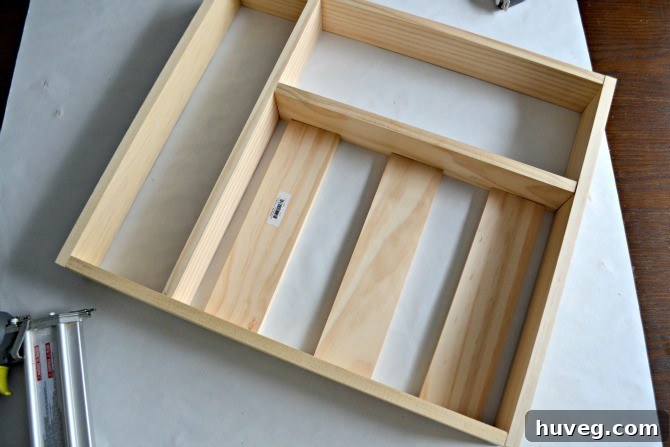
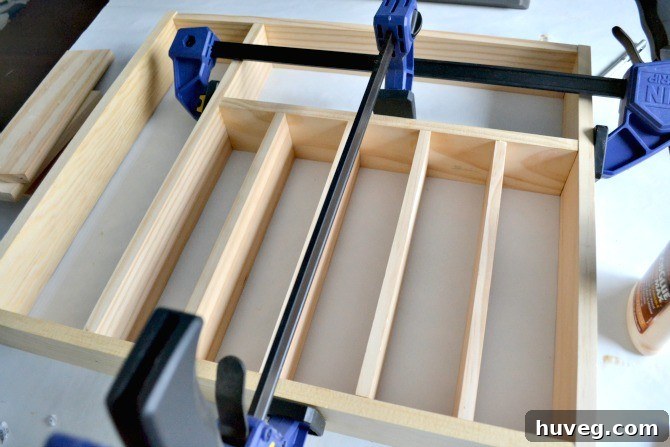
5. Finishing Touches: Protection and Polish
After the glue has fully cured and the structure is solid, it’s time to protect your masterpiece. While some tutorials suggest painting, I strongly advise against it for a silverware organizer. Over time, cutlery will inevitably bang and scrape against the dividers, leading to chipped paint – an unwelcome addition to your dinnerware! Instead, opt for a food-safe finish. Following the successful application on my butcher block countertops, I chose a nourishing blend of beeswax and mineral oil. This natural treatment not only protects the wood from moisture and wear but also beautifully enhances its natural grain and color, giving your custom organizer a warm, inviting glow.
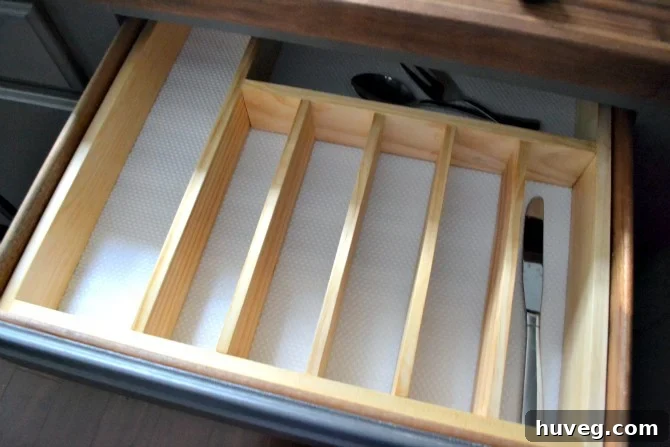
The Organized Reveal: A Place for Everything
With the finishing touches complete, all that’s left is the satisfying act of arranging your silverware. Each knife, fork, and spoon now has its own designated home, nestled neatly within perfectly sized compartments. The transformation is remarkable – from a chaotic mess to a picture of orderly efficiency, all thanks to a custom DIY solution.
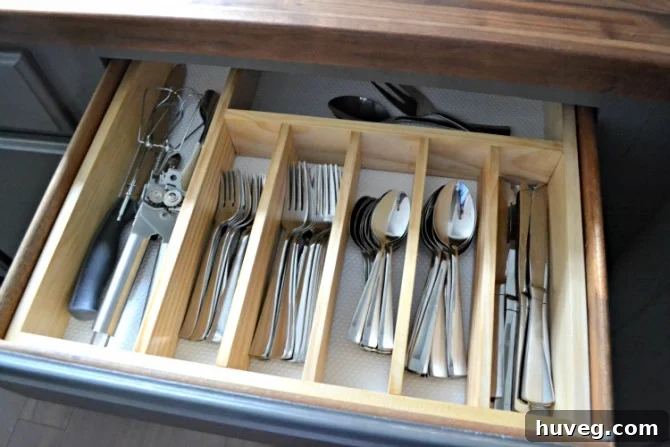
For a minimal investment of approximately $10 in wood and a few hours of enjoyable DIY work, one more drawer has been conquered on my journey to a fully organized kitchen. This project is a testament to the power of customization and the immense satisfaction that comes from creating something both functional and beautiful for your home.
Join the #OrganizeBuildChallenge Community!
This project is just one piece of the larger #OrganizeBuildChallenge mosaic. I encourage you to explore the incredible creativity and ingenuity of my fellow blogging friends who participated this month. Their diverse projects offer a wealth of inspiration and practical ideas for transforming your own spaces. Dive into their amazing work and get inspired to tackle your next organization project!
- Elisha from Pneumatic Addict (this month’s challenge host)
- Donna from Funky Junk Interiors
- Jen from House of Wood
- Jaime from That’s My Letter
- Emily from Merrypad
- Kim from The Kim Six Fix
- Corey from Sawdust 2 Stitches
- Mindi from MyLove2Create
- Sarah from The Ugly Duckling House (that’s me!)
What’s your latest DIY organization project? Share your ideas and inspiration in the comments below – there’s always room on my to-do list for another brilliant idea!