Transform Your Cabinets: No Sanding Needed

Transform Your Kitchen: The Ultimate Guide to Painting Cabinets Without Sanding for a Flawless Finish
Are you dreaming of a kitchen refresh but dreading the thought of sanding? Good news! It is absolutely possible to paint your kitchen cabinets without the laborious and dusty process of sanding, provided you approach the project with the right preparation and products. This comprehensive guide will walk you through my tried-and-tested method, helping you achieve a durable, professional-looking finish with less hassle, saving you time and energy.
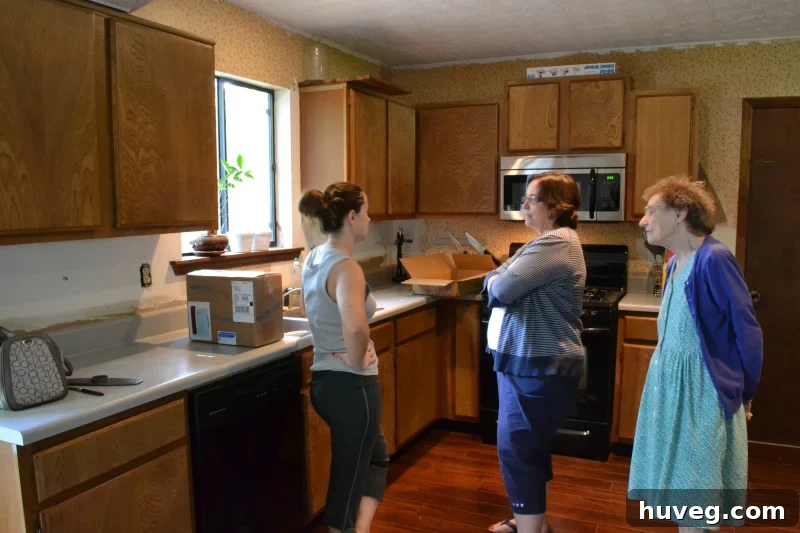
My own kitchen renovation journey began on a bustling Saturday morning, complete with a sink full of dirty dishes. My mom and granny generously offered their help, making the initial planning a memorable family affair. As you can see from the photo, our game plan discussion was swift and efficient – a testament to the casual, real-life approach many DIY enthusiasts adopt. It also serves as proof that serious DIY can indeed happen comfortably, even in pajamas and flip-flops!
The Master Plan: Painting Cabinets Without Sanding
Our initial strategy for the day was multifaceted: first, a trip to Home Depot and Lowe’s to explore cabinet hardware options (we ended up visiting both, of course). Second, purchasing essential supplies like deglosser, a crucial element for skipping the sanding step. And finally, thoroughly prepping all the lower cabinets for their new coat of paint. Throughout this guide, I’ve included links to the specific products I used, as I often find it helpful to see the exact packaging when browsing stores. While these links may provide a small commission at no extra cost to you, rest assured, all products are readily available at your local hardware store.
The No-Sanding Strategy: My Proven Method
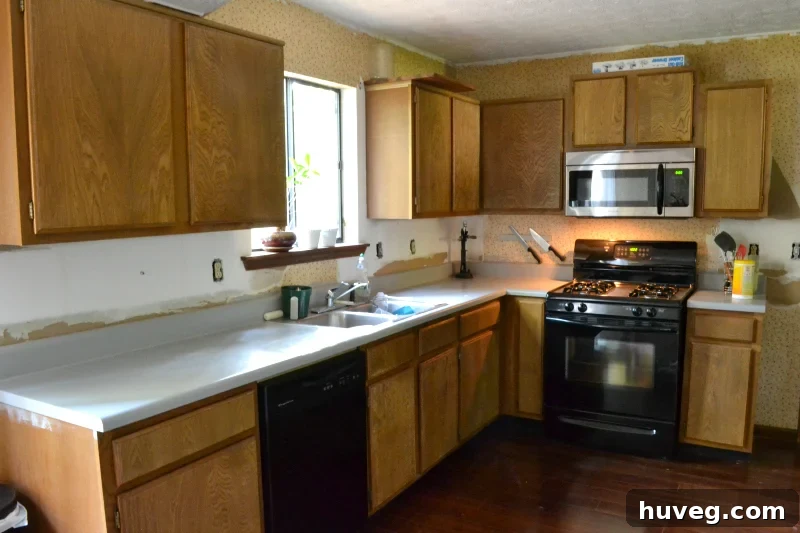
Let me share a confession and a bit of backstory: I was absolutely determined to avoid sanding these cabinets. They were old and grimy, yet surprisingly lacked a high-gloss finish, which made me optimistic about a no-sanding approach. A few years prior, I had successfully painted the original bathroom cabinets (identical to these kitchen ones) using a cabinet painting kit as a trial. Despite extensive use and even repurposing one door as a laptop rest, that painted surface showed not a single scratch. This experience solidified my belief that with the right combination of preparation and products, sanding could be bypassed.
While my previous experience with the kit was positive for durability, I decided to opt for a different approach for the kitchen. This was primarily due to my desire for a specific sheen in the final result, concerns about needing multiple kits to cover the entire kitchen, and the limited color selection offered by the kit. My vision for the kitchen required more flexibility in color and finish. My goal was a system that delivered equivalent, if not superior, adhesion and longevity without the messy, time-consuming effort of sanding. Below is the refined strategy I planned to implement for my kitchen transformation, focusing entirely on a robust chemical preparation instead of mechanical abrasion.
Step-by-Step Guide: How to Paint Kitchen Cabinets with Zero Sanding Required
Achieving a long-lasting, smooth paint finish on your kitchen cabinets without sanding boils down to rigorous preparation. Follow these steps meticulously:
- Wash Thoroughly: Begin by washing down every surface of your cabinets with a powerful TSP substitute. This critical first step removes layers of grime, grease, food residue, and finger oils that accumulate over years. These contaminants can severely hinder paint adhesion, leading to peeling or uneven finishes later on. Ensure you clean every nook and cranny, as paint will only stick as well as the surface beneath it.
- Scrub with Deglosser: After the initial wash, further scrub the cabinets with a Liquid Sander/Deglosser. This product is the secret weapon for skipping sanding. It chemically etches the existing finish, creating a microscopically rough surface that primer can grip onto, much like traditional sanding would, but without the dust. It also helps to further break down any remaining oils or residue.
- Prime Adequately: Apply two thin, even coats of high-quality primer to all cabinet surfaces. After extensive research and reading countless reviews, I chose Zinsser Smart Prime. A good primer acts as a bonding agent, ensuring your topcoat adheres flawlessly to the prepped surface and provides a uniform base for your chosen paint color. It also helps block stains and prevents bleed-through from older finishes.
- Paint the Lower Cabinets: Once the primer is fully cured according to manufacturer instructions, proceed with painting your lower cabinets. Apply thin coats for the best results, allowing adequate drying time between each.
- Repeat for Upper Cabinets: Since I planned to use two different colors and add molding to the upper cabinets, I decided to tackle them on a separate day. This allows for focused attention on each section, ensuring precision and preventing accidental drips or color transfers.
Essential First Steps: Preparing Your Workspace
Protect the Floor
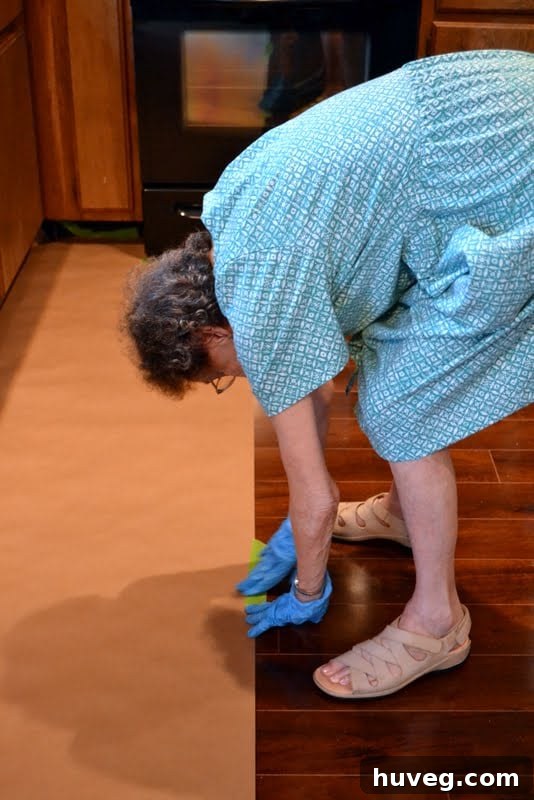
Before any serious cleaning or painting could begin, the first order of business was to protect our shiny kitchen floor from potential drips or spills of the deglosser and paint. We carefully taped down builder’s paper, also known as rosin paper, to create a protective barrier. Here’s a quick DIYer tip: invest in a giant roll of rosin paper. It’s incredibly versatile, cheap, and pays for itself in convenience. Beyond protecting surfaces, it can be used for various projects and even serves as emergency wrapping paper! My granny, who has Alzheimer’s and gets restless if she sits for too long, happily took charge of securing the paper with Frogtape, ensuring every inch of the floor was safe.
Remove Doors and Hardware
Next, I tackled the removal of the lower cabinet doors and their hardware. Let me tell you, thirty-year-old cabinet hardware can be quite a challenge, with stubborn screws and accumulated grime requiring extra effort! While I wrestled with the old hardware, Mom began the initial wash-down with the TSP substitute. The primary goal at this stage was to meticulously remove any grease and finger oils. These particular cabinets didn’t have doors on them, meaning years of hands gripping the edges left behind residues that absolutely needed to be scrubbed away to ensure proper paint adhesion.
For the cleaning, I used Klean-Strip TSP Substitute, which performed adequately. However, Mom also found that a plain grease-cutting spray, typically used for cleaning the stove, worked just as effectively. It’s always good to have options, especially when dealing with stubborn kitchen grease.
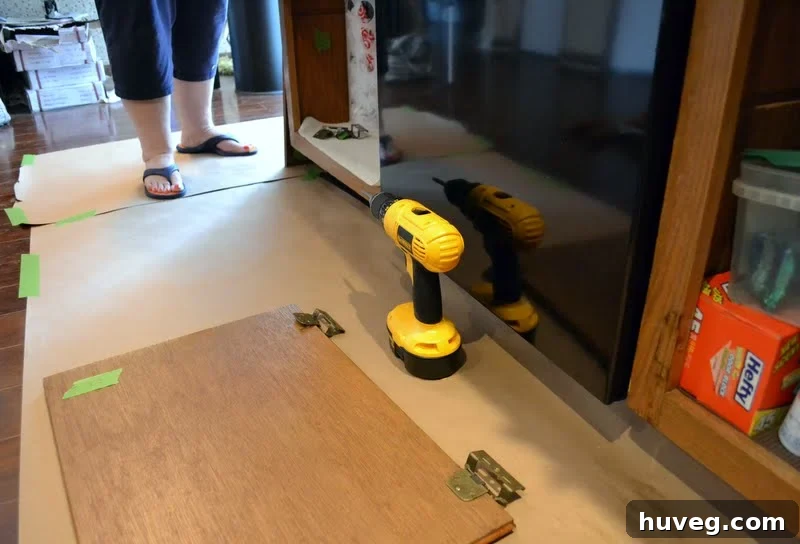
A minor but important learning moment: I discovered that the most efficient way to remove everything was to first detach the entire door from the cabinet frame, and then remove each hinge from the door. It seems like common sense in hindsight, but in the heat of a DIY project, it’s easy to start the other way around like a “doof” (as I did!).
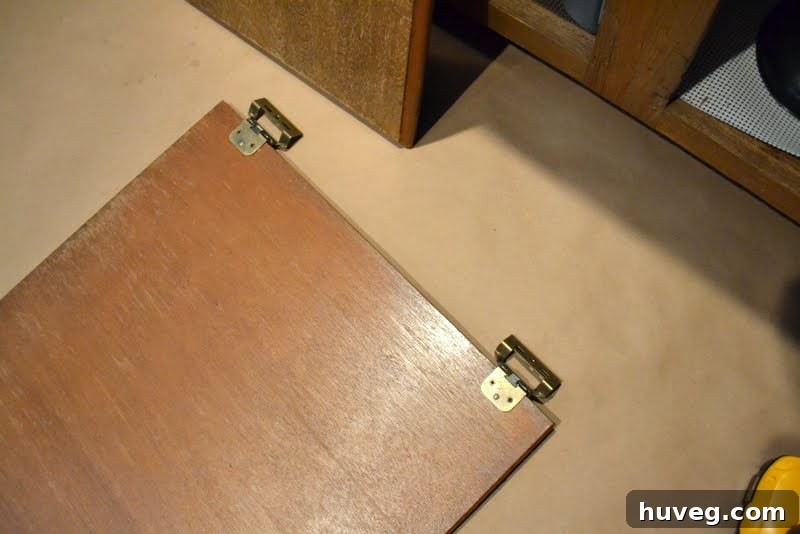
Systematic Hardware Tracking
To avoid the chaos of lost screws or mismatched hinges, I developed a simple yet effective system for keeping track of all hardware. Each piece of hardware was placed directly into the cabinet it belonged to, with a small piece of tape indicating which hinge was the bottom one. This ensures that when it comes time for reinstallation, everything goes back exactly where it came from.
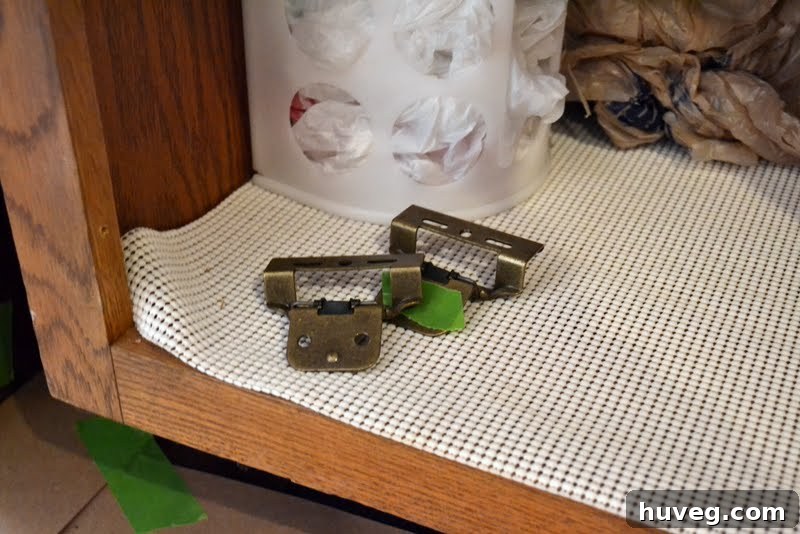
Screws were meticulously taped together in small groups, corresponding to their respective hinges or hardware pieces.
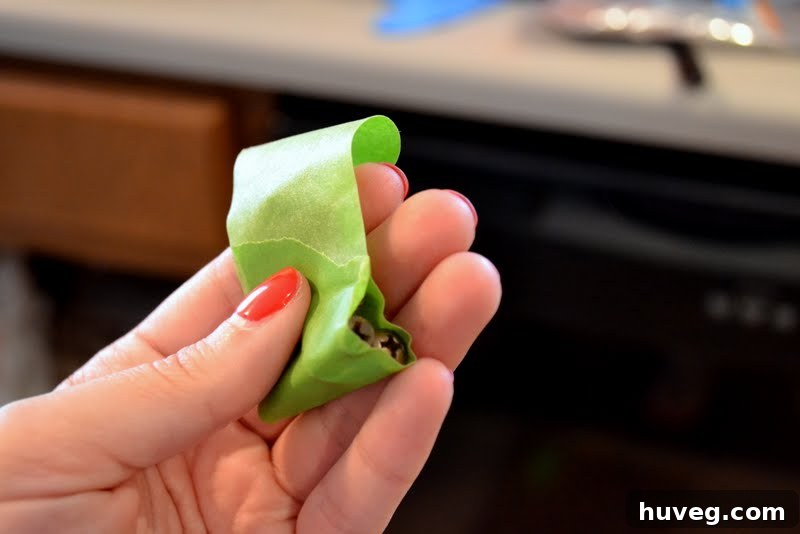
These grouped screws were then taped to the inside of their corresponding cabinet, safeguarding them from getting lost and ensuring they are reunited with their correct hardware later. I’ve heard stories of hinges causing doors to hang unevenly if they are mixed up, so maintaining their original pairing was crucial. (That caddy with plastic bags you see is an old Ikea find, perfect for corralling doggie bags, proving its versatility even in a kitchen renovation!)
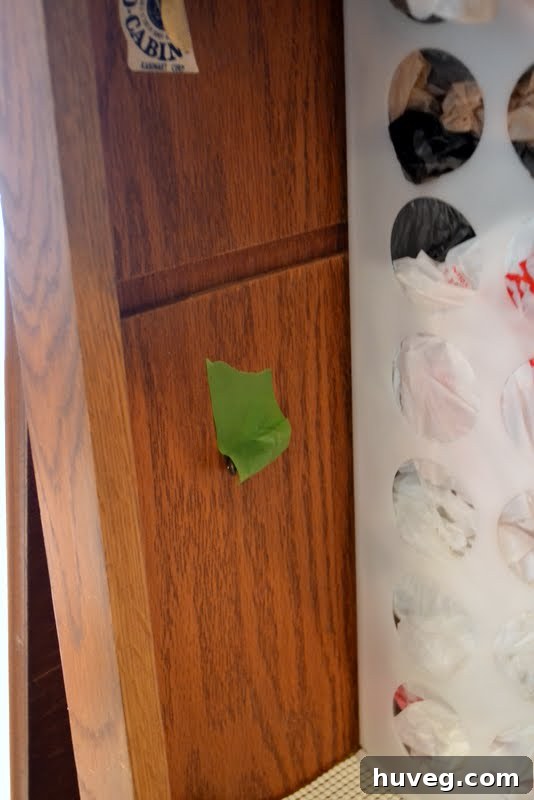
Though I ultimately planned to replace these old hinges with new ones that better matched our chosen cabinet door handles, this meticulous tracking system was still invaluable. It provided a reliable backup in case I couldn’t find suitable replacements, ensuring I could easily reassemble everything in its original configuration if necessary.
Marking Door Placement
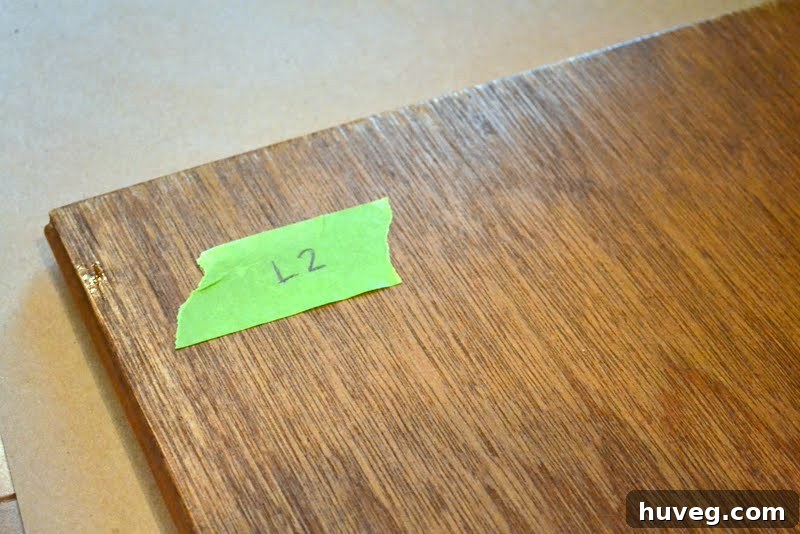
Another valuable lesson learned was the importance of reliably marking the doors. Initially, I used tape to label each door (e.g., “L1” for lower cabinet door 1, “L2” for lower cabinet door 2, from left to right). However, after scrubbing the cabinets with the TSP substitute, the tape simply wouldn’t adhere again, proving this method unreliable for multiple cleaning stages.
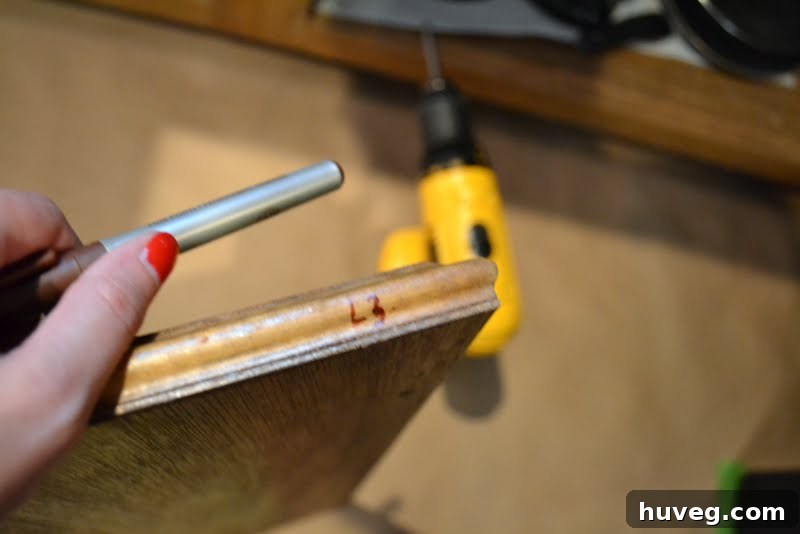
The alternative was to mark the bottoms of each door with a permanent(ish) marker. While this also rubbed off during the subsequent liquid deglosser process (darn!), it was much easier to re-mark than trying to get tape to stick to a wet, chemically treated surface. It’s all part of the learning curve in a hands-on project.
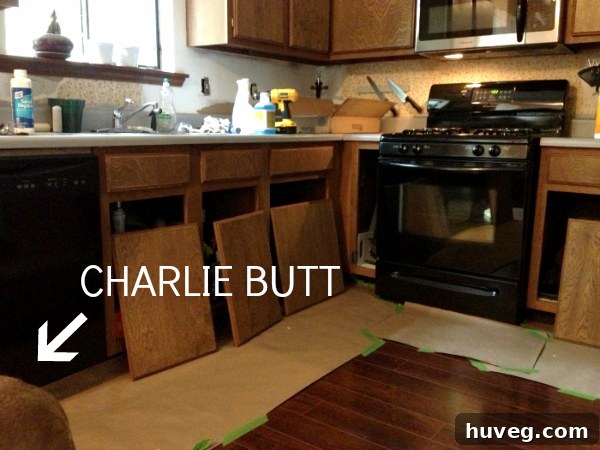
Amidst all the renovation activity, our sweet dog, Charlie, found her happy place. She spent the day contentedly sitting in the middle of the kitchen, joyfully devouring a new toy I brought home for her. Now, she carries it everywhere, from room to room – an adorable distraction amidst the DIY!

Deep Cleaning: The Foundation for a Lasting Finish
Clean and Scrub with TSP Substitute and Deglosser
Once all the cabinets had undergone their initial scrubbing with the TSP substitute, we moved on to the next crucial phase: the liquid deglosser. This might seem like an overly thorough, even redundant, step, but my priority was to ensure the cabinets were in the absolute best possible condition for paint adhesion, guaranteeing a long-lasting finish without the need for sanding. This dual-step cleaning protocol is the cornerstone of the “no-sanding” method.
I specifically sought out a less noxious deglosser to minimize strong chemical odors, making the process more tolerable for everyone involved. I opted for Klean-Strip Liquid Sander Deglosser, which boasts a water-based and biodegradable formula. Its recommendation by professionals, as I found in my research, was a strong convincing factor for me. A practical note: the product packaging might vary. Online, I frequently saw images with a yellow label, but the bottle I purchased had a plainer blue label (you can catch a small glimpse of it in the picture of the cabinets and counter below).
Safety First: Protecting Yourself During Prep
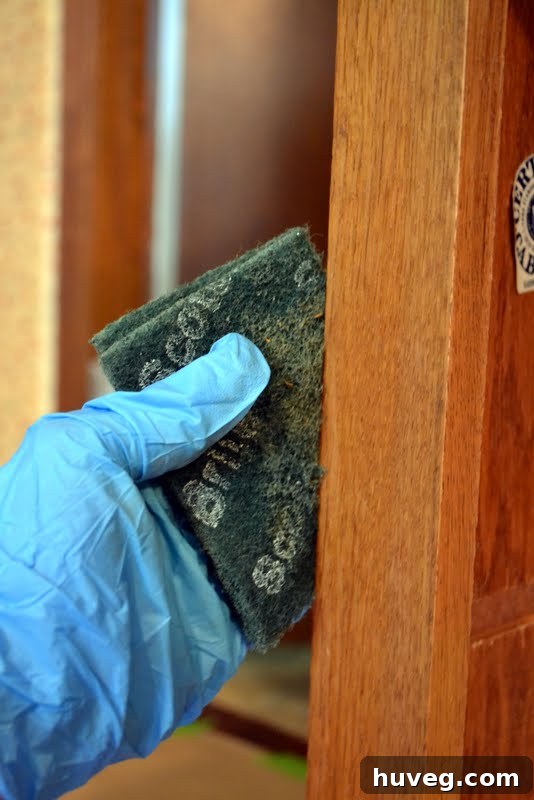
Working with deglosser, even a less odorous one, requires strict adherence to safety protocols. It is paramount to wear safety goggles to protect your eyes and nitrile gloves to shield your skin. Additionally, ensure adequate ventilation by opening windows, even if the product label doesn’t explicitly state it. These are chemicals, and protecting your body from irritation or exposure is non-negotiable.
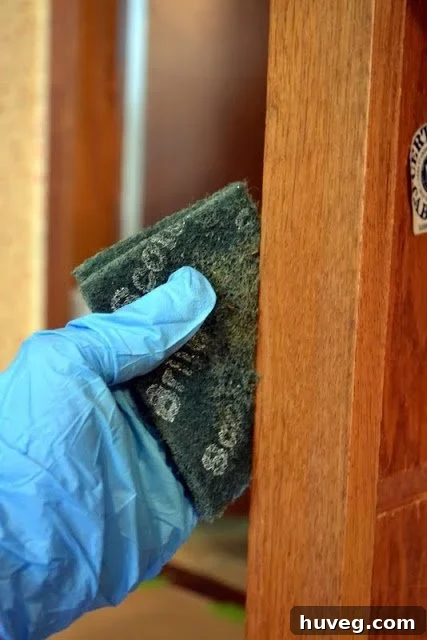
The application process itself is straightforward: generously squirt the liquid deglosser onto a coarse cloth or scouring pad (you’ll often find these next to the deglosser in a well-organized hardware store). Apply it with a firm, circular motion, using a fair amount of “elbow grease.” We were quite surprised to observe the cabinets appearing to lighten slightly as they began to dry, indicating that some of the old finish was indeed being removed and prepped. You might also notice a slightly filmy residue once it dries; the manufacturer’s instructions confirm this is perfectly normal and can be painted over without requiring an additional rinse.
After all the strenuous scrubbing and deglossing was complete, Mom and Granny headed home, leaving me a moment to relax and capture a snapshot of our progress. While it might not look like a monumental change in the picture, we were certainly tired, and the deglosser had already dried, marking the completion of a major preparatory phase. The next steps in this kitchen transformation involve finding new hinges, patching any holes from the old hardware (if necessary), and finally, applying the first coats of primer.
Final Touches and Future Visions: Design Decisions
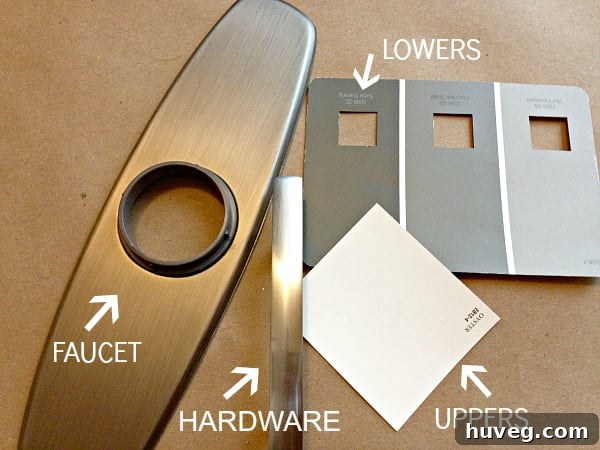
As promised, here’s a sneak peek at some of the design decisions we’ve made so far for the kitchen. I discovered these particular door handles at Lowe’s and knew almost instantly that they were the perfect fit. I didn’t even bother to bring alternative options home – I simply purchased the shorter versions for the drawers and longer ones for the cabinet doors, holding them up against the existing cabinetry once we were back. It was a clear “one and done” decision, a rare but welcome occurrence in design choices!
Also pictured are a few color swatches for the lower cabinets. Dark grays can be notoriously tricky in this house; what’s supposed to be a perfectly neutral shade often takes on a bluish tint, making selection a meticulous process. Beside them, a crisp white swatch serves as a reference for the upper cabinets. I’m almost certain I’ll be painting the upper cabinets Benjamin Moore’s Decorator’s White – a color that consistently receives high praise and strong recommendations from various online sources I’ve consulted for its versatility and clean finish.
Finally, nestled beneath the cabinet handle in the photo, you can see the sample of our new faucet finish. It just arrived in the mail, and I’m incredibly excited to see it installed and gleaming in the renovated kitchen!
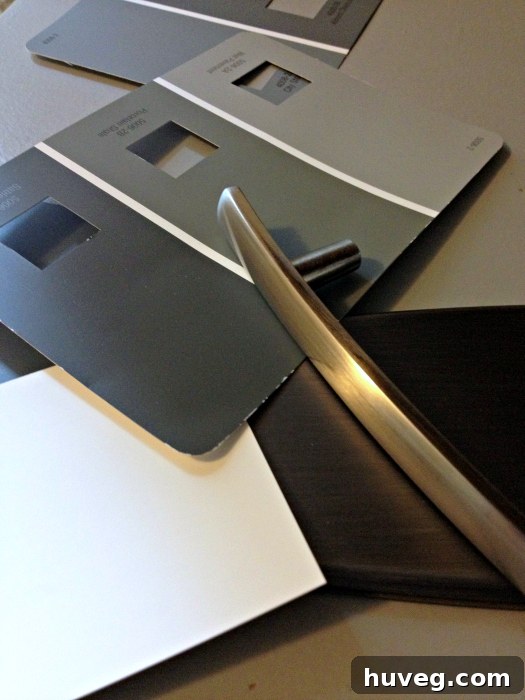
In this second photo, you can get another look at the chosen colors and finishes. The faucet hardware boasts a beautiful “slate” finish, which is a touch darker than traditional stainless steel, adding a subtle depth. I’m incredibly pleased with this combination, feeling confident that these elements will come together to create a cohesive and stylish kitchen aesthetic that perfectly aligns with my vision for a modern, refreshed space.
So, who’s bringing dinner? Takeout is definitely going to be the norm around here until this kitchen renovation is complete – and then, a whole lot of dishwashing awaits! Painting your cabinets without sanding is a highly achievable goal with the right prep work and dedication. By meticulously cleaning and chemically prepping your surfaces, you can bypass the dust and labor of sanding, securing a beautiful and durable painted finish that will revitalize your kitchen. Stay tuned for more updates as we continue this exciting renovation journey!
Explore More Kitchen Renovation Journeys
Here are links to follow-up posts detailing the rest of the kitchen transformation process:
- Priming the Cabinets
- Painting the Lowers and Uppers
- Replacing the Countertop
- Cutting the Hole for the Sink (and fixing a misaligned cut!)
- Treating the Butcher Block
Want more kitchen ideas? From tiling a backsplash to installing counters and more, I’ve got you covered for your next kitchen project!
More Kitchen Remodeling
SEE ALL KITCHEN PROJECTS
-
How to Tile a Backsplash (Step by Step Guide)
-
How to Protect Butcher Block Counters During Projects
-
How to Fix a Bad Cut in Butcher Block Counters with an Undermount Sink
-
No-Sew Faux Roman Shade and My Christmas Kitchen Window
-
How to Seal Damaged Drywall
-
How to Prep Kitchen Walls for a Tile Backsplash
See more projects and get more updates on the Kitchen page of my House Tour!