Dust and Delight

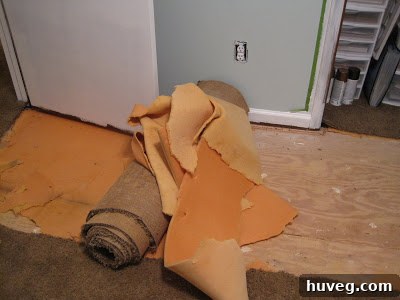
The moment arrives for many homeowners: the realization that the old, worn, and perhaps even aesthetically offensive carpet has seen its last days. For us, that moment struck with full force this week as we embarked on the monumental task of removing our truly nasty, undeniably ugly, and unmistakably brown carpet. It was more than just a floor covering; it was a relic of a bygone era, and frankly, a breeding ground for dust and allergens.
I’ve often heard cautionary tales about what lies beneath old carpet – usually something disturbing, and almost always incredibly dirty. And let me tell you, those warnings weren’t kidding. What we uncovered was a testament to years of accumulated dust, grime, and hidden surprises.
The Genesis of Our DIY Flooring Adventure
Our journey began with a vision: transforming a functional, yet visually uninspiring, craft room into a brighter, more modern space. This past weekend, during a flooring shopping excursion with my Dad, we discussed the possibility of tackling the laminate flooring installation ourselves. The craft room, being a relatively contained area, seemed like the perfect proving ground to test our DIY mettle. Could we really handle this? There was only one way to find out.
Monday evening rolled around, and Scott and I geared up, not in construction attire, but with thick socks – shoes are even better, but any form of foot protection is crucial to prevent staples from finding their way into your soles. Not to mention the sheer grossness you encounter once you start disturbing decades of accumulated dirt under old carpet. Armed with newly purchased utility knives, we began the initial cuts. These sharp tools made surprisingly quick work of slicing through both the carpet and the underlying padding layers, turning what seemed like an overwhelming task into manageable sections.
Navigating the Dust Storm: The Art of Padding Removal
The moment the padding began to lift, my first sneezing fit of the project commenced. A flash photo would likely reveal a cloud of fine dust particles swirling through the air, emanating from the disturbed carpet padding. This stage, often underestimated, is where you’ll really start kicking up dust, dirt, and allergens that have been trapped for years. If you’re embarking on this DIY adventure yourself, my strongest recommendation is to approach padding removal with a gentle hand.
Instead of aggressively yanking the padding off the floor, which only serves to launch a miniature dust storm, try this method: gently pull at the padding to detach it from the staples holding it in place. Once a section is loose, fold each corner inward towards the center, progressively making the piece smaller and smaller. Continue folding until the padding is compact enough to fit snugly into a heavy-duty trash bag. This technique significantly limits the amount of dirt and dust tossed into the air, preventing it from settling into your lungs and all over your newly cleared space. Had this been a larger demolition evening, a proper dust mask would have been donned from the outset – a lesson I’ve certainly learned for our future “Freddy Krueger” session on the downstairs carpet!
The Rapid Transformation: From Carpeted Mess to Bare Canvas
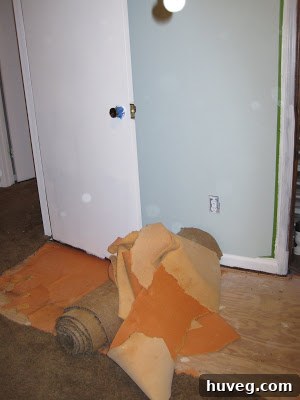
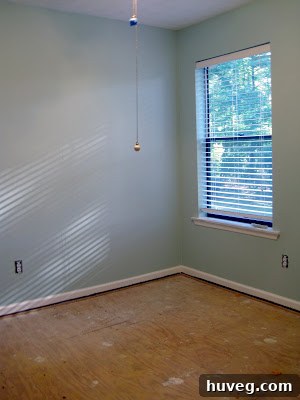
And just like that, in what felt like an astonishingly short fifteen minutes, we had achieved a significant milestone: one less room in our house covered in that unmistakably 70s-style carpet. The transformation was immediate and incredibly satisfying. The once-dark and enclosed space instantly felt larger, brighter, and ready for its next chapter. It’s truly amazing what a bare subfloor can do for the perception of a room.
Beyond the Trash Can: Eco-Friendly Carpet Disposal Ideas
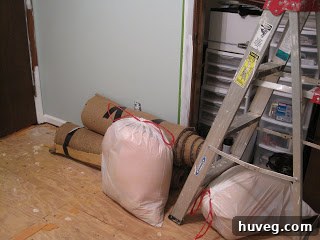
With the carpet now in a manageable pile, the next thought turned to disposal. Instead of immediately hauling it to the dump, I decided to give good ol’ Craigslist a shot. You’d be surprised at the creative uses people find for old carpet in an outdoor setting. I’ve heard of it being used to prevent soil erosion on sloping areas, acting as an effective weed suppressor in gardens, or even providing insulation under a compost heap. While it might seem unconventional, giving things a second life, even something as mundane as old carpet, aligns with an eco-conscious mindset. Even if there are no takers, at least I tried to be “green,” right? It’s always worth exploring alternatives to simply sending things to a landfill.
The Unsung Heroes of Floor Prep: Staples and Tack Strips
But the journey to a beautiful new floor doesn’t end with the carpet and padding gone. What lies beneath is a minefield of forgotten fasteners: countless staples and the ever-present carpet tack strips. These often-overlooked elements are crucial to address before any new flooring can be laid down. Removing them is arguably the most tedious part of the entire carpet removal process, but it’s absolutely non-negotiable for a smooth, professional-looking finish. For the staples, a pair of needle-nose pliers or a dedicated staple remover tool can be invaluable. Each tiny metal staple, once holding the padding firmly in place, must be carefully pried up. It’s a task that requires patience and attention to detail, as even a single overlooked staple can cause a bump or tear in your new flooring. For the tack strips – those wooden strips lined with sharp, upward-pointing nails – a pry bar and a hammer are your best friends. Work carefully, lifting sections at a time, and always wear sturdy gloves to protect your hands from those unforgiving nails. Once removed, these sharp strips should be bundled securely with the nails facing inward and taped to prevent injury during disposal. This meticulous preparation of the subfloor ensures a clean, flat, and safe surface for the next stage of your flooring project.
What’s Next: Preparing for the Future
With the carpet, padding, staples, and tack strips out of the way, the subfloor is finally exposed. This is the moment for thorough cleaning – vacuuming every speck of dust and debris, inspecting for any damage, loose boards, or uneven areas that might need repair. A clean, level subfloor is the foundation of any successful flooring installation. Our next step will involve addressing these final preparation tasks, ensuring our craft room is perfectly primed for its exciting transformation with beautiful new laminate flooring. Stay tuned for the next post, where we dive into the nitty-gritty of subfloor preparation and the exciting process of laying down our chosen laminate!