Simple DIY Round Mirror Frame No Special Equipment

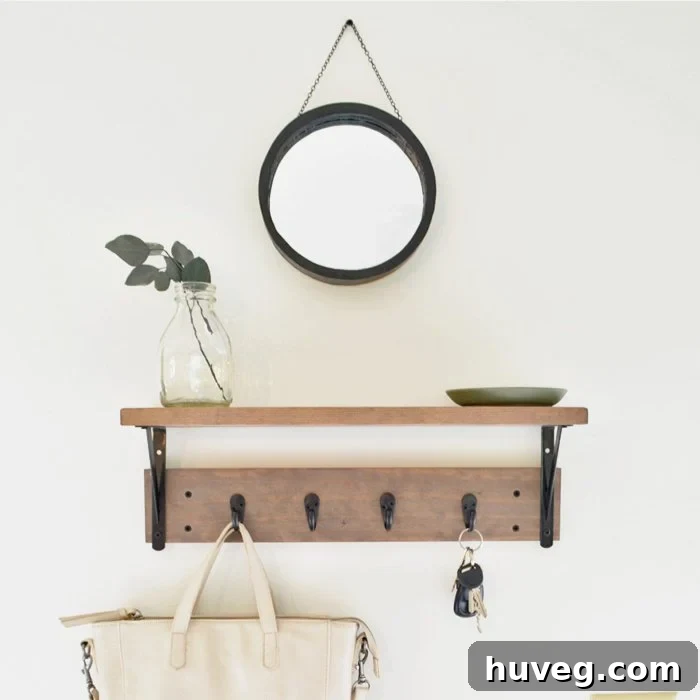
Welcome, DIY enthusiasts! Tylynn here, thrilled to share another creative and budget-friendly project from Bitterroot DIY. Have you noticed the soaring prices of stylish round mirrors in stores recently? It’s astonishing how expensive these popular decor pieces have become! After completing a charming small entryway shelf, I envisioned the perfect small round mirror to complement it. However, my search for an affordable option proved fruitless. Determined to achieve the look without breaking the bank, I decided to tackle the challenge of framing a humble thrift store mirror myself. The total investment? A mere $3.
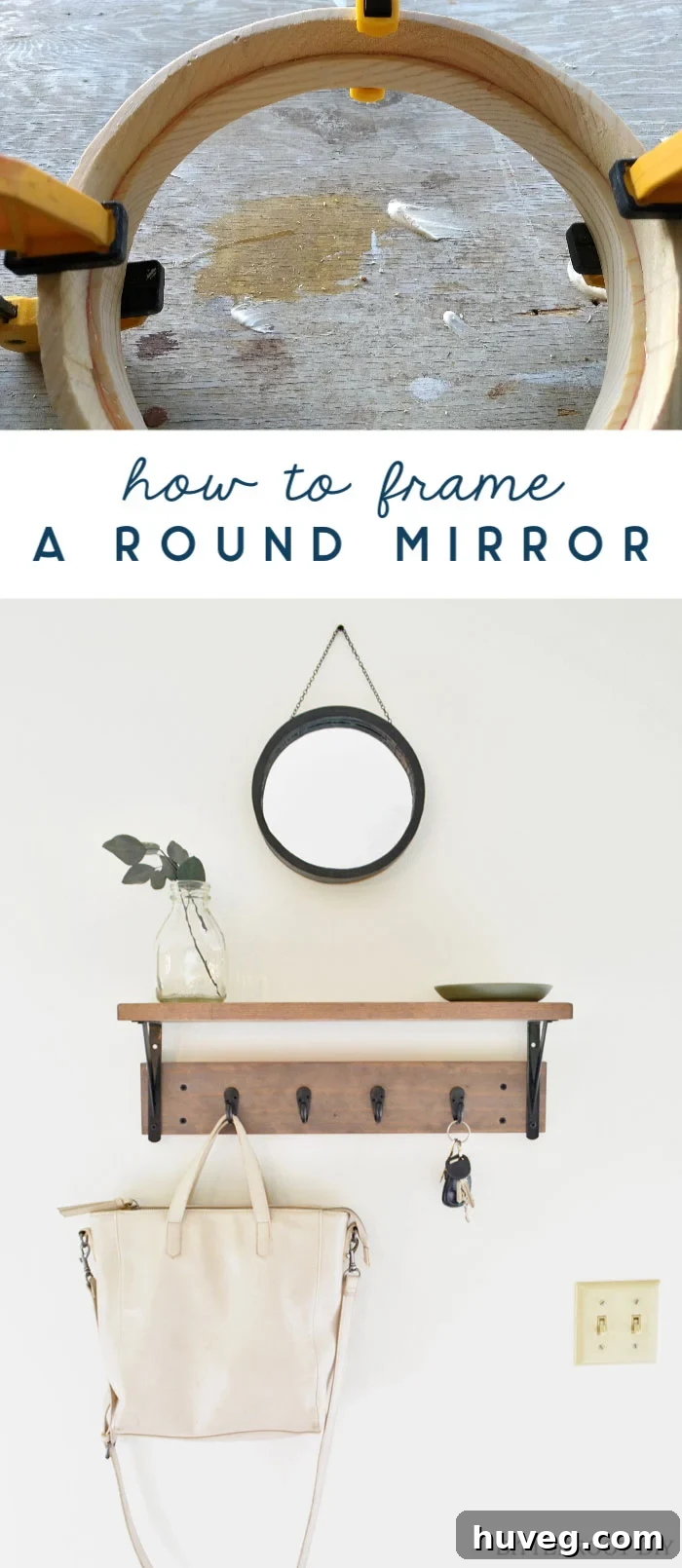
Yes, you read that right – significantly more affordable than anything you’d find in a retail store. While many tutorials for framing round mirrors suggest using a router, I faced a delightful challenge: my sister-in-law currently has my router. This prompted me to devise an alternative method, proving that you don’t always need specialized tools to achieve professional-looking results. I’m incredibly pleased to report that the primary tools required for this project are simply a jigsaw and some reliable clamps!
This beginner-friendly woodworking project is perfect for adding a touch of personalized style to your home decor. Whether you’re looking to upgrade a plain mirror, create a statement piece for an entryway, or simply enjoy a rewarding DIY endeavor, this guide offers a straightforward path. Dive into these free plans and don’t hesitate to reach out with any questions you might have along the way. Let’s transform that inexpensive mirror into a true focal point!
Essential Materials for Your DIY Round Mirror Frame Project
Gathering your materials before you begin will ensure a smooth and enjoyable crafting experience. Most of these items are readily available at your local hardware store or online, making this a highly accessible project for any DIY enthusiast.
- Round mirror: The star of our project! A thrift store find is ideal for keeping costs down, but any plain round mirror will do.
- Jigsaw: Our primary cutting tool for creating those perfect curves. Ensure you have a sharp blade designed for wood.
- Wood: Choose a piece of wood that is wide enough to accommodate the mirror’s diameter plus your desired frame width. Plywood or a solid wood board (like a 1×10 or 1×12) works well. The type of wood will impact the final look and how easily it cuts.
- Clamps: Essential for holding your wood pieces securely while gluing and cutting, ensuring precision and safety.
- Wood glue: For permanently bonding the frame pieces together. A strong wood adhesive is crucial for durability.
- Mirror adhesive: Specifically designed for attaching mirrors to wood without damaging the reflective backing.
- Sandpaper: Various grits (e.g., 80, 120, 220) for smoothing edges and preparing the wood for finishing.
- Paint/stain of your choice: To customize your frame and match your existing decor. Don’t forget a sealant for protection!
- Optional: Wood filler, drill with a bit, measuring tape, pencil, compass or string and a thumbtack for drawing perfect circles, protective cardboard.
How to Frame a Round Mirror Without a Router: A Step-by-Step Jigsaw Tutorial
This detailed guide will walk you through creating a stunning custom frame for your round mirror using just a jigsaw, proving that beautiful home decor doesn’t require a workshop full of expensive tools. Get ready to transform your space with this budget-friendly DIY project.
Step 1. Crafting the Back Frame: The Foundation of Your Mirror
The first step involves creating the foundational piece of your mirror frame, which will provide stability and partially recess the mirror. Begin by placing your round mirror directly onto your chosen piece of wood. Carefully trace the entire outside edge of the mirror onto the board using a pencil. This traced line will serve as your essential reference for the mirror’s precise diameter.
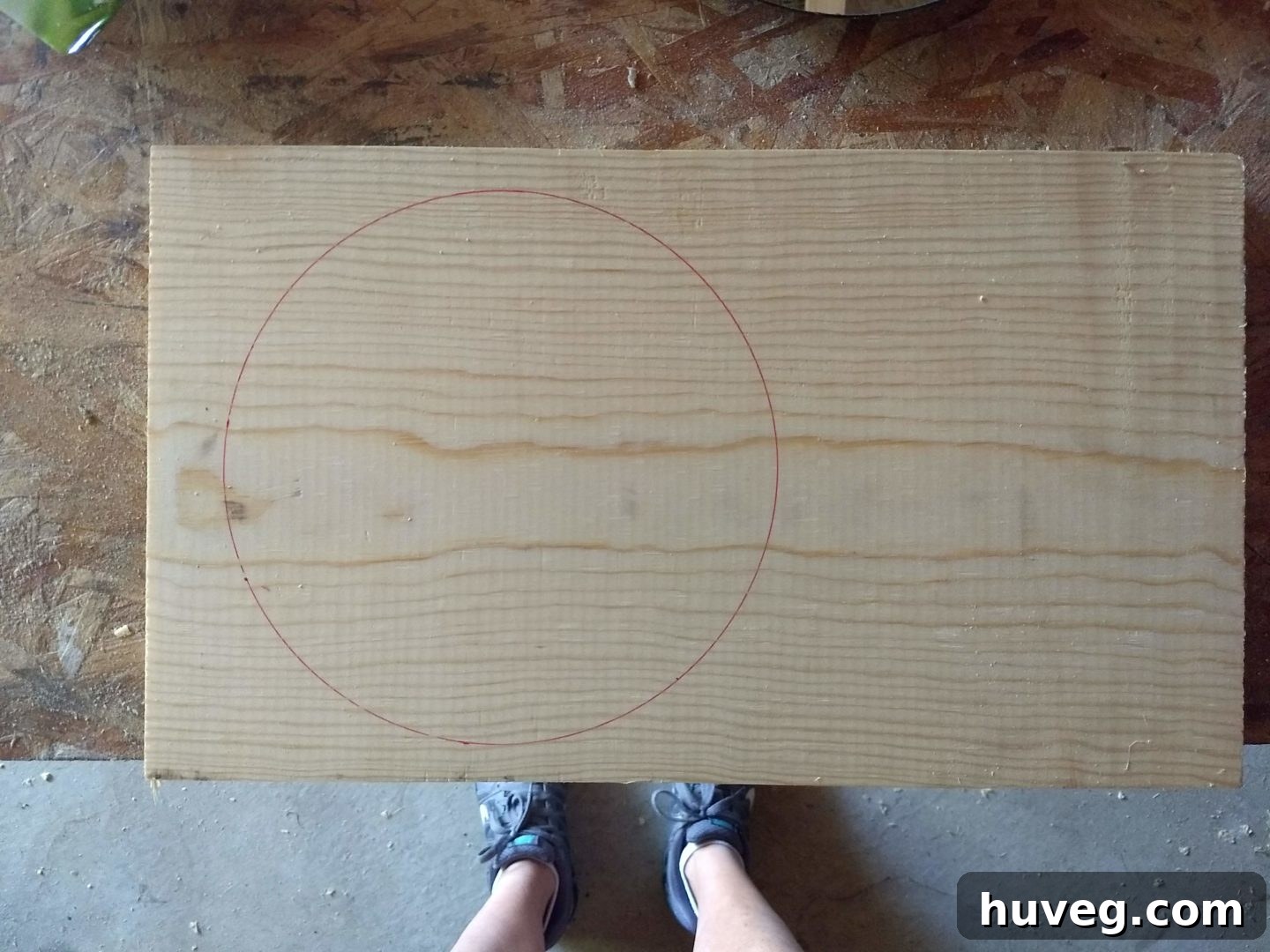
Next, determine the desired width of your frame. For this project, I opted for a 1/2-inch wide frame, which offers a sleek and modern look without being overly bulky. To achieve this, you’ll need to mark two additional circles:
- **The Outer Edge:** Find the precise center of the circle you just traced (the mirror’s diameter). From this center point, measure and mark 1/2 inch (or your chosen frame width) to the *outside* of the traced mirror diameter. This new, larger circle will define the outermost edge of your finished frame.
- **The Inner Lip:** From the same center point, measure and mark 1/2 inch to the *inside* of the original traced mirror diameter (the center red line in the example photo). This smallest circle will create the inner lip that the mirror will eventually rest against.
The photo illustrates these lines: the central red line represents the mirror’s actual diameter, the outer marked line is 1/2″ beyond that, and the innermost line is 1/2″ inside the mirror diameter.

Now, it’s time to make your first cuts. Using your jigsaw, carefully cut along the outermost circle you marked. Take your time, moving slowly and steadily to ensure as smooth and round a cut as possible. Remember, patience is key here for a clean finish. Once the outer circle is cut, you will have a solid wood disc that represents the full diameter of your framed mirror.
To cut out the inner circle and create the opening for your mirror, you’ll need a starting point for your jigsaw blade. Drill a small pilot hole just *inside* the innermost marked circle, ensuring it’s large enough to insert your jigsaw blade. Once the pilot hole is drilled, insert your jigsaw blade and carefully cut along the innermost circle. This cut creates the recess where your mirror will sit.
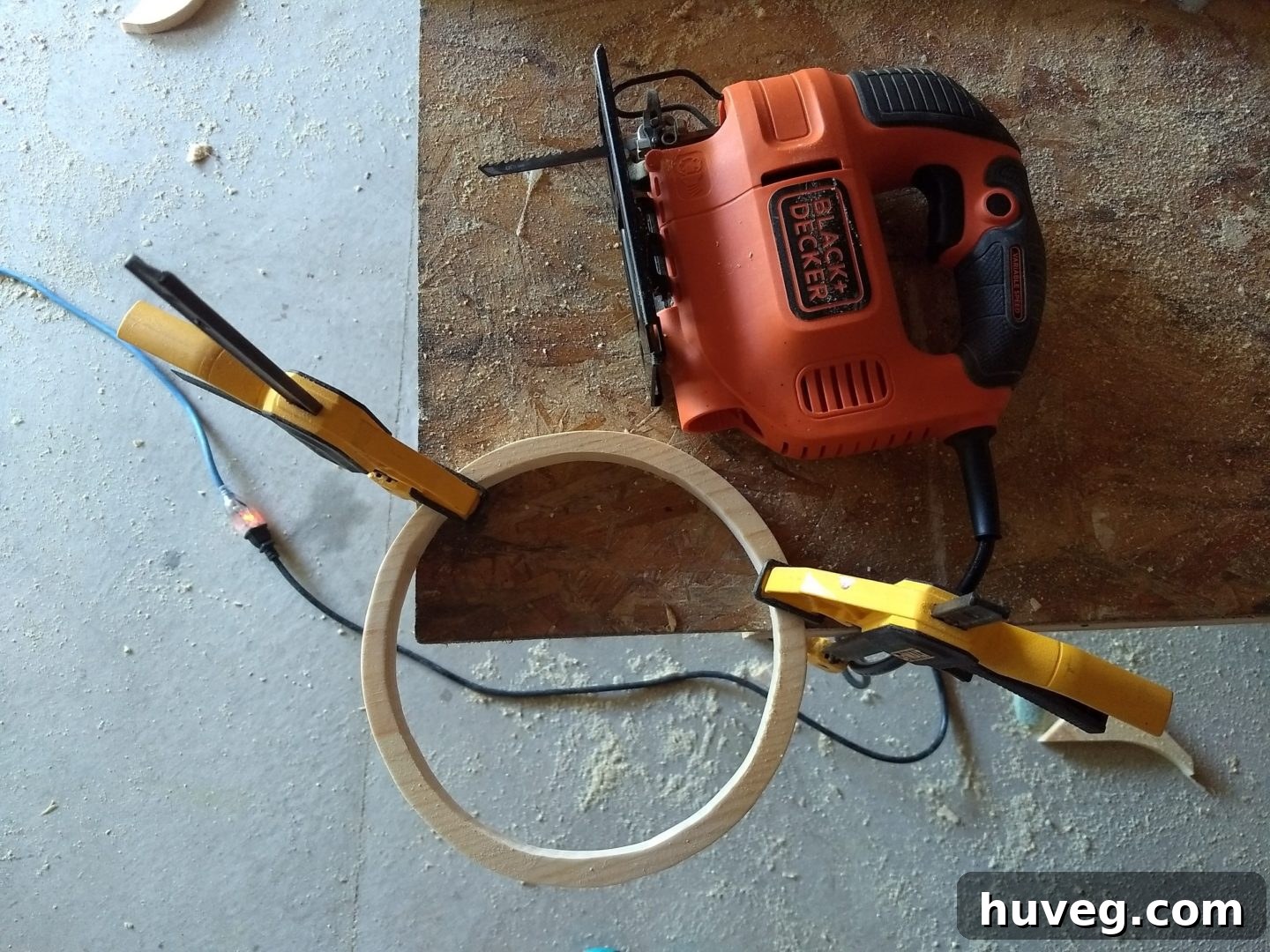
You now have the back frame piece, complete with an inner lip. The mirror I used for this particular project was quite small, only about 6 inches in diameter, which allowed me to cut the entire frame out of a single spare 1×10 board. For larger mirrors, your approach may need to be slightly different. If your mirror’s diameter exceeds the width of a single board, you can adapt a technique where multiple pieces of wood are joined. For an excellent example of how to lay out a large mirror frame using multiple pieces, I recommend checking out Angela from Angela Marie Made. While she uses a router for her cuts, her method for piecing together a larger frame is highly adaptable. Simply follow her layout strategy and then use your jigsaw for the circular cuts, taking extra care to smooth the seams where pieces meet later with wood filler.
Step 2. Cutting the Front Frame: Securing Your Mirror
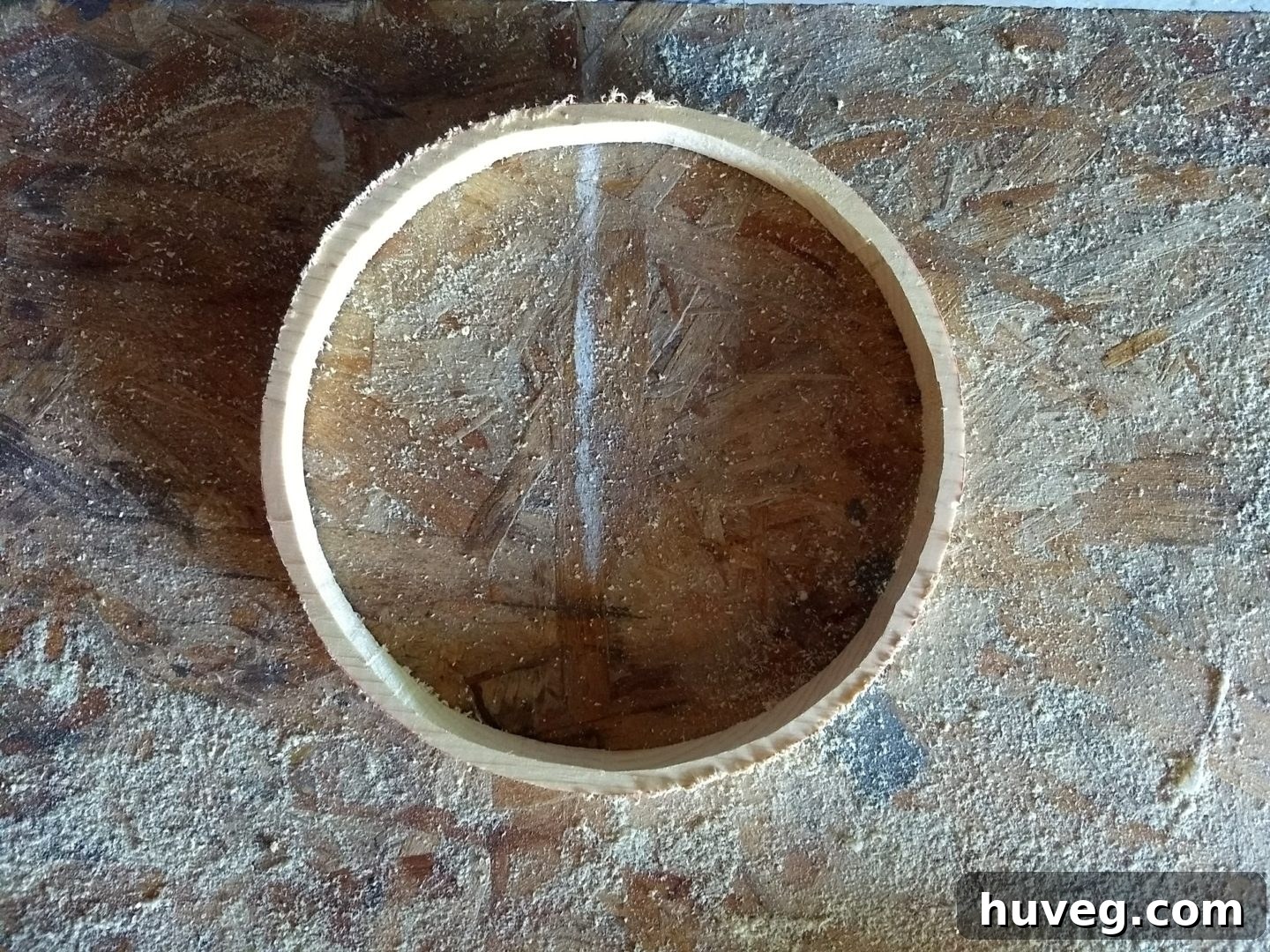
The front frame piece acts as a cover, holding the mirror securely in place and providing the finished aesthetic of your frame. Using the exact same methods of tracing and cutting as in Step 1, create a second circular frame. However, the dimensions for this piece are crucial for a proper fit:
- **Inner Edge:** The inside edge of this front frame must be cut to exactly the diameter of your mirror. This ensures the mirror sits snugly within the frame.
- **Outer Edge:** The outside edge of this front frame should be cut to precisely match the outer diameter of the back frame you just completed in Step 1. This alignment is critical for a seamless look when the two pieces are joined.
Think of this piece as a ring that will sit on top of the back frame, with the mirror sandwiched between them. The inner cut is the mirror’s exact size, and the outer cut matches the overall frame’s perimeter.
Step 3. Attaching Both Frame Pieces Together: Creating a Solid Structure
With both your back and front frame pieces meticulously cut, it’s time to bring them together to form the complete structure of your mirror frame. This step requires precision and firm clamping to ensure a durable bond.
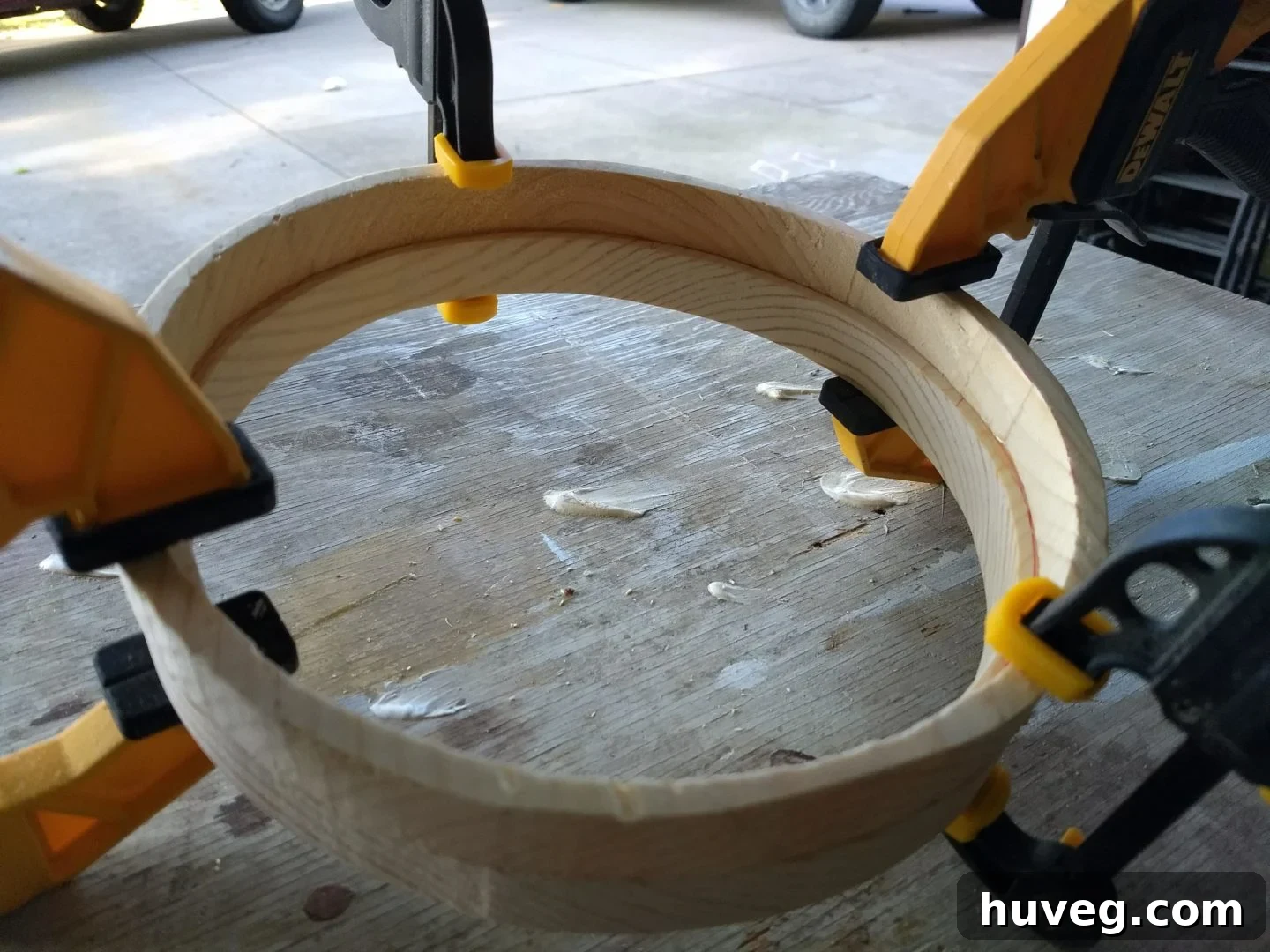
Carefully stack the front frame (from Step 2) directly on top of the back frame (from Step 1). It is essential that the outside edges of both circles align perfectly. This exact alignment creates a seamless exterior for your finished frame. Once aligned, you will notice a small, recessed lip on the inside edge, created by the wider inner diameter of the back frame. This lip is where your mirror will securely rest.
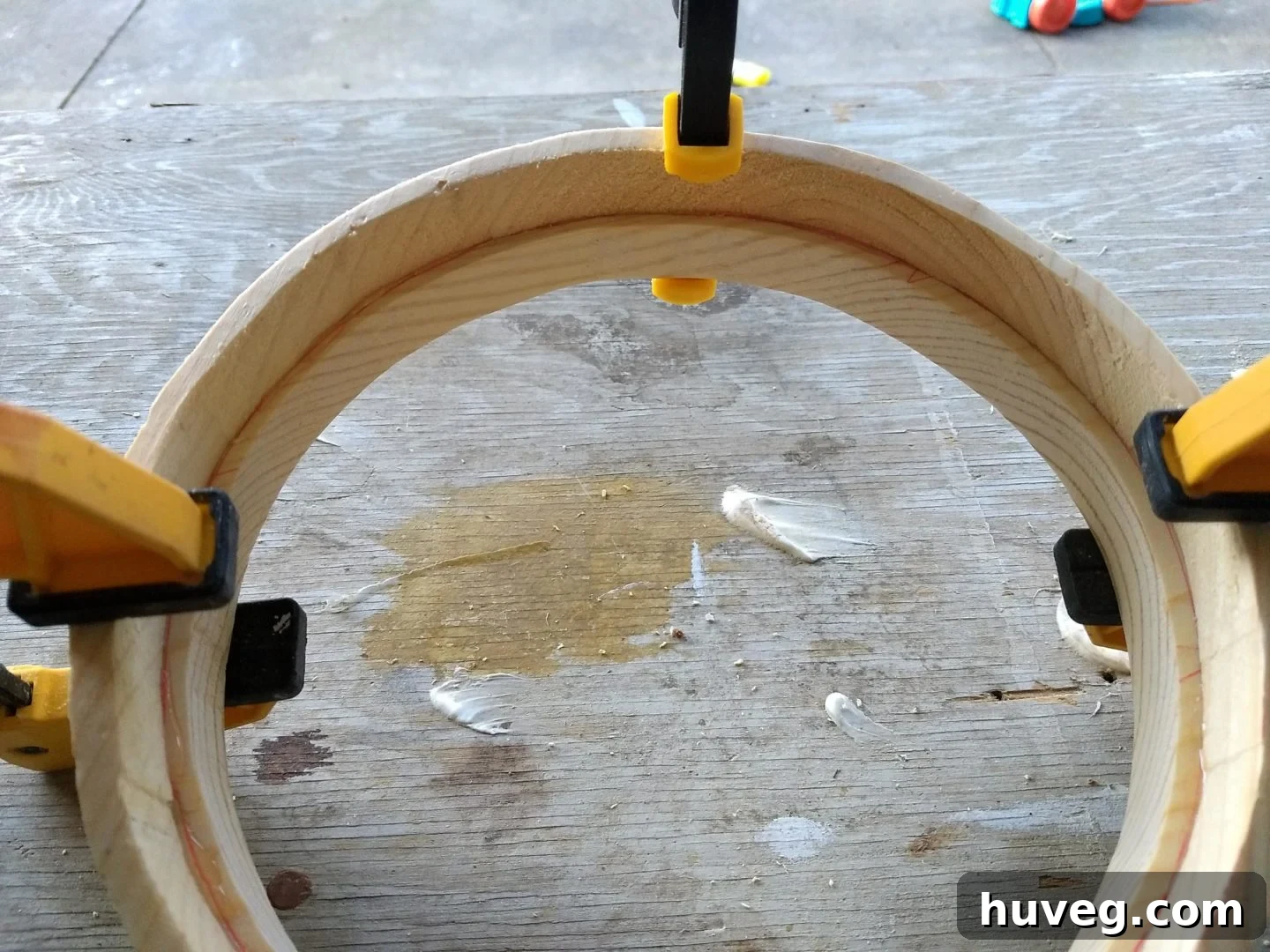
Apply a generous, even layer of wood glue to the top surface of the back frame (the surface that will meet the front frame). Carefully place the front frame on top, ensuring perfect alignment of the outer edges. Once aligned, use several clamps to firmly hold the two pieces together. Apply pressure evenly around the entire circumference of the frame. Any excess glue that squeezes out can be wiped away with a damp cloth immediately. Allow the glue to dry completely according to the manufacturer’s instructions, typically several hours or overnight, before proceeding to the next step. A strong bond here is crucial for the longevity of your mirror frame.
Step 4. Finishing with Paint or Stain: Personalizing Your Masterpiece
This is where your mirror truly begins to take on its unique character! After the glue has fully cured and the clamps are removed, the first order of business is sanding. Even with careful jigsaw work, perfect circles can be challenging to achieve. Sand the entire frame down really well, starting with a coarser grit (like 80 or 120) to smooth out any rough spots or inconsistencies along the edges, especially where the two frame pieces meet. Then, progress to finer grits (like 220) for a silky-smooth finish.
Any small gaps or imperfections between the two pieces of the frame, or irregularities created by the jigsaw, can be easily remedied with wood filler. Apply a thin layer of wood filler to these areas, smoothing it out with a putty knife. Allow the wood filler to dry completely, then sand it flush with the surrounding wood. This step is vital for a professional-looking finish, especially if you plan to paint your frame.
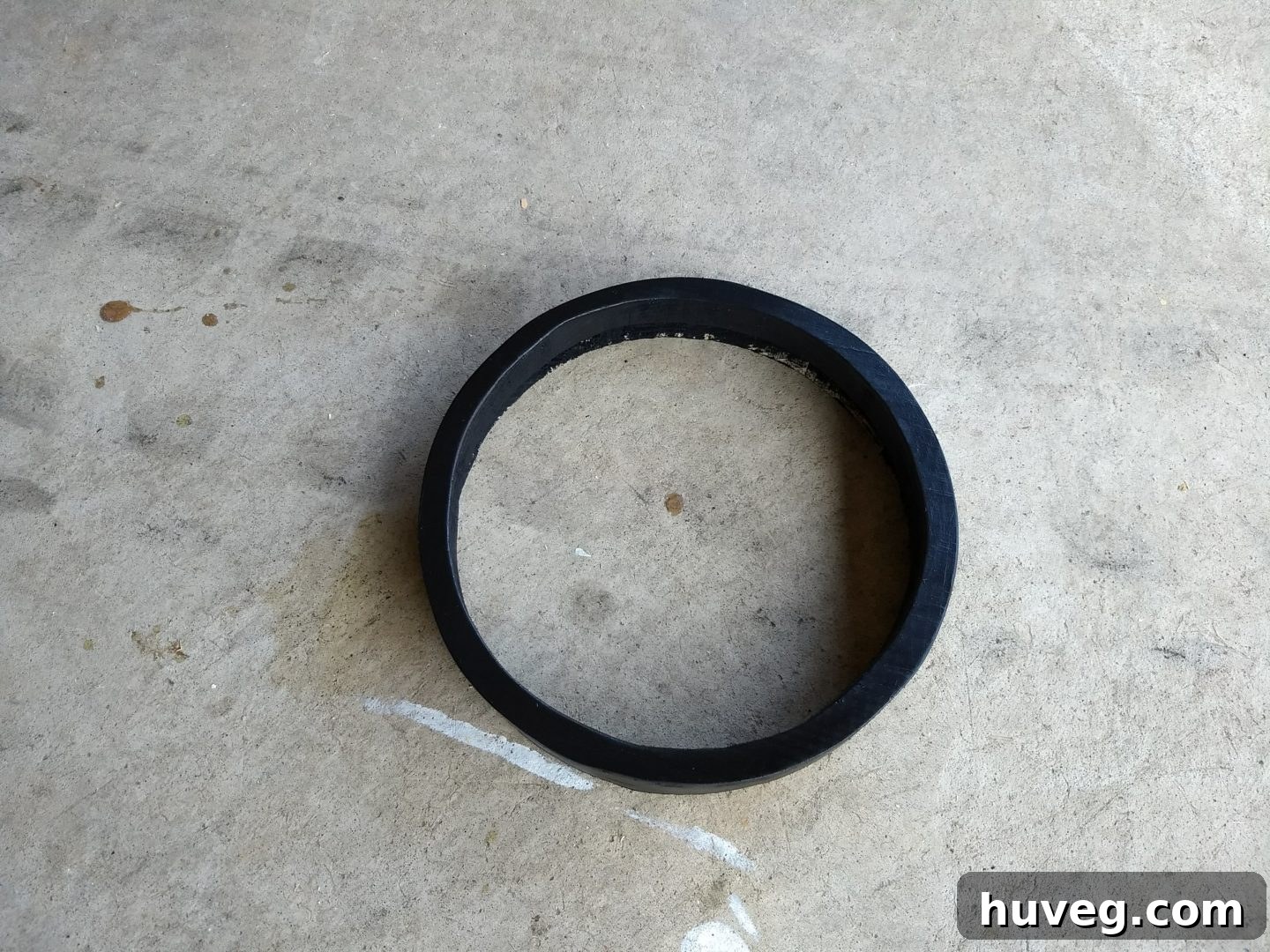
Once the frame is perfectly smooth and free of blemishes, it’s time for the exciting part: applying your chosen paint or stain. For my project, I opted for a chic black acrylic paint, which I then sealed with a glossy polyurethane for an industrial, modern vibe. This not only added a beautiful sheen but also provided crucial protection to the wood. Consider the overall aesthetic of the room where the mirror will hang – will a natural wood stain complement your decor, or will a bold color make a statement? Apply paint or stain in thin, even coats, allowing each coat to dry thoroughly before applying the next. Finish with a protective topcoat like polyurethane or clear wax to ensure durability and a lasting finish.
Step 5. Attaching the Mirror: Bringing Your Project to Life
With your beautifully finished frame ready, it’s time to secure the mirror itself. Carefully flip your frame over so that the back side is facing upwards, exposing the recessed lip. Place your round mirror gently into this recess, ensuring it sits flat and centered within the frame. It should fit snugly against the inner lip you created.
Once the mirror is perfectly positioned, apply a specialized mirror adhesive to the back of the mirror where it makes contact with the frame. It’s crucial to use an adhesive specifically designed for mirrors, as some glues can react negatively with the mirror’s backing and cause damage over time. Apply small dabs or a continuous bead around the perimeter where the mirror meets the frame, ensuring good contact. Avoid using too much, as excess can squeeze out. I typically use a mirror adhesive found at Home Depot, which provides a strong, reliable bond.
After applying the adhesive, place some weights evenly on the mirror to ensure consistent pressure while the adhesive cures. Books, paint cans, or other heavy objects work perfectly. Allow the adhesive to dry completely according to the product’s instructions, which can take anywhere from a few hours to a full 24 hours. Resist the temptation to move or hang the mirror before it’s fully dry to prevent shifting and ensure a strong, lasting attachment.
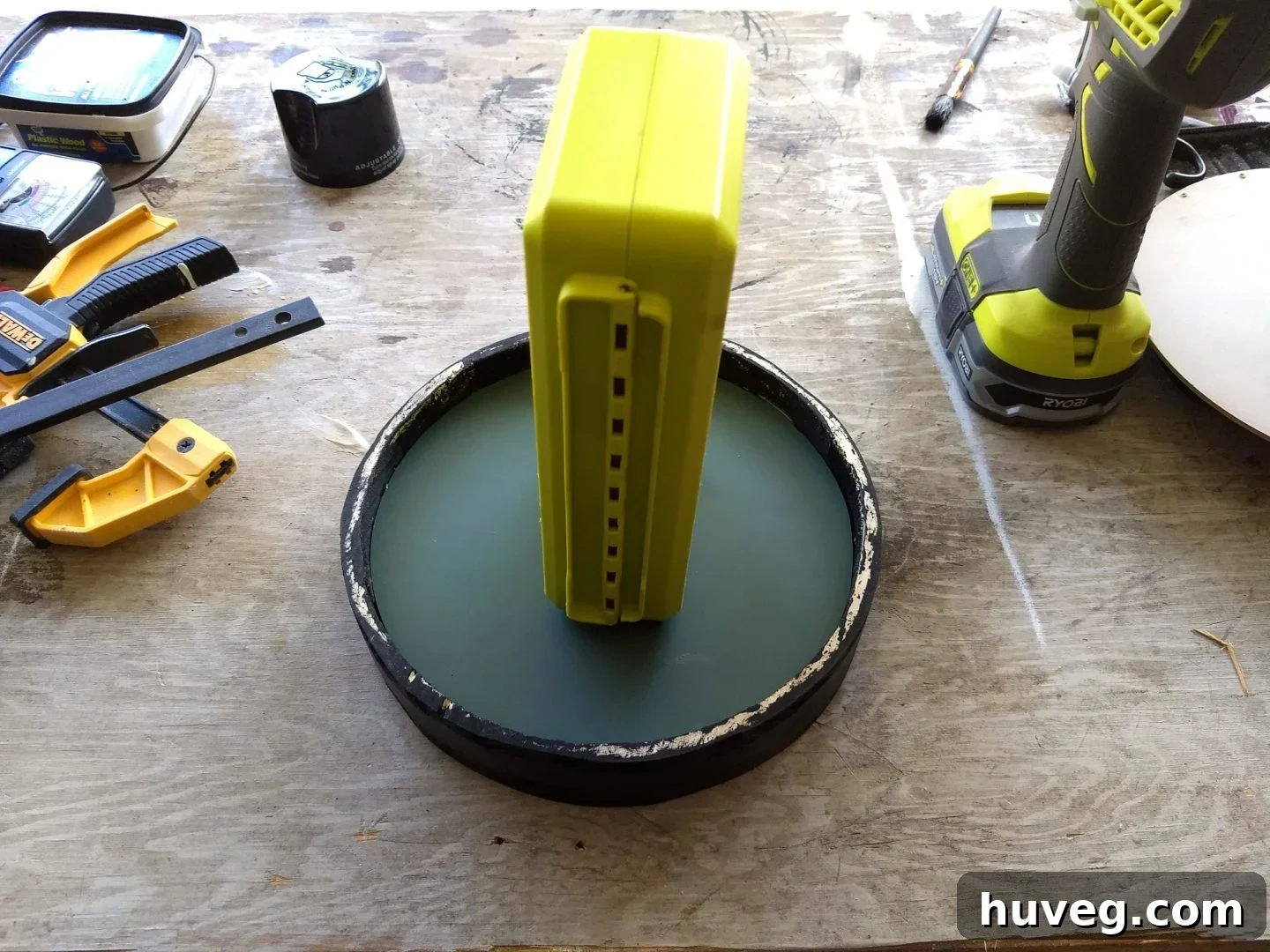
Step 6. Attaching the Chain and Finishing Touches: Ready for Display
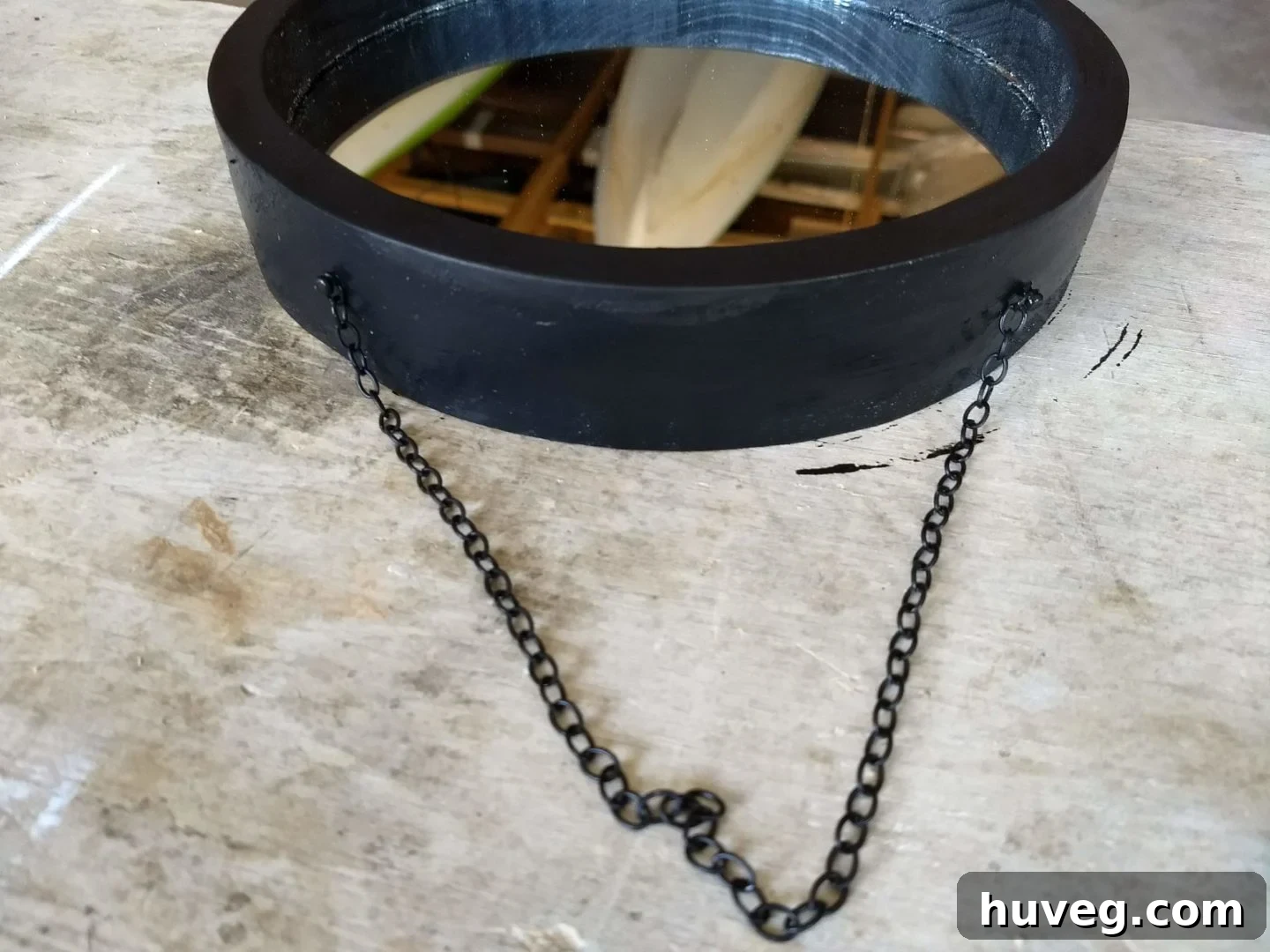
With the mirror securely in place and the adhesive fully cured, your custom-framed mirror is almost complete! The final step is to prepare it for hanging. For a stylish and rustic touch, I chose to attach a small black chain to the top of the frame. This not only provides a secure hanging mechanism but also adds to the industrial aesthetic.
To attach the chain, you’ll need two small screw eyes or D-rings. Measure and mark two equidistant points on the top edge of your frame, ensuring they are perfectly balanced. Drill small pilot holes to prevent the wood from splitting, then carefully screw in the hardware. Attach your chain to these points, making sure it forms an even loop. If you prefer a more concealed hanging method, you could also install a simple D-ring hanger or sawtooth hanger directly on the back of the frame, depending on its size and weight.
For an added layer of protection and a cleaner finish, I highly recommend adding a round piece of cardboard to the back of the mirror once everything else is done. This cardboard backing will close in the mirror, protecting its delicate silvering from dust, moisture, and accidental damage. Simply cut a piece of sturdy cardboard to the exact size of the back of your frame and either glue it in place with wood glue or use small brad nails to secure it around the perimeter. This small detail significantly enhances the mirror’s longevity and gives it a truly polished, professional appearance.
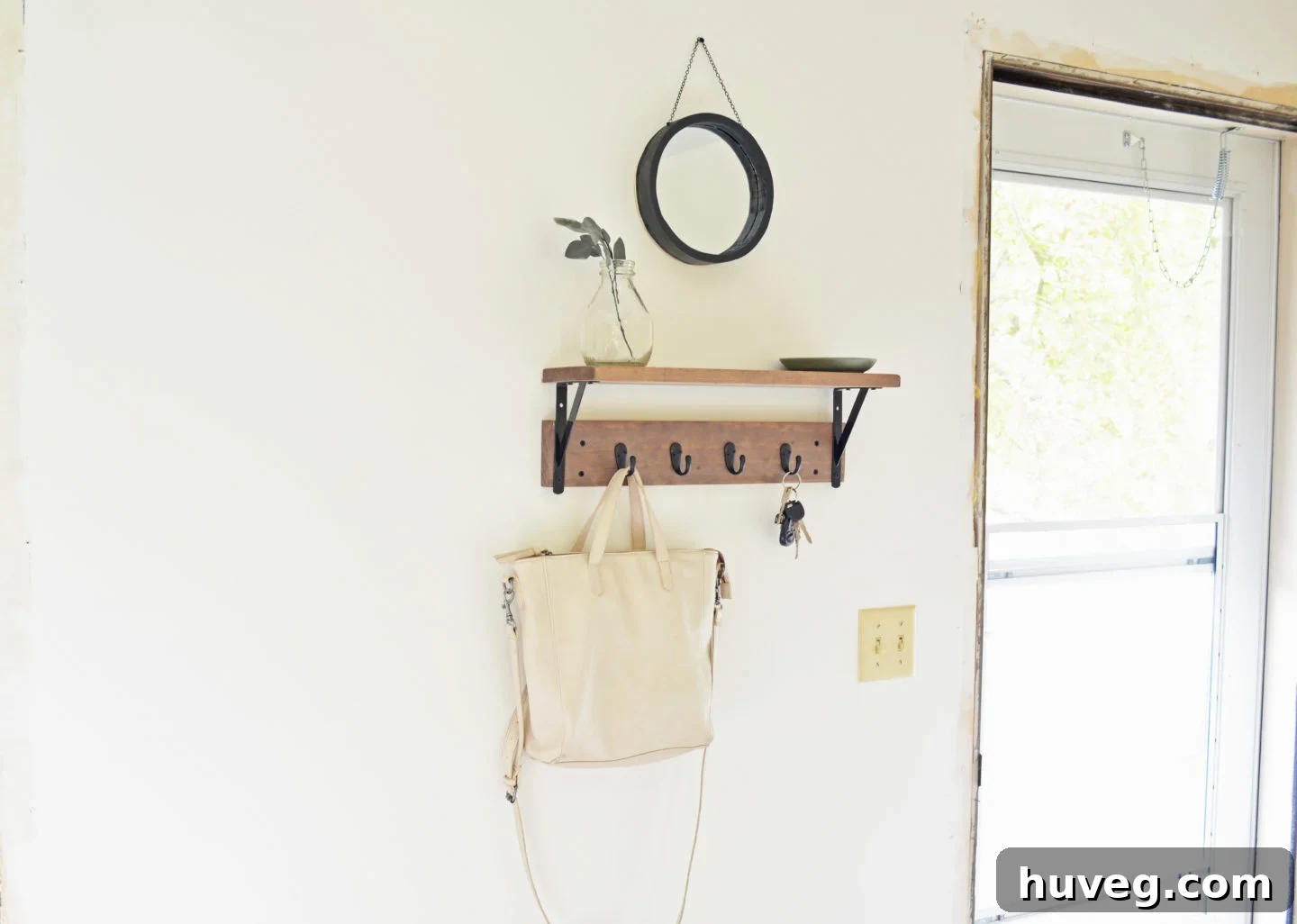
Why Choose This Jigsaw Method for Your Round Mirror Frame?
This jigsaw-only method for framing a round mirror offers several compelling advantages, especially for home DIYers:
- **Cost-Effective:** Routers can be expensive, and this project proves you don’t need one. By repurposing an old mirror and using readily available wood, you can achieve a high-end look on a minimal budget.
- **Accessibility:** Jigsaws are a common power tool in many home workshops. This project makes custom woodworking accessible to more people.
- **Customization:** From the width of the frame to the choice of paint or stain, every aspect is customizable to perfectly match your home’s aesthetic.
- **Skill Building:** It’s an excellent project for beginner woodworkers to practice using a jigsaw, marking accurately, and achieving smooth finishes.
- **Satisfaction:** There’s immense satisfaction in creating something beautiful and functional with your own hands, especially when it saves you a significant amount of money.
Tips for Achieving a Perfect Circle with a Jigsaw:
- **Sharp Blade:** Always use a sharp, appropriate blade for cutting curves in wood.
- **Slow and Steady:** Don’t rush. Guide the jigsaw slowly and deliberately along your marked lines.
- **Clamp Securely:** Ensure your workpiece is clamped firmly to your workbench to prevent movement, allowing you to focus on guiding the saw.
- **Practice Cuts:** If you’re new to using a jigsaw for curves, do a few practice cuts on scrap wood first.
- **Use a Pivot Guide (Optional):** For larger circles, consider making a simple pivot guide. Attach one end of a thin strip of wood to the center of your circle with a small nail, and attach your jigsaw to the other end at the desired radius.
This project is more than just framing a mirror; it’s about embracing creativity, learning new skills, and proving that stunning decor doesn’t have to come with a hefty price tag. The joy of seeing your finished, custom-made mirror adorning your wall, knowing you crafted it with your own hands, is truly priceless.
For more inspiring project ideas like this, I’d be absolutely delighted if you stopped by my blog, Bitterroot DIY. You can also find me on Pinterest for a treasure trove of DIY inspiration and creative solutions. And to stay updated with all the latest shenanigans and behind-the-scenes glimpses, be sure to follow me on Instagram! Happy crafting!
Don’t forget to pin this amazing DIY project for later!
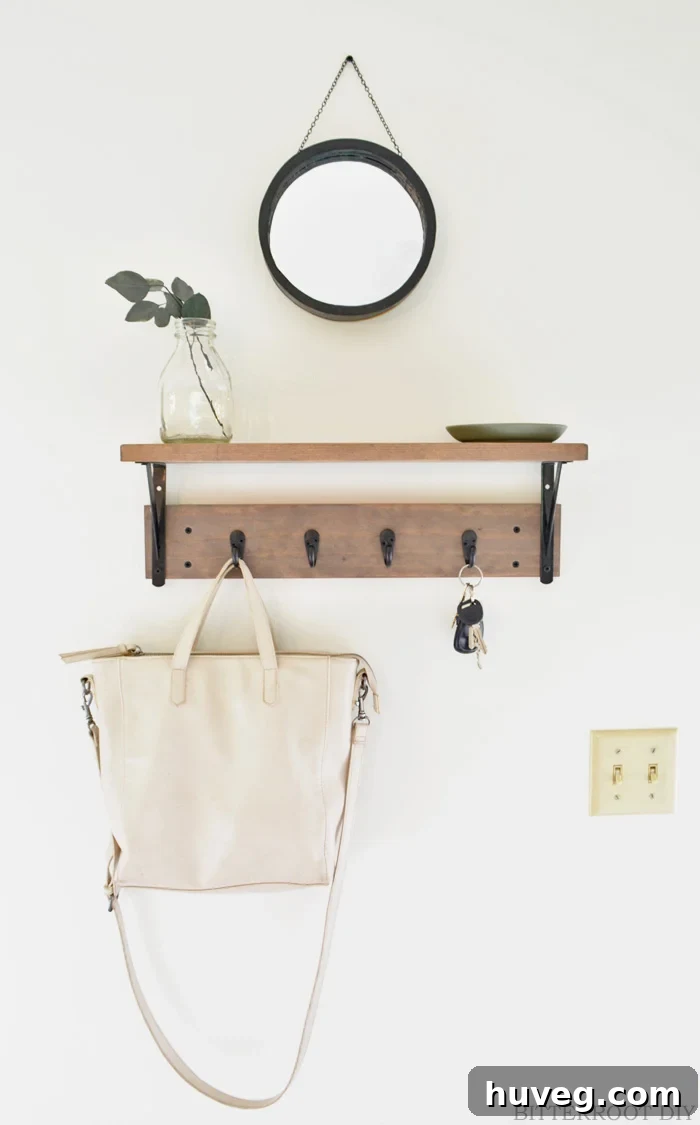
Explore More from Tylynn’s DIY Adventures