Kitchen Cabinet Priming Progress Days Two and Three

Transforming your kitchen cabinets can breathe new life into one of the most important rooms in your home. It’s a significant undertaking, but with careful preparation and the right approach, you can achieve a professional-looking finish that will impress for years to come. The secret to a durable, beautiful cabinet repaint often lies not just in the final coats of color, but in the meticulous steps taken beforehand, with priming being arguably the most critical.
Our journey to a refreshed kitchen begins with this foundational step: priming. It’s a stage that demands patience, precision, and an understanding of the materials at hand. This comprehensive guide will walk you through the essential process of priming kitchen cabinets, ensuring you’re well-equipped to tackle this rewarding DIY project.
Transforming Your Kitchen: The Essential Guide to Priming Cabinets for a Flawless Finish
The phrase “Prime. Let dry. Repeat.” might sound deceptively simple, but behind these words lies a world of detail crucial for achieving a superior cabinet finish. This isn’t just about splashing on a coat of white liquid; it’s about creating the perfect canvas for your chosen paint, ensuring longevity, adhesion, and a truly stunning end result.
The Indispensable Role of Primer in Cabinet Refinishing
Why is primer so important? Many DIYers might be tempted to skip this step, but experienced painters know it’s non-negotiable for kitchen cabinets. Primer serves multiple vital functions:
- Enhanced Adhesion: It creates a bonding layer between the cabinet surface (wood, laminate, or previously painted) and the new topcoat. This is especially crucial for slick surfaces or when transitioning from oil-based to water-based paints.
- Blocking Stains and Bleed-Through: Kitchen cabinets are notorious for grease, food stains, and tannin bleed from wood. A good primer acts as a barrier, preventing these imperfections from showing through your final paint color. This is particularly important for knotty woods or when painting light colors over dark.
- Creating a Uniform Surface: It helps to smooth out minor imperfections and provides a consistent base color, allowing your paint to look more vibrant and even. Without it, you might see patchy areas or variations in color due to differences in the underlying material.
- Durability and Longevity: A properly primed surface helps the paint adhere better and withstand the daily wear and tear kitchen cabinets endure, leading to a much longer-lasting finish. It acts as an armor for your paint, protecting it from chipping and scratching.
- Saving Topcoat Paint: By providing a consistent, non-porous base, primer reduces the number of finish coats required, ultimately saving you money and time on expensive cabinet paint.
Prepping for Perfection: Essential Steps Before You Prime
The quality of your priming job is directly proportional to the quality of your preparation. Neglecting the prep work can lead to frustrating issues down the line, such as peeling paint or an uneven finish. Before you even think about opening a can of primer, dedicate ample time to these crucial steps:
Cleaning and Degreasing for a Spotless Start
Kitchen cabinets accumulate a surprising amount of grease, grime, and food residue over time. This oily film will prevent any primer or paint from adhering properly. Begin by thoroughly cleaning all cabinet surfaces, inside and out. A strong degreaser (like TSP substitute or a dedicated kitchen degreaser) mixed with warm water is highly effective. Scrub all surfaces, paying extra attention to areas around the stove and handles. Rinse thoroughly with clean water and allow everything to dry completely. Any residual grease will compromise adhesion.
Sanding for Success: Creating a “Tooth” for Primer
Once clean and dry, a light sanding is often necessary to create a “tooth” for the primer to grip onto. Use a fine-grit sandpaper (180-220 grit) and lightly scuff all surfaces you intend to prime. This doesn’t mean stripping off the old finish; it’s simply about dulling the sheen and creating microscopic scratches that help the primer bond. After sanding, wipe away all dust with a tack cloth or a damp cloth, followed by a dry one. Ensure no dust particles remain, as they can cause a bumpy finish.
Removing Hardware and Labeling for Seamless Application
Before sanding and cleaning, remove all cabinet doors, drawer fronts, hinges, handles, and any other hardware. This step is non-negotiable for a professional finish. Trying to paint around hardware inevitably leads to a messy result. As you remove doors and drawers, label them clearly with numbers or letters indicating their original location. This will make reinstallation much easier and ensure everything fits back perfectly. Store hardware in labeled bags to keep everything organized.
Navigating the Priming Process: A Step-by-Step Approach
With preparation complete, it’s time to apply the primer. This stage requires patience and attention to detail, especially when dealing with multiple coats and specific drying requirements.
Choosing the Right Primer for Your Cabinets
Selecting the correct primer is critical. There are generally three types:
- Oil-Based Primers: Excellent for blocking stains, especially from wood tannins or water damage. They offer superb adhesion, particularly over existing oil-based finishes or glossy surfaces. They are durable but emit strong fumes and require mineral spirits for cleanup.
- Water-Based (Latex) Primers: Easier to clean up, faster drying, and low odor. They are suitable for most previously painted or unfinished wood cabinets. However, they may not block severe stains as effectively as oil-based or shellac primers.
- Shellac-Based Primers: The ultimate stain-blocker, perfect for knotty woods or cabinets with heavy smoke or water damage. They dry very quickly and adhere exceptionally well to almost any surface. They also have strong fumes and require denatured alcohol for cleanup.
For kitchen cabinets, an oil-based primer or a high-quality water-based bonding primer is often recommended due to their superior adhesion and stain-blocking capabilities.
Application Techniques: Achieving a Smooth Finish
The application method greatly impacts the final smoothness of your cabinets. For the best results on cabinet doors and drawer fronts, consider:
- Brushing and Rolling: Use a high-quality synthetic brush for cutting in edges and intricate areas, and a small foam roller or a roller with a very fine nap (3/8″ or 1/4″) for flat surfaces. Rollers help achieve a smooth, even coat without brush marks.
- Spraying: For the most professional, factory-like finish, a paint sprayer is ideal. This minimizes brush strokes and ensures incredibly even coverage. However, it requires proper ventilation and masking.
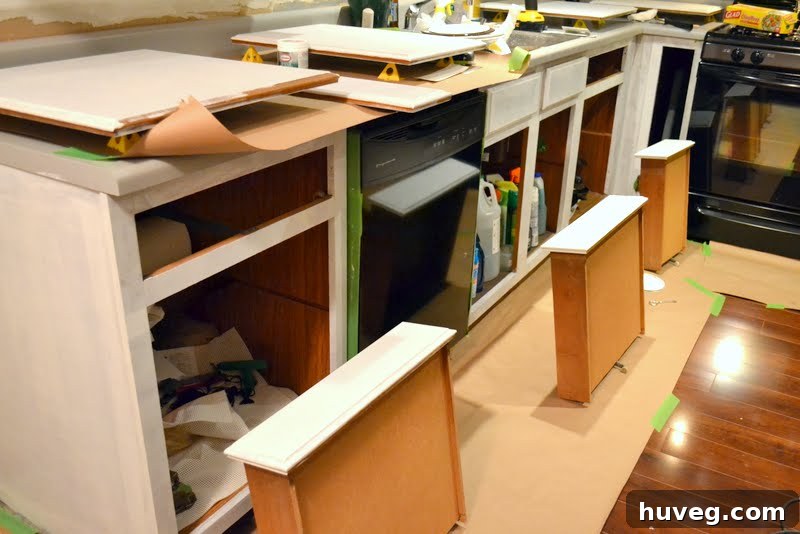
Because of the humidity in our region, affectionately dubbed “Wetlanta,” priming the kitchen cabinets certainly took a little longer than initially planned. High humidity significantly extends drying times, making it crucial to adjust your schedule and ensure each coat is fully dry before proceeding. This is not a step to rush.
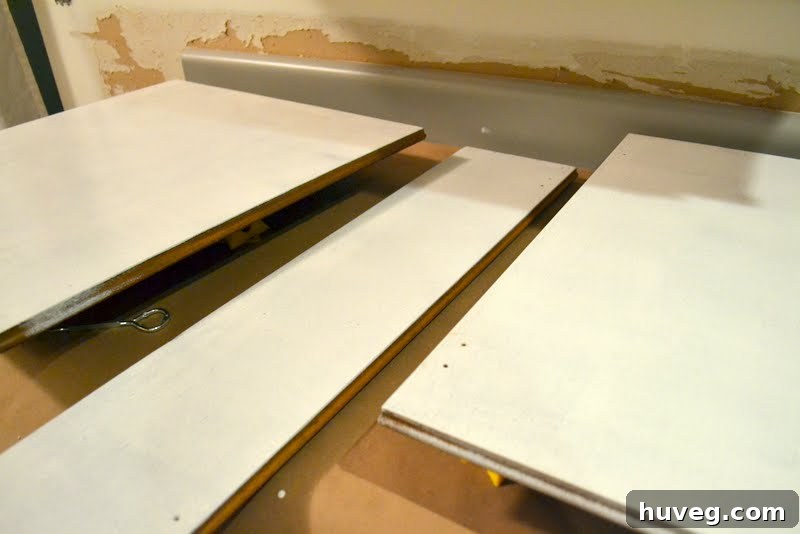
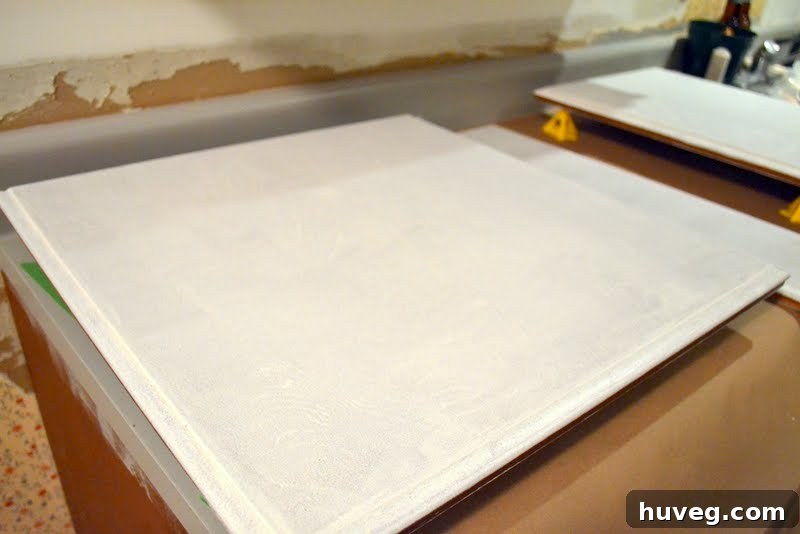
My approach involved two thorough coats of white primer on both the front and back of each door and drawer. I meticulously painted the sides, ensuring every little nook and cranny I could reach received adequate coverage. It’s tempting to cut corners in less visible areas, but every surface needs to be treated equally to prevent future issues. This detailed application ensures a uniform foundation, vital for the subsequent paint layers.
The Waiting Game: Understanding Drying and Curing Times
One of the most common mistakes in painting projects is confusing “dry to the touch” with “fully cured.” These are two very different stages, and understanding them is crucial for the durability of your cabinet finish.
- Dry to the Touch/Recoat Time: This is the time it takes for the surface to feel dry and for another coat to be applied without disturbing the previous one. For most primers, this can be as little as 1-2 hours.
- Full Cure Time: This is the time it takes for the primer (or paint) to reach its maximum hardness and durability. During this phase, the solvents fully evaporate, and the material chemically hardens. For many primers, especially those designed for high-traffic areas like kitchens, full hardness curing can take up to seven days, sometimes even longer depending on the product and environmental conditions.
Ignoring the full cure time can lead to a softer, less durable surface that is prone to scratching, chipping, and adhesion failure. While you can usually recoat much sooner, it’s vital to handle the primed pieces gently until they have fully cured. Our humid climate further emphasizes the need for patience; always err on the side of caution and allow extra drying time if the air is heavy with moisture. Always consult the back of your primer can for specific manufacturer recommendations on drying and curing.
What to Expect: Primer Coverage and Adhesion
When you apply primer, especially on stained wood, it’s common to wonder if you’ve done it correctly. Some common observations and what they mean:
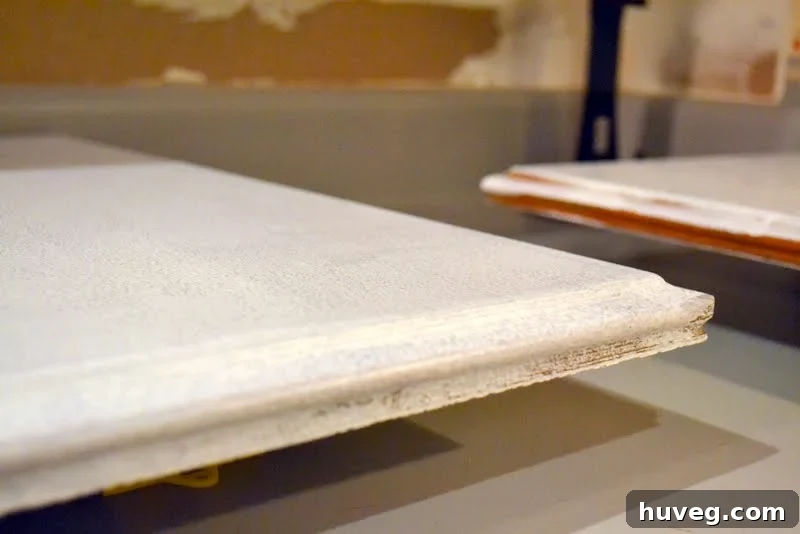
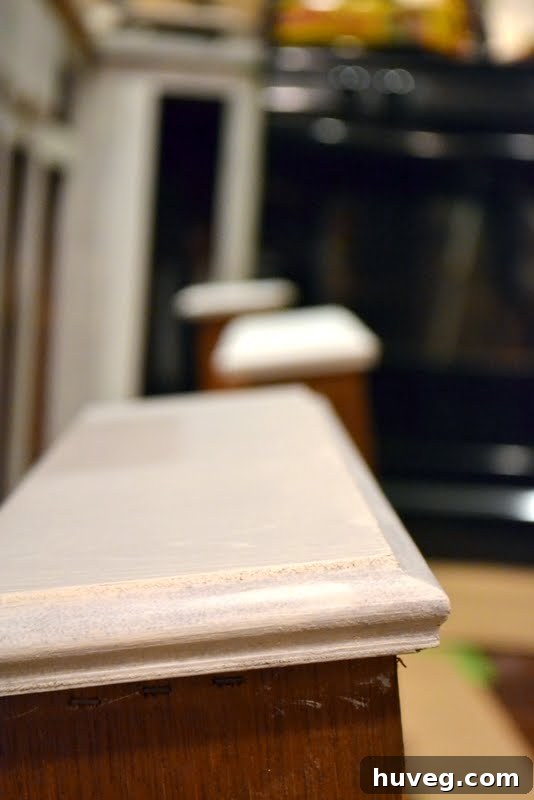
As some of you requested close-ups, you can observe that the primer doesn’t always achieve complete, opaque coverage with just one or even two coats. It’s quite normal for some of the original wood grain or even a hint of the previous color to still show through a little. This is not a sign of failure! Primer is not designed to be a topcoat; its primary purpose is to provide adhesion and an even base for your paint, not complete opacity. I had pretty much expected this outcome, so there’s certainly no disappointment here.
What is paramount, however, is the primer’s adhesion. After allowing sufficient drying time, I was careful to try to scratch the surface to see if the primer would come off. I’m pleased to report that it’s stuck firmly! This is an excellent sign, indicating that the primer has properly bonded with the cabinet surface, forming a strong foundation for the subsequent paint layers. A good adhesion test ensures that your hard work will pay off with a long-lasting finish.
For an even smoother finish after priming, you might consider a very light sanding with fine-grit sandpaper (220-320 grit) after the primer has fully dried, especially if you notice any slight roughness. This creates an ultra-smooth surface for your final paint coats, helping to achieve that coveted factory-like finish. Just be sure to wipe away all dust before painting.
Looking Ahead: The Excitement of Cabinet Painting
With all the priming complete and the cabinets thoroughly prepped and cured, the most exciting part of the transformation can begin: applying the final paint coats. The meticulous efforts invested in cleaning, sanding, and priming will now pave the way for a truly beautiful and durable painted finish.
Tonight, I’m eagerly tackling the cabinet paint. The anticipation of seeing the chosen color come to life on these well-prepared surfaces is immense. Hopefully, by Sunday, I’ll be able to put on another coat and have lots of progress to show you next week. The thought of unwrapping those finished doors and seeing the kitchen’s new look is incredibly motivating.
Of course, life often throws in its own challenges. The fact that classes are starting up again could mean that I find myself on a full Chinese takeout binge, procrastinating on painting. However, the urge to see this project through to completion is strong! I think the odds of focused painting versus a delightful detour into procrastination are probably 50/50. Either way, the journey is part of the fun.
Have a great weekend, and here’s to hoping for a productive painting session!
By following these detailed steps for priming, you’re not just applying a base coat; you’re investing in the longevity and aesthetic appeal of your newly refinished kitchen cabinets. Patience and precision at this stage will undoubtedly lead to a more satisfying and enduring result.