The Primary Bedroom’s Ceiling Conundrum: Airflow or Artistry?

As the vibrant energy of outdoor projects often consumes our thoughts, it’s a common phenomenon for our minds to drift towards those neglected interior spaces – particularly the ones we’ve always meant to upgrade but never quite got around to. After countless hours spent wrestling with the earth, transforming a garden, or tackling exterior renovations, the appeal of refining an indoor sanctuary becomes undeniable. It’s a natural shift in focus, a yearning for comfort and aesthetic beauty within the walls of our homes. For many DIY enthusiasts, this transition often highlights unfinished business, like that one crucial element that could truly elevate a room: lighting.
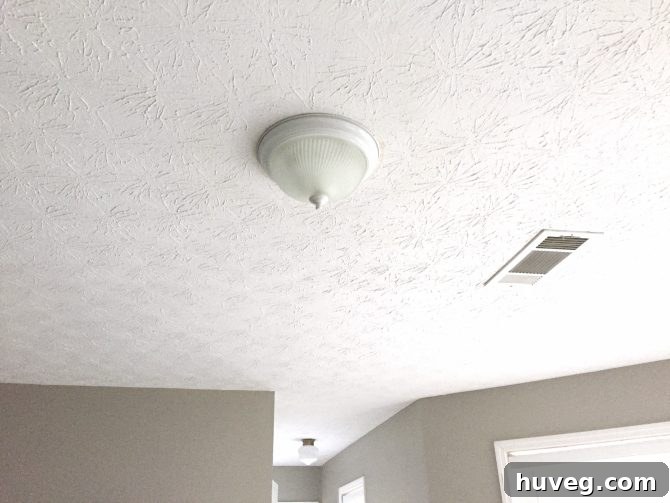
There’s a curious irony in how frequently a primary bedroom, a space intended for rest, rejuvenation, and personal retreat, becomes a repository for temporary solutions that overstay their welcome. Such is the case with the ubiquitous “boob light” – a fixture so commonly installed for mere functionality that it often becomes a long-term, uninspiring presence. Despite a deep-seated passion for home improvement, even the most dedicated DIYer can find themselves overlooking their own private quarters, tolerating a fixture that offers little in terms of style or ambiance. This oversight isn’t due to a lack of desire, but often stems from a deeper design dilemma, a conflict between practicality and passion that demands a careful decision.
The quest for the perfect primary bedroom light fixture often feels like waiting for a serendipitous discovery, a magical moment when the ideal design simply presents itself. While some lighting elements in a home might indeed find their way in through fortunate circumstances, the most impactful choices often require a more deliberate approach. The enduring challenge in selecting a primary bedroom fixture frequently boils down to a fundamental question: should priority be given to a fixture that is purely beautiful and decorative, or one that offers superior functionality? This isn’t merely a matter of taste, but a pragmatic consideration that deeply influences comfort and livability, especially in climates that demand specific environmental controls.
The Great Debate: Aesthetics Versus Practicality in Bedroom Lighting
In regions known for their relentless heat and humidity, such as Atlanta, Georgia, the role of a ceiling fan transcends mere decoration. It becomes an indispensable tool for comfort, energy efficiency, and overall well-being for a significant portion of the year. While the aesthetic appeal of traditional ceiling fans has historically been a point of contention for interior designers, their practical benefits are undeniable. They circulate air, create a cooling breeze, and can significantly reduce reliance on air conditioning, leading to lower energy bills and a more comfortable sleeping environment. Yet, for many homeowners, the visual compromise of a ceiling fan in a beautifully designed bedroom is a difficult pill to swallow. The juxtaposition of essential function against desired elegance creates a significant design conundrum that requires careful thought and often, a creative solution.
Navigating the World of Ceiling Fan Designs
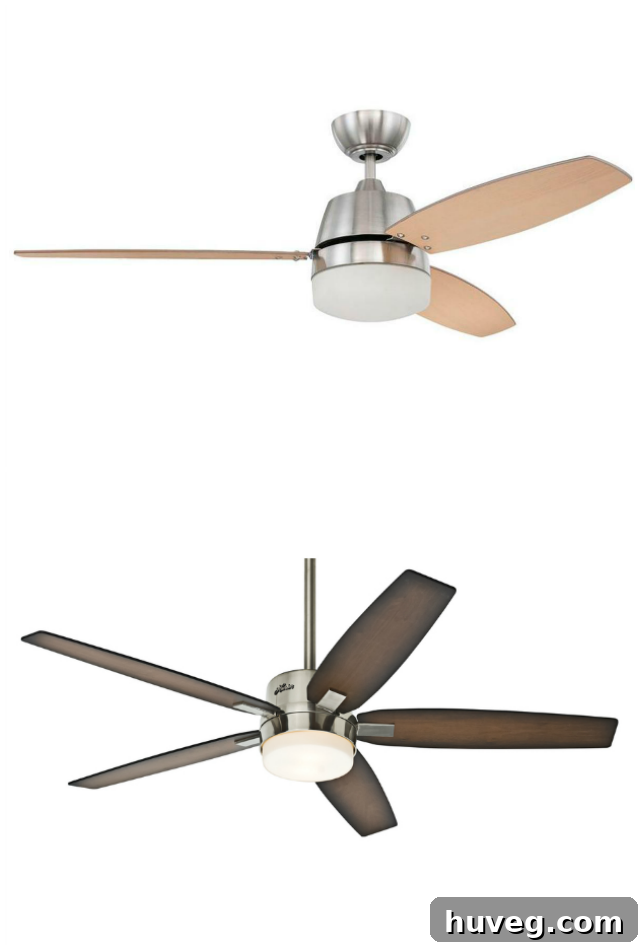
The journey to find a ceiling fan that balances performance with palatable design can feel like searching for a needle in a haystack. While the market has evolved beyond the clunky, dated models of yesteryear, truly stylish and functional options can still be elusive. When faced with this challenge, even a focused search can quickly reveal the limitations. In one such exploration, after a diligent, albeit brief, thirty-minute deep dive into various online retailers and home improvement stores, two distinct ceiling fan options emerged that managed to strike a desirable balance. The first, from Shades of Light, captivated with its sleek profile and a sophisticated color combination, presenting a modern aesthetic that felt far removed from the typical bulky designs. Its reasonable price point only added to its appeal, making it a strong contender for those prioritizing contemporary style without breaking the bank. The second option, found at Lowe’s, offered a more classic five-blade style but with thoughtful design elements, including a notable contrast in its finish, which provided an updated traditional look. Both options demonstrated how manufacturers are slowly but surely beginning to address the demand for more visually appealing ceiling fans, yet the inherent design limitations often mean they still struggle to compete with purely decorative lighting masterpieces.
This post may contain affiliate links — for the full disclosure policy, click here.
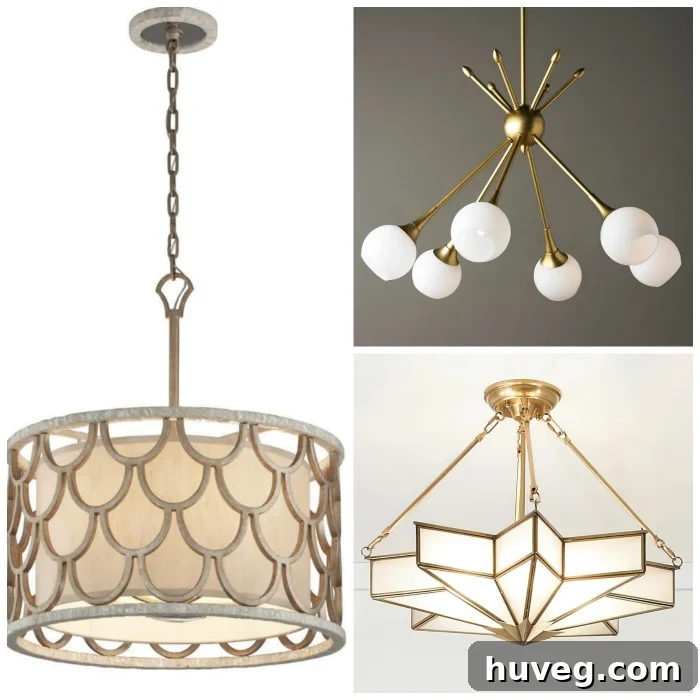
While the design evolution of ceiling fans is certainly commendable, and there are increasingly more aesthetically pleasing models available, it’s an undeniable truth that they still operate within certain structural constraints. The fundamental need for rotating blades and a motor housing often means they simply cannot achieve the same level of intricate artistry or dramatic visual impact as a purely decorative light fixture. These “beauties” – chandeliers, pendants, and unique semi-flush mounts – are designed solely with form and illumination in mind, allowing for breathtaking designs that can truly transform a room into a luxurious retreat.
The Irresistible Charm of Decorative Light Fixtures
Decorative light fixtures are more than just sources of illumination; they are statements of style, focal points that define the character and mood of a room. In a primary bedroom, a thoughtfully chosen chandelier or pendant can elevate the space from functional to truly luxurious, creating an ambiance of serenity and sophistication. The vast array of designs, from shimmering crystal to minimalist modern forms, intricate sculptural pieces to organic, natural textures, offers endless possibilities for personal expression. These fixtures speak to our desire for elegance, art, and a personalized sanctuary, captivating the eye and stirring the imagination in ways that utilitarian objects simply cannot.
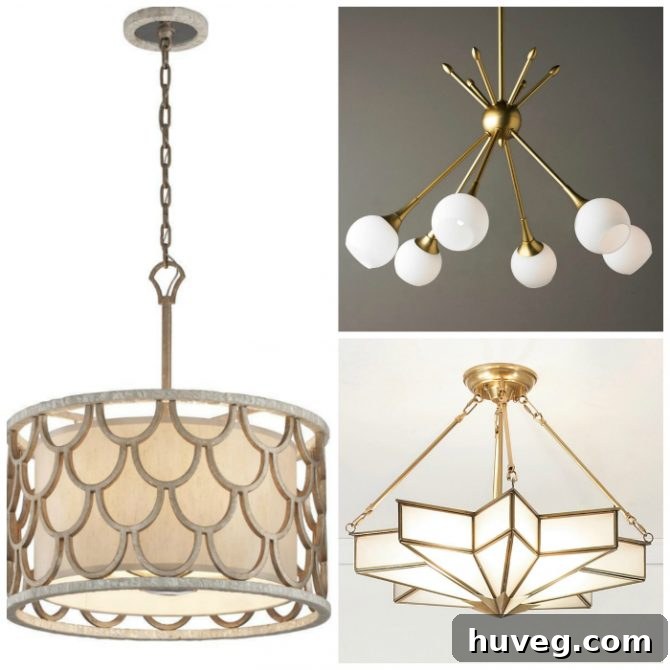
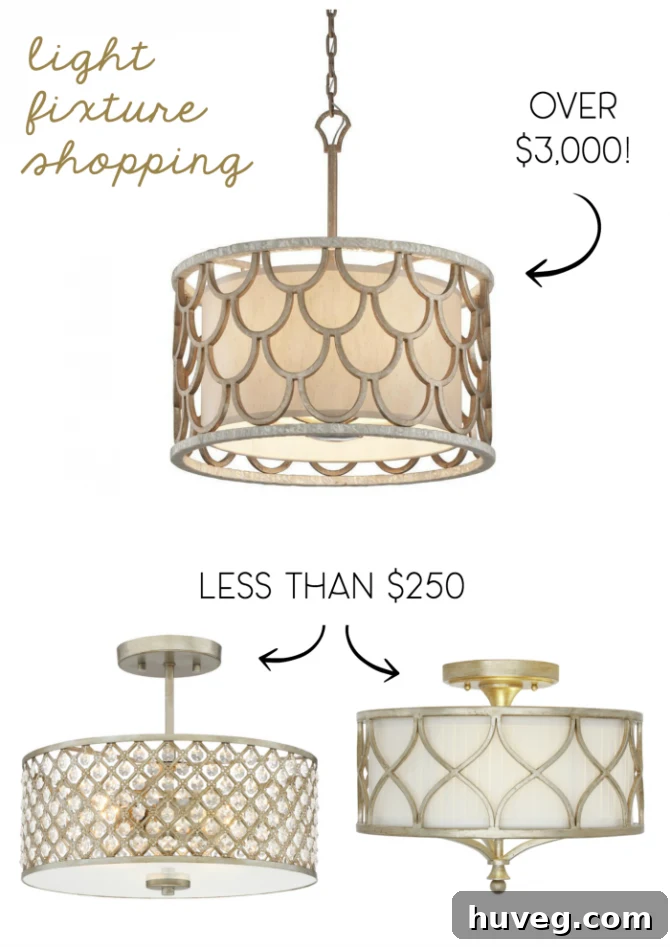
The allure of exquisite design, however, often comes with a hefty price tag. Browsing high-end showrooms or specialty lighting stores can quickly lead to moments of both admiration and sticker shock. It’s not uncommon to encounter a dream fixture whose cost rivals that of a significant home renovation component, such as an entire house’s flooring. This reality forces a pragmatic reconsideration, prompting a search for equally elegant alternatives that align with a more realistic budget. The good news is that the market is rich with comparable designs, often referred to as “dupes” or more affordable interpretations, that capture the essence of high-end aesthetics without the prohibitive cost. These alternatives prove that sophisticated style doesn’t necessarily demand an extravagant investment, allowing homeowners to achieve their desired look through smart shopping and careful selection. The key is to look for similar materials, finishes, and design motifs, ensuring the spirit of the original piece is maintained at a more accessible price point.
Finding Your Perfect Equilibrium: Bridging Form and Function
The dilemma between choosing a beautiful, decorative light fixture and a highly functional, often essential, ceiling fan is a universal challenge in home design. It’s a testament to the fact that our homes are not just visual statements, but living spaces that must cater to our comfort and practical needs. For homeowners grappling with this decision, several strategies can help bridge the gap between form and function, allowing for a harmonious blend of style and practicality in the primary bedroom.
One common approach is to seek out compromise solutions. The market has seen a rise in “fandelier” designs, which cleverly integrate a fan into what appears to be a decorative chandelier. While not always as powerful as a dedicated ceiling fan or as purely artistic as a traditional chandelier, these hybrid fixtures offer a compelling middle ground, providing both air circulation and aesthetic appeal. Another strategy involves a layered lighting approach. Instead of relying solely on a central ceiling fixture, incorporating multiple light sources—such as stylish table lamps on nightstands, elegant floor lamps in reading nooks, or sophisticated wall sconces—can create a dynamic and functional lighting scheme. This allows a homeowner to choose a purely decorative central fixture for visual impact, while supplementing general illumination and task lighting with other sources. For larger primary bedrooms, it might even be possible to zone the lighting, perhaps placing a sleek ceiling fan over the sleeping area for direct comfort and a stunning chandelier in a separate sitting or dressing area.
Ultimately, the decision rests on personal priorities, lifestyle, and the specific climate in which one lives. Do you prioritize a comfortable, climate-controlled environment above all else, or does the visual elegance of a statement piece hold more sway? Budget considerations also play a significant role, influencing whether one can invest in high-end options or needs to seek out more affordable, yet equally charming, alternatives. Considering the long-term impact on daily comfort and the overall atmosphere of your most private space is key. Whether you opt for a sleek, modern ceiling fan that discreetly blends into your decor, a bold, artistic chandelier that becomes the room’s crown jewel, or a thoughtful combination of both, the goal is to create a primary bedroom that truly reflects your individual style and enhances your daily life. So, for those who have navigated this familiar crossroads of design: what path did you choose for your primary bedroom lighting, and more importantly, how has that decision enriched your living experience?