From Stump to Showpiece: A Cascading DIY Planter

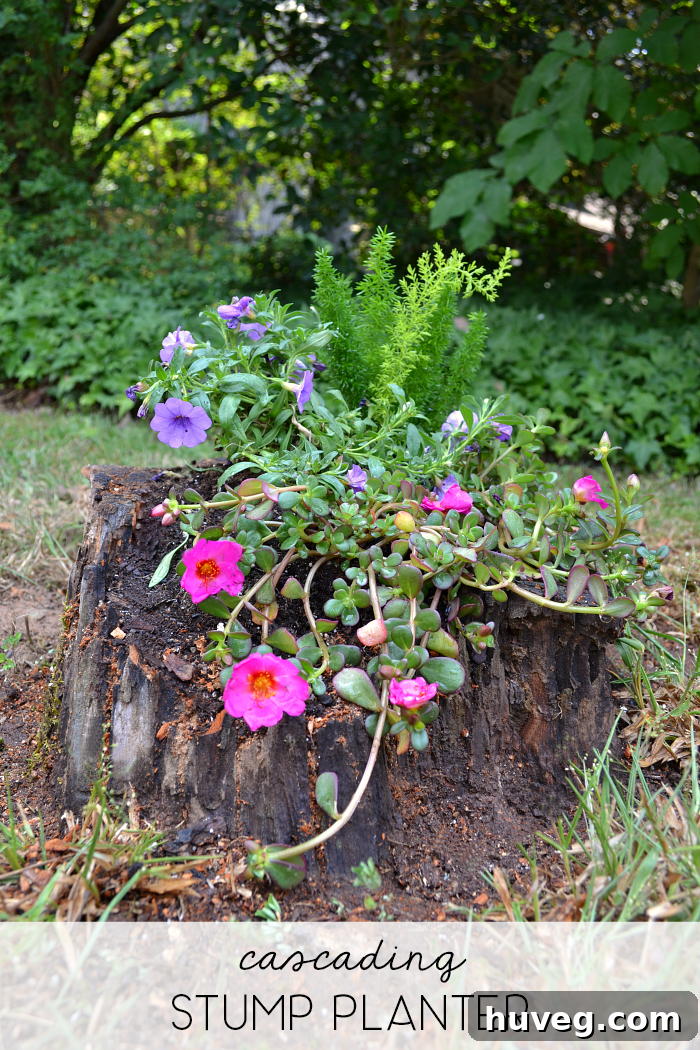
Enchanting Your Outdoors: Create a Stunning Cascading Stump Planter
This season, my passion for outdoor DIY projects has truly taken root, transforming my yard into a vibrant canvas of creativity. It seems I can barely finish one exterior beautification before another idea blossoms, keeping me happily engrossed in the fresh air and sunshine. While I do have a few exciting indoor reveals simmering, the momentum with my outdoor endeavors has been so exhilarating that I’m keen to keep this winning streak going! This time, I embarked on a project I’d admired countless times on Pinterest: the cascading stump planter. Initially, I was skeptical if such a visually appealing garden feature could truly be as straightforward as it appeared. Spoiler alert: it wasn’t a walk in the park! Yet, the satisfaction of completing it, and the impromptu arm workout it provided, was immense. More importantly, the final result is far from shabby; it’s a charming focal point that adds unique character to my outdoor space.
Embracing the #LIVINGDIYCHALLENGE: A Journey of Outdoor Creation
As I shared recently, a wonderful group of DIY blogging friends and I love to organize themed challenges. These collaborations push our creative boundaries and introduce us to new project ideas. We’ve tackled themes like organization, giving everyday spaces a functional refresh. We’ve explored the versatility of scrap wood, transforming discarded pieces into practical treasures. And we’ve even illuminated our homes with innovative lighting solutions. For this round, it was my turn to host, and I chose “Living DIY” (#LIVINGDIYCHALLENGE) as our theme. My inspiration wasn’t elaborate; I simply had a backlog of at least ten potential projects that perfectly fit the criteria! The core concept was to build or DIY something that incorporates a living element, whether plant, animal, or even a self-sustaining ecosystem. Indoors, this could manifest as a delicate terrarium, an elevated dog dish stand, or captivating wall art adorned with trailing plants. Outdoors, the possibilities are virtually limitless, as every garden project inherently involves living components. The idea filled me with excitement, eager to witness the ingenious creations my talented friends would unveil. Knowing their knack for crafting “badass” projects, I anticipated some serious competition. Hosting also served as a fantastic self-accountability mechanism, as I’m notoriously prone to procrastination and taking on more than I can chew. And sometimes, even the best-laid plans go awry…
Completing my own cascading stump planter project was one hurdle, but June brought an amusing twist to our challenge. It seems my fellow blogging enthusiasts collectively hit a snooze button on their project alarms! Each, in their own charming way, “pulled a Sarah” – they enthusiastically agreed to participate, started their creative endeavors, and then, this very week, encountered not just one, but multiple unforeseen conflicts! It was a bit of a comical moment for us all. I admit, I was tempted to suggest postponing the challenge out of solidarity. However, I didn’t want to inadvertently delay anyone who had managed to complete their projects on schedule. So, I decided we would proceed with a “Hunger Games” approach: may the odds be ever in your favor for posting! I’m genuinely glad I made that call, because today, Mindi from My Love 2 Create is sharing an absolutely stunning wall project that you absolutely won’t want to miss. Be sure to check it out!
At the end of this post, you’ll also find a link-up where other themed projects will be shared, offering a fantastic array of living DIY inspiration. For now, though, let’s dive into the specifics of my very own cascading stump planter project!
This post contains affiliate links — for the full disclosure policy, click here.
Transforming an Eyesore: The Cascading Stump Planter Tutorial
Step 1: Identify and Assess Your Stump

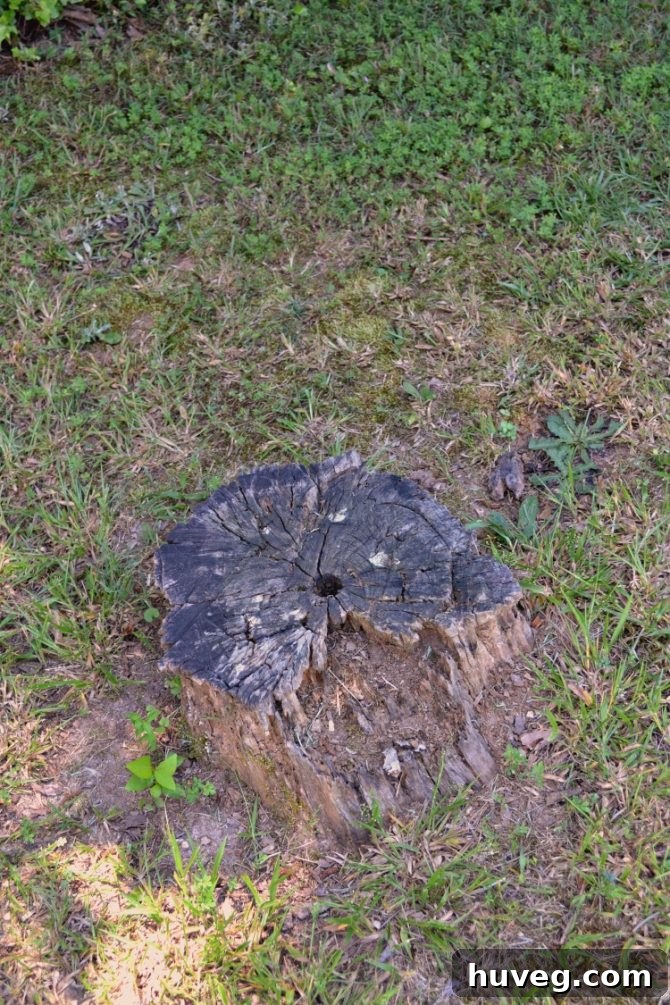
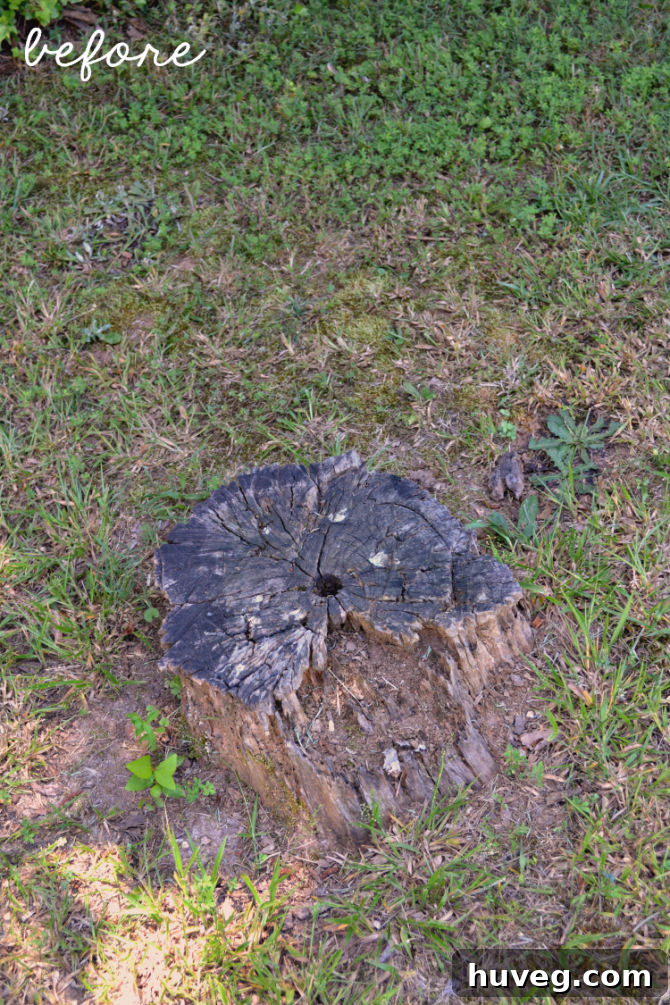
Every great transformation begins with a challenge, and for this project, it was an unsightly stump that had been a persistent eyesore since I moved in. To clarify, this wasn’t one of the remnants from the significant tree removal project I undertook last year. This particular stump was likely a legacy from the city’s tree removal efforts many years ago, left to slowly decay in an inconvenient spot near utility lines in my front yard. Its placement was particularly frustrating, smack dab in the middle of an otherwise easily mowed area, constantly disrupting the flow of my lawn care. Before you begin, take a moment to assess your chosen stump. Is it stable? What kind of wood is it (harder woods like oak will be more challenging than softer woods)? How old is it? Older, drier stumps are often easier to work with, but they can also be more brittle. My stump, having been neglected for years, was perfectly dried out, making it an ideal candidate for this garden makeover.
Step 2: Gather Your Essential Tools and Prioritize Safety

Before you even think about drilling, safety must be your absolute top priority. I cannot stress this enough: ensure you are wearing safety glasses. When working with wood, especially old, brittle stumps, splinters and flying debris are inevitable. The last thing you want is a piece of wood entering your eye – a painful and potentially serious injury that is easily preventable. Don’t compromise on eye protection. In addition to robust safety glasses, you will need a sturdy drill. This isn’t a job for a tiny household drill; you’ll need one with enough power and torque to tackle dense wood. Pair this with the largest spade bit you can find. A spade bit is designed to aggressively remove wood, creating wide, flat holes quickly, which is perfect for hollowing out a stump. You’ll also need a reliable hammer for breaking up larger chunks of wood. While not strictly essential, a wood chisel would be incredibly helpful for refining the edges and removing stubborn pieces. If, like me, you don’t happen to have a chisel readily available, don’t despair! You can still complete the project, it just requires a bit more perseverance and elbow grease with your drill and hammer. Consider adding work gloves to protect your hands from splinters and abrasions, especially during the hammering phase.
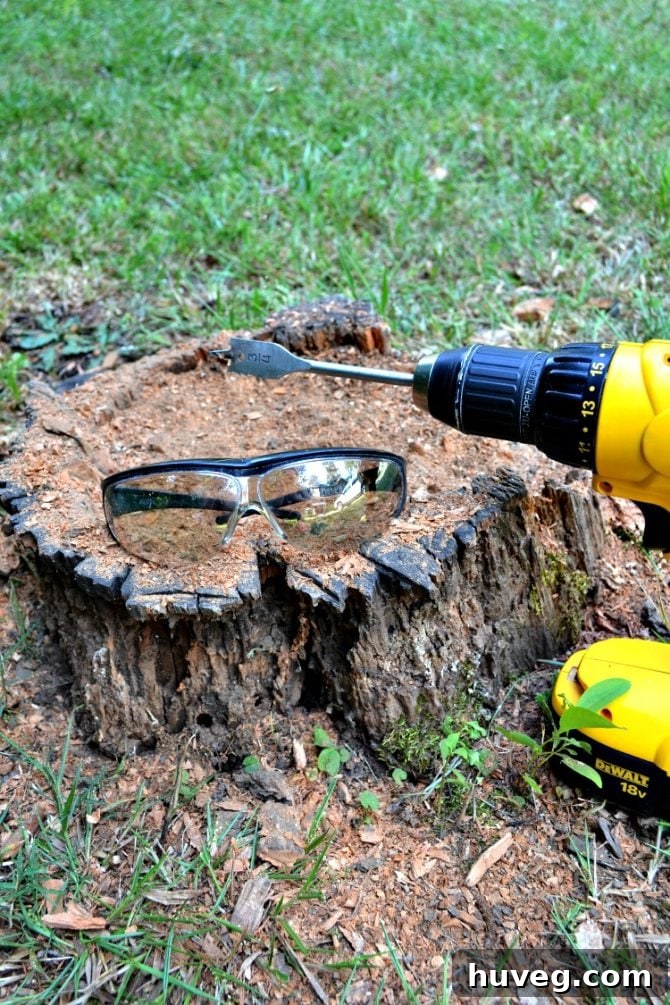
Step 3: Begin the Hollowing Process

I was fortunate that the stump I was working on already had a small center hole, a relic from when the tree was originally removed years ago. This existing cavity, though small, provided a natural starting point and meant the stump had already endured several years of drying out and becoming inviting insect habitat. This pre-existing condition proved to be an unexpected advantage, significantly speeding up the initial drilling process as the wood was exceptionally dry and prone to splintering. However, this dryness also meant I had to exercise caution. The wood was so brittle that one entire side of the stump had already chipped away over time – perhaps due to natural weathering, or maybe a wayward pass from an edge trimmer. My goal was to carefully drill new holes around the center, expanding the cavity while preserving the integrity of the remaining stump edges. Begin by drilling a series of holes, starting from the center and working outwards in a circular pattern. These initial holes will serve as pilot points and help you define the inner perimeter of your planter. Remember to keep a consistent distance from the outer edge of the stump to ensure structural stability. The drier the wood, the faster your drill will cut, but also the more sawdust and debris you’ll generate, so be prepared for a bit of a mess.
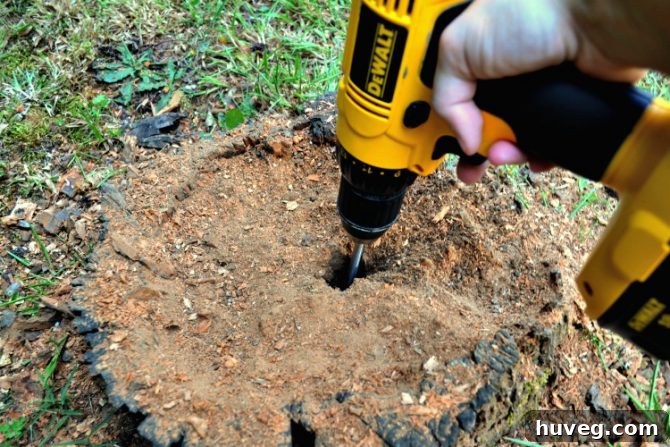
Step 4: Deepen and Refine the Planter Cavity

This is where the real workout comes in! Continue the hollowing process by systematically drilling more holes and breaking away the wood between them. I found that the most effective combination for my stump was leveraging the aggressive cutting power of my large spade bit with my powerful Dewalt drill. Once a cluster of holes was drilled, I would then switch to a hammer, striking at various stubborn bits of wood until they broke free in satisfyingly large chunks. As mentioned earlier, a chisel would undoubtedly streamline this process, allowing for cleaner cuts and more precise removal, but a hammer can suffice with enough effort. This Old House suggests using a mattock, a robust tool designed for digging and prying. While I own a mattock, I found it difficult to achieve the necessary control to protect the delicate edges of my stump, so I reverted to the more precise, albeit slower, method of drill and hammer. For further inspiration on similar projects, Stacey from Not Just a Housewife crafted a beautiful indoor planter from a log section, offering more valuable tips (though I must note, my Ryobi impact driver was not effective for this project, as the bits consistently slipped). Aim for a cavity depth of at least four to six inches; this provides ample space for plant roots and soil. Critically, remember to drill a few additional, deeper holes at the very bottom of your newly created cavity. These serve as essential drainage points, preventing waterlogging which can quickly lead to root rot and compromise the health of your plants. It’s easy to feel like you’re not making progress amidst the accumulating sawdust, but trust the process. Once you sweep away the debris, you’ll likely discover that the hallowed-out area is much deeper than it appeared.
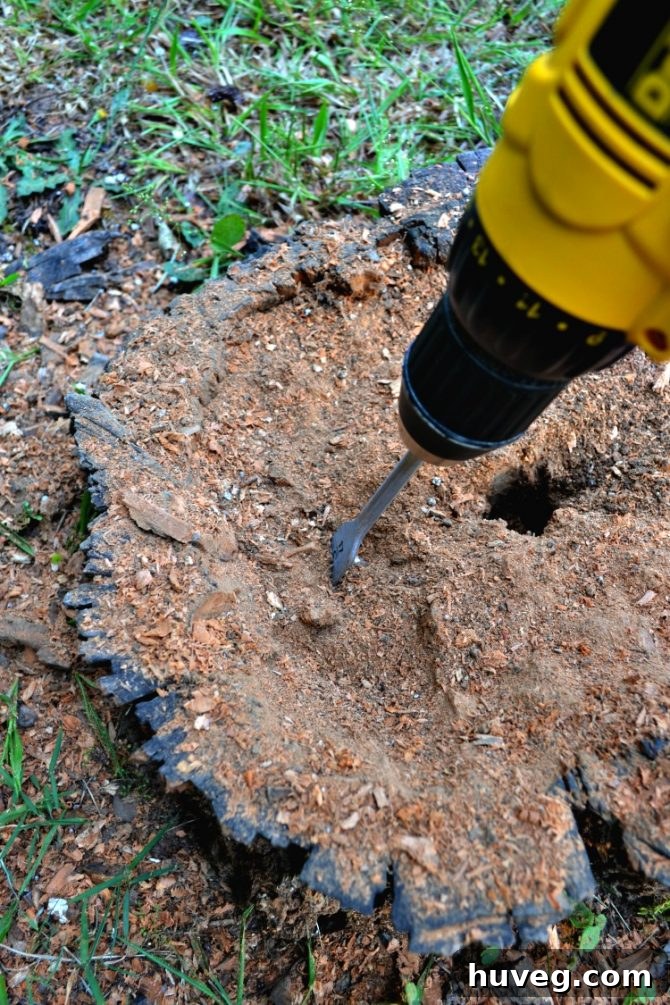
Step 5: Select and Plant Your Cascading Flora

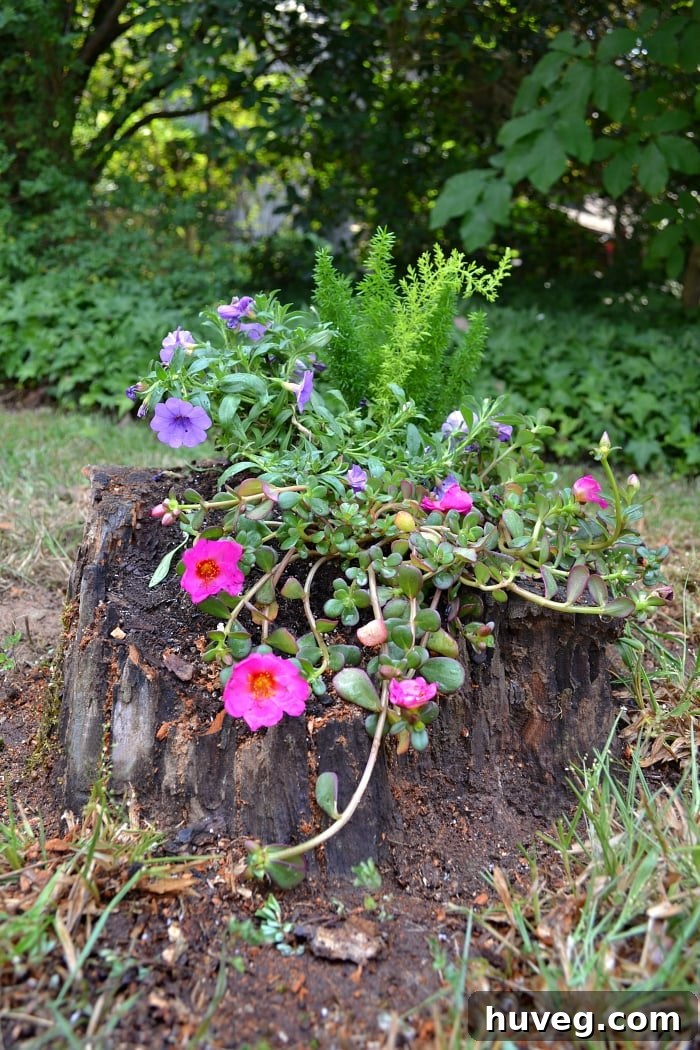
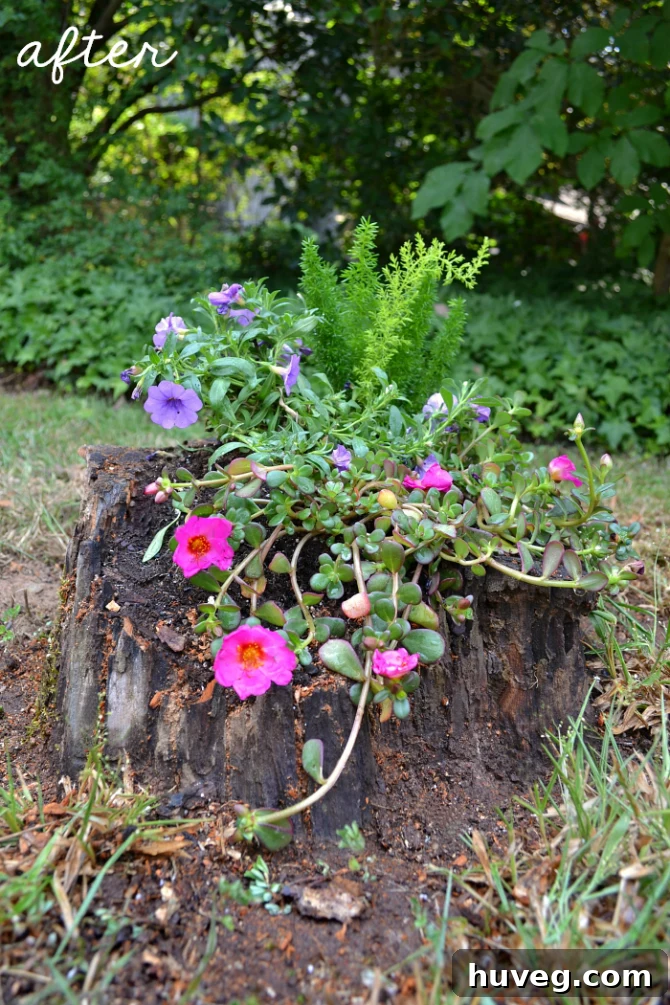
Finally, it was time for the truly rewarding part: bringing the stump to life with beautiful plants! My initial thought was to fill the cavity with a variety of succulents, known for their drought tolerance and striking textures. However, during a nursery visit, I stumbled upon a delightful fern and some vibrant flowers that completely changed my vision. The beauty of a cascading stump planter lies in its ability to transform a static object into a dynamic display. For the back of the planter, I chose a Foxtail fern and Calipetite, both excellent choices for their resilience and drought-tolerant properties once established. These plants provide a lovely green backdrop and some vertical interest. The true magic, however, comes from the Portulaca (also known as moss rose), with its cheerful pink flowers. I strategically placed the Portulaca along the front, allowing its delicate tendrils to elegantly cascade down the side of the stump. This clever placement had a dual benefit: it softens the natural lines of the stump and, quite ingeniously, makes the chipped-off area look far more intentional, as if designed for the flowers to flow perfectly. When planting, use a high-quality potting mix that offers good drainage, especially given the nature of a stump planter. Gently loosen the roots of your chosen plants before placing them, ensuring they have room to spread. Arrange them aesthetically, considering their mature size and growth habits, to create a balanced and beautiful composition.
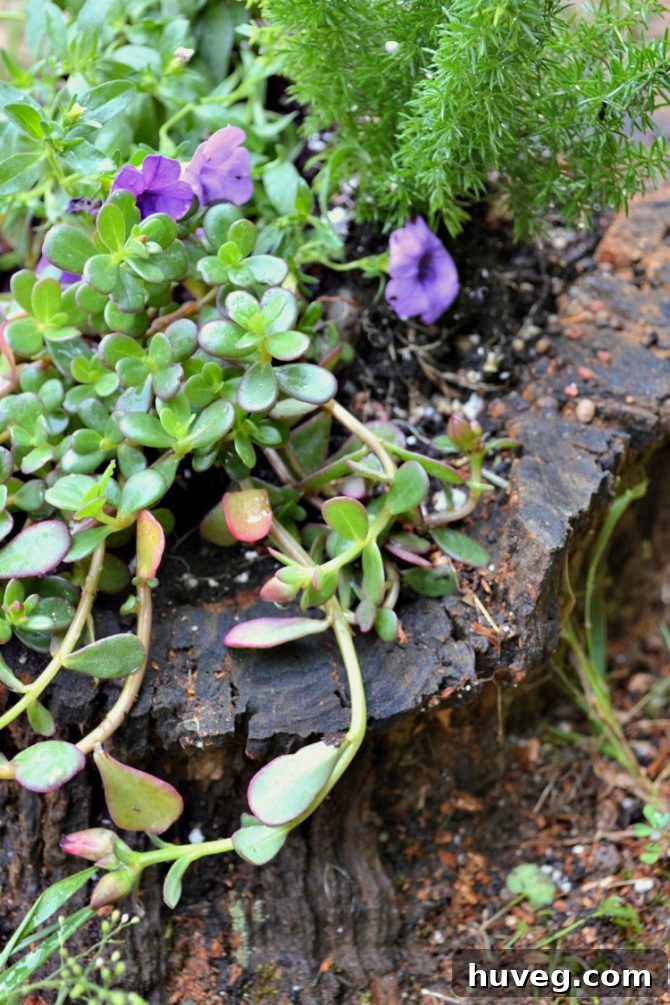
The Beautiful Transformation: Before & After Reveal
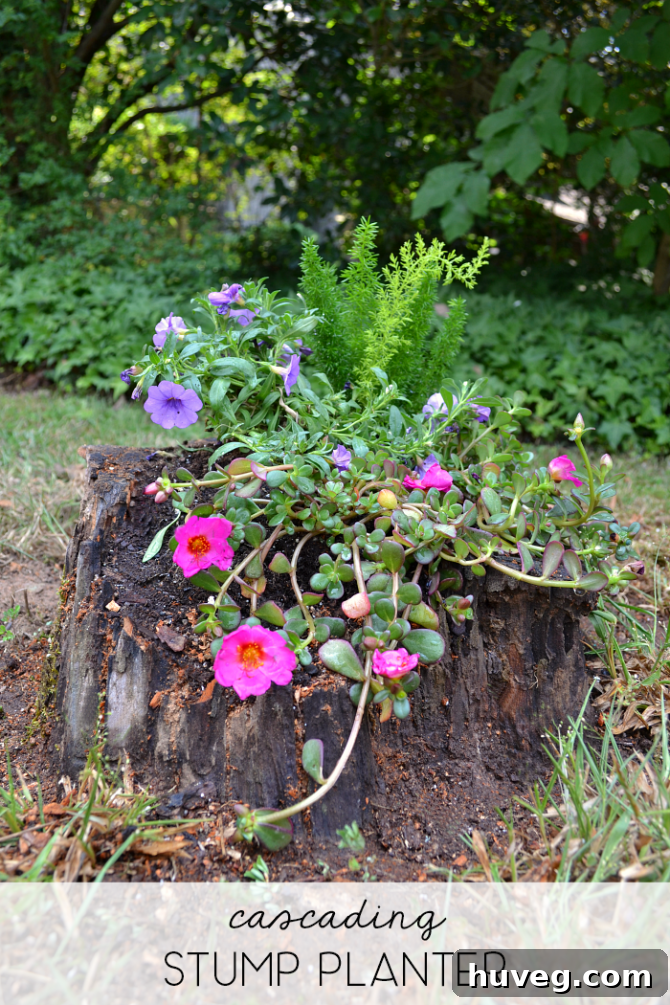
And here it is, the moment of truth – the stunning final result of my cascading stump planter! I literally raced against the clock to capture these photographs, snapping away just moments before the heavens opened up with a much-needed rain shower. While the sudden downpour might have caused some of the delicate flowers to temporarily close, I am utterly delighted with the transformation. This once-neglected, awkward stump has been reborn into a charming and eye-catching feature that undeniably elevates the beauty of my front yard. It’s a testament to how a little vision and elbow grease can turn a nuisance into a natural work of art. The mix of textures and colors, particularly the vibrant pink Portulaca gracefully trailing down, brings a softness and vitality that was completely absent before. It no longer detracts from the landscape but actively enhances it, proving that even the most stubborn garden elements can be repurposed with creativity.
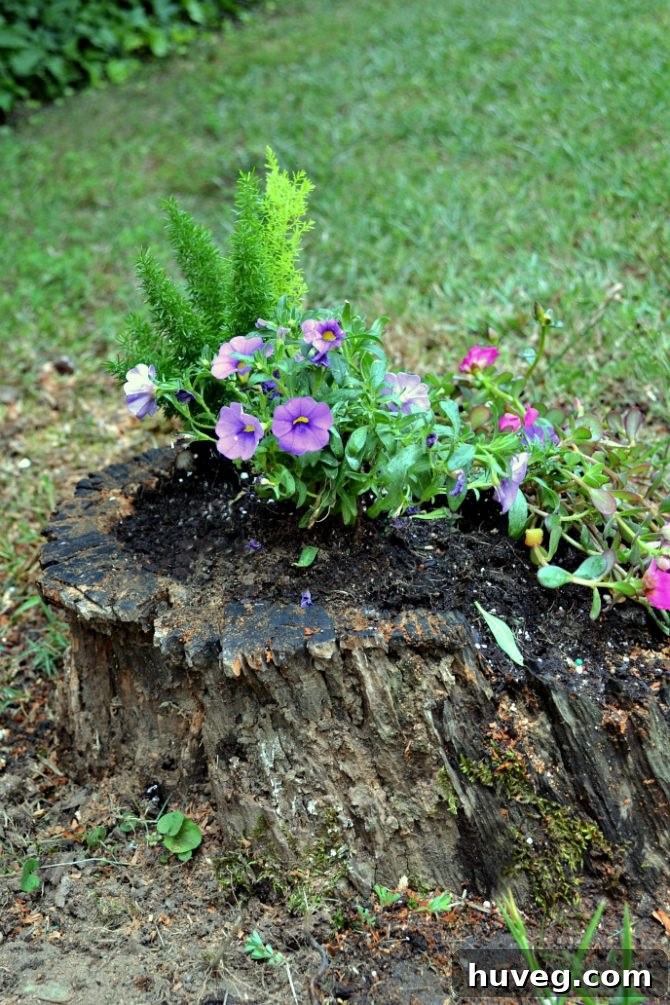
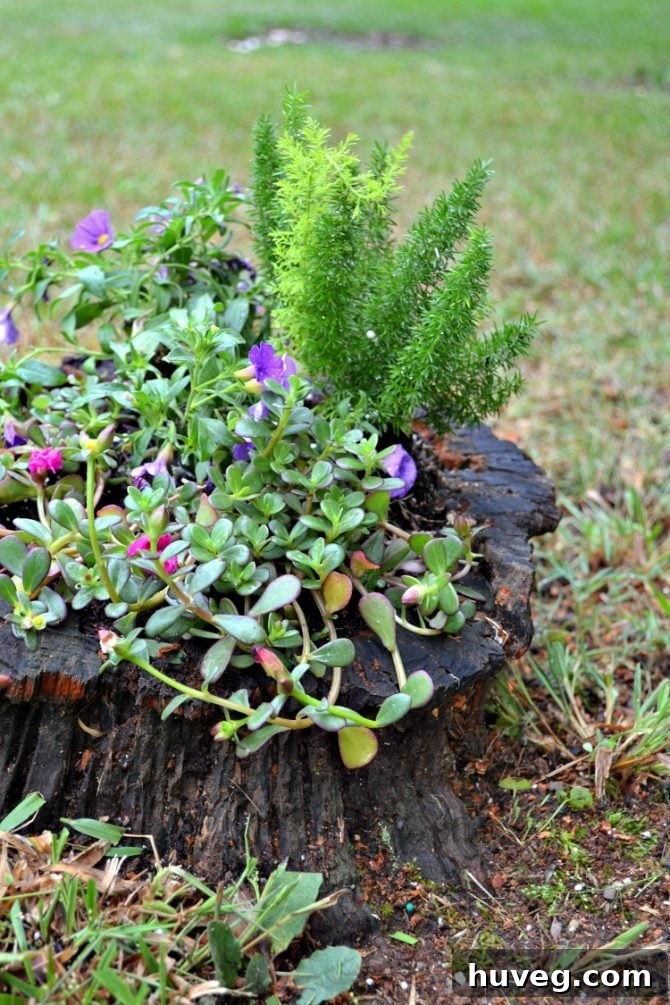
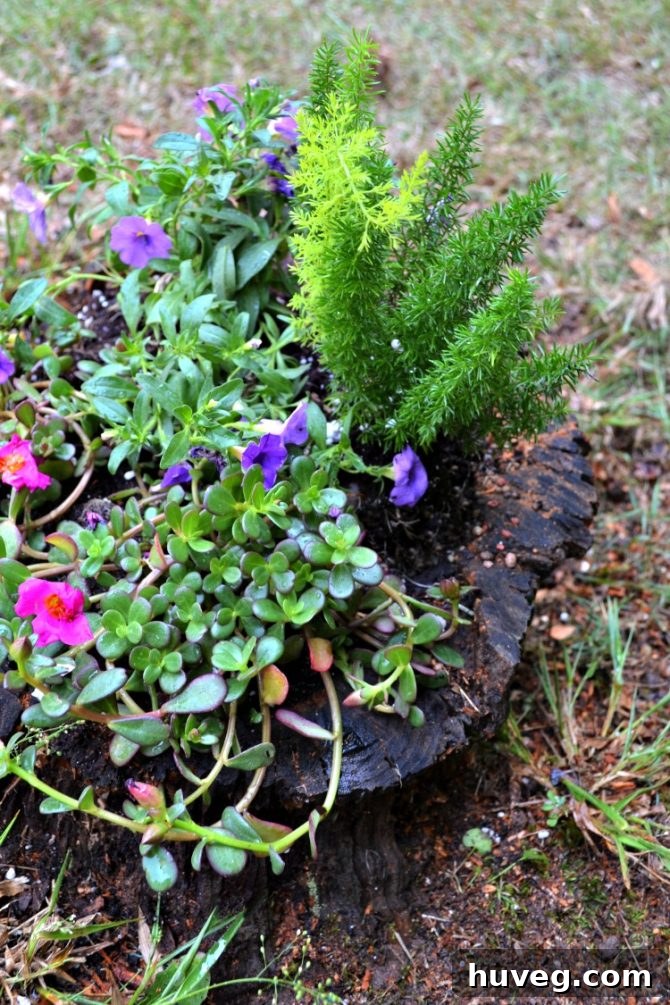
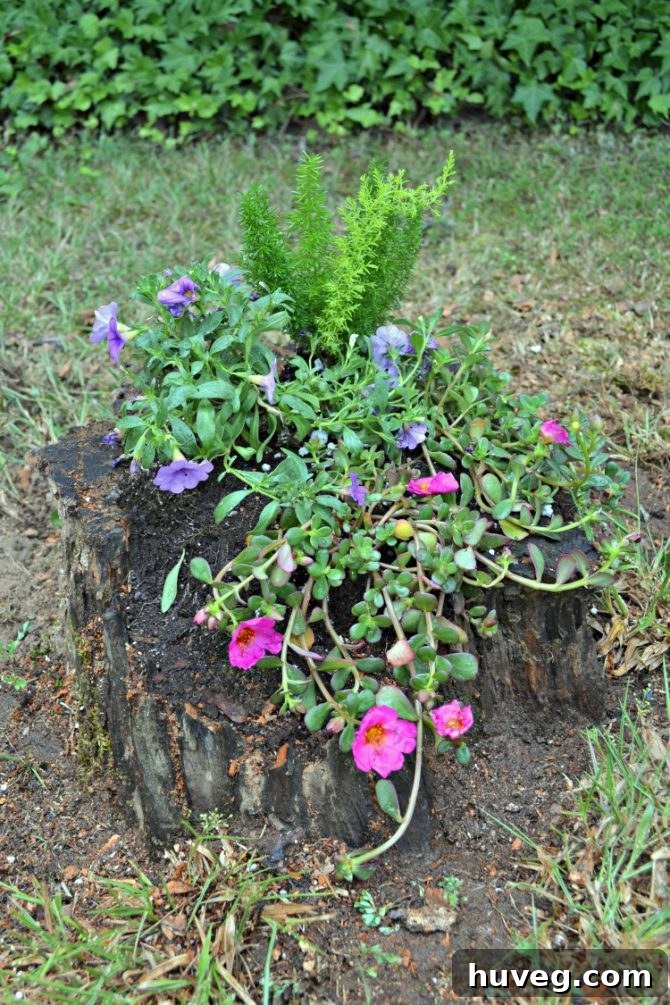
To truly appreciate the transformation, let’s take a moment for a satisfying before and after comparison:
Maintain Your Outdoor Oasis: Tips for Longevity
Creating a beautiful cascading stump planter is just the beginning; maintaining its vibrancy ensures it remains a stunning garden feature for years to come. The longevity of your living sculpture largely depends on proper care and attention to your chosen plants. Regular watering is crucial, especially for plants in a relatively shallow container like a stump. While some plants, like my drought-tolerant selections, require less frequent watering, always check the soil moisture levels before adding more. Overwatering can be just as detrimental as underwatering, leading to root rot in poorly drained conditions. During hot summer months, you might find yourself watering daily, while cooler periods will require less. Fertilization also plays a key role. Depending on your soil mix and plant choices, consider adding a slow-release granular fertilizer at the beginning of the growing season or a diluted liquid feed every few weeks. This replenishes nutrients that plants consume, promoting healthy growth and abundant blooms. Be mindful of seasonal changes. As temperatures drop, you might need to bring certain tender plants indoors or replace them with cold-hardy varieties like pansies or ornamental kales for winter interest. Regularly deadhead spent flowers to encourage new blooms and prune back any leggy growth to maintain a neat and full appearance. Inspect your planter periodically for pests or diseases, addressing any issues promptly to prevent them from spreading. With a little consistent care, your cascading stump planter will not only thrive but also continue to be a dynamic and delightful focal point in your garden, a testament to sustainable and creative outdoor living.
Join the #LIVINGDIYCHALLENGE and Inspire!
Now, it’s your turn to unleash your creativity and join the #LIVINGDIYCHALLENGE! If you’ve embarked on a project that incorporates a living element, we encourage you to share your inspiring creations. Please use the hashtag #LIVINGDIYCHALLENGE on social media platforms so that I and other participants can admire your work, offer encouragement, and connect with your journey. Additionally, if you’re sharing a blog post about your project, please include a reference to our challenge and a link back to this post. This helps your readers discover the full scope of our creative community and explore the diverse range of living DIY projects. Your participation not only adds to the richness of the challenge but also inspires others to transform their spaces with living beauty. Dive in, get creative, and let’s cultivate a more vibrant, DIY-filled world together!