Troublesome Tree Solutions

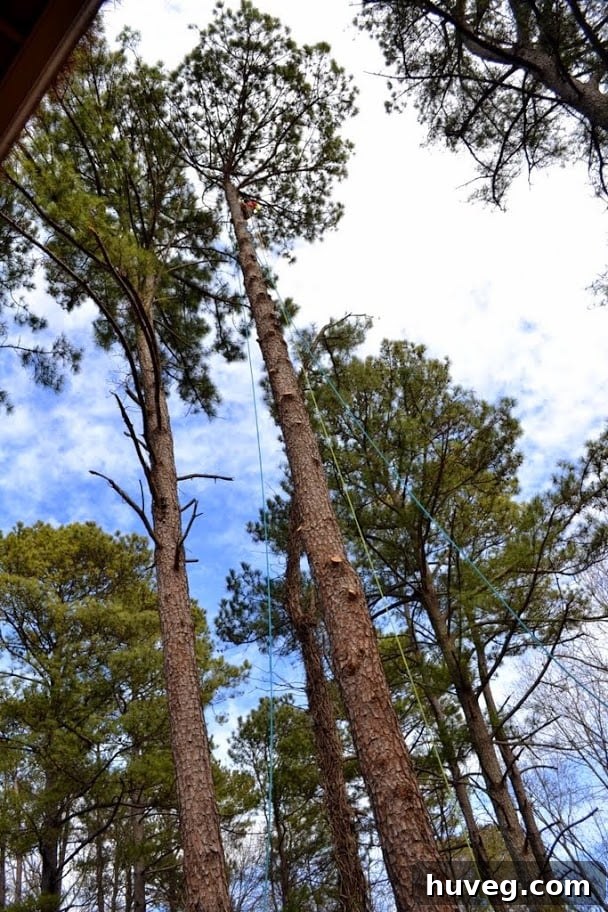
This week has certainly been a whirlwind, starting with personal challenges like the intense Spartan Sprint, which left me with a few battle scars – scrapes, blisters, and bruises. Pushing physical limits on the race course often translates into tackling equally daunting projects at home, and that’s precisely what I did last week. After years of contemplation, I finally hired a professional tree removal service to address a significant issue in my yard: five towering pine trees. And now, the job is complete enough to share the transformative results. But before we dive into the “after,” let’s go back to the beginning of this extensive home improvement journey.
The Imperative for Tree Removal: Reclaiming My Outdoor Space
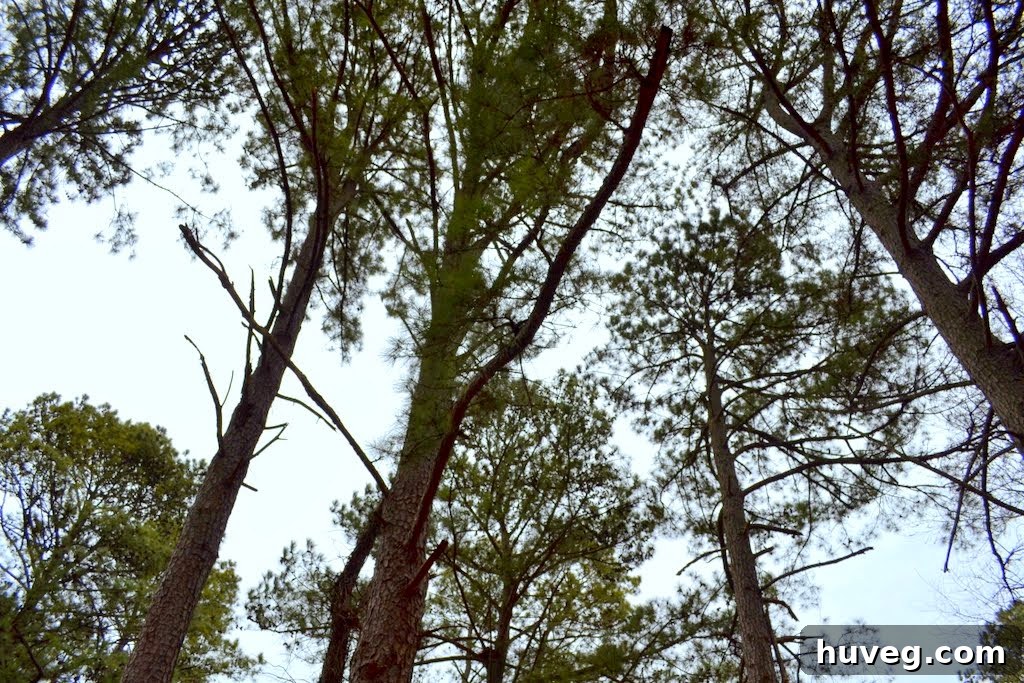
My decision to invest in tree removal wasn’t made lightly. For the past five years, these pine trees – one in the front yard and a cluster of five dominating the backyard – have been a constant source of frustration. While they initially offered a sense of privacy, their drawbacks far outweighed any benefits. The thought of potential roof damage from falling branches during storms was a persistent worry, creating anxiety with every strong gust of wind. Beyond the structural concerns, the sheer volume of pine straw and needles was overwhelming.
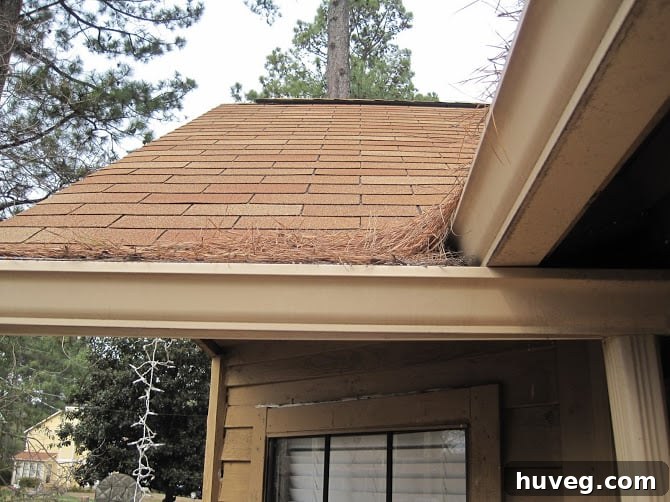
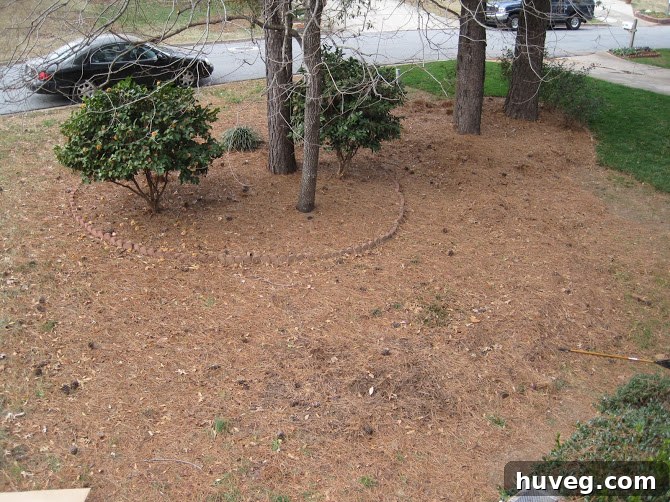
Every season brought endless piles of pine straw, blanketing both the first and second-story roofs, relentlessly clogging the gutters, and suffocating the lawn. This perpetual cycle meant that any progress I made on backyard landscaping or maintenance was quickly undone, leaving me feeling defeated. The vision of a vibrant, low-maintenance yard was constantly overshadowed by a brown, needle-strewn landscape. It became clear that these trees were incompatible with the kind of outdoor living space I envisioned for my home. Financially, it was a significant undertaking, but I knew this project would be a game-changer for the overall aesthetic and functionality of my property.
How to Select a Reputable Tree Removal Service
My quest for a reliable tree removal service began after realizing I had some budget flexibility from other exterior repair projects. Having never navigated this type of service before, I initially considered the unsolicited business cards occasionally left in my mailbox by passing companies. However, I quickly dismissed this approach. To ensure both competitive pricing and trustworthy service, I turned to more proven methods.
My first stop was online research, which led me to HomeAdvisor. The name sparked a faint memory of a previous contact, but it wasn’t until I started getting quotes that the connection solidified. This platform proved incredibly user-friendly. I simply entered my contact information, zip code, and specified the type of project I needed – in this case, tree removal and stump grinding. The site promptly displayed a list of local professionals, complete with past reviews and direct contact options.
A key feature I appreciated was the ability to indicate whether I was in the “planning” stage or “ready to start.” This transparency alleviated pressure, as service providers knew they were providing competing quotes. HomeAdvisor also facilitated the process by sharing my contact details with pre-screened and verified local companies. This meant I received calls, scheduled on-site visits, and obtained comprehensive quotes without the hassle of initiating every contact myself. Furthermore, knowing that these companies were vetted through HomeAdvisor and provided proof of licenses and insurance policies gave me significant peace of mind. The only minor drawback was an initial influx of follow-up emails, which, after providing feedback, seemed to taper off.
Navigating Quotes and Scheduling: A Practical Guide
With several quotes in hand, the next phase involved careful negotiation and selection. This crucial step is worthy of its own dedicated guide, but I’ll share the highlights here. My experience often mirrors the “Goldilocks principle”: one option is too expensive, another falls short, and one is just right. In this instance, one service quoted an exorbitant $675 for trimming a single tree, another was the cheapest but overly aggressive in their sales approach, and a third company struck me as the most reliable and professional.
By comparing the quotes and leveraging the more competitive offers, I successfully negotiated a comprehensive package with my preferred team. For a total of $1300, they agreed to cut down five pine trees, trim the sixth to clear it from the roofline, and perform stump grinding for all removed trees. A clear contract solidified our agreement. The crew marked each tree with colored tape: orange for complete removal and green for trimming, ensuring clarity on the scope of work.
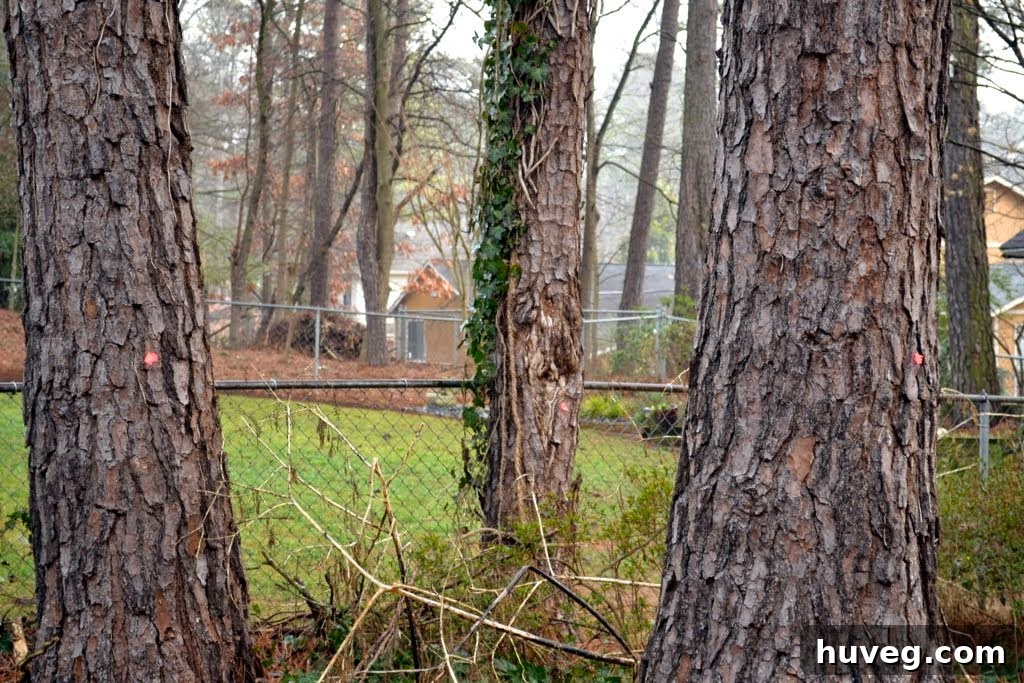

Scheduling took about two weeks, but I was pleasantly surprised to learn that the entire job would likely be completed in a single day. The company also handled coordinating with the utility company to mark underground lines, removing any additional tasks from my plate. All that was left for me to do was await the crew’s arrival.
Tree Removal Day: A Detailed Account of the Process
On the appointed day, a large and highly efficient crew arrived earlier than anticipated, immediately commencing work in the backyard. Due to the fenced perimeter of my backyard, they carefully removed a section of the gate to facilitate the hauling of equipment and debris. This minor logistical adjustment was executed flawlessly, and the gate was reinstalled perfectly upon completion – a relief, as other services had proposed more invasive gate removal methods that raised concerns about proper reassembly.
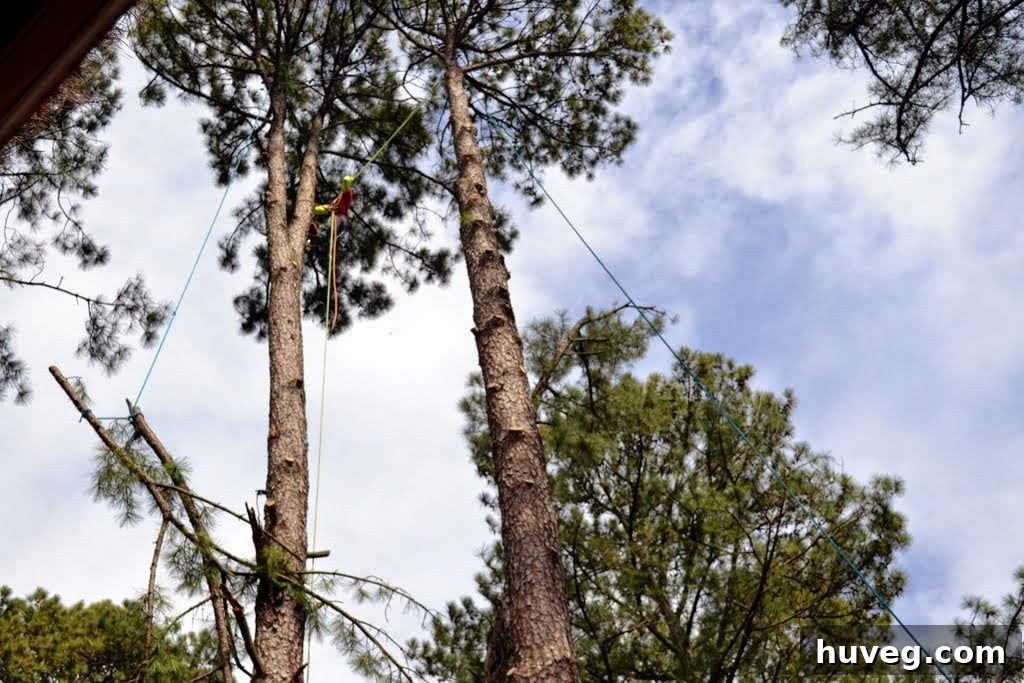
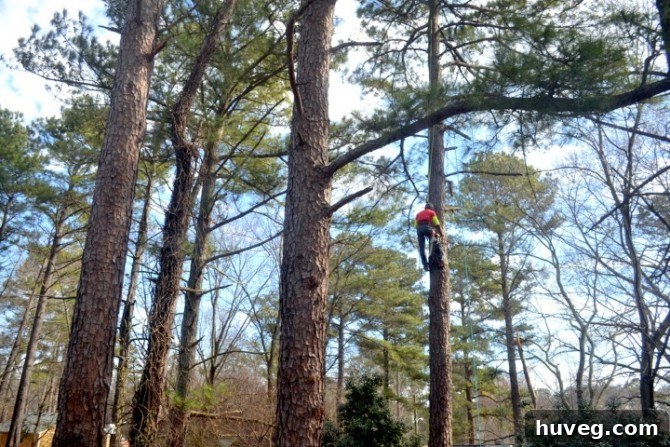
The crew’s expertise was immediately apparent. Climbers scaled the towering pines with incredible agility, systematically lopping off branches from the top down. Smaller branches were allowed to fall freely, while larger, heavier limbs were meticulously secured with ropes and guided safely to the ground. From the protective vantage point of my kitchen’s sliding glass door, I captured a few photographs, understanding that closer proximity would be unsafe given the scale of the operation.
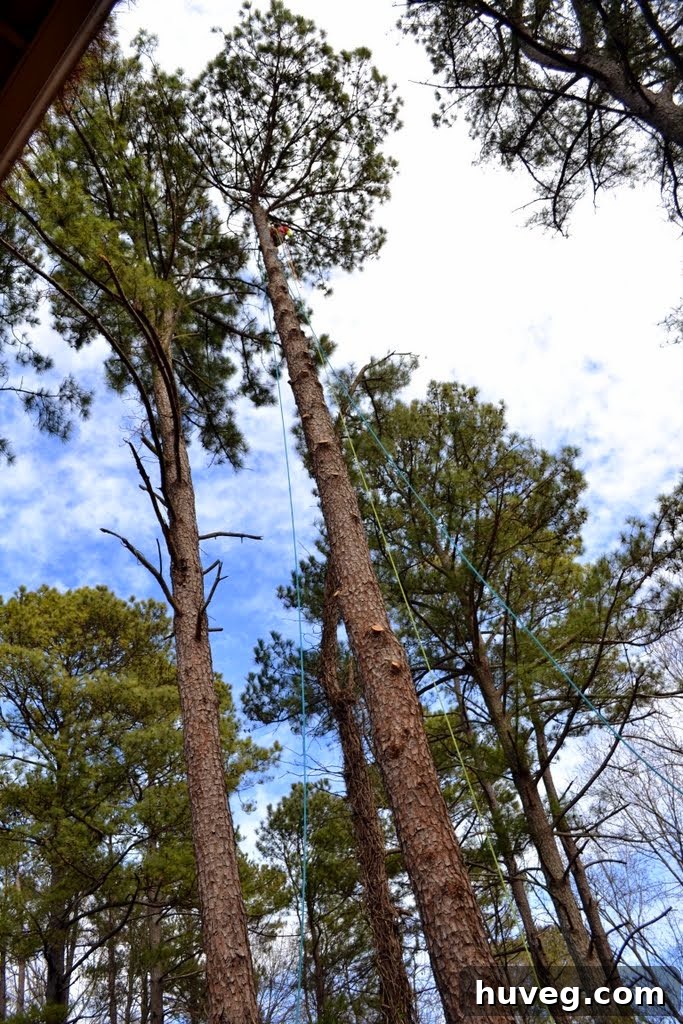
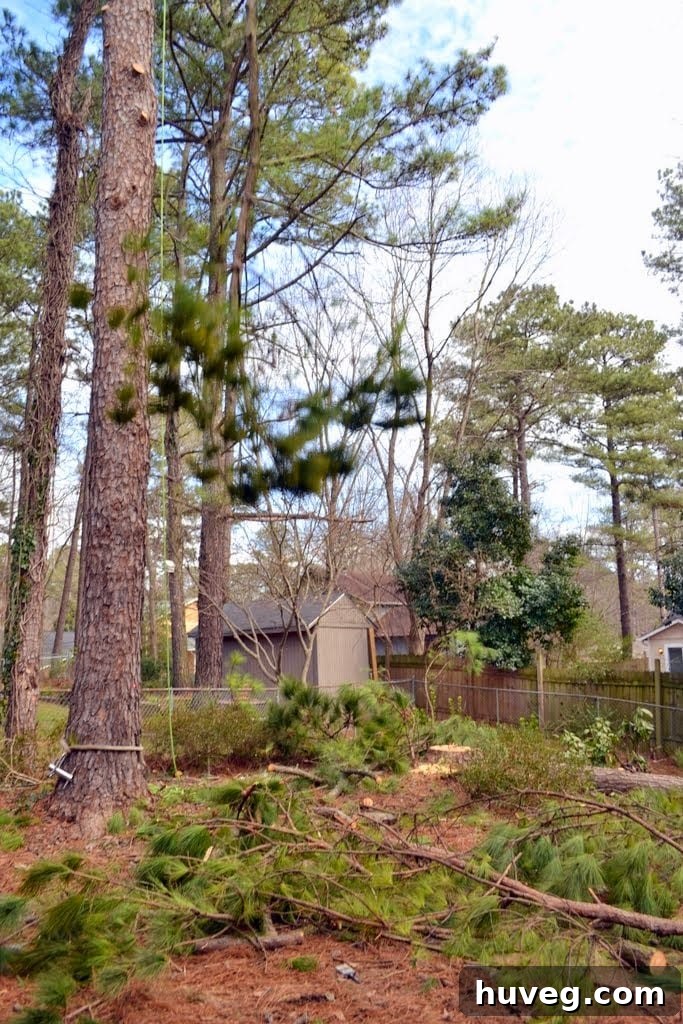
Once the branches were cleared, the focus shifted to dismantling the main trunks in manageable sections. Each segment that hit the ground sent a noticeable tremor through the house, much to the curiosity (and slight alarm) of my dog, Charlie, who maintained her post as a vigilant guard. Despite the noise of chainsaws and falling timber, the crew maintained an impressive level of calm and coordination. This quiet efficiency was incredibly reassuring; it allowed me to continue working upstairs, confident that professionals were handling the formidable task outside.
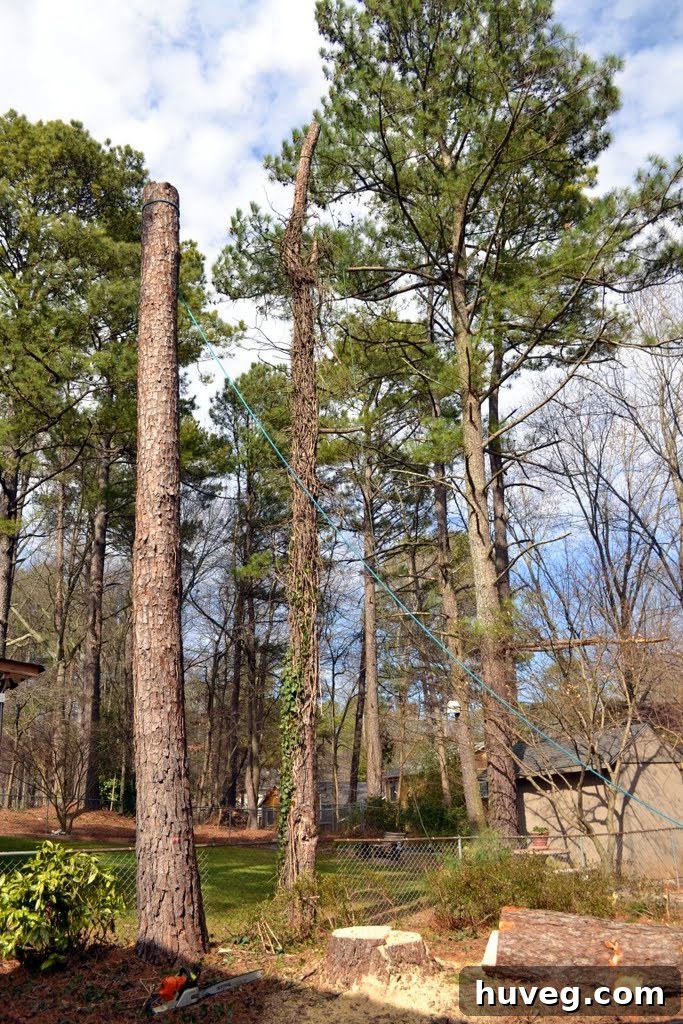
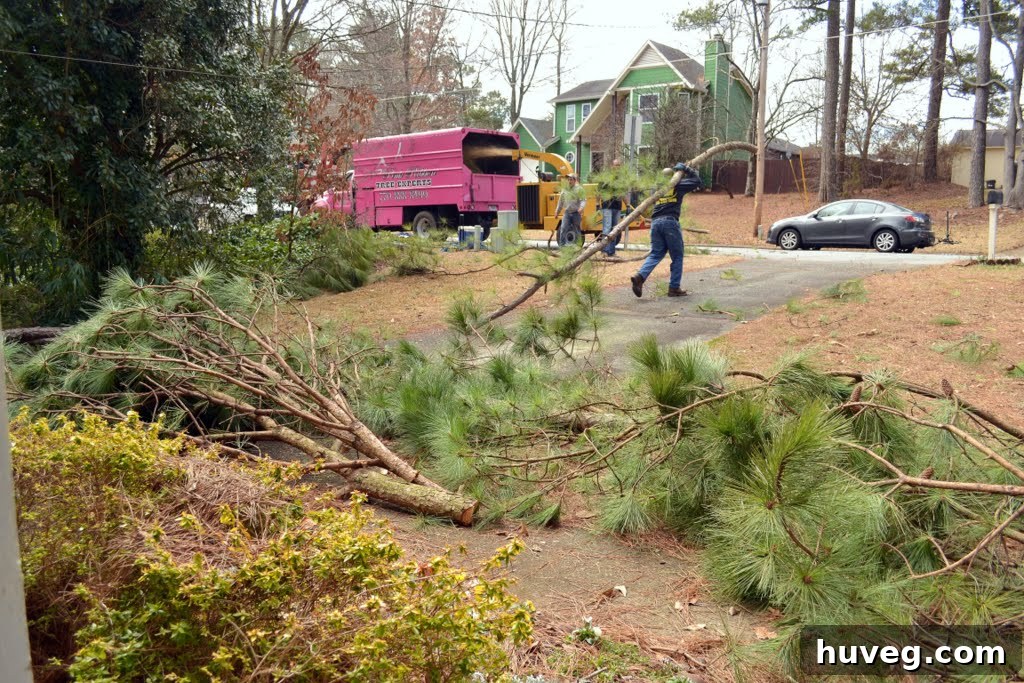
One by one, the trees were systematically reduced, and other crew members efficiently dragged all removed branches to the chipper located in the front yard. The team was remarkably friendly, with some even good-naturedly posing for my camera. The utility representative also arrived as scheduled to mark any necessary lines. I took a brief break for lunch while the work progressed seamlessly throughout the afternoon.
An Unexpected Hiccup and Professional Resolution
Midway through the day, while I was out for lunch, I received a call from the tree service. It concerned a discrepancy in a comparison quote I had used during my negotiation. It turned out the “cheaper” quote, which had helped me secure a better price, had erroneously listed only four of the five trees I needed removed. This oversight explained the significantly lower initial estimate. To be frank, I hadn’t scrutinized the details of that particular quote closely enough, primarily focusing on the inclusion of stump grinding and assuming all requested trees were covered. I had specifically discussed the front yard tree, so its omission from that estimate was puzzling.
Momentarily, I felt a surge of frustration and panic, envisioning them asking for more money for the work already in progress. I was prepared for a difficult conversation. However, my concerns were quickly assuaged. They were calling to inform me that the error was on their part for not catching the discrepancy sooner, and they immediately reassured me that they would honor our original agreement without any additional charges. This commitment to their word and swift acceptance of responsibility reinforced my confidence in their professionalism. Up to that point, the process had been flawless, and their integrity during this minor hiccup further solidified my positive impression.
Rain Interruption and the Disappearing Logs
Returning from lunch, I was immediately struck by the visual impact of fewer trees. A newfound lightness enveloped the house, and the sight of an open sky in the backyard was, surprisingly, a very welcome change. The crew had also meticulously limbed up the last remaining pine tree in the backyard – the only one I chose to keep.
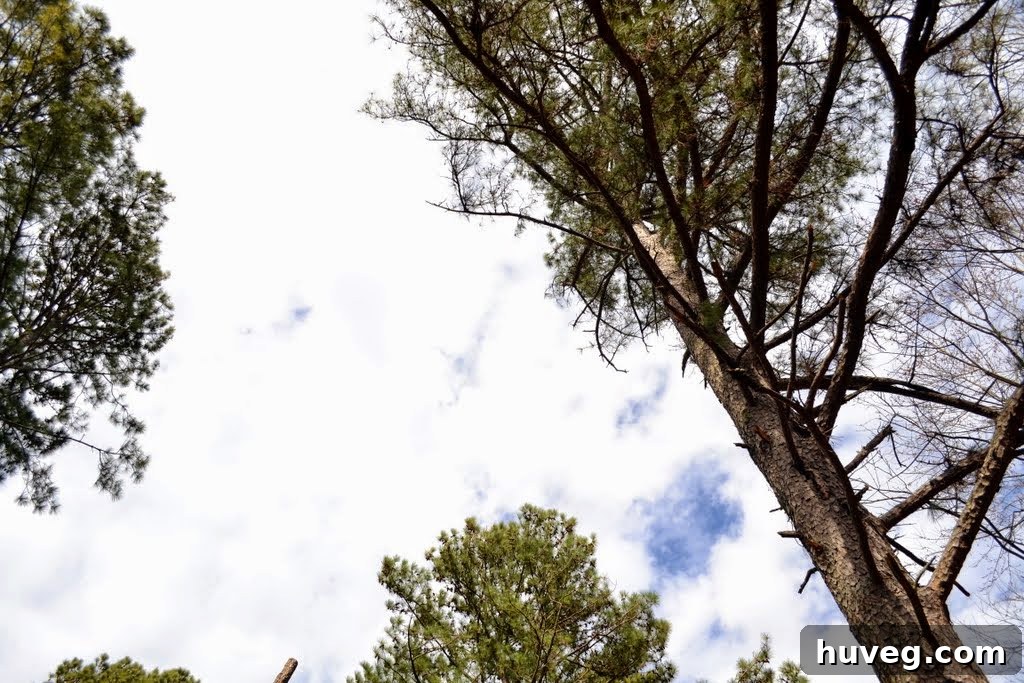
Unfortunately, the newly revealed open space also welcomed ominous rain clouds, signaling that the project wouldn’t be completed in a single day. The crew efficiently packed up, having cleared all branches from both yards. However, the heavy logs from the trunks had to remain until the ground was dry enough for their equipment to move without getting stuck or damaging the lawn. While I understood the need to wait, I had a sneaking suspicion that the ground would dry precisely on the day I was scheduled for an office trip to Alabama. This meant I might miss capturing the final stages of log hauling and stump grinding – a minor disappointment, as I was eager to document the entire transformation.
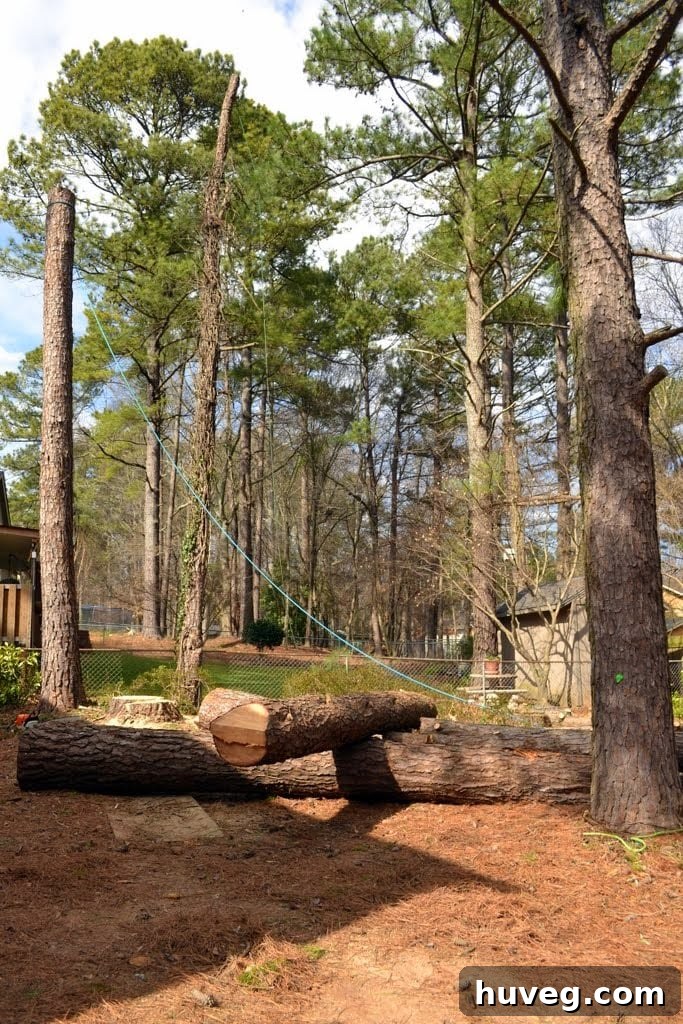
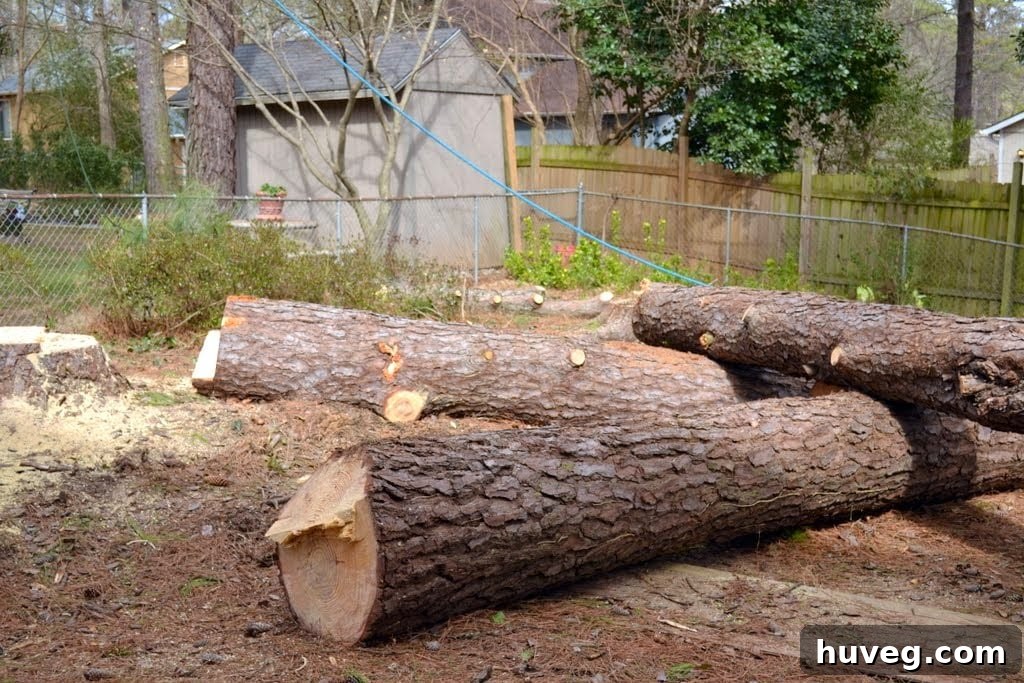
The Vanishing Logs and Unforeseen Casualties
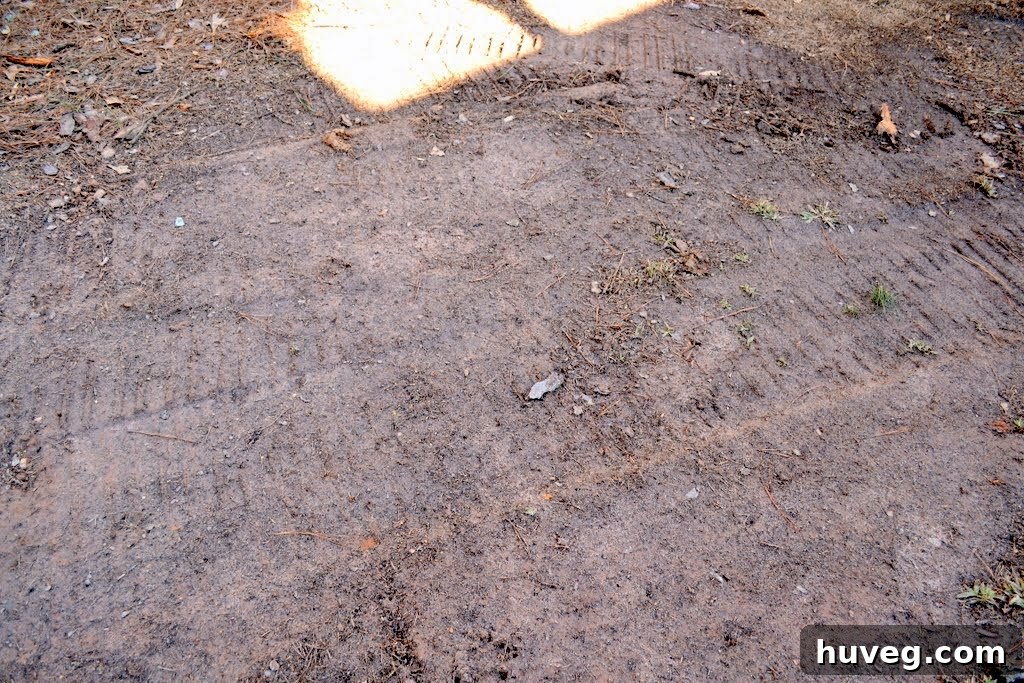
My premonition proved correct. Two days later, while I was away, the logs vanished as if by magic. It had been rainy when I left, and there was no prior call to inform me of their return. Upon arriving back in my driveway, the only evidence of their renewed activity was tire tracks on a patch of dirt near the fence. The air was thick with the fresh, earthy scent of mulched pine, and distinct mounds of stump remnants dotted the front and back yards. This “disappearing act” left me with an odd sensation, akin to misplacing car keys, but on a much larger scale – a truckload of pine logs gone.
I also observed some unforeseen casualties of the tree removal. It hadn’t occurred to me until everything was cleared, but the heavy logs had been temporarily placed directly over some of my azaleas and other shade-loving shrubs, crushing them. While there wasn’t much alternative space in the yard for these massive logs, this oversight highlighted a crucial lesson for future projects: if you have important plants you wish to protect, either explicitly mention them to the crew or temporarily relocate them to a safe area. One particular plant was completely decimated.
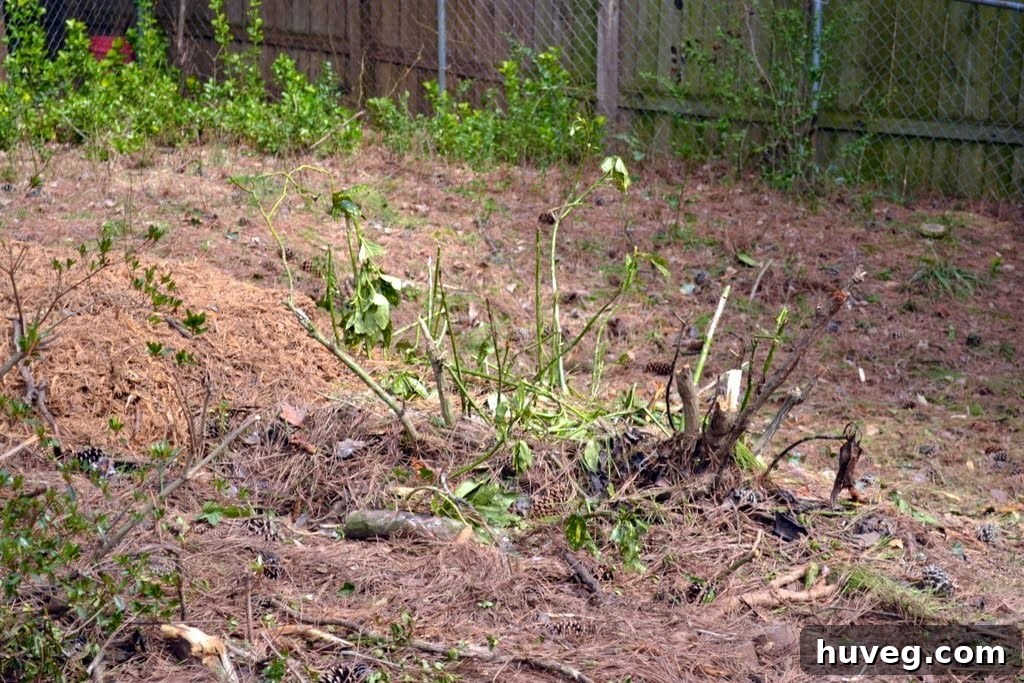
My current plan is to observe and see if these resilient azaleas, which appear particularly hardy, will recover with the increased sunlight. They are stunning when in bloom, so I’m holding out hope before considering new locations for them.

The Transformed Landscape: Immediate Results and Future Vision
While I’m still adjusting to the dramatically altered landscape, I am unequivocally thrilled with the decision to remove these troublesome trees. After past attempts to tame them proved futile, this decisive action felt like the right path forward. The increased sunlight has opened up a world of potential, and I’m buzzing with ideas for this newfound space. My immediate priority is to replace the existing metal fence section with a more aesthetically pleasing wooden one, similar to the one my dad and I installed previously. Beyond that, the canvas is open. Lush grass is definitely on the agenda, and relocating the recovering azaleas to a more intentional spot will certainly enhance the overall design. My to-do list for this area is already expanding!
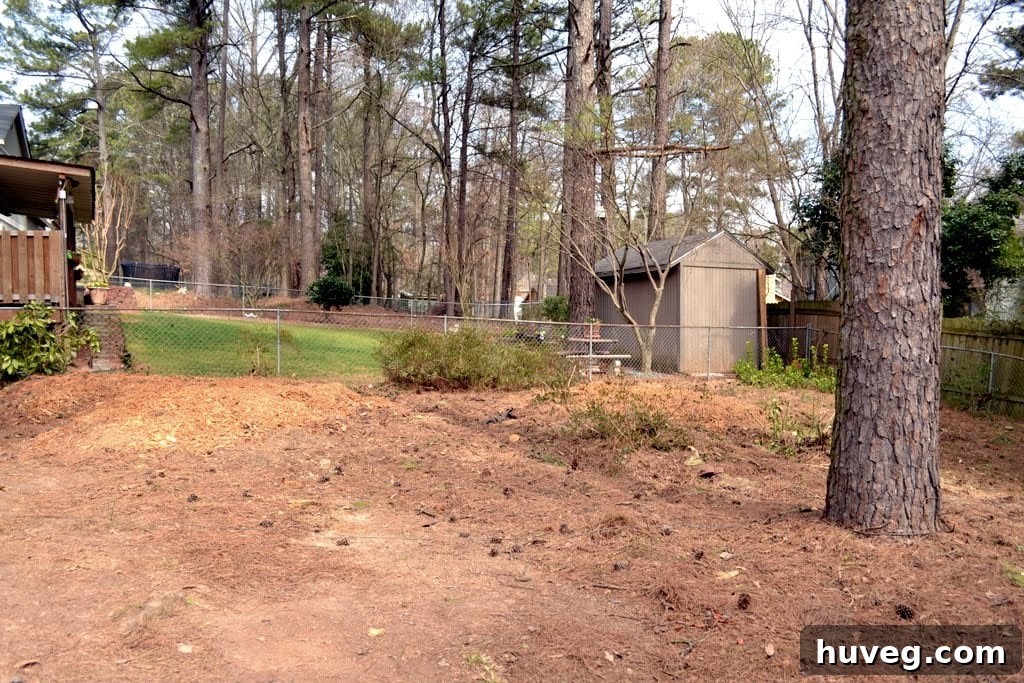
I attempted to gather old “before” photos for direct comparisons, but most of my past yard pictures were taken in summer and fall when the trees were fully leafed, making the “after” shots appear somewhat stark by comparison right now. However, spring and summer are just around the corner, and once the new greenery flourishes, I’ll be able to showcase the full, vibrant results. For now, while I envision new landscaping possibilities, here are some initial glimpses of the transformed spaces.
Front Yard: A Clean Slate for Spring Plantings
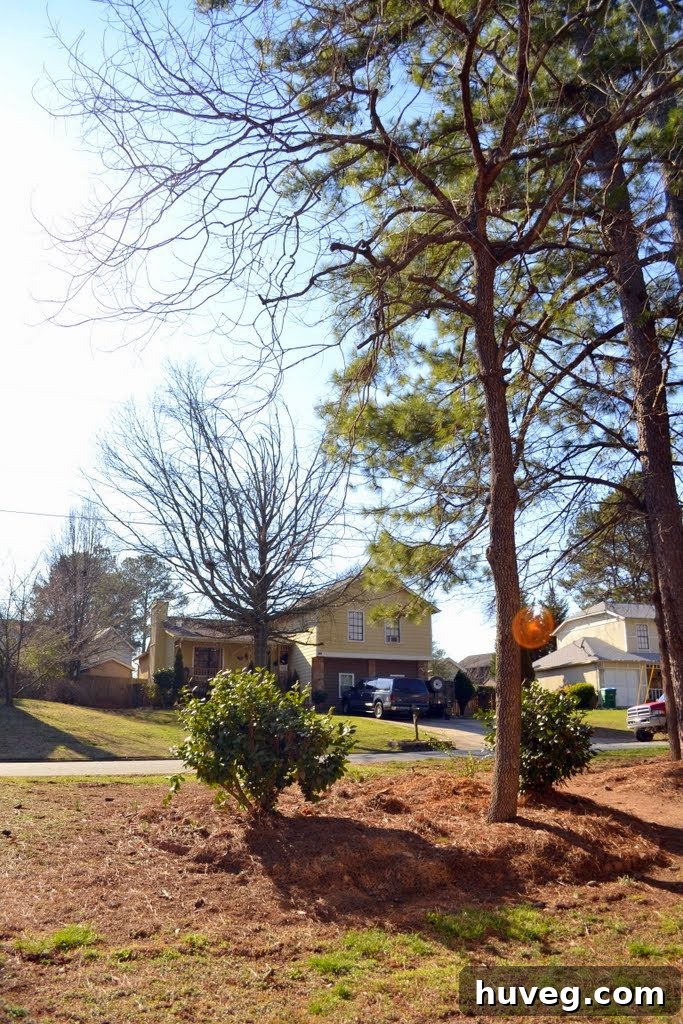
The front yard is now ready for a refresh. All that remains is to bag up the last of the persistent pine straw, and then I’ll be prepared for new flower plantings this spring. I typically wait until mid-March to plant, observing for any late freezes.
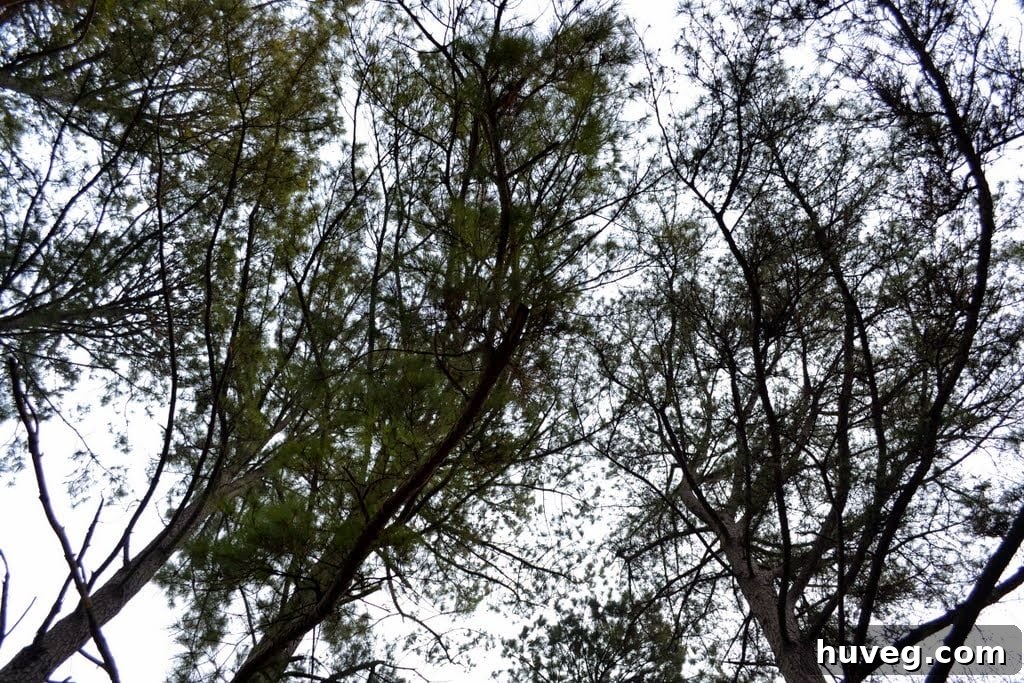
Backyard Sky: From Perpetual Shade to Abundant Light
Before: This winter “sparse” version barely hints at the density. In spring, the tree canopy was so thick that the sun rarely had a chance to penetrate.
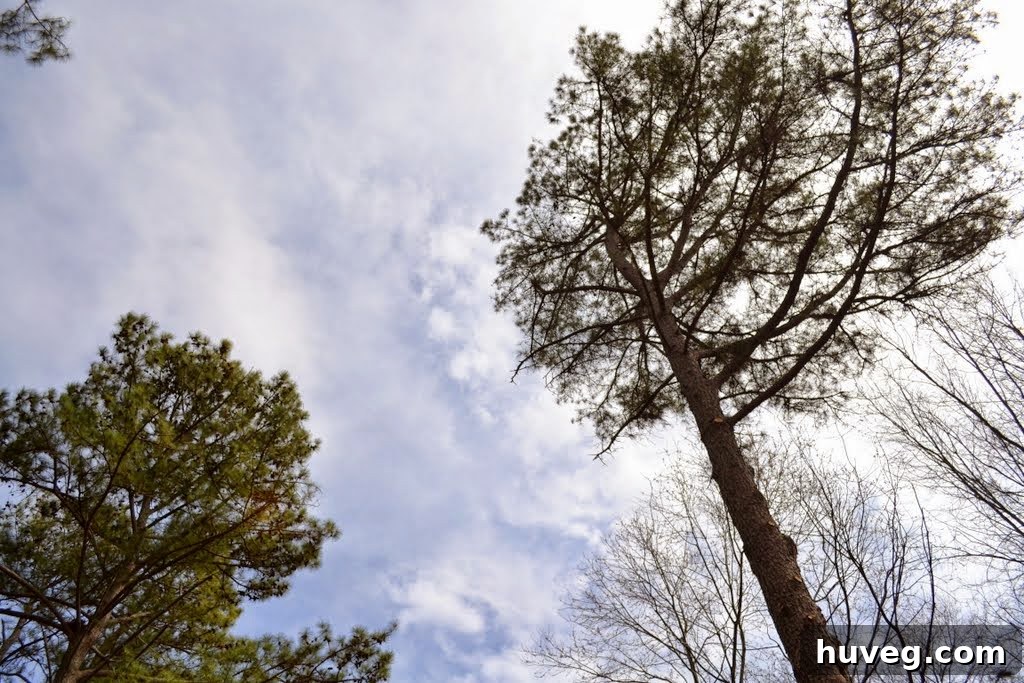
After: Ahh. The open sky is breathtaking. It feels like the entire house just took a deep, refreshing breath.
Overgrown Corner Transformed into a Blank Slate
Before: This area was perpetually overgrown, covered in ivy, and frankly, uninviting. Even in fall photos (which appear greener), the vibrancy remained in the trees, leaving the ground dull and unappealing, especially after the strenuous effort to remove the persistent ivy.
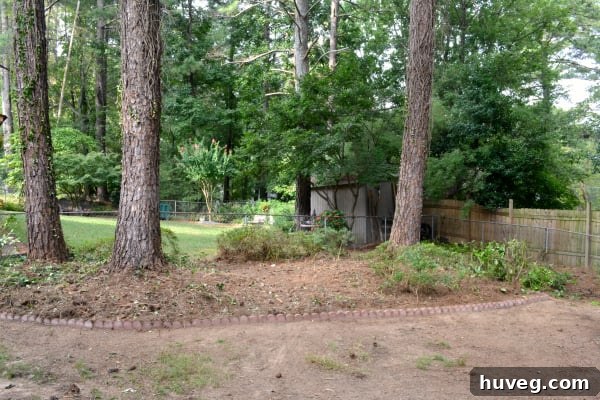
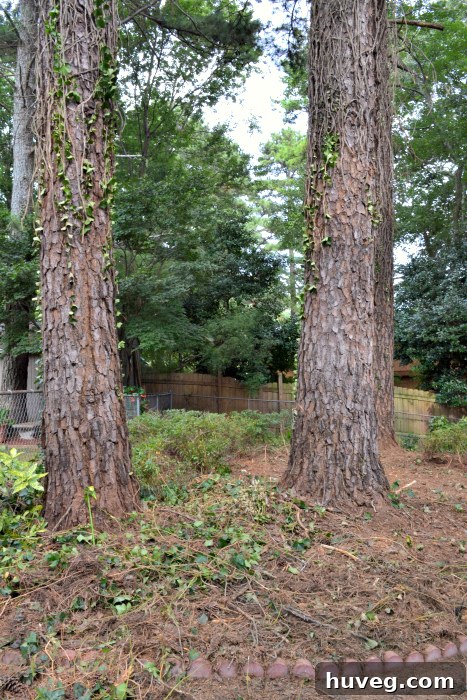
After: Now, it’s a true blank slate, ready for a complete redesign! The crew even removed the scalloped edging that once bordered this area, likely to accommodate their equipment. There’s still significant work ahead, but I’m incredibly excited to implement more changes this summer.
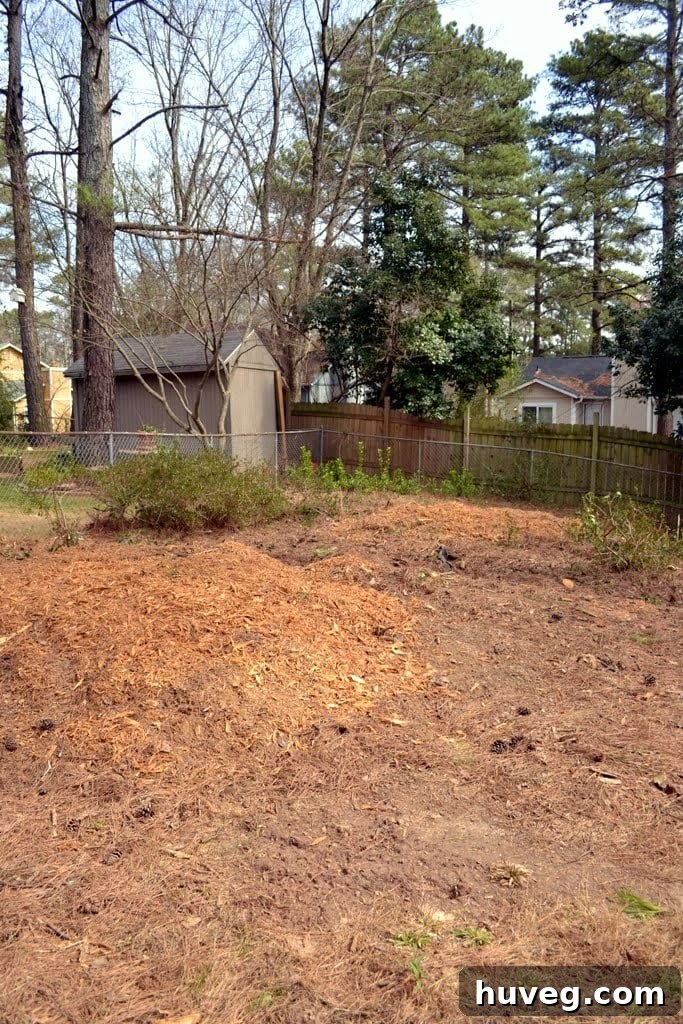
Admittedly, these “after” photos, taken in the dead of winter, don’t yet capture the full beauty of the transformation. Shaping this backyard into my dream outdoor oasis will require continued effort, and I’m openly soliciting all your ideas! Perhaps some smaller, less enormous tree species, even a fruit tree, could thrive in this now sun-drenched corner? Leveling out the lumpy terrain is also high on my list. What visions do you have for this revitalized space?
A Note on Transparency and Recommendations
Disclosure: I have voluntarily partnered with HomeAdvisor and was asked to review their site in exchange for compensation. However, I had already begun using their services independently prior to this collaboration, making it a truly serendipitous and mutually beneficial partnership. I can honestly and confidently recommend their platform based on my genuine experience. As always, all opinions expressed in this post are 100% my own.
P.S. For those in the Atlanta area seeking a reliable tree service, I highly recommend 770 BAM Tree. Their crew was friendly, their pricing competitive, and their professionalism exceptional. They didn’t collect payment until the job was fully completed and I was satisfied. I’ve already shared their contact information with family members, which speaks volumes about my confidence in their service.
P.P.S. While I’ve touched upon costs in the “Negotiation” section, I plan to provide more detailed financial insights and negotiation tips in a future dedicated post, which I will link here once published.