Pro Secrets for Stunning Murals

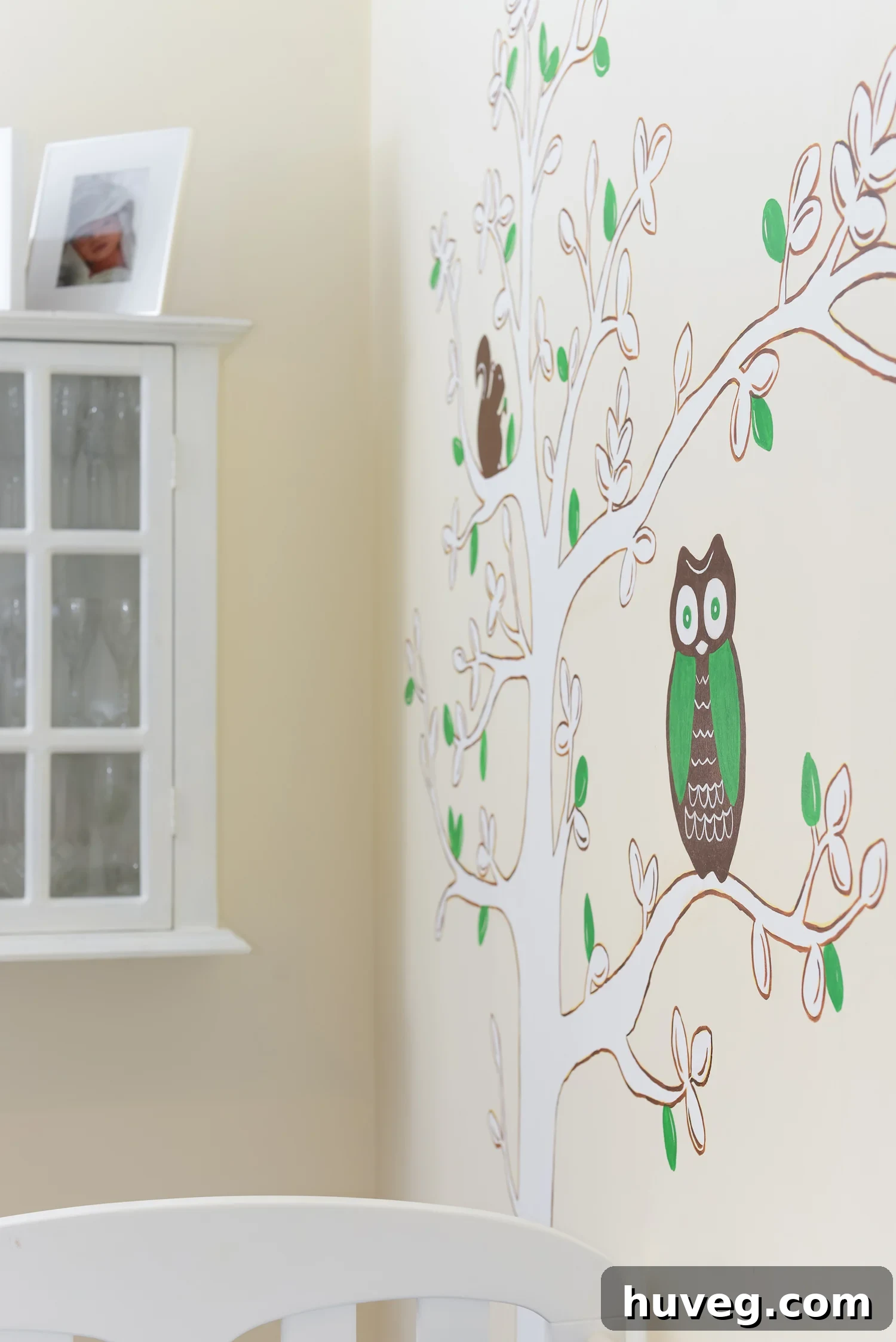
Today, we’re thrilled to present a special feature on the blog: an inspiring guest post from talented interior designer, Ruth Stolerman. Ruth is here to guide us through the captivating process of painting a vibrant, imaginative mural perfect for a child’s bedroom. Get ready to unleash your inner artist and transform a plain wall into a whimsical wonderland!
In the seven years I’ve poured into this blog, I’ve sparingly opened its doors to guest contributors – perhaps only three or four times. This isn’t for a lack of incredible DIYers out there, nor a lack of desire to feature a regular talent or two sharing their brilliant projects with you (a thought I’ve been seriously considering lately, so stay tuned!). The truth is, managing a blog solo is a constant balancing act. It involves meticulous planning, hands-on project execution, crafting engaging posts, perfecting photos, handling the back-end business operations, site maintenance, financial oversight, and a never-ending stream of emails. Every minute counts, and often, there’s simply no time left for new ventures – especially with my furry companion, Charlie, needing his daily walks.
For those unfamiliar with the behind-the-scenes world of blogging, “guest post” requests are often thinly veiled marketing ploys disguised as genuine content. Knowing you, my readers, are far too savvy for such tactics, I grew frustrated sifting through them and eventually stopped accepting guest post requests altogether. However, this policy proved less effective than hoped. As any seasoned blogger will tell you, spammers are persistent, often following up on emails that were ignored the first time. My inbox remained perpetually full, unless I resorted to blunt responses along the lines of, “To be 100% honest, I’d rather eat rusty nails than publish this for you.”
But then, on a truly rare and perfect day – when the sunlight streams just right, and I’ve had enough coffee to conquer my email aversion – I sometimes stumble upon a genuine gem worth sharing. This, dear readers, is one of those precious finds. Ruth Stolerman, a talented interior designer and reader, reached out about a delightful children’s bedroom mural project she recently completed. Ruth specializes in creating unique, custom mural designs for her clients, and she generously offered to share her expert tips in a DIY tutorial. Her sole motivation? To inspire you and show you how these adorable creations come to life! And believe me, they are absolutely charming!
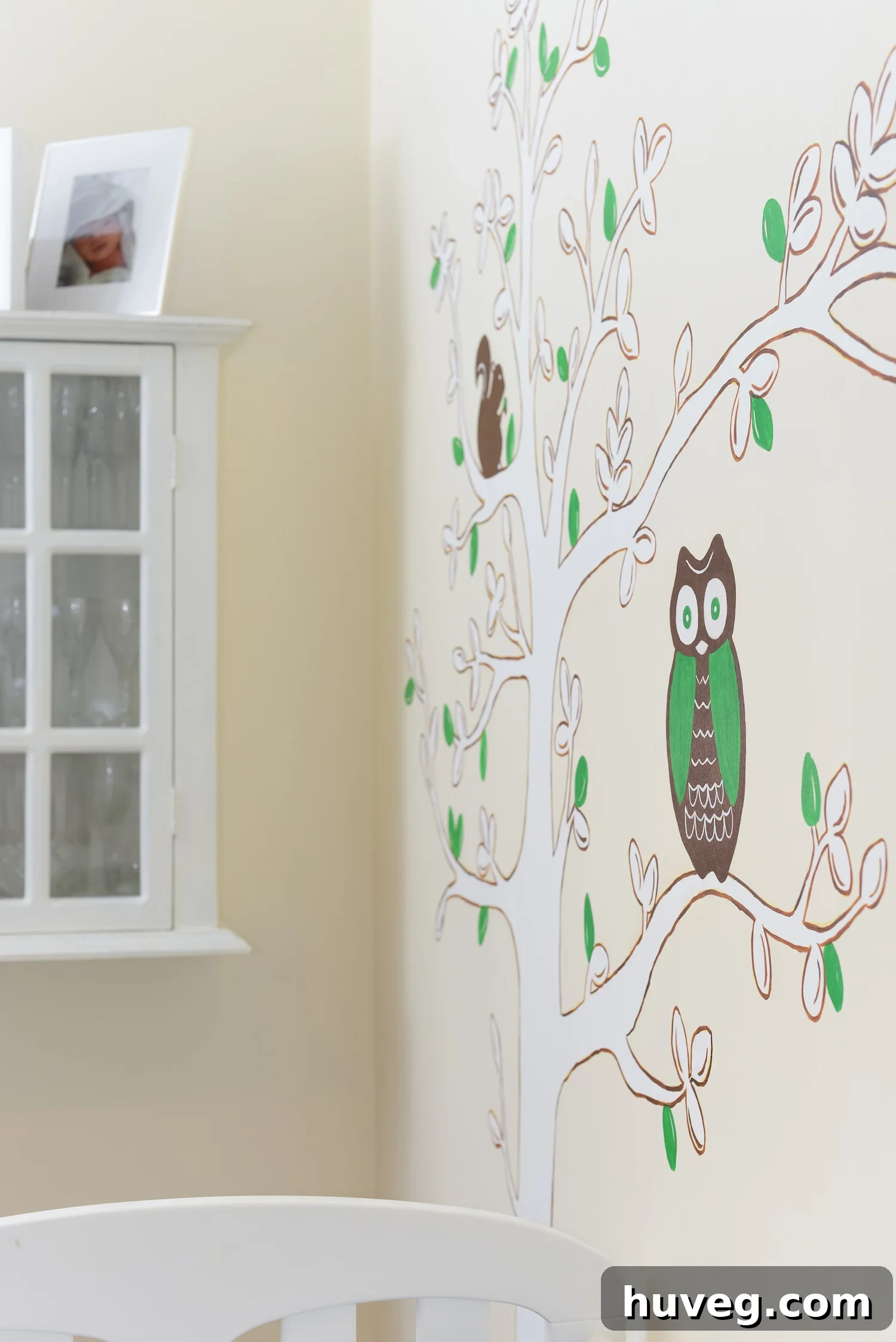
Ruth’s initiative sparked an idea: I’d love to feature more posts from readers who are proud of their DIY accomplishments. So, I enthusiastically said yes. Ruth was incredibly gracious, sending everything in a perfectly organized package. Despite her efficiency, I still managed to get bogged down for months before finally getting this incredible content onto the blog. So, with sincere apologies to Ruth for the delay, I am finally sharing it with you all. I truly hope you enjoy it! Without further ado, take it away, Ruth!
———————-
An Interior Designer’s Comprehensive Guide to Painting a Captivating Wall Mural
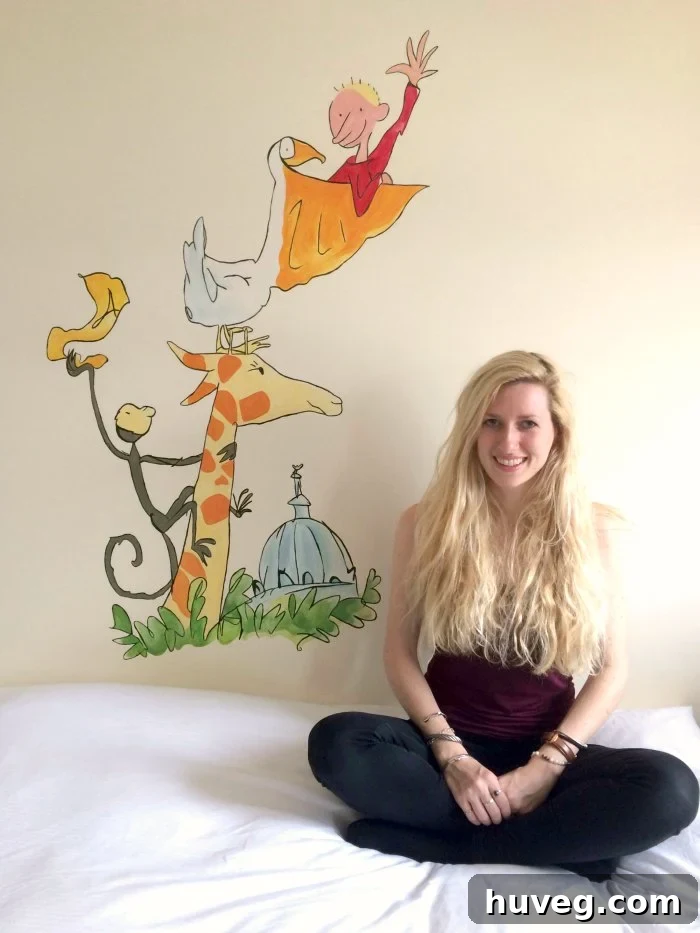
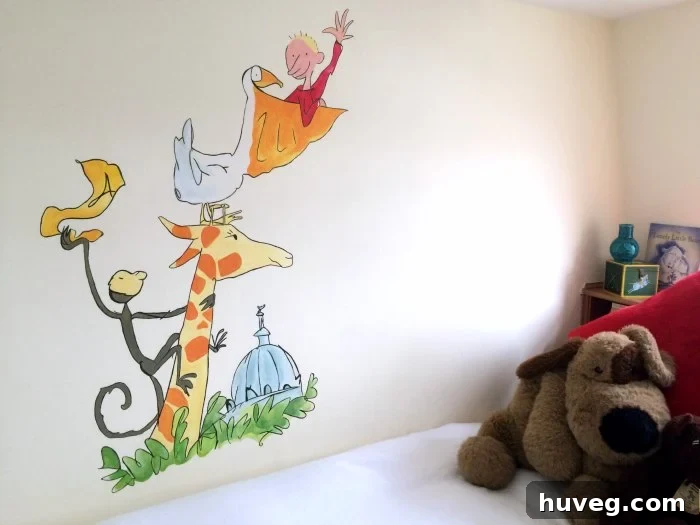
As an interior designer, painting murals for my clients is one of my greatest joys. They offer a fantastic way to personalize a space, especially in children’s bedrooms, where they can ignite imagination and create a truly unique atmosphere. Murals are also an excellent alternative to heavy framed artwork, particularly above beds, eliminating any safety concerns about something falling during sleep. The absolute cornerstone of a successful mural project is meticulous planning. Before you even pick up a brush, ensure you have a crystal-clear vision of your design. Even if you prefer a freehand style, spend time researching images, colors, and themes to help solidify your idea. For this tutorial, I’ll walk you through a delightful mural I recently completed (pictured above), inspired by the magical world of Roald Dahl’s The Giraffe and the Pelly and Me, for which we had a defined vision from the very beginning. This detailed step-by-step guide will empower you to create your own stunning wall art, whether you’re a beginner or an experienced DIYer.
Essential Materials & Tools for Your Mural Project:
Gathering the right supplies before you start will ensure a smooth and enjoyable painting experience.
- Pencil: A light-colored pencil is crucial for sketching your design onto the wall without leaving dark, visible lines.
- Paint Brushes of Various Sizes: You’ll need a range, from fine-tipped brushes for intricate details and crisp lines to broader brushes for filling in larger areas.
- Paint Roller and Paint Trays: Highly recommended if your mural involves painting large background areas or blocks of color, as they provide even coverage.
- Water Glass: Essential for rinsing your brushes thoroughly between color changes, preventing muddiness.
- A Palette or Makeshift Palette: A dedicated artist’s palette, a ceramic plate, or even a sturdy plastic lid can serve as a mixing surface for your paints.
- Kitchen Towel or Rags: For wiping brushes, dabbing mistakes, and general cleanup.
- Cling Wrap / Plastic Wrap: Invaluable for covering your palette to keep paints fresh and workable overnight.
- Acrylic Paint or Latex Paints: Acrylics are versatile and fast-drying. Latex house paints are excellent for large areas and offer a cost-effective solution with sample pots.
- Acrylic Medium (Optional but Recommended): This additive extends the drying time of acrylic paints, making them more workable and easier to blend, especially for intricate designs or larger sections.
- Painter’s Tape: For masking off areas, creating sharp lines, or securing sketches to the wall.
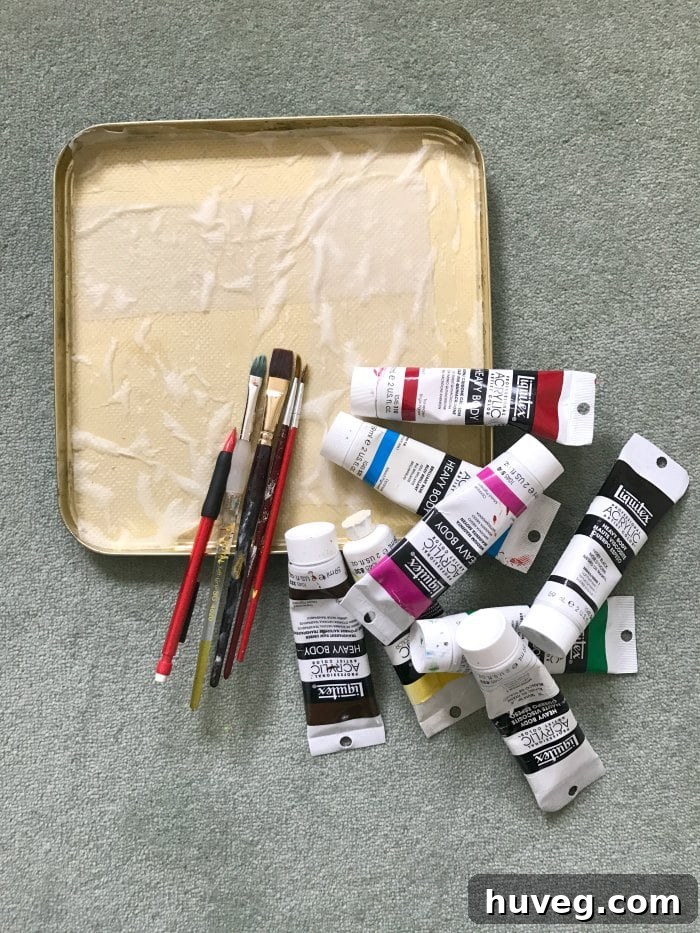
Choosing the Best Paint Type for Your Interior Wall Mural
When it comes to selecting paint for an interior wall mural, my top recommendation is acrylic paints. Their quick-drying nature means less waiting time between layers, and their water-resistant finish offers durability. A significant advantage is their forgiving nature: if you make a mistake before the paint fully dries, you can often dab it with a damp towel to remove the error completely. This allows for greater flexibility during the creative process. For larger sections or background colors, latex house paints are another excellent choice. You can often purchase small paint samples in a wide array of colors, making them an inexpensive and practical option for covering expansive areas. While spray paint is a common medium for outdoor murals due to its coverage and weather resistance, I strongly advise against using it for interior walls due to ventilation concerns and the difficulty of controlling overspray indoors.
Thoroughly Preparing the Wall Surface for Your Mural
Once your planning is complete and your design is ready, preparing your wall surface is the next crucial step. Begin by ensuring the wall is painted in your desired base color. This could be a fresh coat of house paint or simply the existing wall color if it complements your mural design. Allow any freshly applied paint to dry completely according to the manufacturer’s instructions. Next, thoroughly wipe down the entire wall surface. Use a mild cleaner if necessary to remove any dirt, dust, or grease. If you use water for cleaning, ensure the walls are absolutely dry before you begin sketching or painting, as moisture can affect paint adhesion. Finally, clear the work area by moving any furniture out of your way and covering anything you want to protect from potential paint drips with drop cloths. Good ventilation is also key, so open windows if possible.
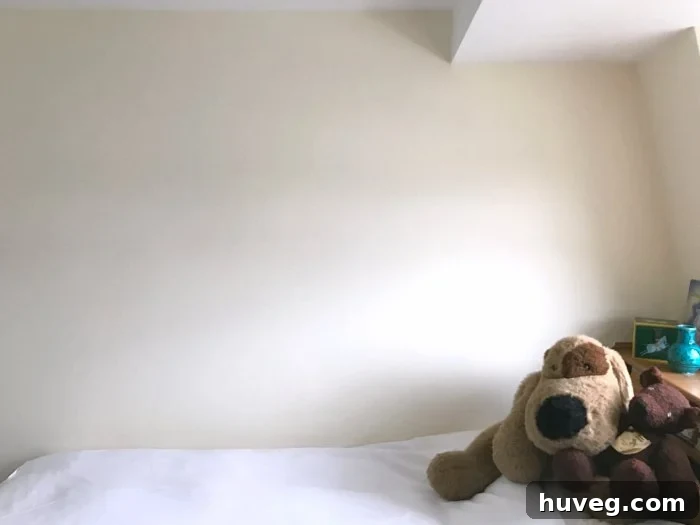
Expert Techniques for Drawing Your Image onto the Wall
This stage is where your vision truly begins to take shape. Using a light-colored pencil (a standard HB pencil often works well), carefully mark out the rough boundaries of your mural. It’s important to continuously step back and assess your drawing from a distance to ensure the design doesn’t become disproportionately large or small for the space. If you’ve created preliminary sketches, attach them to the wall using painter’s tape to visualize the layout and confirm you’re happy with its placement and scale before committing. You can then copy or trace these sketches directly onto the wall.
For those who are new to mural painting or feeling a bit nervous, I highly recommend two effective methods:
- The 1:1 Sketch Method: Create your design on pieces of paper that are the exact size you want individual elements or sections of your mural to be. You can then tape these directly onto the wall as a one-to-one guide, making it easier to trace or freehand copy the details.
- The Grid Method: This technique is excellent for accurately scaling a smaller design onto a larger wall. First, draw a grid over your paper sketch. Then, lightly draw a corresponding, larger grid onto your wall using a pencil. You can then transfer the image section by section, ensuring accurate proportions and placement. While this method can be time-consuming, the precision it offers is invaluable, helping to ensure your mural is well-balanced and aesthetically pleasing.
I often dive straight into freehand sketching, but that comes with years of practice. For your first few murals, patience at this stage will pay dividends in the final result. Another popular option is to use a projector to cast your design onto the wall, allowing you to easily trace the projected image. However, if a projector isn’t in your budget, the 1:1 sketch or grid methods are fantastic and equally effective alternatives.
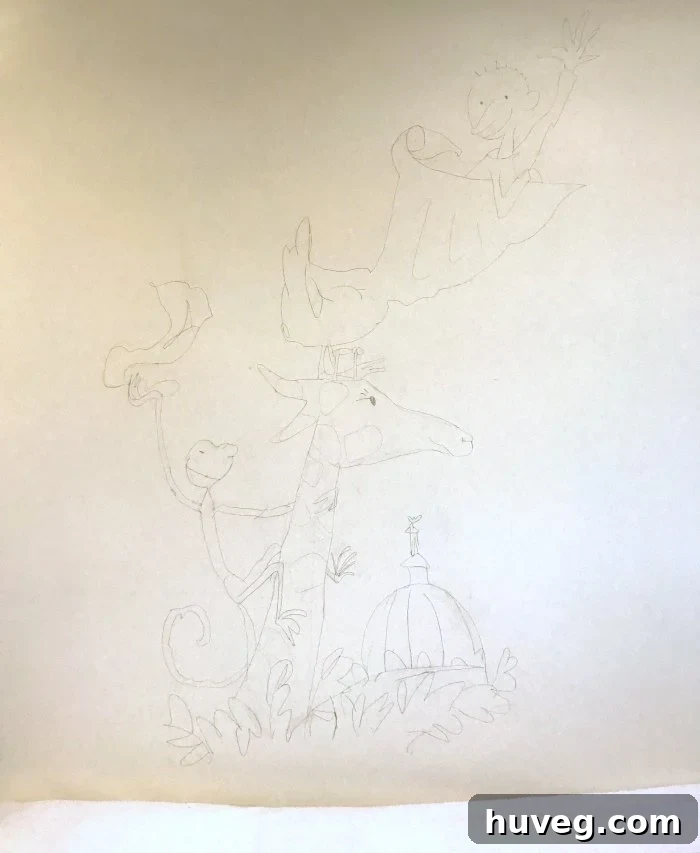
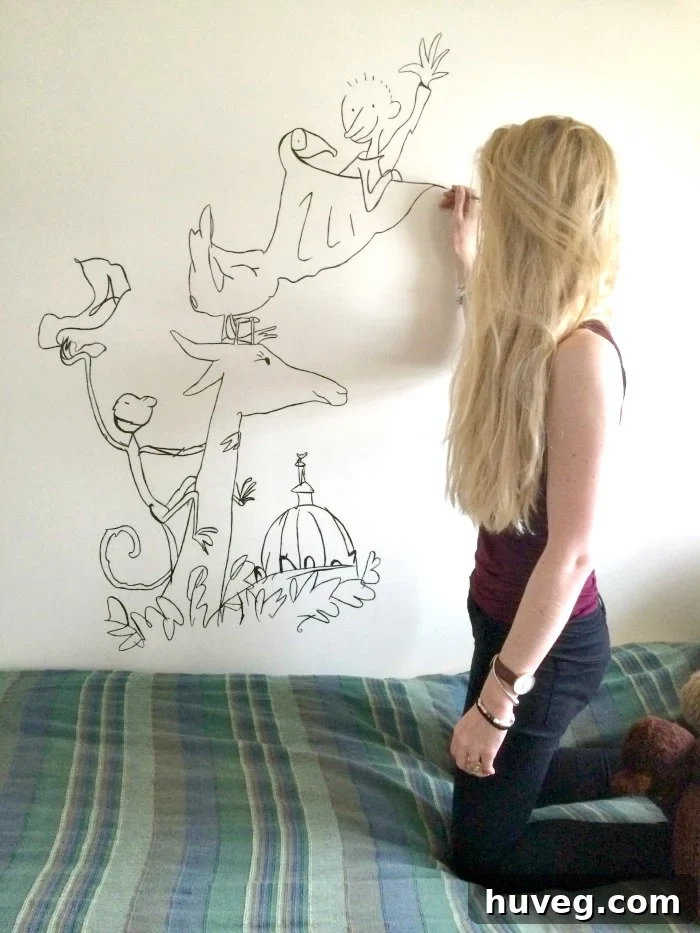
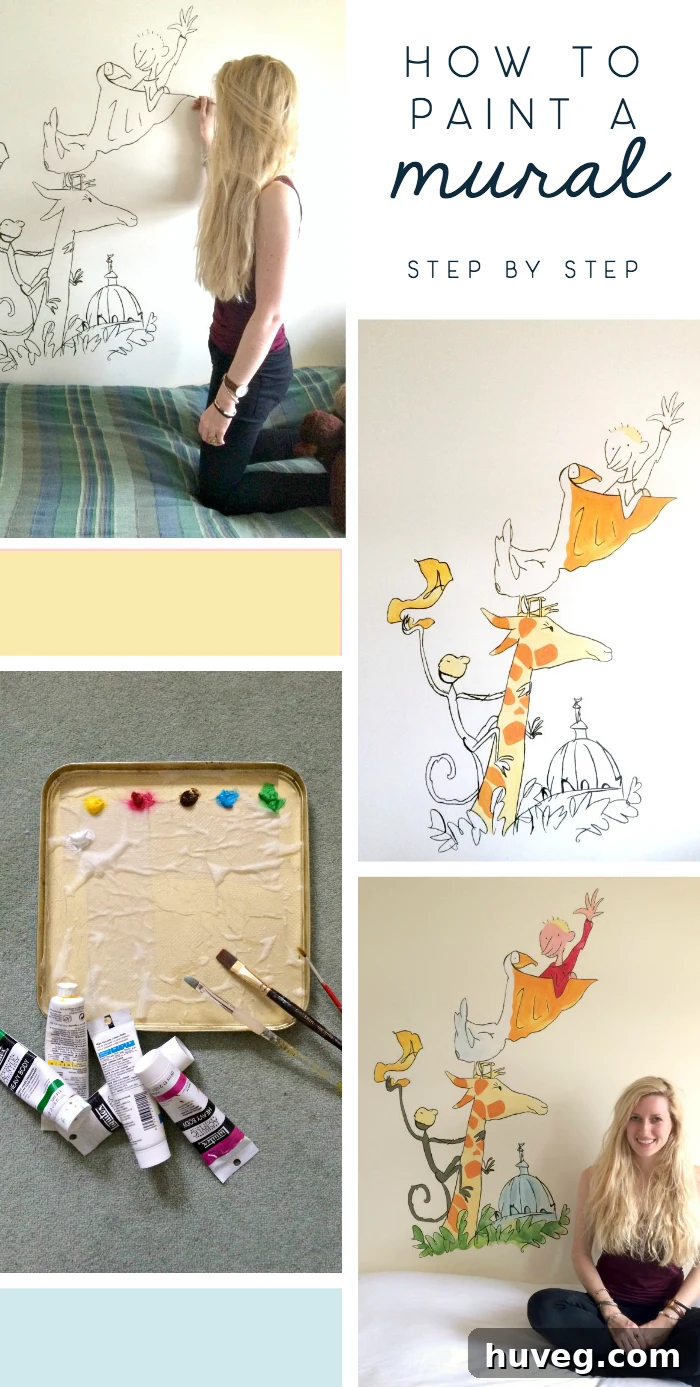
If you’re copying an existing image, keep it prominently displayed in front of you as you draw. For the Roald Dahl-inspired mural, I began sketching in the bottom left-hand corner, meticulously ensuring the image would sit perfectly just above the duvet. Throughout the entire drawing process, make it a habit to constantly step back from the wall. This wider perspective is essential for checking your dimensions, proportions, and overall composition, allowing you to make adjustments before any paint is applied. The ultimate goal is to fill the designated space with your design in harmonious and correct proportions.
Mastering Paint Preparation and Color Mixing for Your Mural
With your drawing complete, it’s time to prepare your paints. My preferred method for preparing the palette is to lay down a sheet of paper towel and dampen it slightly with water. This simple trick helps to maintain the moisture in acrylic paints, preventing them from drying out too quickly on the palette, especially during longer painting sessions. If you plan to continue painting the next day, you can easily cover your palette with cling film or plastic wrap; the damp paper towel will keep the paints fresh and workable overnight.
When arranging your paints on the palette, position them around the edge, moving from lighter to darker shades. This leaves the central area of the palette open for mixing custom colors. Avoid placing your paints too close to each other, as they will inevitably get muddled as you work. Experiment with a broad spectrum of colors to add depth and interest to your mural. For instance, in this particular mural, I wanted to incorporate a subtle blue hue. Instead of using black to create grey tones, I mixed blue with a touch of brown and white, resulting in a rich, nuanced grey that integrated beautifully with the overall color scheme. Don’t be afraid to experiment with color combinations to achieve unique shades that perfectly match your vision.
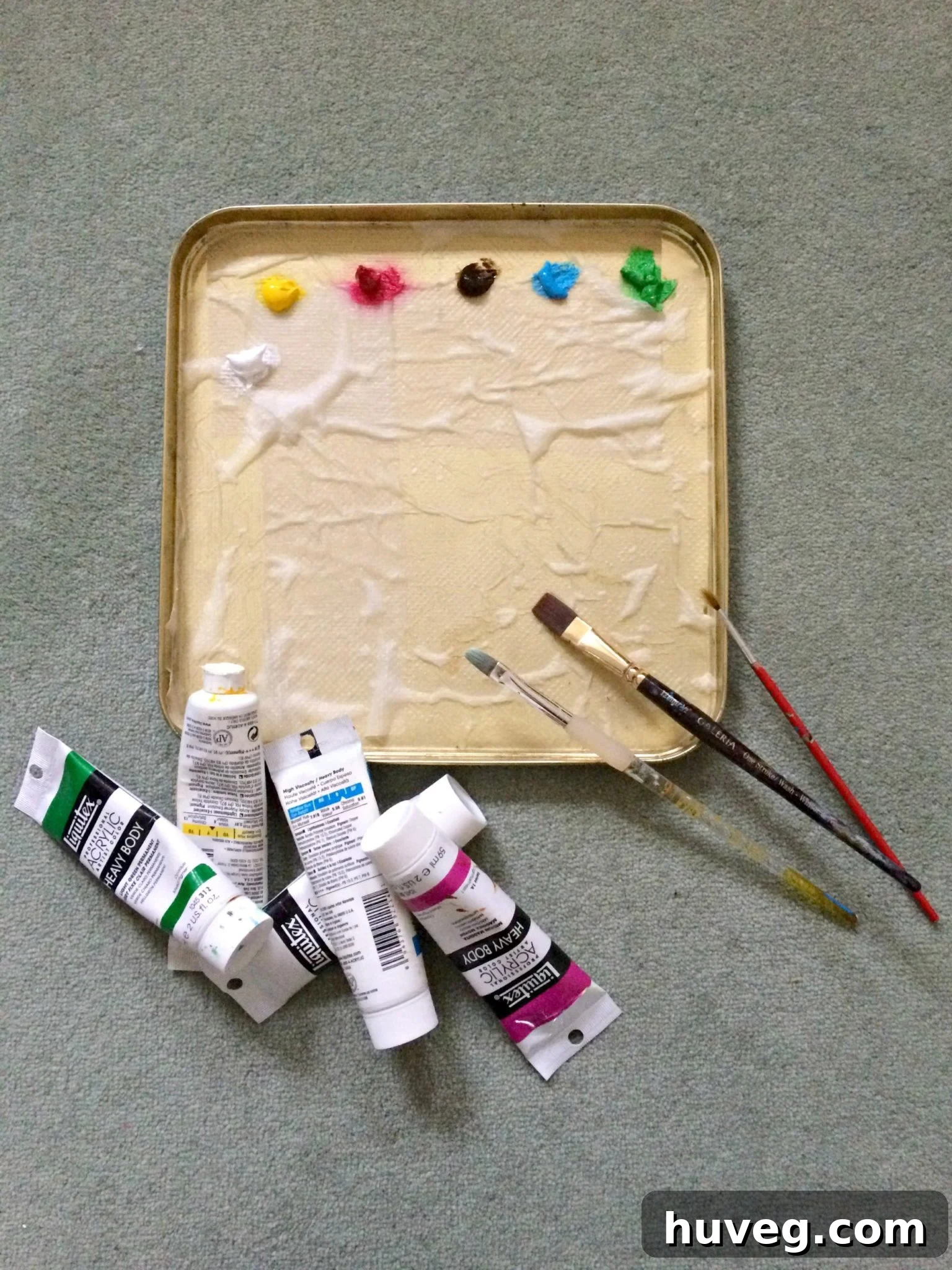
Effective Painting Techniques: From Outline to Fine Details
Now, the exciting part begins – it’s time to paint! If your image benefits from a clear outline, select your desired outlining color and use a thin paintbrush to carefully trace your pencil sketch. I find it most effective to paint from left to right if you are right-handed (or right to left if left-handed). This allows you to steady your painting hand against the wall and, crucially, prevents accidental smudging of freshly applied paint. This methodical approach ensures clean, crisp lines from the start.
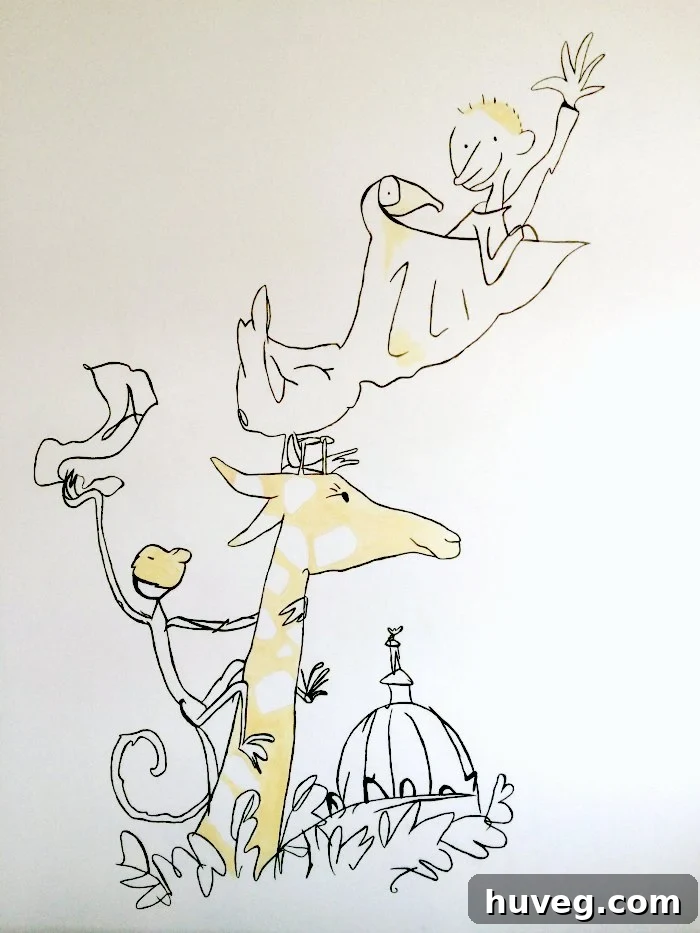
From here, the process is akin to painting by numbers. Choose one color mixture to start with – I recommend beginning with your lightest shade. Apply this chosen color to all the designated areas across your painted surface that require it, completing that layer of paint for that specific color. Working from light to dark offers a significant advantage: if your brushes aren’t 100% clean when you switch colors, any minimal contamination will be less noticeable when moving to a darker shade, rather than vice versa. This technique helps maintain the purity of your colors.
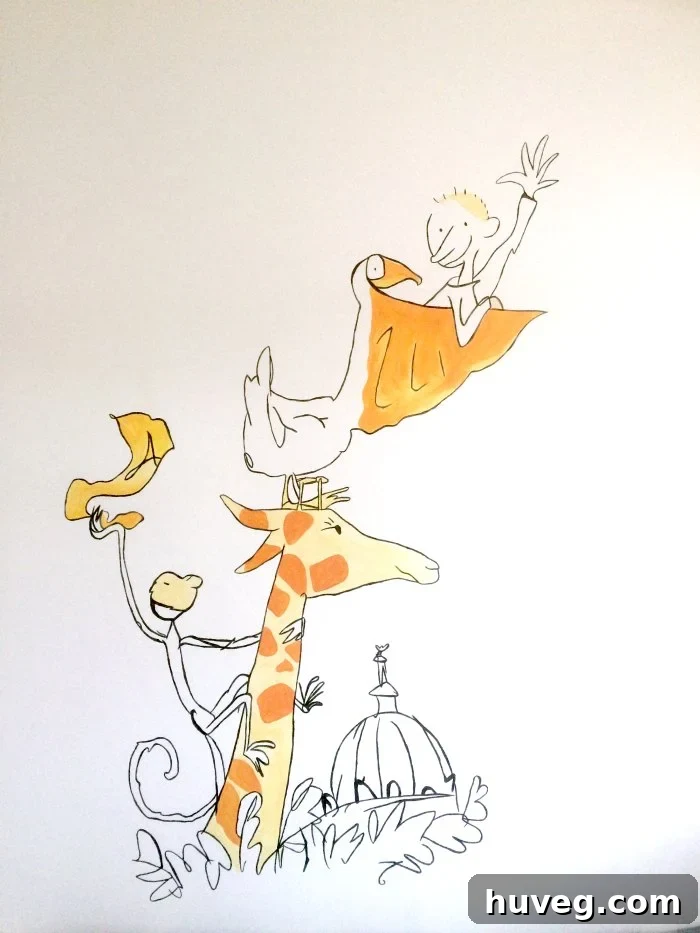
For your second color, simply move to the next darkest shade in your palette and repeat the process, applying it to all relevant sections of your design. Continue this layering technique, gradually working your way through your color palette from light to dark. For any small, intricate details within your painting, such as facial features, fine textures, or delicate patterns, wait until the surrounding paint is completely dry before adding them. This prevents accidental smudges and allows for cleaner, more precise application of these final touches. This methodical approach, layering colors one by one, will bring your mural to life with depth and vibrancy. Keep adding colors, taking breaks to step back and assess your progress, until your beautiful image is fully complete. Good luck, and happy painting!
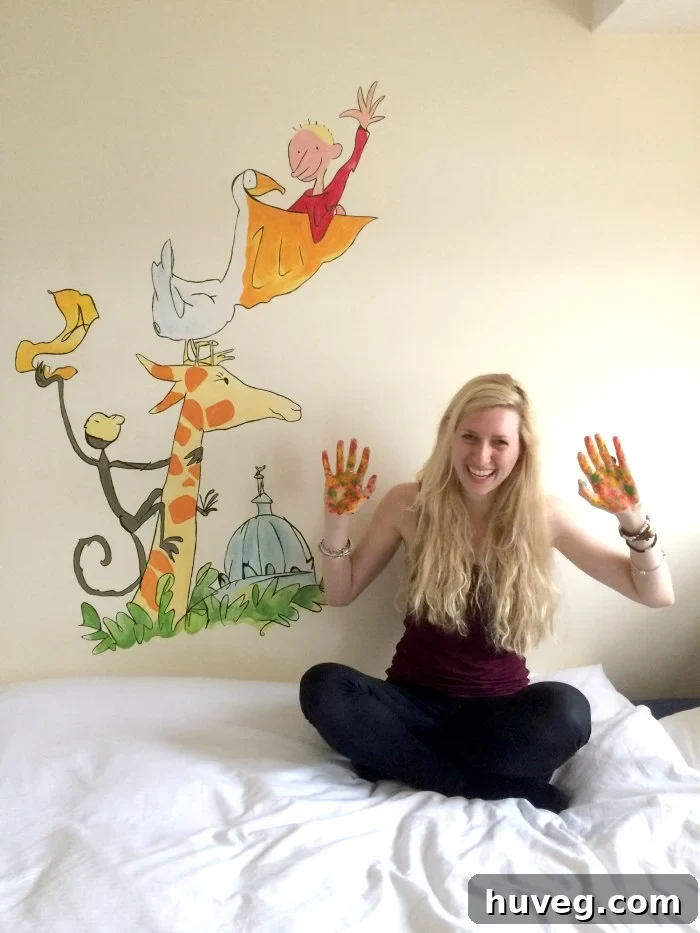
Once your mural is fully painted and the final touches are added, allow ample time for all the paint layers to cure completely. This might take anywhere from 24 to 72 hours, depending on the paint type and thickness of application. While acrylics dry to the touch quickly, full curing ensures durability. For added protection and longevity, especially in a child’s room where walls might see more wear and tear, consider applying a clear, non-toxic sealant or varnish specifically designed for painted surfaces. This can protect against scuffs, UV fading, and make the mural easier to clean. Celebrate your accomplishment and enjoy the personalized, imaginative space you’ve created!
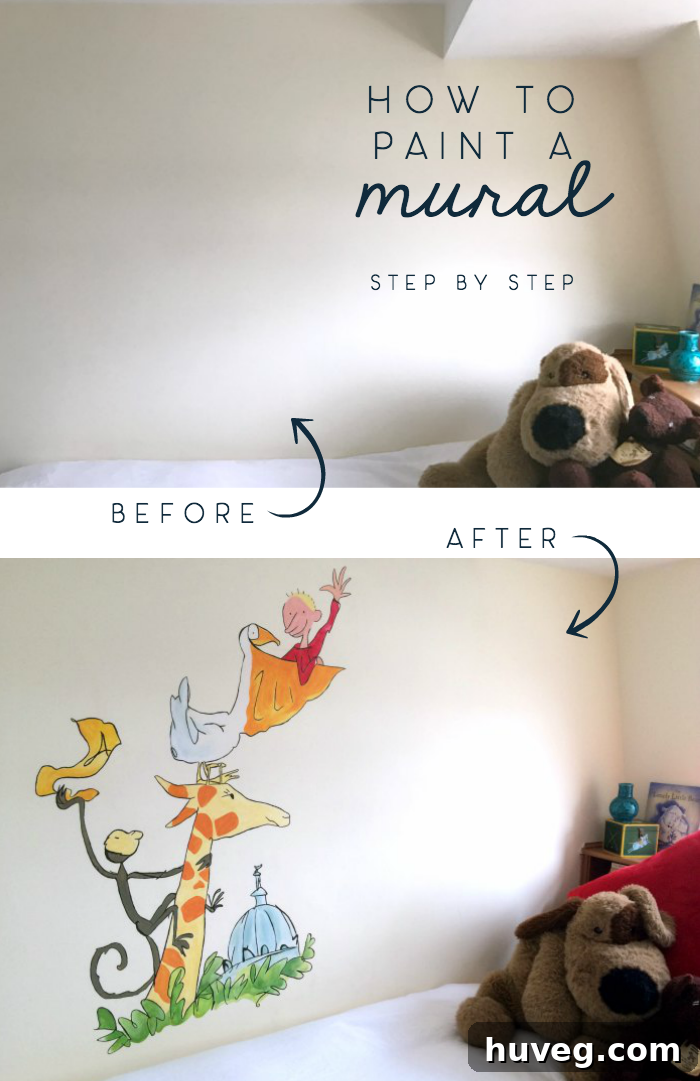
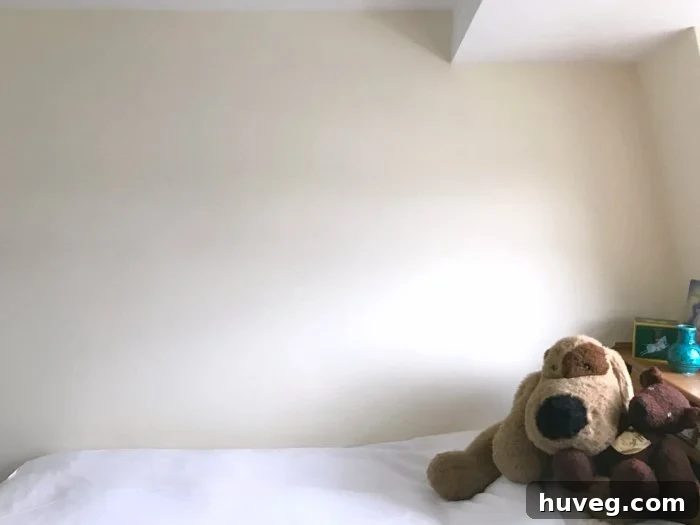
Before the Transformation: A Blank Canvas
Every masterpiece begins with a blank canvas. This image shows the wall in its original, unadorned state, patiently awaiting its artistic transformation. It’s a testament to how much potential a simple wall holds for creative expression and personalization.
After the Transformation: A Dreamy Mural Unveiled
And here it is! The magical “After” shot, revealing the beautifully completed mural. From a plain wall to a vibrant scene from a beloved storybook, this transformation exemplifies the power of a personalized wall mural to inspire and delight, creating a truly unique and enchanting space for a child. This captivating mural not only adds aesthetic appeal but also fosters a sense of wonder and creativity in the room’s occupant.
———————-
Image credits: All stunning images in this post are courtesy of the talented Ruth Stolerman at www.ruthstolerman.com.
A huge, heartfelt thank you to Ruth for generously sharing her incredible artistic talent and practical wisdom with our community! Her guide on how to paint a wall mural is not just a tutorial; it’s an invitation to bring personalized art into our homes. If you’re as inspired by her work as we are, be sure to connect with her and explore more of her captivating designs on Instagram, Facebook, and Pinterest. Follow her journey to discover endless creative ideas for transforming living spaces!
P.S. To all our cherished regular readers: if you’ve recently completed a DIY project you’re particularly proud of and would love to showcase your work, please don’t hesitate to email me! I’m an absolute enthusiast for compelling before-and-after transformations, and I would be thrilled to share your unique story and creative journey with our audience. However, a gentle reminder: if your submission leans towards unsolicited marketing content, you might just get that “rusty nail” response I mentioned earlier! I look forward to hearing about your amazing DIY adventures!