Installing a Toilet Made Easy

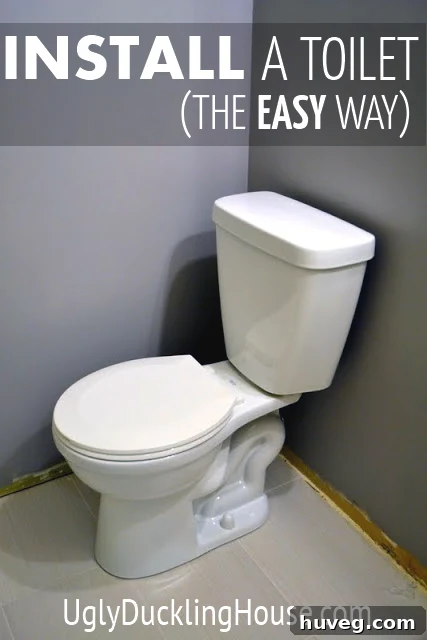
DIY Toilet Installation: Achieve a Fully Functional Bathroom with Ease
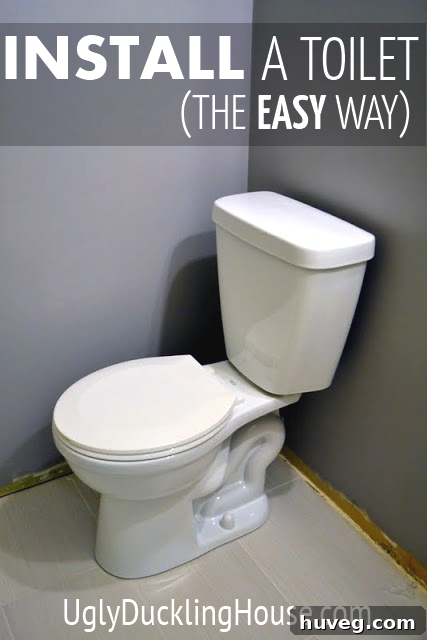
Embarking on a bathroom renovation, even a small one, can feel incredibly daunting. Yet, the satisfaction of completing a project like installing a new toilet yourself is immeasurable. After a journey filled with unexpected turns and a significant amount of drywall dust, I finally achieved a major milestone in my home improvement efforts: a brand-new, fully functioning toilet in one of the upstairs bathrooms. This guide will walk you through the process, demonstrating just how straightforward it can be to tackle this essential upgrade.
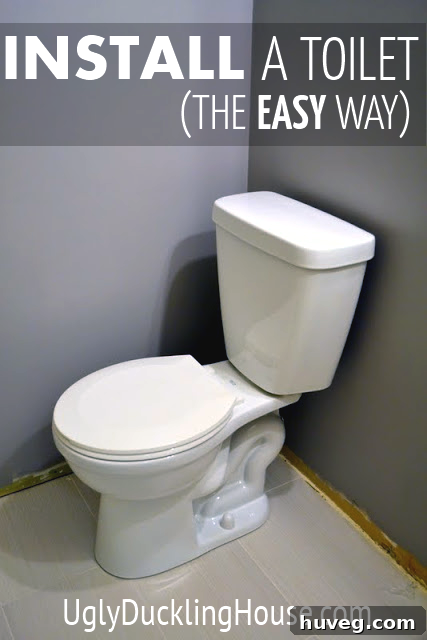
From Renovation Roadblocks to a Relaxing Retreat
My initial vision for a primary bathroom overhaul quickly detoured into a challenging adventure. What began with ambitious plans to remodel the primary bath soon devolved into a saga of unexpected plumbing issues and a complete restart. After tackling wallpaper removal and extensive drywall repairs, a simple request to my Dad to help remove the old vanity and toilet while I was in grad school led to a significant, albeit innocent, misunderstanding. This meant starting all over again, pushing back my timeline and extending the period of living without a fully functional primary bathroom.
Months blurred into a relentless cycle of balancing grad school, work, and endless DIY tasks. My free time was often spent looking like a dusty mess, a testament to the ongoing drywall repair, or simply collapsing into a textbook, utterly exhausted.
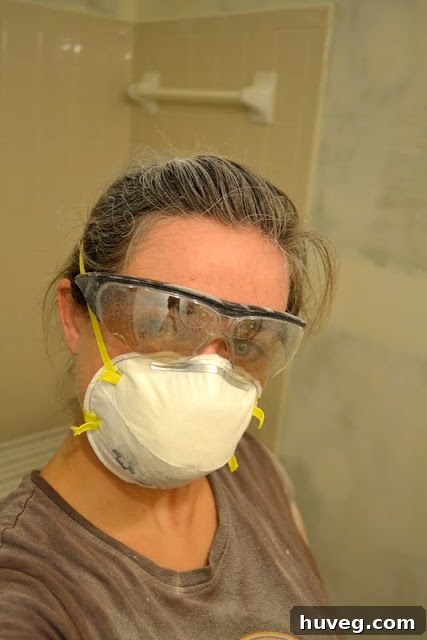
A particularly demanding summer left little room for personal projects, but I powered through the final drywall fixes during a much-needed school break. As the fall semester began, a deep yearning for normalcy set in. For a DIY enthusiast, “normal” often means having basic amenities like a toilet and shower in the same functional bathroom near where you sleep. It might sound trivial, but anyone who has lived through a major home renovation understands the profound luxury of simple comforts.

Preparing for Your Toilet Installation Project
Before diving into the steps, a critical safety note: once your old toilet is removed, immediately stuff an old rag or towel into the open drain hole in your floor. This isn’t just a recommendation; it’s a necessity. Leaving the drain open allows unpleasant and potentially hazardous sewer gases to escape into your home. This simple precaution ensures a much safer and more pleasant working environment. Now, let’s gather our tools and get ready for a surprisingly straightforward project.
What You’ll Need: Tools & Materials
While many modern toilets come with some installation components, having a few essential tools on hand will make the process smoother:
- New toilet (ideally one that states “everything included” on the box)
- Adjustable wrench or basin wrench
- Screwdriver (Phillips and Flathead)
- Utility knife
- Level
- Tape measure
- Old rags/towels (for stuffing the drain and cleanup)
- Bucket (for residual water in the old toilet)
- Caulking gun and bathroom caulk (mildew-resistant)
- Baby wipes or damp cloth (for caulk cleanup)
- Optional: Extra-thick wax ring if you have new flooring, new water supply line if old one is corroded or leaking.
Step-by-Step Guide: Installing Your New Toilet
-
Selecting Your New Toilet & Inspecting the Kit
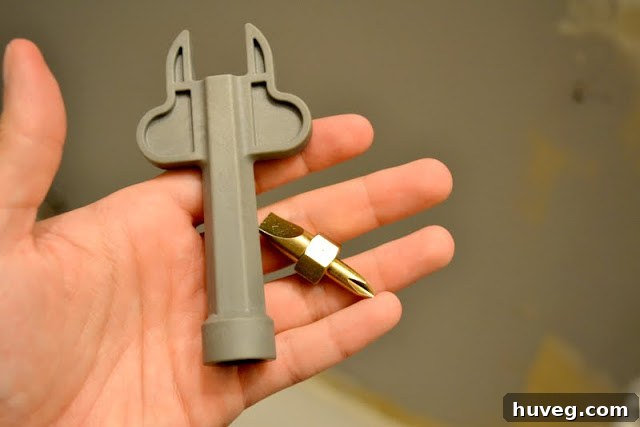
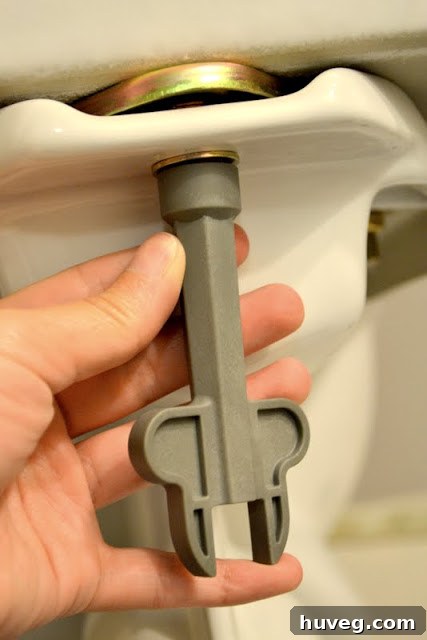
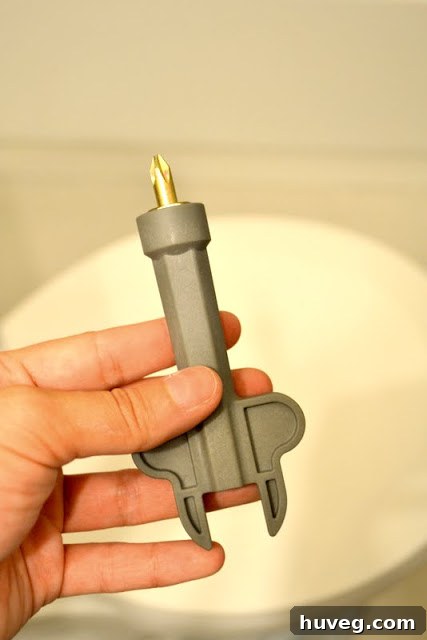
Start by purchasing a new toilet. Look for models that explicitly state “includes everything you need for installation” on the box. While not every component might be truly universal, these kits often contain specialized tools tailored to their specific hardware, which can be incredibly helpful. For example, my Delta toilet from a local hardware store included a clever plastic multi-tool. This ingenious device wasn’t just for tightening the toilet bolts; it also had a slot for a screwdriver bit, making it versatile for securing the toilet lid components. This kind of thoughtful design can truly simplify the installation process, especially for DIY beginners.

-
Assembling the Tank and Bowl
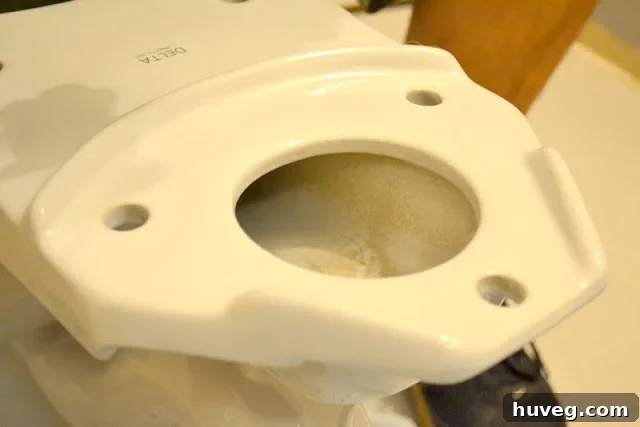
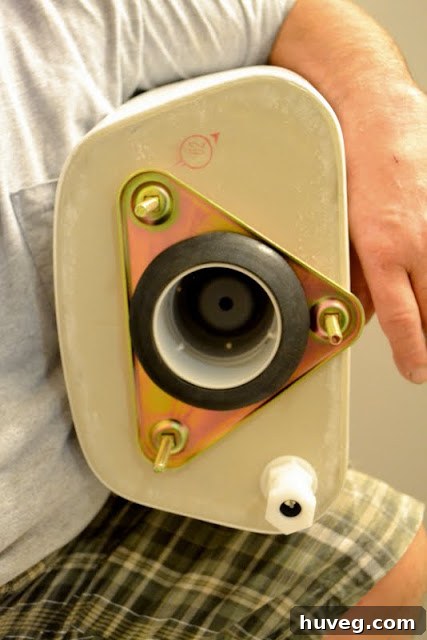
Most standard residential toilets are two-piece units, consisting of the bowl (the part you sit on) and the tank (which holds the water). The toilet bowl will have a large opening at the back, designed to connect to the tank. The tank, in turn, will have a spout-like part that fits into this opening. To ensure a watertight and vacuum-sealed connection, you’ll need to attach a thick rubber gasket. This gasket is crucial for creating that powerful “whoosh” sound and ensuring efficient flushing.
Carefully place the gasket onto the tank’s connection point, ensuring it’s seated properly and creates a snug seal. This step is vital to prevent leaks between the tank and bowl.
-
Securing the Tank to the Bowl
Once the gasket is in place, carefully align the tank with the bowl and gently lower it. You’ll notice bolt holes on both parts. Insert the tank bolts, usually accompanied by washers and nuts, through these holes. Use the specialized tool (if provided in your kit) or an adjustable wrench to securely tighten these bolts. The benefit of using a plastic tool, like the one included in my kit, is that it helps prevent over-tightening, which can lead to cracking the porcelain. Instead, the plastic will slip around the nut once sufficient torque is applied. Ensure the tank is straight and doesn’t wobble, which indicates an uneven or loose connection.
-
Connecting the Water Supply Line (Initial Setup)
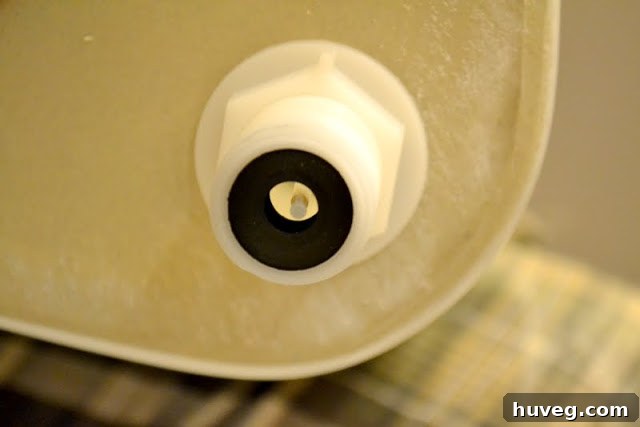
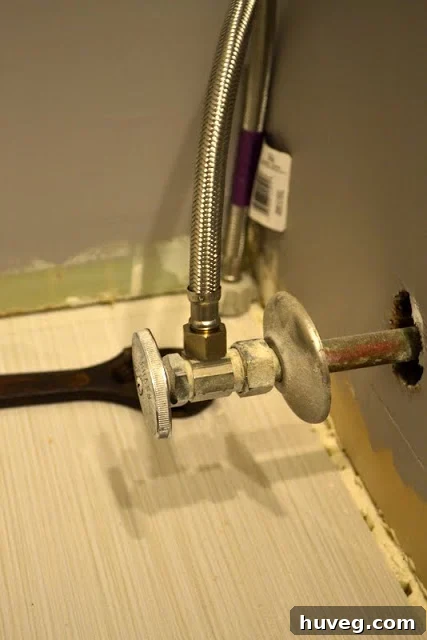
On the underside of the toilet tank, you’ll find an opening for the water supply line. While you likely have an existing supply line, it’s often a good idea to replace older, potentially corroded lines to prevent future leaks. Connect the supply line to the wall valve first, ensuring a hand-tight fit followed by a quarter-turn with a wrench. Do NOT open the water supply valve yet. This connection to the toilet will be made later in the installation process.
-
Installing the Wax Ring and Floor Bolts
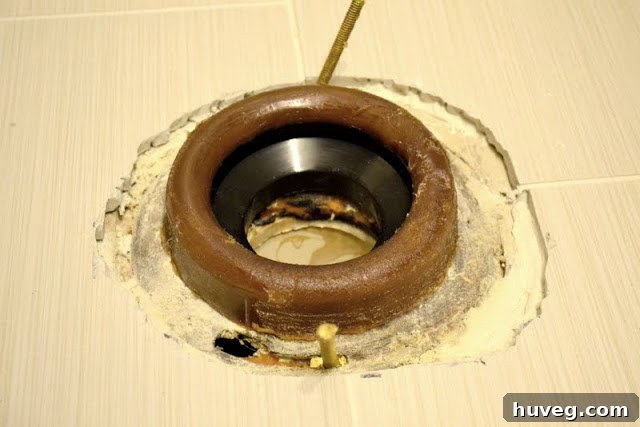
Every new toilet requires a wax ring for a watertight seal between the toilet base and the drainpipe (also known as the toilet flange or closet flange). If you’ve recently installed new flooring, like tile, you might have created a height difference, necessitating an extra-thick wax ring to ensure a proper seal. You have two main options for wax ring placement: either firmly press the wax ring onto the toilet flange on the floor or apply it to the base of the toilet bowl. I find placing it on the floor, allowing gravity to assist in seating, generally easier. Insert the long closet bolts into the floor flange, ensuring they are positioned correctly to align with the holes in the toilet base. The wax seal, though gooey and not visually appealing, is critical for preventing leaks and will be completely hidden once the toilet is secured.
-
Positioning the Toilet
This step often requires the most care, and potentially a second pair of hands due to the weight and awkwardness of the toilet. Carefully lift the assembled toilet and align the holes in its base with the floor bolts you just installed. Gently lower the toilet, ensuring the bolts slip through the holes smoothly and the wax ring makes contact with the flange. Once it’s roughly in place, a crucial step for ensuring a perfect seal is to sit on the toilet. Yes, seriously! Your weight helps compress the wax ring evenly, creating a strong, leak-proof seal. You might need to wiggle it slightly to ensure it’s square with the wall and not rocking, which would indicate an incomplete seal.
-
Securing the Toilet to the Floor
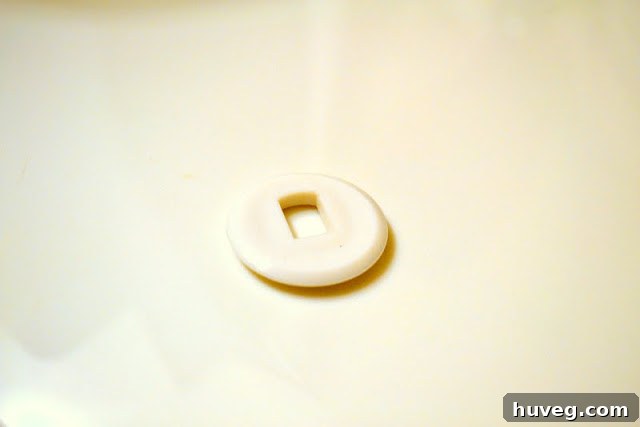
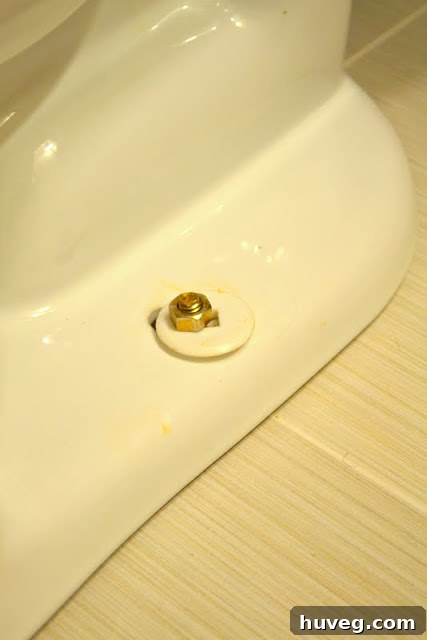
With the toilet firmly in place and the wax ring compressed, it’s time to secure the toilet to the floor. Place a plastic washer, followed by a metal washer and then a nut, onto each of the closet bolts. Use your specialized tool or a wrench to tighten the nuts. It’s important to tighten them evenly and gradually, alternating between the two bolts, to prevent cracking the porcelain. Many kits include a specific plastic ring that goes between the porcelain and the nut, designed to prevent direct contact and reduce the risk of cracking. Ensure these rings are installed correctly; if upside down, the bolt covers might not snap into place properly later.
Always double-check that the plastic ring (often white, as seen below) is oriented correctly, with the broader side facing down against the porcelain. If it’s wonky or installed upside down, it can interfere with the cap later.
-
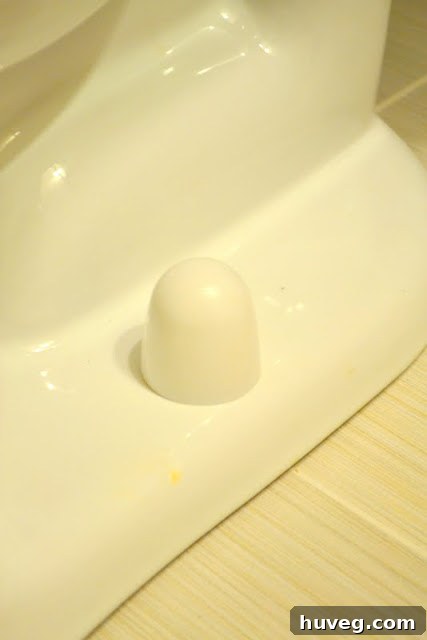
Finishing the Floor Bolts with Caps
Once the nuts are tightened and the toilet is secure and level, you can trim any excess length from the closet bolts using a hacksaw if necessary (though many bolts are designed to be just the right length). Finally, snap the decorative caps over the nuts. These caps provide a clean, finished look and protect the bolts from corrosion.
-
Installing the Toilet Seat
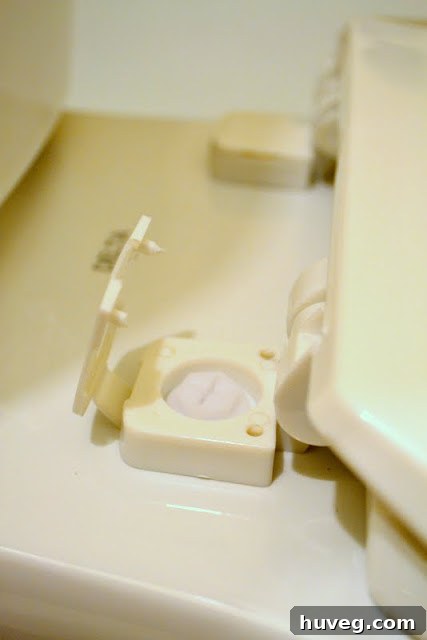
The toilet seat installation is typically straightforward. Most seats attach with bolts that pass through specific holes in the back of the toilet bowl. Many kits include a special screwdriver bit that integrates with your multi-tool, making this step easy. Fasten the bolts securely but avoid over-tightening. Once the seat is attached, snap its decorative covers into place for a clean aesthetic.
Ensure the covers snap firmly into position, providing a finished look and preventing dirt accumulation in the bolt recesses.
-
Adjusting Internal Tank Components
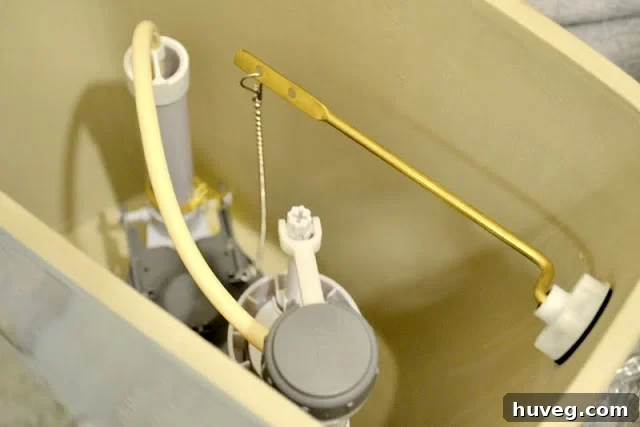
The internal mechanisms of toilet tanks can vary slightly by model. Refer to your toilet’s specific instructions for correctly hooking up the flapper chain and ensuring the fill valve operates properly. The chain should have just a little slack when the flapper is closed to ensure a complete seal. Test the flushing handle a few times to confirm that the flapper lifts, the water drains, and the fill valve closes completely after the tank refills.
-
Final Water Connection and Testing
Now for the exciting part! Connect the water supply line from the wall valve to the bottom of the toilet tank. Tighten it securely, but again, avoid over-tightening. Once connected, slowly turn on the water supply valve at the wall. Watch as the tank fills with water. Inspect all connections for any signs of leaks. Once the tank reaches its fill line, perform your first flush! Test it a few more times to ensure everything is working perfectly. Congratulations, you’ve just installed a toilet!
-
Applying Caulk for a Clean Finish (Optional but Recommended)
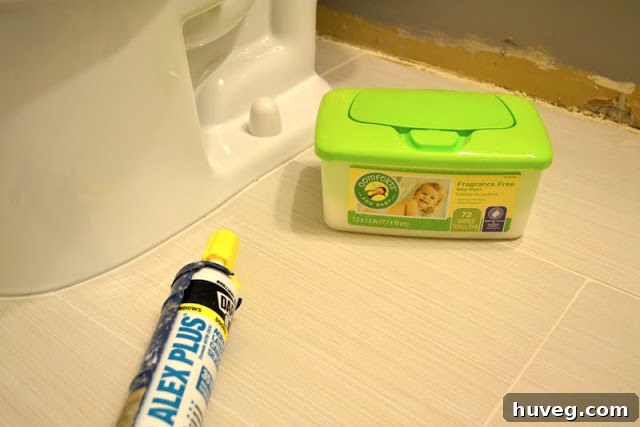
For a truly polished look and easier cleaning, you can run a bead of mildew-resistant caulk around the base of the toilet where it meets the floor tile. This prevents dirt, dust, and hair from accumulating in the small gap, making cleaning much simpler. However, a crucial tip: leave a small, uncaulked gap at the very back of the toilet. This acts as a tell-tale sign if a leak ever develops from the wax seal or plumbing connection underneath, allowing you to spot it before it causes significant damage. For cleanup, baby wipes work wonders for removing excess caulk and creating a smooth, professional line – a trick I now use for all my caulking projects!
Troubleshooting & Tips for a Smooth Installation
- Wobbly Toilet: If your toilet wobbles after tightening, it could indicate an uneven floor or an improperly seated wax ring. You might need to use shims under the base to stabilize it before re-tightening the bolts.
- Leaks at the Base: A leak at the base usually points to a faulty wax ring seal. This requires removing the toilet, replacing the wax ring, and re-seating the toilet carefully.
- Leaks at Tank Connections: Check all nuts and washers on the tank bolts and the water supply line. Tighten them slightly, but never force them, as this can crack porcelain or strip threads.
- Weak Flush: Ensure the flapper chain has the correct amount of slack and the fill valve is allowing the tank to fill to the proper level.
- Get Help: While many steps are manageable solo, lifting and positioning the toilet can be heavy and awkward. Don’t hesitate to ask for help to prevent injury or damage.
Embrace Your DIY Skills and Enjoy Your New Toilet!
Installing a toilet might seem like a daunting plumbing task, but as you’ve seen, it’s largely a process of careful preparation and following clear steps. With one successful toilet installation under my belt, I now feel genuinely confident tackling the next one in the primary bath. While lifting the entire bowl alone might present a challenge, most of these steps can be adapted or done slightly out of order if you’re working solo. The key takeaway is this: the fear of plumbing projects no longer holds me back.
What about you? What DIY project have you recently conquered that you initially doubted your ability to complete? Share your experiences and inspire others to embrace the satisfaction of home improvement.
Disclaimer: This guide details my personal toilet installation experience. While the basic principles apply to most toilets, your specific model may have unique components or instructions. Always refer to your toilet’s manufacturer guide for precise steps and torque specifications. This installation was surprisingly simple, but lifting heavy porcelain can be challenging; seek assistance if needed. Ugly Duckling House (& its author) is not responsible for any issues or damages resulting from your DIY project. Proceed with caution and common sense.