Optimizing Laundry Room Shelf Layout

Ultimate Laundry Room Renovation: From Drab to Fab with DIY Flair
For many homeowners, the laundry room is often overlooked—a purely functional space tucked away, devoid of much aesthetic consideration. However, with a thoughtful approach, even the most challenging laundry areas can be transformed into beautiful, efficient, and enjoyable parts of your home. We’ve been diving deep into a comprehensive laundry room renovation, focusing on practical updates that not only enhance functionality but also elevate the overall style. While the journey is still ongoing, we’re thrilled to share the significant progress made so far, including a stunning new light fixture, the intricate process of adding crown molding, and the critical planning stages for optimizing shelf placement. These initial steps lay the groundwork for a truly remarkable transformation, proving that a little DIY dedication can go a long way in crafting a space that’s both stylish and supremely organized.
Illuminating the Space: A Fresh Perspective with a New Light Fixture
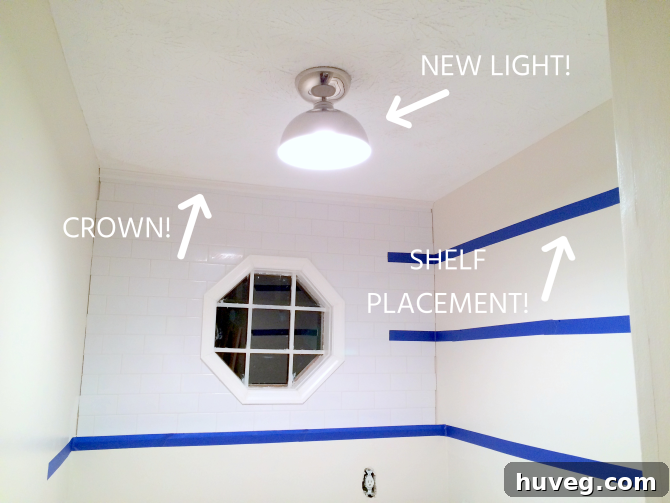
One of the quickest and most impactful ways to update any room, especially a utilitarian space like a laundry room, is to upgrade the lighting. Adequate illumination is crucial for tasks like stain removal and sorting, but a stylish fixture can also serve as a beautiful design element. Our journey began with a new light fixture purchased ages ago from West Elm. This particular fixture was advertised as “satin nickel,” a finish I specifically sought out for its subtle, matte elegance that complements a wide range of decor styles. However, after what felt like an eternity in its box, upon unboxing, it revealed itself to be far more chrome-like than the promised satin nickel. While a matte finish was my initial preference—and I even considered tackling a DIY spray paint job with a matte sealer to achieve the desired effect—a fortunate coincidence emerged: the fixture’s chrome-like sheen unexpectedly harmonized with the doors of our brand-new washer and dryer. Sometimes, design quirks turn into happy accidents, leading to a cohesive look without extra effort.
Choosing the right light fixture involves more than just aesthetics; it’s about balancing form and function. For a laundry room, consider fixtures that provide bright, even light without harsh shadows. LED options are energy-efficient and offer excellent longevity. The style should also align with the overall vision for your space, whether it’s modern, farmhouse, or transitional. Despite the initial finish surprise, this new fixture has already significantly brightened and modernized the laundry room, setting a crisp tone for the rest of the renovation.
Before & After: A Glimpse at the Lighting Transformation
To truly appreciate the transformation, it’s essential to see where we started. The original light fixture was functional but lacked character, contributing to a less inspiring atmosphere. Swapping it out was a relatively simple yet highly effective update that immediately elevated the room’s aesthetic.

A Fresh Canvas: Embracing White, Molding, and Architectural Detail
Creating a bright, clean, and cohesive look often starts with a fresh coat of paint and carefully chosen architectural details. Our laundry room refresh embraces a “white on white” palette, a timeless choice that maximizes light and creates a feeling of spaciousness, especially vital in smaller utility rooms. Part of this process involved meticulously scraping off old paint from the octagonal window. This painstaking task revealed the need for a fresh coat on some of the windowpane dividers—or “grilles” or “muntins,” as they’re known in architectural terms—a small detail that makes a big difference in a finished look. Attention to such details ensures a professional, polished outcome.
Beyond paint, the introduction of molding plays a pivotal role in refining the space. We’ve begun the delicate process of adding molding around the existing tile backsplash from the kitchen, which was installed a while back. This strategic addition serves multiple purposes: it instantly dresses up the area, adding a layer of sophisticated finish, and perhaps more importantly, it cleverly conceals any imperfections from imperfect tile cuts. Utilizing leftover materials is a fantastic way to save costs and reduce waste, but it often comes with the challenge of working with less-than-perfect pieces. Molding effectively bridges this gap, transforming potential flaws into intentional design elements.
Conquering Crown Molding: A First-Timer’s Guide to Adding Elegance
Crown molding is a classic architectural feature that adds undeniable elegance and a sense of completeness to any room, visually bridging the gap between walls and ceiling. Despite its transformative power, many DIY enthusiasts shy away from installing crown molding due to its perceived difficulty. For me, this laundry room has become the perfect “guinea pig” for learning this skill before tackling more prominent areas of the house. The goal is to master the techniques here, where any initial mistakes can be more easily forgiven and rectified.
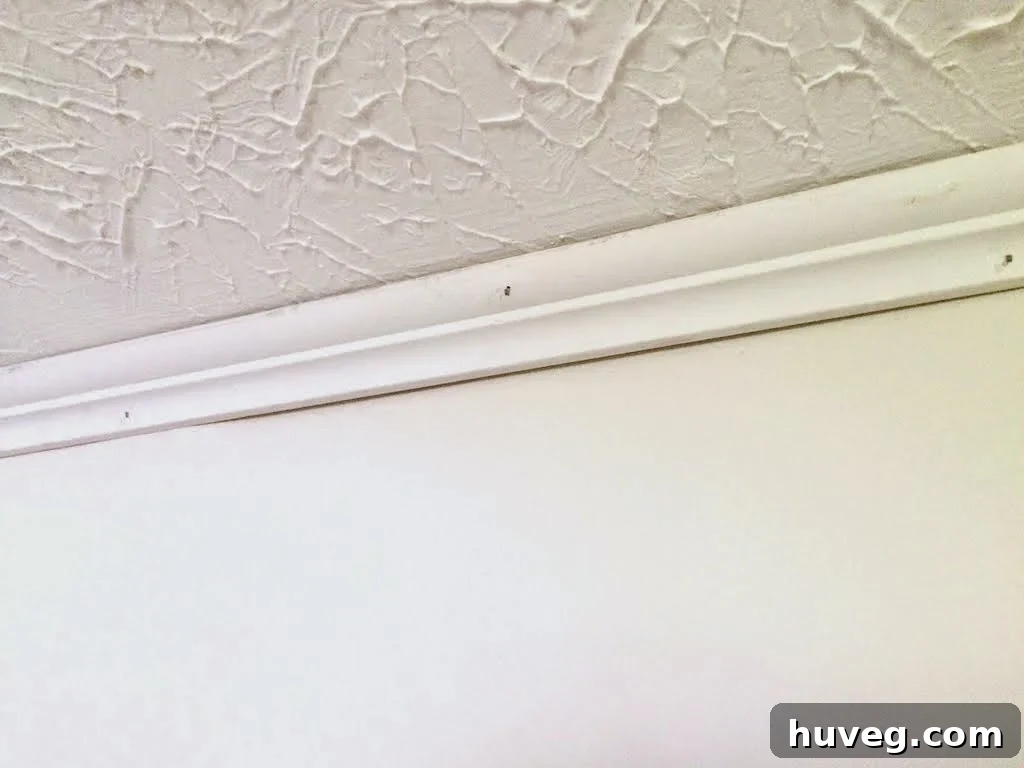
For this compact laundry room, we opted for a smaller profile crown molding, believing it would be better suited to the room’s scale, unlike the beefier versions planned for larger spaces elsewhere. The learning curve was steep, and early on, I made a classic beginner’s mistake: installing a piece upside down! Initially, I was unsure whether to wrap the entire room or just install molding on the back wall to specifically hide the tile edges. I cut and installed a single piece for that wall, only to realize its isolated presence looked somewhat “dinky.” Fortunately, this mistake required me to take it down to cut proper corner angles for a full room installation anyway, so it all worked out. A minor casualty was a small section of ceiling texture ripped away during removal, but this is easily fixed with some spackling—which is required for the molding seams anyway—so everything will be seamlessly repaired in unison.
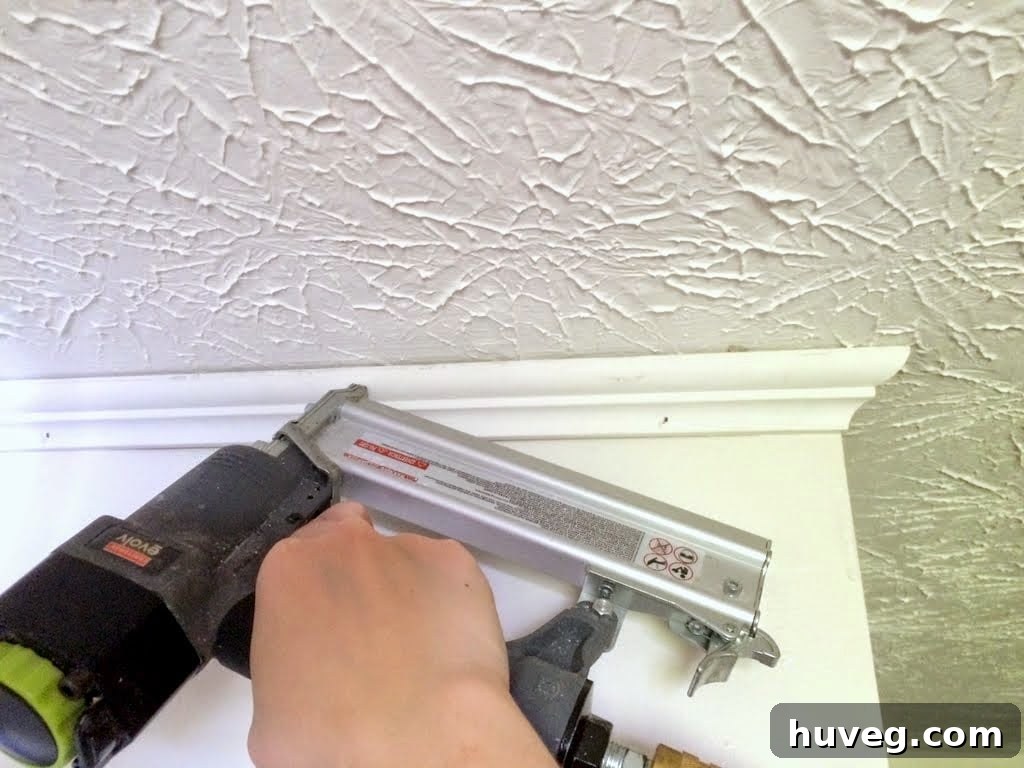
To be entirely transparent, my initial attempts at crown molding have been, shall we say, a significant learning experience. The uneven walls of this older home only compound the challenge, making precise cuts and perfect alignment a true test of patience and skill. However, this is precisely why this room was chosen for this DIY experiment. It’s a low-pressure environment where I can make and learn from all my mistakes, hone my technique, and build confidence without the scrutiny of a high-traffic area. Every imperfect cut and challenging corner brings me closer to mastering this craft, ensuring that future crown molding projects throughout the house will be executed with greater precision and ease. This iterative learning process is invaluable for any home improvement enthusiast.
Strategic Shelf Placement: Maximizing Storage and Overcoming Awkward Layouts
Effective storage is paramount in any laundry room, but it becomes an even greater puzzle in spaces with awkward shapes and limited square footage. This is where strategic planning for shelf placement truly shines. Upon first glance, the liberal application of blue painter’s tape across our laundry room walls might appear chaotic, but it serves a vital purpose: it’s our visual planning tool for determining optimal shelf locations and dimensions. This room presents a unique set of challenges due to its incredibly awkward shape, which demands creative solutions to maximize both storage and functionality.
Addressing Key Laundry Room Challenges:
- The Washer & Dryer Gap: Along the back wall, directly behind the window, there’s a small ledge that protrudes. This area naturally suggests a long shelf above the washer and dryer. However, a rigid dryer vent hose forces both appliances to stick out approximately eight inches from the wall. This creates a substantial gap—a notorious spot for socks and other items to disappear into the unreachable abyss. Any shelf here needs to be deep enough to cover this gap effectively, preventing items from falling behind, yet still shallow enough for easy reach, especially for someone with shorter arms. Balancing depth for functionality with accessibility is crucial for this primary storage zone.
- Navigating the L-Shape Layout: Our laundry room features a distinct, somewhat “fat L-shape” layout. It narrows considerably towards the door entrance, then opens into a larger area where the washer and dryer reside. This creates a valuable, albeit irregularly shaped, space to the right of the appliances, ripe for additional shelving. Utilizing this corner effectively is key to unlocking the room’s full storage potential, turning an architectural oddity into a design asset.
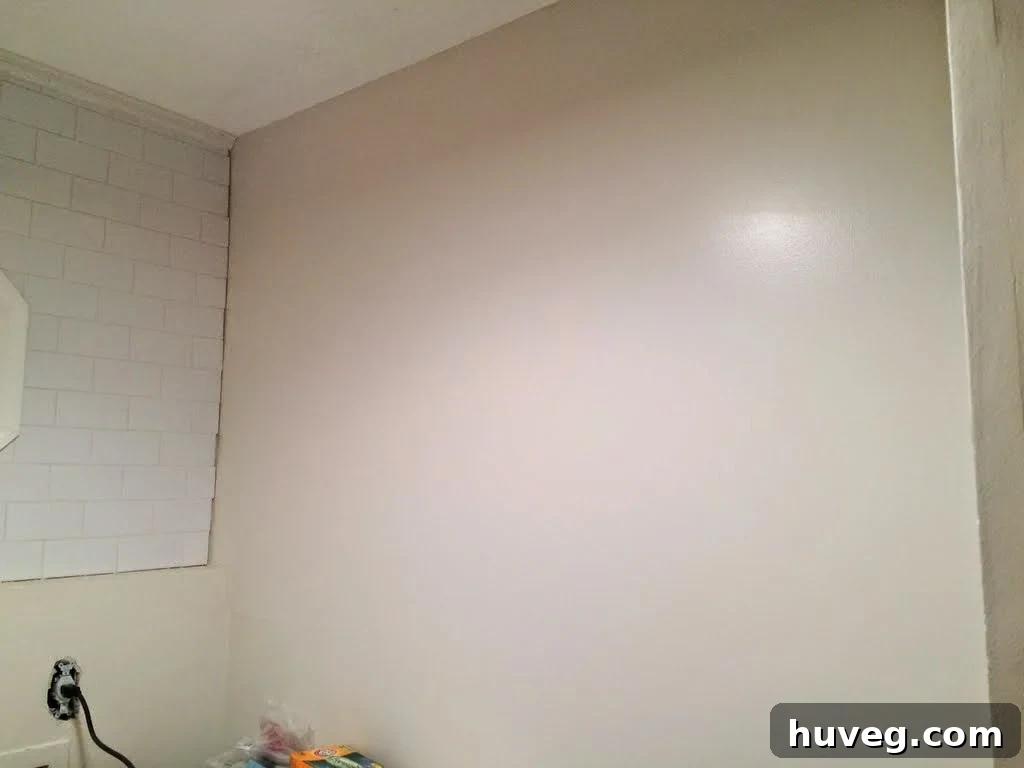
- Vertical Storage Imperative: The pressing need for storage in this room is undeniable. With the washer and dryer consuming the majority of the floor space—leaving just a small corner for essentials like a trash can or a laundry hamper—all storage solutions must be vertical. However, deep shelving, while offering more capacity, is largely out of the question. In a cramped space, deep shelves can make the room feel even smaller and more overwhelming. The challenge lies in designing vertical storage that is both ample and aesthetically light, maintaining an open feel.
Innovative Solutions for Optimal Laundry Room Storage:
After much contemplation and visualization with our trusty painter’s tape, a clear strategy for maximizing storage and functionality has emerged:
- Custom Countertop and Narrow Shelf Over W&D: The ideal solution for the gap behind the washer and dryer involves a robust cleating system. This system will support a beautifully stained wooden countertop, effectively bridging and covering the eight-inch gap. This not only prevents items from falling but also creates valuable folding or sorting space. Above this new countertop, a narrower shelf will be installed on the existing ledge below the window. Given the depth of the appliances, this shelf will be somewhat harder to reach for practical storage, making it perfect for decorative items—think small plants, framed photos, or stylish storage baskets—adding charm without demanding constant access.
- Floating Shelves for the L-Shape: The additional space to the right, created by the room’s L-shape, is perfectly suited for a series of floating shelves. A cleating system can also be effectively employed here, offering robust support while maintaining a minimalist aesthetic. Floating shelves are an excellent choice for smaller rooms as they provide ample storage without the visual bulk of traditional cabinetry, keeping the cramped feeling to an absolute minimum. The blue tape along the tile in the photos serves as a guide for eyeballing the ideal width and spacing of each shelf, ensuring they integrate seamlessly into the design and offer practical storage for laundry essentials, detergents, and other supplies.
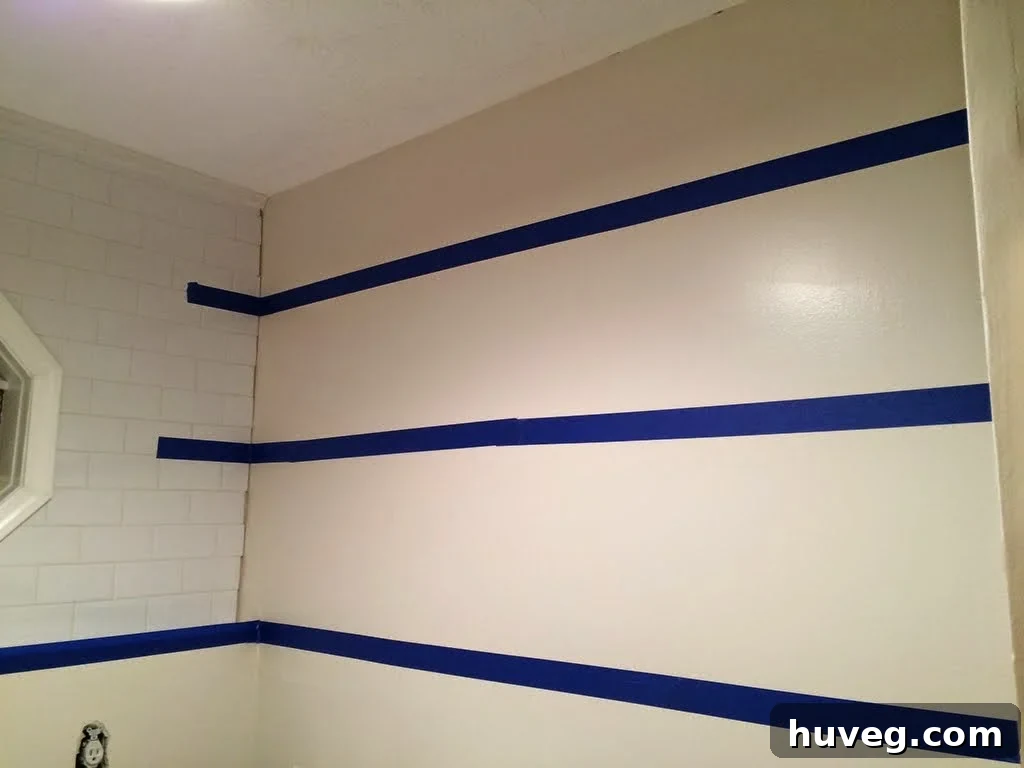
Pro Tip: Unlock Your Vision with Painter’s Tape!
When you’re unsure about placement, sizing, or layout for any home project, painter’s tape is your secret weapon. It allows you to visualize just about anything—from rug sizes and furniture arrangements to gallery wall layouts and, of course, shelf placement—without making a single permanent mark. This simple, inexpensive tool can save you countless hours of rework and prevent costly mistakes, making it an indispensable part of any DIYer’s toolkit.
As the progression of blue tape configurations in these photos illustrates, numerous ideas were explored and refined. Ultimately, this meticulous visualization process has led to a clear vision for the final layout. While some minor adjustments, such as slightly lowering the tape for each shelf on the right, might occur during installation, the overall scheme is now firmly established.
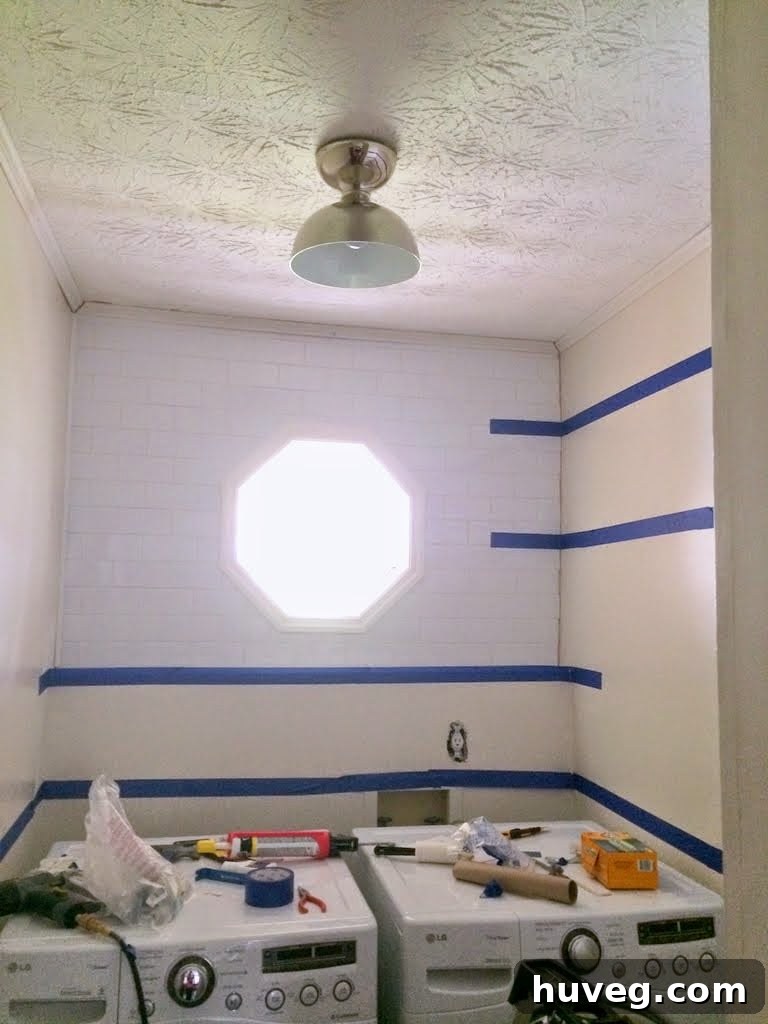
The Road Ahead: Continuing the Laundry Room Transformation
With the major planning hurdles cleared and initial installations underway, the laundry room is steadily progressing towards its full potential. You can already see additional molding meticulously installed, including the decorative strip carefully placed to artfully conceal the tile edges on the left wall. These small, thoughtful details collectively contribute to a more polished and professional finish, showcasing how attention to detail can transform a utilitarian space into something truly special.
There’s always more to accomplish in any DIY renovation, and this weekend promises further advancements. We anticipate more installation, more finishing touches, and undoubtedly, another trip or two to the hardware store for supplies—a familiar ritual for any dedicated home improver! We’re excited to share more progress next week as this ultimate laundry room renovation continues to unfold. Stay tuned to witness the exciting evolution of this once-overlooked space into a highly functional and aesthetically pleasing hub of the home. Until then, happy renovating, and have a fantastic weekend!