Atlanta Unleashed

The Atlanta Snowpocalypse: Unpacking the Chaos, Community, and Unforgettable Lessons
The term “Atlanta Snowpocalypse” might conjure images from a humorous newsreel or a viral meme for many across the globe. Yet, for those of us who lived through it, the experience of January 2014 was anything but a laughing matter. It was a stark reality of gridlock, uncertainty, and an unexpected testament to human resilience. While this article isn’t strictly about home improvement, it reflects on a time when many Atlantans, including myself, were literally stuck in their homes for days, witnessing a city grappling with an unprecedented winter storm.
Setting the Scene: Atlanta’s Unforeseen Winter Challenge
As residents of Atlanta, we are no strangers to the occasional winter weather warning. Often, these warnings result in a preemptive shutdown of the city—schools close, businesses encourage telework, and grocery stores are swarmed as if preparing for the end of days. This time, however, the response was tragically different, leading to one of the most significant urban transportation crises in recent memory. We knew the snow was heading for the Southeast, and we were acutely aware that our road infrastructure, with its mere handful of sand trucks (reportedly around 30 for the entire metropolitan area), was ill-equipped to handle substantial ice and snow accumulation.
Despite this foreknowledge, the city’s decision-makers initially opted against widespread closures. Schools and offices remained open, perhaps underestimating the storm’s potential or fearing the economic impact of a premature shutdown. It’s easy to poke fun at Atlanta’s reaction to the slightest threat of snow, but this particular event exposed a critical flaw in our emergency preparedness. Instead of closing institutions proactively, the call to action came after the snow had already begun to fall. This reactive approach, as if meteorology couldn’t predict weather patterns before the first flake descended, unleashed a domino effect of catastrophic proportions. Schools released children early, offices abruptly closed, and the resulting mass exodus transformed the entire city into an immovable parking lot by early Tuesday afternoon. The chaos was palpable, with commuters trapped, many running out of fuel, and the urban landscape paralyzed.
A Personal Snapshot: From Curiosity to Concern
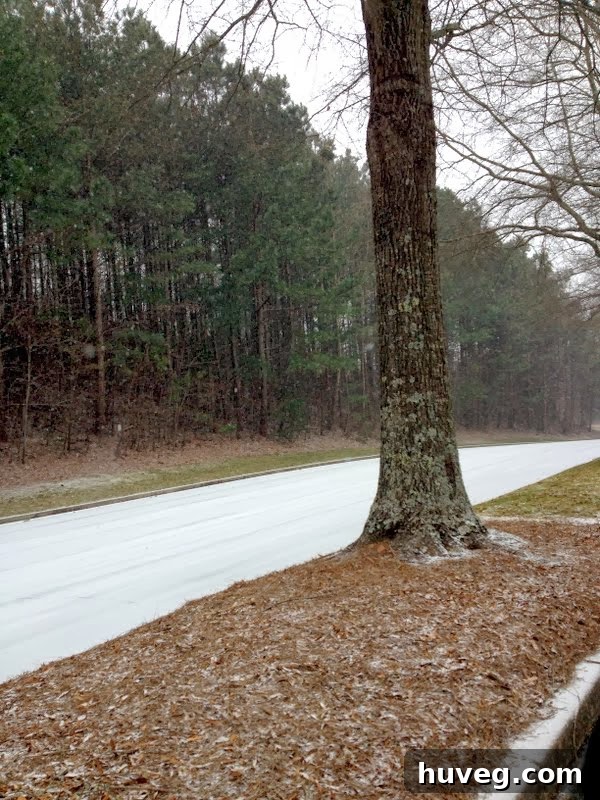
My own experience began with a sense of mild curiosity, typical of an Atlantan witnessing snow. As the first flakes began to descend and my office released us to head home, I snapped a photo, sharing it on social media with a lighthearted caption, oblivious to the unfolding disaster. It was a picturesque scene, the city temporarily softened by a gentle dusting of white. Who knew it would quickly morph into a scene of widespread distress?
(Image: A photo depicting the initial light snowfall in Atlanta, a momentary beauty before the chaos.)
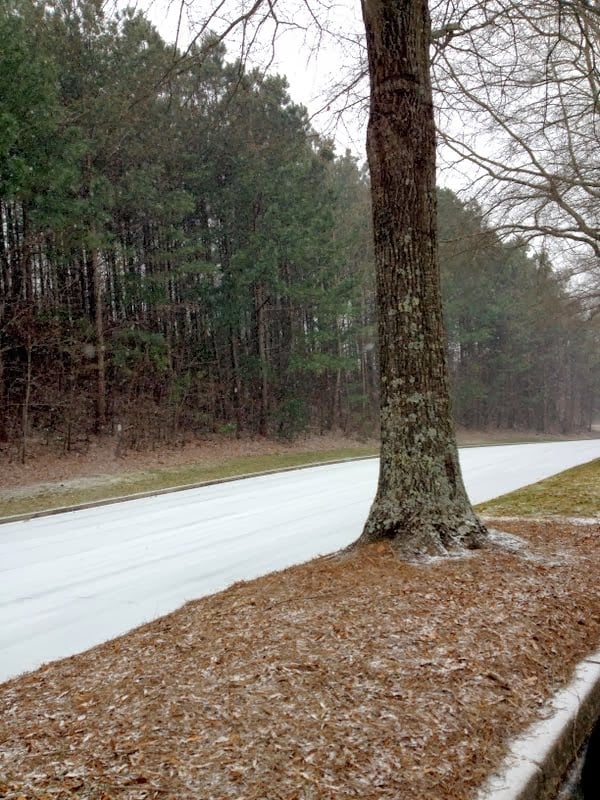
I took another picture as a more substantial layer of snow began to accumulate on the roads. For those of us who don’t live in a region accustomed to regular snowfall, photographing it becomes almost an instinctual act. “Hey, look at this weird white stuff!” we think, marveling at the novelty.
Miraculously, I made it home without incident, remaining completely unaware of the thousands of people who were already becoming stranded on the roads. I hadn’t encountered much traffic on my commute, a stroke of luck that I only realized in hindsight. My dog, Charlie, had her first encounter with snow, which was relatively uneventful at first. She was cautiously curious, sniffing and stepping carefully until she realized she could still run and play. Her usual leash had frozen, preventing her usual backyard excursions, but she revelled in the freedom of the deeper snow. I spent over an hour attempting, largely unsuccessfully, to photograph or video her joy, all from the warm vantage point of my kitchen’s sliding door. My front yard, however, looked rather melancholic under its blanket of white, prompting mental notes about spring landscaping projects.

It wasn’t until around 8 PM that evening that the gravity of the situation began to sink in. Texts poured in from friends and colleagues, including my boss, all asking if I had made it home safely. “Um, yeah, it’s just a little snow!” was my initial, naive response. The snow was still falling, but I felt secure. Then came the sobering news: my mother was among the many stranded motorists, unable to reach home. Reports of abandoned cars flooded social media, painting a grim picture. My father endured a harrowing seven-hour journey to get home from his office, a commute that typically took mere minutes. My sister and her husband, fortunately, were out of state in Washington, D.C., and thus safe from the immediate chaos, though their return flights were, of course, canceled.

Understanding the Gridlock: Why Atlanta Stalled
In the aftermath, the finger-pointing began almost immediately. Yet, many insightful analyses emerged, shedding light on the complex factors that led to Atlanta’s unprecedented gridlock. A common consensus pointed to a confluence of poor judgment and unique geographical challenges. The simultaneous release of thousands of schoolchildren and office workers onto icy roads, combined with Atlanta’s sprawling infrastructure and heavy reliance on personal vehicles, created a perfect storm. Unlike many northern cities, Atlanta lacks the extensive public transit systems and the specialized fleet of snow removal equipment necessary to manage such an event. The city’s geography, characterized by rolling hills and numerous overpasses, further exacerbated the problem, as ice made these elevated structures perilous. Drivers, unaccustomed to navigating treacherous winter conditions, quickly lost control, leading to countless accidents that blocked major arteries and brought traffic to a complete standstill. Resources like this explanation from Business Insider and this article from Gizmodo provided crucial context for understanding the catastrophic chain of events.
The Silver Lining: Acts of Kindness Amidst the Chaos
While the Snowpocalypse was undeniably a difficult and frustrating experience for many, it also unveiled a profound sense of community spirit and spontaneous heroism. My personal story might have been relatively uneventful compared to others, but the stories of selflessness that emerged are truly awe-inspiring. These acts of kindness provided a much-needed beacon of hope during a trying time, demonstrating the best of humanity when faced with adversity.
Teachers as Lifelines: Shelter in Schools
- Perhaps one of the most heartwarming stories involved school children who were released but whose parents couldn’t reach them through the impassable traffic. Atlanta’s dedicated teachers rose to the occasion, becoming unexpected lifelines. They not only provided shelter but also food, comfort, and entertainment for worried and tired students who had to spend the night at school. This remarkable compassion, where educators stepped far beyond their job descriptions, transformed school buildings into sanctuaries and reassured countless anxious parents. Stories like those highlighted on Today.com underscored their incredible dedication.
“Snowed Out Atlanta”: A Digital Lifeline
- In a world increasingly connected digitally, a Facebook group named “Snowed Out Atlanta” rapidly transformed into a vital hub for disaster relief. People who were safely at home or possessed four-wheel-drive vehicles used the platform to offer assistance to those stranded. This included volunteers preparing and delivering sandwiches, walking along packed streets to hand out supplies, providing much-needed gasoline to stalled vehicles, and even venturing out in 4WD trucks to rescue individuals trapped in their cars across the city. These extraordinary efforts were driven purely by altruism, with no expectation of anything in return. Business Insider chronicled some of these incredible acts, showcasing the power of community in a crisis.
Chick-fil-A’s Compassion: Fueling the Stranded
- Imagine being stuck in your car for an entire day, facing hunger and exhaustion. Many Atlantans experienced this grim reality. By the second hour, most people would be rummaging for forgotten snacks, perhaps even an old cough drop. In a truly remarkable display of corporate and individual compassion, Chick-fil-A employees, known for their exceptional customer service, took initiative. They walked up and down crowded intersections, bravely navigating the frozen, gridlocked streets, handing out hundreds of free sandwiches and drinks to anyone they could reach. This simple yet powerful gesture provided much-needed sustenance and comfort to countless stranded motorists, a testament to their unwavering commitment to serving the community, even in the direst circumstances.
Open Doors: Stores as Sanctuaries
- As the crisis deepened, many were forced to abandon their cars and seek refuge wherever they could find it. Large retailers like Home Depot, CVS, and Publix opened their doors, not just for business, but to provide warmth and shelter to those in desperate need. These stores became impromptu havens, offering a safe space from the freezing temperatures. My own mother, among the thousands stranded, found solace at a Racetrac gas station. She was offered free coffee and a warm place to rest if she needed it, though thankfully, she managed to make it home safely by 10 PM that night. These acts of kindness from businesses, foregoing profit to prioritize human safety and comfort, truly exemplify the spirit of community. Business Insider also documented these vital shelters, highlighting the profound impact of these open doors.
Lessons Learned and the Path Forward
In summation, the Atlanta Snowpocalypse was a challenging and at times frightening experience. It exposed vulnerabilities in urban planning and emergency response mechanisms in a region unaccustomed to severe winter weather. However, it also brought to the forefront the incredible capacity for good within our communities. The countless acts of selflessness, compassion, and courage demonstrated by ordinary citizens, teachers, businesses, and volunteers were truly extraordinary. These “complete badasses,” as I like to call them, reminded us that in the face of chaos, the human spirit can shine brightest.
As for me, I opted to continue working from home for an additional day, allowing the roads a critical window to clear and the ice to melt. By that afternoon, most major arteries were passable, and the city slowly began its recovery. For those residing in other areas, especially those prone to unexpected weather events, the message remains clear: stay safe, stay warm, and always be prepared. The Atlanta Snowpocalypse taught us valuable lessons about community, resilience, and the enduring power of kindness in the most unexpected of circumstances.