The Unflinching Resolve

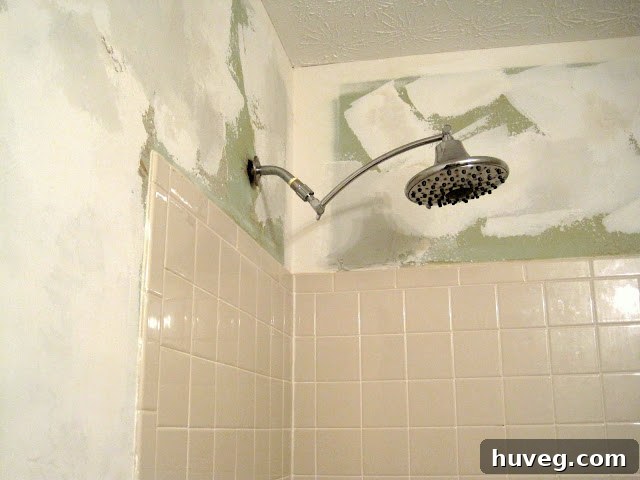
Embarking on a do-it-yourself home renovation project can be both exhilarating and daunting. Among the many tasks involved in transforming a space, achieving perfectly smooth walls often stands out as one of the most challenging, yet rewarding. This particular journey focuses on the primary bathroom, a relatively compact area that, despite its size, presented a significant undertaking for a single individual tackling the intricate process of skim coating. Even with half the wall space covered by existing tiles, windows, or the vanity footprint, the meticulous application of a skim coat is a time-consuming art that demands patience, precision, and the right approach.
The essence of a successful renovation, especially when aiming for professional-grade finishes, lies not just in skill but crucially in the efficacy of your tools. My recent experience with skim coating has undeniably underscored this vital lesson: possessing the optimal equipment for the task is paramount to not only achieving a superior result but also drastically accelerating the completion time. This revelation became strikingly clear through a practical comparison. Initially, I found myself wrestling with a standard joint compound bucket and a narrow 4-inch spackling knife. This setup, while seemingly basic, proved to be incredibly inefficient, extending the effort required to cover even a modest section of a wall over several nights.
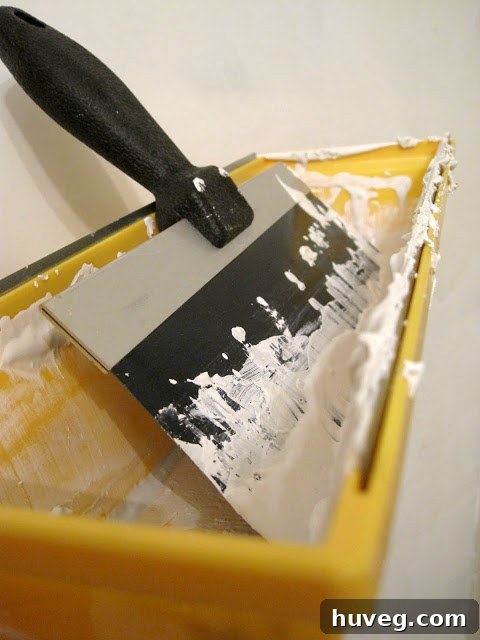
The contrast, however, was stark and transformative when I switched to a wider 10-inch flexible taping knife paired with a dedicated mud pan. The difference in productivity was nothing short of astounding. What once took two arduous evenings to complete half of a single wall could now be accomplished across three entire walls in just one night. This dramatic improvement wasn’t merely about speed; it was about reducing physical strain, minimizing imperfections, and ultimately, building confidence in the process. The synergy between the larger knife, allowing for broader, more consistent strokes, and the easily accessible mud from the pan, streamlined the application process, making the once-tedious task surprisingly manageable and, dare I say, enjoyable. This strategic shift in tooling unequivocally confirmed that investing in the right gear is not an expense but an invaluable investment in efficiency and quality.
Skim coating, at its core, is the application of a very thin layer of joint compound over an entire wall surface to create a smooth, uniform finish. It’s an indispensable technique for various scenarios: masking minor imperfections, covering up old textures (like popcorn ceilings or orange peel walls), repairing small cracks or damage, or simply preparing a wall for a pristine paint job. The process begins long before the first swipe of mud. Meticulous preparation is key. This involves thoroughly cleaning the walls to remove any dirt, grease, or loose paint particles. Any existing holes or larger cracks should be pre-filled and sanded smooth. Taping off trim, windows, and any fixtures that cannot be removed is essential to protect them from the inevitable mess. Often, a coat of primer can help ensure better adhesion of the joint compound, particularly on glossy or previously painted surfaces.
Once the walls are prepped, the actual application begins. Using the mud pan and the flexible taping knife, a thin, even layer of joint compound is spread across the wall, typically working in small, manageable sections. The key is to apply just enough compound to fill in irregularities without building up too much material, which would lead to excessive sanding later. Holding the knife at a slight angle and applying consistent pressure helps feather the edges, blending the new layer seamlessly with the existing surface. After the first coat dries completely – a process that can take several hours depending on humidity and thickness – a light sanding is often required. This initial sanding aims to knock down any obvious ridges or high spots. Respirators and safety glasses are non-negotiable during this dusty phase. Following the first sanding, a second thin coat of compound is applied, often with an even lighter touch, to achieve that truly glass-smooth finish. Sometimes, a third coat might be necessary for perfectionists or particularly challenging surfaces.
While I may not boast the expertise of a seasoned professional, and I readily acknowledge my need for continued learning and pointers, I am genuinely proud of the progress and quality of my work thus far. The moment of truth arrived when I sanded down a section of the wall to test the finish. The result was incredibly satisfying: the surface was undeniably smooth, signaling that my aspiration for perfectly flat, sleek walls is indeed within reach. This successful test provided immense encouragement and validated the effort and meticulousness applied throughout the process. It’s a testament to the fact that with persistence and the right techniques, even a DIY enthusiast can achieve professional-looking results.
The journey to smooth walls is not without its challenges. Repairing damaged drywall and applying skim coats is inherently a dirty, physically demanding, and often two-handed process. This reality makes capturing the entire technique on camera a less-than-ideal proposition, as hands are constantly covered in mud and attention is entirely focused on the wall. However, I am committed to sharing my complete experience and insights. A comprehensive tutorial is actively in the works, meticulously documenting all the tools I utilized, the specific techniques I discovered to be most effective, and a step-by-step guide to help others achieve similar success. If all goes as planned, this valuable resource will be available by Friday, offering practical advice and visual examples where possible.
Beyond the walls, the transformation of the bathroom continues. Tomorrow, I’m excited to invite you, my readers, to participate in the next crucial step: helping me select the perfect vanity. This will involve considering various styles, sizes, materials, and functionalities to ensure it complements the newly smooth walls and overall aesthetic of the primary bathroom. A vanity is more than just a functional piece; it’s a focal point that defines the character of the space, offering both storage and style. Your input will be invaluable in making this important design decision. For now, however, my aching shoulders are calling for a well-deserved rest, and the demands of the day job await. Every step, every challenge, and every success in this renovation journey brings us closer to a beautifully transformed home, reminding us that with dedication, even the most ambitious DIY projects can be accomplished, one smooth wall at a time.