6 Smart HVAC Hacks for Cool Comfort and Lower Bills

If your summer experience is anything like mine, you’re acutely aware of one undeniable truth: it’s scorching hot. We’re talking about that intense, sweat-dripping-down-your-back-within-minutes kind of heat. In these relentless temperatures, your home’s air conditioning system isn’t just a convenience; it’s a vital guardian of your comfort, working harder than ever to maintain a cool sanctuary. There’s absolutely no room for this summer MVP to falter or go on the fritz. That’s why I’m here today, diving back into the world of HVAC to share another comprehensive roundup of my favorite tips, designed to help you stay cool, comfortable, and keep your system running optimally all season long.
For those who might have missed it, I previously shared a foundational set of tips in the first installment of this two-part series, which you can find right here. While I genuinely enjoy documenting the triumphs, challenges, and occasional misadventures of my DIY projects, I’ve learned that when it comes to HVAC, consulting with experts is invaluable. Their insights often lead to significant savings and prevent costly blunders – believe me, fewer mysterious stained holes appearing in my living room ceiling is a huge win! So, when the opportunity arose earlier this year to partner with Trane Residential as a sponsor, it felt like the perfect alignment. Trane is a recognized leader in home comfort solutions, and this collaboration allows me to bring you truly high-quality, expert-backed advice. They offer an extensive resource library on their website, and I’ll be referencing and linking to some of those insightful posts throughout our discussion below.
6 Essential HVAC Do’s and Don’ts for Ultimate Summer Comfort and Efficiency
Maintaining a comfortable home environment during peak summer heat while also managing energy costs requires a strategic approach to your HVAC system. These six additional do’s and don’ts build upon fundamental practices and offer actionable insights to optimize your air conditioning’s performance and longevity. Implementing these tips can lead to noticeable improvements in both your indoor comfort and your monthly utility bills, making your home a truly cool oasis.
1. DO Upgrade Your Home Comfort with a Smart Thermostat
In today’s rapidly evolving world, it seems like virtually everything in our homes is undergoing a “smart” transformation. From light switches that respond to voice commands to internet-connected kitchen appliances, the market is flooded with innovations. While some smart home gadgets offer mere novelties, others represent truly valuable investments that significantly enhance convenience, security, and especially, energy efficiency. Among these beneficial upgrades, a Wi-Fi-connected programmable thermostat stands out as a genuine game-changer for any homeowner looking to optimize their HVAC system and dramatically reduce energy consumption.
For me, personally, while I initially adored the vintage charm and aesthetic of my old thermostat, the decision to upgrade to a smart thermostat has fundamentally reshaped how I manage my home’s climate. The unparalleled ability to control and monitor my HVAC system’s performance directly from my smartphone, no matter if I’m at work, on vacation, or simply relaxing on the couch, has brought an unprecedented level of convenience and precise control. This isn’t just about setting a temperature; it’s about intelligent, adaptive climate management. Here are the compelling, multifaceted benefits to consider when thinking about integrating a smart thermostat into your home:
- Optimized Temperature Control for Maximum Savings: A smart thermostat empowers you to create incredibly detailed and personalized heating and cooling schedules that align perfectly with your daily routine. This precision prevents the wasteful “yo-yo” pattern of constantly heating and cooling an empty house, ensuring energy is only consumed when and where it’s truly needed. For example, you can program it to slightly raise the temperature during work hours and then cool down just before you arrive home. The result is consistent comfort without the unnecessary expense of inefficient temperature fluctuations, leading to significant savings on your utility bills.
- Intelligent Learning Capabilities for Effortless Efficiency: Many advanced smart thermostats possess the remarkable ability to learn your family’s habits and preferences over time. By observing when you’re home, away, awake, or asleep, these sophisticated devices can automatically adjust to optimal temperatures throughout the day, often without you needing to manually change a setting. This proactive energy management maximizes savings and minimizes manual adjustments, effectively making your home’s climate control truly intelligent and responsive to your lifestyle.
- Real-time Diagnostics and Proactive Maintenance Alerts: High-end smart thermostats, such as the Trane ComfortLink™ II XL1050, go far beyond simple temperature regulation. They offer sophisticated real-time diagnostics, constantly monitoring your HVAC system’s health and performance. Should an issue arise – perhaps a filter needs changing or a component is underperforming – the system can immediately alert you. Even more impressively, with your permission, it can directly notify your local Trane dealer. This allows professionals to review your system’s data remotely, often enabling them to diagnose problems more quickly and efficiently, potentially preventing minor issues from escalating into major, costly repairs. It’s like having a vigilant, 24/7 guardian for your home’s most important mechanical system.
Expert Tip: Enhancing Resale Value and Buyer Appeal While real estate appraisers may not always factor smart home technology directly into a home’s appraised value, a smart thermostat can undeniably increase its marketability and appeal to prospective buyers. In a competitive neighborhood where many homes share similar layouts and features, showcasing an installed system that can save new owners up to 10% annually on heating and cooling costs, in addition to offering unparalleled convenience, can make your property stand out significantly. It signals a modern, energy-conscious home, a highly desirable attribute for today’s savvy buyers who are increasingly prioritizing efficiency and smart home integration.
2. DON’T Place Heat-Emitting Objects Near Your Thermostat
It’s certainly tempting to want to blend your thermostat seamlessly into your home décor, perhaps by placing a decorative object or a piece of DIY art over it to conceal its functional appearance. While this can be aesthetically pleasing, it’s absolutely crucial to ensure that any obstruction is temperature-neutral and allows for proper, unimpeded airflow around the unit. The thermostat is, quite literally, the brain of your HVAC system, meticulously designed to accurately read the ambient temperature of a room, which then dictates precisely when your air conditioner or heater should activate to maintain your desired climate.
However, placing heat-emitting items too close to your thermostat can severely compromise its accuracy and lead to significantly inefficient and wasteful operation. Common culprits include lamps, televisions, space heaters, computers, or even direct sunlight streaming through a window onto the thermostat’s surface. These objects artificially elevate the temperature immediately surrounding the thermostat, effectively tricking it into believing the room is warmer than it actually is. In response to this false reading, your air conditioning system will run longer and more frequently than necessary, consuming excess energy, inflating your utility bills, and potentially shortening the lifespan of your unit. This false reading can also exacerbate those “yo-yo” temperature fluctuations mentioned earlier, making it difficult to maintain consistent and comfortable indoor temperatures throughout your home.
Furthermore, fully enclosing a thermostat in a snug nook or behind heavy furniture without adequate space for air circulation can trap stagnant, warmer air around it, again leading to an inaccurate temperature reading. This trapped air prevents the thermostat from sensing the true room temperature, causing it to overcompensate. For optimal performance and to ensure your HVAC system operates as efficiently as possible, simply keep the area around your thermostat clear and free from anything that could interfere with its sensitive internal sensors or obstruct airflow. Similarly, if you’re in the process of selecting a location for a *new* thermostat installation, consciously avoid any walls or areas that receive direct sunlight exposure for extended periods. Strategic, unobstructed placement is absolutely key to achieving consistent comfort, maximizing energy savings, and promoting the longevity of your HVAC system.
3. DO Optimize Your Energy Bills by Remembering These Magic Numbers: 78°F and 68°F
One of the simplest yet most profoundly effective ways to significantly reduce your heating and cooling expenses is by adhering to optimal thermostat settings. Extensive studies on residential energy consumption consistently highlight the substantial savings achievable through mindful temperature management. These seemingly minor adjustments, when consistently applied, can lead to considerable annual savings without requiring you to sacrifice comfort entirely. The U.S. Department of Energy (DOE) offers straightforward, scientifically backed guidelines that serve as an excellent starting point for maximizing efficiency. They recommend aiming for two “magic numbers” when you are home and active:
- 78°F (26°C) for Summer Cooling: During the warmer months, setting your thermostat to 78°F (or approximately 26°C) provides a remarkably comfortable indoor environment for the vast majority of individuals. This temperature allows your air conditioner to work efficiently without overtaxing the system. Your body can naturally adapt to slightly warmer ambient temperatures in the summer, making this setting feel perfectly pleasant once accustomed. This also reduces the temperature differential between inside and outside, lessening the load on your AC.
- 68°F (20°C) for Winter Heating: In the colder months, maintaining a setting of 68°F (or approximately 20°C) provides adequate warmth while significantly reducing the load on your heating system. Each degree you lower the thermostat in winter can contribute to notable savings. Lowering the temperature at night or when away can yield even greater savings without impacting your daytime comfort.
Beyond these primary settings, you can unlock even greater energy savings by making strategic adjustments when your home is unoccupied or when you are asleep. The DOE suggests that you can save as much as 10% on your annual heating and cooling costs by simply adjusting your thermostat 7 to 10 degrees Fahrenheit (approximately 4 to 6 degrees Celsius) for eight hours a day. This strategic adjustment could mean turning the temperature up in the summer or down in the winter when you are at work, running errands, or sleeping soundly. A smart or programmable thermostat makes these adjustments utterly effortless and automatic, ensuring you’re only paying to condition your home when you’re actually there to enjoy it. This consistent, moderate approach not only saves a substantial amount of money over time but also significantly reduces wear and tear on your HVAC system, potentially extending its operational lifespan and delaying costly repairs.
4. DO Harness Energy Efficiency with Window Film and Ceiling Fans
Older homes, charming and full of character as they may be, often present unique challenges when it comes to maintaining consistent indoor temperatures. Drafty windows and inadequate insulation are common culprits, leading to significant heat gain in the summer and heat loss in the winter. A frequently offered piece of advice to combat summer heat is to keep blinds and curtains closed, effectively blocking the sun’s powerful rays from penetrating your home. While this strategy undeniably helps reduce heat absorption, it often comes at the cost of natural light – and for many, myself included, a light-filled home is a source of immense joy and comfort!
Fortunately, there are alternative, more elegant solutions that allow you to enjoy ample daylight while still mitigating unwanted heat transfer: high-performance heat control window film and Energy Star rated ceiling fans.
Embrace Heat Control Window Film: Instead of sacrificing precious natural light, consider installing high-quality heat control window film, especially on windows that face the relentless afternoon sun. These advanced films are specifically engineered to reflect solar radiation, block up to 99% of harmful UV rays, and reduce glare, all without significantly darkening your rooms or impeding your view. I’ve personally installed window film in my own home and can attest to its surprisingly DIY-friendly nature, making it an accessible and rewarding project for most homeowners. When selecting a film, always check the labels to ensure it specifically provides UV blocking and filtering benefits, as some films are purely decorative or offer minimal energy efficiency. The right window film can dramatically reduce heat gain, protect your valuable furnishings and flooring from fading, and enhance your home’s overall energy efficiency, creating a perceptibly cooler and more comfortable living space.
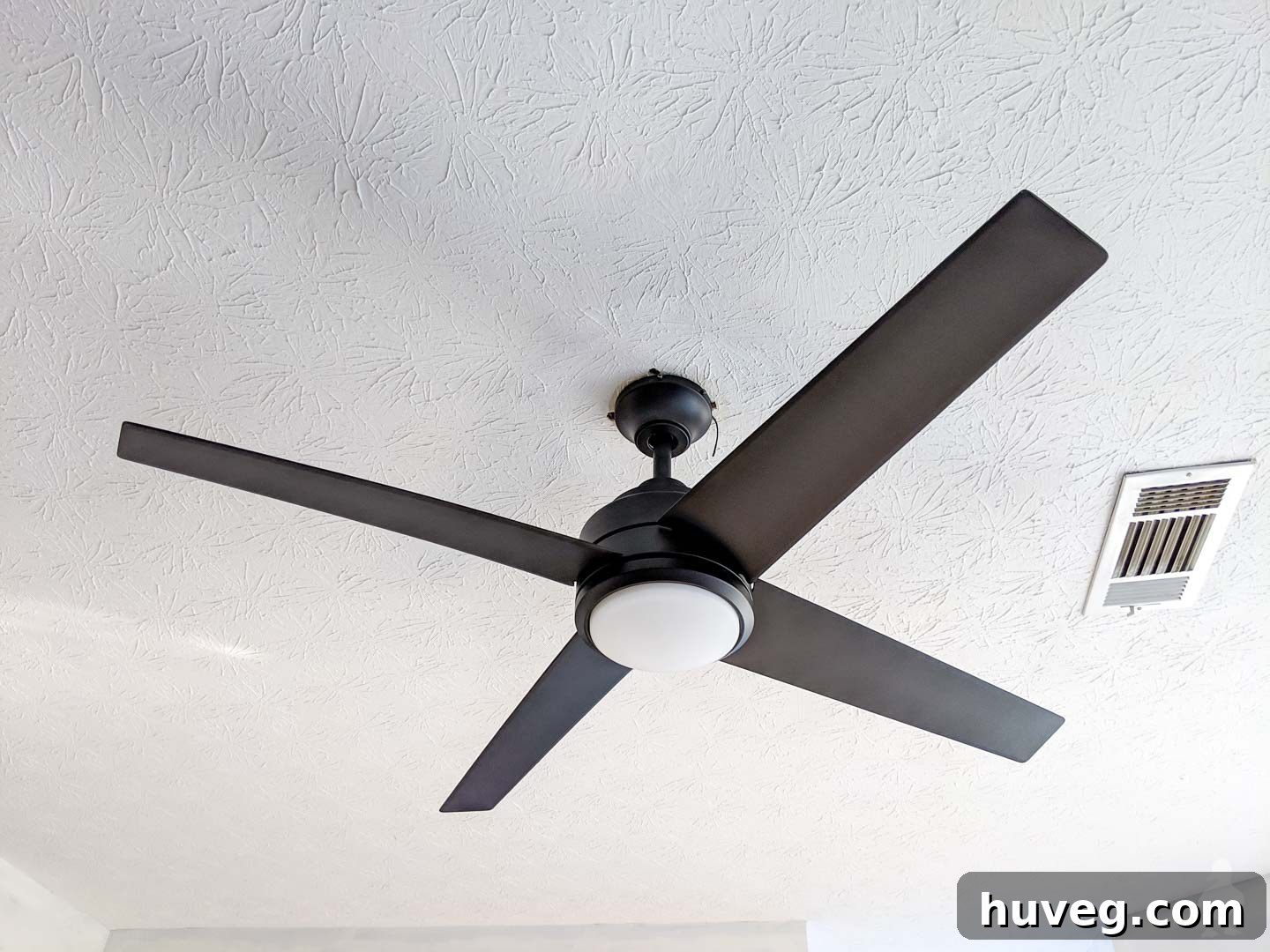
Leverage Energy Star Rated Ceiling Fans: For rooms that consistently feel warmer than others, or those with significant sun exposure – like my primary bedroom, which features multiple windows facing the hottest part of the day and is also one of the largest rooms – an Energy Star rated ceiling fan is an excellent, cost-effective, and aesthetically pleasing solution. Ceiling fans work by creating a gentle breeze and a wind-chill effect, making a room feel significantly cooler (often by several degrees) without actually lowering the thermostat temperature. This means you can potentially set your air conditioner a few degrees higher, reducing its workload and saving on energy bills, all without compromising your personal comfort. Choosing an Energy Star certified model ensures you’re investing in a fan designed for optimal energy efficiency and superior air circulation.
My primary bedroom is a prime example of where a ceiling fan makes a huge difference, not only due to its size and orientation but also because it allows me to avoid over-cooling the entire house just to make one specific room comfortable. This targeted approach to cooling is both smart and remarkably economical.
Pro Tip #1: Right Size for Maximum Impact The effectiveness of a ceiling fan is highly dependent on its size relative to the room it occupies. A fan that is too small for the space simply won’t circulate enough air to make a noticeable difference in temperature or comfort. Conversely, an oversized fan might create an uncomfortable draft. Always measure your room dimensions carefully and consult manufacturer sizing guides to select an appropriately sized fan to ensure maximum impact and efficiency. Generally, larger rooms (over 225 sq ft) require larger fan blade spans (50-60+ inches), while smaller rooms can utilize more compact models.
Pro Tip #2: Understand Your Fan’s Seasonal Settings Most modern ceiling fans offer a reversible motor function, allowing the blades to spin in either a clockwise or counter-clockwise direction. This isn’t just a gimmick; it’s a key feature for year-round energy savings! In the summer, you want the blades to turn counter-clockwise (as viewed from below). This pushes cool air directly down into the room, creating a refreshing downdraft and a significant wind-chill effect that can make the room feel up to 10 degrees cooler. In the winter, reverse the direction to clockwise. This gently pulls cool air up, displacing the warm air trapped near the ceiling and circulating it back down the walls, effectively destratifying the air and making the room feel warmer at lower thermostat settings. Mastering this simple adjustment maximizes your comfort and energy efficiency throughout all seasons.
Key Takeaway: Understanding the simple physics behind these solutions can lead to profound improvements in home comfort and energy efficiency. Science truly is both fun and incredibly useful when applied practically!
5. DON’T Obstruct Your Air Vents – Let Your HVAC System Breathe!
It’s an incredibly common oversight, often happening by accident: placing furniture, rugs, curtains, or decorative items directly in front of or on top of your home’s air vents, whether they’re strategically located on the floors or walls. While seemingly innocuous and often done to improve aesthetics or furniture placement, blocking these crucial air pathways has significant negative consequences for your HVAC system’s performance, energy efficiency, and your overall home comfort. Your air vents are integral components of a carefully designed air distribution system, meticulously responsible for delivering conditioned air efficiently and evenly throughout your living spaces.
When supply or return vents are obstructed, you’re essentially suffocating your HVAC system. This blockage prevents the free, unimpeded circulation of air, leading to several detrimental problems:
- Uneven Temperature Distribution: Rooms with blocked vents will inevitably become noticeably warmer in the summer and colder in the winter, creating uncomfortable hot and cold spots throughout your home. This forces your HVAC system to work harder, and often longer, to compensate for the imbalance, leading to inconsistent comfort levels and frustration.
- Increased Energy Consumption and Higher Bills: When airflow is restricted, your system has to exert significantly more effort and pressure to push air through the ducts and past the obstruction. This increased workload makes the unit run longer to reach the desired temperature in other areas, directly translating to higher energy bills as your system expends unnecessary energy.
- Reduced System Efficiency and Longevity: Persistent airflow restrictions can put undue strain on critical components like your furnace and air conditioner’s fan motor. This constant overwork can lead to premature wear and tear, increase the likelihood of component failure, and potentially shorten the overall lifespan of your entire HVAC system, necessitating costly repairs or even early replacement.
- Compromised Indoor Air Quality: Proper and consistent air circulation is absolutely essential for maintaining good indoor air quality. Blocked vents can lead to stagnant, stale air that lacks proper filtration and exchange. This can exacerbate issues with dust, allergens, and even contribute to increased humidity in certain areas, potentially fostering mold and mildew growth.
Make it a regular habit to walk through your home and ensure that all supply and return air vents are completely clear and unobstructed by furniture, rugs, or drapes. Also, take the time to periodically clean them of accumulated dust and debris for optimal performance. This simple act of vigilance allows your HVAC system to breathe properly, ensuring consistent temperatures, maximizing energy efficiency, and promoting a healthier, more comfortable indoor environment for you and your family.
A sincere thank you to Trane for providing this excellent, practical reminder to routinely check my own home’s vents! I chuckled when I realized I didn’t have to look far to find a perfect (though certainly not ideal!) example in my own space. It just goes to show how easily this can happen.
6. DO Regularly Inspect and Clear Your HVAC Condensation Line for Clogs
The condensation line of your HVAC unit is arguably one of its most overlooked yet critically important components. While it typically operates out of sight and out of mind, its function is vital to the health, efficiency, and safety of your air conditioning system. As I’ve unfortunately learned the hard way, neglecting this small drain pipe can lead to significant problems, including extensive water damage to your home, mold growth, and a complete system shutdown.
The Essential Role of the Condensation Line: During the cooling process, your air conditioner does much more than just lower the temperature; it also removes a substantial amount of humidity from your home’s air. This moisture condenses into water, which then collects in an indoor drip pan strategically located beneath your HVAC unit’s evaporator coil. The condensation line, a small PVC pipe, is specifically designed to efficiently channel this collected water safely out of your home, typically exiting near your outdoor condensing unit or into a designated drain. A clear line ensures that this byproduct of cooling is properly disposed of.
Identifying a Clog: A properly functioning condensation line should ensure the indoor drip pan remains completely dry. Therefore, if you observe standing water in this indoor drip pan, it’s a strong, undeniable indicator of a clogged line. These clogs are commonly caused by a natural buildup of algae, mold, dirt, sediment, or even insect nests within the narrow pipe over time. Another tell-tale sign can be observed on the exterior of your home: when your AC unit is running consistently, you should typically see a steady, albeit slow, drip of water exiting the condensation line. If this drip is absent, or if you only see intermittent drips, it might strongly suggest a blockage, though its absence doesn’t *always* signify a problem, it’s certainly worth a closer investigation.
DIY Clearing and When to Call a Pro: For minor clogs, a simple and often effective DIY solution involves using a powerful shop vacuum. Locate the exterior end of your condensation line – it’s usually a small PVC pipe protruding from an exterior wall, typically near your outdoor AC unit – and attach the hose of your shop vac, ensuring a tight seal around the opening. Run the vacuum for several minutes (5-10 minutes is usually sufficient) to suction out any blockages. This method can effectively clear many common clogs caused by debris or biological growth. After attempting this, make sure to check the drip pan indoors to see if the water has completely drained, and then observe if the exterior drip has resumed when the AC is running. For preventive maintenance, you can also pour a cup of distilled vinegar down the indoor access point of the condensation line once a month to inhibit algae growth.
However, if the shop vac method doesn’t fully resolve the issue, or if you’re dealing with recurring clogs, significant water damage, or any signs of persistent system issues, it’s absolutely crucial to call in a professional. A qualified HVAC technician can perform a thorough inspection, identify the root cause of the blockage, ensure your system is properly drained, and address any underlying problems that could be contributing to the issue. You can easily locate a local Trane Comfort Specialist in your area through their website. Investing in professional maintenance for your condensation line prevents costly water damage, insidious mold growth, and premature system failures, ultimately safeguarding your home, your health, and your peace of mind.
That concludes our deep dive into these essential HVAC tips for a more comfortable and efficient summer! Seriously, there are countless valuable air conditioning tips and tricks out there, and I could elaborate on this topic endlessly. However, if you still have lingering questions about maintaining your AC system, don’t hesitate to ask them in the comments section below – I’m always happy to share what I’ve learned! Alternatively, explore the comprehensive resources available on the Trane website for even more expert insights and solutions, such as their informative article debunking common air conditioning myths. Staying proactive with these simple do’s and don’ts can make all the difference in achieving a cooler, more energy-efficient, and supremely comfortable home this summer and for many years to come.
Don’t forget to save these valuable tips by pinning this post for future reference – your comfortable home will thank you!