Why Squirrels Are The Worst

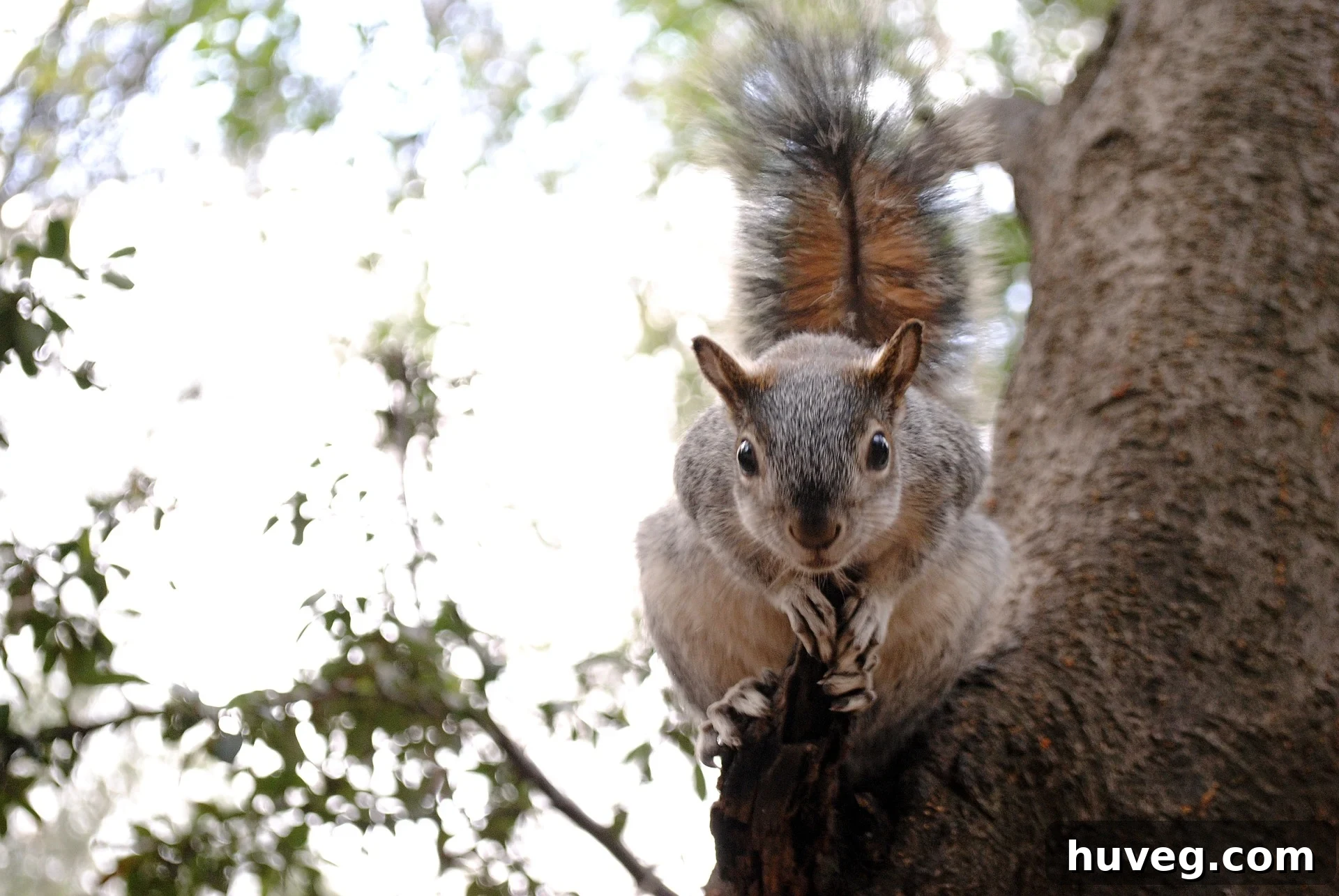
Dealing with uninvited guests in your attic can be one of the most frustrating experiences for a homeowner. While these bushy-tailed creatures might appear charming in a park, their presence indoors can quickly escalate into a full-blown nuisance, causing significant damage and unsettling your peace of mind. This comprehensive guide chronicles my personal journey through the challenging process of evicting a persistent family of squirrels from my attic, offering practical, humane, and DIY-friendly strategies that I learned along the way. Prepare for a detailed account of perseverance, clever tactics, and the ultimate victory against these determined little invaders.
My battle against the attic squirrels began, as it often does, with the unmistakable sound of scratching. For those unfamiliar with the auditory signatures of wildlife invading your home, let me assure you, there’s no mistaking it. The incessant gnawing, the hurried scampering directly over your head, and the rustling sounds are a clear signal that something has taken up residence. In my case, the primary bedroom served as the unfortunate auditory epicenter, ensuring that I couldn’t ignore the presence of my new, unwelcome tenants for a single minute.
The Nuisance and Dangers of Attic Squirrels
Beyond the irritating noise, attic squirrels pose several serious threats to your home and well-being. These rodents are notorious for their destructive chewing habits. They can gnaw through electrical wiring, creating significant fire hazards. Insulation, a critical component of your home’s energy efficiency, often becomes material for their nests, leading to costly damage and reduced thermal performance. Structural wood, PVC pipes, and even ductwork are not safe from their relentless teeth. Furthermore, squirrels can introduce parasites like fleas, ticks, and mites into your home, potentially affecting pets and family members. Their droppings and urine can also contaminate your attic space, leading to unpleasant odors and potential health risks. Early intervention is key to preventing extensive and costly repairs.
My resolve to remove the squirrels was firm, driven by both the disruption to my sleep and the potential for extensive damage. While my preference was always for a humane solution, avoiding harm to the animals, I was equally determined to find a cost-effective DIY approach rather than resorting to expensive professional services. The added challenge of a highly curious dog, unsettled by the sounds of intruders in his domain, only amplified the urgency of the situation. This journey would test my patience, but ultimately, lead to a squirrel-free home.
Round 1: Identifying the Entry Point and Initial Deterrence Attempts
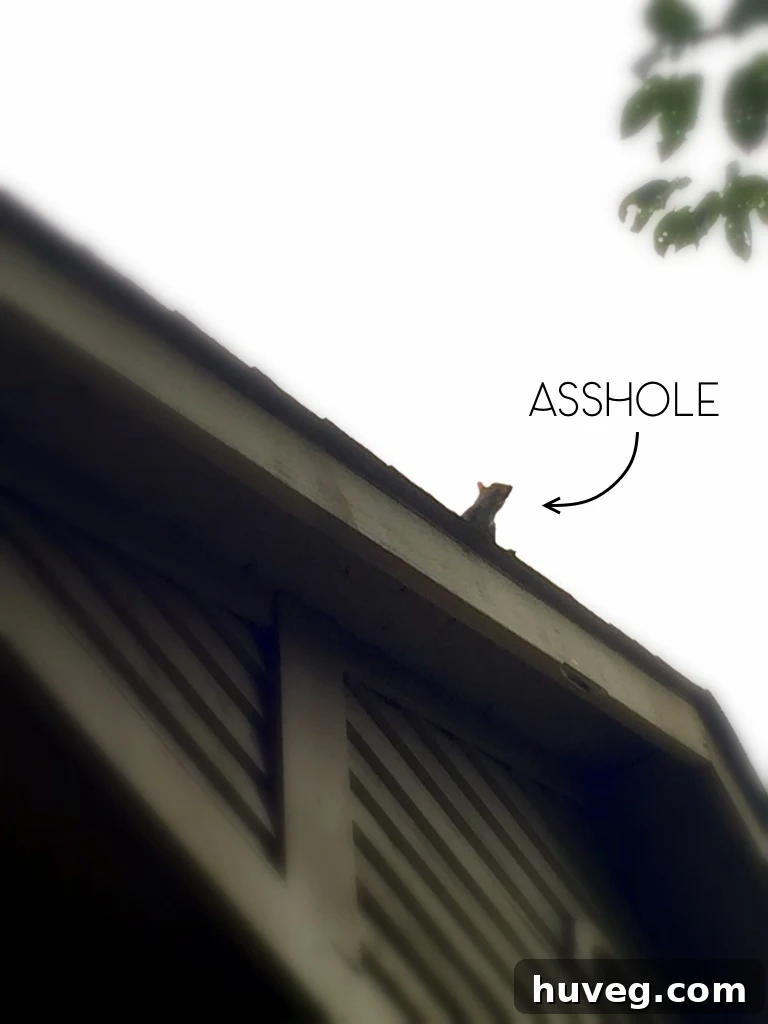
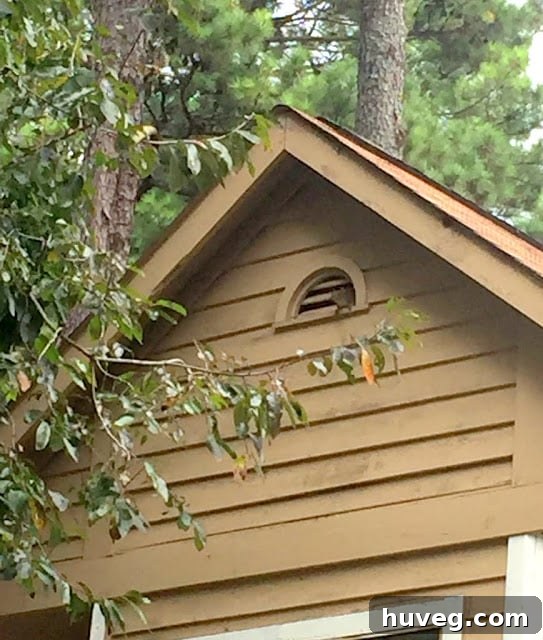
One evening, the distinct sounds of gnawing, scampering, and rustling confirmed my fears. Something had indeed breached the sanctity of my attic. A few days later, the culprit made a brazen appearance, casually perched in the louvered gable vent, almost as if surveying its new domain. This bold display left no doubt about the primary access point and ignited my mission to reclaim my space.
I quickly consulted with my father, a seasoned DIY enthusiast, who provided invaluable advice and lent me a live trap. Our initial strategy focused on a multi-pronged approach to effectively get rid of attic squirrels:
- Live Trapping: The primary goal was to humanely capture the squirrel and relocate it far from the property.
- Sealing Access: If trapping proved difficult, the alternative was to wait for the squirrel to leave for its daily foraging and then immediately seal its known entry point.
- Preventative Measures: Thoroughly inspecting and sealing all potential access points with durable, thick-gauge metal mesh to prevent future re-entry and squirrel nesting in the attic.
- Long-term Peace: Ultimately achieving a squirrel-free and secure attic, preventing future damage and disturbances.
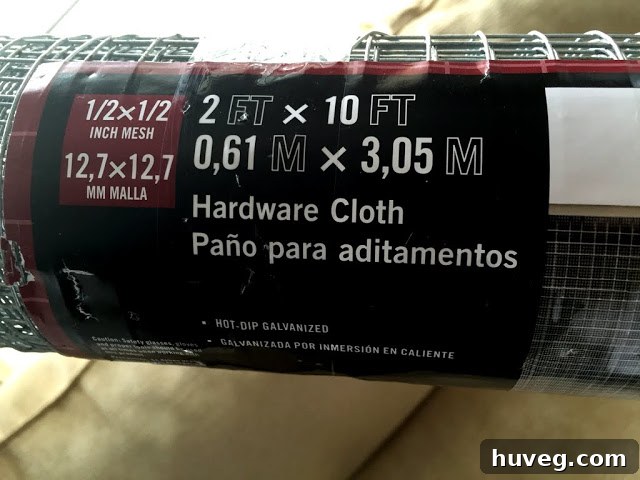
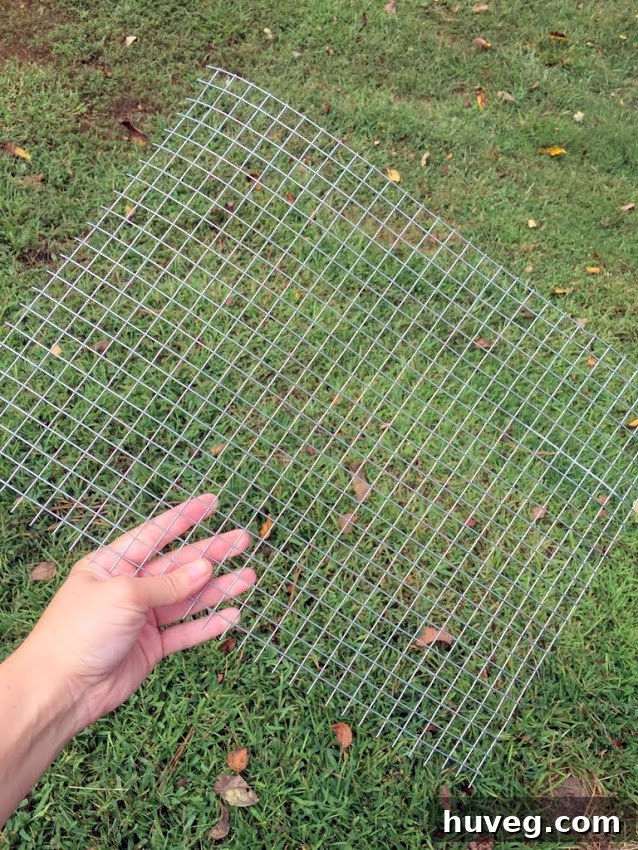
The urgency of the situation intensified with each passing night, the gnawing and scratching persisting directly above my bed. I knew direct action was required to remove squirrels from the attic. My first step was an investigative trip into the attic, followed by a visit to the local home improvement store. I acquired essential materials: robust metal hardware cloth, ideal for creating impenetrable barriers, and a specialized handheld staple gun with a front-facing trigger. This particular staple gun offered superior control in tight spaces compared to standard models, a crucial feature for the challenging work ahead, especially when pest proofing attic spaces.
Preparing the hardware cloth was a critical step in sealing attic entry points. Using a jewelry cutter and a wire stripper multi-tool (in lieu of tin snips, a testament to making do with available tools), I cut a manageable rectangular piece of mesh. This pre-cut section would be far easier to maneuver in the cramped attic than wrestling with an entire roll. I anticipated needing multiple pieces, so having plenty of material on hand was reassuring for this DIY squirrel removal project.
Armed with my tools, I embarked on the challenging ascent into the attic. Unlike previous, more accessible attic projects, this particular area above my primary bedroom, a gabled dormer, presented a unique obstacle course. Navigating the dimly lit, insulated space required careful foot placement on the joists to avoid a catastrophic fall through the drywall ceiling below. As anyone who has attempted attic repairs knows, falling through a ceiling is a homeowner’s nightmare, demanding meticulous attention to safety and structural awareness in attic pest control. Using a headlamp and wearing sturdy clothing are vital for attic safety for DIY projects.
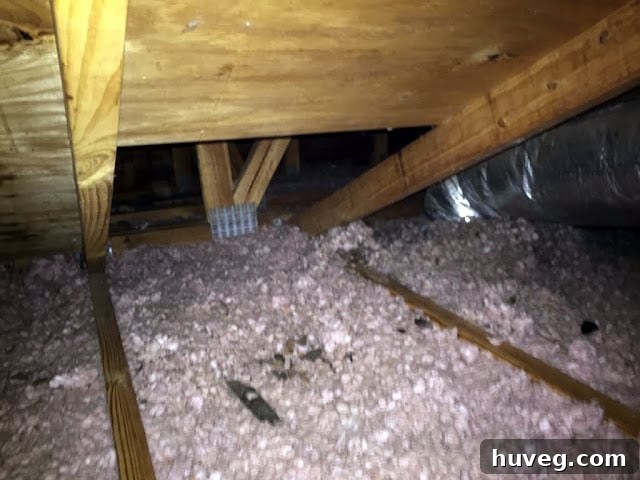
This narrow, often overlooked section of the attic, characterized by its low clearance and insulation, was precisely where the squirrels had established their rent-free residence. I strategically chose a time of day when I believed the adult squirrel would be out foraging, then cautiously maneuvered myself into the cramped space. Crawling on joists, contorting my body, and protecting my head from potential spiderwebs (a common attic inhabitant that always makes me shudder), I finally reached the suspected nesting area. Flexibility and a sense of humor are essential when performing wildlife control in an attic.
My initial intention was clear: inspect the area, staple the mesh over the vent opening, and complete the task. However, a closer look revealed a critical, unforeseen complication. The nest, clearly visible from a few feet away, housed not just one, but at least one baby squirrel, peacefully sleeping. This discovery immediately altered my plans. Removing the mother while her young were still vulnerable was not an option, both for ethical reasons and the practical impossibility of catching the babies without the mother’s presence. Defeated but informed, I carefully retreated from the attic, knowing this would be a multi-phase operation. Humane squirrel removal often requires adapting your strategy to protect young.
Round 2: Escalating Deterrents and the Surprise Confrontation
Repeated attempts to trap the mother squirrel proved fruitless; she consistently managed to access the bait without activating the trap. Even if successful, the challenge of removing the babies remained. Frustration mounted, prompting a shift in strategy towards squirrel deterrents. Online research suggested “squirrel repellent” sprays, often a blend of peppery spices and strong, unpleasant odors. While reviews were mixed regarding their efficacy, I was willing to explore any non-lethal option. I purchased a clearance bottle and positioned it in the attic for the next phase of my offensive against the attic squirrels.
Days later, after confirming the mother’s temporary absence, I re-entered the attic, armed with the spray and a plastic bowl containing ammonia-soaked rags. Ammonia is a known deterrent for squirrels due to its pungent, irritating odor, mimicking the scent of a predator’s urine. (A crucial safety note: Ammonia fumes can be harmful. Always use extreme caution, ensure good ventilation, and avoid direct inhalation. I kept the rags sealed until deployment.) This method aimed for humane squirrel removal by making the attic an undesirable nesting spot.
Navigating the cramped dormer opening once more, I anticipated an empty nest. Instead, I found the babies wide awake, huddled in a corner, visibly recoiling from my presence. To my surprise, they were not newborn, hairless kits, but rather weeks-old juveniles, almost fully grown. This was encouraging; older juveniles are more capable of fending for themselves and more likely to leave a nest when pressured. This stage presented a better opportunity for effective wildlife eviction.
Just as these observations registered, a new scratching sound emanated from another corner. My flashlight beam swung towards the gable vent opening, revealing the imposing figure of the mother squirrel, staring menacingly. She had been present the entire time, cleverly concealed! Her swift, darting movements towards her young, coupled with an aggressive posture, clearly communicated her protective fury. Despite her smaller size, the confined, dark space, and her maternal aggression made it clear that a direct confrontation was not advisable when trying to get rid of attic squirrels.
Reacting swiftly, I deployed the squirrel repellent spray liberally around the area and strategically tossed the ammonia-soaked rags. In my awkward position, I knew I needed to create an immediate deterrent. To further amplify my presence, I repeatedly slammed the heavy spray bottle against an attic joist, creating a loud, jarring noise. While bear-like tactics might not be optimal for squirrels, my goal was to instill fear and create an overwhelming sensory assault. I then made a hasty but careful retreat, hoping my efforts had finally convinced the family to evacuate the attic.
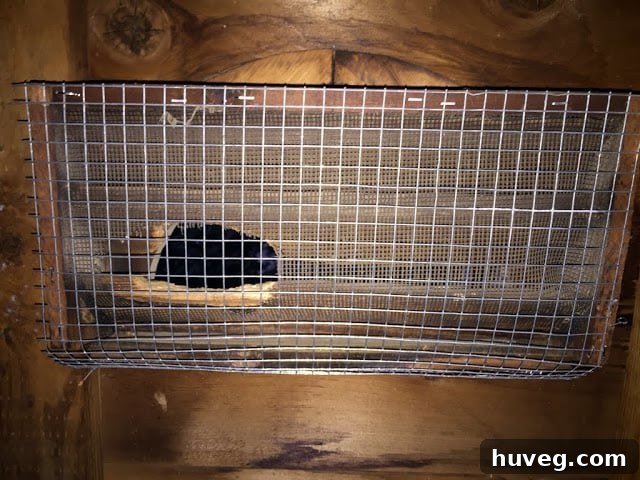
The next day, with the ammonia smell quickly dissipating, I cautiously re-entered the attic. To my immense relief, the nest was empty! No mama, no babies! Victory at last! I promptly used the hardware cloth and staple gun to securely seal the opening in the gable vent, ensuring no creature could enter or exit through that point again. While the exterior would require cosmetic repairs, the immediate threat of re-entry was neutralized, marking a successful step in preventing squirrels in the attic.
Round 3: The Relocation and the Fogger Solution
My celebration was short-lived. The very next day, familiar sounds echoed through the house, but with a disturbing twist: the mother squirrel was attempting to *leave* the attic, indicating she had found a new, internal nesting site. My “successful eviction” was merely a change of address! This time, she chose the chimney as her new sanctuary. While my meticulously sealed gable vent held firm against her attempts to re-enter, the fact that she had simply moved within the house was a profound setback. This demonstrated the immense challenge of squirrel removal from an attic.
She eventually forced her way out through another vulnerable spot along the dormer, creating yet another hole. This meant I now had two areas to address: the new nesting location (fortunately, more accessible than the previous one) and the newly created exit point. Back to the online forums I went, seeking a truly effective, non-lethal solution. The consensus pointed towards an unexpected hero: bug foggers.
While not explicitly marketed for squirrel eviction, some homeowners reported success using insect foggers for general attic maintenance. The fumes, while designed for insects, create an intensely unpleasant environment for larger pests like squirrels, compelling them to leave. An additional benefit, which I found particularly appealing, was the elimination of fleas. Squirrels are notorious carriers of fleas, and while my dog was on monthly preventative treatment, eradicating any potential infestation in the attic was a significant win-win for home pest control. I carefully selected a fogger that was safe for homes with pilot lights, minimizing risks. Prior to deployment, I sealed all air conditioning vents and turned off the AC system, then sealed the attic access point as thoroughly as possible. My dog, Charlie, and I spent the day with my parents, returning home to a quiet house, hoping this strategy would prevent squirrels in the attic from returning.
The thought of potentially killing the squirrels rather than just evicting them lingered, causing a few anxious days imagining a grim scavenger hunt for deceased rodents within my walls. However, relief arrived in the form of renewed activity: I heard the mother squirrel again, but this time, her efforts were focused on finding a way *back into* the attic, not out. The fogger had worked to evict her!
I had mistakenly believed that once evicted, the saga would end. A few repairs, and peace would be restored. But the tenacity of this particular squirrel proved that this was far from over. Attic squirrel damage and persistence are often underestimated.
Round 4: The Persistent Return
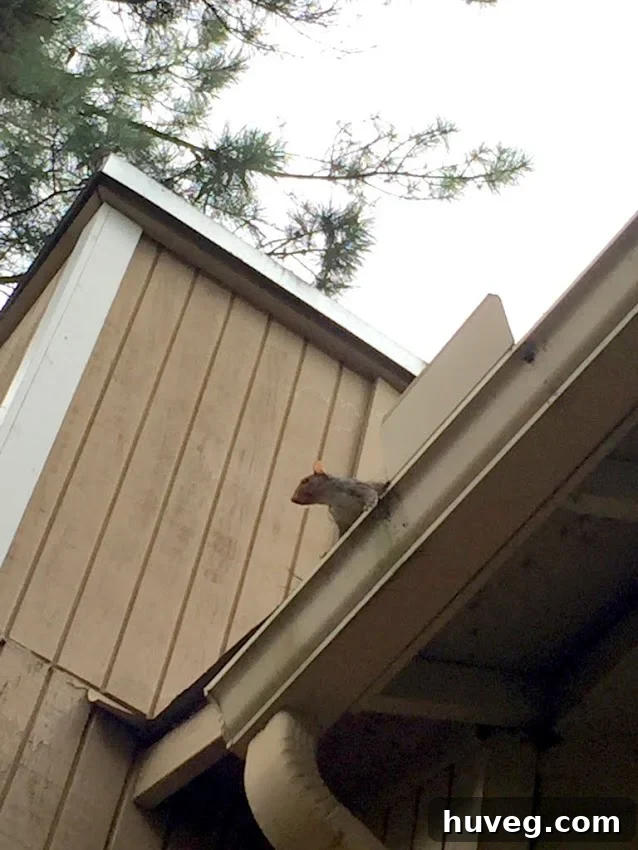
Apparently, an angry squirrel has a distinctive way of expressing its displeasure. Her persistent attempts to regain entry, often with a baby in tow (whether carried or clinging to her, I couldn’t tell), were accompanied by infuriated chirps and gnawing at new spots along my roofline – areas I had recently paid to have repaired! My patience wore thin. I resorted to chucking pine cones in her direction, hoping to deter her. This routine repeated itself for hours that morning, each attempt further agitating both me and Charlie, my dog. She would even sit on the roof, scolding me with furious chirps, clearly incensed by my audacity in removing her from “her” home. This phase truly highlighted the challenges of wildlife control attic issues.
Round 5: The Bold Squirrel-Napping
By this point, my patience had completely evaporated. For several consecutive days, the cycle continued: scratching, damage, pine cones, angry chirps, and an endless standoff. There was a noticeable increase in urgency, perhaps due to a new hawk circling the area, making her attempts even more desperate to find a safe haven for her young. On what I declared would be the final day of this ordeal, she began her usual destructive gnawing. However, in between attempts, she made a critical error: she dropped one of her babies, presumably for safekeeping, at the very base of my chimney.
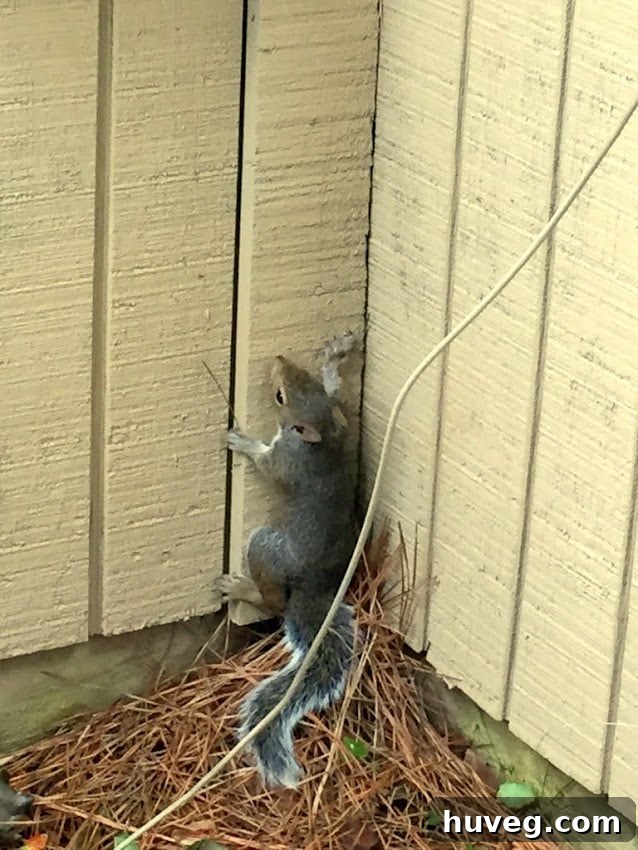
Seizing this unexpected opportunity, I rushed inside, grabbed a shoebox, and cautiously scooped up the baby squirrel, using the lid to gently guide it in. With the box secured, I marched into the backyard, purposefully placing it a significant distance from the house. My intention was not to permanently separate them but to create a critical distraction. The mother squirrel, ever vigilant, followed my every move, carefully observing where I left her offspring. This momentary diversion allowed me to swiftly return to the house and install metal mesh over the new entry point she had been working on. Once the repair was complete, I returned to the shoebox, carefully emptied its contents over the fence, and watched as the relieved mother quickly reunited with her baby, leading it away. This unconventional method of humane squirrel removal proved highly effective in sealing the final access point.
Round 6: The Ultimate Showdown and Final Victory
She returned later that afternoon, but I was diligently working in the garden, providing a constant, frustrating human presence. She leaped from the roof to an overhanging tree branch in the front yard and back again, her frustration palpable. (I made a mental note to trim those branches soon, eliminating this easy access route and further preventing squirrels in the attic.) The more she chirped aggressively, the more I stared her down, a staring contest born of pure exasperation. This entire experience, I realized, had truly tested the limits of my sanity.
Then, something extraordinary happened. She descended the tree in a series of short hops, chirping defiantly, each time coming closer to the base. She stopped just a few feet from me. As she moved, I noticed a small, craggy scar near her tail where a patch of fur was missing. This squirrel had clearly seen some battles and was a formidable adversary.
My immediate thought was a mixture of disbelief and determination: Was I about to engage in a physical confrontation with a battle-hardened squirrel? Backing down at this moment felt like an admission of defeat, ensuring a continuation of the endless cycle of damage, chasing, and repairs. I was utterly done. I wanted this ordeal to end, decisively. This was the final stand in my DIY squirrel removal journey.
In a moment of sheer, unadulterated frustration, I looked directly at the defiant rodent, threw my arms up, and shouted, with absolute seriousness: “You wanna GO? Let’s GO!”
To any casual observer, I must have looked like a complete lunatic, arguing vehemently with a tree (as the squirrel would have been invisible from their vantage point). In that surreal moment, I even pondered defensive strategies should she lunge. My sanity had indeed taken a sabbatical, but I was not about to lose this final staring contest.
Just as suddenly as it began, the squirrel seemed to reassess the situation. Perhaps I appeared larger, or my unexpected outburst was simply too much. She scurried back up the tree, leaped to the roofline, and scampered off, her parting chirps undoubtedly conveying something akin to, “You’re not worth my time!”
And that was the end of it. A week later, my dad helped me trim the overhanging tree branches, effectively eliminating a major access point to the roof and attic. While cosmetic exterior repairs remain, the installed mesh barriers ensure that those entry points are secured against future intrusions. The mother squirrel and her babies have not returned, bringing a definitive close to this intense chapter of wildlife control and teaching me valuable lessons on how to remove squirrels from an attic.
However, as one problem ends, another often begins. My attic is now squirrel-free, but it seems the woodpeckers have decided to start their own campaign of annoyance on the house. The life of a homeowner is never truly quiet.
UPDATE: The saga continued! Read what happened next here.