Dad’s Best Plumbing Hacks

There are certain rites of passage every homeowner experiences, and facing unexpected plumbing issues is undeniably one of them. Just recently, I found myself navigating this challenging terrain when my new upstairs toilet decided to stage a protest with a persistent blockage, closely followed by an annoying leak from the sink in the vanity. Given that this guest bathroom serves as the *only* fully functional bathroom in our home – our primary bath remains perpetually unfinished, and the downstairs powder room lacks a tub – my frustration levels were understandably sky-high. The thought of being so close to a complete, usable space, only to have it compromised by plumbing woes, was truly disheartening. Plumbing, I must confess, is far from my expertise, and the mere thought of tackling it can be quite intimidating.
Like many homeowners, I often turn to those with more experience for guidance. For me, that reliable source of wisdom is my Dad. A quick call to him unveiled a treasure trove of practical, insightful lessons I hadn’t yet acquired about handling common household plumbing problems. His advice wasn’t just about fixing the immediate issue; it was about understanding the underlying principles and preventative measures. These aren’t just generic tips; they are tried-and-true strategies that have saved me both time and money. So, if you’re looking to demystify some basic plumbing repairs and empower yourself with DIY skills, here are some invaluable plumbing tips straight from Dad:
Essential Plumbing Wisdom: Troubleshooting and Repairing Common Issues
1. The Mighty Thread Seal Tape: Your Best Friend for Metal-on-Metal Connections
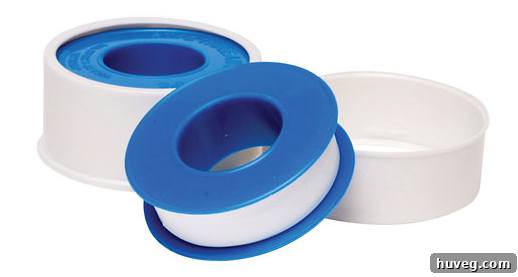
One of the foundational rules of plumbing, according to Dad, revolves around the proper sealing of connections. He firmly states: “If it’s metal on metal, you always need thread seal tape.” This seemingly simple piece of advice is crucial for preventing leaks and ensuring the longevity of your plumbing fixtures. Whether you’re attaching a new showerhead, connecting a pipe fitting, or dealing with any threaded metal joint, thread seal tape (also commonly known as Teflon tape or PTFE tape) is indispensable.
Why is it so important? Thread seal tape works in multiple ways. Firstly, it acts as a lubricant, allowing threaded connections to be tightened more easily and securely without galling the metal. Secondly, and most importantly, it fills the tiny gaps and imperfections in the threads that water could otherwise seep through, creating a watertight and airtight seal. It also helps prevent galvanic corrosion between dissimilar metals. Dad always emphasizes applying it correctly: wrap the tape clockwise around the threads (in the same direction the fitting will be tightened) for 3-5 layers, ensuring it’s snug but not overly thick. This creates a robust barrier against leaks.
On the flip side, Dad also clarifies that this tape is generally not needed for plastic-on-plastic joints, such as those commonly found under a sink in your vanity. Plastic plumbing typically relies on compression fittings, rubber gaskets, or O-rings to create a seal, which are designed to function effectively without the addition of thread tape. Attempting to use tape on these connections can sometimes even be counterproductive, hindering the proper seating of the O-ring or gasket and potentially causing, rather than preventing, a leak. Knowing when and where to use thread seal tape is a fundamental skill that distinguishes a successful DIY plumbing job from a frustrating one.
2. The Power of Your Hands: Fixing Leaks Under the Sink
Many homeowners immediately reach for a wrench at the first sign of a leak, but Dad often advises a simpler, less aggressive approach for leaks under the sink. “Leaks under the sink can often be fixed by simply hand-tightening the plumbing pieces,” he instructs. This tip highlights the fact that many minor leaks are not due to broken parts, but merely connections that have vibrated loose over time or weren’t tightened sufficiently during installation.
The key to effective hand-tightening is precision. Dad’s technique involves holding one plumbing piece steady with one hand while gently tightening the adjacent piece with your other hand. This ensures that you are only manipulating the specific joint that needs attention, preventing other connections from accidentally loosening further. This method is particularly useful for slip-nut connections found in drain assemblies, where a slight adjustment can make all the difference. Not only is this method less likely to cause damage than using tools, but it also gives you an immediate feel for whether the connection is truly secure. It’s a quick, free, and often surprisingly effective first step in troubleshooting a drip.
3. Navigating the Common Sink Basin-to-Pipe Leak: A Delicate Balance of Tightening
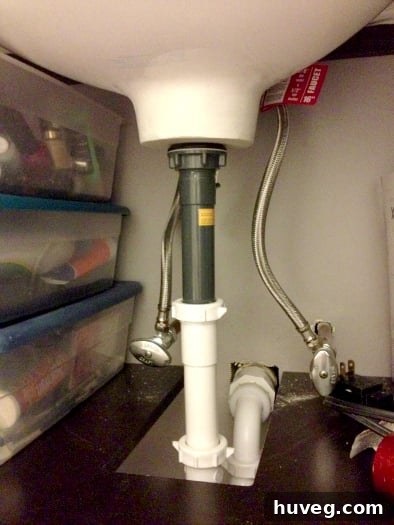
Perhaps one of the most common and frustrating leaks is found where the sink basin meets the first pipe directly underneath your vanity. Dad notes, “A common cause for this is inadvertently bumping the pipe.” Since vanity cabinets are often used to store various items, it’s all too easy to knock these sensitive connections out of alignment or loosen them without even realizing it. I’ve personally experienced this twice with both sinks I’ve installed, proving just how prevalent this issue can be.
When addressing this specific leak, Dad’s advice is paramount: “If you are hand-tightening, you should be okay, but if you are using a tool, you must be very careful not to overtighten.” This is a critical distinction. The seal at this junction typically relies on a rubber washer, which is highly effective at forming a watertight seal when compressed just right. However, applying excessive force with a tool can easily damage this rubber component. Overtightening will cause the rubber part to crack, deform, or even break entirely. Once the integrity of that rubber washer is compromised, no amount of subsequent tightening, with or without tools, will fix the leak. At that point, you’re left with no option but to buy a replacement washer or drain assembly and install it, just as I had to do with my first sink.
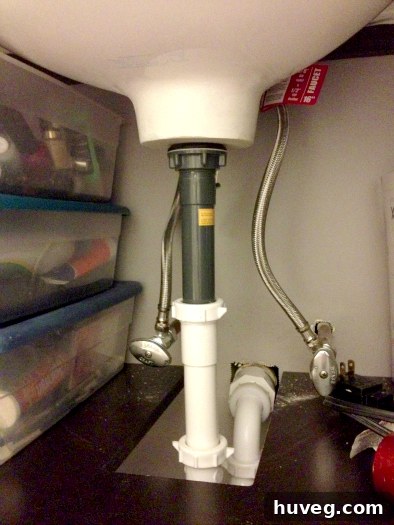
During my most recent incident, I was fortunate. The leak had only been hand-tightened originally, meaning the rubber washer was likely still intact. Following Dad’s advice, I simply applied a bit more hand pressure to the pipe that seemed to be the source of the drip. To my genuine surprise, the piece was quite loose – it took another half turn or so to properly tighten things up before the steady drip from the sink finally ceased. This experience underscored the importance of understanding the mechanics of these connections and exercising caution. Always start with hand-tightening, and if a tool is absolutely necessary, use it with extreme care and sensitivity to avoid costly damage to the rubber sealing components.
4. Invest in a Toilet Auger: The Ultimate Weapon Against Stubborn Clogs
A clogged toilet is universally loathed. Regardless of the cause (and yes, we can all imagine the unpleasant realities), it’s a plumbing nightmare that plungers often fail to resolve. Dad is a staunch advocate for every homeowner owning a toilet or “closet” auger. He even suggests that with the prevalence of low-flow toilets designed to conserve water, clogs might be more common now than in the past, making an auger an even more necessary tool in your arsenal.
What is a toilet auger? Essentially, it’s a specialized plumbing tool consisting of a long, flexible metal cable (often with a barbed or corkscrew-like end) housed within a protective shaft, with a crank handle on one end. The protective shaft helps prevent damage to the porcelain bowl while the flexible cable can be snaked through the toilet trap and into the drainpipe, effectively loosening or retrieving stubborn clogs that a plunger simply can’t dislodge. A quality auger typically costs less than $50, an investment that often pays for itself with its very first use by saving you the significant expense of calling a professional plumber.
Dad highly recommends watching an instructional video to understand its proper use, such as this one, which demonstrates the same brand I own. It explains very clearly how to maneuver the auger to effectively clear a toilet blockage. However, he also offers a critical word of caution: “When using this, be careful to stick that barbed end into the toilet without touching the sides of the bottom of the bowl.” Think of it like playing a delicate game of “Operation”; you want to gently guide the barbed end into the bottom-most part of the toilet’s trap without scraping the porcelain. The metal barbs can easily scratch the ceramic, leaving you with an unsightly and permanent mark on your toilet bowl – a functional toilet, yes, but one that’s aesthetically compromised.
Furthermore, as the video also advises, it’s crucial not to allow too much slack in the auger’s cable. If the flexible hose doubles up on itself or kinks inside the pipe, you will find yourself in an even worse predicament. A kinked auger can get stuck, and at that point, your DIY efforts will have failed, and you will need a plumber to extract it, leading to a much more expensive repair bill than the original clog would have incurred. Always maintain firm tension on the cable as you feed and retrieve it, ensuring it follows the natural curvature of the drain pipe.
Empowering Your Home Maintenance Journey
Taking on minor plumbing repairs yourself can be incredibly empowering and financially rewarding. The frustrations of a leaky sink or a stubborn toilet clog no longer need to translate into immediate calls to expensive professionals. With a few simple tools and the practical wisdom shared by experienced hands like Dad’s, you can confidently address many common household plumbing issues.
From understanding the critical role of thread seal tape in metal connections to mastering the art of careful tightening for sink leaks, and from equipping yourself with a toilet auger to knowing its proper, gentle application – these tips are designed to build your confidence and expand your home maintenance skillset. My recent experiences only reaffirmed the immense value of this advice, transforming what felt like insurmountable problems into manageable tasks.
Do you have any of your own invaluable plumbing tips to share with fellow homeowners? Or perhaps you just want to extend a well-deserved “thanks, Sarah’s dad!” for these practical insights? Feel free to share your thoughts and experiences in the comments below!