My Foolproof Way to Pick Paint Colors

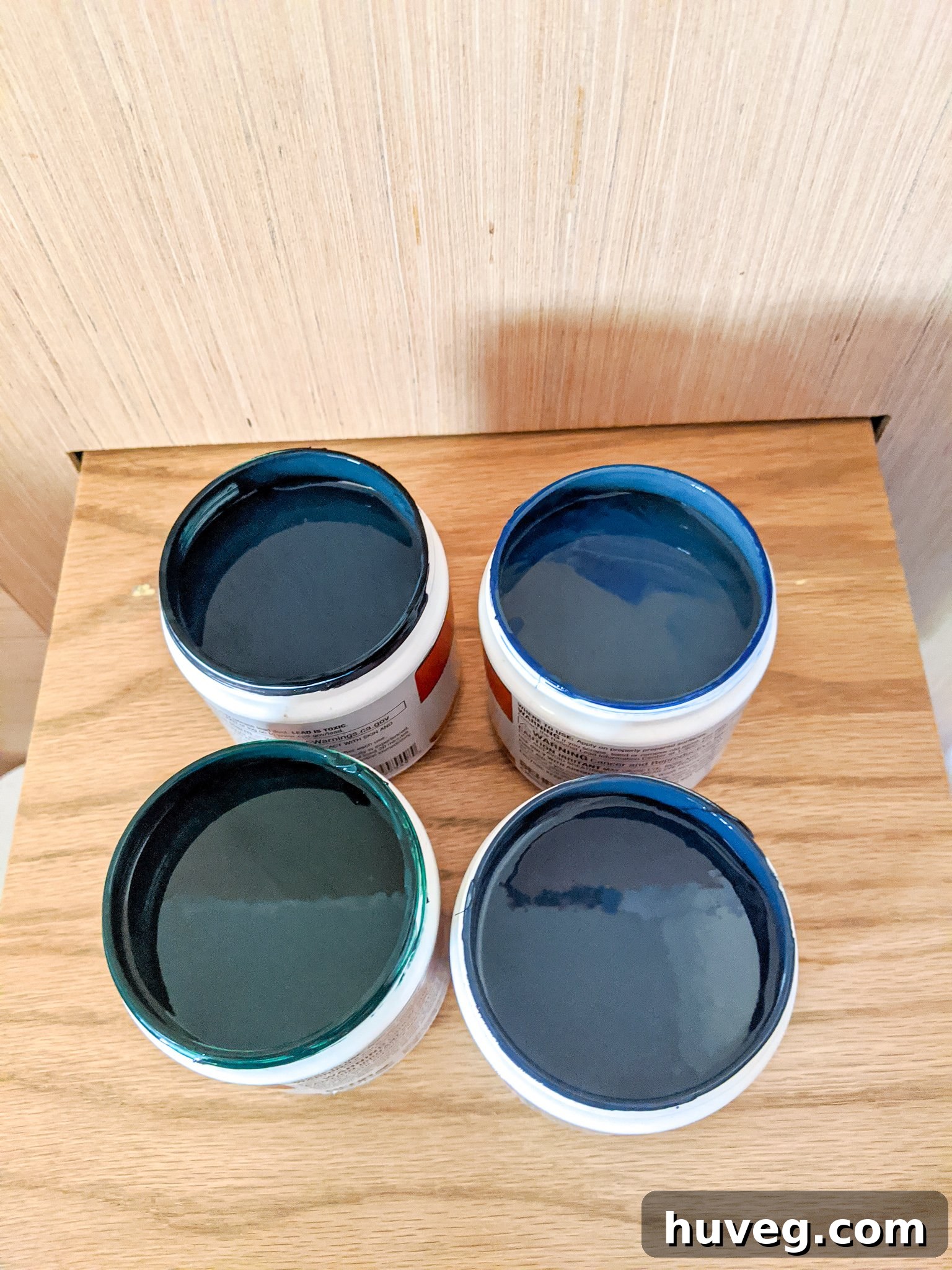
Choosing the perfect paint color for your home can feel like an overwhelming odyssey. With an endless spectrum of shades and countless brands vying for your attention, it’s easy to get lost in a cycle of endless sampling and decision fatigue. What if there was a smarter, more efficient way to navigate this vibrant labyrinth? Today, I’m excited to share a truly game-changing “nerdy tip” that has personally saved me countless hours and put an end to the frustrating paint sampling merry-go-round.
Every home decor blogger or interior designer on Instagram seems to possess at least one secret paint hack. For years, I believed I had a solid collection of useful painting tips, but I never thought I had a truly “secret-worthy” insight. Most of what I knew felt like common knowledge. That was until I shared my favorite website for analyzing paint colors with a friend, and her reaction—she said it absolutely blew her mind—made me realize this knowledge might not be as widespread as I thought. So, in the spirit of sharing invaluable insights, now you too will be equipped with this powerful tool, ready to impress your friends with your newfound paint expertise!
Are you ready to transform your paint selection process? Then it’s time to discover one of my absolute favorite design websites: Encycolorpedia. If you’re already familiar with the genius of this site for paint, feel free to skip ahead to my next post (which will delve into the exciting nursery design). However, I encourage you to read on, because even seasoned users might not be leveraging Encycolorpedia in all the fun, geeky, and highly effective ways I’m about to reveal.
I recently shared much of this information through a series of stories on Instagram. While I won’t re-embed the video here, the core message remains: this tool is a time-saver. If you prefer reading over watching, or if you’re unable to access video content, rest assured that this post covers all the intricate details and actionable advice. We’re about to dive deep into the world of color, so fair warning: things are about to get delightfully nerdy! (And just for transparency, this isn’t a sponsored post – though there’s certainly no shame in those!)
How Encycolorpedia Streamlines Your Paint Color Decisions
At first glance, Encycolorpedia appears to be a straightforward color reference tool. I initially started using it years ago for various web design services. It allows you to input any 6-digit hexadecimal color code (e.g., #000000 for black) into its search box to retrieve a wealth of information, which is incredibly useful for web-safe color combinations or extracting colors from a logo. While I won’t delve deeply into the intricacies of hex codes today, suffice it to say they represent a vast palette of 16 million possible colors!
Here’s where it becomes invaluable for paint selection: you can also type in the exact name of a paint color from any major brand. Encycolorpedia will instantly match it to its corresponding hex code, unlocking a treasure trove of useful data. Let’s explore this with an example I’ve used frequently: Sherwin-Williams Cascades.
For several months, I found myself on a quest for the perfect paint color for an accent wall in our bedroom. With so many captivating options available across all the major paint brands, making a definitive choice felt almost impossible. I envisioned a shade that was a harmonious blend of green and blue, deep but not so dark that it would absorb all the room’s natural light. It also needed a subtle touch of gray to temper its vibrancy, adding character and depth without being overtly bold. Essentially, I was searching for a complex, moody navy with a hint of green, or perhaps the reverse. As you can imagine, countless paint samples from various brands seemed to fit this general description, yet each differed subtly, creating an overwhelming sense of choice. The critical question remained: which one was truly right for my space?
Breaking Free from the Traditional Paint-Picking Pattern
My traditional approach to paint selection usually involved a multi-step process: 1) extensive online research for inspiration, 2) compiling a list of promising recommendations (often without brand loyalty at this stage), and 3) searching for real-life images of these colors in actual homes, thanks to the invaluable contributions of bloggers and online communities. From this curated list, I would then narrow it down to a manageable 3-4 colors for physical sampling. Finally, I’d apply these samples to the wall and painstakingly select my favorite.
This was precisely the pattern I followed for my bedroom project. I reached the penultimate stage, with samples already adorning my wall, almost ready to make the final choice. That’s when, while scrolling through my Instagram feed, the exact color I had been dreaming of unexpectedly appeared in a follower’s post. The catch? It was a color I hadn’t even considered in my initial research.
Overcoming Analysis Paralysis with Data-Driven Choices
View this post on Instagram
That wall color looked absolutely stunning in Tiffany’s home, didn’t it? But a crucial question lingered: would it evoke the same magic in my space? And how would it truly compare to the samples I already had on my wall? As I’ve consistently emphasized, it is absolutely essential to test out a paint color in your own environment. A shade that shines brilliantly in someone else’s home, under their unique lighting conditions, might appear entirely different in yours. For instance, I used the same navy paint in both my outdoor shed and my home office, and due to varying light exposure, they look like two distinct colors. I’ve even fallen for “the perfect white paint” that dominates every top-5 list on Pinterest, only to find it appearing dull and yellowed in my own home. These discrepancies are simply part of the paint selection journey!
Under normal circumstances, an extra trip to the store for another paint sample wouldn’t be a significant hurdle. However, navigating pregnancy during a global pandemic amplified the perceived risks of even “quick errands.” Even before these unique circumstances, I never relished a fourth trip to the same store in a single week (because let’s be honest, going to the store for just one item is rarely my *first* trip of the week!). Without a reliable tool, I could easily get trapped in an endless cycle of indecision, always convinced that the “perfect” color was still just beyond my grasp.
Leveraging Data to Compare and Refine Existing Samples
Instead of succumbing to indecisiveness yet again, I turned to Encycolorpedia. I simply typed in the name of the intriguing new color I discovered. The site immediately provided a detailed breakdown of its underlying components – the precise amount of green, blue, its saturation level, lightness, and more. But the true magic lies further down the page: Encycolorpedia displays a list of similar colors from other brands, offering near-identical matches (often marked with a star ★) and close alternatives. This visual comparison makes it incredibly easy to discern subtle differences without needing physical samples.
The depth of this data is remarkably helpful! In my situation with the bedroom wall, Encycolorpedia allowed me to quickly see that one of the four samples I already had on my wall was sufficiently close to the new Instagram-inspired color. By comparing their data, I could anticipate whether the new shade would be more green or blue, lighter or darker, without ever leaving my home. Since I had already tested and rejected “Salamander” for being too dark for the room, I could confidently infer that Sherwin-Williams Cascades, while lighter, likely wouldn’t be light enough to achieve the true color vision I had. This insight saved me a wasted trip and eliminated further guesswork. Furthermore, for those with existing color decks at home, Encycolorpedia often points to similar colors for which you might already possess swatches, making comparisons even more immediate.
Preventing Overly Intense Paint Mistakes with Precision
Another powerful application of Encycolorpedia is in fine-tuning a chosen color to avoid common painting pitfalls. I believe I first picked up this valuable tip from Young House Love: a vivid color that looks absolutely perfect on a small paint swatch can sometimes become overwhelmingly intense when applied to an entire room. This phenomenon often leads to disappointment and the need for a costly repaint. The wise approach is often to slightly desaturate the color, leaning a little grayer or incorporating a touch more beige. This “step-down” method is particularly effective if you’re not accustomed to selecting brighter, bolder paint colors. Encycolorpedia empowers you to execute this strategy flawlessly.
The site features dedicated sections for increasing saturation, decreasing it, lightening, darkening, and more. You can experiment in any direction, making minute or significant adjustments, and then instantly find the closest commercially available paint color to match your refined shade, across virtually any brand. This functionality ensures that you achieve the exact mood and intensity you desire for your space, eliminating the guesswork and the potential for costly mistakes.
Effortlessly Finding Color Matches for Your Preferred Brands
Do you have a preferred paint brand or a specific line of paint that you trust for its quality, durability, or ease of application? Encycolorpedia makes it incredibly simple to stick with your favorites while still exploring a world of colors. If you find a color you love from one brand but wish to use paint from another (perhaps for convenience, cost, or existing loyalty), this tool is indispensable. Rather than relying on potentially inaccurate in-store color matching machines, which can sometimes miss the subtle undertones, you can immediately find the closest equivalent from your preferred brand with confidence. It’s worth noting that most major home improvement stores now have extensive databases for matching popular paint retailers, so often you won’t even need a physical sample in hand. However, for brand new color releases, you might occasionally need to bring a swatch if it hasn’t yet entered their system. Ultimately, the best method is the one that works most effectively for you, and Encycolorpedia provides a robust solution for nearly every scenario.
Unlocking Advanced Color Accents and Palettes
But wait… there’s even more to Encycolorpedia than just matching individual shades! This tool truly shines when you need to explore complex color relationships. Are you envisioning a sophisticated monochromatic scale for a gradient effect, perhaps on a feature wall or a piece of furniture? Or maybe you’re trying to identify the perfect complementary colors to create a striking contrast? How about finding the exact opposite shade on the color wheel to introduce dynamic tension? Encycolorpedia can effortlessly perform all these advanced color tasks, simplifying what would otherwise be a tedious and uncertain process.
While numerous paint apps are available for download that promise to generate color palettes, these are often restricted to a single paint brand. Nearly every major paint manufacturer has its own proprietary app, but they rarely offer robust cross-brand matching capabilities for similar shades. This limitation is precisely why I advocate so strongly for Encycolorpedia. Its brand-agnostic approach provides unparalleled flexibility and accuracy.
(P.S. For those interested in web design or graphic art, some of my personal favorite sites for crafting inspiring color palettes include Design Seeds and Coolors. The beauty is, you can generate hex codes on these sites and then seamlessly use Encycolorpedia to find corresponding paint colors, opening up another exciting avenue for custom color creation.)
Strategic Branding for DIY Enthusiasts and Small Businesses
This final application of Encycolorpedia might not immediately appeal to every homeowner, but it offers immense value for small businesses, creative entrepreneurs, and DIYers looking to professionalize their spaces. As I plan the finishing touches for my garage workshop, I intend to utilize this site in a unique, inverse manner. To establish a cohesive brand identity for my DIY video productions, I plan to take the specific color codes from my existing logo and use Encycolorpedia to find exact paint matches. This will allow me to paint various elements around the room—storage areas, doors, shelving, and other accent pieces—to perfectly align with my brand colors. In this scenario, the hex codes serve as the starting point, and the ideal paint colors are generated from that precise digital foundation. It’s an ingenious way to bring digital branding into the physical world.
In essence, this is how I leverage Encycolorpedia, one of my most cherished online resources, to make informed, efficient, and ultimately satisfying paint color decisions. Now, armed with this “nerdy but neat” secret, you can too! I truly hope this guide helps you navigate your next painting project with confidence and creativity. Stay tuned for more design insights, as I’ve just finalized the nursery mood board this week, and that post is coming up next! I’m still weighing whether or not to reveal the baby’s gender in that upcoming reveal, so keep an eye out!