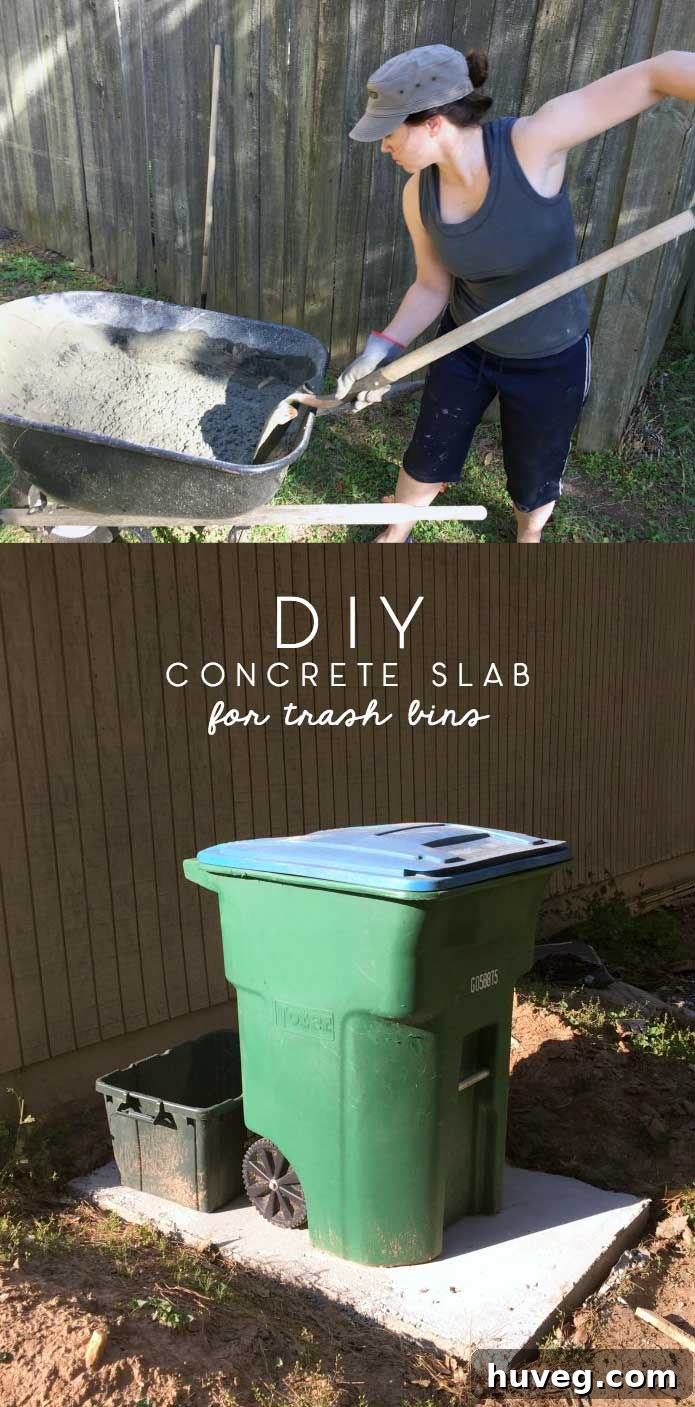
Pour Your Own Small Concrete Slab


This past weekend, I successfully completed a new DIY concrete slab project, designed to provide a discreet and functional space for my city’s trash and recycling bins, effectively enhancing my home’s curb appeal. In this comprehensive guide, I’ll walk you through the entire process, step by step, sharing insights and tips I learned along the way!
Like many homeowners, I maintain a mental list of ongoing projects, each vying for attention and prioritization. These projects often fall into several key categories:
- Financial Imperatives: Projects driven by economic considerations, such as avoiding opportunity costs, securing sponsorships, or directly generating income.
- Sanity Savers: Tasks that, if left undone, create visual clutter or functional annoyances that make me “twitch.”
- Long-Standing “Slacker Projects”: Those items that have lingered on my to-do list for far too long, demanding completion. (See my full list of slacker projects here)
- Creative Distractions: New projects undertaken to momentarily escape the frustration or challenges of the first three categories, often a therapeutic response to a setback.

The endeavor to “lay a concrete slab for my trash bins to remove them from plain sight in the driveway” perfectly encapsulates several of these categories. The bright green trash and recycling bins sitting prominently in front of the garage door were a constant eyesore, severely detracting from the overall aesthetic. Given the numerous exterior enhancements I’ve made specifically to boost my home’s curb appeal, allowing the trash bins to remain exposed was no longer an option. This project was a critical step in achieving a more polished and inviting exterior.
While I considered alternative solutions – such as relocating them behind my (now-repaired) backyard fence or storing them in the garage – years of ingrained habit prevented me from consistently implementing these. Despite soliciting new ideas from readers last spring, I continually reverted to the path of least resistance. The garage, for instance, wasn’t a viable long-term solution, especially considering the intense Georgia heat and its effect on outdoor trash bins. Furthermore, the limited square footage in a single-car garage, particularly for a prolific DIYer like myself, meant space was at a premium.
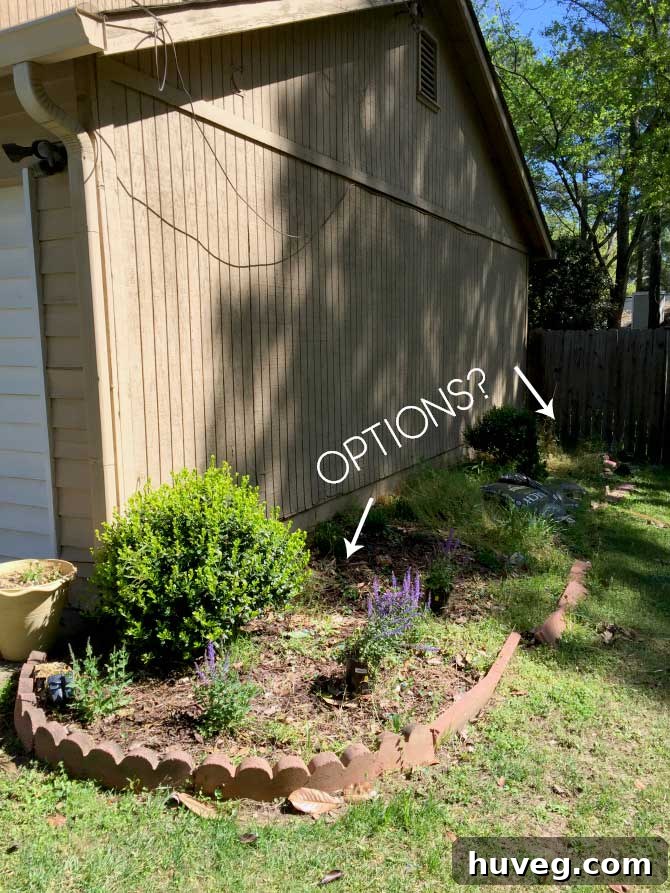
Ultimately, the side of the house, coupled with a planned wood screen, emerged as the ideal location. This solution satisfied both my desire to conceal the bins and my reluctance to drag them across the lawn or integrate them into my backyard landscaping plans. To bring this vision to fruition, a small, level surface was essential. This project also presented a perfect opportunity to refine my concrete slab-making skills, which would prove invaluable for a larger shed construction planned for the backyard later.
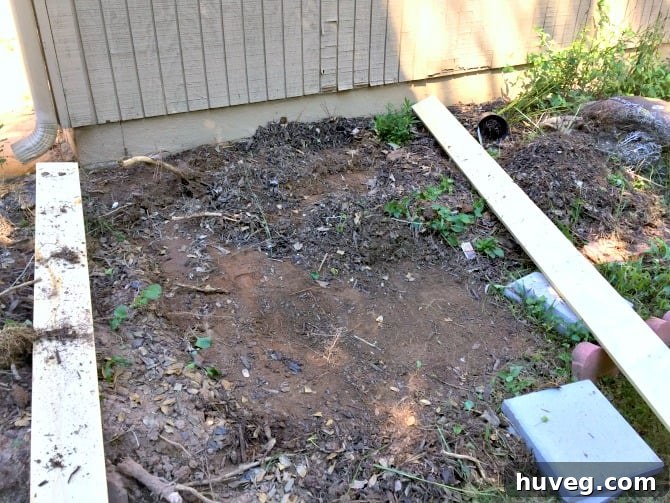
How to Form a Concrete Slab for Your Outdoor Trash Bin Enclosure
Last autumn, I initiated the groundwork for this project. I excavated the designated area, constructed the wooden frame, ensured it was level, and filled it with pea gravel. However, higher-priority projects and the onset of winter weather led to a temporary postponement. With warmer temperatures now here, I was eager to finalize this long-overdue task!
For those who may not have seen my initial post, I’ll begin this guide from the very start, providing a comprehensive list of everything you’ll need.
Recommended Tools & Supplies for Your DIY Concrete Slab
Before embarking on your concrete slab project, gather these essential tools and supplies:
- Lumber for Formwork: Scrap 1×4 or 2×4 boards, cut to the desired length for your slab’s perimeter. These will create the mold for your concrete.
- Wood Stakes: Used to secure your formwork in place, preventing it from bowing under the weight of the concrete. You can also DIY these from scrap wood.
- Miter Saw: Essential for precise cuts on your lumber. (This is my trusted model)
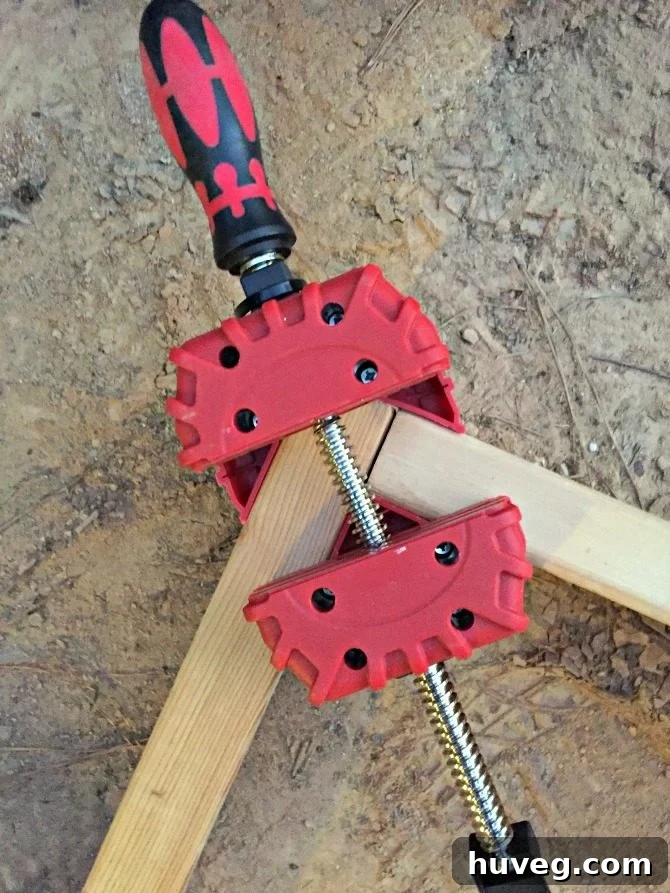
- Right Angle Corner Clamps: A fantastic shortcut for achieving perfectly square corners on your frame, saving time and frustration.
- Screws: To firmly join the pieces of your wooden formwork.
- Drill: For driving screws efficiently. (My go-to drill)
- Pea Gravel: Or other suitable gravel, to create a stable, well-draining base for your slab. Pea gravel is generally cost-effective.
- Level: Crucial for ensuring your frame is properly sloped for drainage. (One of my favorite levels)
- Rigid Rake: For spreading and compacting the gravel base.
- Tamper Tool: (Optional but highly recommended) For effective compaction of the gravel base, ensuring a solid foundation.
- Shovel: For digging, moving gravel, and mixing concrete.
- High-Strength 80 lb. Concrete Mix: The primary material for your slab. Ensure you purchase enough bags – I often underestimate!
- Wire Mesh / Hardware Cloth: For reinforcing the concrete and minimizing cracking, particularly useful for larger slabs.
- Tin Snips: Absolutely essential for safely and easily cutting wire mesh.
- Protective Gloves: Heavy-duty gloves are crucial for protecting your hands from concrete and sharp mesh.
- Wheelbarrow: For mixing concrete and transporting it to the formwork.
- Water Hose: For mixing concrete and keeping it damp during curing.
Constructing the wooden frame for your concrete slab is a straightforward task, especially when utilizing a set of right angle corner clamps. These clamps are a fantastic hack that significantly reduces the frustration associated with achieving perfectly square corners, ensuring a precise and sturdy formwork from the outset.
Step 1: Call Before You Dig – Safety First!
Before breaking ground on any excavation, it is absolutely crucial to contact 811 to have your underground utilities marked. This free service prevents accidental strikes of power lines, gas pipes, water mains, or communication cables, which can lead to severe injury, costly repairs, and significant service disruptions. Even for small projects like this trash bin pad, it’s better to be safe than sorry. While my small slab (under 32 sq ft and not attached to the house) did not require a permit in my county, always check with your local municipality for specific regulations regarding concrete patios or slabs, as permits are often mandatory for larger installations.
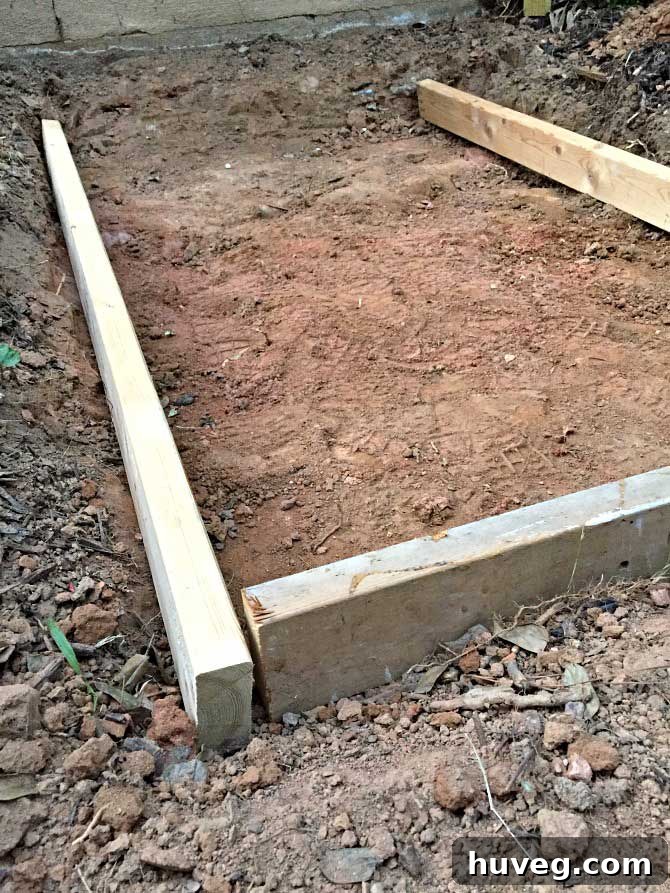
Step 2: Cut the Frame and Excavate the Area
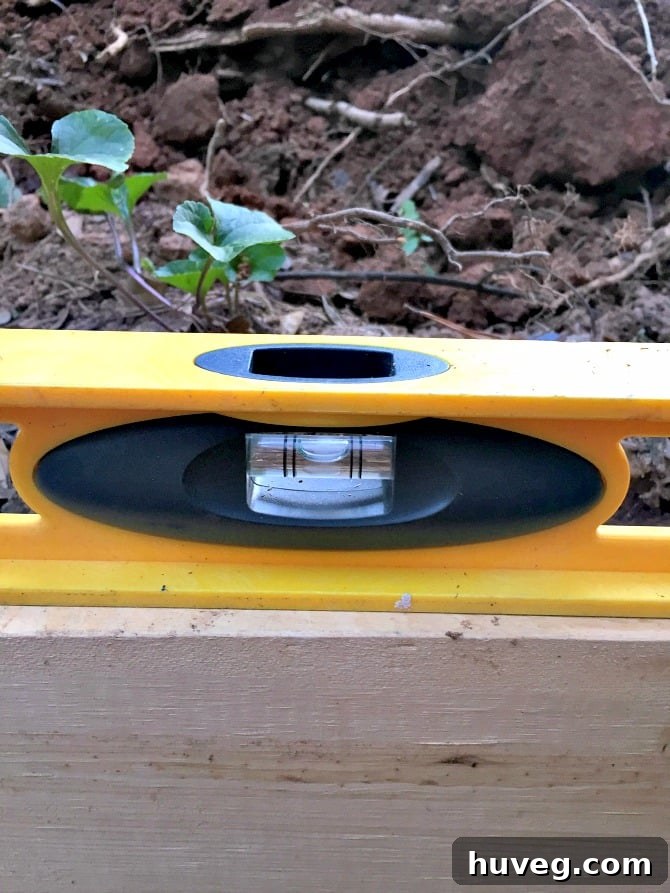
Begin by cutting your 2×4 lumber to create the perimeter of your concrete slab. Using your right-angle clamps, assemble the frame with screws, ensuring it is sturdy and square. As you assemble the frame, meticulously check for levelness. This step is critical! For a concrete slab adjacent to your house, it’s essential for it to have a slight slope away from your foundation. This ensures proper rainwater runoff, preventing water from pooling against your home and potentially causing damage. A commonly recommended slope is approximately half a bubble on a spirit level, meaning the bubble should be slightly off-center towards the lower end. Ironically, the one time I needed a subtle slope, my frame stubbornly stayed perfectly level! Once the frame is assembled and positioned, carefully excavate the area within, digging to a depth that accommodates both your gravel base and the concrete slab itself. Ensure the ground beneath is firm and compacted before proceeding.
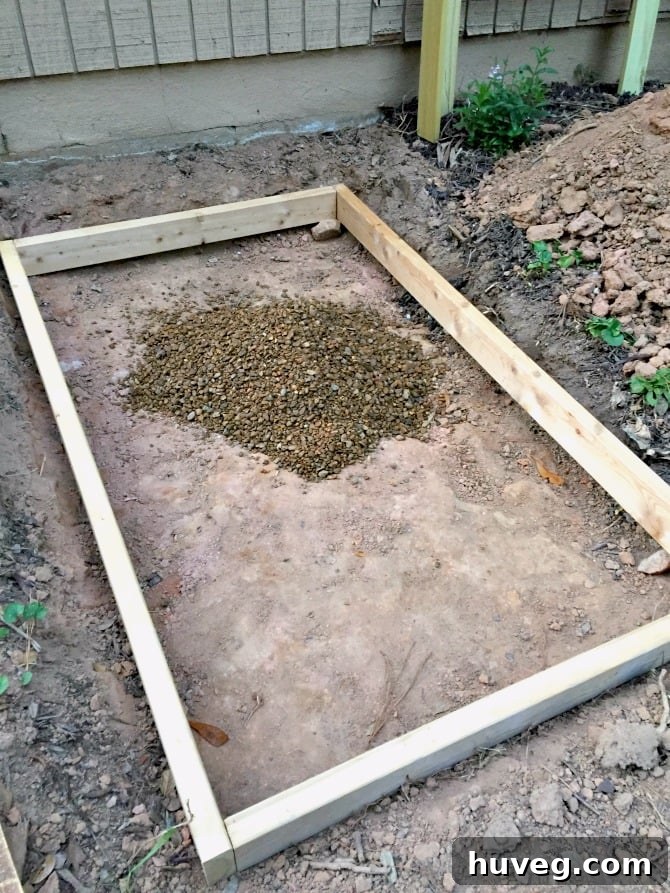
Step 3: Pour and Spread the Gravel Base
With the frame in place, it’s time to establish a solid foundation for your concrete. Pour several bags of pea gravel into the excavated area, filling it to the desired depth, typically 4-6 inches for a small slab. Pea gravel is an excellent choice due to its excellent drainage properties, which help prevent frost heave and ensure the long-term stability of your slab. Once the gravel is in, use a rigid-tine rake to evenly spread it across the entire base. Crucially, use the rake’s rigid tines (or a tamper tool if you have one) to compact the gravel thoroughly. Proper compaction creates a dense, stable base that will support the concrete and help prevent future settling or cracking. This layer is vital for the longevity and performance of your slab.
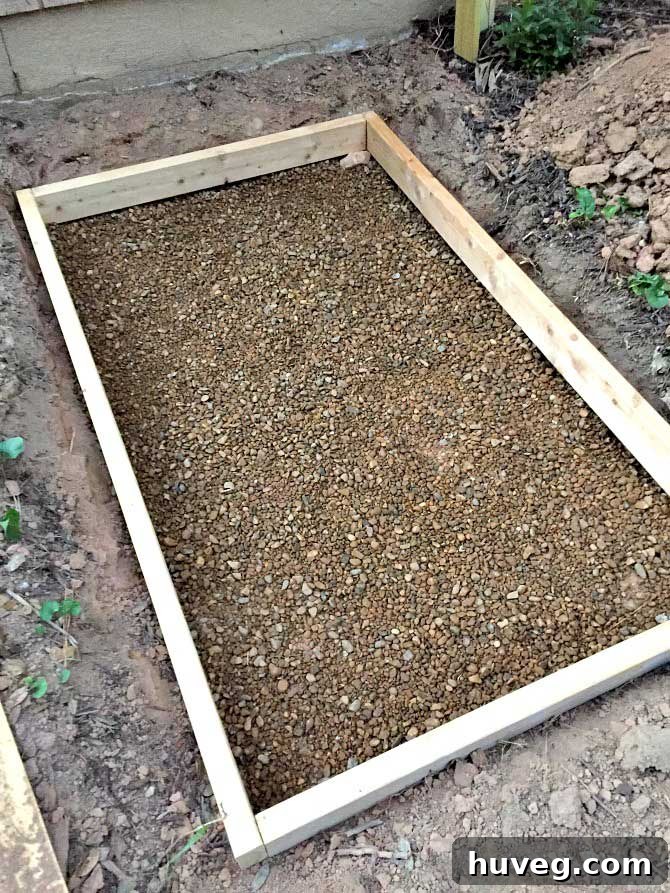
And that’s where the project paused until spring. Now, let’s move on to the exciting part: pouring the concrete!
Step 4: Gather Remaining Supplies and Prioritize Safety
As you prepare for the concrete pour, ensure you have all necessary materials and prioritize safety. This stage requires heavy-duty protective gloves, a wheelbarrow for mixing, a shovel, sufficient bags of high-strength concrete mix, wire mesh or hardware cloth (arguably optional for a very small slab but highly recommended for reinforcement), and a water hose for mixing.
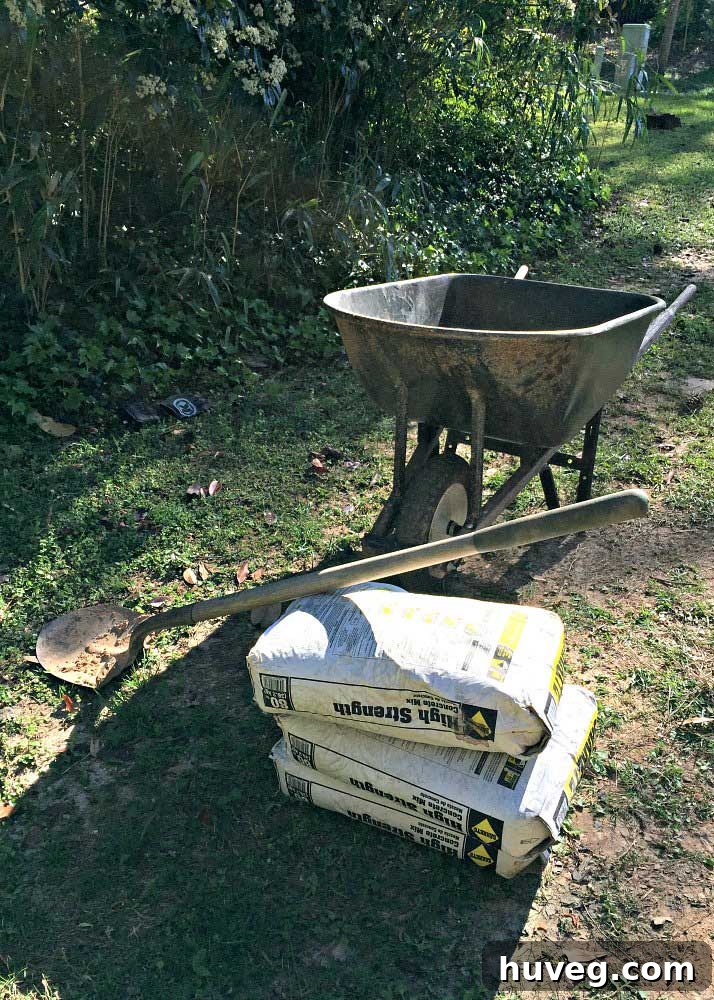
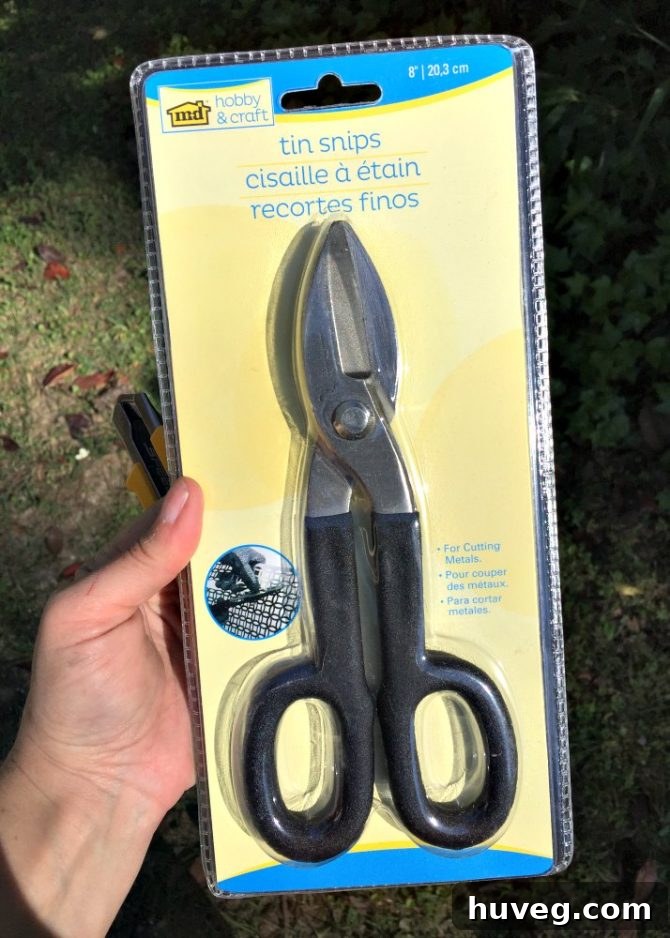
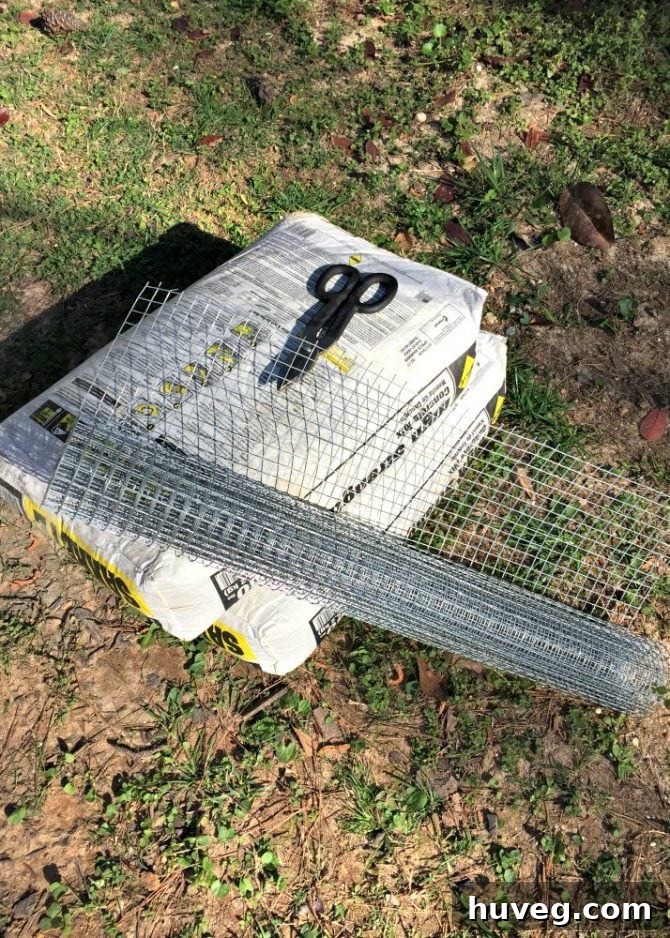
Additionally, don’t forget your tin snips – they are indispensable for cutting wire mesh or hardware cloth safely. Trust me on this: wearing proper gloves from the start will save you from painful cuts, as I learned the hard way (notice the small cut on my thumb before I donned my gloves!). While wire mesh is primarily for reinforcing concrete to minimize cracking, its necessity for a very small slab like this one is debatable. However, for larger applications, reinforcement like rebar or even doubled-up chicken wire is crucial for structural integrity. I considered using leftover chain link fence material from removing my old fence, but having surplus hardware cloth from my previous battle with attic squirrels provided a convenient and effective solution. It’s always satisfying to repurpose materials!
With all preparations complete, it’s time to get started with the concrete mixing!
Step 5: Mix the Concrete
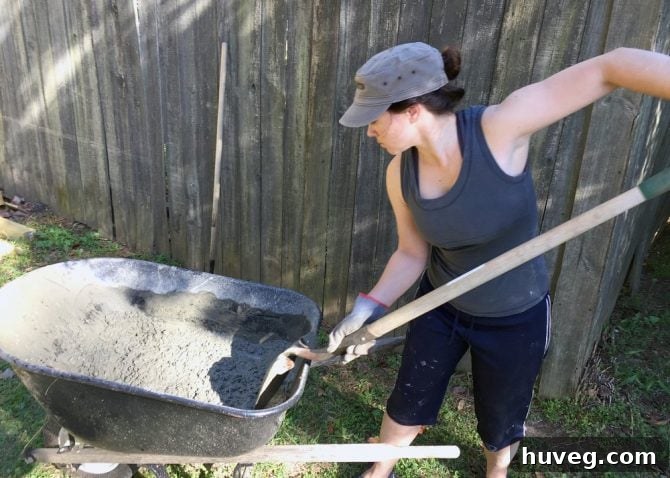
Working one bag at a time in the wheelbarrow, use your shovel to break open each bag of dry concrete mix. Begin by adding a small amount of water to the mix, then thoroughly combine it with the shovel. Gradually add more water, mixing continuously, until you achieve a consistent, workable texture. The ideal consistency should be like thick oatmeal – wet enough to be malleable but not so soupy that it’s runny. It takes a little practice to gauge the perfect water-to-mix ratio, so start with less water and add incrementally. This process is a good workout and ensures the concrete is properly hydrated for maximum strength and ease of spreading.
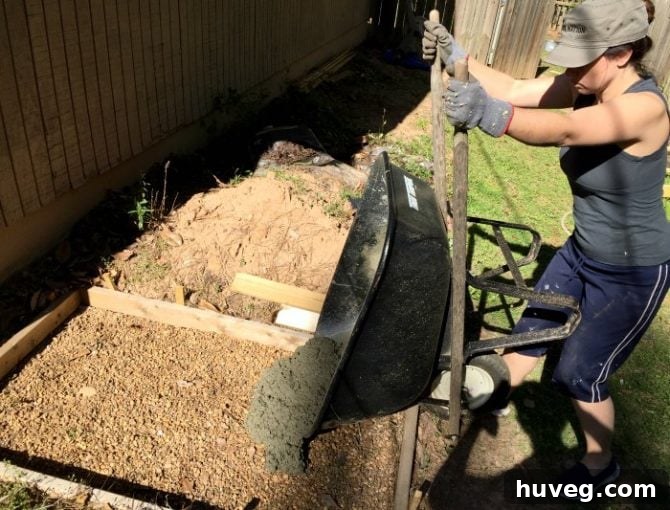
Step 6: Spread the First Layer of Concrete and Incorporate Mesh Reinforcement
Once mixed, carefully pour the first batch of concrete into the frame, filling it about halfway. Use a rigid-tine rake or a shovel to spread the concrete evenly across the entire area, ensuring there are no significant gaps or low spots. After establishing this initial layer, gently lay a pre-cut piece of wire mesh or hardware cloth on top of the wet concrete. The purpose of the mesh is to reinforce the slab, helping to distribute stresses and prevent cracking, especially important for long-term durability. For this small slab, a single layer of mesh, strategically “sandwiched” between two layers of concrete, proved sufficient. While I considered a second layer, I decided against it to avoid the challenge of completely concealing the mesh as the concrete level approached the top of the frame.
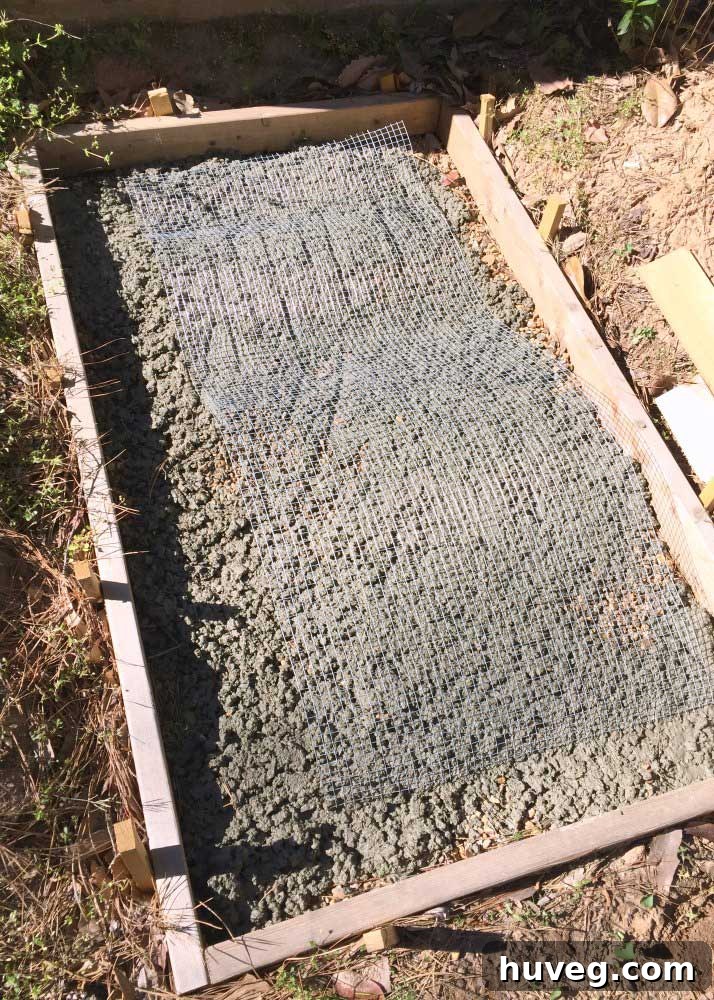
Step 7: Continue Pouring and Leveling the Concrete
With the mesh in place, proceed to mix and pour additional batches of concrete, filling the frame until it is slightly overfilled. You might notice wooden stakes driven into the ground around the frame; these are crucial for larger slabs to prevent the formwork from bowing outwards as the concrete cures. For a smaller slab like this, the 2×4 frame often provides sufficient rigidity on its own. While a bull float is typically used for large slabs to achieve a perfectly flat surface, for smaller projects, a straight piece of scrap wood can serve the same purpose. The depth and width of the 2×4 boards used for the frame were ideal for this project, allowing for an easy screeding process. This step involves continuous mixing and careful spreading, a task that truly earns you a cold beverage at the end of the day! I initially bought four bags of concrete, but quickly realized I had underestimated the quantity needed, necessitating another trip to the store for more supplies. It’s a common DIYer mistake – always better to have a bit extra!
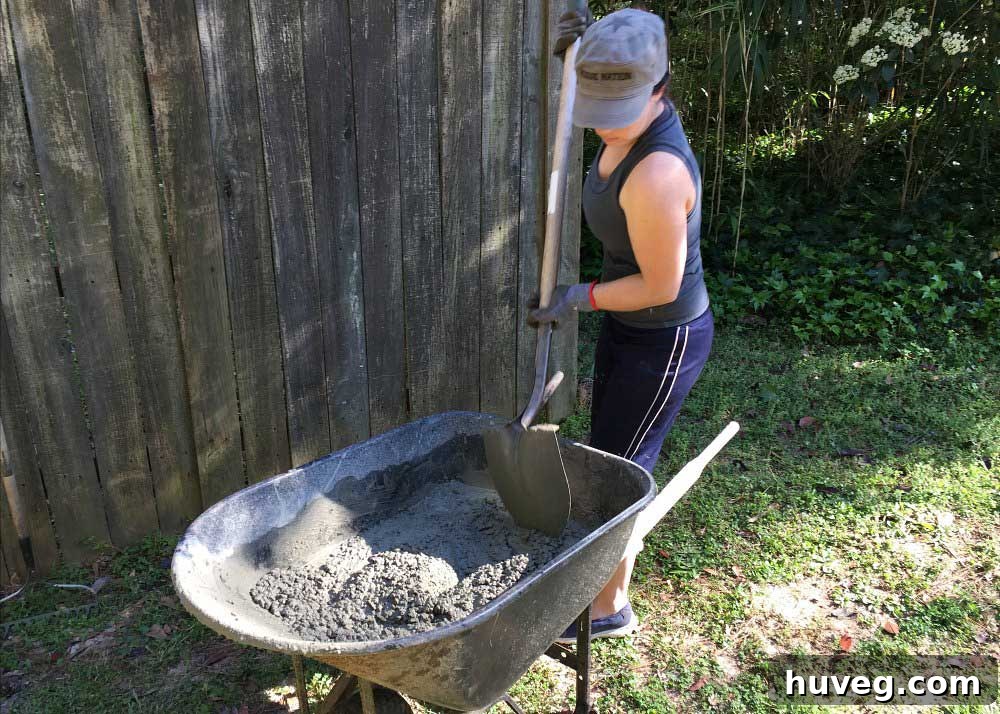
And more spreading, and more mixing. #earnyourbeer
I bought 4 bags at first, but had clearly underestimated, so I went back to the store for more bags.
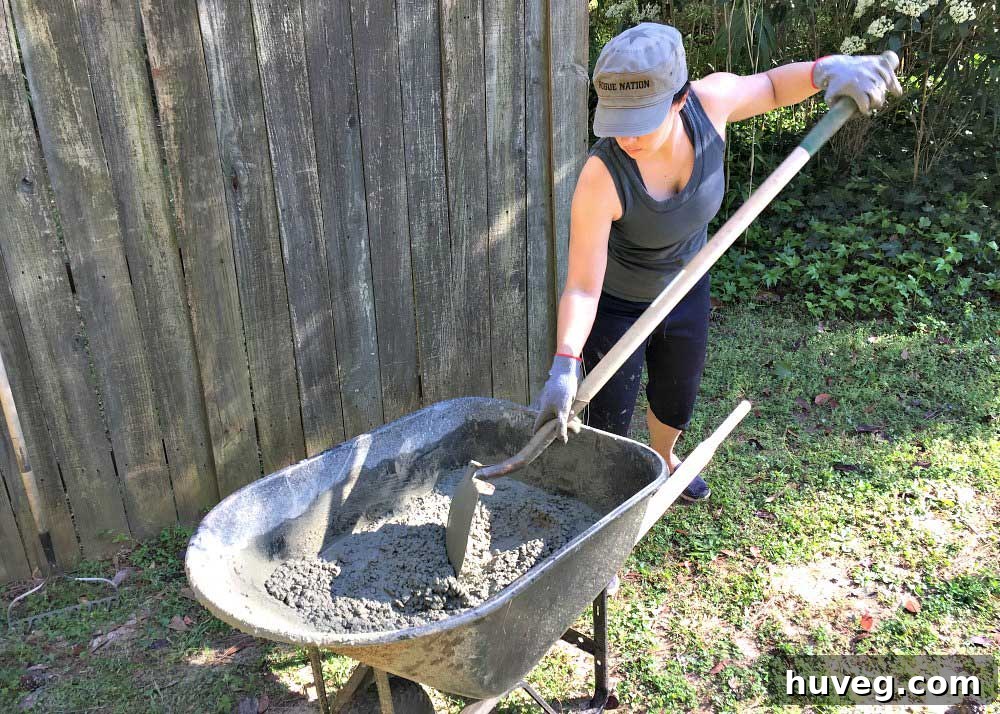
Step 8: Screed and Finish the Concrete Surface
As dusk approached, and after multiple trips for more concrete (I regrettably eyeballed the quantity instead of consulting the handy chart on the bags!), I decided enough was enough. The goal was practical functionality, not absolute perfection. This is where the screeding process comes in. Using a straight piece of scrap wood – in our case, the very innovative 2×4 method – drag it across the top of the wet concrete, resting it on the edges of your formwork. This “screeding” action removes excess concrete and begins to level the surface. A crucial tip: ensure the concrete surface remains damp; a mist setting on your hose works well. Use a sawing motion as you drag the board to help smooth things out. My boyfriend, with his valuable past construction experience, took over when my initial attempts at achieving my envisioned smooth finish proved challenging. Ideally, if you’ve filled the frame completely, use a board long enough to span both sides of the frame and drag it across, allowing excess concrete to spill over, leaving a uniform and level surface.
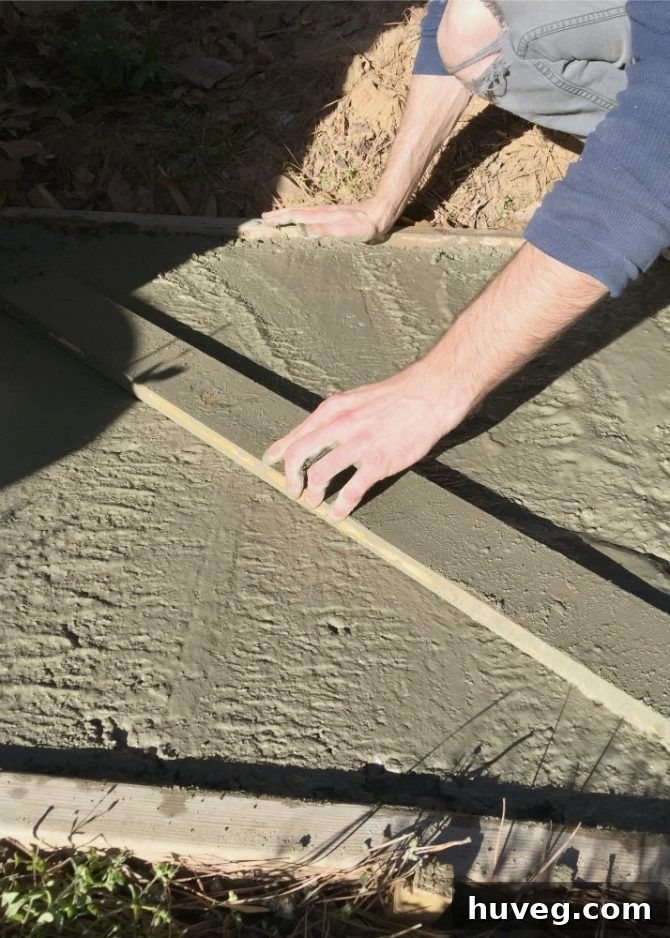
For those seeking a flawlessly smooth finish, this is the stage to employ a steel trowel, meticulously working the surface until it gleams. An edging tool can also be used to create nicely rounded, sharp-free edges, which can be important for aesthetics and safety, especially in high-traffic areas. Alternatively, for added traction on walkways or patios, a “broom finish” can be applied by gently dragging a broom across the surface to create a textured pattern. My primary goals for this slab were crack-free integrity and keeping labor costs to a minimum. (Also, I was getting hangry, and “Hangry Sarah” is not fun for anyone involved!)

After the screeding and initial finishing, the concrete needs to cure properly. This involves keeping the slab damp for several days, ideally by misting it regularly or covering it with plastic sheeting to retain moisture. Proper curing significantly increases the concrete’s strength and durability, minimizing the risk of cracks. By the next day, after a good night’s rest, the slab was looking remarkably good!
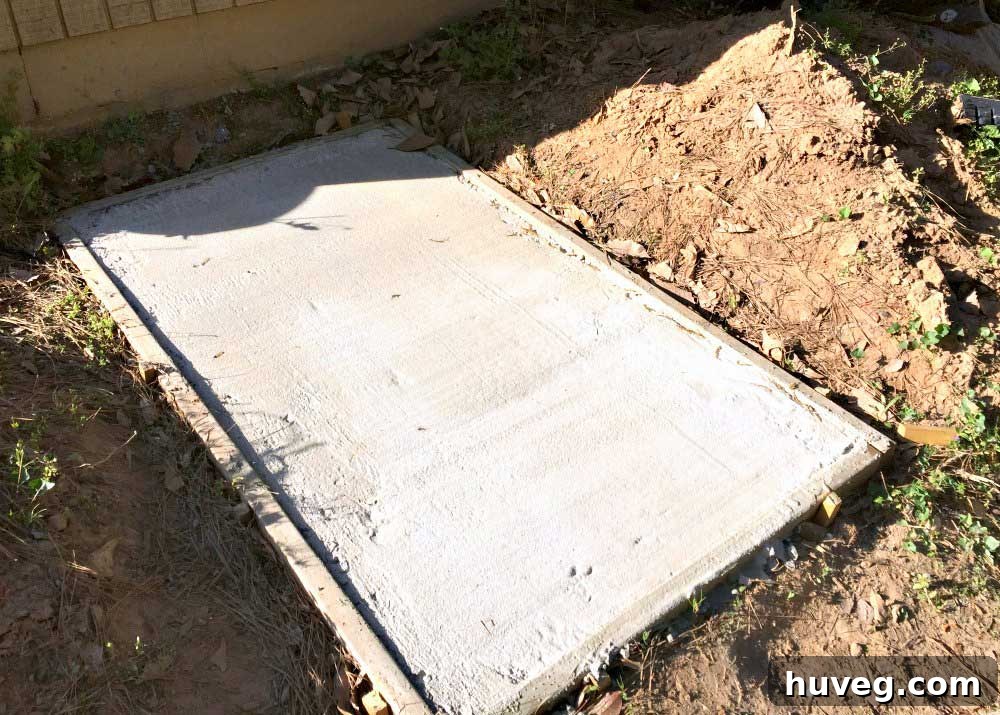
Step 9: Remove the Frame (After Ample Curing Time)
Once the concrete has had ample time to cure – typically 24-48 hours for formwork removal, though it’s best to wait longer before putting heavy loads on it – it’s time to carefully remove the wooden frame. I half-expected the wood to stick, but to my pleasant surprise, it detached cleanly and effortlessly. The entire removal process took a mere two minutes, leaving behind a crisp, defined concrete slab.
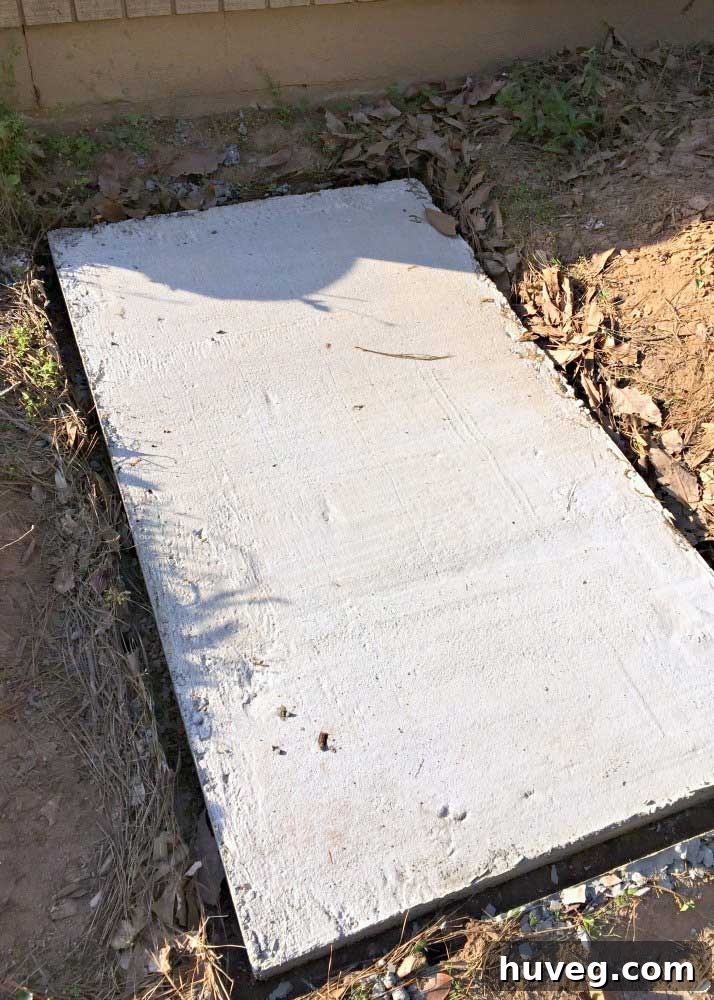
While the slab isn’t absolutely perfect, that wasn’t the primary objective. The real value lies in the substantial knowledge gained throughout this DIY journey. I now have a much better understanding of precise framing techniques, the true quantity of concrete bags required (significantly more than initially estimated!), the surprisingly manageable effort involved in mixing multiple bags, and numerous other practical insights. This project served as an invaluable learning experience, precisely as intended.
Project Complete: A Perfect Pad for Outdoor Trash Bins!
Laying this concrete slab proved to be far less intimidating than I had anticipated. And since its sole purpose is to house a couple of trash bins – a function that doesn’t demand absolute perfection – I can confidently move forward. This imperfect yet perfectly functional concrete pad provides a solid foundation for the next stages of this curb appeal enhancement project, allowing me to focus on the elements that will truly refine its appearance.
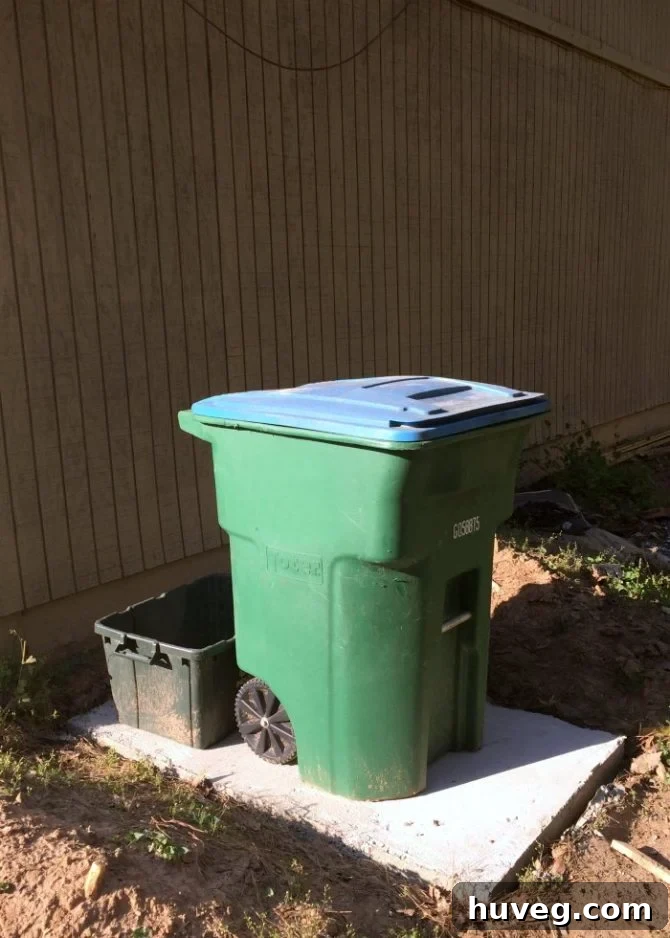
And just like that, my trash bins finally have a designated, convenient, and aesthetically pleasing home! This concrete pad offers the perfect blend of accessibility from my driveway without the unsightly presence directly in front of my garage, which will make the overall exterior before and after transformation even more dramatic. The next phase of this project involves constructing a decorative wood screen to completely conceal the bins from street view, much like the one I built to hide my air conditioning unit. A surrounding garden, planned for this summer, will further integrate the area into the landscape. I’ll be eagerly sharing the full before and after reveal once all the planting and mulching are complete!
Don’t forget to pin this valuable DIY guide for your next outdoor project!