Artistic Watercolor Gift Tags

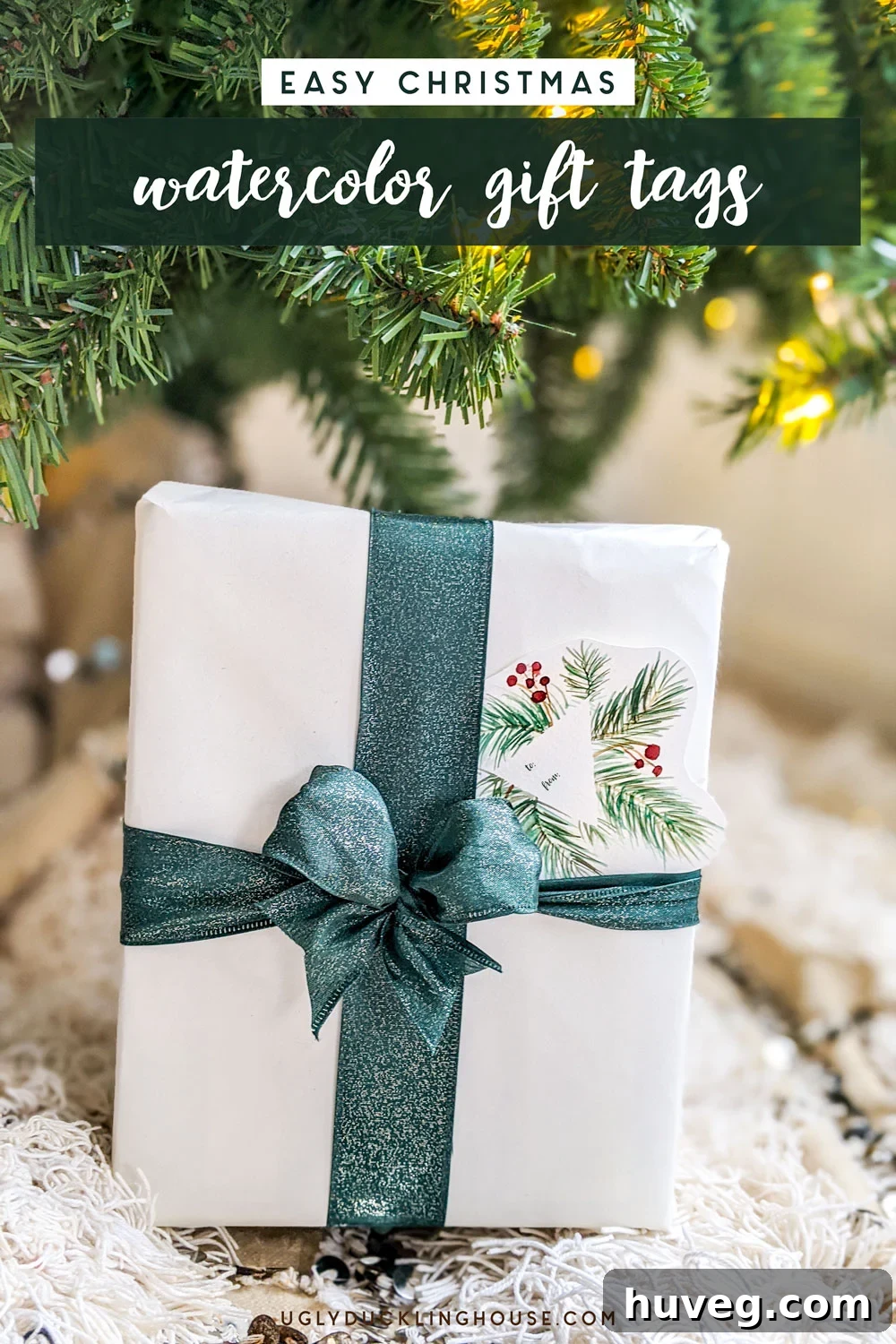
The holiday season is a magical time for crafting, and there’s nothing quite like adding a personal touch to your gifts. I’ve often been asked about the watercolor materials I use, and honestly, they’re nothing overly fancy! The beauty of watercolor lies in its accessibility; even with an inexpensive set, you can create stunning pieces like these delightful Christmas gift tags that carry a unique, handmade charm.
It feels wonderful to dip back into art supplies, especially during the festive season. It’s been a significant while since I dedicated time to painting, and while I’m certainly no expert, I’ve discovered a unique joy in painting by the soft, ambient glow of Christmas tree lights. This serene and inspiring atmosphere encouraged me to craft a few art prints, which I’ll be sharing in an upcoming post. However, I felt these watercolor gift tags deserved to be introduced first. They are incredibly easy to make, offer endless possibilities for customization, and are a fantastic way to experiment with basic watercolor techniques. Whether you’re a seasoned artist or a complete beginner, you’ll find joy in creating these. Feel free to either download our convenient printable templates to get started right away, or follow this comprehensive tutorial to craft your own bespoke tags from scratch.
Essential Materials & Tools for Watercolor Gift Tags
Before diving into the creative process, gathering your materials is a crucial first step. The good news is that you don’t need a professional art studio setup to create stunning personalized Christmas gift tags. A few basic items are all it takes to unleash your creativity. Here’s a detailed list of what you’ll need, along with a few tips for selecting the right supplies:
- Pencil: A standard graphite pencil (HB or 2B is ideal) is perfect for sketching your tag outlines or initial design ideas. It allows for light, erasable marks that won’t show through your delicate watercolor paint, ensuring a clean final look.
- Watercolor Paint Palette: The right paints can significantly impact your results. For beginners, a basic student-grade set offers a great range of colors at an accessible price, making it perfect for initial experimentation and learning techniques. If you’re seeking more vibrant pigments, smoother blending, and better lightfastness for lasting artwork, a more advanced, artist-grade set will make a noticeable difference in your artwork’s quality and your painting experience. Both options make thoughtful and inspiring gifts for any artist in your life!
- Watercolor Brushes: A small collection of round brushes is incredibly versatile for watercolor. For the intricate details on these gift tags, I primarily used a #2 round brush. Its fine tip provides exceptional control for delicate strokes, which is ideal for painting elements like individual pine needles and tiny berries. A slightly larger round brush (e.g., #6 or #8) can also be useful for applying broader washes and filling in larger areas.
- Watercolor Paper/Pad: This is arguably the most critical component for successful watercolor painting. Regular printer paper will buckle, warp, and pill excessively when wet, making it unsuitable. Always opt for dedicated watercolor paper, ideally cold-press, which has a slight texture that helps hold pigment. Paper weight is also important: aim for at least 90lb. (190 gsm) or, for the best results, 140lb. (300 gsm). Heavier paper can handle multiple layers of water and paint without deforming, allowing for richer effects and preventing bleed-through.
- Water Glass/Jar: Keep at least two containers of water handy: one specifically for rinsing off your brushes (which will get cloudy quickly with paint) and another with clean water for diluting your paints to create clear, vibrant washes and consistent color strength.
- Paper Towels or Clean Cloth: These are indispensable tools for watercolor artists. Use them for blotting excess water from your brushes, controlling paint flow, gently lifting color from the paper to create highlights, and correcting minor mistakes. Always keep a stack within arm’s reach.
- Painter’s Tape: Often relegated to home renovation projects, low-tack painter’s tape is an artist’s secret weapon in watercolor. It’s excellent for masking off specific areas you want to keep pristine and unpainted, helping you create crisp, clean edges for borders or interesting geometric designs. Ensure it’s applied and removed carefully to avoid tearing your delicate watercolor paper.
Step-by-Step Guide: How to Craft Beautiful Christmas Watercolor Gift Tags
Creating your own personalized Christmas watercolor gift tags is a rewarding project that adds a heartfelt and truly unique touch to any present you give this holiday season. This detailed tutorial will walk you through each step, helping you bring your festive vision to life with ease and confidence, regardless of your prior painting experience.
Time needed: Approximately 1 hour (plus passive drying time between layers)
These charming watercolor gift tags are an effortless and quick way to infuse personality and warmth into every gift you give this holiday season. Perfect for beginners and experienced crafters alike, they add an irreplaceable handmade touch that recipients will adore.
- Step 1: Prepare Your Workspace and Mask Areas with Painter’s Tape
Setting up an organized and clean workspace is the first step to a smooth and enjoyable creative process. Begin by laying out your chosen watercolor paper. It might sound unconventional, but painter’s tape is an artist’s secret weapon in watercolor, even though its primary use is typically for painting walls (you can check this tutorial to understand why I use it differently there). For watercolor, it’s invaluable for masking off specific sections you want to keep pristine and unpainted, allowing you to create crisp lines and intriguing geometric shapes. Start by lightly sketching your desired tag outlines onto your watercolor paper with a pencil. Then, carefully apply painter’s tape along these lines, ensuring you firmly press down the edges to prevent any paint from seeping underneath. This technique is fantastic for achieving clean, defined borders or leaving intentional white spaces within your design, giving your tags a professional and polished appearance.

- Step 2: Initiate Painting with the Lightest Layer of Color for Depth
The secret to achieving rich depth, vibrant luminosity, and a truly beautiful watercolor effect lies in carefully building up layers of color. Always begin your painting process with the lightest wash. To do this effectively, mix a generous amount of clean water with your chosen paint color on your palette, creating a very transparent, diluted hue. Apply this light wash evenly across the areas you intend to paint, allowing it to dry slightly. This initial, almost translucent layer establishes the foundation for your artwork and is crucial for preventing subsequent darker layers from appearing flat or muddy. It allows light to reflect beautifully through the layers of paint, giving your colors a radiant glow. Remember, watercolor is about building up tones gradually and thoughtfully, so patience is a virtue at this stage; the full, striking effect of your work won’t be entirely visible until later layers are meticulously applied.
- Step 3: Master the Art of Painting Delicate Pine Needles
For creating realistic and elegantly rustic pine needles, begin by painting a very thin, light stem or “branch” using a highly diluted green or brown watercolor paint. This provides a subtle backbone for your needles to emerge from. Once that base is dry (or nearly dry), switch to creating the individual needles. Using your #2 round brush (or a similar fine-tipped brush), load it with a slightly darker mix of green. You can enhance the natural look by adding a tiny touch of brown, blue, or even a hint of deep yellow to vary the green tone. Paint light, quick, and confident brush strokes that radiate outwards from your “branch.” Focus on creating a natural, slightly irregular pattern rather than a perfectly symmetrical one; real pine needles are never perfectly uniform! Vary the pressure on your brush to create needles of different thicknesses and lengths, mimicking the organic randomness found in nature. With each new layer of color you add, incrementally reduce the water content and adjust your color mixture. Incorporate more pigment for darker, more defined needles, or add an earthy brown for a truly natural, rustic feel. For a clear visual guide, watching a video tutorial can be incredibly helpful for observing the precise hand movements and pressure needed to achieve this effect.
- Step 4: Create Charming and Realistic Watercolor Berries
To paint charming and lifelike berries, I find it most effective to start with the berries themselves. Using a small, round brush and a rich red paint (like cadmium red or alizarin crimson for a festive hue), dab small, circular shapes onto your paper. Don’t strive for perfect circles; slight irregularities actually enhance their natural appearance. Aim for a sporadic arrangement and consider grouping them in odd numbers – clusters of three or five often appear more aesthetically pleasing and organic than even numbers. Once your berries are in place and slightly dry, use a very fine brush (like a liner brush) and a light green or brown paint to connect them with delicate, thin strokes, forming a tiny branch or stem. To give your berries a rounded, dimensional look, you can add tiny highlights with a lighter red or orange, or a minuscule dot of white gouache or opaque white paint, once the base layer is completely dry. This simple addition makes them truly pop off the page!
- Step 5: Allow Each Layer to Dry Thoroughly Between Applications
One of the most crucial watercolor techniques for achieving clean, vibrant, and multi-dimensional results is patiently allowing each layer of paint to dry completely before applying a new one to the same area. This step is absolutely vital if you desire distinct lines, clear color separation, and rich visual depth in your artwork. If you paint wet-on-wet (applying new paint to a still-wet area), colors will blend and mingle, often creating softer edges and sometimes leading to muddy or less controlled tones. While wet-on-wet has its place for specific artistic effects, for distinct elements like pine needles or berries where you want definition and crispness, waiting for dryness is key. By consistently layering dry over dry, you prevent colors from bleeding into each other and ensure sharp, clean lines. This layering technique allows you to build up color intensity, add subtle shadows, and create a more pronounced three-dimensional appearance, giving your tags a professional and polished look. If you’re pressed for time, a hairdryer on a low, cool setting can gently speed up the drying process, but always maintain a distance to avoid disturbing the paint.
- Step 6: Embellish with Playful Dots and Creative Splatters
Sometimes the most beautiful design elements emerge from happy accidents! Lately, I’ve found myself captivated by irregular polka dots, a fascination perhaps evident in my recent dining room decor choices. This particular technique for gift tags actually came about when I accidentally dropped a large, vibrant dot of paint onto one of my tags. Instead of panicking or trying to correct it, I embraced the serendipity and purposefully added more dots, both large and small, in varying festive colors (think complementary shades of red, gold, or deep green). This instantly added a whimsical and spontaneous touch to the design. You can also experiment with a splatter technique for a charming, organic texture: load your brush with watered-down paint, hold it over your tag, and gently tap the handle of the brush (or flick the bristles with your finger) to create a fine mist of tiny, random dots. This method adds a dynamic and artistic finish to your tags, making each one truly unique and full of character.
- Step 7: Carefully Cut Out Your Finished Gift Tags
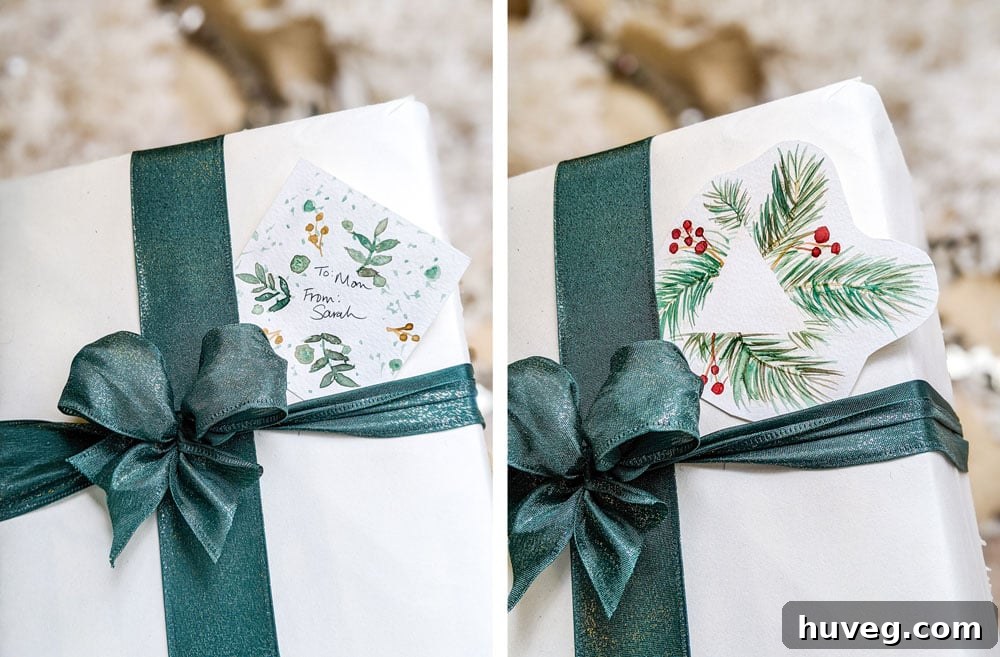
Once all your painted layers are completely dry and you’re satisfied with your designs, it’s time to transform your watercolor creations into usable gift tags. Carefully remove any painter’s tape you applied earlier, peeling it slowly at an acute angle to prevent tearing the paper and revealing crisp, clean edges. For the polka-dotted designs or those with a more abstract feel, I often cut them into simple squares or rectangles using a paper cutter or a sharp pair of scissors for a neat, modern finish. For designs like the pine needles and berries, you might prefer to delicately trace around the painted outline with a sharp pair of scissors, giving them a more organic, custom shape that truly highlights the artwork. Don’t be afraid to experiment with different shapes and sizes to perfectly match your artistic style and the gifts they will adorn!
- Step 8: Attach Your Handmade Tags to Presents with Style
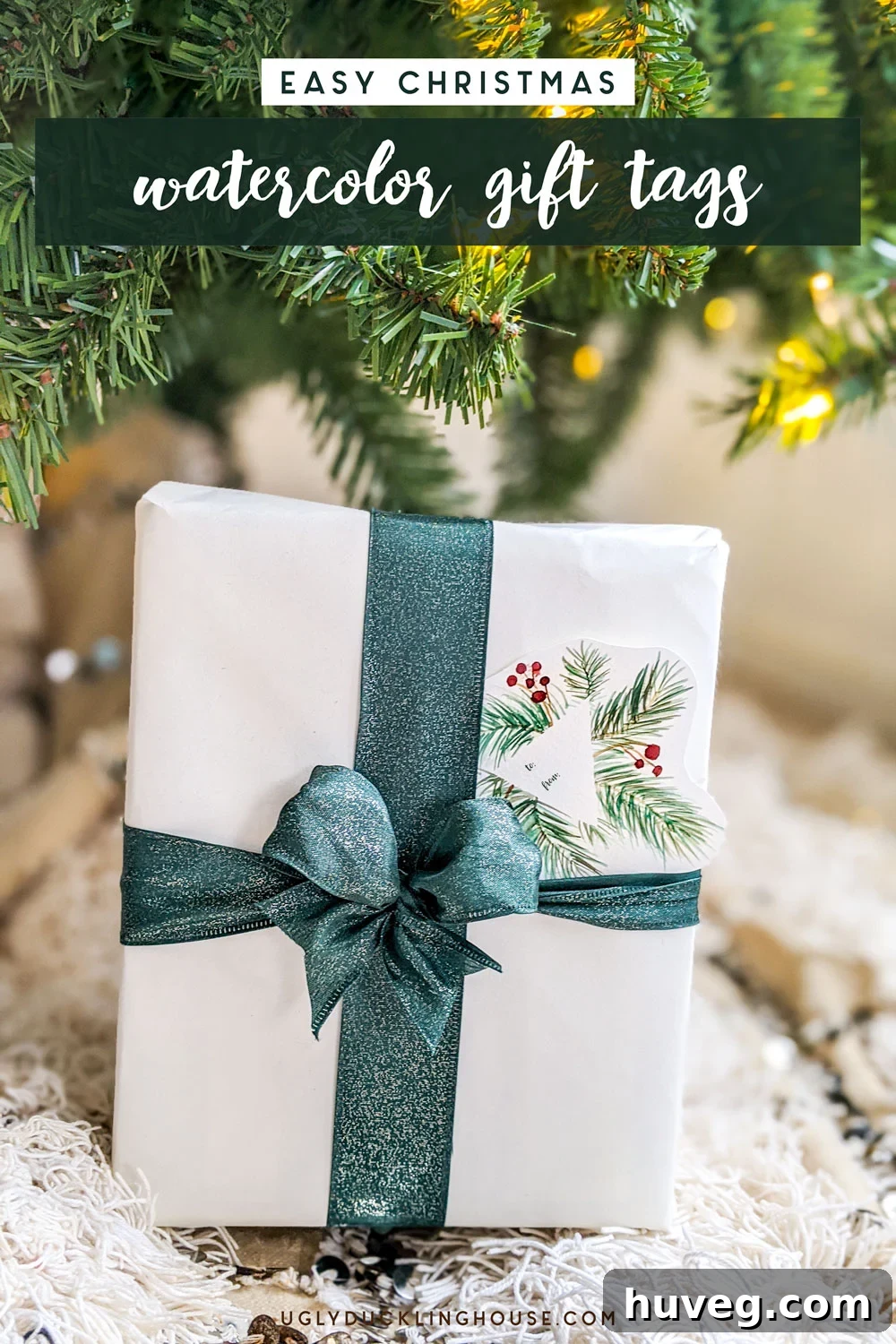
The final and most satisfying step is to proudly attach your beautiful, handmade watercolor gift tags to your holiday presents. For most tags, I punch a small hole at the top, typically centered, using a standard hole punch. Then, I thread through some natural twine, festive ribbon, or baker’s string. This allows them to dangle elegantly and charmingly from your wrapped gifts, adding an immediate sense of warmth. For a slightly different and perhaps more integrated presentation, particularly with the first tag I created, I opted to tuck it directly into the existing ribbon on the gift. To ensure it stayed securely in place and wouldn’t accidentally fall off during transport, I discreetly taped the back of the tag to the present. This clever method creates the illusion of the tag being gracefully tucked in while guaranteeing its firm attachment, offering a seamless and refined look to your thoughtfully prepared gifts.
A Thoughtful Gifting Guide: Why Quality Art Supplies Matter
As a child, some of my most cherished possessions were invariably my “nicer” art supplies. There was a distinct joy and a profound sense of possibility that came with receiving a smaller selection of high-quality paints or brushes, a feeling that far surpassed having a vast, but ultimately inferior, kit. This preference for quality over sheer quantity has stayed with me throughout my creative journey, and it’s a principle I strongly advocate for. If you have an artist of any age in your household – whether a budding young enthusiast just discovering their passion or a seasoned hobbyist looking to refine their skills – I cannot emphasize enough how valuable it is to prioritize quality when allocating your budget for art supplies. This makes a significant difference, not just in the final outcome of their artwork, but fundamentally in the enjoyment and ease of the creative process itself.
It’s important to understand the value proposition: those large, flashy art kits, often marketed as “all-in-one” packages boasting a medley of colored pencils, oil pastels, markers, and sketching tools, frequently cost about the same as one truly excellent set of watercolors, a premium selection of acrylics, a specialized set of artist-grade markers, or even a single set of professional-grade brushes. This is a crucial distinction when considering a gift that genuinely inspires creativity and enables authentic artistic growth. Better quality art materials inherently boast higher pigmentation, meaning they deliver more vibrant, richer, and more consistent colors with less effort. They also tend to blend more smoothly, perform consistently, and are significantly more durable, offering a longer lifespan and better value. For instance, heavier watercolor paper (like 140lb. or 300 gsm) can hold substantially more water without buckling or tearing, enabling artists to explore stunning wash techniques, apply multiple layers, and achieve unique textural effects that thinner, cheaper paper simply cannot support. This superior performance not only makes the artistic process more enjoyable and less frustrating but also helps artists understand the full spectrum of possibilities and advanced techniques they can achieve with their chosen medium. To this day, the nostalgic scent of a well-stocked art supply store or the exciting act of opening a new box of pristine art materials still feels utterly magical, a gateway to endless creation. There’s still ample time to order these wonderful items, especially if you have Amazon Prime, so I’ve conveniently linked some excellent possibilities above to help you find the perfect, inspiring gift.
Short on Time? Download Our Exclusive Printable Gift Tags! 😊
While I generally don’t focus heavily on creating printables, the growing demand for easy, ready-to-use solutions for busy crafters and gift-givers has inspired me to expand our offerings – starting today! Since I’m sharing these beautiful watercolor tags and several complementary printable art pieces in my next post, I’ve taken the initiative to create a dedicated Printables Library right here. Our valued subscribers can access these festive watercolor gift tags, along with our extensive collection of cross stitch patterns and woodworking plans, absolutely FREE. The library operates seamlessly: simply enter your name and email address to gain access. If you’re not yet a subscriber, you’ll first need to enter your details, confirm your subscription via the email sent to your inbox, and then return to the page to enter your details again for pass-through access. This two-step process is implemented to help us prevent spam and ensures our email service remains cost-effective, allowing us to continue providing free valuable content without interruption.
All the watercolor designs mentioned, including these charming gift tags, have already been uploaded to the library, ready for you to download and enjoy. Be sure to check back for the next post, where I’ll delve even deeper into the creative process behind these art pieces and share more detailed insights into their artistic journey!
Don’t forget to pin this project for later inspiration and to share the creative joy!
25 DIYs of Christmas
VIEW SERIES
This project is proudly part of our special series, “25 DIYs of Christmas”! This extensive collection features a diverse range of DIY gifts, festive decor, and other delightful holiday inspiration, perfect for adding a personal touch to your celebrations. Each entry provides detailed step-by-step tutorials, delicious recipes, helpful videos, free patterns, and woodworking plans where applicable. Many of these ideas include multiple versions to showcase the incredible possibilities for each DIY. To ensure you don’t miss any of these exciting projects and keep your holiday crafting inspired, be sure to subscribe to our updates!
More Festive DIY Projects from the Series:
- DIY Pinecone Christmas Place Card Holders
- DIY Hanging Advent Countdown Calendar
- Ruby’s Revival Cookies!
- 4 Watercolor Christmas Prints
- DIY Gold Foil Star Ornaments
- Easy DIY Gift: Earring Holder