Sky-High Success

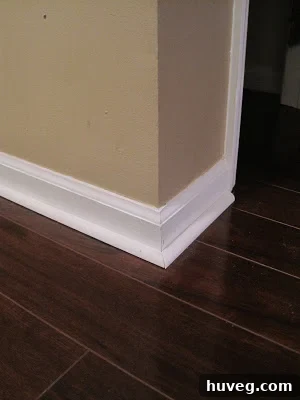
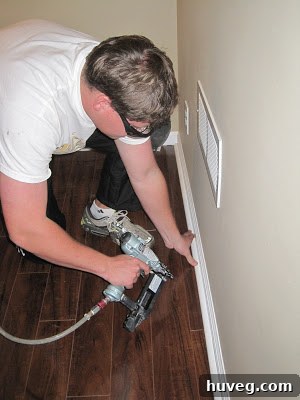
Home improvement projects can often feel daunting, but with the right tools and a clear vision, even seemingly small details can lead to a dramatic transformation. This was certainly the case for Scott, who recently embarked on a mission to enhance his downstairs flooring. Thanks to the generosity of a friend and the loan of an indispensable air nailer, he managed to swiftly install shoe molding around nearly the entire ground level in a single day. This seemingly minor addition elevates the aesthetic appeal of the floors, creating a polished and sophisticated finish that ties the entire room together. It’s a testament to how practical tools can empower DIY enthusiasts to achieve professional-level results with remarkable efficiency.
Much of the installation involved long, continuous strips of molding, which the air nailer made quick work of. Scott’s focused effort truly paid off, demonstrating how a powerful tool can significantly reduce the labor and time typically associated with such projects. Observing his progress, it was clear that the speed and precision offered by the air nailer were game-changers, allowing him to cover substantial ground without compromising on quality. This efficiency is one of the primary reasons why air nailers have become a favorite among both professional contractors and dedicated DIYers for trim work.
The Unsung Hero of Flooring Finishes: What is Shoe Molding?
Before diving deeper into the installation process, let’s understand the critical role of shoe molding. Often confused with quarter round, shoe molding is a slender piece of decorative trim typically applied at the base of walls, directly on top of the finished flooring. Its primary purpose is to elegantly bridge the gap between the baseboard and the floor. This gap, known as an expansion gap, is essential in many flooring types, especially hardwood and laminate, to allow the material to expand and contract with changes in humidity and temperature. Without shoe molding or quarter round, these gaps would be unsightly, collecting dust and detracting from the overall appearance of a room.
While both shoe molding and quarter round serve a similar function, shoe molding is generally taller and thinner, offering a more delicate and refined profile. This subtle difference makes it a popular choice for those seeking a more understated finish that complements existing baseboards without overwhelming them. It’s also incredibly versatile, available in various wood species, finishes, and even paint-grade options like MDF or PVC, allowing it to seamlessly integrate into any interior design scheme. Investing a little time in selecting the right shoe molding can significantly impact the final look and feel of your living spaces.
The Power Tool Advantage: Why an Air Nailer is Your Best Friend for Trim
Scott’s rapid progress wasn’t just due to his dedication; it was largely attributed to the efficiency of the air nailer. For trim work, especially shoe molding, an air nailer (or pneumatic nailer) is an invaluable tool that offers numerous benefits over traditional hammer-and-nail methods. Firstly, its speed is unmatched. What might take hours with a hammer can be accomplished in a fraction of the time, allowing you to complete extensive projects like an entire downstairs floor in a single day, as Scott did. This boost in productivity is particularly appealing for DIY enthusiasts who want to see quick, tangible results.
Beyond speed, precision is another significant advantage. Air nailers drive nails consistently and powerfully, ensuring each nail is set to the perfect depth. This brings us to a crucial benefit Scott highlighted: the nails are forced further into the molding. This means there are virtually no visible nail heads protruding or sitting flush with the surface. Instead, the nail heads are slightly countersunk, creating a small, clean indentation. This eliminates the tedious task of having to paint over numerous exposed nail heads, which often results in uneven finishes or visible imperfections. The immediate result is a much smoother and more professional-looking installation straight off the bat.
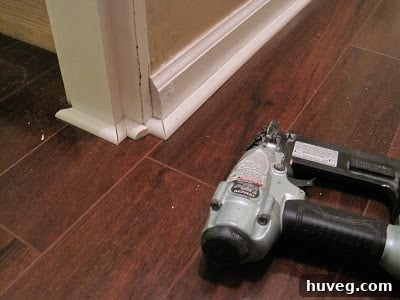
The reduced physical strain is also a major plus. Repeatedly swinging a hammer can be tiring and even lead to strain injuries. An air nailer, on the other hand, requires minimal effort – simply position the tool and pull the trigger. This makes long projects more manageable and accessible to a wider range of DIYers, regardless of their physical strength or experience level. Moreover, the consistent force prevents splitting of the delicate molding, which can be a common issue with manual nailing, especially near the ends of strips.
Safety First: Using Your Air Nailer Responsibly
While an air nailer is incredibly efficient, safety should always be the top priority. Always wear appropriate personal protective equipment (PPE), including safety glasses to protect against ricocheting nails or debris, and hearing protection, as these tools can be quite loud. Ensure you understand how to load and operate the specific model you’re using. Disconnect the air supply when clearing jams or performing maintenance. Never point the nailer at yourself or others, and always keep your fingers clear of the firing mechanism and the point where the nail exits. A responsible approach ensures that your home improvement project remains both productive and safe.
Mastering the Installation: Techniques for a Flawless Finish
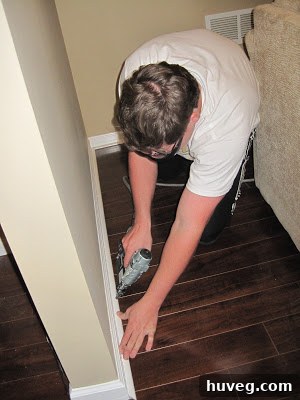
While long, straight runs of shoe molding are relatively straightforward with an air nailer, there are always areas that require a bit more finesse and creativity. Scott encountered this around the stairs, a common challenge in many homes. Mastering these trickier spots is what truly elevates a DIY project from good to exceptional.
Straight Runs: Speed and Simplicity
For the majority of the room, installing shoe molding involves cutting long pieces to fit and then fastening them securely. The key here is accurate measurement and precise cuts. Using a miter saw set to the correct angles (typically 45 degrees for inside and outside corners) ensures tight, seamless joints. When fastening, place nails every 12 to 16 inches, angling them slightly to create a strong hold that resists pulling away from the baseboard or floor. The air nailer’s ability to consistently drive nails without splitting the wood is particularly beneficial on these longer, often thinner, pieces of trim. Always work your way around the room, making sure each piece fits snugly before nailing.
Tackling Tricky Areas: Stairs and Irregular Shapes
The areas around stairs, doorframes, and built-in cabinetry often present unique challenges. As Scott noted, these spots require a “little creative” thinking. Instead of trying to force a single, long piece, it’s often better to work with shorter sections, meticulously cutting and fitting each one. For stair landings, this might involve compound miter cuts where the molding needs to transition from a horizontal to a vertical plane or wrap around a corner. Patience and careful measurement are paramount here. Using a scrap piece of molding to test cuts before committing to the final piece can save both material and frustration.
When dealing with corners, especially inside corners, you have two main options: mitered joints or coped joints. Mitered joints involve cutting two pieces at 45-degree angles to meet at a 90-degree corner. While quicker, they can sometimes open up over time due to wood movement. Coped joints, on the other hand, involve cutting the profile of one piece into the end of another, creating a much tighter and more forgiving joint that hides movement better. While coping takes more practice and time, the results are often superior, particularly in older homes where corners may not be perfectly square. For an initial DIY project, mitered joints are a perfectly acceptable and common approach.
The Finishing Touches: Achieving a Seamless Look
The installation of the shoe molding is only part of the journey. To achieve that truly polished, professional finish, the post-installation work is just as important. Scott recognized this, noting the next step would be to fill the nail holes and any gaps. This stage, though time-consuming, is where the transformation truly becomes complete.
Filling Nail Holes and Gaps
Because the air nailer forces nails beneath the surface, you’re left with small, clean indentations rather than prominent nail heads. These need to be filled for a smooth, unblemished surface. You have two primary materials for this:
- Wood Putty: Ideal for natural wood molding that will be stained or left natural. Wood putty comes in various colors to match different wood tones. It’s easy to apply, dries relatively quickly, and can be sanded smooth.
- Caulk: Best for molding that will be painted. Caulk (specifically paintable acrylic latex caulk) is excellent for filling nail holes and also for sealing any small gaps between the top edge of the shoe molding and the baseboard, or where the bottom edge meets the floor (if the floor is static, like tile). It provides flexibility, accommodating minor movements without cracking.
Apply the chosen filler with a putty knife or your finger, pressing it firmly into the holes. Wipe away any excess immediately with a damp cloth or sponge to prevent dried residue that requires more sanding later. Patience is indeed key here, as Scott mentioned, because it’s a lot of molding to go over!
Sanding and Painting/Staining
Once the filler is completely dry, a light sanding with fine-grit sandpaper (180-220 grit) will create a perfectly smooth surface, blending the filled areas seamlessly with the rest of the molding. After dusting off the sanding residue, the molding is ready for its final finish.
If you’ve opted for paint-grade molding or want to match your existing baseboards, apply a primer first, followed by two coats of high-quality trim paint. For natural wood, apply your chosen stain, followed by several coats of protective clear coat, such as polyurethane, to ensure durability and highlight the wood’s natural beauty. These steps might seem minor, but they are crucial for achieving that “much smoother finish” and protecting your investment for years to come.
Before & After: The Transformative Impact of Shoe Molding
Even before the final sanding and painting, the mere addition of shoe molding dramatically enhances the appearance of any room. It provides a clean, continuous line that frames the floor beautifully, making the space feel more complete and thoughtfully designed. This isn’t just about covering gaps; it’s about adding architectural detail that elevates the entire aesthetic.
A Polished Foundation for Your Home
Think of shoe molding as the base layer of makeup for your floors. It conceals imperfections, defines edges, and brings a sense of cohesion to the room. Without it, floors can look unfinished, almost as if something is missing. With it, the room gains a layer of sophistication and attention to detail that is immediately noticeable. This visual upgrade can significantly impact how you perceive your home and how it’s perceived by guests. It contributes to a sense of order and meticulous craftsmanship.
Before & After: A Visual Comparison
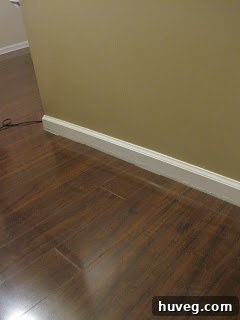
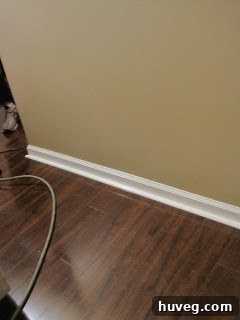
As the “Before & After” images clearly illustrate, the difference is striking. The “Before” image reveals the raw, somewhat unrefined junction where the flooring meets the baseboard, often exposing expansion gaps or minor irregularities. This can make the room feel less cohesive and detract from the overall design. In contrast, the “After” image, with the quarter round (or shoe molding) elegantly in place, transforms this functional necessity into a decorative feature. The eye now glides smoothly from the floor to the wall, perceiving a unified and carefully executed finish. It’s more than just covering a gap; it’s about completing the architectural thought of the room, adding a subtle yet powerful layer of sophistication and tidiness.
Conclusion: Elevate Your Home with Professional Trim Work
Scott’s successful shoe molding project is a perfect example of how combining the right tools with a bit of effort can yield incredibly satisfying and professional results. The air nailer proved to be an indispensable asset, drastically cutting down installation time and ensuring a high-quality finish with its ability to countersink nails effortlessly. From the swift installation of long strips to the careful negotiation of challenging areas like stairs, the entire process, though requiring patience for the finishing touches, results in a noticeable upgrade.
The addition of shoe molding not only enhances the aesthetic appeal of your floors, making them look cleaner, more finished, and more elegant, but it also provides a crucial functional benefit by concealing necessary expansion gaps. Whether you’re undertaking a major renovation or simply looking for a way to refresh your space, tackling trim work with an air nailer is a highly recommended DIY project. It’s an investment in your home’s beauty and longevity, proving that sometimes, the smallest details make the biggest difference. So, if you’re considering a similar project, don’t hesitate to borrow (or invest in!) an air nailer – you might be surprised at how quickly and beautifully you can transform your home.