Upgrade Your Doorbell Easily

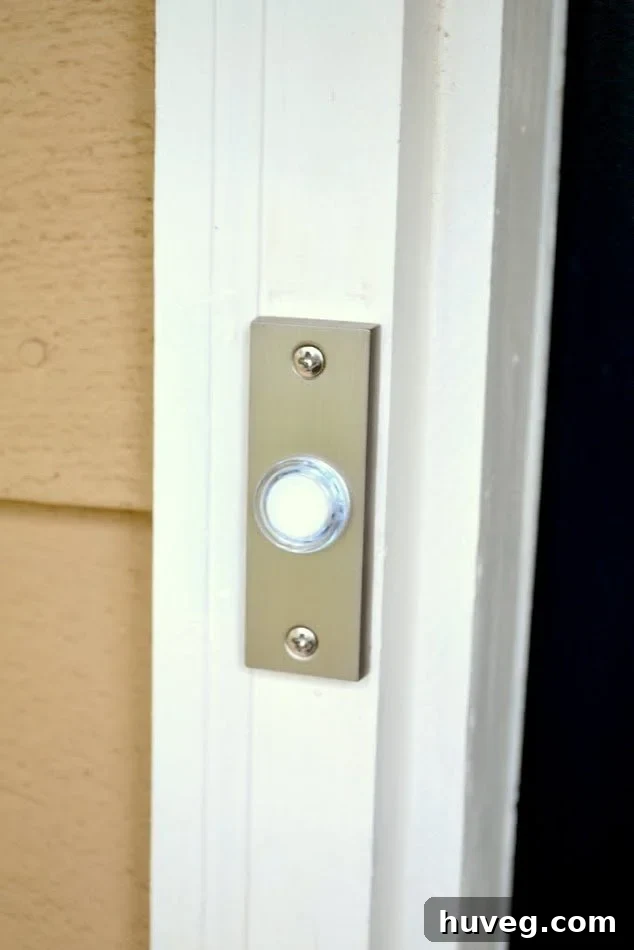
Transforming the exterior of your home doesn’t always require a grand renovation. Sometimes, the most significant impact comes from focusing on the smallest details. Today, I’m thrilled to share how a simple DIY project – replacing an outdated doorbell with a more contemporary model – can give your front entry an instant, refreshing facelift. It’s an incredibly satisfying upgrade that proves even the smallest changes can make a huge difference in your home’s curb appeal.
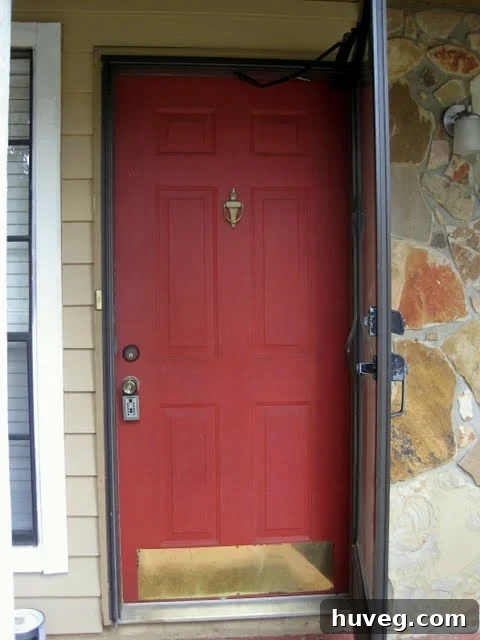
Our front door and porch areas were already enjoying a fresh look thanks to some recent updates. We’ve been steadily working on modernizing our home’s exterior, and the results have been incredibly rewarding. Take a look at where we started:

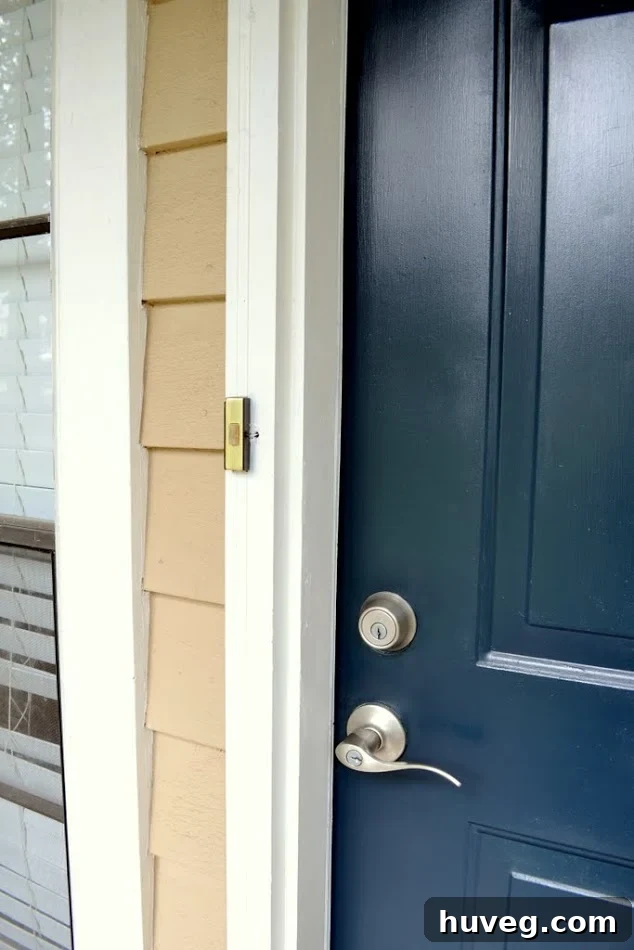
Despite the progress, one glaring detail continued to detract from the overall aesthetic: our old doorbell. It was a relic from a bygone era, and frankly, it was an eyesore that desperately needed to go.
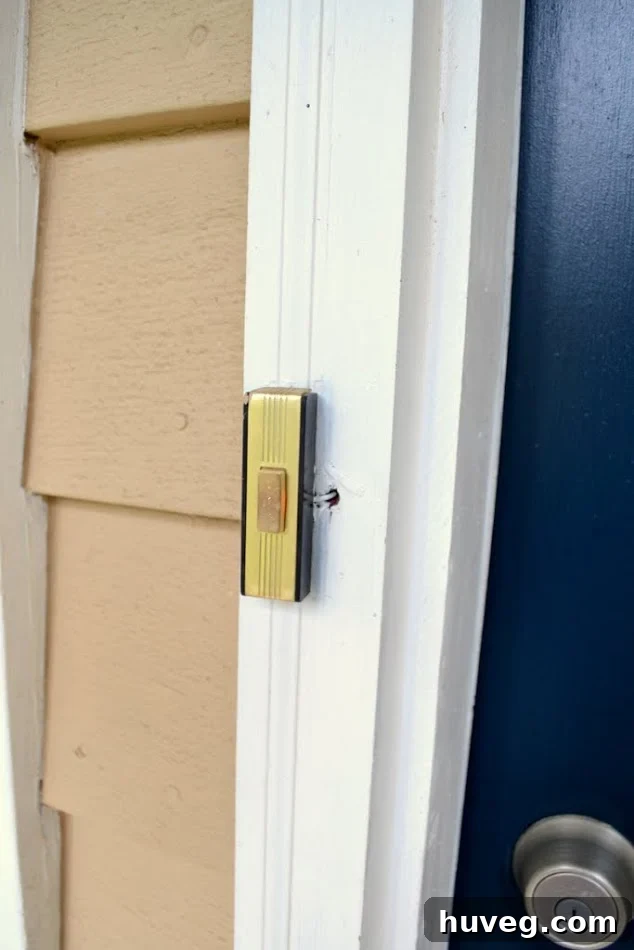
As you can clearly see, it was more than just a matter of taste; it was a matter of bringing our home into the present. The dated brass finish and general wear and tear were no longer compatible with the fresh, modern vibe we were cultivating. A change was not just desired; it was essential!
Why a Doorbell Replacement is More Than Just an Aesthetic Upgrade
My decision to replace the doorbell stemmed from a combination of aesthetic dissatisfaction and some functional quirks that had long bothered me. Beyond merely being old, the existing doorbell button suffered from several issues.
Firstly, its installation was far from ideal. The old doorbell button had been awkwardly re-mounted to the left of the original wiring hole. This haphazard placement was a consequence of a previous storm door, which I’ve since removed. The unsightly outline and lingering screw holes from its original position were still visible on the trim, leaving an exposed wire that looked incredibly unprofessional. It was a clear sign of a rushed job by a previous owner, and it stood out like a sore thumb against our newly painted trim.
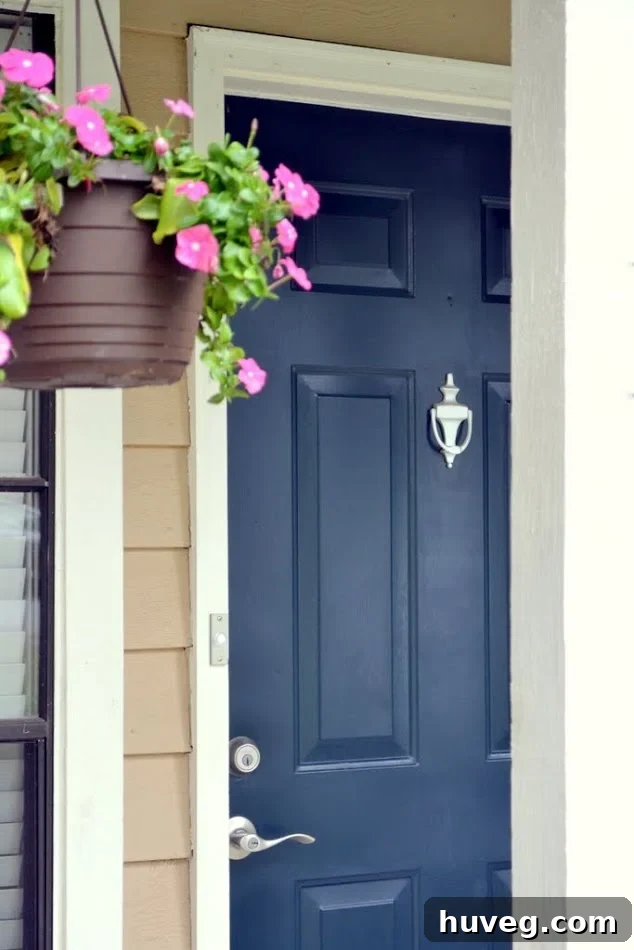
Secondly, the tarnished brass finish of the old wired doorbell clashed dramatically with all the other exterior hardware around our front door. Over time, I’ve been systematically upgrading these elements to a sleek, consistent satin nickel finish. This includes the house numbers, the elegant door knocker, the charming porch light, and most recently, the door handle and deadbolt. The brass doorbell was the last remaining holdout, disrupting the harmonious flow of our updated front entry. I firmly believe the satin nickel finish beautifully complements our navy blue front door and crisp white trim, creating a much more sophisticated and welcoming aesthetic.
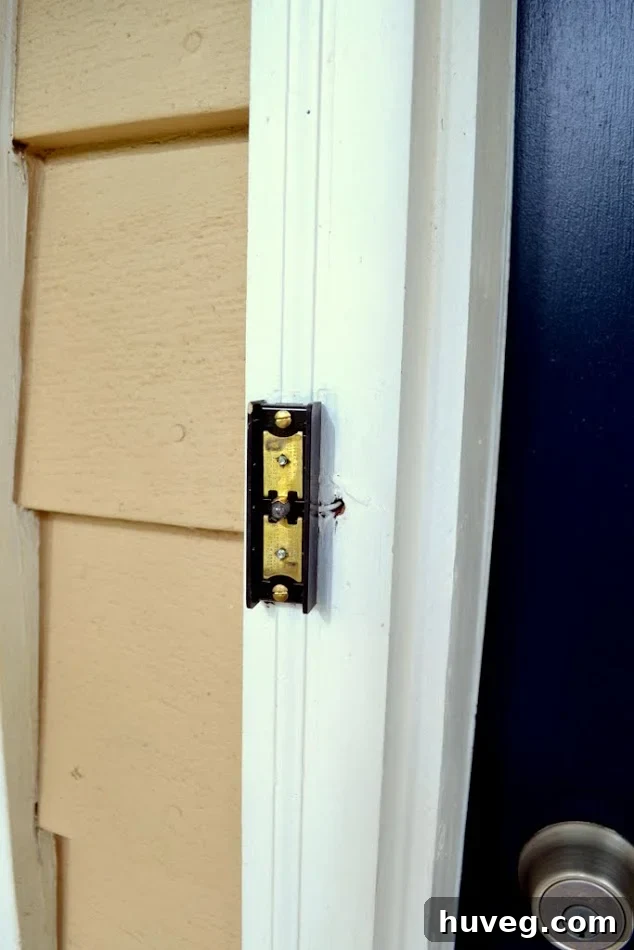
So, as the pictures vividly illustrate, a doorbell replacement wasn’t just a whim; it was a necessity for completing our front door makeover. Fortunately, this particular home improvement project is surprisingly straightforward and incredibly rewarding. It’s a fantastic, low-effort way to significantly enhance your front porch and door’s overall appeal, making a lasting first impression on anyone who approaches your home.
How to Do a Simple Doorbell Installation: A Step-by-Step Guide for DIY Enthusiasts
Upgrading your doorbell is a surprisingly quick and impactful DIY task. With a few basic tools and a bit of patience, you can completely transform the look and feel of your front entry. Here’s a comprehensive guide to help you through the process of a smooth doorbell installation.
Gather Your Essential Materials & Tools
Before you begin, ensure you have all the necessary supplies on hand. This will make the installation process much more efficient and enjoyable. While specific needs may vary slightly based on your chosen doorbell model, this list covers the essentials for a successful wired doorbell replacement.
Materials & Tools You May Need
- Pencil (for marking and tracing)
- Screwdriver set (flathead and Phillips head, to accommodate various screw types)
- New doorbell (This is the sleek nickel one I chose)
- Voltage tester (crucial for electrical safety)
- Exterior-grade paint (to match your door frame or trim)
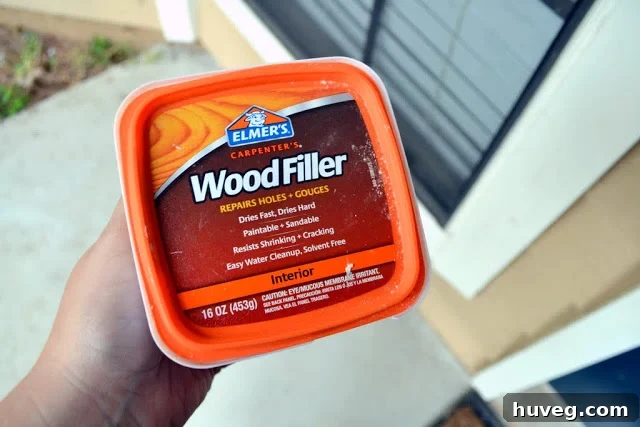
- Wood filler (for patching old holes or imperfections)
- Sandpaper (fine-grit, for smoothing patched areas)
- Drill (cordless or corded, for drilling new screw holes and potentially enlarging wire holes)
- Spade drill bit (or a hole saw, depending on your new doorbell’s requirements for the wire recess)
- Utility knife (useful for scoring paint lines or trimming wires)
- Wire strippers (if your existing wires are damaged or need to be shortened)
- Electrical tape (for securing wire connections, if desired)
Step 1: Prioritize Safety & Understand Your Wiring
Before touching any wires, safety must be your absolute top priority. As you can probably infer, our project involves a wired doorbell, meaning it draws power directly from the house’s electrical system, unlike battery-operated alternatives. Therefore, the very first and most critical step is to completely de-energize the circuit you’ll be working on. Simply flipping a wall switch to the “off” position is insufficient. To eliminate any risk of electrical shock or short circuits, you must turn off the power at your home’s main electrical panel, also known as the circuit breaker box.
Locate your circuit breaker box, typically found in a basement, garage, or utility closet. Identify the breaker labeled for your front porch, exterior lights, or general outdoor outlets. If unsure, you can often turn off the main breaker for the entire house, though this will temporarily cut power to everything. Once you’ve flipped the correct breaker to the “off” position, use your voltage tester on the doorbell wires to confirm there’s no residual electrical current. Even low-voltage doorbell wires, typically 10-24 volts, can still deliver an unpleasant shock and potentially damage your tools or the doorbell transformer. Don’t let these bell wires intimidate you, but always respect the power they carry.
NOTE: Different doorbells, or door chimes, may have varying numbers of wires. Most wired doorbells will have two low-voltage wires. However, depending on your system, you might encounter a ground wire, a neutral wire, and a hot wire. Always consult the wiring diagrams provided with your new doorbell package for specific instructions. These diagrams are your best friend for a successful and safe installation!
Step 2: Selecting Your Perfect Doorbell Replacement
With safety measures in place, the fun part begins: choosing your new doorbell! You’ll find a vast array of replacement doorbells at major home improvement stores like Home Depot and Lowe’s, as well as an extensive selection online. When making your choice, consider both aesthetics and functionality to ensure your new doorbell complements your home and meets your needs.
I opted for a model that was simple yet elegant, designed to beautifully complement the surrounding front door and its updated accessories. Think about the finish – will it match your door handle, knocker, and light fixtures? Satin nickel, bronze, matte black, or classic brass are common options. Consider the style too: a modern, minimalist look or something more traditional? Beyond aesthetics, look for practical features. Does the button light up for visibility at night? Is it durable and weather-resistant? You’ll find all sorts of “bells and whistles” available in the doorbell section, from basic buttons to smart doorbells with cameras. For this project, a straightforward, stylish wired doorbell was exactly what was needed to elevate the existing curb appeal.
Step 3: Carefully Remove the Old Doorbell Unit
Now that you’ve chosen your replacement and ensured the power is off, it’s time to remove the old doorbell. Begin by gently prying off the front plate of the old unit. In my case, because the doorbell was quite old, the button component often came away with the front plate, revealing the internal mechanism and wiring. This might vary depending on your old doorbell’s design, but the goal is to expose the mounting screws and the wired connections.
Once the inner workings are visible, use your screwdriver to loosen and detach the wires from the back of the doorbell. Most wired doorbells will have two low-voltage wires connected to terminals. Before fully disconnecting them, this is a crucial moment to re-verify safety with your voltage tester. Touch the probes of the tester to each wire connection point to confirm that no current is present. While a zap from these low-voltage wires typically shouldn’t cause more than a minor tingle, it’s always best to avoid any electrical surprises. Remember, even if you’ve already turned off the circuit breaker, a quick check with the voltage tester provides an added layer of security. Always prioritize safety in any electrical DIY project.
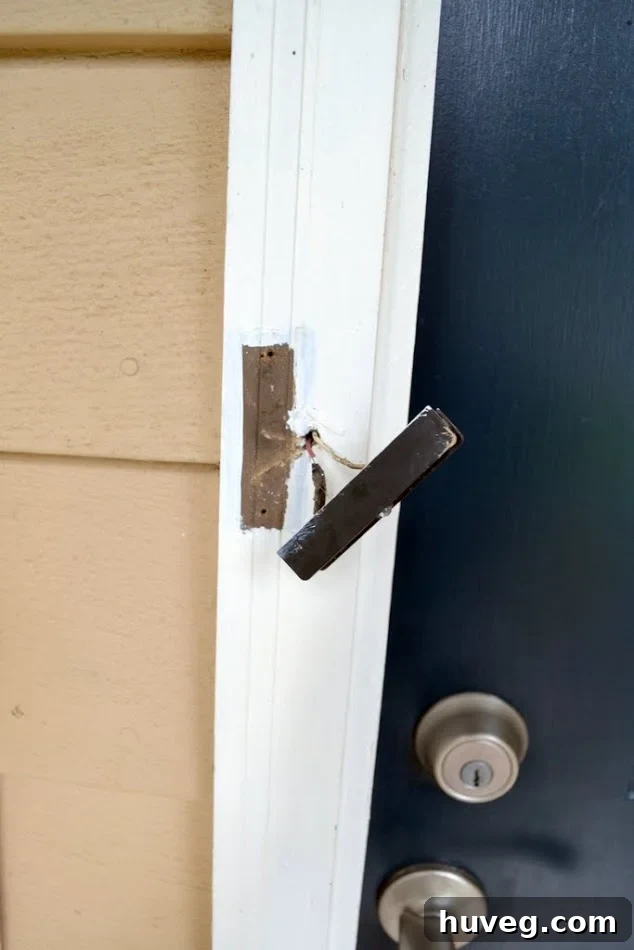
Step 4: Positioning Your New Doorbell for Optimal Placement
With the old doorbell removed and the wires hanging free, it’s time to determine the ideal placement for your new unit. The new doorbell I purchased was fortunately quite similar in size to the old one, which made the alignment process relatively straightforward. However, it’s rare that the old and new units will perfectly align, especially if you’re upgrading from a significantly different model or if the previous installation was less than perfect.
Carefully hold the new doorbell in place, centering it where you want it to be. Consider both aesthetic balance and functional access for visitors. Use a pencil to lightly mark the new screw hole locations and the perimeter of the new doorbell, especially if its backplate is larger than the original. In my case, I decided to shift the new doorbell a tiny bit to the right on the doorframe to correct the previous owner’s off-center installation. This planning step is essential for a clean, professional finish, ensuring your new doorbell looks intentional and perfectly integrated into your front entry design.
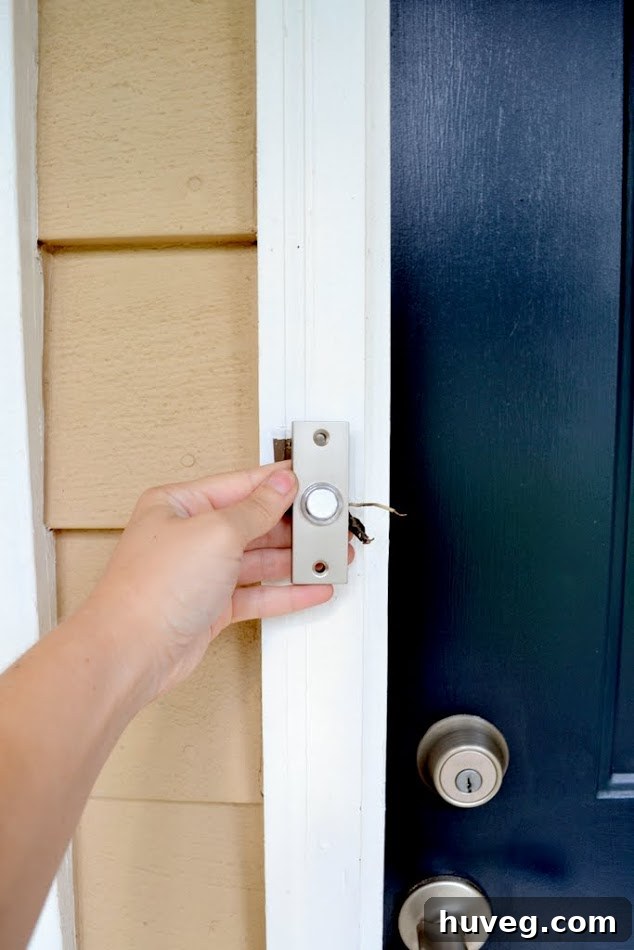
Step 5: Patch and Paint the Door Frame (If Necessary)
Since I wasn’t installing the new doorbell in the exact same spot, the door frame was left with visible remnants of the old installation – specifically, old screw holes and an unpainted area beneath the previous doorbell’s footprint. Achieving a seamless, polished look requires addressing these imperfections. This step is crucial for any doorbell replacement where the new unit doesn’t perfectly cover the old marks.
First, I used wood filler to fill the old screw holes. Apply the filler firmly into the holes with a putty knife or even your finger, ensuring it’s slightly mounded above the surface. This accounts for any shrinkage as it dries. For the unpainted section, ensure the surface is clean and smooth. Allow the wood filler to dry completely according to the manufacturer’s instructions, which usually takes a few hours. Once dry, lightly sand the patched areas with fine-grit sandpaper until they are perfectly flush with the surrounding trim. This creates a smooth canvas for painting.
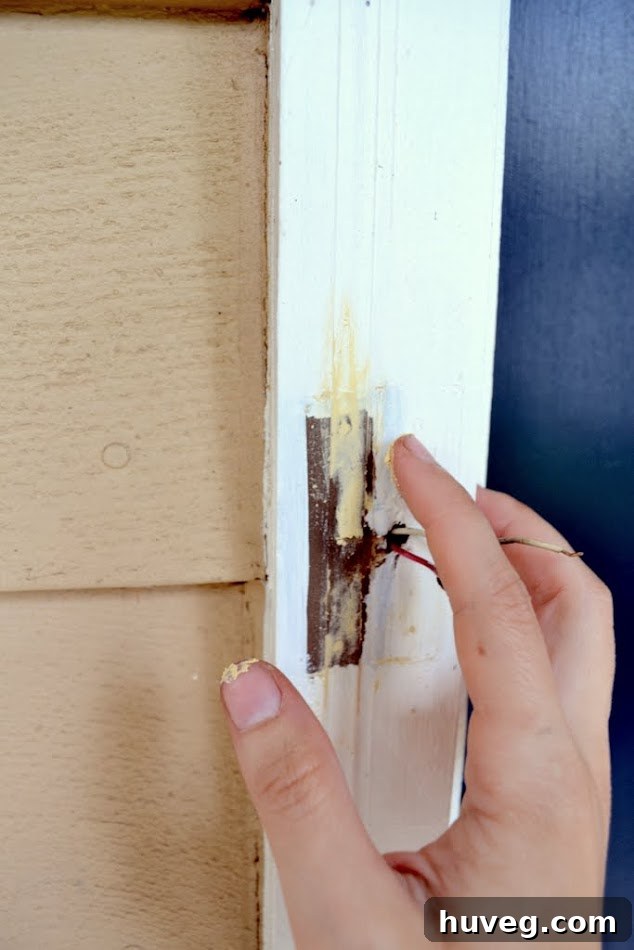
After the wood filler was dry and sanded, it was time to paint. I applied a couple of coats of exterior-grade paint to match our existing white trim, carefully covering the patched areas and the previously unpainted section. It was a pleasant reminder of how much lighter and brighter our exterior paint now looks compared to five years ago when we first started these updates. This fresh coat of paint, combined with the other new door accessories, truly made a significant difference. The satin nickel against the crisp white trim and navy door looked incredibly sharp and modern, instantly making the entryway feel more welcoming and sophisticated.
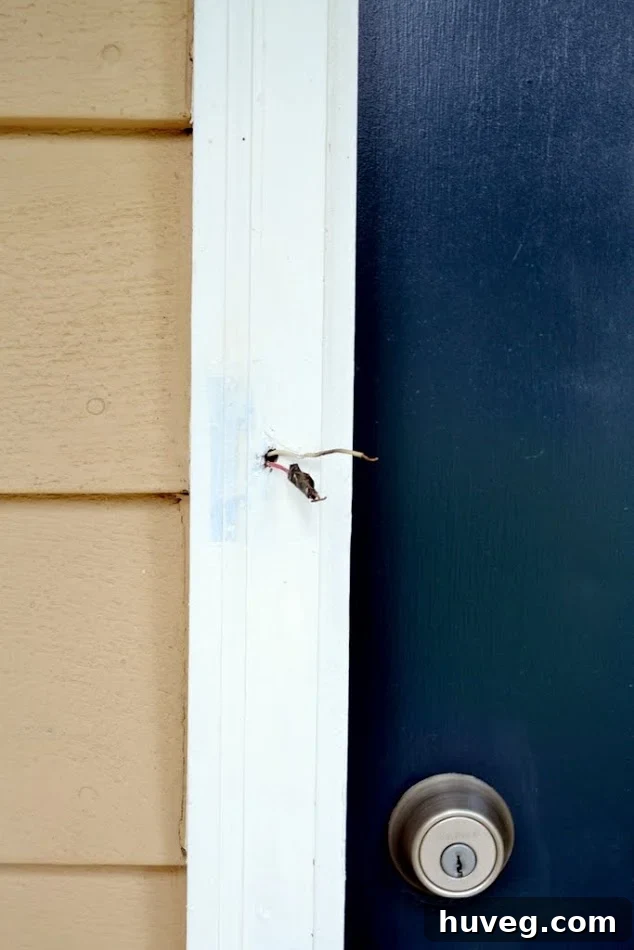
Step 6: Adjusting the Doorbell Wire Hole (If Required)
Midway through the doorbell replacement process, I encountered a common challenge: the new doorbell’s design required a slightly larger recess for its back casing to fit snugly into the trim. This often happens due to advancements in doorbell technology, differing manufacturer designs, or simply a desire for a cleaner, more integrated look. Regardless, it meant I needed to enlarge the existing wire hole to accommodate the new unit.
To ensure a precise fit, I first held the new doorbell in its intended position and carefully traced the outline of the required recess onto the doorframe with a pencil. Before drilling, I used a flashlight to peek into the existing hole and confirm the exact path of the doorbell wires behind the trim, ensuring I wouldn’t accidentally damage them. With careful precision, I then used a spade drill bit to enlarge the hole. I sized the drill bit according to the manufacturer’s instructions provided with the doorbell package (in my case, 5/8″). While a hole saw bit typically creates a cleaner, more perfect circular cut, a spade bit works perfectly well, especially since the new doorbell would ultimately cover the hole. The key is to drill slowly and steadily, maintaining control to avoid splintering the wood. After all, function over absolute perfection when it’s going to be hidden!
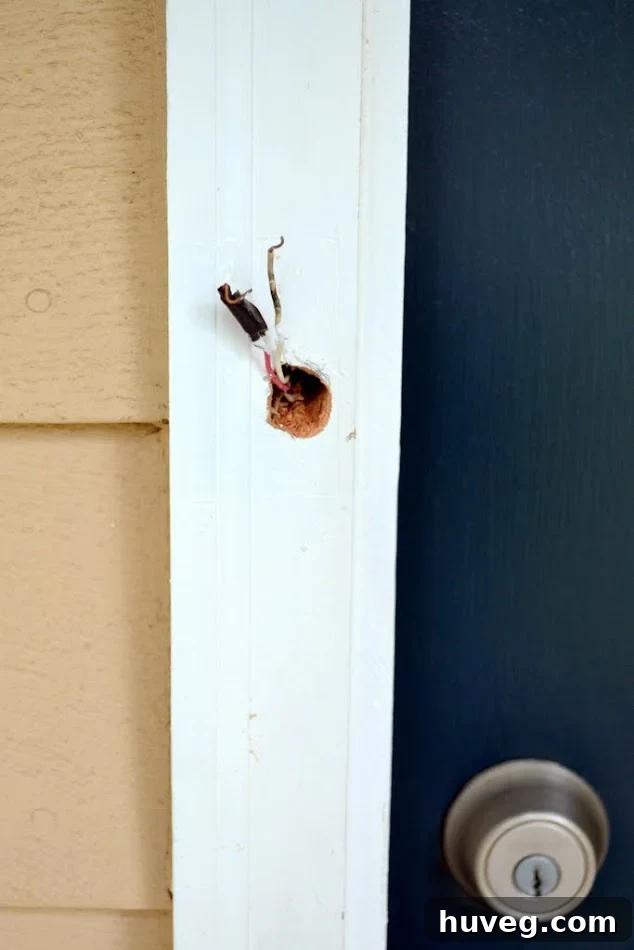
Admittedly, once I finished drilling, the hole bore a slight resemblance to the work of a carpenter bee – not the prettiest hole I’ve ever created. But the good news is that this imperfection would be entirely concealed by the new doorbell’s housing, proving that sometimes, “good enough” is indeed perfect for DIY projects!
Step 7: Securely Attach and Test Your New Doorbell
With the mounting surface prepped and the wire hole adjusted, the final steps of installing the new doorbell are surprisingly simple. Carefully pull the low-voltage wires through the newly created or enlarged hole. Most wired doorbells will have two terminals for connection. Simply connect the wires to these terminals, typically by loosening small screws, wrapping the bare wire ends around the screws, and then tightening them securely. While doorbell wiring isn’t usually color-coded like household electrical wiring (red to red, black to black), if your wires do have distinct insulation colors, you can generally match them up for consistency, though it’s not strictly necessary for functionality in low-voltage circuits. Just ensure a solid connection.
Once the wires are securely attached, it’s time for the moment of truth: testing! Head back to your circuit breaker panel and restore power to the doorbell circuit. Then, return to the front door and press the new doorbell button. You should hear your chime ring! If it doesn’t work, don’t panic. First, recheck the breaker. If that’s not the issue, turn the power off again and re-examine your wire connections for any looseness or incorrect wraps. Often, it’s just a loose connection.
With a successful test, carefully position the doorbell over the wire hole, aligning it as you planned in Step 4. Using the new doorbell as a template, mark the locations for the mounting screws. Drill small pilot holes to prevent the wood from splitting, then use your trusty screwdriver to attach the doorbell’s mounting plate securely to the doorframe. Finally, snap on the doorbell’s decorative cover or button assembly, and “bam!” – your brand new doorbell is installed and fully operational!
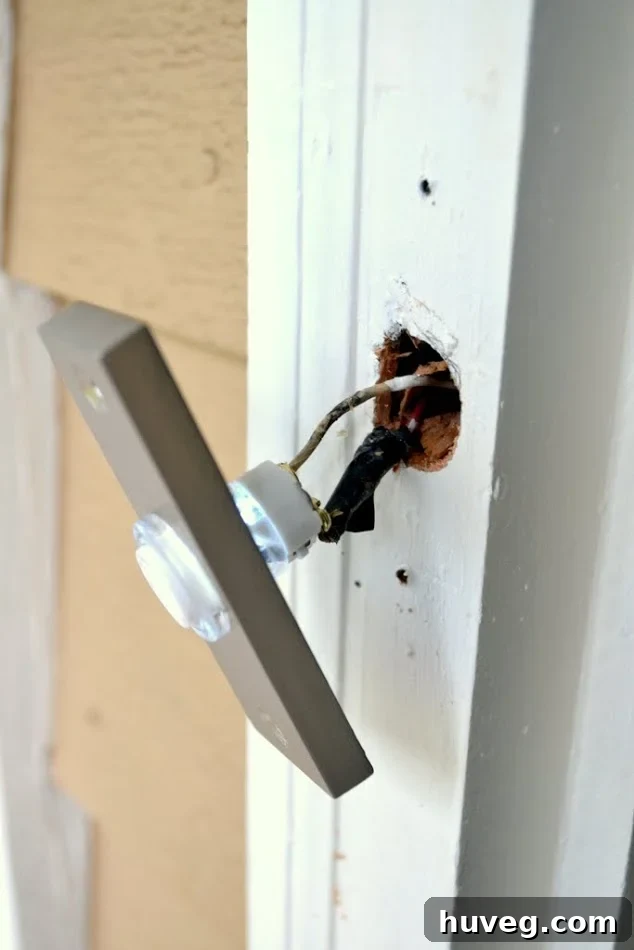
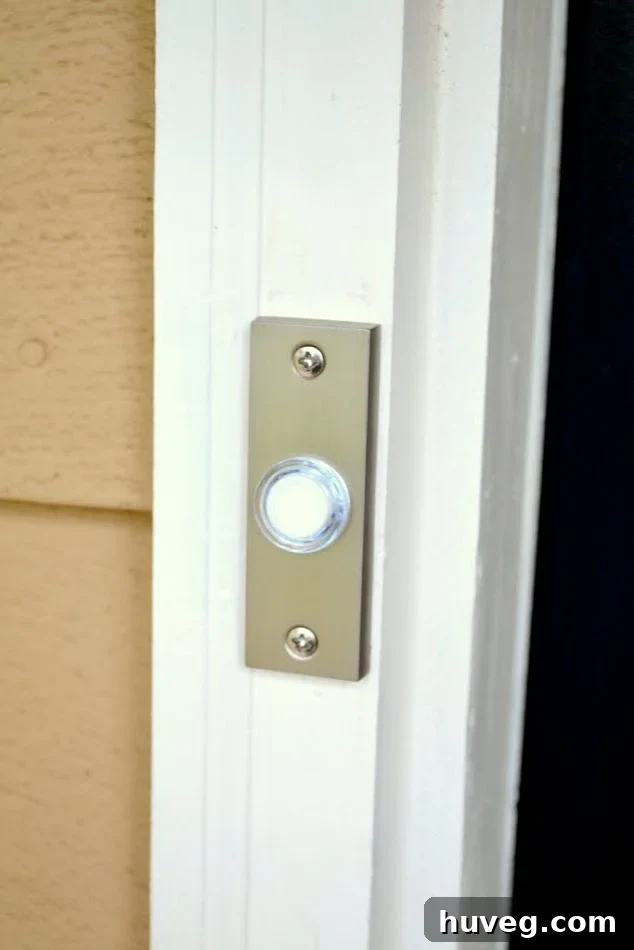
Once I figured out how to install a new doorbell, the entire front entry of our home looked incredibly fresh and updated. The transformation is genuinely remarkable, and you can truly appreciate the dramatic difference a doorbell replacement makes when comparing the before and after images.
My old doorbell, tarnished and out of place:
And after our satisfying doorbell replacement!
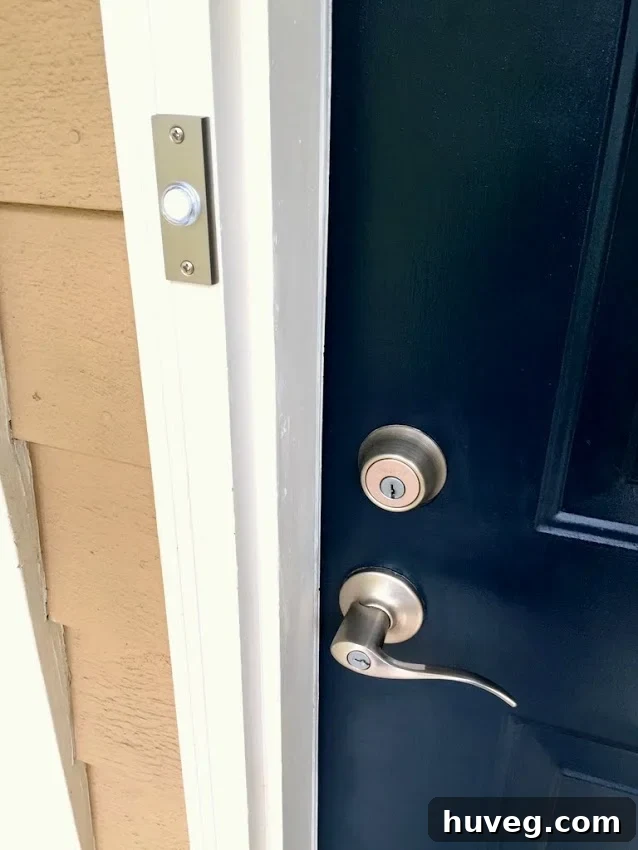
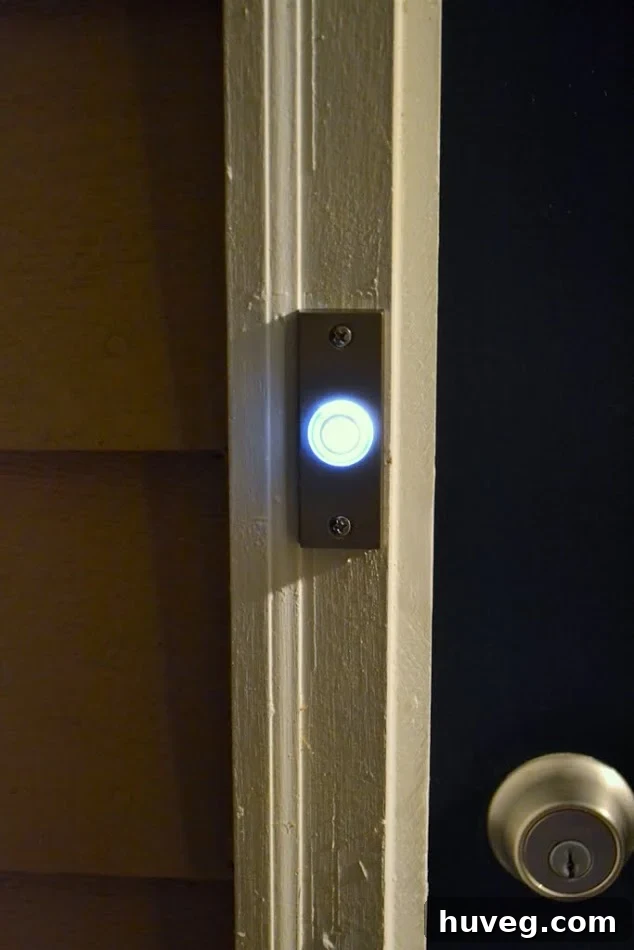
One of the coolest features of our new doorbell is its glowing button! This subtle yet effective detail makes the doorbell incredibly easy to locate in the dark, especially for evening visitors. I imagine this thoughtful upgrade will make life a lot easier for anyone approaching our front door, from friends to the pizza delivery person. Some of the new doorbell buttons out there offer such fantastic functionality and style!
Like many home improvement projects in an older house, the front door and porch will likely always present new little quirks to tackle. But overall, the transformation is truly significant, a far cry from where we were just several years ago. The front door now feels incredibly welcoming, modern, and cohesive, and this simple doorbell replacement played a crucial role in achieving that fresh new look. It’s a testament to how small, focused DIY efforts can yield impressive results, boosting both curb appeal and homeowner satisfaction.
Even Danny from Archer is a fan. (Sorry, this clip just makes me giggle.)
Me too, Danny. Me too.